8 minAugust 18, 2026

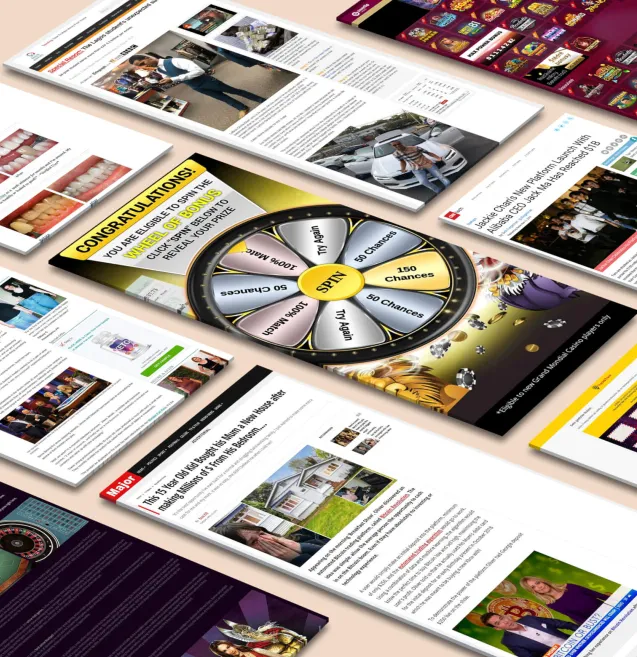
Our spy tools monitor millions of native ads from over 60+ countries and thousands of publishers.
Get StartedGoogle isn't experimenting with AI in advertising anymore. It has rebuilt the entire infrastructure of its ads business around it — and the results are already reshaping what performance marketers should consider the baseline for competitive advertising.
At Google Marketing Live 2026, the company made its position unambiguous: Gemini is now the engine powering every layer of the advertising stack, from campaign creation and creative generation to measurement and cross-platform strategy. AI Max, Google's AI-powered campaign framework, was positioned as the "core building block" for advertisers — the default mode through which businesses show up in AI-driven search, not an optional upgrade for early adopters. The platform's directive to advertisers has shifted from "optimize your keywords" to "define the outcome you want, and let the AI figure out how to get there."
That shift is more than philosophical. As Neil Patel observed, Google is "attempting to abstract away the operational complexity of advertising itself," moving beyond general AI messaging and attaching the strategy to specific products like Ask Advisor, Asset Studio, and entirely new ad formats purpose-built for conversational search. Traditional keyword dependency, for years the bedrock of digital marketing precision, is becoming insufficient on its own as Google shifts toward broader intent understanding supported by contextual signals and real-time creative assembly.
The new ad formats illustrate just how deeply AI-native the platform has become. Conversational Discovery ads assess the full context of complex, multi-layered user queries — someone asking how to make their house smell like a high-end spa in a low-maintenance way, for instance — and dynamically spin up custom ad creative from relevant businesses in real time. Highlighted Answers generates curated, sponsored recommendation lists triggered by searches with clear commercial intent. As Marketing Dive reported, Google's VP of Ads Vidhya Srinivasan emphasized that "these formats are rethinking not only how the ads look, but also the value they provide, because ultimately the best ads are just answers." Google also introduced AI-powered Shopping ads with built-in explainers that synthesize product information and make the case for why a particular product fits the user's need — ads that argue on the advertiser's behalf, generated by the platform's own models.
Meanwhile, the creative production side has been overhauled to match. Asset Studio now integrates Gemini, Veo for video, and the new Gemini Omni model, connecting directly to tools like Adobe and Canva. As WordStream noted, a new AI Brief feature lets advertisers provide brand voice, guardrails, and messaging guidelines in plain language, and the AI generates ad creative that follows those rules — addressing the most common objection to AI-generated ads while dramatically accelerating production velocity for lean teams.
The net effect is a platform where creative, targeting, bidding, and measurement are all orchestrated by a single AI layer that operates in real time, at a scale no human team could replicate manually. AI Mode alone now has over one billion monthly users, all interacting with search through conversational interfaces where these new ad formats live natively.
This is no longer the frontier. It's the floor. And for performance marketers operating outside Google's walled garden — particularly in native advertising — the question isn't whether AI-optimized ads work. Google has already answered that. The question is why so many teams are still running their own campaigns as if the answer hasn't arrived.
Google Ads users aren't just getting better tools — they're operating inside an entirely different creative infrastructure than what's available to most native and push advertisers. Understanding the specifics of that gap is the first step toward closing it.
Start with creative production. Asset Studio now integrates Gemini, Veo, and connects directly to Adobe, Canva, and YouTube Studio, giving advertisers a single hub where they can generate image and video variations, resize assets across formats, and pull from an existing library — all without leaving Google Ads. For a performance marketer running native campaigns, the equivalent workflow typically involves briefing a designer in Slack, waiting for drafts, uploading creatives manually to each platform, and hoping the sizing is right. Google collapsed that entire chain into one interface powered by generative AI. Native advertisers are still stitching it together by hand.
Then there's testing. Google now offers built-in A/B testing that lets advertisers swap creatives and measure incremental performance without duplicating campaigns. That distinction matters more than it sounds. In most native ad platforms, testing a new headline or image means creating a separate campaign or ad group, splitting budget manually, and eyeballing the results in a spreadsheet after a few days. Google's system handles the split, the measurement, and the statistical significance in the background. The advertiser focuses on creative decisions; the platform handles the science. In native, you are the testing infrastructure.
The most telling feature, though, is AI Brief. This lets advertisers write a creative brief in plain language — brand voice, target audience, guardrails, messaging guidelines — and Google's AI interprets those inputs to generate on-brand ad variations with previews for human review. As WordStream noted, this directly addresses the most common concern about AI-generated ads: loss of brand control. You're not approving every individual ad; you're setting the rules the AI follows when creating them. For native advertisers, brand control typically means a Google Doc with tone guidelines that a freelancer may or may not reference before writing the next batch of headlines. The difference isn't incremental — it's architectural.
Finally, there's measurement. Google introduced Qualified Future Conversions, a predictive metric that analyzes signals like branded searches, video views, and site visits after ad exposure to forecast profitable conversions up to six months out. This gives advertisers running upper-funnel campaigns a way to justify spend before the actual conversion materializes. Native advertisers running awareness or consideration campaigns rarely have anything comparable. Attribution typically ends at the click or, at best, a same-session conversion pixel. Everything beyond that is a black box.
The cumulative effect is what MarTech described as the shift toward AI-native operating models — systems that enable continuous testing, learning, and optimization rather than campaign-based workflows. Google has built this into the platform itself. Native advertisers have to build it from scratch, if they build it at all.
This isn't about Google being a bigger company with more resources, though that's obviously true. It's about the fact that Google Ads users now receive automated creative generation, integrated testing, brand-controlled AI direction, and predictive attribution as default features. Native and push advertisers are still working with a spreadsheet of angles, a designer on Slack, and intuition. The playing field isn't tilted — it's a different sport entirely, and pretending otherwise is the most expensive mistake an independent marketer can make right now.
But here's the part Google won't put in a keynote slide: every one of these AI improvements is engineered to keep users, transactions, and data inside Google's ecosystem — not to maximize your margin.
Consider Universal Cart, the native checkout feature Google unveiled alongside its AI ad formats. On the surface, it sounds merchant-friendly — retailers like Walmart, Wayfair, and Shopify partners still legally own the transactions. But as Adweek noted, the development "heightens the walls around Google's garden, incentivizing consumers to browse and shop entirely within Google's ecosystem by eliminating the need to click out to a merchant's website." Google's VP of merchant shopping, Ashish Gupta, insisted the company sees itself as "a matchmaker, connecting shoppers directly with businesses" rather than a marketplace. But matchmakers don't typically insert themselves into the checkout flow, generate their own ad copy, and then synthesize their own "explainer" content about your product before the customer ever reaches your landing page.
That explainer feature is worth pausing on. Gemini-powered explainers pop up within AI Mode ads to "synthesize information about the service or product" and provide additional context. Google frames this as building user trust. But as Adweek's coverage acknowledged, the insertion of Google's voice into the ad experience raises a pointed question: who really controls the narrative? When Google's AI writes the ad, decides when to show it, and then layers its own editorial summary on top, the advertiser isn't just outsourcing creative production — they're ceding the entire brand story to an algorithm whose primary obligation is to Google's revenue line.
And that revenue line is thriving. Alphabet's Q2 earnings hit $119.8 billion, with Google's SVP of ads, Jerry Dischler, emphasizing that Gemini models are now applied "across our entire ads infrastructure." AI Max reportedly delivers a 50% improvement in overall conversions or ROAS on average. These are impressive numbers — for Google. But they're Google's numbers, measured by Google's systems, optimized by Google's models, and billed on Google's terms.
The same dynamic applies to that celebrated 20% improvement in "highly relevant ads." It sounds like a win for everyone until you realize Google defines relevance, measures relevance, and charges you for relevance. The advertiser never sees inside the model. As MarTech warned, brands operating in this environment must "establish governance for autonomous systems" and "define guardrails to balance performance with brand equity" — but governance requires transparency, and Google's AI offers precious little of it.
This is where the story pivots for native and push advertisers. Yes, you're operating without Google's trillion-dollar AI infrastructure. But you're also operating outside the walled garden — and that's not purely a disadvantage. You own the creative. You see the real performance data. You control when, where, and how your message appears. Nobody is inserting an AI-generated explainer between your headline and your conversion event.
The catch is that freedom without intelligence is just guessing. And most native advertisers are still guessing — testing headlines by gut instinct, rotating creatives on arbitrary schedules, and interpreting results without competitive context. The opportunity isn't to replicate Google's black box. It's to build the transparent, data-driven creative process that Google's system will never give you.
Google's AI advantage in advertising isn't magic — it's a loop. Gemini identifies what users want by interpreting conversational queries and behavioral signals, generates creative tailored to that intent, then tests and iterates at a scale no human team could match. As Marketing Dive detailed, formats like Conversational Discovery now assess the full context of specific, multi-layered user queries and spin up custom ad creative from relevant businesses in real time. The system doesn't guess which headline or image will resonate — it reads billions of data points and acts on probability. That's the competitive moat independent advertisers think they can't cross.
But here's the reframe that changes everything: you don't need Google's proprietary data pipeline when you can read the results of everyone else's testing in real time.
Ad spy tools — platforms that index live campaigns across native, push, and display networks — give independent marketers access to a functionally similar loop. Instead of analyzing user intent signals from first-party search data, you're analyzing the creative output of thousands of advertisers and letting the market itself tell you what converts. When a headline, image angle, or landing page structure has been running for weeks across multiple geos and placements, that longevity is conversion evidence. Ads that don't perform get killed. Ads that scale are, by definition, winners. The signal isn't hidden inside an algorithm; it's visible in the campaign data.
Consider what Neil Patel observed about Google's strategic direction: the platform is moving toward a "goal-in, AI-executes" model where advertisers define business outcomes and the system handles operational execution, from creative iteration through Asset Studio to cross-platform guidance through Ask Advisor. Google is essentially abstracting away the complexity of testing and optimization. Ad spy intelligence does the same thing through a different mechanism — it abstracts away the cost of testing by letting you observe which creative decisions survived the market's natural selection process. You're not paying for the thousands of failed split tests that preceded a winning combination. You're reading the final answer.
The pattern recognition involved is genuinely empirical. When you see the same style of curiosity-gap headline paired with a specific type of before-and-after image dominating a vertical for three consecutive weeks, that's not anecdotal. That's data at a scale most solo media buyers could never generate on their own budgets. You're effectively crowdsourcing your R&D across every advertiser running traffic on the networks you compete in.
This doesn't mean copying ads verbatim — that's a race to the bottom. It means extracting the underlying patterns: the emotional triggers that drive clicks in a given vertical, the landing page architectures that hold attention long enough to convert, the offer structures that justify a click in the first place. Google's Gemini analyzes intent signals to generate creative that feels like a helpful answer to a user's question. You can reverse-engineer the same outcome by studying which answers — in the form of ads and funnels — real users have already validated with their wallets.
The asymmetry between Google advertisers and independent native buyers is real, but it's narrower than it appears. Google's AI reads user behavior to predict what will work. Ad spy tools read advertiser behavior to reveal what already does. Both are forms of pattern recognition grounded in market data. One just costs you a subscription fee instead of a seven-figure media budget and access to a closed ecosystem. The independent marketer who treats competitive intelligence as a systematic input — not an occasional shortcut — is running a version of the same optimization loop that powers Gemini. The data source is different. The logic is identical.
Google has already published the blueprint for AI-driven creative optimization — the problem is that blueprint only works if you're spending inside their ecosystem. But the underlying logic is universal, and independent marketers running native campaigns can replicate it step by step without surrendering control or margin to a walled garden.
Step 1: Trend Identification via Spy Tools. Google's Gemini models scan billions of queries and behavioral signals to detect emerging intent patterns. Your equivalent is systematic use of ad spy tools — platforms like Anstrex, AdPlexity, or SpyFu — to monitor what's actually running and scaling across native networks right now. Instead of guessing what angles might resonate, you're reading the market's live answer sheet. Pull the top-performing creatives in your vertical weekly, noting headlines, thumbnail styles, landing page structures, and emotional hooks. This is your raw signal layer.
Step 2: Angle Extraction and Clustering. Once you've collected fifty to a hundred winning ads, group them by the underlying persuasion angle — not the surface copy, but the deeper mechanism. Is the ad leading with fear of missing out, social proof, curiosity gaps, or outcome visualization? Cluster these angles into three to five buckets. This mirrors what Google does when its AI interprets an advertiser's creative brief in plain language through AI Brief, extracting brand voice, target audiences, and messaging guidelines to generate variations. You're doing the same extraction manually, but informed by competitive reality rather than your own assumptions.
Step 3: Rapid Creative Variation Using AI Design Tools. Google's Asset Studio now integrates Gemini, Veo, and connections to tools like Canva and Adobe to centralize creative production. You don't need Asset Studio to access those same tools. Feed your clustered angles into ChatGPT or Claude to generate dozens of headline and body copy variations. Use Canva's AI image generator or Midjourney to produce thumbnail concepts that match the visual patterns your spy research revealed. The goal isn't one perfect ad — it's twenty viable variations per angle, produced in hours instead of weeks.
Step 4: Structured Testing Methodology. Google now offers built-in A/B testing that lets advertisers swap creatives and measure incremental performance without duplicating campaigns. On native platforms like Taboola or Outbrain, you build this discipline yourself: launch each angle cluster as a separate campaign with three to five creative variations, hold budgets equal for a statistically meaningful window (typically seventy-two to ninety-six hours), and kill anything that doesn't clear your cost-per-action threshold. No gut calls, no "let it run another week to see." Define your kill criteria before you launch.
Step 5: Iterative Scaling Based on Data. Google's AI Max has become what AdExchanger described as the core building block for advertisers to fully participate in AI-powered experiences, delivering on average a fifty percent improvement in conversions or ROAS. You replicate that scaling logic by taking your winning angle-and-creative combinations and systematically increasing budget while monitoring downstream signals — not just clicks, but email opt-ins, purchase completions, or lead quality scores. This is your version of Google's Qualified Future Conversions metric: tracking meaningful actions that predict real revenue, not vanity engagement.
The point of this framework isn't to build a knockoff Google. It's to internalize the same data-driven creative loop — observe, extract, generate, test, scale — while keeping your data, your margins, and your strategic flexibility entirely in your own hands.
The framework in the previous section works today precisely because so few native advertisers are using anything like it. That gap won't persist. Every signal from the major platforms suggests that AI-driven creative optimization is accelerating from competitive advantage to table stakes, and the window for early adopters to build a durable lead is narrowing faster than most marketers realize.
Consider the velocity of change inside Google's own ecosystem. AI Max, the company's AI-based bidding and targeting product, has already delivered on average a 50% improvement in overall conversions or ROAS for advertisers who adopt it. That kind of performance lift doesn't stay quiet. It creates gravitational pull — more advertisers pile in, more budget flows toward AI-optimized channels, and the cost of competing without equivalent intelligence rises quarter by quarter. When Alphabet can casually report $119.8 billion in quarterly revenue while expanding its debt portfolio from $16 billion to $100 billion to fund further AI infrastructure, the message is clear: the largest advertising company on the planet is betting everything on machine-driven execution becoming the default.
That default will eventually reach native. Programmatic native platforms are already layering in automated bidding and rudimentary creative suggestions. Taboola and Outbrain have both invested in recommendation algorithms that favor engagement prediction over static placement. The sophistication gap between what Google offers inside its walled garden and what independent native buyers can access on the open web is still significant — but it's closing. Once native platforms ship their own AI-native creative tools, the arbitrage available to marketers who built those systems independently evaporates. The early movers who already have months of structured test data, validated angle libraries, and iterative feedback loops will hold an advantage that latecomers can't shortcut by simply toggling on a platform feature.
The deeper strategic shift compounds the urgency. As MarTech argued, the next phase of advertising is agentic AI — systems that make decisions autonomously, continuously reallocating budget, adjusting targeting, and refining creative without human intervention. Early adopters of these self-optimizing agents are already seeing lower acquisition costs and shorter sales cycles. When that capability becomes widely available on native platforms, the advertisers who win won't be the ones learning the basics of structured testing for the first time. They'll be the ones who spent the preceding twelve to eighteen months building the strategic inputs — brand narrative, messaging architecture, audience understanding — that feed those autonomous systems quality raw material.
This is the asymmetry that defines the current moment. Most native advertisers are still writing headlines based on gut feeling, running two or three creatives per campaign, and calling it "testing." Meanwhile, the entire infrastructure of digital advertising is being rebuilt around continuous, AI-powered iteration. The playbook outlined in the previous section isn't exotic — it's simply the disciplined application of principles that Google has already proven at scale. The difference is that right now, applying those principles in native still gives you an outsized edge because your competitors haven't caught up.
That won't last. The platforms will democratize the tooling. The agencies will productize the methodology. The advantage shifts from knowing what to do to having already done it — having the compounding data, the proven creative frameworks, and the operational muscle memory that no turnkey solution can replicate overnight. The question isn't whether AI-grade creative optimization will become standard in native advertising. It's whether you'll be the one who built the foundation before everyone else was handed the same tools.
Receive top converting landing pages in your inbox every week from us.
Recently Updated
Learn how Pure Leaf’s “Break Conference” transformed a celebrity sports moment into a scalable native advertising story. This guide shows performance marketers how to turn brand storytelling into measurable Native, Push, Pop, Affiliate, and TikTok campaigns using ad spy intelligence and narrative-driven creative.
Marcus Chen
7 minSep 29, 2026
Featured
Explore how creative operators and managing directors are shaping modern media buying by connecting creative strategy, AI, channel allocation, experimentation, and governance. This guide examines how leadership decisions influence Native, In-Stream, Creator, and Push campaigns, as well as the contracts and systems that determine how media teams operate.
Dan Smith
7 minSep 29, 2026
Most Read
Learn how OOH employers can move beyond selling billboard inventory and start monetizing the full funnel impact of every outdoor impression. This guide shows how to connect OOH with Native and TikTok-style funnels using competitive intelligence, creative research, tracking, retargeting, and performance-focused roles.
Rachel Thompson
7 minSep 28, 2026