8 minSeptember 24, 2026

Our spy tools monitor millions of native ads from over 60+ countries and thousands of publishers.
Get StartedMost marketers think they know what “good creative” looks like because they see it every day: the scroll-stopping TikTok ad everyone is stitching, the Meta concept that keeps getting referenced in webinars, the polished case study that makes a carousel look like a silver bullet. But the gap between what’s publicly hyped and what privately performs has never been wider.
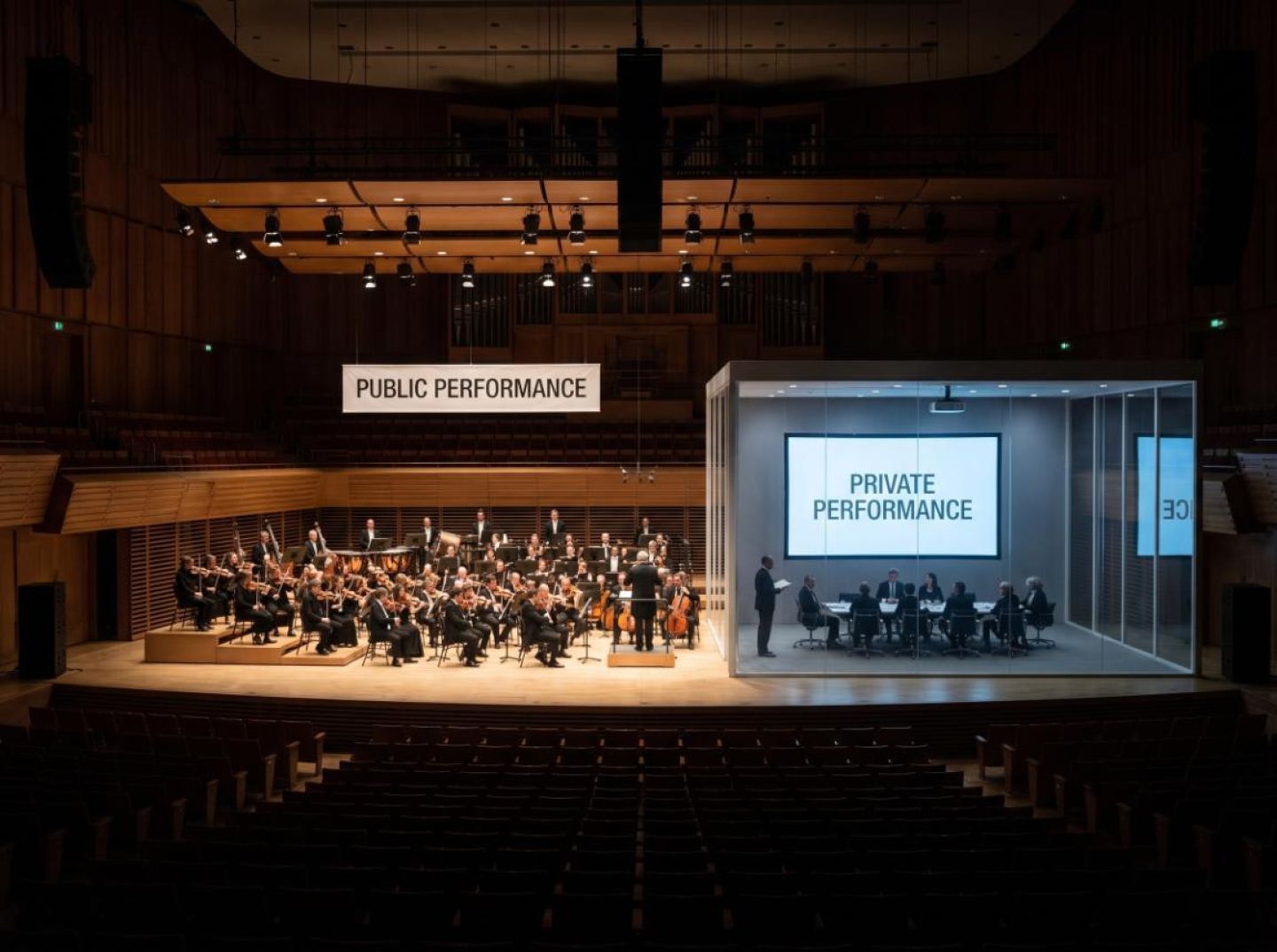
A big reason is that the ad ecosystem itself has changed faster than our intuition. Platforms are quietly shifting from manual levers to what MarTech describes as “agentic AI” systems that continuously experiment, reallocate budget, and refine creative without waiting for human approval. These systems don’t care whether an ad is famous, only whether it moves the numbers. The outcome is a kind of parallel reality: public chatter clustered around a handful of visible hits, and private performance driven by an ever-evolving mix of creatives most people never notice.
You can see this split clearly in the way creative volume and structure have evolved. On Meta, the winning setup is no longer an intricate lattice of campaigns and bid strategies; it’s “one condensed campaign, a batch of creatives, and continuous testing to find winners and scale,” as Social Media Examiner reports. Yet many teams still fixate on sheer output—100, 200 ads a week—because they’ve internalized the narrative that more testing equals more success. What actually happens is they flood the system with near-identical, trend-chasing executions, and the algorithm quietly demotes all of them in favor of a handful of stranger, sharper, more original ideas that never make it into conference talks.
This is the hidden gap: algorithms are optimizing for “most useful answer,” while the industry is still celebrating “loudest spectacle.” AI-native discovery environments—whether they’re search results wrapped in summaries or conversational assistants recommending products—reward brands that show up with precise, differentiated, machine-readable answers. Illumin notes that as consumers turn to AI-powered assistants and conversational search to compare options, visibility increasingly depends on content that AI can “understand, reference, and recommend with confidence,” not just content that wins human-designed awards.
The same inversion is happening inside the ad platforms. TikTok’s official AI skills, like the Viral Video Creator described by Social Media Examiner, surface top-performing patterns from millions of ads and hand marketers a templated “70% there” version of winning creative. Those patterns influence what countless advertisers make next, which in turn standardizes the look and feel of paid creative. Meanwhile, the really interesting outliers—the “under-the-radar” ads that quietly crush ROAS for a specific audience segment or in a niche placement—are rarely reverse-engineered or shared. They’re discovered by machines and guarded by performance teams.
At the same time, creative production itself is being reshaped by AI in ways that further mask what’s truly working. As Native Foreign’s Nik Kleverov argues in Adweek’s conversation with him, visual AI is most powerful as a “creative accelerant,” enabling iterative, editor-centric workflows that produce dozens of variations from a single concept. To the outside world, all those variations look like one campaign. To the buying algorithm, they are distinct experiments with radically different outcomes. Only the brand and the platform see which obscure edit—tweaked framing, slightly different emotional beat, an unexpected product angle—actually shifted behavior.
Finally, strategy and operations are being rebuilt around AI-native workflows. Analysts highlighted by illumin expect marketers to manage end-to-end AI-powered workflows instead of discrete tasks. In this model, “the campaign” is no longer a fixed asset but a constantly morphing system that the public glimpses only in snapshots. And as MarTech points out in its guidance on AI-native operating models, winning teams are already moving beyond campaign batches toward continuous testing, learning, and optimization anchored in strong strategic inputs rather than trend-following.
Put simply: the work you see onstage, in featured lists, and in public “best ads” compilations represents only a sliver of what actually drives results inside AI-optimized platforms. The rest lives in the shadows—ads engineered for answer engines, tailored to micro-contexts, and iterated faster than any public narrative can keep up with. Bridging that gap requires a different approach to how we source inspiration, evaluate creative, and design native ads for an environment where the most effective work is often the least visible.
“Featured creative” lists make for great decks and bad decision-making.
They spotlight the loudest winners in a very specific context, then quietly ignore the far larger universe of ads that actually determine what works in the wild. If you’re building native ads on top of those lists alone, you’re effectively training your strategy on survivor bias.
There are four structural problems with that.
First, featured ads are optimized for shareability, not profitability. When a fan-made Pepsi spot goes viral and fools thousands, as one AI-generated “Pep” film did, it wins the internet for a day—but you have no data on whether it can profitably sell a 12‑pack at scale. The same clip that dominates X or TikTok can crumble when it has to carry a CPA target, a frequency cap, and three different audience segments. Yet featured lists rarely differentiate between “most talked about” and “most margin-accretive.”
Second, the featured universe is painfully narrow. Awards shows, trade press, and roundups skew toward big brands, high-gloss production, and a handful of verticals. You’ll see Toys“R”Us’ headline-grabbing AI film or a splashy Times Square stunt where brands like HelloFresh showcased AI-made creative via Hightouch’s Ad Studio, but you won’t see the hundred under-designed, over-performing UGC videos quietly compounding ROAS in B2B SaaS or niche ecommerce. Native ads live and die in those underexposed pockets: ugly thumbnails that crush in-feed CTR, odd-angle product demos that silently dominate lower-funnel performance, earnest talking-head explainers that never trend but print revenue.
Third, featured work freezes a moment in time while performance realities change weekly. Platforms are evolving toward “agentic” systems that self-optimize creative, as one MarTech analysis of AI-native advertising emphasized. When algorithms are continuously remixing formats, placements, and messages, last quarter’s award-winning pattern is a lagging indicator at best and a decoy at worst. That TikTok hook or Meta concept you saw in a webinar has already been copied, fatigued, and discounted by both users and the platform’s delivery system by the time it shows up in a “best of” reel.
Fourth, featured lists are almost always divorced from volume and variance—the two things AI-native systems actually need. HelloFresh’s marketing lead openly describes being “under pressure to produce significantly more creative than ever,” using AI to spin up and test variations so they can prioritize top performers, as reported in the Times Square Ad Studio activation. In a similar vein, Amazon’s generative agent for Cuisinart isn’t hunting for a single masterpiece; it digests the brand’s entire historic catalog, identifies which ads worked, and then keeps generating riffs that are “akin to what works but isn’t exactly the same,” according to Amazon Ads’ own engineers. That is the opposite of a curated top‑10 list. It’s a statistical engine that only gets smart when it can see all the hits, misses, and near-misses.
This matters because native advertising is increasingly embedded inside answer engines, feeds, and interfaces where users never consciously think, “I’m watching an ad.” As one contributor argued in a MarTech piece on AI-native operations, the winners will be brands that show up with the right answer, in the right context, at the right moment—not those with the most spectacular standalone creative. To train for that world, you need exposure to the full distribution of creatives that quietly generated that “right answer,” not just the handful that earned a case study slide.
So the problem isn’t that featured lists are useless. It’s that they’re incomplete, unlabelled datasets masquerading as strategic guidance. They can spark ideas, but if you let them define your native ad strategy, you’re letting the noisiest, most exceptional examples stand in for the messy, high-volume reality that actually drives performance.
The next generation of AI that builds and optimizes native ads can’t be fed exclusively on hype clips and awards sizzles. It has to learn from both the viral anomalies and the under-the-radar workhorses that never make a featured list—but consistently move the numbers.
Anstrex AI matters because it isn’t just “looking at what went viral.” It is built to sit between the hero creatives everyone talks about and the quiet winners hardly anyone notices — and to learn from both.
Most AI ad tools today are glorified highlight reels. They scrape whatever surfaces on “featured” lists, creative roundups, and public ad libraries, then remix those same tropes. It’s the Pepsi-spot problem at scale: as one commentator noted when a fan-made, AI-generated Pepsi spec ad charmed thousands online, the internet will happily celebrate a shiny fake that simply replays familiar formulas. When your training data is dominated by loud, memeable work, you get models that are great at imitating spectacle and weak at replicating performance.
Anstrex takes a different stance: treat “hero creative” as just one signal in a much larger system.
On one side of that system are the obvious inputs: breakout concepts that dominate discourse. Think of the way TikTok’s official Viral Video Creator skill is trained on “millions of videos” to surface hooks, structures, and CTAs from top-performing ads. That kind of pattern recognition is genuinely useful: it tells you what the market is currently rewarding in terms of pacing, framing, and narrative shape.
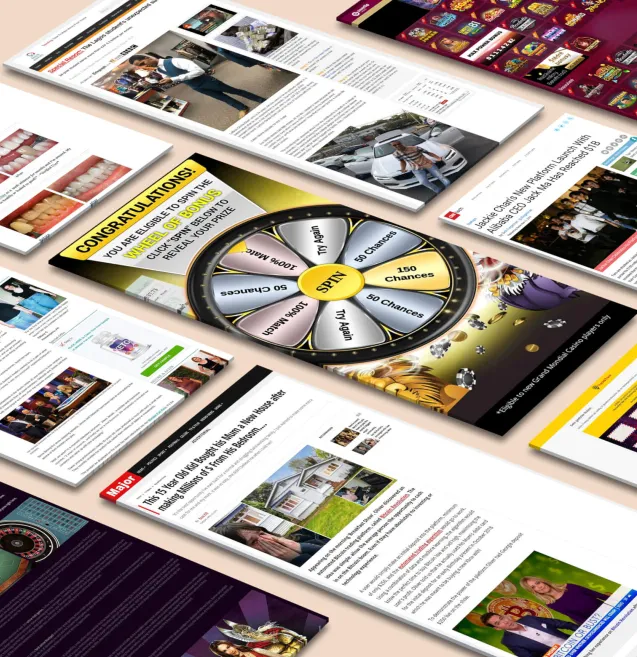
But on the other side of the system are the quiet winners: native ads that never make a “best of” reel, yet run profitably for weeks or months; angles that don’t look sexy in a deck but print money in a narrow placement or geo; creatives that break every stylistic “rule” of the moment and still get approved, clicked, and converted. These are the ads that never become talking points on LinkedIn, yet they are exactly what you want an AI to study if you care about lift, not likes.
Anstrex’s bridge is its training mixture and feedback loops. Instead of over-indexing on high-visibility case studies, it leans on large-scale, in-the-wild data from native networks: impressions, durations, rotations, placements, and landing-page continuity. The system doesn’t just ask, “What do top creatives look like?” It asks, “What keeps getting budget and distribution in real auctions?” That is a fundamentally different question.
This is where Anstrex’s philosophy lines up with how serious practitioners on social are already using AI. Meta buyers who win today focus on a tight structure, “a batch of creatives, and continuous testing to find winners and scale,” rather than flooding the account with 200 low-intent variations, as one strategist explained in a Meta case breakdown. The point is not volume; it’s learning velocity. You create fewer, sharper hypotheses, then watch what the market actually rewards.
Anstrex AI applies that same discipline at discovery scale. Hero creatives enter the system as hypotheses — strong candidates for patterns that might generalize. Quiet winners enter as proof — the small, statistically boring ads that nevertheless keep clearing the bar in harder, messier conditions. The model is tuned to privilege what the auction validates repeatedly, not what the industry retweets.
There’s also a strategic side to this bridge. As AI reshapes how people discover brands — with assistants and conversational search summarizing information from multiple sources, as one analysis of AI-driven discovery pointed out — the bar for “native” keeps rising. Ads can’t just look like platform content; they have to read like credible, context-aware answers in a broader information ecosystem. Hero creatives tend to be great at attention; quiet winners tend to be great at context. You need both to show up inside feeds, widgets, and AI summaries without triggering skepticism.
Finally, Anstrex is designed with the same division of labor forward-looking marketers are adopting: the AI provides the analysis, humans provide the judgment. The system can surface high-performing patterns that resemble a viral spec spot, and at the same time flag an unglamorous native unit that’s quietly compounding ROI. Your job isn’t to accept those outputs as gospel; it’s to decide which patterns to lean into, which to subvert, and where to inject the human craft that commentators celebrating non-spec, real-world campaigns on sites like Bhatnaturally keep reminding the industry not to abandon.
In other words, Anstrex AI is not a creativity vending machine fed by “best of” lists. It’s a bridge between what gets celebrated and what actually scales — an engine that learns from both the billboard and the backwater placement, so your next native ad is built on reality, not just reputation.
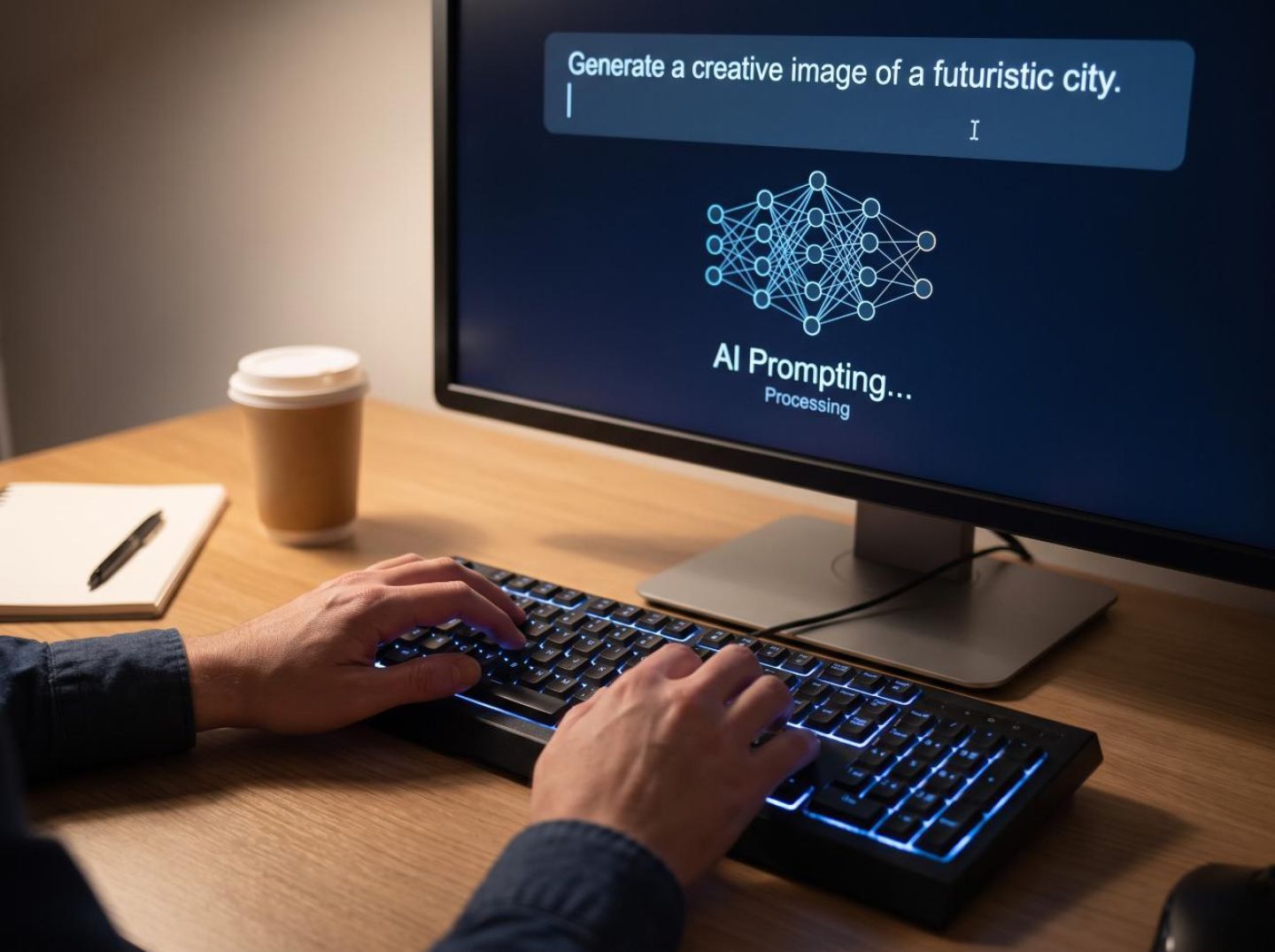
Think of prompting Anstrex AI less like “write me an ad” and more like briefing a strategist who has sifted both the viral Pepsi spoof your CMO Slacked around and the no-name nutraceutical that’s quietly printing money at 2 a.m. on Taboola.
To get that level of judgment, you have to feed it both kinds of inputs on purpose.
Before you ever type into the prompt box, build two short lists:
Inside Anstrex, tag or label these sources separately. Your goal is to force the model to see the contrast: what looks great in a highlight reel vs. what actually clears the cash register.
Most marketers prompt generative tools with a single reference: “Write five headlines in the style of this ad.” That’s how you get cloned hero creatives and more of the survivor-bias problem you’re trying to escape.
With Anstrex AI, structure prompts so it must reason across both piles:
I’m giving you two groups of native ads. Group A: viral or ‘featured’ creatives that generated social buzz or industry coverage. Group B: quiet long-running ads with strong profitability but little public attention.
- First, summarize the key patterns in Group A only.
- Then summarize the key patterns in Group B only.
- Finally, propose a set of testable angles and hooks that combine stopping power from Group A with the conversion discipline of Group B. Prioritize ideas that can be iterated quickly in an AI-native, always-on testing environment.
Language like “AI-native, always-on testing” leans into the continuous experimentation loops that platforms such as Hightouch’s Ad Studio are already enabling, where marketers can generate and tweak large volumes of creative on demand, as AdExchanger reported about HelloFresh’s workflow.
As AI-native advertising shifts from one-off campaigns to continuous, agentic optimization, you need the model to help you define structure, not just spit out more headlines. In other words, brief it like a strategist who understands what MarTech calls “messaging architecture” and “differentiated value propositions.”
Examples:
From these viral hero creatives and these quiet winners, infer the underlying messaging architecture: core promise, supporting proof points, emotional triggers, and risk-reversal elements. Show me where Group A over-indexes vs. Group B. Then design a lattice of 5 core promises × 5 emotional angles that we can systematically test as native ads.
Format-by-intent prompt
Classify each ad as awareness, consideration, or decision-stage based on copy and offer. Show how performance shifts by stage for both viral and under-the-radar ads. Then propose native ad templates tailored to each stage that align with how AI ‘answer engines’ now surface recommendations inside conversational flows.
That last clause matters because discovery is moving inside assistants and AI-generated responses; the recommendation itself is becoming the ad, as recent analysis from MarTech argues. Your prompts should nudge Anstrex AI to design creatives that feel like useful answers, not just clickable bait.
Quiet winners often look dull until you ask why they keep winning. Prompt Anstrex AI to make those mechanics explicit:
For each pattern you identify, explain why it likely works in native environments: placement context, audience sophistication, offer clarity, compliance constraints, or alignment with ‘answer-style’ discovery experiences. Highlight at least three tactics that appear unattractive in hero creatives but consistently drive results in under-the-radar ads.
This is the same human-plus-machine pattern illumin describes: AI does the analysis; you provide judgment and guardrails. By asking “why,” you turn Anstrex from a copy machine into an analyst that helps you make smarter tradeoffs between spectacle and sustained performance.
Finally, never let a prompt end at “give me ads.” Make it end at “give me tests and rules”:
Using the blended insights above, output:
- A prioritized test plan (batches of creatives, hypotheses, and success metrics), and
- Guardrails that protect brand voice, compliance, and offer integrity, even as we auto-generate and rotate variants at scale.
That phrasing mirrors how sophisticated teams are already governing autonomous, agentic systems in advertising, where AI coordinates creative generation while humans set boundaries and review logic, as illumin has outlined.
When you consistently prompt Anstrex AI this way—with explicit viral inputs, explicit quiet winners, and explicit demands for structure, reasoning, and guardrails—you stop training your native ads on highlight reels and start building a machine that learns from the whole field.
Campaign thinking is built on bursts: brief, launch, optimize, report, shut it down, start again. AI-native creative systems don’t think in bursts. They think in loops.
When you stop treating AI as a way to spin up more “Pepsi imposter” moments and start using it as the connective tissue across discovery, testing, and iteration, you move from running campaigns to running a living creative organism.
Always-on doesn’t mean “set it and forget it.” It means you design a system where every impression is a data point, every ad variation is a hypothesis, and your stack is wired so the learnings actually change what gets made next.
Most brands still brief AI the way they brief a freelancer: here’s the campaign, here’s the headline formula, go. That’s why so many AI-native ads feel like generic highlight reels cribbed from viral fan work and spec spots.
An always-on system needs something closer to what Nik Kleverov calls a “creative accelerant” model, where AI is plugged into an editor-centric workflow that iterates against a clear idea rather than replacing it. As Nik’s approach to visual AI shows, you define the brand voice, tension, and non-negotiables once, then let AI explore within that box, with humans curating what actually ships.
In practice, that looks like:
You’re not briefing ads; you’re briefing the system that will keep making them.
Right now, many AI tools live at the edges of the workflow: an LLM to write copy here, a video generator there. The real shift happens when, as illumin’s analysis of AI workflows argues, you stop automating isolated tasks and start connecting the entire chain.
For native and performance creative, that means:
Instead of your team exporting CSVs and manually updating “what worked” decks, AI agents can summarize pattern shifts, flag anomalies, and propose new creative batches aligned with business goals, leaving humans to apply the judgment and nuance the machines lack.
Platforms are already happy to “help” you run creative, whether it’s TikTok’s Viral Video Creator skill or Google’s auto-assembled assets. As Social Media Examiner notes in its breakdown of TikTok’s AI skills, those recommendations can be useful—but they’re also biased toward what the platform can easily optimize and measure.
In an always-on system, AI is a colleague you challenge, not a boss you obey. If a platform suggests killing a new concept because it underperforms legacy winners after 72 hours, your system should be set up to:
That override data is gold. It teaches your internal AI when your brand is willing to “lose” in the short term to build a new winning pattern the algorithms haven’t seen before.
Consumers are already using generative tools as shopping concierges, and search results are being replaced by summarized answers. As illumin points out about AI-driven discovery, visibility is shifting from “rank high on a page” to “be the brand AI is comfortable recommending.”
Your native creative system has to assume that:
That means teaching your system to prioritize clarity, proof, and consistent positioning over clickbait that wins the auction but loses the narrative. Under-the-radar winners that quietly convert on sketchy claims might look great in short-term dashboards; in an AI-mediated discovery world, they can poison your brand’s “reputation graph.”
Campaign calendars won’t disappear, but in an AI-native setup they stop being the primary organizing principle. Instead, you staff around roles that keep the creative organism healthy:
You still launch, peak, and report. But the real asset isn’t the campaign—it’s the continuously learning, AI-native creative system you’re training with every test, every override, and every under-the-radar win you refuse to ignore.
Guardrails are not the opposite of creativity; they’re the price of entry if you don’t want your AI-native ads to look like everything else in the feed—or, worse, like they were made by a bored manifesto generator.
When teams complain that “AI work all looks the same,” what they’re really seeing is the absence of three things: clear constraints, visible human authorship, and a standard for what “on-brand reality” actually is.
The more you scale AI-generated native creative, the more you need non-negotiables baked into the system: legal, compliance, safety, and brand standards.
Platforms like Hightouch’s Ad Studio don’t start from a blank canvas; they deliberately ingest a brand’s past campaigns, product catalog, and compliance guidelines so the system knows what’s in-bounds and what isn’t, helping HelloFresh keep voice and regulatory details intact even when the tool is generating Times Square–level volumes of assets, as described in this overview of AI creative guardrails. Your native engine should do the same:
This isn’t about slowing creative down; it’s about protecting speed. If your AI can generate 100 variations in an hour but every second one gets kicked back by legal, you don’t have scale—you have chaos.
A healthy AI-native system looks less like an automated ad factory and more like an editor’s room. Nik Kleverov describes visual AI as a creative accelerant, not a replacement for human storytellers, and emphasizes workflows where humans remain the “authors of record,” shaping and approving iterations rather than rubber-stamping machine output, as outlined in his conversation on editor-centric AI workflows.
For native ads, that translates into:
The fastest route to sameness is feeding your system only the greatest hits of AI advertising—the viral Pepsi imposters, the Spencer Pratt superhero fantasies, and every other shiny, high-drama spot that’s racked up X views. Those pieces are engineered to be shareable, but as the analysis of the Pepsi spoof makes clear, they tend to recycle familiar tropes and even legacy taglines, which is why the fake spot still leaned on BBDO’s original “Thirsty for more” line according to this breakdown of fan-made AI campaigns.
If you train primarily on that surface-level spectacle, your native ads will inherit the same rhythm and clichés: the swelling music, the same four joke structures, the same beaming stock faces. You’ll get impressions, but you’ll also get an audience that scrolls past because “I’ve seen this before.”
To avoid that, your guardrails should include what not to imitate:
Authenticity isn’t a vibe; it’s a constraint you can operationalize.
Your guardrails should include:
The goal is not to stop AI from learning; it’s to teach it what kind of success you’re willing to stand behind. Done well, your system doesn’t just avoid the AI lookalike trap—it starts producing native ads that feel so grounded in human reality that nobody even thinks to ask, “Was this made with AI?”
Receive top converting landing pages in your inbox every week from us.
Recently Updated
Featured ad lists capture the creative everyone talks about, but they often miss the quiet native ads that consistently drive performance. This guide shows how to combine viral “hero” creatives with under-the-radar winners in Anstrex AI to build, test, and continuously improve native advertising systems based on real performance signals.
Liam O’Connor
7 minSep 24, 2026
Guide
Track how new creative leadership can reshape competitor native campaigns by connecting executive hires with changes in ad libraries, creative patterns, and funnel strategies. This guide shows how to use Anstrex to monitor those shifts, identify emerging creative systems, and reverse-engineer competitor funnels without relying on internal performance data.
Marcus Chen
7 minSep 24, 2026
Editor’s Pick
Discover how to turn food, sports, and tech trends into structured creative testing hypotheses instead of one-off ad ideas. Learn how to build vertical-specific blueprints, test them across Native, Push, Pops, and TikTok, and use performance data to continuously improve your creative strategy.
Dan Smith
7 minSep 20, 2026