6 minSeptember 14, 2026

Our spy tools monitor millions of TikTok ads from over 55+ countries. Biggest TikTok Ad Library in E-commerce and Mobile Apps!
Try It FREEMarketers keep being handed the same false dilemma: either you rely on “human curiosity” and gut, or you hand everything over to a swarm of AI “employees” and dashboards. In reality, neither extreme works. Curiosity without infrastructure stalls out in opinion wars and one-off experiments. AI without a human judgment layer quickly devolves into prettier reports that don’t change what you ship, say, or spend.
The real advantage is what happens when you treat curiosity as the operating system, and AI as the infrastructure that lets that curiosity scale.
Most teams already feel like they’re doing this. They have competitive dashboards, alerts, social listening, and a rotating cast of “spy tools” watching every move their rivals make. Yet as one AI-powered competitive intelligence playbook points out, these systems overwhelmingly give you rearview‑mirror visibility: what happened last week, how many mentions you got, who published what. They are excellent at collecting signals and terrible at turning those signals into conviction.
That jump—from data to conviction—is where human curiosity belongs.
Curiosity is not a mood you sprinkle on top of a quarterly report; it’s a discipline you bake into how you interrogate performance. When a test underperforms, curious marketers don’t declare the experiment a failure and move on. They treat the loss as evidence. As one analysis of post‑campaign reviews argues, a “losing” test can be the single most valuable outcome if it challenges an assumption about your audience or kills an idea that was never going to scale. Curiosity reframes success: the goal is no longer to prove you were right; it’s to find out what’s true.
But that mindset only becomes powerful when it’s turned into a repeatable system. Instead of asking AI tools to “be smart” for you, you give them a job inside a human‑designed loop. You ask, every time you review a campaign or a competitor move:
That kind of rigor is precisely what high‑performing SEO teams are doing when they use search as an intelligence layer for the rest of marketing. Search behavior exposes customer intent, language shifts, and emerging topics long before they show up in social feeds or sales calls. Brands that put a strategist in charge of reading those signals are using SEO to make faster, forward‑looking decisions about content, product, and positioning—decisions AI cannot autonomously make because it doesn’t know your margins, roadmap, or brand constraints.
In those programs, AI is everywhere in the workflow—surfacing opportunities, clustering topics, drafting concepts—but the final calls on prioritization, risk, and competitive response still sit with a human who understands the business and the audience. That human isn’t fighting the tools; they’re orchestrating them. The curiosity lives in the questions they ask and the bets they choose to place. The scale comes from the machines.
This is why “AI employees” is the wrong metaphor. AI is less a replacement for people and more an expansion pack for human curiosity. It lets a small team watch thousands of competitors, keywords, and creative variations at once. But only a curious strategist can turn that firehose into a system for discovering what actually wins—and then doubling down while everyone else is still generating the next report.
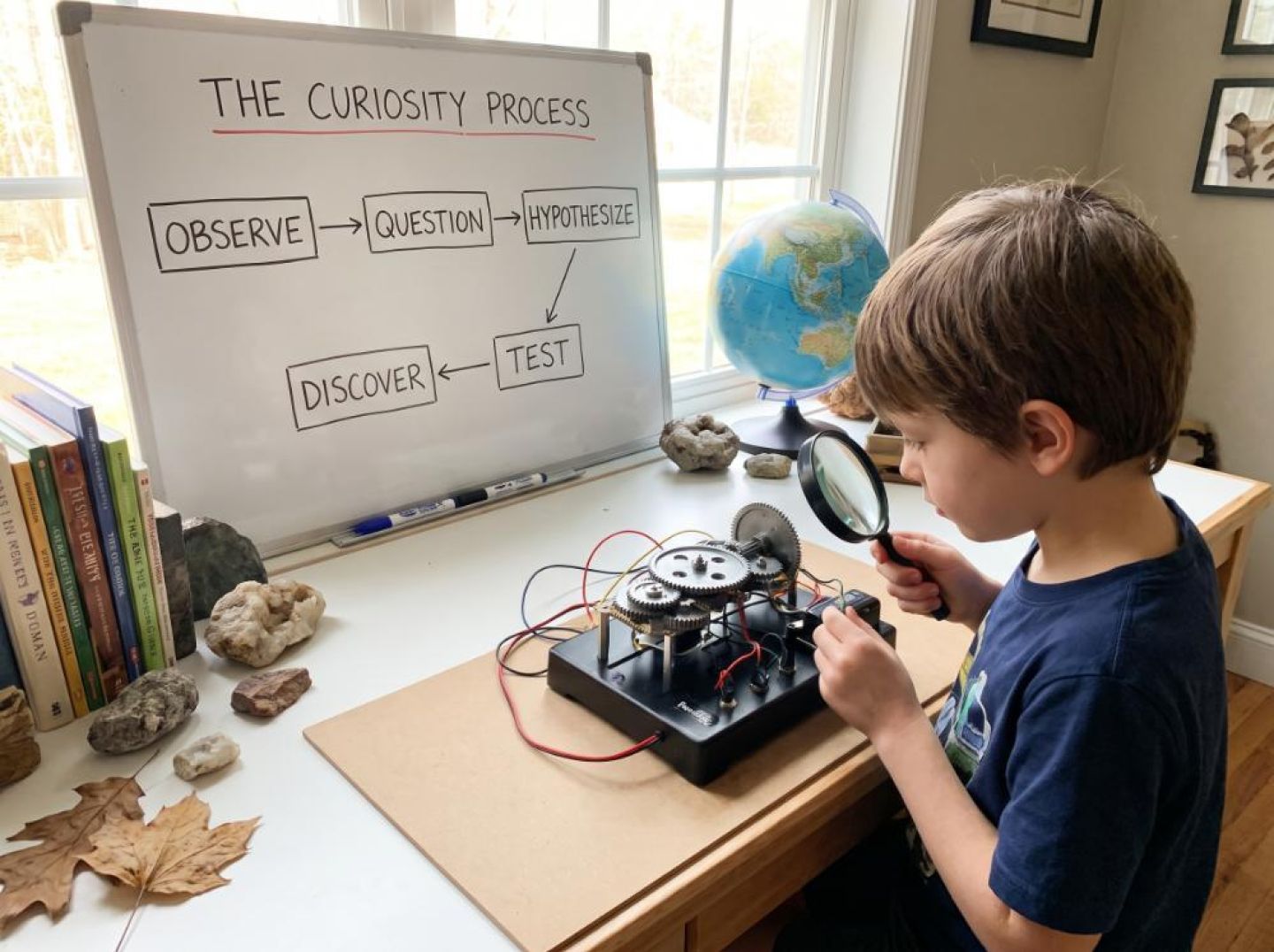
Curiosity feels like a personality trait: something you either have or you don’t. In high-performing marketing teams, it functions very differently. Curiosity is operationalized. It’s a repeatable process baked into how ideas are prioritized, how tests are run, and how results are reviewed.
Think of it less as “being naturally inquisitive” and more as a factory line for insight.
Most teams already have the raw materials. They watch metrics, run A/B tests, and hold post-mortems. The problem is that those activities often stop at description. As one breakdown of post-campaign analysis notes, most reporting tells you what happened; insight only begins when you consistently ask why and what next in a structured way, turning “interesting numbers” into a pipeline of hypotheses and follow-up tests woven into the normal campaign rhythm, not bolted on as an occasional deep dive.
That shift—from ad hoc questioning to a defined loop—is why curiosity scales. When every brief, standup, and recap forces the same few questions, you’re no longer dependent on who happens to be in the room or how “curious” they woke up feeling that day.
A simple loop might look like this:
When this loop is codified—inside testing templates, dashboards, and meeting agendas—curiosity stops being a heroic act from a lone strategist and becomes an organizational reflex.
This is exactly the dynamic high-performing SEO programs have leaned into. In strong organic search operations, the strategist doesn’t just peek at rankings when traffic dips; they treat search data as a continuous intelligence feed. As one analysis of human-led SEO points out, search surfaces customer intent data, emerging topics, and language shifts before they show up anywhere else, but none of that becomes a creators" target="_blank" rel="noreferrer noopener">competitive advantage until a strategist repeatedly interprets those signals, questions their assumptions, and feeds what they learn into content, product, and positioning decisions over time.
In other words, the “human edge” isn’t a mystical creative spark. It’s the discipline of turning every signal into a structured round of: What is this telling us? What does that imply we test next?
The same pattern shows up after campaigns. Performance reviews that stop at “opens were down, we’ll try a different subject line” aren’t curious—they’re reactive. Teams that build curiosity into their review process instead start with the facts, isolate what surprised them, and force themselves to separate what they know from what they’re merely assuming. One breakdown of post-campaign best practices recommends exactly this progression: begin with “What happened?”, move to “Why do we think it happened?”, and only then translate those answers into the “What should we test next?” that drives the next experiment.
Crucially, this process treats both wins and losses as inputs. When a test underperforms, curious teams don’t discard it as a failure; they treat it as disconfirming evidence that tightens their understanding of the audience. When a campaign wildly overperforms, they don’t just celebrate; they reverse-engineer which elements of offer, audience, and timing were actually responsible so they can reproduce the result.
Spy tools and AI dashboards are most powerful when they plug into this loop. They are phenomenal at surfacing anomalies, clustering queries, or spotting competitor moves at a scale no human can match. But, as the human-led SEO perspective emphasizes, they do not make the core strategic calls: which opportunities to prioritize, what risks to tolerate, or which outlier in the data deserves a whole new round of questioning. Those decisions require a person who understands both the business and the audience and who is working inside a process that expects them to ask “why?” and “what next?” every single time a result comes in.
That’s the practical definition of curiosity at scale: not inspiration, not personality, but a repeatable system that converts every new data point—win or loss—into the next, better question.
Most teams are already “using spy tools.” They just aren’t using them as engines for curiosity. They’re using them as screenshot factories.
Log in, sort by “Top Ads,” grab a few examples, paste them into a deck, and feel like you did competitive intelligence. A week later, nobody remembers what any of those ads were supposed to teach you.
To turn spy tools into a curiosity engine, you have to redesign how you work with them – from “collecting artifacts” to running an ongoing insight process.
Curiosity becomes useful the moment it’s attached to a specific question.
Instead of “Let’s see what Competitor X is running,” frame questions like:
This mirrors the observation → question → hypothesis → test loop that turns numbers into optimization, not just reporting, in performance reviews. When a marketer sees a conversion rate drop and immediately asks whether it was audience, traffic quality, or offer, they’re doing what MarTech describes as turning data into insight: starting with a concrete question, not a vague sense of concern.
Write your questions down before you click “search.” Only collect ads and pages that speak to those questions. Everything else is noise.
A single “cool ad” is trivia. Curiosity scales when you compare patterns.
Take those spy screenshots and sort them into small, focused sets:
Then interrogate each set:
This is the same shift high-performing SEO teams make when they stop treating search as a collection of isolated rankings and start treating it as an intelligence layer the rest of marketing runs on. The value isn’t the snapshot of “who’s #1.” It’s the pattern of how the market is talking about a problem and how that’s changing over time.
Your spy tool is just another market-intent feed. Treat it like a structured dataset, not a moodboard.
Spy tools, by definition, give you “what competitors are doing at scale.” That’s raw fuel, not direction.
Just as AI SEO platforms can surface thousands of “opportunities” but still can’t decide which ones align with your margin profile or brand position, tools don’t know which competitor moves you should actually care about. As Neil Patel’s team argues, prioritization and competitive interpretation are human jobs.
Do the same with spy data:
The goal is not “Who should we mimic?” It’s “What does this tell us about the market’s psychology, and what’s our response?”
Curiosity without tests is just more meetings.
Once you’ve identified a pattern, crystalize it as a hypothesis:
Then run controlled experiments in your own campaigns. Treat the spy tools as a cheap R&D lab: they’re showing you what’s already being tested in the wild so you can design smarter variations instead of starting from zero.
This is the same mental move that happens when teams stop staring at post-campaign reports and start, as MarTech puts it, using results as the starting point for the next question. Spy tools give you competitor results in aggregate; your job is to turn those into your next test, not your next slide.
A curiosity engine is as much about the calendar as the software.
As AI systems and bots do more of the “reading” of your site and your competitors’ – with automated agents now making up the majority of HTML requests on the web – the advantage won’t belong to the team with the prettiest dashboards. It will belong to the team that has turned curiosity into a repeatable loop: ingest signals, ask sharper questions, form hypotheses, run tests, and feed the learnings back into the machine.
Spy tools are the intake pipe. Curiosity is the engine. Without the engine, you’re just collecting screenshots.
Once you’ve turned spy tools into a curiosity engine, the next step is to turn that curiosity into hypotheses you can actually test — and to do it in a way that cuts across channels, not just within a single ad account.
The raw material is simple: every “that’s interesting…” you capture from your spying work should graduate into a clear, falsifiable statement about behavior. The discipline is in how you translate those sparks into structured tests.
A practical way to do it:
That last step is where curiosity stays honest. You’re not running tests to prove you were right; you’re running them “to find out what’s true,” as one recent piece on post-campaign analysis argued, emphasizing that a disproven hypothesis is still a successful learning outcome when you treat it as a data point, not a failure to be hidden in a slide appendix.
Once you have the hypothesis, you design tests as a system, not as isolated experiments in each platform.
You start with a single, shared question: “Does risk-reversal beat feature-led?” Or, “Does specificity in the promise (‘Grow traffic 27% in 90 days’) outperform vague ambition (‘Grow faster’)?”
Then you express that same question differently in each channel’s native language:
The goal is not to run four different tests. It’s to run one test, expressed four different ways. That’s how you get a clean read on whether the concept actually works.
Modern platforms are extraordinarily good at the plumbing: generating variants, scheduling experiments, and even reallocating spend toward winners. Autonomous agents can already orchestrate cross-platform strategies — drafting channel plans from search trends, spinning up variations of ads and promotions, and shifting budget as they see performance gaps emerge.
Use that. Offload as much of the execution as you can: variant creation, test configuration, initial allocation. But keep humans firmly in charge of three things:
The final step is to design your tests so each one naturally suggests the next. After a campaign or experiment, you don’t just ask, “What happened?” You systematically ask:
When those questions are baked into every recap and test brief, curiosity stops being a vibe and becomes a roadmap. Spy tools keep feeding you raw material. AI systems keep executing at a scale no manual team can match. Human judgment keeps turning those inputs into sharp, cross-channel hypotheses.
That’s how you move from “we saw some interesting ads” to “we have a disciplined, multi-channel testing program built on curiosity — and it keeps finding winners before our competitors do.”
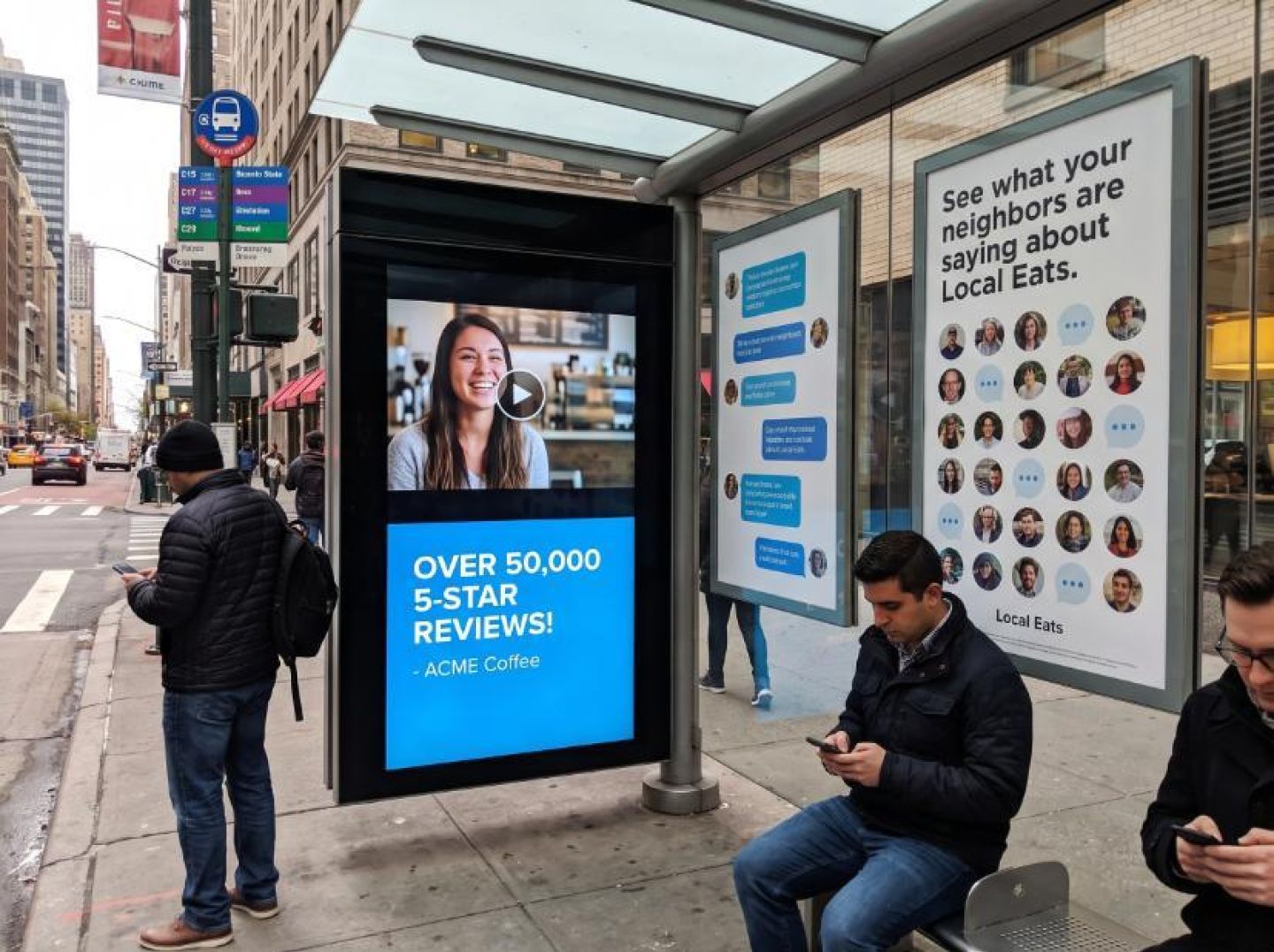
Open your spy tool, filter for TikTok, and you’ll see the same pattern on repeat: UGC-style clips that open with a testimonial hook, name-drop a result (“I lost 12 pounds in 30 days”), and only then reveal the product. When three or four competitors in the same category are all leading with “social proof first” creatives, that’s not a coincidence — it’s a live behavior pattern.
The mistake is stopping at “everyone’s doing it, so we should too.” That’s rearview-mirror thinking. As one analysis of AI-powered competitive intelligence put it, most teams are still reporting what happened last week instead of asking what those shifts might mean for their own positioning going forward, which is where the real advantage lives in a modern playbook for competitive intelligence.
A curiosity-driven marketer treats that TikTok wall of social-proof-first ads as a prompt, not a prescription. You’re not copying the creative; you’re interrogating the pattern:
Those questions are how you turn “spy” into “sense-making.” The tools collect the patterns; your job is to translate them into hypotheses about human behavior.
This is exactly where AI-powered tools are strongest and weakest at the same time. They’re unmatched at surfacing patterns — clustering similar creatives, flagging which hooks are most common, spotting language shifts long before a human team could manually scroll enough feeds. That mirrors how AI is reshaping search: machines are doing massive “query fan-out,” scanning far more content and variations than a person ever could before synthesizing an answer, as one model of AI-driven discovery and recommendation explains. Your TikTok spy dashboard is doing a version of that: fanning out across thousands of ads and concentrating what’s working into visible clusters.
But the leap from cluster to decision is still human. Tools can show you that “I tried X so you don’t have to” testimonials dominate your niche; they cannot tell you whether that means:
As one seasoned SEO strategist argued about reading search signals, data only turns into a strategic edge when a human with context interprets it and connects it to real business decisions, not just channel tactics, which is the essence of human-led competitive interpretation. Spy tools are no different. The creativity isn’t in finding the “top ads”; it’s in deciding what those ads actually imply about people, preferences, and risk.
So when you notice multiple competitors leaning hard on social proof first, you treat that as one input into a broader curiosity system:
This cross-channel triangulation is where curiosity scales. The TikTok pattern is no longer “everyone’s running social proof, so we should grab a similar UGC template.” It becomes: “In our category, people don’t believe claims without visible peers validating them, across every touchpoint.”
From there, you can graduate to the next step in your system: turning that observation into explicit, falsifiable test ideas across channels — not to chase what competitors are doing, but to learn faster than they are about what your specific audience actually responds to.
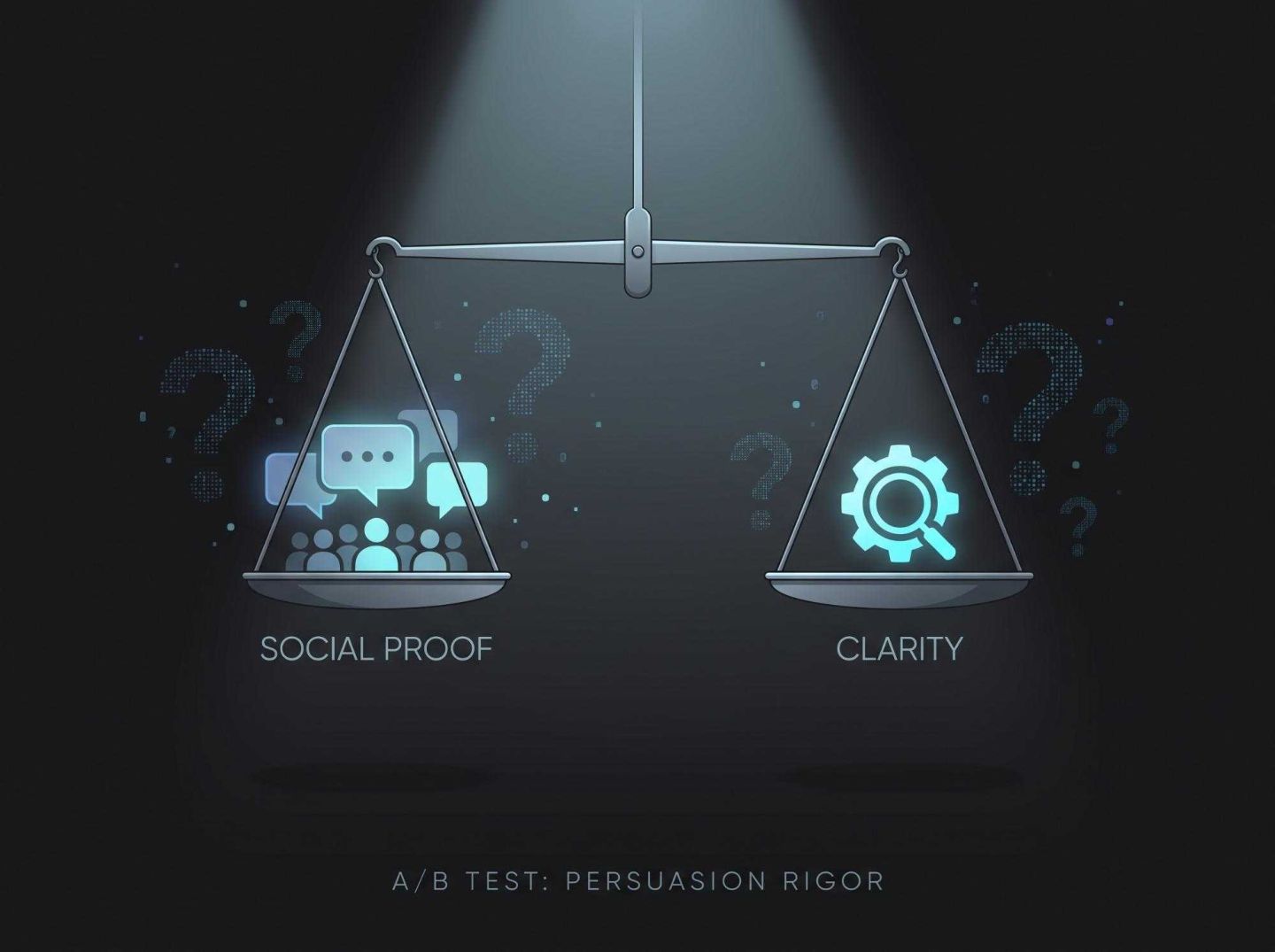
To turn “everyone on TikTok is leading with testimonials” into a real growth lever, you have to treat it as a question about persuasion, not a creative fad: are users in your niche actually more moved by social proof than by direct product claims?
That’s not a philosophical question. It’s a test design problem.
On TikTok, the tell that social proof might be doing the heavy lifting is the ubiquity of UGC testimonials and “day in the life” reviews in your spy tools: creators opening with “I lost 12 pounds in 30 days using this,” “this literally changed my skin,” or “I didn’t believe this would work until…,” with the brand reveal pushed later. But the pattern itself is just a hint. Your job is to treat those creatives as hypotheses about why people say yes.
The question becomes: “Given this audience, does an ad that leads with someone like them and a specific outcome outperform an ad that leads with a clear, concrete product promise?”
The simplest way to answer that is to clone the underlying structure of the winning ads you’re seeing, then strip the variable down to one thing: the opening persuasion frame.
Treat those frames like keywords in SEO: they’re strategic levers, not interchangeable lines of copy. Just as a human-led SEO program uses search behavior as an “intelligence layer” for every other channel, the way Neil Patel’s team describes reading intent from queries and folding it into broader marketing, you’re using creative patterns from spy tools as an intelligence layer for your TikTok testing.
Design your test like this:
2. Anchor both variants in real behavior language. Your spying work should have surfaced not just formats but phrases: “I didn’t think this would work for me,” “nothing else helped,” “I was so skeptical of…” Those are gold because they mirror live market language, the same way search queries surface intent before it shows up in other channels, as Neil Patel’s analysis of SEO data points out. Use those phrases in both variants so you aren’t accidentally testing “relatable language vs. corporate copy.”
3. Measure for decision, not vanity. In short-form video, watch time and thumb‑stop rate will usually be higher for social proof hooks because humans are wired to care about other people’s stories. But your real outcome is add‑to‑cart, lead submission, or qualified app install. Modern ad platforms and AI optimization tools already reallocate spend toward the best‑performing creatives across thousands of combinations of hooks, visuals, and CTAs, as MarTech’s coverage of AI‑driven testing explains. Your role is to constrain those tools to a clean test that isolates persuasion style.
4. Run the test cross‑channel when possible. If spy tools show similar testimonial‑heavy trends in Reels or Shorts, mirror the same social proof vs. claim‑first variants there. You’re not just learning “what works on TikTok”; you’re learning whether this audience segment, across platforms, responds more to “people like me” or “promise that fits my job to be done.”
5. Protect against false positives. TikTok’s algorithm can over‑reward anything that looks particularly native or sensational, regardless of downstream quality. Remember that AI agents and optimization systems will happily chase cheap engagement unless you set the right objective and guardrails, exactly the dynamic MarTech warns about when they describe agents auto‑shifting budget based on surface‑level performance. Make sure your conversion event is as close to revenue as the platform allows, and watch cohort quality.
What you’re really building here is a persuasion‑mode map for your niche.
If social proof–first ads consistently win on high‑intent outcomes—even when you move into colder audiences—that tells you TikTok users in this space are using other people’s outcomes as their primary filter for risk. You double down on testimonial structures, reviewer mashups, creator “duets,” and before‑and‑after compilations, and you task AI tools with churning variations within that lane, not inventing new lanes at random.
If direct product claims hold their own or win outright, especially on more expensive or technical offers, it suggests your niche is more solution‑driven and less swayed by anecdote. You still use social proof, but as supporting evidence, not the headline act.
Either way, you’ve turned “everyone seems to be using UGC testimonials” from a loose observation into a systematized, cross‑channel answer about how your specific audience prefers to be persuaded—and that answer will compound in value far beyond a single TikTok campaign.
Receive top converting landing pages in your inbox every week from us.
Must Read
Human curiosity becomes more powerful when paired with spy tools and AI-driven competitive intelligence. This guide shows how to turn competitor ad patterns into structured questions, testable hypotheses, and cross-channel experiments that uncover what audiences actually respond to.
Rachel Thompson
7 minSep 14, 2026
In-Depth
Emotional storytelling is becoming a powerful targeting signal as AI-driven platforms take over more audience selection and delivery. This guide shows performance marketers how to use spy data to reverse-engineer emotional arcs and build cross-channel sequences that move audiences from emotional hooks to solution moments, social proof, and conversion.
Liam O’Connor
7 minSep 13, 2026
Must Read
Performance marketers can stay aggressive without crossing ethical or compliance boundaries by turning competitive ad spying into a structured, defensible intelligence process. This guide covers AI-powered monitoring, ethical data practices, governance guardrails, and practical workflows for using competitor insights to drive smarter performance decisions.
Priya Kapoor
7 minSep 13, 2026