9 minSeptember 12, 2026

Our tools monitor millions of native, push, pop, and TikTok advertising campaigns.
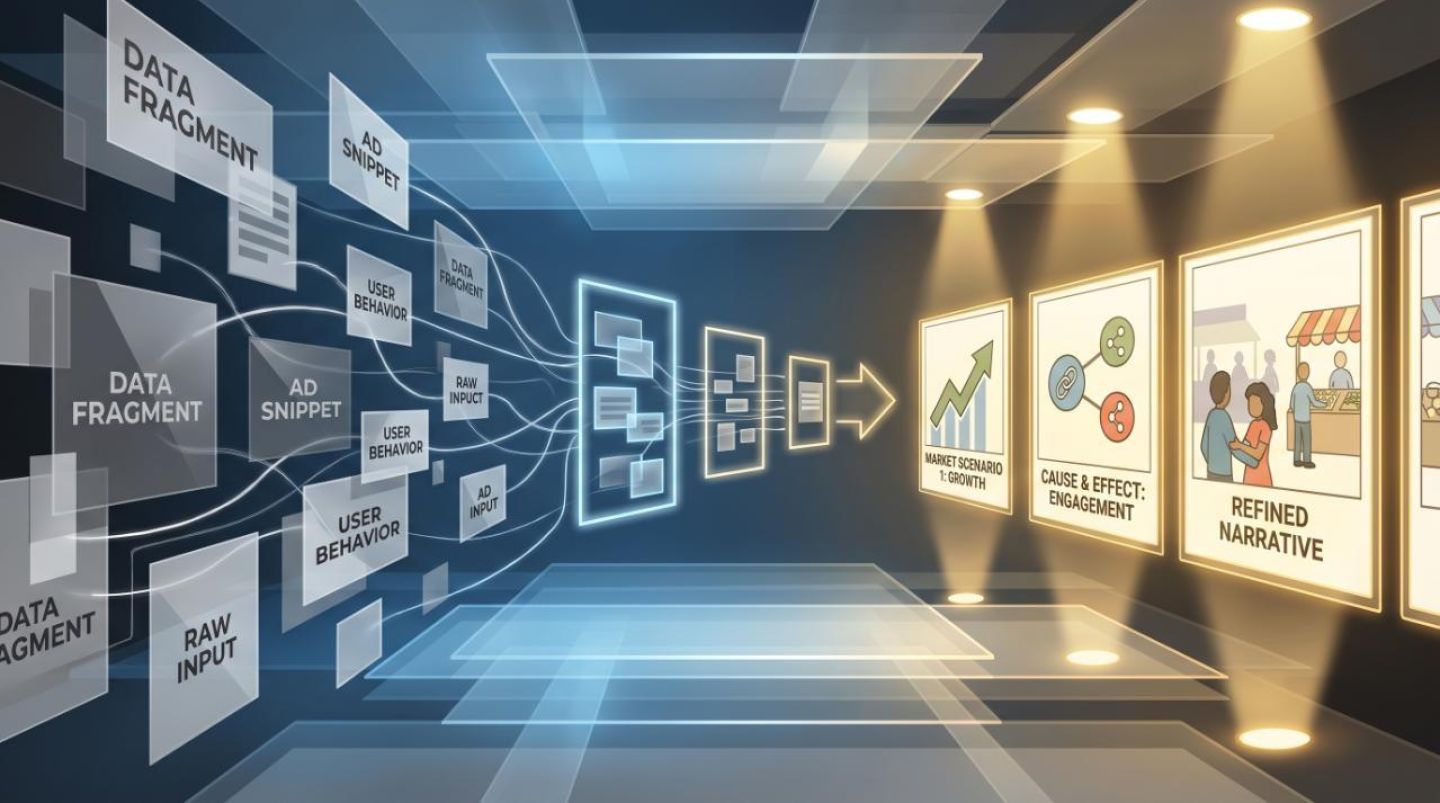
Get StartedMost “spy tool” workflows still treat competitive Anstrex.com/blog/who-are-top-advertisers-and-publishers-on-newsmax-feed-network" target="_blank" rel="noreferrer noopener">ad platforms like X‑ray goggles: you crack open Anstrex for a quick peek at “what’s working,” rip off a few creatives, and hope the algorithm smiles on you. But the agencies that win long-term retainers use that same data as a recurring, structured “market reality check” — more like the competitive intelligence frameworks described on the Semrush blog and the AI-driven monitoring systems outlined in MarTech’s playbook for competitive intelligence — and that’s how they stop being task-takers tweaking headlines and start becoming the strategic partners who keep clients aligned with what the market is actually doing.
You don’t have a “spy tool problem.” You have a workflow problem.
Most agencies pile on more platforms — Anstrex, AdSpy, Meta Ad Library scrapers, half a dozen dashboards — and still end up in the same place: a screenshot dump in a Google Drive and a few “let’s test something similar” notes. It feels busy, but it’s structurally identical to the “rearview mirror” competitive reporting that MarTech describes: lots of activity, very little forward-looking strategy.
If you want to turn ad intelligence into long-term retainers, you need to stop thinking in terms of tools and start thinking in terms of a repeatable competitive intelligence workflow that runs alongside every account — week in, week out.
The ad tech industry is already moving this way. As AdExchanger has argued, the real leverage for independent agencies isn’t “one more platform,” it’s using AI and data to connect research, planning, activation, optimization, and reporting into a single continuous process. The same logic applies to your competitive work: instead of jumping into a spy tool when performance dips, you design an always-on workflow that:
Think of competitive intelligence as its own mini lifecycle:
2. Interpretation: This is where most spy tool workflows collapse. A dashboard tells you “what happened.” A workflow forces you to answer “why it’s happening” and “what it means for our client.” That is a human job. The same way ranking data in SEO requires a strategist to interpret why a competitor is gaining ground, as Neil Patel explains in his piece on human‑led SEO, competitive ad data needs a human reading: Is this a margin play? A positioning shift? A seasonal test? A panic move? Your process should explicitly include a short, written interpretation pass — not just exporting charts.
3. Planning: Insights are useless unless they affect the next plan. In a real workflow, your competitive review is a standing input to media and creative planning: “What’s the category message right now? Where is everyone over‑invested or under‑invested? Which angles look saturated, and which are conspicuously missing?” When MarTech describes teams using AI to track messaging shifts and positioning gaps, this is where that work pays off: you translate patterns in the market into concrete briefs, constraints, and hypotheses, not just “let’s swipe the winning hooks.”
4. Activation & Testing: Instead of copying, you deliberately counter‑position and test. Your workflow should tie each competitive observation to a hypothesis (“Competitor A’s heavy CTV push in Germany suggests they’re chasing incremental reach; we’ll test more performance‑driven OTT creative in that market and protect our direct‑response lanes”). With conversational AI layered onto a solid data foundation, as AdExchanger notes in its analysis of AI‑powered ad intelligence, you can jump from “Who ramped spend?” to “What should we trial next?” in minutes instead of days.
5. Monitoring & Feedback: The loop closes when you review what changed — both in the market and in your own performance. Did your counter‑move slow a competitor’s visible tests? Did a new message start propagating across three rivals at once? This is where keeping humans in the loop becomes a compounding advantage. Just as long‑run SEO gains come from practitioners continually “reading the signals” of search behavior, as Neil Patel emphasizes, your competitive ad program compounds as your team builds institutional memory about how specific competitors behave over time.
Notice what’s missing from this workflow: any step that says “open spy tool, grab whatever looks sexy, and paste it into the client Slack.”
You absolutely should exploit AI to reduce the manual burden — using it to surface shifts you might not think to investigate and to compress the path from question to answer, the way AdExchanger’s coverage of workflow intelligence describes. But the sophistication lives in the structure: the cadence, the questions, the translation from observation to decision.
Once you treat competitive ad intelligence as an operating system instead of an emergency windshield repair, you stop selling clients “access to tools” and start selling them an ongoing, human‑led view of reality in their market. That’s the foundation of a long‑term partnership — and you can’t get it from X‑ray goggles alone.
Most agencies still treat competitive ad intel like an end-of-month autopsy: “Here’s what everyone else did. Here’s where you lost.” Useful? Sometimes. But it’s also why your decks feel like rearview mirrors instead of radar.
The shift you want is from one-off competitor “spying” to a recurring, forward-looking market reality check that actually changes the decisions you and your clients make.
Think of how the better advertisers run Google Ads competitor analysis. The analysis itself isn’t magical — it’s the cadence. Top performers don’t pull keyword gaps and ad examples once a year; they follow a system that defines what to monitor, how often to check it, and how findings feed back into campaign decisions. That repetition turns random screenshots into a living map of how the market is actually moving.
For agencies, the goal is similar: stop downloading what happened and start narrating where the market is headed next.
That starts with how you frame the work. A monthly “competitor ad review” invites nitpicking and reactive copying. A monthly “market reality check” says something very different to clients: “We’re going to pressure-test your assumptions against what the market is showing us right now — and adjust before it’s too late.”
Structurally, that reality check should lean on three types of signals:
3. Cross-channel context, not channel silos. The next wave of marketing intelligence is less about adding tools and more about connecting workflows. As an analysis in AdExchanger put it, AI and integrated platforms are most valuable when they unify research, planning, activation, optimization, and reporting into a continuous process. Your reality check should reflect that same principle: competitor ads in Meta, YouTube, search, and programmatic aren’t separate stories — they’re one narrative about where budgets and bets are shifting.
Once you have the structure, the power move is how you deliver it.
Instead of dumping a deck of screenshots, walk clients through three lenses:
Behind the scenes, you should ruthlessly automate the grunt work. The kind of workflow intelligence described in AdExchanger’s coverage of Elevate — consolidating inputs, syncing data across platforms, and using AI to summarize pattern shifts — is exactly what frees your team to spend 80% of the meeting on interpretation and decisions, not data collection.
Because that’s the real difference between rearview reports and reality checks: in both cases you’re using the same “spy tools.” But in one, the tool is the star. In the other, it’s just the raw material for what clients actually pay for — a strategist who can look at the chaos of the competitive landscape and say, with a straight face, “Here’s what this really means, and here’s what we’re going to do about it before it shows up in your numbers.”
If you want to stop treating competitive tools like X‑ray goggles and start using them as infrastructure, you need something more durable than “log in when you remember and screenshot what looks interesting.”
You need an always‑on layer — and AI agents are how you build it.
Think of this as shifting from “analyst as web surfer” to “analyst as air-traffic controller.” The AI does the flying: monitoring, collecting, summarizing. You decide what matters and what to do next.
Most teams start with tools. That’s backwards.
First define the competitive intelligence layer as a system:
This mirrors the “competitor intelligence framework” that high-performing advertisers use in Google Ads: they define what to monitor, how often, and how findings feed into campaigns before they worry about surface-level tactics, as the Semrush guide to Google Ads competitor analysis puts it.
AI agents sit inside that framework. They don’t replace it.
If you drop agents into your stack without guardrails, you don’t get intelligence — you get noise.
Before anything is automated, build a structured, shared source of truth:
When teams implemented dedicated AI agents on top of a unified source of truth, they saw tangible productivity gains within weeks, because agents weren’t hallucinating generic advice — they were working from your context, as one MarTech breakdown of AI marketing agents emphasizes.
Treat this corpus as living infrastructure: pipe in call transcripts, objection patterns, win/loss notes, and market changes so the intelligence layer stays aligned with reality, not last quarter’s assumptions.
The right question isn’t “What can this agent monitor?” but “What decisions should be better, faster, or more consistent because this agent exists?”
For competitive ad intelligence, three agents tend to do most of the heavy lifting:
It behaves like the competitive agent described in MarTech’s AI workflows piece: on a weekly schedule, it answers three questions for each client:
This is how you move from “we look at Auction Insights when performance drops” to a continuous radar that quietly flags meaningful shifts before your client’s CFO does.
2. Synthesis Agent – “What’s the story across channels?”
Monitoring alone only tells you that competitors moved. The synthesis agent tells you what that movement means.
It ingests:
Then it produces a narrative: where competitors are leaning in, where they’re pulling back, and what strategic gaps are opening up. This mirrors the idea that ranking and performance data need human interpretation to explain why competitors are gaining ground, as Neil Patel’s discussion of AI’s limits in SEO points out — except here, you give the agent just enough structure to propose hypotheses, while a strategist still decides which ones actually align with your client’s goals and risk tolerance.
3. Action Agent – “What should we test next?”
The last agent is tightly scoped around execution. Its job is not to decide strategy; it is to translate strategy into options:
Every suggestion still hits a human filter. You’re using AI to widen the option set, not to choose the path.
The intelligence layer becomes valuable to clients only when it consistently shows up in their decision cycles.
Instead of “we’ll add a competitive slide at the end of the QBR,” hardwire your agents into:
This is how competitive intelligence stops being an ad hoc “spy report” and becomes the quiet operating system under every recommendation you make. Over time, clients stop asking “What did competitors do this month?” and start asking “What are you seeing in the market that we’re not thinking about yet?” — which is exactly the question a long-term partner is supposed to answer.
Most “spy” decks die at the exact same moment: the client nods, says “interesting,” and then goes right back to the plan they already had.
The problem isn’t the data. It’s the narrative.
Competitive intelligence only changes behavior when you translate raw signals into a story about “what’s really happening in this market” and “what we’re going to do next.” Your job is less “Sherlock with screenshots” and more showrunner: turning dozens of tiny clues into a plot your client can’t ignore.
Here’s how to build that kind of narrative.
If your deck opens with “Brand X launched three new creatives,” you’ve already lost. Start with the thesis: the one-sentence description of how the ground is shifting.
Examples:
You can ground these theses in the kind of auction‑level signals that platforms like Polaris AI surface: falling CPMs for one rival, budget concentration in a specific placement for another, a sudden shift into a new geography. The deck should open by naming the pattern, not the screenshots.
Raw observation:
Narrative:
That is exactly the kind of leap from “what happened” to “what it means” that competitive platforms are beginning to automate. As AdExchanger explains, the value isn’t just knowing who spends more; it’s understanding why they’re winning before everyone else notices. Build that interpretive step into every slide: observation → interpretation → implication for the client.
A simple rule: never show a chart without these three lines beneath it:
As the major platforms push you toward broad, AI-led targeting, creative has quietly become one of the strongest targeting signals in the system. When Google’s Performance Max, Meta’s Advantage+ and TikTok’s recommendation engine are all doing the audience selection, your headlines, visuals and offers are effectively how the algorithm decides who this ad is for, as.
That should reshape your spy narrative:
Now the client sees a strategic move, not a spend fluctuation.
The fastest way to make intelligence ignorable is to treat it as an isolated “interesting” report, disconnected from planning, activation and reporting. The second you position this as “extra,” it becomes optional.
Instead, frame every insight as a workflow improvement: a way to change how the client runs campaigns, not just what they know. As one workflow‑focused perspective on the industry points out, the next generation of marketing intelligence platforms is about connecting research, planning, activation, optimization and reporting into a single, unified loop so agencies can make faster, more informed decisions without hopping across siloed tools, especially independents with limited resources (AdExchanger describes this shift).
In your narrative, that means:
Every competitive slide should finish with: “Here’s exactly where this lives in your workflow next month.”
AI agents can monitor ad libraries, landing pages and pricing updates and ship you a weekly digest of “what changed, why it matters, and a recommended response,” exactly like the competitive intelligence agents MarTech profiles. But that “recommended response” is a starting point, not the final call.
You still need to own three things:
When you name those decisions out loud in your deck — “We looked at five possible plays and are recommending these two because…” — clients stop seeing spy data as trivia and start seeing it as the backbone of your judgment.
The final shift from “X‑ray goggles” to “market radar” is cadence. Don’t sell spy work as a big quarterly reveal. Sell it as a standing operating rhythm:
Over time, the client stops thinking, “They showed us interesting competitor stuff,” and starts thinking, “They keep us plugged into reality — and they always tell us what to do next.”
That’s the difference between spy toys and strategic narratives: one gets you screenshots; the other gets you long‑term retainers.
If Section 4 is about telling a better story, this section is about building the ritual that makes that story inevitable.
Competitive ad intel turns into long-term retainers when it stops being “a cool slide every quarter” and becomes the operating system for how you and the client work together. That requires clear cadences, shared rituals, and tangible deliverables that rewire expectations on both sides.
Most agencies already have some form of weekly performance check-in. The shift is to make that meeting about the market, not just the account.
Use your AI layer to run a lightweight, automated sweep of competitor movements before the call: new search ads, fresh social creative, landing page changes, and visible spend swings. This mirrors the “check for shifts in competitor keyword positions and new entrants” and “monitor competitor spend changes” pattern that the Semrush guide to Google Ads competitor analysis recommends on a weekly cadence, but extended across your full media mix.
Your weekly deliverable: a single-page “Market Pulse” that always fits on one screen and answers three questions:
This could be as simple as a three-row table in your notes doc, but it reframes the relationship. You’re no longer the team reporting what Google or Meta did to the account; you’re the team explaining what the market did and how you’re counter‑programming it.
Once a month, zoom out. Clients don’t need another recap; they need to see how intelligence became revenue.
Borrow from the “competitor intelligence framework” structure outlined in the Semrush Google Ads analysis workflow: what you monitored, how often, and how it fed back into decisions. Turn that into a standing “Edge Review” ritual with a tight, repeatable agenda:
This is where human judgment is non‑negotiable. Tools can show you every change in copy, bid, or placement, but deciding which moves matter, which align with margin and positioning, and which to ignore is a strategist’s job. As the discussion of “prioritization” and “competitive interpretation” in Neil Patel’s piece on human-led SEO makes clear, AI can surface options; it cannot decide which ones match the brand’s 12‑month horizon.
Your monthly deliverable: a short deck or doc that opens with “This is how we created or protected an edge this month,” backed by 2–3 specific stories where competitive intel changed a campaign decision and outcome.
Traditional QBRs are linear: performance recap → channel plans → budget request. A competitive‑intelligence‑driven relationship needs something more like a strategy room.
Once a quarter, bring your core team and the client’s core team into a session built around live intel:
Your quarterly deliverable: a “Strategy Room Dossier” that captures the decisions made and the competitive hypotheses underpinning them. This becomes a living artifact that future tests and optimizations reference.
Underneath these cadences sits the workflow architecture. As coverage of workflow intelligence in advertising has argued, the real unlock is less “more tools” and more the way you connect research, planning, activation, optimization, and reporting into a unified loop. When agencies use AI to stitch together these stages, as platforms like Elevate demonstrate in AdExchanger’s examination of workflow-based marketing intelligence, they cut manual effort dramatically and accelerate reporting.
Expose just enough of that loop to the client:
This transparency is the quiet rewiring of the relationship. Instead of asking, “What are you doing for us next quarter?” clients start asking, “What is the market telling us, and how do we want to respond together?”
At that point, your “spy tools” are no longer a parlor trick. They are the backbone of a shared decision system, one that makes it very hard for a competitor — or another agency — to sell the illusion of X‑ray goggles when your client already has a control tower.
Receive top converting landing pages in your inbox every week from us.
How-To
Spy tools are only valuable when they become part of a repeatable competitive intelligence workflow. This guide shows agencies how to turn ad intelligence into market reality checks, AI-powered monitoring, strategic narratives, and recurring client rituals that strengthen long-term partnerships.
Marcus Chen
7 minSep 12, 2026
Featured
Emotional storytelling is becoming a powerful performance lever as AI-driven advertising makes targeting increasingly dependent on creative signals. This guide introduces the EMO framework—Hook, Setup, Peak, Payoff, and Brand Role—and shows how marketers can use ad intelligence to find emotional winners and systematically test hooks, emotional registers, and endings.
David Kim
7 minSep 11, 2026
Quick Read
Query fan-out is changing how buyers research, compare, and discover products through AI search. Learn how to use Anstrex to reverse-engineer the winning angles, hooks, and funnels shaped by these hidden intent patterns and align your performance strategy with them.
Samantha Reed
7 minSep 9, 2026