7 minSeptember 23, 2026

Our tools monitor millions of native, push, pop, and TikTok advertising campaigns.
Get StartedOut-of-home has always punched above its weight in brand storytelling. What’s changed—quietly but decisively—is that the same canvases once bought on gut feel and GRPs are now being wired into the same performance infrastructure that powers search, social, and programmatic display.
Digital out-of-home, or DOOH, is the bridge. By layering geofencing, tracking, retargeting, attribution, and real‑time triggers on top of physical screens, DOOH turns a one‑to‑many medium into something that behaves a lot more like programmatic display in the wild, as the team at Clearcode explains. Campaigns adjust creative based on weather, time of day, or local audience mix. They’re bought in the same DSPs as mobile and CTV. And critically, they throw off data—exposure, movement, and outcome signals—that can be stitched back into full‑funnel performance reporting instead of sitting in a silo.
That data spine is what’s pulling OOH into parity with the channels growth marketers already live in. Platforms such as AdQuick describe ingesting consumer, demographic, and behavioral inputs and then using machine learning to evaluate trillions of potential unit combinations. Instead of “we like this board on the highway,” planners can optimize toward “this cluster of units is most likely to drive incremental app installs among lapsed users in these ZIP codes.” All of this is delivered in real time, bringing OOH decisioning and reporting into line with modern performance benchmarks rather than quarterly post‑buy decks.
At the same time, the buy side is getting more automated and more agentic. In the Lot of Happiness campaign, Broadsign and Draft Digital deployed fully agent‑based systems on both buy and sell sides to coordinate planning, optimization, and execution across a massive pool of global inventory, from video‑enabled street furniture to in‑store and cinema screens, with humans providing oversight and guardrails, as OOH Today reported. Broadsign’s CTO described agentic AI layered over static and digital supply, enriched with screen‑level audience indexes, dynamic creative, and guaranteed buying, as the foundation for a “paradigm shift” in how the business operates. That’s performance language, not poster‑shop language: indexes, guarantees, optimization loops.
What’s really converging here is not just technology but expectations. As marketers normalize on data‑driven investment across every line item, they expect precision, transparency, and cross‑channel comparability from OOH, too. Yet, as Jawad Hassan points out in his analysis of OOH measurement, legacy audience models and fragmented methodologies have lagged behind what the medium can now technically deliver, creating a gap between capability and how performance is actually understood, as detailed in his piece on rethinking OOH measurement. That gap is no longer a nerdy methodological issue; it’s a strategic bottleneck on budget.
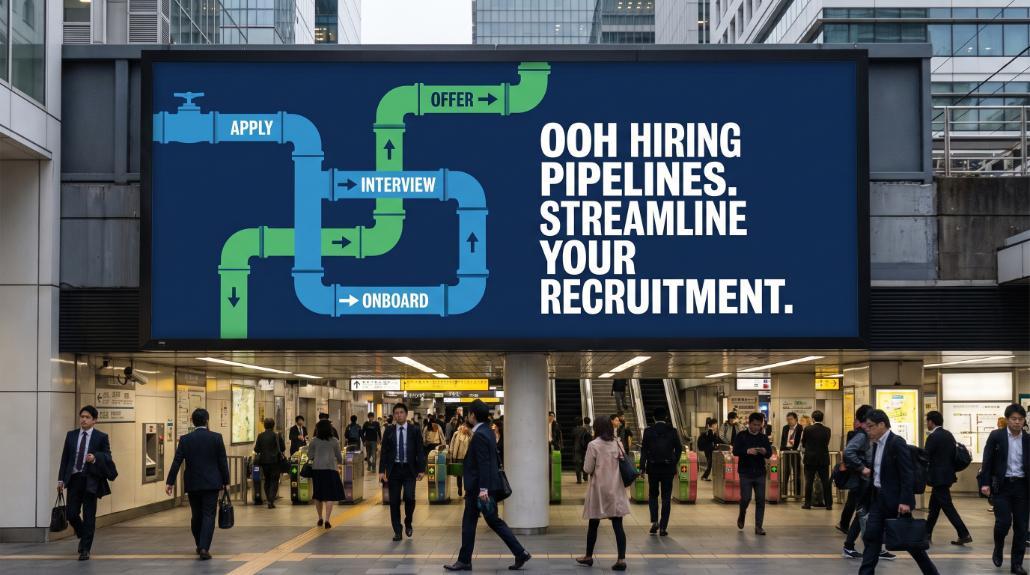
Meanwhile, the pipes are already connected. DOOH impressions can be activated from the same DSPs as display and CTV, so exposed audiences flow straight into retargeting pools and multi‑touch attribution models, just as Clearcode notes. Add in the well‑documented “halo effect” OOH has on adjacent digital channels, and the case for treating it as a strategic performance lever—not a decorative awareness line—is obvious, as.
The result is a subtle but profound convergence: OOH is starting to behave, get bought, and get judged like every other performance channel in the stack. Once your billboards are being optimized by the same AI that tunes your paid search, and held to the same lift and ROI standards as your social spend, it’s no longer an outlier. It’s just another high‑impact, data‑rich surface in a performance ecosystem—which is exactly where ad spies and performance‑minded operators are beginning to focus their attention.
Physical attention is getting more valuable at the exact moment digital attention is getting more mediated. As AI agents increasingly filter inboxes, feeds, and recommendations, the unfiltered nature of a billboard, transit shelter, or place‑based screen becomes a strategic advantage. As one Cannes Lions case study notes, out of home remains one of the only channels that reaches people directly, “without algorithmic filtering,” turning real‑world presence into cultural infrastructure that digital then amplifies later on in the journey, as shown in the.
But physical presence alone is no longer enough. To win modern budgets, OOH has to plug into the same intelligence layer that powers performance media. That’s where ad spy tools come in. They sit between the analog world of eyeballs and the digital world of signals, giving operators and agencies a live view of who is buying what, where, and how aggressively—and then turning that intelligence into hiring and org‑design decisions.
The groundwork is already there. Digital out‑of‑home is, as one overview puts it, essentially traditional OOH “powered up with AdTech”—geofencing, tracking, attribution, and programmatic execution baked into physical inventory, according to this definition of DOOH. Screens that once behaved like static posters now respond to weather, time of day, and audience density. Buying that once required a string of insertion orders now happens inside DSPs where OOH sits alongside display, mobile, and CTV. In other words: the pipes are already digital. Spy tools simply make those pipes observable.
At the same time, the industry is finally treating OOH as a lever for digital action, not a siloed awareness play. Research from OAAA and Winterberry found that 98% of surveyed marketers now use OOH inside purchase‑driving commerce initiatives, with cost‑effective reach and cross‑channel consistency among its primary roles, as reported in a recent OOH Today analysis of the physical–digital link. Place‑based formats in offices, retail, and workplaces are being selected precisely because they nudge people toward apps, sites, and marketplaces where conversion happens. That’s not a branding conversation; that’s a performance conversation.
Once OOH is judged on performance, competitive intelligence becomes mandatory. If you’re accountable for ROAS, you can’t treat competitor OOH as mysterious wallpaper. You need to see the actual units they buy, the programmatic tactics they lean on, the timing and creative they repeat. Spy platforms give you that line of sight. They can reveal, for example, that a rival DTC brand has silently shifted 40% of its upper‑funnel budget into transit‑screen DOOH in a handful of cities, or that a quick‑service chain is pulsing creative around tentpole events instead of maintaining always‑on coverage.
That’s not just fodder for your next media plan; it’s input for your hiring plan. If intelligence shows your category is leaning heavily into automated guaranteed deals for high‑demand periods and leaving open RTB for flexible, audience‑driven campaigns—as many DOOH buyers now do, according to this technical breakdown of DOOH trading—you can’t staff your team like it’s still 2014. You need people who understand bid strategies, log‑level data, and cross‑channel incrementality, not only contract negotiation and rate cards.
That same logic is already reshaping the tech stack. Platforms like AdQuick have positioned themselves as a “universal adapter” that pulls in location, demographic, and behavioral inputs, then uses machine learning to evaluate “trillions of possible combinations of OOH units,” bringing OOH into parity with online performance channels, as outlined in their description of AI‑powered OOH optimization. Once you can plan, buy, and measure OOH with that level of precision, the teams running those tools start to look a lot more like programmatic traders and marketing scientists than traditional outdoor buyers.
Spy tools are the missing layer between this new infrastructure and the people who operate it. They reveal where competitors are already behaving like performance marketers in OOH, where they’re still stuck in legacy patterns, and where there are open lanes in markets, formats, or tactics. For operators, that intelligence tells you which capabilities to build in‑house versus via partners. For agencies, it informs the roles you post for—data‑savvy planners, DOOH engineers, attribution analysts—because you can now see exactly how sophisticated the rest of the field already is.
Physical attention has become the scarcity. Digital intelligence is how you compete for it efficiently. Spy tools are what connect the two—and, quietly, they’re doing as much to reshape who gets hired in OOH as any new screen or format.
Out-of-home is no longer a static poster on the side of the road; it’s a software-mediated system that just happens to render in the physical world. The uncomfortable truth for most organizations is that the tech stack has sprinted ahead, while the talent stack is still lacing up its shoes.
On the supply side, platforms like Broadsign are wiring agentic AI directly into the pipes of OOH. In the Lot of Happiness campaign, Broadsign’s buy‑side and sell‑side agents collaborated to plan, negotiate, and execute an entire campaign end‑to‑end, with humans acting more as supervisors than operators, as described in their agentic AI‑powered OOH case study. Their CTO is explicit that layering AI on top of global static and digital inventory, with screen‑level audience indexes, dynamic creative, and guaranteed buying, is intended to trigger a “paradigm shift.” That’s not incremental automation; it’s a redefinition of what OOH operations even are.
On the demand side, tools like AdQuick are turning OOH into a full‑blown performance channel. Their platform analyzes trillions of combinations of units using machine learning to decide where each dollar should go, bringing OOH into “parity with modern performance channels,” as their own overview of the platform puts it. In practice, that means OOH buying now looks and feels like programmatic display: automated, data‑driven, constantly optimizing. OOH is not a quirky outlier in the media plan anymore; it is another node in the same decision engine that allocates budget across search, social, CTV, and display.
And at the infrastructure level, DOOH has quietly adopted a lot of the same AdTech plumbing that powers web and mobile. As one clear primer on the space notes, DOOH today layers geofencing, retargeting, attribution, and real‑time optimization on top of classic placements, while remaining immune to ad blockers and unskippable in the wild, as explained in this introduction to digital out‑of‑home. The same piece points out that supply is outpacing demand in many markets, creating under‑monetized inventory that sophisticated buyers can lock in programmatically, especially around tentpole events. Structurally, DOOH now behaves like a modern, data‑rich channel. Culturally, many OOH teams still treat it like posters and phone calls.
This is where the gap shows up most painfully: measurement and decision‑making. As one media strategist argues in a recent analysis of OOH metrics, the medium has become “dynamic and responsive,” closer than ever to digital, but its measurement remains fragmented and reliant on legacy models and post‑campaign PDFs, creating a “strategic constraint on growth,” as outlined in this discussion of rethinking OOH measurement. You now have screen‑level impression data, mobile location signals, and audience indexes flowing into platforms, but relatively few people in OOH roles who can interrogate those datasets with the same rigor a performance marketer brings to a paid search dashboard.
Meanwhile, digital‑native marketers are already being trained to treat DOOH as just another surface in their omnichannel systems. Guides from programmatic‑first vendors urge brands to activate DOOH alongside display, mobile, and CTV in the same DSP so that exposed audiences can be retargeted, and attribution models can account for OOH’s contribution across the entire funnel, as described in this breakdown of DOOH targeting and attribution. In theory, that’s a dream for integrated planning. In practice, it exposes a competence gap: most traditional OOH buyers were never asked to think in terms of identity graphs, incrementality tests, or multi‑touch attribution. Now the tools assume they can.
The first fully agentic campaigns underscore how rapidly the operating model is evolving. In the Lot of Happiness example, agency teams used agentic workflows to orchestrate multichannel experiences and compress coordination across publishers, leaning on first‑party performance data to guide decisions, as the campaign recap on agentic OOH execution makes clear. That is a fundamentally different job from negotiating a quarterly billboard package. You’re not just buying “locations”; you’re managing an AI‑assisted portfolio that reacts to shifting audience patterns, creative variants, and real‑time performance signals.
In other words, OOH’s physical footprint hasn’t changed much, but the interface to that footprint has. The industry is operating billboards with the expectations and instrumentation of modern AdTech, yet still staffing them like analog media. The organizations that close that gap fastest—by hiring and training people who can speak both “steel and screens” and “APIs and agents”—will be the ones that turn this new stack into a durable advantage rather than an underused toy.
Ask most OOH hiring managers what they’re looking for and you’ll still hear answers in the language of formats: “We need a billboard AE,” “We’re adding a programmatic DOOH trader,” “We’re short on ops for street furniture.” The org chart is organized around faces of metal and glass, not around how buyers actually move through a decision journey.
That made sense when the medium itself was format‑bound. It doesn’t make sense now.
Digital out‑of‑home is explicitly defined as traditional OOH “powered up with AdTech” — geofencing, retargeting, personalization, and attribution layered onto physical screens, as one DOOH overview explains. Once you introduce targeting, real‑time triggers, and frequency controls, you’re not just buying billboards; you’re operating a funnel that happens to render in physical space. Yet most hiring strategies are still built as if the only job is putting pixels on a panel.
The gap shows up most painfully in measurement and analytics talent. OOH is now capable of behaving like a modern, responsive channel, but its measurement infrastructure “has not kept pace,” relying on fragmented methodologies and inconsistent metrics across markets and formats, as one analysis of OOH measurement fragmentation points out. Instead of hiring people who can stitch OOH exposure data into a unified, cross‑channel attribution model, companies keep hiring format specialists who can recite DEC, TAB, and CPM by unit type.
The result: OOH remains a specialty buy in the eyes of performance‑oriented marketers, even as platforms prove it doesn’t have to be. When a planning and buying layer can analyze “trillions of possible combinations of OOH units” and bring delivery and reporting into real‑time parity with digital channels, as one platform case study describes, the real hiring need isn’t another “billboard salesperson.” It’s people who can think in experiments, cohorts, incrementality, and halo effects — the same skills you’d expect from your paid social or CTV lead.
There’s a second missed opportunity: OOH hiring still treats the medium as a front‑of‑funnel awareness blast, not as connective tissue across the whole customer journey. Yet DOOH can be planned and bought inside the same DSPs that power display, mobile, and CTV, so that OOH‑exposed audiences populate retargeting pools and are counted across the journey rather than in a silo, as one DOOH planning guide notes. To capitalize on that, you need talent that understands funnel design — impression sequencing, creative rotation by stage, and how OOH touchpoints lift downstream conversion — not just how to negotiate a flight of digital posters near a stadium.
Meanwhile, the very definition of “OOH inventory” is expanding in ways the old hiring playbook barely acknowledges. As one retail media analysis argues, a store is increasingly a “media property” — aisles become avenues, checkout lanes become Main Street, and digital in‑store screens begin to look a lot like traditional OOH placements. If you’re still recruiting around classic roadside and transit formats, you’re not building the capabilities to integrate retail media networks, place‑based video, and contextual digital inventory into a coherent funnel that follows a customer from street to shelf.
All of this converges in one uncomfortable conclusion: the way most OOH organizations define roles almost guarantees they’ll miss the channel’s full‑funnel potential. They over‑index on “what hangs where” and under‑index on “who moves how” — which audiences they reach, in what order, with which messages, and how that sequence influences behavior across channels.
The companies that will quietly pull ahead won’t necessarily be the ones with more inventory; they’ll be the ones that stop hiring for formats and start hiring for funnels. They will look for strategists who can architect journeys that include OOH, analysts who can prove its contribution in a unified model, and operators who can treat a street‑level screen the way a performance marketer treats a high‑intent keyword. Everything else is just metal and glass.
If you’ve been living in ad spy tools, you’re already closer to an OOH job than most “OOH people” realize. You’ve been training on the same raw materials the channel is finally being rebuilt on: competitive intelligence, funnel logic, and performance feedback loops.
The challenge is that OOH hiring managers aren’t going to connect those dots for you. You have to package your skills so they can literally see their future org chart in your portfolio
Start with what OOH actually sells now: outcome‑driven, data‑linked reach. When marketers say they’re using OOH to drive “purchase‑driven commerce initiatives,” they’re talking about stitching physical touchpoints to digital actions across the funnel, something recent research highlighted when nearly all surveyed marketers said OOH is now part of their commerce strategy and most plan to increase investment over the next two years, with cost‑effective reach and consistent cross‑channel messaging as core value drivers, as industry coverage has emphasized. That is performance language. It’s also exactly the world affiliate media buyers and spy‑tool power users already live in.
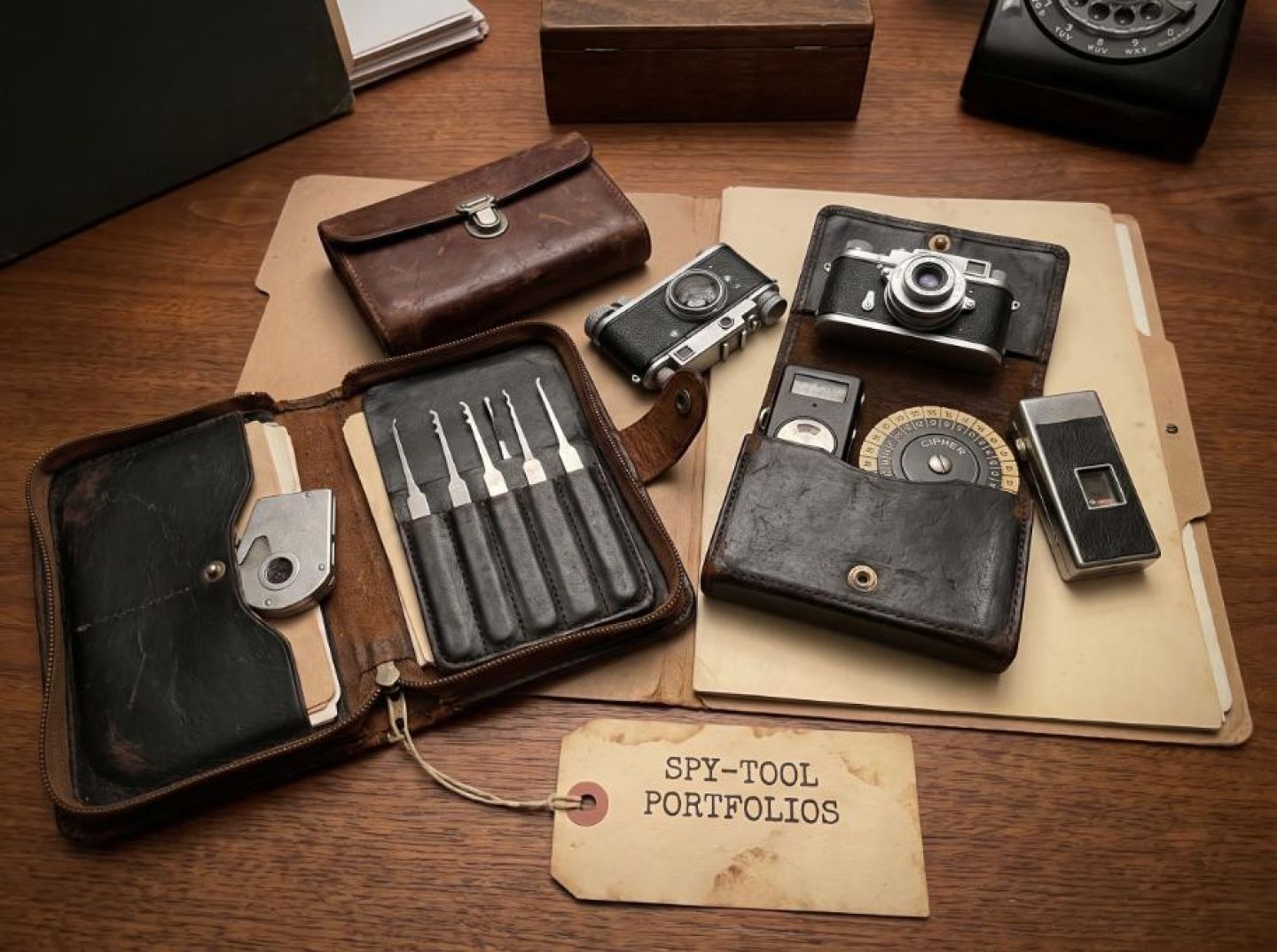
So build a portfolio that speaks performance first, format last. Instead of a generic “media planning” section, create a “Spy‑Tool Funnels for the Physical World” chapter. For each case study:
This is the bridge most OOH teams are still struggling to build. They know their wallboard, office screen, or retail poster is a “physical touchpoint” that triggers online investigation, as recent analysis of place‑based OOH has underscored. What they don’t have is a repeatable method for reading competitive signals and turning them into full‑funnel physical‑to‑digital journeys. That’s what your spy‑tool portfolio should dramatize.
Next, show you can think in the language of the pipes. Digital OOH is no longer just printed posters with backlighting; it is OOH “powered up with AdTech,” complete with programmatic pipes, targeting, and measurement, as one technical overview of DOOH’s evolution into a machine‑traded channel explains. Meanwhile, convergence between DSPs and SSPs means the “OOH button” on a planner’s screen will soon behave just like the CTV or display button, using the same interoperability protocols for AI‑driven buying, as programmatic commentators have noted.
If you’ve ever optimized a campaign inside a walled‑garden ad manager, you already understand the dynamics these OOH platforms are racing toward: unified buying
Then, lean into the agentic AI moment. When media owners and platforms talk about “agentic advertising” and “buyer and seller agents rapidly coordinating complex tasks” for full‑funnel DOOH campaigns, as seen in recent coverage of Broadsign‑powered initiatives, they’re describing something affiliates already do manually with spy tools: sense, simulate, and scale. Your portfolio should frame you as the human who understands how those agents ought to behave.
Concretely, that means case studies where you:
Finally, package everything as a “hireable product.” Don’t just send a CV. Send a short deck titled “Spy‑Tool‑Native OOH Growth Partner.” Each page should answer a hiring manager’s implicit questions:
If the portfolio proves those three things—rooted in the same programmatic and DOOH transformation the trade press is already chronicling—you’re no longer “the affiliate person asking for an OOH job.” You’re the missing operator who can translate ad‑spy signal into agent‑ready OOH strategy. That is the role every serious OOH shop will quietly be hiring for next.
The problem with most OOH job descriptions is simple: they’re still written for a metal-and-glass world, while the buying reality has quietly become API calls, incrementality models, and journey orchestration.
If ad spies and performance buyers are going to move into these roles, the JD has to stop asking, “Have you sold roadside posters?” and start asking, “Can you think like a cross‑channel performance system that happens to include physical screens?”
Here’s what a data‑led OOH recruitment brief should actually be hiring for.
First, JDs need to foreground fluency in multi‑touch, not fluency in formats. Brands are folding OOH into purchase‑driving commerce plans at scale; one study found that 98% of surveyed marketers now use OOH in purchase‑driven initiatives, with cost‑effective reach and consistent cross‑channel messaging as core reasons for the spend increase over the next two years, as one analysis of the physical world’s role in driving digital action points out. A hiring manager should be screening for people who can:
That’s exactly what ad‑spy natives already do when they reverse‑engineer competitors’ paths from TikTok ad to landing page to retargeting. A modern OOH JD should call that out directly: experience dissecting other brands’ funnels and translating creative + placement patterns into testable hypotheses.
Second, job specs should treat OOH as AdTech, not as “outdoor.” Digital out‑of‑home is now effectively OOH with a stack attached: geofencing, audience triggers, dynamic creative, and programmatic pipes that mirror online display, as a primer on DOOH’s AdTech backbone makes clear. Instead of requiring “5+ years with static posters,” JDs should emphasize:
Spy‑tool power users are already pattern‑matching these rules when they watch how big advertisers rotate creative by calendar, event, or geo.
Third, JDs should explicitly recruit for measurement skepticism and attribution literacy. OOH is racing toward a more dynamic, AI‑assisted future, but its measurement stack is fragmented and lagging. Analysts have described how OOH still leans on legacy exposure models and inconsistent metrics that struggle to integrate with digital planning tools, creating a gap between what the medium can do and how it’s evaluated, as a critique of OOH’s fragmented measurement systems notes. The right hire is someone who:
That last piece is only becoming more critical. As programmatic OOH converges with broader DSP/SSP infrastructure, the same entity may control inventory, auctions, and reporting. Analysts have already warned that when the platform running the auction also owns the billboard and the SSP, it creates asymmetric intelligence and very little independent validation, as a discussion of DSP/SSP convergence in a phone‑call‑driven OOH industry argues. A future‑proof JD should explicitly value candidates who know how to interrogate those numbers and push for third‑party verification, log‑level audits, or independent experimentation.
Finally, data‑led OOH hiring should privilege “system thinking under constraints” over “Rolodex thinking.” The candidate who has been quietly running guerrilla tests with cheap Facebook traffic and an ad spy subscription already knows how to:
Instead of asking for “deep relationships with local plant owners,” JDs should be asking for portfolios: deconstructed funnels, annotated screenshots of competitor campaigns, or case write‑ups on how a physical touchpoint was used to force a digital outcome.
In other words, if OOH is becoming another programmable, data‑driven node in the media graph, then the JD needs to stop hiring for who can drive around a market and start hiring for who can read that graph—and rewrite it.
Receive top converting landing pages in your inbox every week from us.
Quick Read
Ad-spy tools and performance marketing are helping reshape OOH from a traditional media channel into a data-driven, programmable performance environment. This guide explores how competitive intelligence can influence OOH hiring, talent requirements, funnel strategy, measurement, and agentic AI workflows.
Dan Smith
7 minSep 23, 2026
In-Depth
OOH is getting better at measuring impressions, but many classifieds and job descriptions still stop short of owning the post-click experience. This guide explains how landing pages, attribution, retail media, and performance marketing can help OOH evolve from selling physical inventory to owning the full funnel.
Rachel Thompson
7 minSep 23, 2026
How-To
Learn how to replicate the strategic value of big-budget sports tie-ins without relying on celebrity deals or massive media spend. This guide shows how to use Anstrex, micro-targeted sports creative, modular landing pages, and a unified spy-to-scale workflow to turn sports moments into repeatable performance campaigns.
Liam O’Connor
7 minSep 22, 2026