9 minAugust 6, 2026

Our tools monitor millions of native, push, pop, and TikTok advertising campaigns.
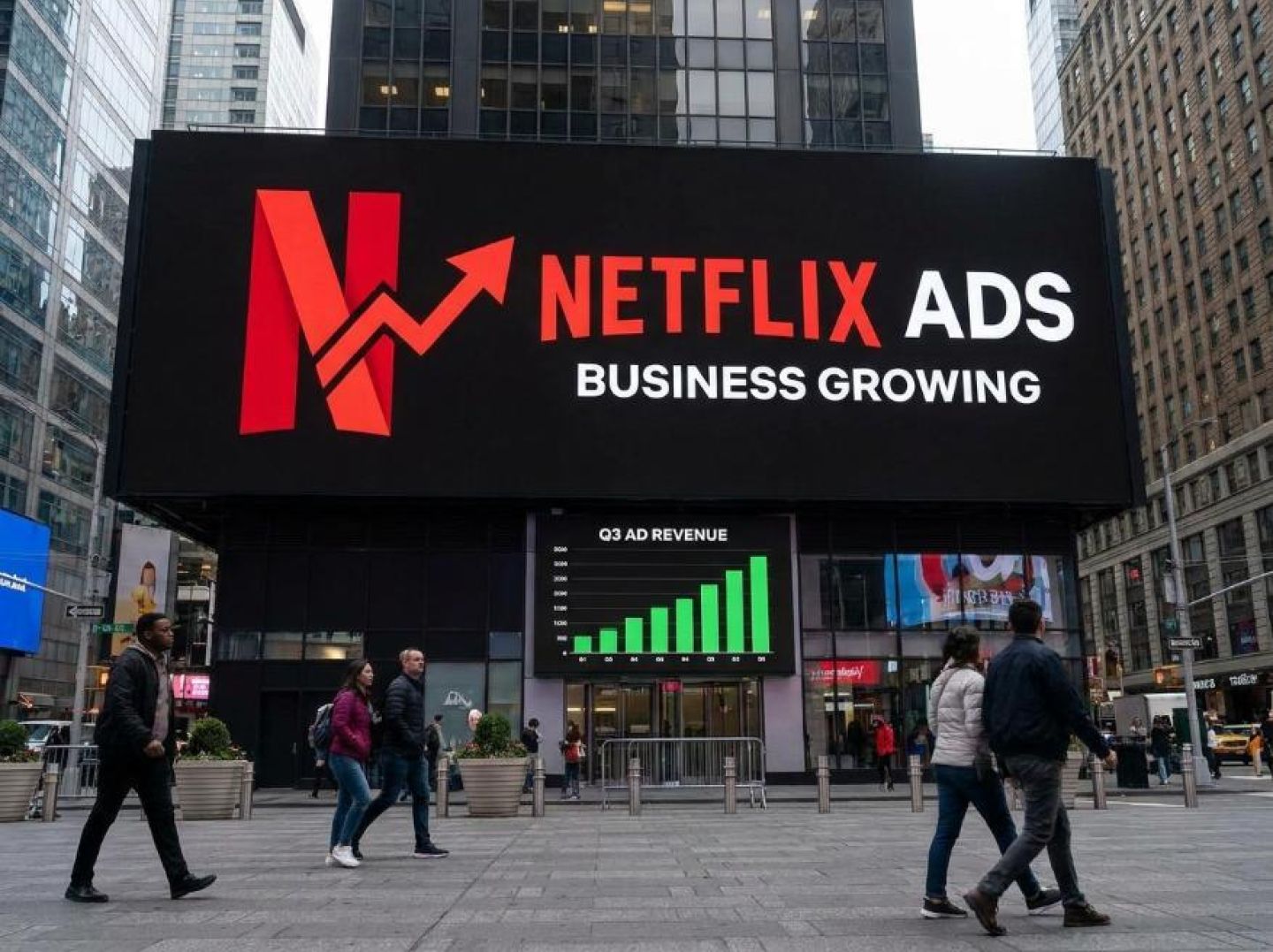
Get StartedOn paper, Netflix's advertising business looks like a rocket ship. The platform's advertising base grew 70% year over year to more than 4,000 global brands, over 60% of new signups are choosing the ad-supported tier, and the company engagement/825515/" rel="noopener" target="_blank">affirmed it is on track to hit $3 billion in ad revenue this year — effectively doubling its 2025 haul. By any conventional growth metric, this is a business firing on all cylinders.
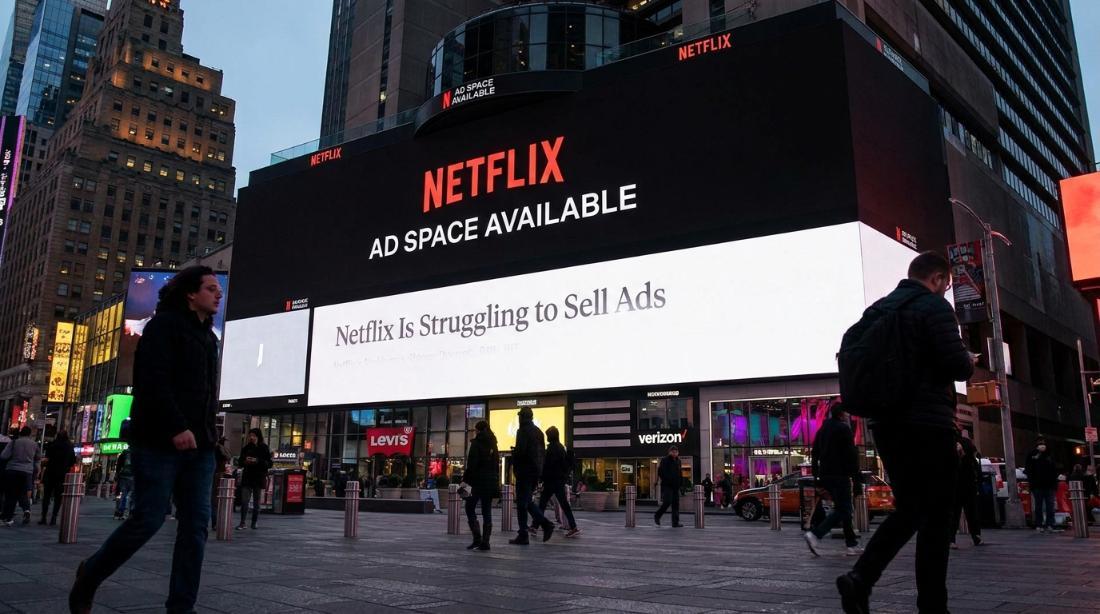
But look closer and the cracks become hard to ignore.
When Netflix reported Q2 earnings, investors appeared disappointed in the outlook, sending shares downward as the company fielded pointed questions about reported slowdowns in viewer engagement. The same quarter that validated the ad revenue trajectory also surfaced a more uncomfortable truth: the people watching Netflix are watching less of it, and finishing fewer of the shows they start.
This is the paradox that performance marketers need to sit with. Netflix is simultaneously growing its advertiser base and eroding the very thing that makes those ad impressions valuable — sustained, deep viewer attention. It's a classic leaky bucket problem, and as Branding Strategy Insider argued, the platform has spent years wooing Wall Street with acquisition numbers while its core customers quietly disengage. Engagement — measured by time spent viewing and series completion rates — is a driver of satisfaction, and when it declines, it signals that subscribers are drifting toward passive, low-attention usage or cycling off the platform entirely.
For brand advertisers chasing mass reach and upper-funnel awareness, this might be tolerable. A "completed view" next to a half-watched episode of a show someone is about to abandon still registers as an impression. But for performance marketers — the ones who need to justify every dollar with attribution data and downstream conversions — the implications are serious. What is the actual quality of attention behind a video completion metric when the viewer didn't even care enough to finish the series the ad was embedded in? When engagement is declining across the platform, a "completed view" becomes an increasingly hollow signal.
The data transparency gap makes this worse. Netflix still can't offer the IP-level data that performance marketers need for verification and cross-platform measurement. As AdExchanger reported, other major streaming providers like Paramount, Disney, and NBCUniversal make IP address data available programmatically — but Netflix does not. The result is predictable: some marketers are reallocating programmatic spend elsewhere in search of data accountability, particularly the small and mid-sized advertisers who must justify every incremental TV dollar.
Co-CEO Greg Peters framed the opportunity optimistically during the earnings call, saying that improvements in measurement capabilities and ad products are "really the bulk of the opportunity we have to improve unit performance and monetization for the next few years." But that language reveals as much as it conceals — Netflix is essentially admitting that its ad product isn't yet competitive on the metrics that matter most to performance buyers.
The topline numbers tell a growth story. The underlying dynamics tell a different one: a platform optimizing for subscriber and advertiser acquisition while the foundation of viewer loyalty softens beneath it. For performance marketers evaluating where to allocate CTV budgets, the question isn't whether Netflix has scale. It's whether that scale translates into the kind of engaged, measurable attention that actually drives results.
For performance marketers, the most damning detail about Netflix's ad platform isn't what the company charges or how it packages inventory — it's what it refuses to hand over after the campaign runs. And increasingly, what it withholds during the bidding process itself.
In programmatic advertising, IP-level data is the connective tissue that allows buyers to track a household across platforms, deduplicate reach, and build coherent attribution models. It's table stakes. Disney makes it available programmatically. So do Paramount and NBCUniversal. But as one CTV buyer told AdExchanger, it's "highly unusual for a programmatic buyer not to find IP-level information in a DSP bid" — except when it comes to Netflix. That single omission collapses the entire measurement framework that performance marketers depend on to justify spend.
The reporting Netflix does offer only deepens the frustration. Buyers receive basic reach and frequency counts, completed views, and unique reach — metrics that might satisfy a Fortune 500 CMO measuring awareness lift, but that leave a performance marketer flying blind. Other streaming and CTV platforms routinely report content type and timestamps alongside that critical IP-level data, enabling buyers to attribute campaigns across platforms and control frequency capping across the sprawling ecosystem of streaming services a single household might use in a given week. Without these signals, Netflix ads exist in a measurement vacuum: you know impressions were served, but you can't connect them to downstream behavior with any confidence.
This opacity has real consequences beyond spreadsheet inconveniences. When a mid-market DTC brand spending $200,000 a month on CTV can't deduplicate its Netflix reach against its Hulu or Peacock buys, it risks both wasted frequency and inflated performance claims. The inability to stitch together a cross-platform view means these advertisers literally cannot calculate incremental reach or cost per acquisition with the rigor their CFOs demand. It's not a reporting gap — it's an attribution dead zone.
Netflix is aware of the problem, at least superficially. The company has invested in clean room partnerships with InfoSum, Snowflake, LiveRamp, and AWS, and it launched a Conversion API in March. Co-CEO Greg Peters has said the company is focused on making it easier for advertisers to transact, noting that improvements in measurement and ad products are "really the bulk of the opportunity" to improve monetization in the coming years. But clean rooms are collaborative analysis environments, not substitutes for the real-time, bid-level data that powers programmatic decisioning. And a Conversion API — while useful for closed-loop measurement within Netflix's own walls — doesn't solve the cross-platform stitching problem that performance marketers face across dozens of publishers simultaneously.
The result is a predictable market correction. Performance marketers, particularly smaller and medium-sized advertisers who must justify every incremental dollar in CTV spend, are reallocating programmatic budgets to platforms that deliver superior data quality. These aren't advertisers walking away from CTV — they're walking away from Netflix specifically, toward competitors whose measurement infrastructure treats accountability as a feature rather than a future roadmap item.
For the big brands chasing mass reach and cultural cachet, Netflix's walled garden may be an acceptable trade-off. But for the growing universe of performance-driven buyers — the ones Netflix needs to scale from $3 billion toward the double-digit billions it's implicitly promising investors — this data black hole isn't a minor inconvenience to be patched with incremental hires from Amazon Ads. It's a structural barrier that makes the platform functionally unusable for ROI-accountable advertising.
Netflix's measurement headaches don't exist in a vacuum. They're symptoms of a much larger condition: the digital video advertising market is expanding at breakneck speed while the infrastructure to support it remains woefully immature. The global digital video ad market is barreling toward $82 billion, fueled by the proliferation of connected TV platforms, the rise of shoppable video on social feeds, and the migration of linear TV budgets into streaming. But growth this fast, across this many platforms, breeds chaos — and chaos is where performance marketers find their best deals.
Consider the competitive landscape Netflix now inhabits. YouTube commands 13.4 percent of all TV viewing minutes in the United States compared to Netflix's 7.8 percent, according to Nielsen's most recent Gauge report. Amazon, which wrapped its own upfronts talks just days before Netflix's Q2 earnings call, is a key competitor in the streaming realm with a formidable advantage: a closed-loop commerce ecosystem that connects ad exposure to purchase data in ways Netflix cannot yet replicate. TikTok's InStream placements are pulling mid-funnel dollars from brands that once reserved video budgets exclusively for television. Roku, Tubi, Pluto TV, and a constellation of free ad-supported streaming platforms are collectively amassing enormous reach among cost-conscious viewers. The result is a buyer's market in volume but a minefield in quality — a sprawling bazaar where no two vendors measure the same thing, fraud detection varies wildly, and inventory opacity remains a persistent concern flagged by the IAB and echoed by buyers across the ecosystem.
This is the messy adolescence of streaming advertising. Standards haven't calcified. Verification is inconsistent. And the biggest brand advertisers are still prioritizing prestige over performance, chasing the cachet of appearing alongside premium original content on platforms like Netflix even when the measurement infrastructure doesn't justify the CPMs. As AdExchanger reported, for bigger marketers looking for mass reach and other upper-funnel objectives, advertising on Netflix "might very well suffice." But that tolerance for opacity is a luxury that performance-driven buyers — the ones who need to justify every dollar with attribution data — simply cannot afford.
Here's the counterintuitive opportunity: the more attention and budget that Fortune 500 brands pour into premium-but-opaque environments, the more underpriced the data-rich alternatives become. YouTube offers robust conversion tracking and audience segmentation at scale. Amazon's DSP connects impressions to actual purchase behavior. Even smaller CTV platforms that provide IP-level data, content-type reporting, and time stamps — the very signals that Netflix withholds — become relatively more attractive when the industry's biggest spenders are distracted by the gravitational pull of prestige inventory.
Fragmentation creates inefficiency, and inefficiency creates arbitrage. Performance marketers should resist the instinct to follow brand dollars into environments that weren't built for accountability. Instead, they should map the landscape for platforms where measurement maturity outpaces advertiser demand. When a platform offers granular attribution but hasn't yet attracted the bidding wars that inflate CPMs, you've found a window — and in a market growing this fast and standardizing this slowly, those windows stay open longer than you'd expect. The smart move isn't to compete for Netflix inventory you can't measure. It's to let the brand advertisers fight over the prestige while you quietly harvest returns everywhere else.
When platform reporting is a black box and even the most "transparent" walled gardens operate with incomplete data, performance marketers need a different source of truth. The answer isn't to wait for Netflix or any other platform to suddenly open the kimono — it's to shift focus to the one variable you can both control and study with precision: creative.
This is the strategic framework that separates reactive advertisers from proactive ones. In a fragmented video landscape where programmatic buyers have gotten used to operating with incomplete data, the creative assets competitors are running — where they're placing them, how long they persist, and which formats are being scaled — become a proxy for the conversion signals no single platform will voluntarily share. You can't see Netflix's internal fill rate dashboards. You can't audit YouTube's view-through attribution methodology on your own terms. But you can observe which competitor creatives have survived four, six, eight weeks in rotation across TikTok InStream, YouTube pre-roll, and programmatic CTV buys. Longevity is a signal. Repetition is a signal. Format migration — when a brand takes a concept that worked as a fifteen-second vertical spot and scales it into a thirty-second CTV placement — is one of the strongest signals available.
Ad spy tools make this reverse-engineering systematic rather than anecdotal. Instead of committing budget to blind A/B tests on a platform that won't give you granular performance feedback, you can study what's already demonstrating traction in the market before you spend a dollar. You can identify which hooks competitors are reusing, which calls to action appear across multiple campaigns, which visual treatments are being iterated rather than discarded. This isn't guesswork — it's competitive creative intelligence, and it functions as a market-wide proxy for conversion data that individual platforms guard jealously.
The urgency of this approach is amplified by the pace of format experimentation happening across the industry. Netflix's own trajectory illustrates the point: the company announced plans to increase ad inventory across vertical video and podcasts during its upfront presentation, signaling that even the largest streaming platform recognizes horizontal, lean-back viewing isn't the only game in town. When Netflix is racing to diversify its ad formats, you can be certain that every platform in the ecosystem — from Amazon's Freevee inventory to Roku's shoppable overlays — is doing the same. The result is an explosion of format permutations that makes intuition-based media planning effectively obsolete.
This is where systematic creative study becomes indispensable. The marketers who are cataloging which vertical video ad concepts are persisting on TikTok, which CTV pre-roll formats are being scaled on Hulu and Peacock, and which podcast ad reads are being repurposed as audio overlays on streaming platforms will have a massive informational advantage. They'll know which creative territories are crowded and which remain open. They'll spot format trends — say, the migration of user-generated-content aesthetics from social feeds into CTV environments — weeks before they become conventional wisdom.
Meanwhile, their competitors will be running blind tests on platforms that many marketers are already reallocating spend away from due to data accountability concerns, burning budget to learn what was already visible in the market. In a world where platform measurement is unreliable and format fragmentation is accelerating, the creative layer isn't just one input among many — it's the most honest signal left.
The opportunity here isn't theoretical — it's a five-step framework you can execute this quarter, before the rest of the market catches up.
Step 1: Audit your CTV and streaming spend for attribution quality. Start by asking a brutally honest question about every platform currently receiving your video dollars: can you actually measure what it's doing? Not "does the platform provide a report" — can you independently verify reach, frequency, and downstream conversion? For Netflix specifically, the answer is almost certainly no. While the platform works with clean room providers like InfoSum, Snowflake, and LiveRamp, buyers still lack the IP-level data they need for independent verification and cross-platform measurement. As AdExchanger reported, other major streaming providers — Paramount, Disney, and NBCUniversal among them — make IP address data available programmatically, giving performance marketers the deterministic matching they need to justify spend. If your current allocation includes platforms where you're flying blind, flag them immediately.
Step 2: Catalog competitor creative across every viable video surface. Use ad spy and competitive intelligence tools to pull competitor video creatives running on TikTok InStream, YouTube, and programmatic CTV inventory. Don't just browse — systematically document patterns in format (vertical versus landscape), video length, hook structure in the first three seconds, and CTA placement. The creative intelligence framework from the previous section isn't just for insight — it's the raw material for Step 4.
Step 3: Prioritize platforms offering full-funnel attribution. Shift budget toward environments where you can tie impressions to outcomes with confidence. Programmatic CTV buys through platforms that offer deterministic matching, YouTube's robust conversion tracking, and social video placements with pixel-based attribution should all rank higher than premium walled gardens that trade on brand prestige but starve you of performance data. The reallocation trend is already underway: smaller and medium-sized advertisers are shifting spend to streaming platforms that deliver superior data quality, precisely because these businesses must justify every dollar with measurable outcomes.
Step 4: Rapid-test creative variants modeled on proven competitor formats. Take the patterns you identified in Step 2 and produce creative variants — not copies, but structurally informed adaptations. If competitors are winning with a three-second pattern-interrupt hook followed by a product demo and an end-card CTA, test that architecture with your own messaging. Run these variants across your highest-attribution platforms first to generate statistically significant learnings fast.
Step 5: Scale before the arbitrage window closes. This is the step most marketers will miss because it requires conviction. Right now, Netflix is pushing aggressively toward its target of doubling advertising revenue to $3 billion in 2026, which creates upward price pressure on premium CTV inventory across the board. Simultaneously, Netflix is expanding its ad-supported tier to 27 countries, diluting inventory quality as it chases scale in markets with lower purchasing power. The math is straightforward: cost-per-valuable-impression on Netflix rises while competing platforms, hungry for the ad dollars flowing away from Netflix's data gaps, are offering better measurement, lower CPMs, and more transparent reporting.
This window won't last forever. As more performance-oriented advertisers recognize the disparity and reallocate, CPMs on alternative platforms will normalize upward. The marketers who move now — following attribution data rather than platform prestige — will lock in efficient rates and build creative learnings that compound over time. Those who wait for Netflix to fix its measurement infrastructure will pay more for less certainty, which is the exact opposite of what performance marketing demands.
Receive top converting landing pages in your inbox every week from us.
Quick Read
OOH is increasingly becoming a measurable performance channel, but many industry roles are still built around selling inventory rather than outcomes. This guide explores how OOH careers can evolve toward performance marketing through attribution, ad intelligence, funnel design, landing-page data, and measurable campaign optimization.
David Kim
7 minSep 20, 2026
Featured
Testing only inside Google Ads and TikTok can hide platform bias, attribution problems, and misleading performance signals. This guide shows how to combine spy-tool intelligence with controlled experiments across Google, TikTok, Native, Push, and Pops to identify which creative and funnel patterns actually drive incremental results.
Priya Kapoor
7 minSep 18, 2026
Editor’s Pick
Generic AI output is becoming easier to recognize and harder to differentiate in performance marketing. This guide shows how to turn competitor spy data into structured AI inputs, build expert-backed creative workflows, and generate original ads that use market intelligence without copying competitors.
Marcus Chen
7 minSep 18, 2026