11 minAugust 14, 2026

Our spy tools monitor millions of native ads from over 60+ countries and thousands of publishers.
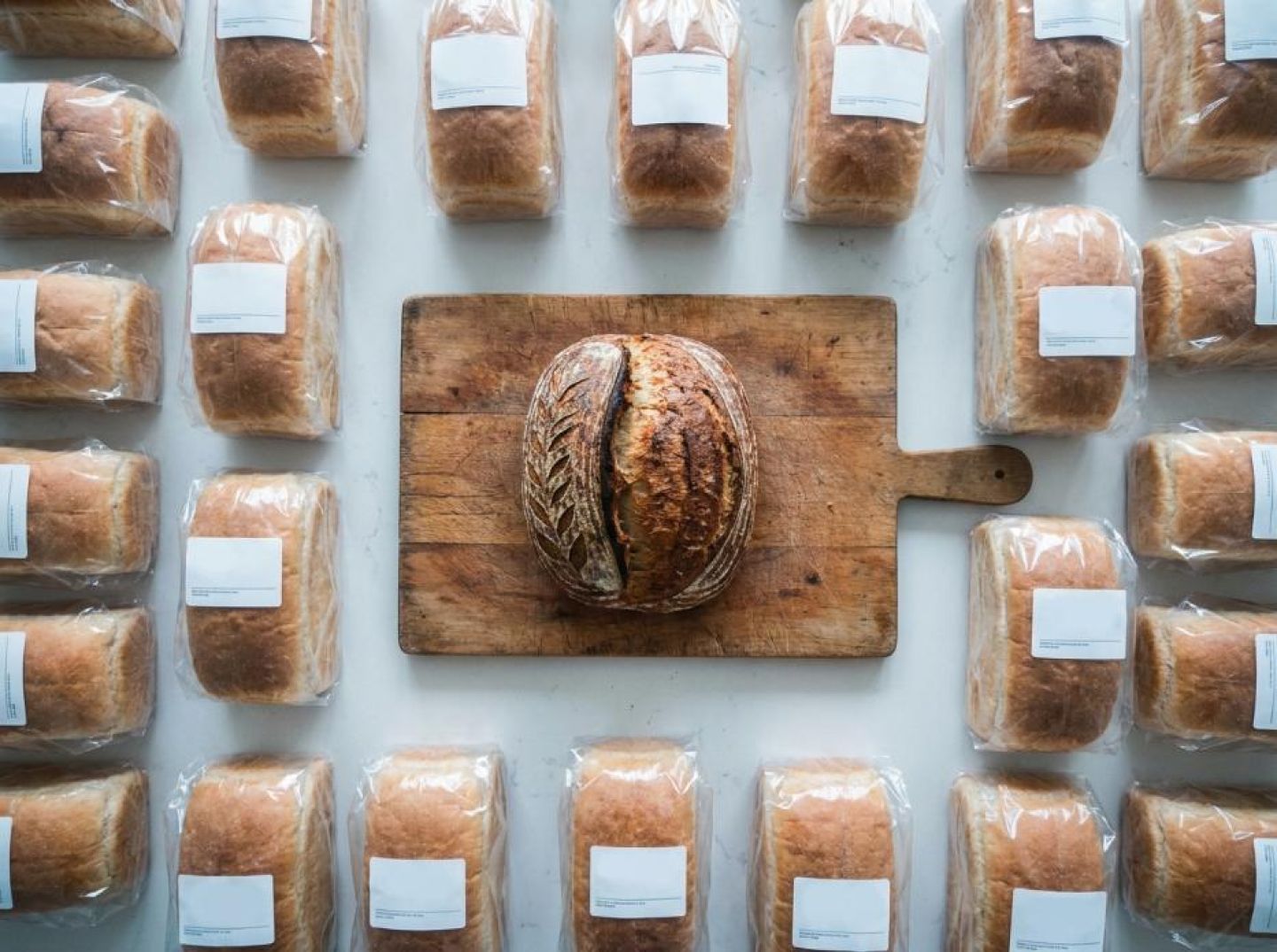
Get StartedSeth Godin's bakery problem is deceptively simple: a neighborhood baker makes extraordinary bread by hand, but the moment she tries to serve a larger market, she faces an impossible choice. Scale up and lose the thing that made the bread worth buying, or stay small and watch inferior competitors capture the demand she created. It's a tension between craft and reach, between the thing that works and the system that grows.
If you run paid media in 2026, you are living inside this problem every single day.
On one side, you have the artisans — the creative directors and brand teams who insist on hand-crafting every ad. They agonize over copy. They commission bespoke photography. They produce three or four brilliant variations per month and wonder why Meta's algorithm starves their campaigns of delivery. They're making sourdough in a world that demands a hundred loaves by morning.
On the other side, you have the automators — the performance marketers who've embraced generative AI with open arms, flooding ad accounts with dozens of variations churned out in an afternoon. The volume is there, but the soul isn't. The ads feel interchangeable, the kind of creative that a user scrolls past without a flicker of recognition. As AdExchanger reported on the HelloFresh Times Square campaign, one of the biggest criticisms of AI-generated advertising has been its inability to produce creative that "doesn't suck" — a predictive algorithm, by definition, isn't going to generate innovative ideas. The backlash is real, and it's growing.
Most marketers self-sort into one of these two losing camps and then defend the choice as principled. But the division is a false binary, and the false binary is the real enemy.
Consider the two misconceptions that Social Media Examiner identified as blocking marketers before they even start: the belief that using AI for ad creative is lazy, and the belief that AI produces low-quality work. Fraser Cottrell, CEO of direct-to-consumer agency Fraggell, pushes back on both — getting AI to produce what you actually want requires significant effort, and current image models produce results nearly indistinguishable from professional photography. The problem isn't the tool. The problem is the absence of a method.
This is where Godin's metaphor sharpens into something actionable. The baker's real constraint was never the oven or the flour. It was knowledge — knowing which qualities of the handmade loaf actually mattered to customers, so those qualities could be preserved even as production expanded. The artisan baker who scales successfully doesn't replicate every gesture; she identifies the three or four choices that define the bread's character and engineers a process around protecting them.
The ad creative parallel is exact. The marketers who escape the false binary aren't choosing between authenticity and volume. They're investing in understanding what's already converting — which hooks, which visual compositions, which proof points, which emotional registers — so that when they generate variations at scale, every output carries the DNA of what works. HelloFresh demonstrated this when it used past ads and promotions to shape its AI-generated content, letting historical performance inform the creative brief rather than starting from a blank prompt.
Without that foundation, you're either the artisan who can't feed the algorithm or the automator producing beautiful bread that nobody wants to eat. Both lose. The way out starts with knowing what good looks like before you try to make more of it.
The platforms have spoken, and their message sounds straightforward: give us more creative. Meta's Andromeda update, as Social Media Examiner reported, ended the old practice of running hundreds of slight variations of the same ad by treating those near-duplicates as a single creative. The algorithm now demands genuinely different ad variations — not the same headline over a new background color, not the same testimonial with a swapped font. Distinct concepts, distinct angles, distinct creative bets. On the surface, that sounds like a simple volume mandate: make more stuff. But it's actually something far more punishing.
Because here's the squeeze most teams miss: the platform is simultaneously raising the quality bar and the quantity bar. Spinning up two hundred iterations of the same static image used to be a legitimate testing strategy. Media buyers built entire workflows around it — swap the CTA, shift the color palette, rotate three hero images across fifty copy variants, let the algorithm sort it out. That playbook is dead. The algorithm now collapses those variations into a single signal, which means all that production effort registers as one creative, not two hundred. You're paying for volume but getting credit for one.
This is exactly where the bakery problem becomes acute. The neighborhood baker can't photocopy her sourdough to meet citywide demand, and you can't photocopy your best-performing static to meet the algorithm's appetite for novelty. The platform is asking you to bake fresh bread every single day — bread that looks, smells, and tastes different from yesterday's loaf.
The instinctive response is to crank the production machine harder. Hire more designers, brief more freelancers, generate more AI assets. And the instinct isn't entirely wrong. As MarTech has argued, the future belongs to brands that move beyond campaign-based workflows and invest in systems that enable continuous testing, learning, and optimization. The era of quarterly creative refreshes is over. But continuous production without creative intelligence — without a foundation of knowing what's actually converting in your category, what angles competitors are exploiting, what visual and narrative patterns are earning attention right now — produces expensive noise, not signal.
Nick Shackelford, a media buyer featured on Social Media Examiner, put it bluntly: he's watched teams test a hundred or two hundred creatives a week, get no results, and feel like they were lied to, because they kept producing the same mediocre-looking ad at mass scale. When his team tests less but with more intention to make something genuinely new and different, performance jumps. AI amplifies you, he argues — but if your ideas are weak, AI just helps you produce more weak material faster.
That last point deserves underlining, because it's the crux of the problem. The bottleneck was never production speed. It was always creative insight. The teams winning right now aren't the ones with the largest asset libraries; they're the ones who understood, before they opened a design tool, which hooks were working, which emotional registers were resonating, and which formats were earning genuine engagement in their specific vertical. They arrived at the canvas with a thesis, not a template.
Without that foundation, more creative just means more ways to be ignored. The algorithm isn't rewarding effort. It's rewarding differentiation — and differentiation requires knowing what already exists in the landscape so you can deliberately deviate from it. That's not a production problem. It's an intelligence problem.
Every master baker learned by watching another baker's hands. The way they scored the dough, the moment they pulled it from the oven, the ratio of flour to water that no recipe book could fully capture — these weren't secrets stolen but patterns absorbed through proximity and repetition. This is what an apprenticeship actually is: not copying someone else's bread, but internalizing the structural principles that make bread work before you ever attempt your own signature loaf. And this is exactly how the best creative teams approach competitive intelligence in native advertising.
There's a persistent myth that studying what's already converting in your space is somehow cheating — that real creativity springs fully formed from pure intuition or, increasingly, from a well-crafted AI prompt. But generating creative with no reference point for what resonates is like trying to bake bread without ever having tasted bread. You might produce something technically complete, but you'll have no internal compass for whether it's any good. The brands winning at creative effectiveness right now aren't the ones with the most original ideas in a vacuum. They're the ones building systematic pattern libraries from proven performers — cataloging hooks, visual language, copy structures, and emotional triggers the way an apprentice baker catalogs techniques.
This distinction between copying executions and learning patterns of effectiveness is critical. Copying means lifting someone else's headline and swapping in your brand name. Learning patterns means recognizing that, in your vertical, ads structured around a specific question consistently outperform those built around declarative statements, or that user-generated visual styles drive higher engagement than polished studio photography. One is plagiarism. The other is craft.
The industry is starting to build infrastructure around this idea. Creative effectiveness scoring platforms are emerging that analyze historical performance data to identify what's likely to succeed before a campaign even launches, turning past winners into benchmarks for future creative decisions. The logic is straightforward: if you can systematically identify the structural elements that separate high-performing ads from mediocre ones, you can apply those patterns to new creative without simply reproducing what came before.
Yet as AdExchanger noted in its Cannes coverage, CMOs are still struggling to prove that their creative actually works, with research from Forrester and Gain Theory confirming that brand marketers remain unsure how best to measure creative effectiveness even as media ROI metrics are well established. The promise of contextual analysis tools — systems that could identify not just which creatives outperform but why — remains largely unrealized, partly because creative budgets are too constrained to invest in the measurement infrastructure that would make those insights possible.
This measurement gap makes the apprenticeship model even more essential. When you can't yet rely on automated systems to tell you precisely why one native ad outperforms another by three hundred percent, human pattern recognition becomes your most valuable tool. Studying winning creatives across your competitive landscape — their pacing, their emotional registers, their structural choices — builds the kind of tacit knowledge that no dashboard can yet replicate. As MarTech reported, the brands that succeed in AI-native advertising won't be those that produce the most ads but those that show up with the most relevant answer at the right moment — and relevance requires understanding what already resonates before you attempt to say something new.
The apprenticeship isn't a phase you graduate from. It's a continuous discipline. The competitive landscape shifts, audience sensibilities evolve, platform algorithms change the rules. The pattern library you built last quarter may need revision this quarter. But the practice of studying what works — rigorously, systematically, without ego — is what separates craft from content generation. It's the difference between a baker who understands dough and one who just follows a recipe they found online.
AI isn't the baker — it's the oven. And a better oven has never fixed bad dough.
This distinction matters because the marketing industry is drowning in AI tool announcements while starving for clarity about what actually makes those tools produce results worth running. The answer, consistently, is the same: the quality of what goes in determines the quality of what comes out. As Fraser Cottrell explained to Social Media Examiner, getting AI to produce what you actually want during the creative process requires significant effort, and the first step in his three-part system isn't generating anything — it's building a brand knowledge base. Before you ever open an AI tool, you need to systematically document who your customers are, what your brand stands for, and what a great ad looks like. AI is only as good as the context and instructions you give it.
That principle scales far beyond small e-commerce brands. When DAIVID integrated its creative effectiveness models into ADIN.AI's platform, CEO Ian Forrester described the core problem they were solving: "Creative is a key driver of advertising outcomes, but for too long it has been measured in isolation, disconnected from media results." The partnership they built creates a live loop between creative intelligence and media execution — letting marketers identify which creative is most likely to succeed before a campaign launches and scale high-performing assets while it runs. But notice what that loop requires as fuel: historical performance data, creative scoring benchmarks, and a continuous feedback mechanism that transforms past results into future guidance. The AI infrastructure is impressive. It's also useless without the accumulated intelligence feeding it.
This is exactly the pattern emerging across every serious AI creative workflow. Nick Shackelford's team, as Social Media Examiner documented, has dramatically cut the time from idea to finished ad — AI now writes roughly 90% of their copy, with the team sharpening the final 10%. But Shackelford frames it bluntly: AI amplifies you. If your ideas are strong, AI helps you execute them faster. If your ideas are weak, AI just helps you produce more weak material faster. People with strong creative backgrounds — photographers, video creators, experienced copywriters — get the best results because they know how to direct a model toward something original rather than accepting the generic output these tools produce straight out of the box.
Here's the gap most teams miss in this equation. They invest in brand knowledge. They invest in audience research. They sometimes even invest in reviewing their own historical performance data. But they almost never invest in a structured, ongoing understanding of what competitors and category leaders are running right now — which hooks are landing, which formats are earning engagement, which visual approaches are breaking through. That competitive creative context is the missing input layer. It gives AI tools (and the humans prompting them) a richer, more grounded set of references to work from, rather than generating into a vacuum.
Think of it this way: a baker who only ever tastes their own bread has no calibration. They don't know if their sourdough is exceptional or merely edible, because they've never studied what the market rewards. Competitive ad intelligence functions as that calibration mechanism — not to copy what's working for someone else, but to understand the landscape of proven creative patterns before asking AI to generate new variations. The teams seeing dramatically better results from AI creative tools aren't the ones with better prompts. They're the ones with better inputs: deep brand context, clear audience understanding, and a curated, continuously updated map of what's already converting in their category.
The fear is always the same: if we make more, we lose control. If we scale creative production, the brand dissolves into a thousand off-brand variations, each one eroding the very distinctiveness that made the original work resonate. It's a legitimate concern — and it's also Godin's bakery problem restated as a quality control question. How do you ensure the ten-thousandth loaf is as good as the first? The answer isn't to bake fewer loaves. It's to build guardrails before you ever preheat the oven.
This is where most brands get the sequence wrong. They scale first, then scramble to contain the damage. They flood the market with creative variations, discover half of them feel soulless or off-brand, and then overcorrect by locking down production so tightly that they lose the speed advantage they were chasing in the first place. The smarter approach — the one that actually preserves what Godin would call the artisan's integrity — is to define the boundaries of your brand's creative identity with precision before a single new asset ships. As MarTech has argued, brands moving into AI-native operating models need to strengthen strategic inputs like brand narrative, messaging architecture, and audience understanding alongside their investment in continuous testing and optimization. Governance isn't the opposite of speed; it's what makes speed sustainable.
Think of it as the difference between a recipe and a set of constraints. A recipe tells you exactly what to make. Constraints tell you what you're not allowed to break — the tonal range your brand occupies, the visual language that signals authenticity versus what crosses into generic territory, the emotional registers that are on-limits versus off-limits. When those constraints are codified clearly enough, they function as creative scoring systems that can evaluate output at scale rather than requiring a senior creative director to personally approve every variant.
This matters because the alternative — relying on volume without evaluation infrastructure — has already shown its failure mode. Consider the scale Unilever attempted by working with an ecosystem of over 300,000 creators. As Search Engine Journal has reported, that kind of massive creator network demands robust creative scoring systems and evaluation frameworks; without them, the sheer volume of output overwhelms any team's ability to maintain quality or brand coherence. The problem isn't having 300,000 creators. It's having 300,000 creators and no systematic way to distinguish the work that reinforces your brand from the work that dilutes it.
Competitive intelligence plays a critical role here that most governance conversations miss entirely. You can't define what makes your brand's creative distinctive if you're defining distinctiveness in a vacuum. Understanding what's already in the market — the visual patterns competitors rely on, the hooks that have become generic through overuse, the tonal territories that are crowded versus open — gives you a map of the creative landscape against which your own guardrails become meaningful. Your brand soul isn't some abstract philosophical artifact. It's the specific set of creative choices that makes your work recognizable when placed alongside everything else your audience encounters in a feed.
And that soul requires protection mechanisms with teeth. As MarTech has emphasized, establishing governance for autonomous systems means defining guardrails that balance performance with brand equity, ensuring transparency in decision logic, and maintaining human oversight where it matters most. The humans in this system aren't bottlenecks — they're the keepers of brand judgment, the ones who recognize when an AI-optimized variant technically outperforms but subtly betrays the brand's identity in ways no click-through rate can capture. Seventy percent of consumers already say AI-generated ads feel like they're missing their soul, which means the cost of getting governance wrong isn't hypothetical. It's measurable in lost trust.
Brand soul isn't preserved by producing less. It's preserved by knowing exactly where the boundaries are, building systems that enforce them, and staffing those systems with humans who understand not just what the brand says but what it means. Scale the loaves. Just make sure the recipe is locked before the ovens are hot.
So you understand the bakery problem. You accept that scaling authenticity requires knowing what's already converting. You've built governance guardrails. Now what? The gap between understanding these principles and executing them daily is where most teams stall — not because they lack tools, but because they lack a repeatable workflow that bridges strategic insight with creative output. Here's how practitioners are closing that gap, stage by stage.
Stage one: build the knowledge base before you touch a single tool. The most common mistake is jumping straight into generation. Fraser Cottrell's process, as detailed in Social Media Examiner's breakdown of his three-step system, begins not with prompts but with deep research — cataloguing who your customers are, what your brand stands for, and what a great ad actually looks like in your category. This is the equivalent of a baker studying flour protein content and hydration ratios before ever preheating the oven. You're encoding brand knowledge into a format that AI can work with, which means the outputs carry your brand's fingerprint rather than the generic sheen that audiences have learned to scroll past.
Stage two: study what's already working, ruthlessly. Pull your top-performing native ads from the last ninety days. Catalog the hooks, the visual compositions, the emotional registers, the copy structures. Do the same with competitors. This competitive creative intelligence becomes the "starter dough" — the living culture of proven patterns that every new variation inherits. Without it, you're guessing. With it, you're iterating from a position of evidence.
Stage three: generate with intention, not volume. The temptation with AI-powered creative tools is to flood the zone. Resist it. Nick Shackelford's experience running Meta campaigns confirms why: his team found that testing fewer creatives with genuine differentiation outperformed producing hundreds of slight variations, especially after Meta's Andromeda update began treating near-identical ads as a single creative. The apprentice baker makes more loaves; the master baker makes better ones. Use AI to explore meaningfully different angles — new hooks, new visual metaphors, new emotional entry points — rather than to create a conveyor belt of sameness at scale.
Stage four: layer human judgment on every output. AI now writes roughly ninety percent of ad copy in some high-performing teams, but the remaining ten percent — the sharpening, the tonal calibration, the gut check on whether something feels right — remains irreplaceably human. As MarTech reported, the brands winning in AI-native advertising are those that strengthen strategic inputs like brand narrative, messaging architecture, and audience understanding even as they automate execution. The governance frameworks from the previous section aren't just corporate overhead; they're the quality control station on the production line.
Stage five: close the loop. Every ad that runs generates data. Every data point refines your knowledge base. The master baker tastes the bread, adjusts the recipe, and bakes again. Your creative system should operate the same way — performance insights feeding back into the brand knowledge base, updating what "converting" looks like as audiences evolve and platforms shift. This isn't a campaign workflow. It's a continuous learning system.
The progression from apprentice to master isn't about acquiring more tools. It's about developing the taste to know what good looks like, the discipline to encode that taste into systems, and the humility to let performance data overrule your assumptions. The tools accelerate what you already understand. They cannot replace the understanding itself.
Receive top converting landing pages in your inbox every week from us.
Most Read
Learn how OOH employers can move beyond selling billboard inventory and start monetizing the full funnel impact of every outdoor impression. This guide shows how to connect OOH with Native and TikTok-style funnels using competitive intelligence, creative research, tracking, retargeting, and performance-focused roles.
Rachel Thompson
7 minSep 28, 2026
Must Read
Discover how Pure Leaf’s “Break Conference” can be deconstructed as a full-funnel strategy spanning Native, Push, and Pop advertising. This guide shows how marketers can use creator content, TikTok Instream, Anstrex, search data, and PR signals to turn a feel-good brand stunt into a measurable performance engine.
Priya Kapoor
7 minSep 27, 2026
Must Read
Learn how to transform one powerful brand moment into scalable Native, Push, and Pop funnels instead of relying on a single hero ad. This guide covers modular creative, TikTok funnel thinking, competitive intelligence with Anstrex, cross-channel testing, and a repeatable creative supply chain.
Dan Smith
7 minSep 26, 2026