Native Ads, Pop Ads, Push Ads, TikTok Ads
10 minSeptember 26, 2026

Our spy tools monitor millions of native ads from over 60+ countries and thousands of publishers.
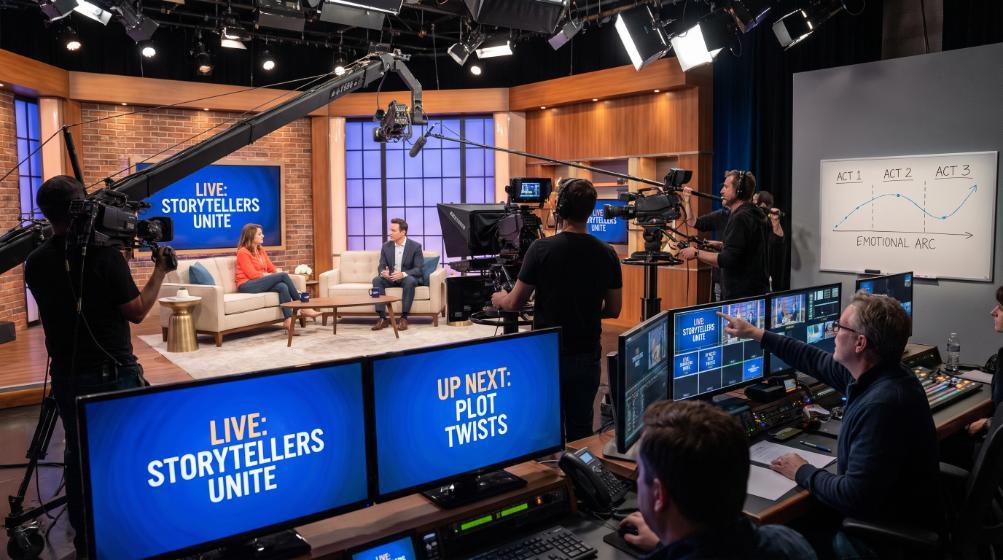
Get StartedFor decades, brand storytelling revolved around a single heroic asset: the “big spot.” You briefed an agency, sweated over a 30-second script, bought premium TV or CTV inventory, and hoped everything else—social cutdowns, banner units, maybe a splashy homepage takeover—would ride the halo. The funnel was essentially implied: reach people with one big idea often enough and sales would follow.
That mental model breaks down the second your primary touchpoints are not TV screens but native feeds, push notifications, and in-app pop-ups. On TikTok, YouTube Shorts, Reels, and mobile apps, attention is fragmented, creative is infinitely remixable, and platforms reward volume and variation over a single masterpiece. The question isn’t “What’s our big film?” but “How do we turn one powerful idea into 50–500 modular moments that work together as a funnel?”
Look at how Uber Eats approached its World Cup work. As one analysis from Real FiG Advertising + Marketing points out, the campaign didn’t stop at broadcast. It intentionally extended across social media, online content, and digital conversations, with every touchpoint reinforcing the same human truth: spend less time cooking and more time enjoying the match. That’s the core shift away from big-spot thinking: the TV asset becomes just one expression of a message designed to live—and sell—everywhere.
Crucially, Uber Eats didn’t complicate the idea. The premise “Who can cook at a time like this?” was so simple that it remained legible whether you encountered it as a TV ad, a meme, a tweet, or a sponsored post. The FiG team notes that this simplicity made the message easy to remember and share, which is exactly what you need when it’s going to be sliced into short-form video hooks, social carousels, and contextual placements. In a world of native, push, and pop experiences, clarity is your compounding asset: it lets a single concept fragment without losing its punch.
TikTok’s evolution is forcing the same rethink. As Neil Patel explains, formats like TikTok’s Premium Burst and TopReach are explicitly built to recreate one of TV’s historical advantages: sequential storytelling and mass reach during high-attention moments. But here’s the catch—these aren’t TV buys in disguise. TikTok still rewards creative that feels native to the feed. The brands winning on the platform aren’t just cutting down TV spots; they’re designing modular narratives that can show up as creator-style Spark Ads, short native clips, and then premium placements that stitch those moments into a high-impact sequence.
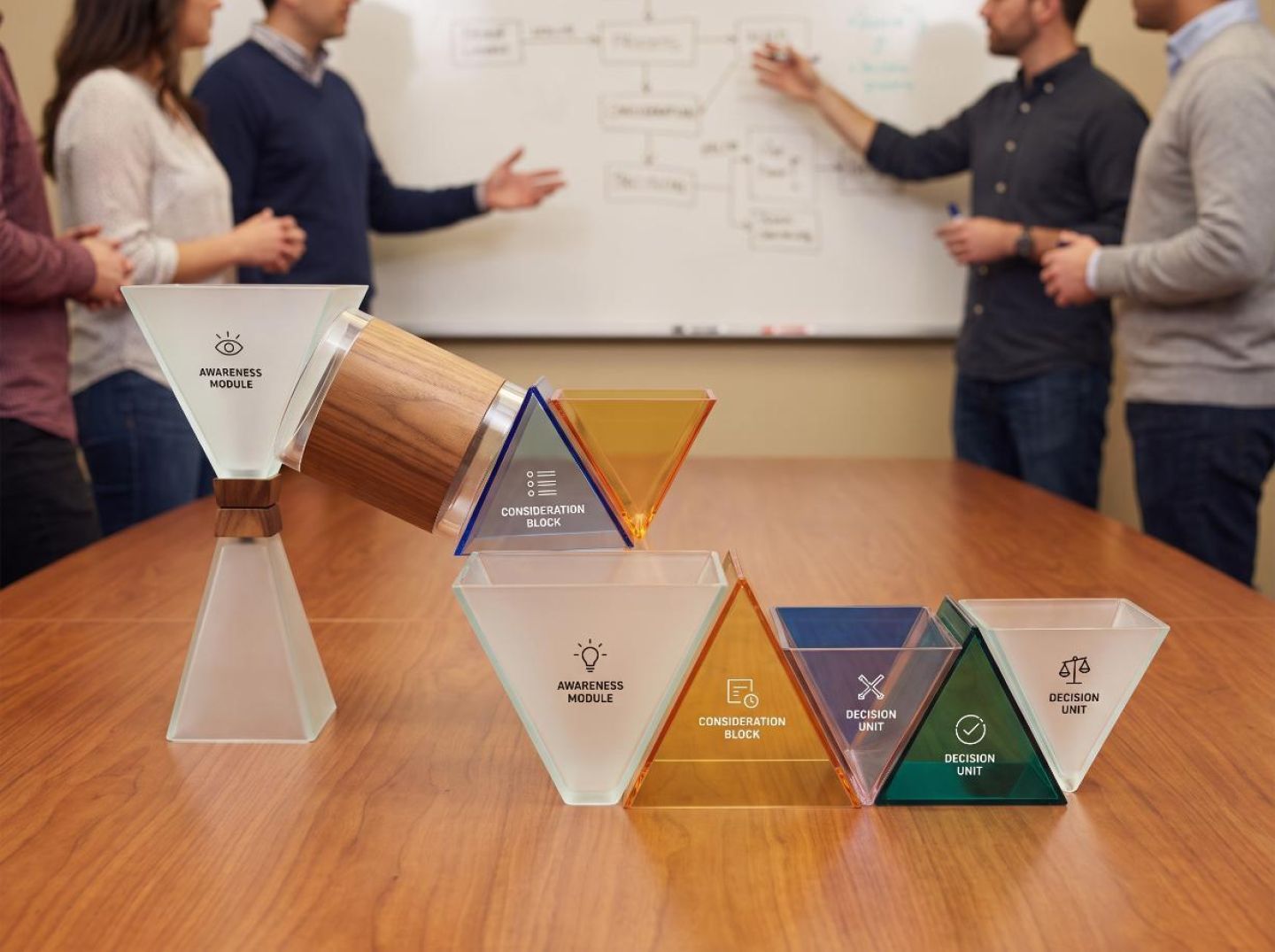
This is where modular funnel thinking diverges from the old “big idea + support” model. Instead of one hero ad and a bunch of derivatives, you architect a system of assets that each have a defined role in the journey:
AI is quietly making this scalable. TikTok’s Symphony Creative Studio, for example, takes a campaign brief and can output storyboards, scripts, and video variations at scale, while human marketers refine the last 30% to nail the product story and brand nuance, as Social Media Examiner describes. That’s not just productivity; it’s an invitation to think in terms of a creative supply chain instead of a single flagship asset.
At the same time, the integration between media platforms and CRM systems is dissolving the wall between “brand” and “performance.” HubSpot’s own coverage of its TikTok integration highlights how marketers can now sync lifecycle data, deal history, and purchase behavior directly into TikTok targeting, then bring performance data back into a unified view. When your creative system and your data spine are connected, the funnel isn’t an abstract model—it’s a living set of native, push, and pop experiences that update in near real time.
The takeaway for modern marketers is stark: clinging to a big-spot mentality in a feed-first, AI-accelerated world is a competitive liability. The brands that will win are those that start with a simple, human idea and then deliberately architect it into a modular, data-aware funnel—one that can flex across native placements, push and pop surfaces, and whatever new attention surfaces emerge next.
If you want native, push, and pop formats to pull the same weight as a big TV spot, you can’t start with a script. You have to start with a moment.
A “brandable moment” is a tiny, repeatable scene where your product, your values, and your customer’s real life collide in a way that’s instantly recognizable. It’s the zoomed-in slice of experience that can live just as naturally in a TikTok hook, a mobile push notification, or a checkout pop-up as it does in long-form video.
Think about Uber Eats’ World Cup work. The entire campaign could be summarized as a single moment: fans so locked into the match that “who can cook at a time like this?” became the only logical question. Every touchpoint—from TV to social content—simply replayed and remixed that same situational truth, which is why the idea extended so cleanly across channels, as one Denver agency’s analysis of the World Cup campaign points out. The message never changed (“spend less time cooking, more time watching”), only the angle and execution around that moment.
That’s your design brief: not “tell our brand story,” but “codify a specific, ownable moment we can replay 1,000 different ways.”
To build that kind of idea, start with three filters.
1. Is it emotionally and visually simple?
If your moment needs three slides of backstory, it’s not scalable. The strongest modern campaigns are “easy to understand, easy to share, and easy to remember,” as the Uber Eats example demonstrates. Ask: could someone understand what’s happening if they saw a single frame, three seconds of video, or one line of text in a notification?
“Friend opens the cupboard and laughs at how empty it is” is a brandable moment. “Our new positioning about sustainable lifestyle optimization” is not.
2. Can it flex across culture and context without losing its spine?
Scalable moments aren’t locked to one media environment or demographic niche. Joyride’s clean-ingredients positioning didn’t stay in “better-for-you” grocery aisles; the team proved the same core promise could show up as exclusive flavors at 7‑Eleven and HEB, attracting parents who hadn’t visited those stores in years, according to a Brandweek conversation about the brand’s expansion. The moment—parent finds a candy-like treat they can actually feel good about—travels; only the wrapper changes.
Ask of every candidate idea: could this same moment work for a TikTok skit, a cart-abandonment pop-up, a loyalty push, and an in‑store display, just by changing the surrounding context?
3. Is it built to multiply, not just to “cut down”?
Traditional spots get “cut” for social; scalable ideas get multiplied. That means designing a moment with modular components: a core tension, a recurring visual, a line or question, and a payoff that can be delivered in different ways.
Creative systems like TikTok’s Symphony Creative Studio are already training marketers to think this way by turning briefs into entire families of videos—hooks, scripts, scenes, and edits—where humans then step in to refine and localize each variation. Your human brief should work the same way: one moment, many expressions.
A practical test: could an AI or templated production tool generate 20 distinct assets from your moment without breaking the idea? If not, it’s probably still a script, not a system.
Once you have a moment that passes these filters, you can design the funnel around it:
The creative challenge is no longer “What’s our one big story?” but “What’s the smallest, sharpest moment that can carry our story everywhere?” When you design for that level of focus, every native unit, push, and pop becomes another entry point into the same idea—giving you the reach of TV-era branding with the test‑and‑learn flexibility of modern performance media.
Most brands still treat TikTok as “the social cutdown” of a TV idea—a vertical remix of a 30-second spot. That’s not a funnel. That’s a format swap.
To turn big ideas into TikTok funnels, you have to think in sequences, not singles. TikTok has literally productized this with formats like the Trio sequential unit, which shows up to three ads from the same brand within 15 minutes. But you don’t need a premium buy to think the same way. Your job is to map the brandable moment from Section 2 into a series of native beats that move someone from “What is this?” to “I’m in.”
Start by expressing your brandable moment as TikTok-native hooks, not as a hero script.
If your moment is “the exact second you realize cooking tonight will kill the vibe,” that can become:
Each hook is just a different doorway into the same emotional state. TikTok’s own tools are built around this modularity; Symphony Creative Studio is designed to break briefs down into reusable scenes, shots, and beats, then recombine them into finished videos at scale, with marketers stepping in to refine product benefits and calls to action as Social Media Examiner explains. Think of your brandable moment that way: as a kit of parts, not a single masterpiece.
TikTok users rarely experience your brand through one perfectly sequenced ad. Their path is messy—more like the “bowl of spaghetti” media reality described by marketing leaders in an Adweek conversation about fragmented attention. Your funnel has to account for that chaos.
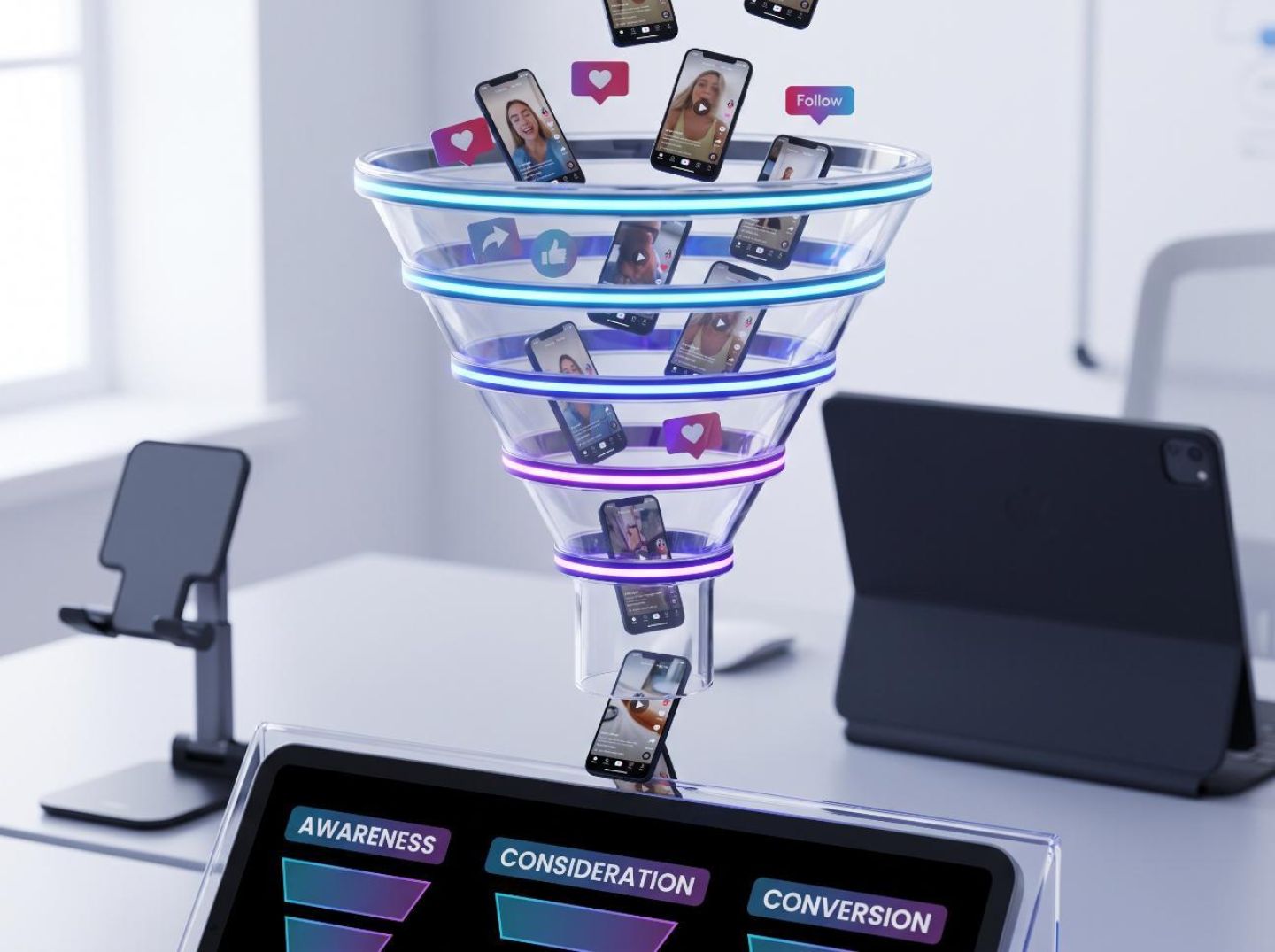
Instead of thinking “upper, mid, lower,” think in experience stages you can hit from any angle:
3. Decision & Friction-busting: Content that clears the last hurdles.
Your big idea stays constant—what changes is which slice of the moment you foreground at each stage.
This is exactly how the best cross-channel campaigns behave. Uber Eats’ World Cup work, for instance, used every touchpoint to reinforce one idea—“who can cook at a time like this?”—while letting each platform express a different flavor of that message, a consistency that a Denver agency analysis notes was key to its resonance across social, digital, and TV coverage by Real FiG Advertising & Marketing shows. Your TikTok funnel should feel just as unified, even when individual videos look wildly different.
Now, translate that journey into actual TikTok funnel structures. A few practical archetypes:
TikTok’s premium formats give you even more control over sequencing. The Trio unit, for example, lets you deliver a continuous story across three exposures—the first ad can simply dramatize the moment, the second can show the product solving it, and the third can be a direct nudge to purchase, a structure that mirrors the storytelling power TV once owned but in a mobile-native feed, as Neil Patel’s breakdown of TikTok’s premium ad push points out. Even if you’re not buying Trio, you can still script your creative library as if users will encounter you multiple times in a short window.
The real unlock is speed. Once your big idea is decomposed into hooks, angles, and scenes, you can generate far more TikTok variations than a traditional production cycle would ever allow—and let performance data guide which “micro-stories” graduate into other channels.
Brands using dynamic creative engines have seen this play out in practice. In a case study on Meta campaigns, one eCommerce brand used templated, rapidly iterated assets to expand testing around a single value proposition; the new variations delivered a 59 percent jump in ROAS versus their legacy ads, an uplift documented in a StoreYa Blog review of RenderTiger’s creative impact. TikTok is even more forgiving of volume and experimentation. You can:
The point isn’t to flood the feed. It’s to systematically explore how many ways you can dramatize the same brandable moment—then promote, repurpose, and scale the winners into push notifications, in-app pop-ups, and even premium inventory.
When you stop asking, “What’s our TikTok spot?” and start asking, “What’s our TikTok funnel for this moment?” you shift from TV thinking to platform-native thinking. And suddenly, TikTok isn’t a place you post leftovers—it’s where your big idea is born
Once you’ve nailed a brandable moment, the next step isn’t “let’s shoot the ad.” It’s “how many funnels can this one moment power?” Native, push, and pop aren’t three separate campaigns; they’re three parallel ways of weaponizing the same core scene.
Think of your brandable moment as the stem cell. Native, push, and pop are the differentiated cells it can become.
Native: feeds and in-content units that feel like the platform
Push: notifications, inbox messages, email subject lines, in-app prompts
Pop: interruptive placements like interstitials, pre-roll, and pop/redirect traffic
The key is to keep the moment constant while changing the way you frame, pace, and payload it for each environment.
A moment that scales is brutally simple: a specific “before” state, a visible “after,” and one emotional beat in between.
Uber Eats’ World Cup line—“Who can cook at a time like this?”—works because the before/after is so clear: stressed fan vs. relaxed fan with delivery, all orbiting a single cultural truth about not wanting to leave the game. As a Denver agency unpacked it, every touchpoint from TV to social to digital commentary reinforced that same idea across platforms, creating “connected experiences wherever customers spend their time,” as.
Your job is to get your brandable moment to that level of atomic clarity, so it can survive any format you throw at it.
Start with the most demanding environment: native content in feeds and stories. That’s where your moment has to compete with real people, not just other ads.
On TikTok, high-performing funnels don’t just blast one “hero” spot; they chain together multiple creatives that explore the same moment from different angles—proof, demo, story, FAQ, objection handling—using sequences like TikTok’s Trio unit. As TikTok’s own team has emphasized, the platforms that perform best are treating TikTok as a demand engine, not a reach stunt, and wiring their creative to drive qualified actions like quizzes, lead forms, or dynamic offers, as.
From your brandable moment, outline at least three native pieces:
Get those working first in a native environment (TikTok, Reels, Shorts, in-feed). Native performance is your creative “truth serum.”
Now compress that same emotional beat into a line that can fit in a notification tray or inbox.
If your TikTok hook was “I stopped doing X the hard way after this one setting,” your push variation becomes:
Push has to ride on intent and timing more than visuals, but it should still be instantly recognizable as the same world as your native content. If someone taps from a notification into a landing page or in-app screen, they should feel like they’ve “stepped inside” the TikTok they saw yesterday, not entered a new campaign.
Performance marketers who expand their creative supply see this connection clearly: when brands use systems that can quickly spin variants of a single concept across formats, they generate more tests, find winners faster, and improve ROAS—like the RenderTiger-led campaign on Meta that drove a 59% lift in return by iterating the same underlying ideas across multiple ad executions, as.
Your push copy should be treated as just another variant of the same idea, not a different campaign.
Pop traffic (interstitials, pre-roll, pop-unders, remnant placements) is where most brandable moments go to die, because teams default back to “old TV” thinking: logo, wide shot, legal copy, done.
Instead, design pop units as if you’re dropping someone into the middle of your best-performing native ad:
The only real difference is pacing and escape mechanics: you have 1–3 seconds before a skip, close, or back button, and you need to earn another 5–10 seconds by leaning harder into curiosity or self-recognition.
This is where creative automation and AI can help you scale responsibly. Tools like TikTok’s Symphony Studio are already built to generate multiple video variants from a single brief and then let humans refine scenes and messaging, as Social Media Examiner’s coverage of Symphony points out. That’s exactly what you need to turn one brandable scene into dozens of pop-friendly cuts without rewriting the idea each time.
None of this matters if native, push, and pop live in separate dashboards and slide decks. The whole point of building funnels from a single moment is that learnings should transfer instantly:
Teams that connect their channel data into a single system—often via CRM-integrated setups where ad signals and lifecycle data feed each other—are able to treat creative like a portfolio instead of a set of isolated assets, as.
The result is a creative engine, not a campaign calendar: one powerful brandable moment, expressed as a native sequence, a push cadence, and a pop arsenal, all evolving together based on what people actually do, not what your storyboards predicted.
If Section 4 was about multiplying one brandable moment into multiple channel executions, this is where you turn into a thief with a spreadsheet.
You are not inventing native, push, and pop funnels in a vacuum. The fastest way to build winning sequences is to reverse‑engineer the ones your competitors are already paying to keep in rotation—then rebuild them around your own brand moment.
Tools like Anstrex sit on top of native, push, and pop networks and show you what’s been running longest, where, and with what creative. Longevity is your first filter: if an ad has been live for weeks or months at stable spend, someone on the other side of the table has done the math and decided it earns its keep.
Start by:
You’re not hunting for “cool ads”; you’re hunting for complete, scalable funnels that have already survived the kill phase. This is the same logic behind why performance teams lean on creative engines that can quickly spin and iterate winning concepts—when an idea proves itself in market, you double down, as the RenderTiger case study on the StoreYa blog illustrates with their 59% ROAS improvement once they leaned into their best‑performing variations.
Inside Anstrex, click through every step that’s visible: the ad, the pre‑sell, the offer page. Screenshot and save everything. Then strip away brand names and logos and ask three questions at each stage:
For native, you might see a consistent pattern: curiosity headline → “news style” advertorial → soft CTA into the cart. For push, it’s often urgency plus personalization: a short, emotional subject line, a single benefit, and a countdown vibe. Pop funnels tend to do the opposite—high‑impact, low‑friction landers that compress the entire story into a couple of panels and a form.
Document these elements in a spreadsheet, not as “copy to steal,” but as structural patterns you can re‑skin with your brandable moment at the center.
Competitive intel is raw material, not a template. The goal is to keep what makes the funnel work (sequence, logic, pacing) and replace everything else with your own moment and message.
Take the entry hook. If competitors lead with cultural relevance (“No one has time to cook during the game”), inspired by campaigns like Uber Eats’ World Cup push that Real FiG Advertising highlighted for its simple, relatable tension, ask: what is your equivalent “of course” truth?
Align the narrative spine of each step with the sequence you’ve already designed for platforms like TikTok. As TikTok’s own premium formats show with units like the Trio sequential ad, repetition with progression—three related exposures building one story—creates a compounding effect you can mirror across native article scrolls, push re‑engagements, and pop‑up retargeting.
Once you’ve mapped structures from Anstrex, you need volume. Instead of rewriting every asset from scratch, treat each funnel type as a pattern library:
Then use AI as a production assistant, not a strategist. As Melissa Laurie explained in Social Media Examiner’s breakdown of TikTok’s AI tools, platform‑level AI tends to get you about “70% of the way there” on hooks and structures, with the remaining 30% demanding human input to inject true product specificity and nuance. Apply the same ratio here: let AI draft variants against your patterns, then refine for sharpness, credibility, and brand voice.
This is how you get to the “create more, test more, find what works” operating system that performance teams crave but rarely achieve manually. Instead of hoping one clever rewrite lands, you’re programmatically filling each slot in a proven funnel structure with multiple, on‑brand interpretations of your core moment.
Competitive intel is a living feed, not a one‑time audit. Set a cadence—weekly or bi‑weekly—to:
If you notice rivals converging on, say, quiz‑based native pre‑sells while your advertorials are soft, that’s your next test. If a new spin on urgency‑driven push notifications keeps resurfacing, fold that pattern into your next wave of variants.
Over time, this constant deconstruction and reconstruction does two things: it keeps your native, push, and pop funnels evolving with the market, and it makes your brandable moments more durable. Instead of a single hero ad that burns out, you’re building an adaptable narrative system informed by what the market is already rewarding—then bending that system around your own story.
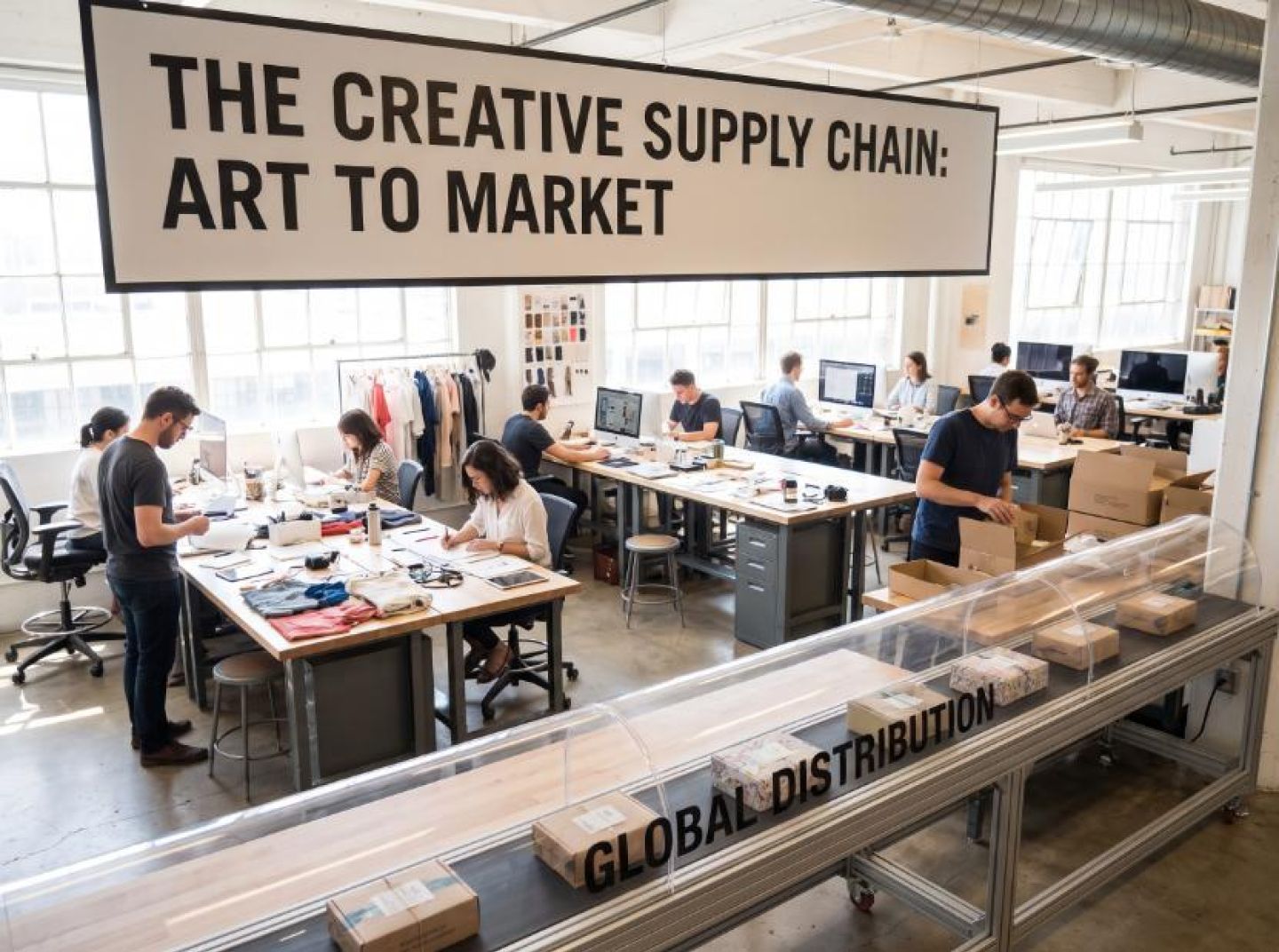
If you want native, push, and pop to scale, you don’t just need more ideas—you need a creative supply chain.
Not a “brainstorm occasionally, brief an agency, wait six weeks” process. A repeatable system that turns one brandable moment into dozens of disciplined variations, feeds them into your funnels, and then ruthlessly promotes what works.
Think assembly line, not art project.
Start by shrinking your ambition. The smallest unit in your supply chain isn’t “a campaign,” it’s a variant of your moment:
This mirrors how Invisalign used a single “Smile Quiz” mechanic and wrapped multiple creative executions around it on TikTok. The quiz was the constant; copy, pacing, and framing flexed around it to find the highest‑intent version of the same underlying move.
For your brandable moment, codify 3–5 testable levers (hook, narrator, context, objection, CTA). Those levers become the columns in your tracking sheet and the raw material your team pulls from when generating variants.
Your goal is throughput, not perfection. Papa John’s and Carat describe operating in a “bowl of spaghetti” media reality, where relevance comes from moving within 24 hours, not waiting for the perfect spot. That’s the mindset you want for your funnels.
Practically, that means:
This is how DTC brands are starting to move from idea to live test in days, not weeks. In one Meta campaign, RenderTiger’s templated, rapid‑turnaround creative pipeline drove a 59% ROAS lift versus the brand’s existing ads precisely because they could explore more variations of the same moment and let the numbers pick winners.
A supply chain is useless if it ships the wrong thing to the wrong destination.
Instead of cloning creative across native, push, and pop, give each traffic source a defined “job to be done” in your learning loop:
Critically, those tests shouldn’t run in isolation. Your spreadsheet should track, for each variant of the moment, how it performs per channel and through the stack (native hook → push reminder → pop capture). The best creative supply chains don’t optimize for one KPI; they optimize for throughput from first touch to conversion.
A supply chain is only as efficient as its quality control. That means you need hard rules for when creative dies and when it scales.
Borrow from the discipline of marketers who aren’t afraid to pull failing creative completely to make room for bolder bets. Set thresholds for each traffic type—e.g., “If a native variant underperforms the control’s thumb‑stop rate by 30% after 10,000 impressions, it’s retired.”
Then redirect that budget and production capacity toward:
Modern tools make this triage easier. TikTok’s Symphony and other AI analytics layers can monitor creative fatigue and surface your strongest hooks daily. Use that same logic across your stack: daily reports that tell you which “stem cell” moment, in which variant, deserves more cells tomorrow.
The outcome of a true creative supply chain isn’t just more ads; it’s a living, evolving organism built around one brandable moment that keeps getting sharper with every native impression, push tap, and pop submission.
Receive top converting landing pages in your inbox every week from us.
Must Read
Learn how to transform one powerful brand moment into scalable Native, Push, and Pop funnels instead of relying on a single hero ad. This guide covers modular creative, TikTok funnel thinking, competitive intelligence with Anstrex, cross-channel testing, and a repeatable creative supply chain.
Dan Smith
7 minSep 26, 2026
Editor’s Pick
Learn how OOH professionals can transfer their sales, operations, creative, and experiential skills into performance-driven Native and Push advertising. This guide breaks down how billboard expertise translates into digital media buying, channel orchestration, scroll-stopping creative, funnels, and measurable performance.
Rachel Thompson
7 minSep 26, 2026
Most Read
Discover why award-winning and highly praised creative does not always translate into profitable advertising performance. This guide shows how to turn inspiration into structured testing, reverse-engineer winning ads across Native, Push, Pop, and TikTok, and build a repeatable creative-performance loop.
David Kim
7 minSep 25, 2026