9 minNovember 24, 2026

Our spy tools monitor millions of native ads from over 60+ countries and thousands of publishers.
Get StartedVirality is tempting because it looks like a shortcut. One breakout advertisement, one perfectly timed trend, and suddenly a brand appears everywhere. But for performance marketers, building a business around unpredictable viral moments is a risky strategy.
A viral spike can generate attention without creating lasting demand. A trend can lose relevance before a campaign is ready. And when brands imitate a popular format without understanding why people care about it, the result can feel forced rather than culturally relevant.
A more dependable approach is to identify the creative ideas that audiences repeatedly respond to, understand the motivations behind them, and build a system that develops those ideas over time.
This is where competitive ad intelligence becomes useful. Ad spy data can help marketers observe recurring messages, creative formats, offers, and campaign patterns across the market. Instead of copying a viral advertisement, teams can use those observations to develop their own repeatable creative strategy.
The objective is not to predict the next viral hit. It is to build a recognizable presence that earns attention, reinforces a message, and gives audiences multiple reasons to engage.
Virality is seductive because it feels like a shortcut. One breakout advertisement can deliver a sudden wave of attention, reach, and engagement. But performance marketers cannot build a dependable acquisition strategy around an outcome they cannot reliably control.
The first problem is timing.
By the time a trend becomes obvious, it may already be saturated. Brands that rush to imitate it can end up publishing content that feels late, disconnected, or opportunistic. In its discussion of the cultural “ick factor,” Brandweek's conversation with Anthony Po and Lauren Probyn Aouad highlights the importance of understanding cultural context rather than simply borrowing a popular format.
A trend is not automatically relevant to every brand. The fact that a particular joke, sound, or video structure is attracting attention does not mean a company can use it credibly. Participation needs to make sense for the audience and the brand.
The second problem is that a viral spike does not necessarily produce sustained business results.
A post can attract views without generating meaningful consideration, trust, or purchases. Social platforms also provide opportunities for recurring content and ongoing discovery. In its coverage of video series and LinkedIn discovery, Social Media Examiner discusses the value of repeatable content formats and continued audience engagement.
For a brand, the practical question is not simply whether one advertisement can attract attention. It is whether the creative strategy can give people a reason to return, recognize the message, and move closer to a decision.
The advertising infrastructure underneath social feeds is changing too. Automated products such as Google's Performance Max, Meta's Advantage+, and other AI-assisted buying systems increasingly handle parts of audience selection and campaign optimization. That makes the creative itself an important source of information about who may respond to an advertisement.
As MarTech explains in its discussion of creative as the new targeting, the message, imagery, and format can help platforms interpret the audiences most likely to engage. Marketers therefore need to think carefully about what their creative communicates, not just which audience settings they select.
There is another risk at the opposite extreme: excessive personalization.
AI can help advertisers produce many variations for different audiences and contexts. But when every message becomes a disconnected micro-variation, the brand may lose the consistent ideas that help people recognize and remember it.
In AdExchanger's analysis of the personalization paradox, Erez Levin explores how extreme personalization can complicate measurement and weaken broader brand signals. The lesson is not to abandon personalization. It is to balance audience relevance with a coherent message that can build recognition over time.
Brands also need the flexibility to respond when genuine cultural opportunities emerge. In its coverage of Papa John's and Carat, Adweek describes an approach to earning attention across fragmented media environments while remaining connected to broader brand strategy.
That is different from chasing every trend. It means having a clear point of view and the ability to act when an opportunity genuinely fits.
For performance marketers, the takeaway is straightforward: virality is an outcome, not a plan.
Rather than betting on unpredictable spikes, build a repeatable creative system. Earn attention through relevant messages, reinforce those messages across multiple touchpoints, and measure whether the attention contributes to meaningful business outcomes.
The goal is to build your own momentum instead of waiting for someone else's trend to carry your brand.
The familiar advertising principle of reaching the right person with the right message at the right time has shaped digital marketing for years.
But as AI-assisted advertising platforms take on more targeting and optimization decisions, marketers need to think beyond individual impressions.
The larger opportunity is to deliver the right messages to a relevant population consistently over time.
This shift reflects three important realities:
Across major advertising platforms, automated campaign products are designed to use signals and machine learning to find opportunities within broader audiences. As MarTech's analysis of creative-led targeting explains, creative quality and message relevance have become increasingly important as parts of media execution become automated.
That changes where marketers can create value.
Instead of relying entirely on increasingly narrow audience segments, teams need to develop messages that clearly communicate who a product serves, what problem it addresses, and why the offer deserves attention.
This does not mean audience strategy is no longer important. It means the creative strategy and audience strategy need to work together.
Erez Levin's argument in The Paradox of Personalization provides a useful way to consider this shift. A campaign should not become so focused on capturing people who are already ready to buy that it neglects the broader population that may become interested later.
A brand needs to communicate with people at different stages of awareness and consideration. Some are actively comparing products. Others are just beginning to recognize a problem. Some may not be ready to purchase until weeks or months later.
A population-first approach recognizes that these people do not all need the same message at the same moment.
For example, an ecommerce brand might build a sequence around a recurring customer problem:
Each stage reinforces the same underlying brand promise while giving audiences information that fits their current needs.
This approach also connects with full-funnel advertising systems. StoreYa's explanation of Traffic Booster's multichannel acquisition approach describes how campaigns can distribute activity across search, Shopping, social, YouTube, and remarketing while using performance information to guide allocation.
The important strategic idea is that a brand should not depend on a single interaction. It should build a consistent presence across the places where potential customers discover, research, and evaluate products.
Recurring content can support that process. Social Media Examiner's coverage of video series and long-tail discovery highlights how repeatable formats can create opportunities for continued discovery and audience familiarity.
The same principle can inform paid advertising. Instead of treating every creative asset as an isolated campaign, develop families of advertisements that share a central message but explore different stories, proof points, and formats.
For performance marketers, the objective is not to deliver one perfect advertisement to one perfect person at one perfect moment. It is to build a message system that remains relevant as a population moves through different stages of the customer journey.
Platforms can help identify individual opportunities. Your creative strategy should give those opportunities a consistent story to discover.
A proto-bandwagon is an emerging pattern that has not yet become an obvious market-wide trend.
It may appear as a repeated product promise, a creative format that several advertisers are adopting, or a particular customer problem that keeps appearing in different campaigns.
These early signals can help marketers understand where a category is heading before a creative approach becomes commonplace.
Ad spy tools provide a practical way to observe those signals. Rather than treating an advertising library as a collection of inspiration, use it as a source of structured competitive observations.
The first step is to look beyond raw advertisement volume.
A large number of advertisements does not automatically mean that a creative concept is successful. Advertisers may be testing variations, running campaigns with substantial budgets, or distributing similar assets across multiple placements.
Instead, look for patterns that appear to be maintained, adapted, and reused.
A creative family consists of advertisements that share an underlying idea but differ in execution.
Examples include:
For instance, a mattress advertiser might repeatedly test different versions of a home-trial message. One advertisement may emphasize convenience, another may focus on risk reduction, and another may highlight the experience of testing the product before committing.
The repeated theme is worth investigating. It may indicate that the advertiser considers the underlying promise important enough to keep exploring.
However, repeated creative activity is a signal—not proof of profitability. Ad libraries generally do not reveal the complete economics behind a campaign. Use the observation to develop a hypothesis and test the idea against your own market and performance data.
A creative idea may appear in several advertising environments.
For example:
The same story appearing across several channels may indicate that the advertiser is building a broader campaign around it.
StoreYa's overview of multichannel Traffic Booster campaigns illustrates how advertisers can coordinate activity across different acquisition channels. Competitive research can help marketers observe whether similar message themes appear in multiple environments.
The important thing is to identify the shared message, not assume that the exact same asset will work everywhere. Each channel has different creative conventions, user expectations, and consumption patterns.
A single snapshot shows what is running today. Repeated observations help reveal how an advertiser's creative strategy changes.
Use weekly or biweekly reviews to examine questions such as:
A concept that continues to appear with new executions may be worth closer investigation. It suggests that the advertiser is still exploring that message or format.
But avoid treating a long observed run as direct evidence of strong return on investment. Creative longevity can have several explanations, including campaign structure, budget decisions, or limited replacement activity.
A repeatable content series is another useful signal.
Look for advertisements that share a recognizable structure:
The value is in the repeatable narrative. A series gives a brand a recognizable way to communicate while leaving room for new stories and proof points.
This aligns with the shift toward recurring content formats discussed in Social Media Examiner's coverage of video series strategy.
When monitoring these patterns, record the advertiser, format, core message, first observed date, subsequent variations, and the channels where the concept appears.
Over time, those observations can help distinguish a one-off creative experiment from a broader direction worth testing.
Proto-bandwagons are not guaranteed predictions of future trends. They are informed opportunities: patterns that deserve attention because they are appearing repeatedly, evolving, or spreading across the market.
Ad spy data gives marketers a way to identify those opportunities while there is still room to develop a differentiated response.
Competitive research is valuable when it helps marketers understand why an idea resonates.
It becomes counterproductive when the objective shifts from learning to imitation.
The difference is subtle but important. A brand can study another advertiser's successful message, identify the customer motivation behind it, and develop an original way to address that motivation. It should not reproduce the competitor's wording, recognizable visual identity, or distinctive creative execution.
The goal is to understand the underlying insight—not borrow the finished advertisement.
The discussion of authenticity in Brandweek's conversation with Anthony Po and Lauren Probyn Aouad reinforces why cultural context matters. Audiences can recognize when a brand adopts a format without understanding the reason it became meaningful.
A practical way to avoid this is to break competitive advertisements into underlying customer insights.
When you find an interesting advertisement, look beyond its colors, layout, or opening line.
Ask:
An advertisement may appear to sell a product, but its underlying promise could be convenience, reassurance, confidence, control, or relief.
That promise is often more useful than the exact creative format.
Consider who the message is speaking to and what situation it reflects.
Does it validate a particular experience? Does it challenge an established assumption? Does it make a complicated problem feel easier to understand?
These details help determine whether the idea is relevant to your own audience.
Suppose a fitness brand uses customer testimonials to communicate frustration with shame-based fitness programs.
The visible format may be a personal confession. But the underlying customer insight is broader: some people want a healthier routine without feeling judged or pressured.
A B2B analytics company should not reproduce the fitness testimonial format simply because it appears effective. Instead, it could explore a related emotional insight in a context that makes sense for its customers.
For example, it might create a founder-led video about the difficulty of making business decisions without reliable reporting, followed by a practical demonstration of how its product improves visibility.
The emotional idea is translated into a different story, setting, and product context.
Instead of copying a single successful advertisement, identify a narrative format your brand can credibly develop over time.
Possible examples include:
A consistent format helps audiences recognize the series while allowing each installment to introduce something new.
This is also a way to apply the recurring-content principles discussed in Social Media Examiner's video series strategy coverage.
Before scaling a new creative direction, gather feedback from people who understand the audience.
Useful review methods include:
Ask whether the concept feels natural, relevant, and credible. If it resembles a competitor too closely or feels disconnected from the brand, revise it before investing more heavily.
The strongest competitive insight is one that helps your brand communicate something meaningful in its own voice.
You are not trying to look like the winning advertisements in your research library. You are trying to understand the customer motivation behind them—and develop an approach that your brand can genuinely own.
A bandwagon is not built through one advertisement. It develops through repeated exposure, recognizable messages, credible proof, and opportunities for people to engage.
Different advertising formats can contribute different roles to that process.
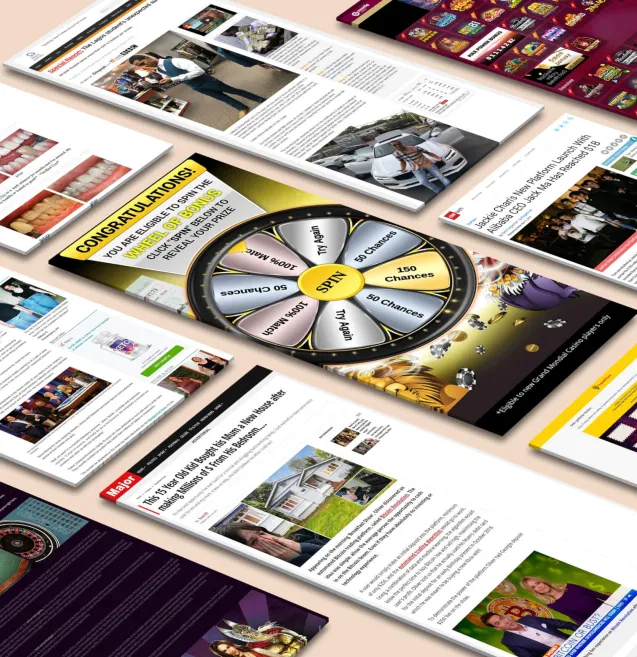
Native advertising can introduce a story. TikTok can provide demonstrations and recurring content. Push notifications can bring people back when they have a relevant reason to return. Pop formats can present a focused offer in an appropriate context.
These formats should not be treated as interchangeable. Each has different user expectations, limitations, and levels of interruption.
Ad spy data can help marketers study how advertisers use these formats and identify creative approaches worth testing.
Native advertising can introduce a product or idea in an editorial-style environment.
When researching native campaigns, look for:
The objective is to identify the narrative that appears to be receiving continued attention from the advertiser.
For example, a product may be introduced through an unexpected use case, a practical demonstration, or a customer story. These approaches can provide a starting point for a broader campaign narrative.
As automated media buying becomes more common, creative also plays an important role in communicating relevance. MarTech's discussion of creative as targeting explains why messaging and visual choices matter when platforms use automated systems to identify potential audiences.
Your native advertisement should therefore communicate a clear, credible reason to pay attention.
Do not assume that a competitor's long-running advertisement is profitable simply because it remains visible. Treat it as a concept worth researching and validate your own version through testing.
The output of this stage is a central story that other campaign formats can adapt.
Push advertising can help bring users back to a message, product, or offer.
Because push notifications have limited space, the message needs to be direct and understandable. It should also be relevant to the user's context and comply with applicable consent and platform requirements.
When researching push campaigns, examine:
A push message can reinforce a previously introduced product benefit or highlight a useful next step.
For example, after a user has engaged with a product demonstration, a relevant follow-up might point to a detailed comparison or a practical guide.
Avoid assuming that every user remembers a previous advertisement. Also avoid unsupported scarcity claims, misleading urgency, or messages that imply a relationship that does not exist.
The role of push is to create a useful continuation—not simply to interrupt someone again.
Pop advertising can be highly interruptive, so it requires careful consideration of context, timing, user experience, and applicable platform rules.
When studying pop campaigns, look for:
A pop advertisement may be used to present a focused offer, bundle, trial, or other conversion opportunity.
However, do not assume that a frequently observed pop campaign is generating strong returns. Visibility alone does not reveal conversion rates, acquisition costs, or profitability.
Social proof also needs to be genuine. If an advertiser uses customer counts, reviews, or performance claims, record the type of proof being used—but never reproduce those claims without evidence of your own.
The purpose of this stage is to make a relevant next step clear to an interested user, not to force a conversion through excessive interruption.
TikTok can provide a space for demonstrations, creator perspectives, customer stories, and recurring content formats.
When researching TikTok advertisements and organic content, look for:
A recurring format can make it easier for people to recognize a brand's content while giving the company opportunities to address different questions and use cases.
For example, a brand might develop a series in which customers test a product under different conditions. Each installment can introduce a new situation while maintaining the same overall theme.
The shift toward repeatable video formats is also discussed in Social Media Examiner's coverage of video series strategy.
The goal is not to manufacture the appearance that everyone is talking about a product. It is to provide useful, credible content that gives people reasons to discuss, share, or investigate it.
A coordinated campaign can use different formats to move the same central idea forward.
For example, a product campaign might follow this sequence:
The sequence is a framework, not a fixed customer journey. Some users may discover a brand through TikTok first. Others may arrive through search, native placements, or direct recommendations. Not every user should receive every format.
Use performance data to evaluate each touchpoint and understand how the campaign contributes to the broader customer journey.
Ad spy research can help reveal which messages and formats competitors are exploring. Your own analytics should determine whether your creative sequence is generating meaningful engagement and business results.
The objective is not to make people believe that everyone is buying your product. It is to build enough consistency, relevance, and credible proof that the brand becomes increasingly familiar to the audience.
Performance marketing does not need another strategy built around hoping that one advertisement becomes popular.
It needs a more disciplined way to understand what audiences respond to, identify emerging creative patterns, and turn those observations into repeatable campaigns.
Ad spy data helps marketers see how competitors communicate, which messages they continue to explore, and how creative ideas appear across different advertising environments. That information becomes more valuable when it is combined with customer research, original brand insights, and first-party campaign results.
The process is straightforward:
Observe the market. Identify the underlying insight. Develop original creative. Coordinate the message across relevant formats. Measure what works. Repeat.
A bandwagon is not created by copying a trend or forcing the appearance of popularity. It is built by consistently showing up with messages that matter to a defined audience.
Stop chasing the next viral moment. Start engineering the creative momentum your brand can sustain.
Receive top converting landing pages in your inbox every week from us.
Most Read
AI can optimize bids and delivery, but it still needs context. Discover how marketers can combine competitive ad intelligence, creative analytics, and structured prompts to guide AI media buying with better information.
Samantha Reed
7 minNov 24, 2026
Announcement
Virality is unpredictable, but repeatable creative systems can be engineered. Discover how performance marketers can use competitive ad intelligence to spot emerging patterns, translate audience insights into original creative, and coordinate campaigns across multiple advertising formats.
Rachel Thompson
7 minNov 24, 2026
Recently Updated
AI-powered advertising needs more than automated bidding and content generation. Discover how competitive ad intelligence can help teams build an always-on creative engine that monitors market patterns, generates differentiated concepts, tests variations, and learns from performance.
David Kim
7 minNov 23, 2026