10 minAugust 13, 2026

Our spy tools monitor millions of TikTok ads from over 55+ countries. Biggest TikTok Ad Library in E-commerce and Mobile Apps!
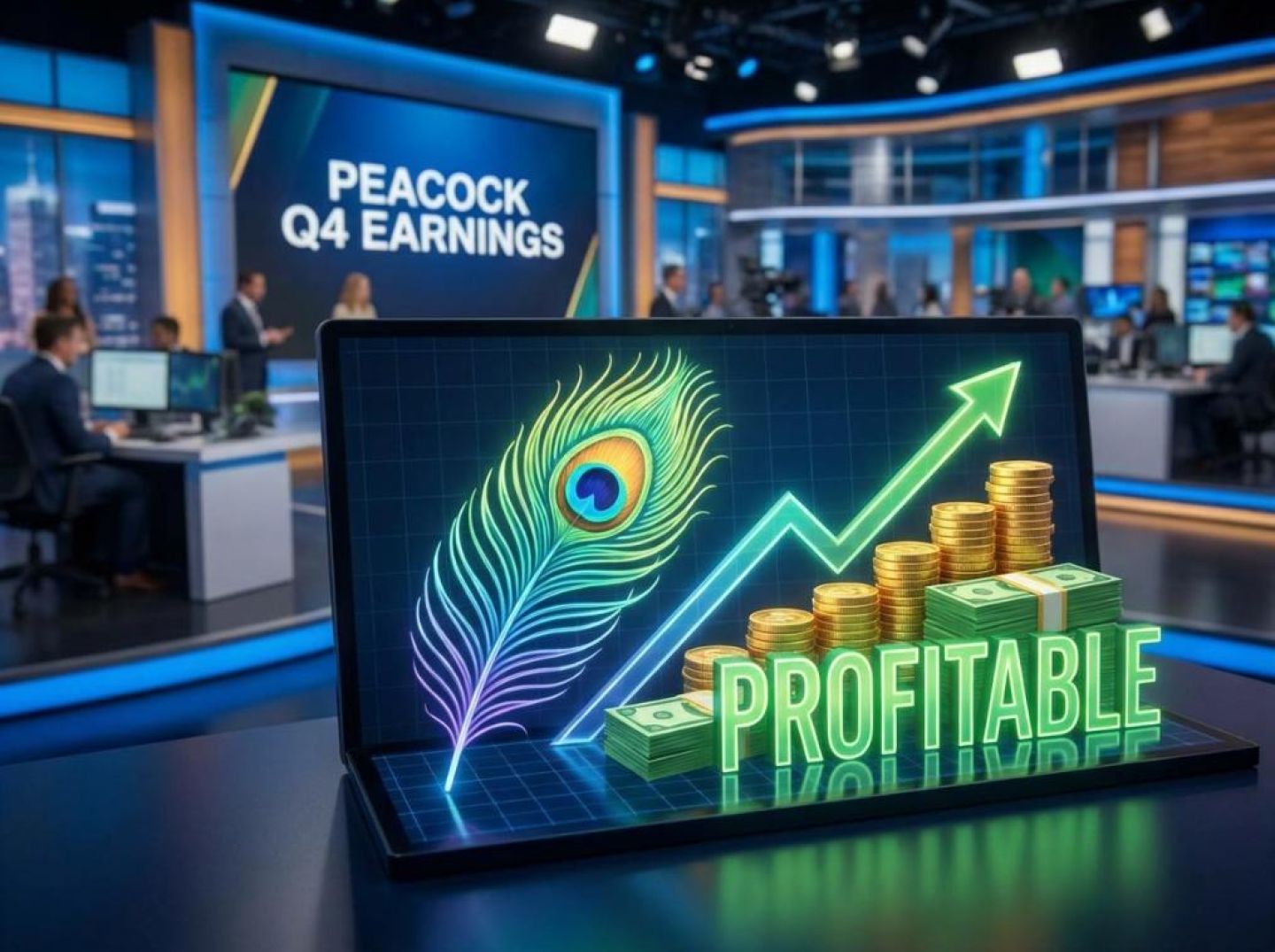
Try It FREEWhen Comcast reported that Peacock had crossed into profitability, the headline read like a vindication story for streaming. But if you're a performance-minded advertiser, the real signal isn't that a platform finally stopped hemorrhaging cash — it's what happens next to the cost of reaching audiences on that platform.
Every emerging media channel follows a predictable arc. In the experimental phase, inventory is abundant, measurement is shaky, and CPMs stay low because buyer confidence hasn't caught up to audience attention. Then something shifts: a major player proves the model works, measurement infrastructure matures, and budget allocation committees stop treating the channel as a test line item. That's the inflection point where auction density increases, competition for impressions heats up, and pricing climbs toward — and often past — legacy benchmarks.
Peacock's profitability milestone, arriving alongside NBCU's strategic pivot toward a converged media operation, places streaming squarely at that inflection point. This isn't just one platform's success story; it's a market-wide maturation signal. As AdExchanger reported from the POSSIBLE conference, the streaming conversation has shifted decisively from where the channel is headed to how marketers drive better performance today. That's the linguistic tell of a medium entering its premium pricing era. When an industry stops debating whether something works and starts optimizing how it works, the arbitrage window is closing.
Three structural forces are accelerating this. First, AI-powered optimization is moving from positioning to production. Nearly six in ten advertisers now identify real-time optimization as the most valuable AI capability for CTV and streaming campaigns, according to advertiser survey data shared at POSSIBLE, yet only 44 percent believe those capabilities will be widely available in 2026. That gap matters: as real-time optimization tools roll out over the next twelve to eighteen months, they will make streaming inventory demonstrably more effective — which will, in turn, justify and drive higher CPMs.
Second, streaming TV buying is becoming signal-driven rather than purely audience-scale-driven. Advances in contextual intelligence, bidstream data, and behavioral signals mean targeting is growing more nuanced and predictive. Better targeting produces better outcomes, better outcomes attract more budget, and more budget inflates prices. The cycle is self-reinforcing.
Third, omnichannel convergence is eliminating the artificial walls between linear and streaming budgets. Integrated or hybrid teams now control 55 percent of CTV and streaming budgets — a structural shift that channels more total dollars into programmatic and biddable streaming environments simultaneously.
For advertisers, the strategic implication is counterintuitive but critical: the moment consensus forms around a channel's effectiveness is precisely the moment to start diversifying toward cheaper frontiers. Consider that TikTok ads currently average a CPM of around $9, compared to roughly $15 on Meta — a cost advantage that reflects where TikTok sits on its own maturation curve. Native advertising occupies a similar position, with formats still priced below their demonstrated engagement value.
Sophisticated advertisers don't pile into channels at the moment of industry consensus. They recognize that consensus is the signal — not to double down, but to lock in rates elsewhere before the next wave of budget migration drives those prices up too. Peacock's profitability isn't your cue to spend more on streaming. It's your cue to ask where the next underpriced attention lives.
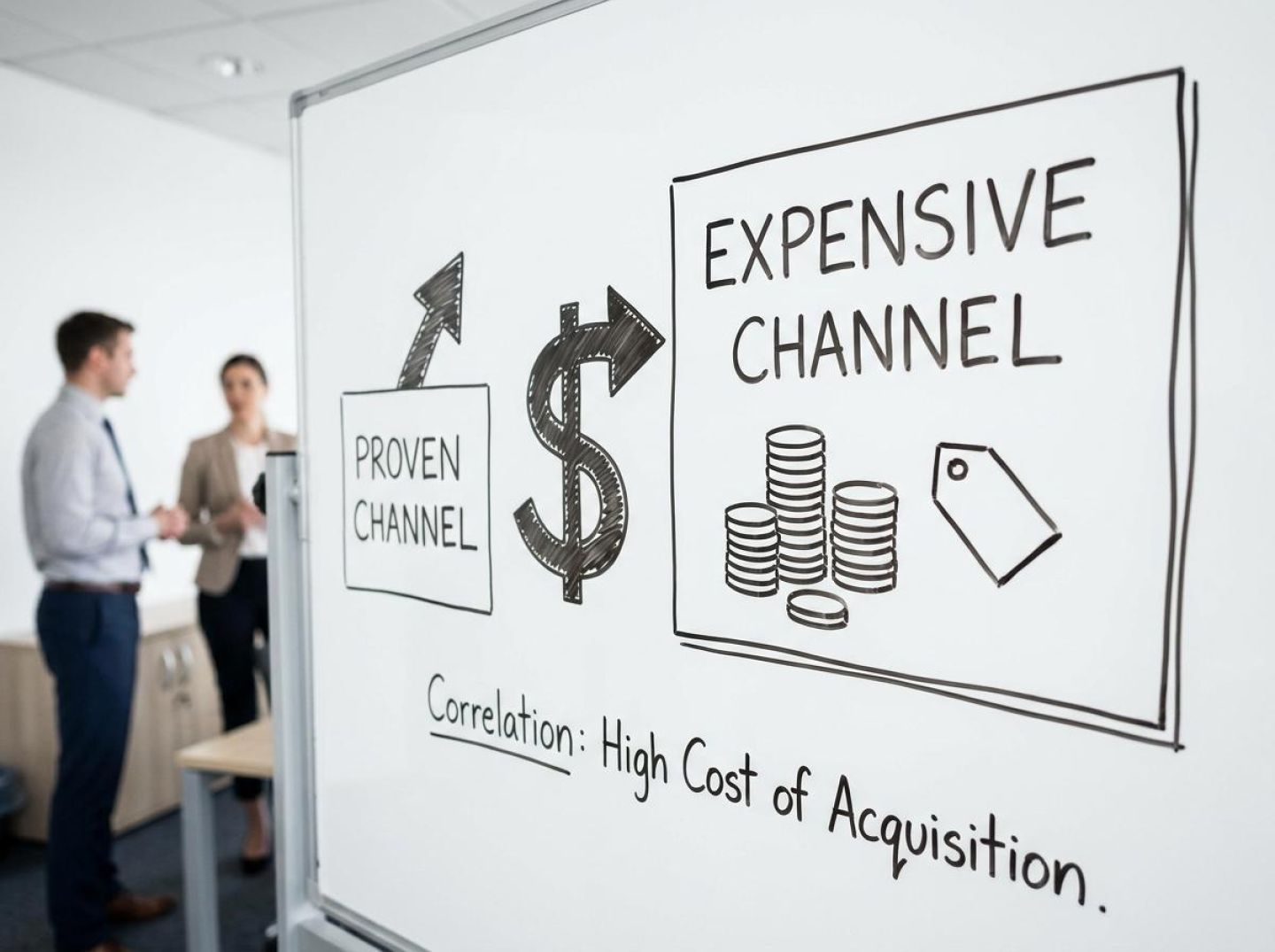
Every major digital advertising channel has followed the same maturation arc: early adopters enjoy cheap CPMs and outsized returns, measurement infrastructure catches up to prove the channel works, and then demand floods in and erases the very arbitrage that made the channel attractive in the first place. We've watched this movie before, and the ending is always the same.
Think back to programmatic display in the early 2010s. When real-time bidding was new and inventory was vast, brands that moved early bought quality impressions for pennies. Then viewability standards arrived, fraud detection improved, and suddenly the channel could prove its value. Demand surged, CPMs climbed, and what was once a performance marketer's secret weapon became a cost-of-entry line item on every media plan. Facebook followed the same script between 2016 and 2018 — the platform refined its conversion tracking, rolled out lookalike audiences at scale, and delivered measurable ROAS that justified massive budget shifts. Within two years, auction density had compressed the cost advantage almost entirely. YouTube pre-roll ads went through their own version of this cycle as Google's TrueView format matured and brand-safety tools gave buyers the confidence to commit larger allocations.
Streaming is now entering the late stages of exactly this pattern. The infrastructure being built around CTV and ad-supported streaming isn't just operational plumbing — it's a proof engine designed to demonstrate, with increasing precision, that streaming advertising works. As AdExchanger reported from the POSSIBLE conference, streaming TV targeting is becoming more nuanced and predictive, moving beyond simple audience-scale plays toward intent signals, engagement patterns, and contextual relevance that help advertisers make smarter media decisions. At the same time, integrated or hybrid buying teams now control 55% of CTV and streaming TV budgets, reflecting a structural consolidation in how organizations manage video investment. When linear and streaming buying collapses into a single operation, frequency capping tightens, overlapping reach gets deduplicated, and the effective supply of available impressions shrinks — even as demand grows.
Layer on AI-driven inventory packaging, where platforms use machine learning to bundle impressions by predicted outcome rather than raw demographics, and you get a marketplace that rewards precision but punishes late entrants with higher floor prices. The better streaming proves incrementality — and 69% of sellers now prioritize it as a measurement metric — the harder it becomes for any advertiser to justify not being there, which is precisely what drives the next wave of CPM inflation.
This is the paradox of measurement maturity. The more a channel can prove its value, the faster its cost advantage evaporates. And this is exactly the inflection point where smart media strategists should be looking not at streaming itself, but at the channels that streaming budgets haven't yet colonized. As Neil Patel's analysis of TikTok's cost structure highlights, TikTok ads currently average a CPM of around $9, compared to Meta's roughly $15 — a gap that exists precisely because the platform still sits earlier on that same maturation curve. That cost advantage won't last forever, but right now it represents the kind of arbitrage window that programmatic display offered a decade ago and that streaming is rapidly closing.
The lesson from every previous cycle is brutally consistent: the moment a channel becomes the consensus "proven" buy is the moment its economics shift against you. The question isn't whether streaming works — it clearly does. The question is whether you're building your next advantage while everyone else is piling into the last one.
The math here is straightforward, even if the strategic implications aren't yet obvious to most media buyers. TikTok's ad ecosystem today sits at roughly the same inflection point Facebook video occupied in 2017: the performance data is accumulating faster than advertiser budgets are following it. That gap between proof and adoption is where structural cost advantages are built.
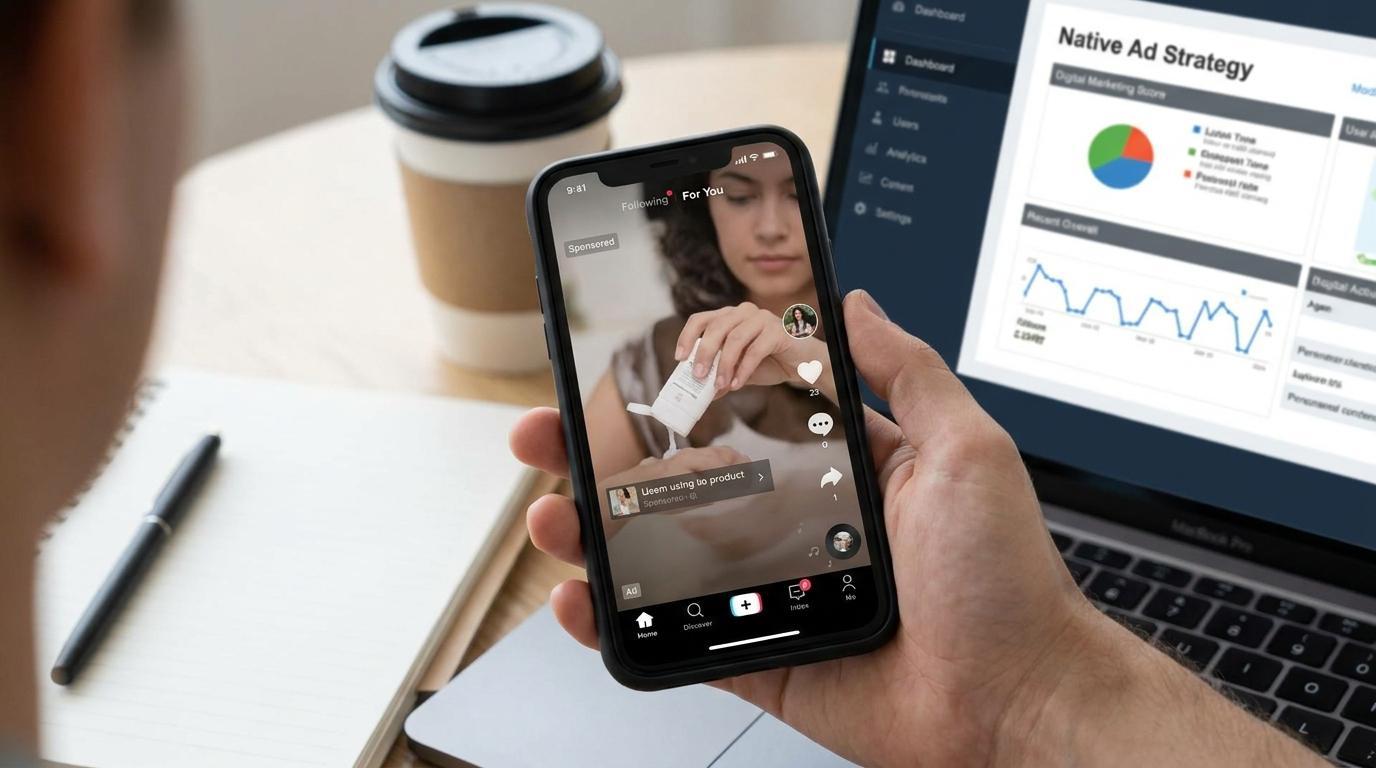
Start with the price tag. TikTok ads currently average a CPM of around $9, compared to Meta's roughly $15, a 40 percent discount for access to an audience that isn't just scrolling — it's watching. That cost differential alone would be noteworthy, but pair it with the platform's trajectory and the picture sharpens considerably. TikTok's global ad revenue is growing at 43 percent year over year, with engagement rates running eight times higher than Instagram's. Those aren't vanity metrics. They represent a platform where users are leaning in rather than tuning out, and where attention is still underpriced relative to the value it generates.
What makes TikTok InStream particularly interesting — and particularly relevant to the streaming profitability story we've been tracking — is that it mirrors the exact ad experience streamers have been validating at premium price points. InStream placements sit within longer-form, creator-driven content, meaning the viewer has already opted into a narrative before the ad appears. This is sequential, contextual, low-interruption advertising — the same model that made ad-supported streaming tiers profitable — delivered inside a mobile-native environment at a fraction of the cost.
TikTok is building toward this deliberately. Its expanding premium format suite, including Pulse and dedicated InStream placements, is designed to offer brands the reach and storytelling cadence that television has historically owned. As Neil Patel's analysis frames it, commerce capabilities on the platform have matured to where lower-funnel performance is genuinely measurable, and creator-led storytelling has proven it can drive purchase behavior in ways traditional video placements often cannot. With TikTok Shop crossing $15.82 billion in U.S. sales in 2025, the full-funnel infrastructure is no longer theoretical — it's operational.
The creative dimension matters just as much as the media economics. Spark Ads, which amplify organic creator content as paid placements, deliver 34 percent higher conversions than standard in-feed ads. The reason is simple: they don't look like advertising. They look like something a person would actually make and share. That native quality is the platform's core differentiator, and brands developing what Mekanism's AJ Pulvirenti calls "Hollywood mindsets with a social-first execution strategy" are already one step ahead of competitors still repurposing CTV spots and hoping for the best.
Here's the uncomfortable truth for wait-and-see advertisers: the $9 CPM is a temporary condition, not a permanent feature. As more budgets migrate onto the platform — and as TikTok's premium inventory proves its performance case — auction competition will compress the advantage. The brands investing now aren't just buying cheaper impressions. They're building creative fluency, audience understanding, and campaign infrastructure at a discount that will be impossible to replicate once consensus catches up. Every month of delay is a month of learning your competitors are banking while you deliberate. The early-mover window on TikTok InStream is measured in quarters, not years.
Everyone is chasing the same insight right now — ads that don't feel like ads outperform everything else — but most of the money pursuing that insight is flowing into the most expensive possible executions. That mismatch is the opportunity hiding in plain sight.
Consider the microdrama gold rush. Procter & Gamble is producing serialized short-form narratives with on-screen chyrons directing viewers to retail partners, and the approach works precisely because the brand integration sits inside a compelling story rather than interrupting one. But as content strategist Mike Schafer cautioned, the enthusiasm may already be outrunning the audience, warning that there might even be a production bubble forming with "almost too much content made for too few people." Meanwhile, brands across the industry are building out Hollywood-style content divisions and hiring entertainment executives, convinced that the future of advertising lives at the intersection of storytelling and commerce. The underlying logic is sound: consumers engage more deeply with content that earns their attention than with content that hijacks it.
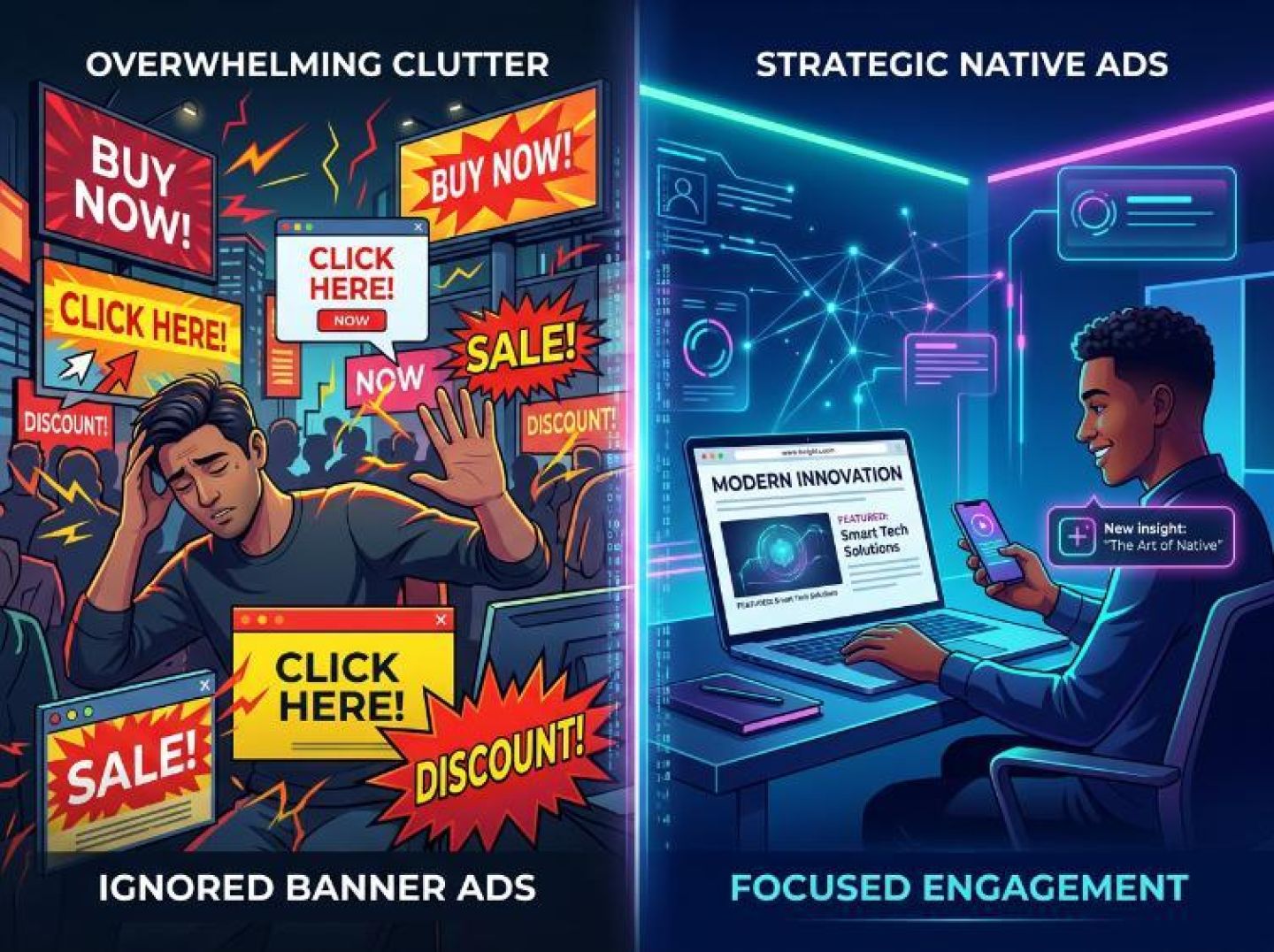
But here's what the microdrama obsession reveals about a broader strategic blind spot. The principle driving these expensive branded entertainment plays — seamless integration into the content experience — is the exact same principle that makes traditional native advertising and push notification channels effective. The difference is cost. A branded microdrama series requires production budgets, talent deals, and distribution partnerships. A well-crafted native placement on a content site requires a headline, an image, and a landing page.
The native advertising ecosystem has been quietly diversifying beyond the social platforms that dominated it for years. As Basis has documented, streaming and mobile channels are opening up new opportunities for native ads with more inventory available programmatically, even as social media remains the largest single channel by spend. That expansion means more placements, more environments, and more ways to reach audiences in contexts where they're already consuming content — all without the premium CPMs attached to social feeds or connected TV.
For performance marketers, this creates a structural advantage. Brand advertisers are pouring budgets into premium native-feeling placements on streaming platforms and social channels, driving up auction competition and CPMs in those environments. TikTok's current average CPM sits around $9 compared to Meta's roughly $15, and even those rates will climb as more budgets arrive. Meanwhile, traditional native ad networks and push notification channels remain largely ignored by the brand dollars chasing entertainment-grade executions. The CPM gap between a sponsored content placement on a major streaming service and a native ad unit on a mid-tier content site can be five to ten times or more — for placements that, when executed well, achieve comparable click-through and engagement rates.
Push notifications occupy an even more overlooked position. The channel carries a reputation problem born from years of low-quality traffic, but the mechanics are identical to what makes microdramas and native placements work: the message arrives inside a context the user has opted into, formatted to match the surrounding experience. For direct-response campaigns where the goal is a click and a conversion rather than a brand lift study, push inventory remains one of the last channels where competition is thin enough to generate genuinely outsized returns on spend.
The lesson from the microdrama trend isn't that every brand needs to become a mini-studio. It's that the market has conclusively validated entertainment-integrated advertising as a category. Performance marketers who apply that same philosophy — content that belongs, rather than content that interrupts — to lower-cost native and push channels are playing the same game at a fraction of the price, against a fraction of the competition.
The macro thesis is straightforward: streaming gets expensive, alternative channels get interesting. But a thesis without timing is just a shower thought. The only way to act on this migration — to position ahead of rising CPMs rather than chase them — is to watch what other advertisers are actually doing with their money in real time. That's where competitive intelligence stops being a nice-to-have and becomes a genuine structural edge.
Start with the signals that matter. When a vertical begins shifting spend, the first evidence rarely shows up in earnings calls or trade press. It shows up in creative volume and placement patterns. New entrants testing a channel. Established brands rotating fresh creative formats into unfamiliar inventory. Landing pages that look nothing like what those brands were running three months ago. These are the breadcrumbs, and they're visible if you know where to look.
With Anstrex InStream, you can monitor which brands are testing TikTok InStream placements and, critically, what their creative approach reveals about intent. There's a meaningful difference between a brand repurposing a polished CTV spot for TikTok and one building native-feeling creative from scratch. The former is a toe-dip; the latter signals committed budget reallocation. As Neil Patel has documented, the most common TikTok mistake is importing creative from other channels — a CTV spot or YouTube pre-roll that performs well will not automatically translate. When you see brands in Anstrex InStream avoiding that mistake, building platform-native creative with the rough-edged authenticity TikTok rewards, you're looking at advertisers who've done the homework and are likely scaling.
Pay attention to vertical clustering. When three or four e-commerce brands in the same category suddenly appear in TikTok InStream within the same two-week window, that's not coincidence — it's a signal that someone's performance data leaked through the industry grapevine. Health, finance, and direct-to-consumer e-commerce tend to be the early movers because their measurement loops are tightest. Track which verticals are accumulating new entrants fastest, and you've identified where the cost arbitrage is widest right now.
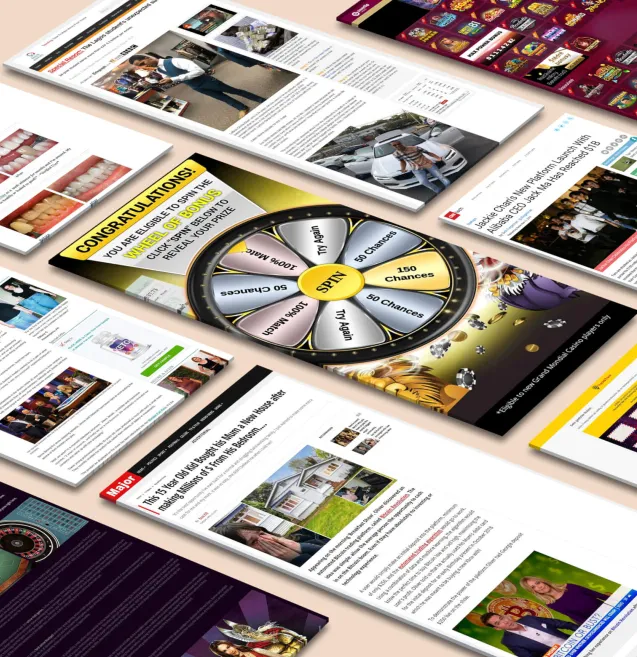
Anstrex Native gives you the same lens across native ad networks, where the dynamics are slightly different but equally revealing. Native placements don't generate the same breathless industry coverage as TikTok or CTV, which is precisely what keeps them underpriced. When you spot a finance advertiser flooding native placements with fresh creative — new angles, new landing page structures, aggressive split-testing — that's an advertiser who has found performance and is pressing the accelerator. The spend velocity change matters as much as the spend itself: a brand that goes from two creatives to fourteen in a single week has found something that works.
Cross-reference what you're seeing in both tools against the broader industry direction. As AdExchanger reported, streaming TV is entering a more signal-driven phase, with AI improving campaign execution and real-time optimization becoming the most valued capability among CTV advertisers. That operational maturity will make CTV more effective — and more expensive. Every efficiency gain on the buy side compresses the arbitrage that made CTV attractive in the first place. Watching Anstrex data for the advertisers who recognize this and begin diversifying before the efficiency gains fully price in is how you stay one cycle ahead.
The framework is simple: monitor creative volume by vertical, distinguish between repurposed and platform-native creative, track spend velocity changes weekly, and watch for landing page pattern shifts that indicate lower-funnel intent. None of these signals require insider access. They require discipline, the right tools, and the willingness to act on what the data shows before the trade press confirms what you already saw.
Receive top converting landing pages in your inbox every week from us.
Recently Updated
Learn how TikTok spy libraries can become a pre-testing engine for OOH creative, helping marketers identify winning hooks, formats, and messaging before deploying truck-side and DOOH campaigns. This guide presents a hybrid workflow for mining digital ad patterns, testing them digitally, validating them in physical environments, and feeding the results back into a reusable creative intelligence system.
Samantha Reed
7 minSep 23, 2026
Editor’s Pick
Discover how to turn food, sports, and tech trends into structured creative testing hypotheses instead of one-off ad ideas. Learn how to build vertical-specific blueprints, test them across Native, Push, Pops, and TikTok, and use performance data to continuously improve your creative strategy.
Dan Smith
7 minSep 20, 2026
Guide
Award-winning ads can inspire powerful performance creative, but they need to be rebuilt for the way algorithms, feeds, and users behave across Native and TikTok. This guide shows how to reverse-engineer high-profile creative into scalable hooks, angles, formats, and AI-driven testing systems that can improve performance.
Elena Morales
7 minSep 19, 2026