11 minJuly 7, 2026

Our spy tools monitor millions of native ads from over 60+ countries and thousands of publishers.
Get StartedEvery marketer has heard the warning by now: AI is going to flood the internet with content. But framing this as a future threat misses the point entirely. The flood has already arrived, and the damage it's doing is measurable, specific, and — if you read the data correctly — concentrated in exactly the channels most marketers still treat as their foundation.
Start with the sheer scale of what's happening. As generative AI tools have collapsed the cost and effort of content creation to near zero, the volume of blog posts, social updates, SEO articles, and editorial content hitting the internet has exploded. But audience attention hasn't expanded to match. The Reuters Digital News Report documented what researchers now call "content overload fatigue" — a measurable decline in both trust and engagement with content that feels generic, interchangeable, or manufactured purely for algorithmic reach. People aren't just scrolling past more content; they're actively disengaging from the organic editorial layer that once served as the internet's primary trust signal.
The trust numbers make the severity impossible to dismiss. The 2024 Edelman Trust Barometer registered the lowest levels of trust in digital media content since the firm began tracking the metric. Let that land for a moment: not stagnating trust, not a modest dip — the lowest ever recorded. This isn't a cyclical fluctuation. It's a structural break that coincides precisely with the mainstream adoption of large language models and the resulting tsunami of indistinguishable content.
And audiences can sense the difference, even when they can't articulate it. Research from Carnegie Mellon's Human-Computer Interaction Institute found that people consistently rated AI-assisted content as less trustworthy and less engaging than content carrying a distinctly human signal. The implication is stark: the more AI-generated material saturates a channel, the more every piece of content in that channel inherits a credibility discount — including the human-written pieces buried alongside it.
Here's where most marketers make their interpretive error. They read these trust-erosion statistics as a universal crisis affecting all digital communication equally. It isn't. The collapse is channel-specific. It's concentrated overwhelmingly in the organic editorial layer — blog posts, social feeds, search-result articles, newsletters — because that is precisely where AI-generated content accumulates unchecked. Nobody is using ChatGPT to manufacture push notifications or fabricate native ad placements at scale. The economics and gatekeeping mechanisms of paid channels create natural barriers that the organic web simply doesn't have.
This distinction matters enormously. While organic content becomes increasingly commoditized and indistinguishable, paid formats like native advertising operate inside curated publisher environments where ads match the look and context of surrounding editorial content, giving them an inherent credibility advantage that generic organic posts are rapidly losing. When trust in the editorial layer erodes, the value of appearing alongside trusted editorial — rather than competing within the undifferentiated mass of it — actually increases.
The organic trust collapse isn't a reason to panic. It's a reason to rethink where your message lives. The crack in the foundation isn't underneath every channel equally. It's underneath the one channel that most content strategies still depend on — and it's widening every month the AI content flood continues to rise.
The most popular counterargument to the AI content flood goes something like this: creators who build from authentic identity will survive because audiences can feel the difference between manufactured output and genuine meaning. It's an elegant thesis, and it's not wrong — it's just aimed at the wrong audience.
Jeff Bullas articulates this position clearly through what he calls the Signal Premium — the idea that creators who produce from the intersection of their genuine obsessions, distinctive worldview, and lived experience generate a signal that no volume of AI-assisted content can drown out. His framework maps two diverging trajectories: the identity-driven creator whose audience trust compounds over time, and the output-maximizer whose engagement peaks then erodes as generic content becomes indistinguishable from surrounding noise. The data supports this. Audiences do rate identity-rich content higher. Trust does compound for creators who transmit meaning rather than perform content production.
But here's the part almost nobody says out loud: this survival strategy applies to a vanishingly small slice of the people who actually spend money on digital marketing. The resonance playbook assumes you are the product — that your face, your voice, your perspective is what you're selling. For the solo creator building a personal brand, that's true. For the performance marketer running campaigns for an e-commerce supplement brand, a SaaS onboarding tool, or a regional insurance provider, it's almost entirely irrelevant. These marketers don't need audiences to fall in love with their editorial voice. They need clicks that convert at a sustainable cost per acquisition.
The identity-driven creator model also has a brutal scaling problem. Resonance, by definition, resists delegation. You can't hire a team to replicate the "hard-earned, lived identity" that makes the model work. That means it caps out wherever the creator's personal bandwidth caps out. For a media personality or thought leader, that ceiling might be high enough. For a marketing team managing dozens of product lines across multiple geos, it's a strategic dead end.
So if resonance isn't the answer for performance marketers, what is? Not out-creating the flood — routing around it entirely.
This is where the structural mechanics of native and push advertising become decisive. As Voluum's overview of native advertising explains, native ads operate through placement-based delivery — appearing as sponsored content recommendations on publisher pages rather than competing for position in algorithmically ranked feeds or search results. They don't need to win an organic ranking war against millions of AI-generated articles covering the same keyword. They bypass that battlefield completely, surfacing through content recommendation engines that select ads based on targeting parameters and bid economics, not editorial merit or domain authority.
Push notifications take this structural insulation even further. They arrive directly on a subscriber's device, outside any feed or search context whatsoever. There is no commoditized editorial layer to compete against because the delivery mechanism doesn't pass through one.
Meanwhile, as MarTech reports, AI is making advertising itself more embedded and dynamic — brands that show up at the right moment with the most relevant context will outperform those producing the loudest creative. That principle aligns naturally with native and push formats, which are already engineered around contextual relevance and moment-of-attention delivery rather than feed-based competition.
The resonance argument correctly identifies the disease — content homogenization destroying organic differentiation — but prescribes a treatment that only a small minority of marketers can actually use. For everyone else, the cure isn't better content. It's a different delivery mechanism altogether.
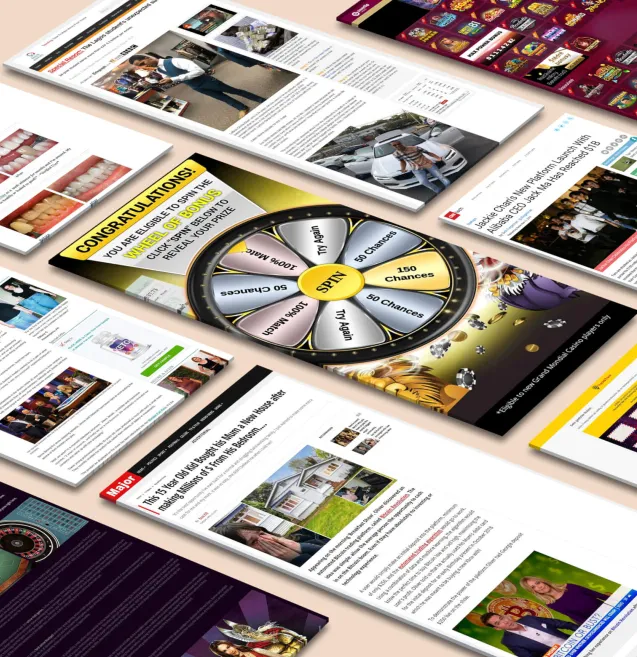
Here's an irony worth sitting with: for years, native advertising carried the stigma of being the internet's "wolf in sheep's clothing" — paid content disguised as editorial, blurring lines that purists wanted kept clean. But in a landscape where AI-generated organic content is itself becoming indistinguishable from what's real, that old criticism has quietly inverted. The paid placement, the one backed by an actual brand spending actual money, is starting to function as a credibility signal precisely because it's curated, intentional, and accountable in ways that the rising tide of machine-written articles is not.
The structural advantages were already there before the AI flood accelerated. Native ads consistently outperform traditional display, particularly on mobile, where desktop CTRs average around 0.15% while mobile native ads exceed 1% — a gap that reflects how seamlessly the format integrates into the scroll experience rather than interrupting it. But raw click-through rates only tell part of the story. What matters more in the current environment is the trust architecture native ads inherit from their placement context. As Taboola's guide on the Voluum blog explains, brands running native ads on the open web benefit from what's known as the "news trust halo" — the credibility transfer that occurs when advertising sits alongside trusted publisher content rather than floating in the undifferentiated sea of a social feed or search results page.
That halo effect matters exponentially more now. When a user scrolls through a publisher's content feed and half the organic articles feel templated, repetitive, or suspiciously frictionless — the telltale signatures of AI-generated filler — a native placement from a recognized brand actually stands out as something with stakes behind it. Someone made creative decisions. Someone approved a budget. Someone chose this publisher, this audience, this moment. That chain of intentionality is a quality signal the organic content surrounding it increasingly cannot match.
Consider the gating mechanisms. A native ad doesn't just appear because an algorithm indexed it or because someone hit "publish" on a WordPress backend. It passes through editorial filters, platform compliance reviews, and advertiser targeting criteria. The format itself is constrained — a headline, an image, a brief description — which forces creative discipline that long-form AI content never requires. These constraints are features, not limitations. They mean every native placement carries implicit curation that readers process, even if subconsciously, as a marker of legitimacy.
And the gap is widening because of how quickly advertisers can now iterate. Creative production powered by AI lets brands deploy continuous optimization loops that test hundreds of variations and adapt messaging based on real-time engagement signals — a capability that organic publishers buried under their own AI-generated content backlog simply can't match. The advertiser using generative AI to refine native creatives is operating in a fundamentally different mode than the publisher using the same technology to mass-produce blog posts. One is iterating toward precision; the other is adding to the noise.
Survey data reinforces this structural advantage: consumers hold a generally positive attitude toward native advertising when the ads are relevant and come from trustworthy brands. That conditional — relevance plus brand trust — is exactly the combination that becomes harder to achieve through organic content alone as the flood erodes the baseline credibility of everything unpaid. Native advertising doesn't need to fight through the noise. It operates on a different plane entirely, one where economic commitment itself has become the scarcest and most meaningful signal a brand can send.
Consider the structural economics of every channel AI content can flood. Search results? An infinite canvas — Google indexes hundreds of billions of pages, and AI can generate new ones faster than any algorithm can demote them. Social feeds? Bottomless scroll, where AI-generated posts multiply without friction. Publisher editorial pages? Already awash in synthetic articles that mimic the tone of every vertical from finance to wellness. Now consider what happens when a push notification lands on someone's lock screen.
Nothing else is there. No surrounding content. No competing headlines from AI blog farms. No algorithmic feed stuffed with lookalike posts jostling for a fraction of a second of attention. Just a headline, an image, and a single moment of direct contact with a human being who, at some point, opted in to receive it.
This is the fundamental reason push advertising is structurally resistant to AI content commoditization: it operates on a permission-gated, inventory-constrained model that cannot be flooded the way open content channels can. You can't AI-spam someone's notification tray. The delivery slots are finite — governed by subscriber opt-ins, frequency caps, and platform-level throttling that limits how many notifications any single user receives in a day. Where organic content channels face what Jeff Bullas describes as exponentially accelerating content volume crashing against declining audience trust, push notifications sidestep that collision entirely. The channel doesn't suffer from supply-side inflation because its inventory is physically bounded by the number of devices and the tolerance of the people who own them.
This constraint reshapes the competitive dynamics in a way that favors craft over volume. In a feed-based environment, a mediocre AI-generated article can still capture traffic simply by existing at scale — a thousand thin pages outranking one good one through sheer keyword coverage. But in push, there is no "outranking." There is only the notification that gets tapped and the one that gets swiped away. The entire performance equation collapses into a single creative unit: your headline, your thumbnail, your offer angle. Nothing else buffers you from the user's thumb.
This makes creative quality the only lever that matters — and it makes competitive intelligence disproportionately valuable. When AdPushup's analysis of advertising format trajectories highlights that brands must get more creative with ad formats to stand out from competition, the principle applies with particular force to push. Because the inventory is scarce and the format is compressed, even marginal improvements in headline specificity, emotional angle, or image selection translate into measurable CTR gains. An advertiser who systematically studies which creatives competitors are running — which hooks, which urgency patterns, which visual styles — can iterate faster and capture a larger share of those finite notification slots.
There's a deeper asymmetry at work here, too. AI tools are exceptionally good at generating volume — articles, social posts, SEO pages — but they are not yet good at the kind of compressed, high-stakes copywriting that push demands. Writing a seventeen-word notification headline that earns a tap is a different discipline than producing a two-thousand-word blog post. It requires an intuitive understanding of curiosity gaps, emotional triggers, and the precise calibration between promise and believability that keeps a notification out of the "spam" mental category. The advertisers who develop that instinct — or who use spy tools to reverse-engineer it from proven winners — hold an advantage that no AI content flood can erode, because the flood simply doesn't reach this channel.
Push isn't just surviving the AI content era. It's the one paid format whose core value proposition — scarcity of access, directness of delivery — actually appreciates as every other channel gets noisier.
For years, the SEO playbook was elegant in its logic: study what ranks, reverse-engineer the signals, and build your strategy around the gaps. Keyword research tools became the compass, search rankings the map, and organic performance the north star. That framework assumed something critical — that organic signals were trustworthy proxies for audience intent and content quality. That assumption is now broken.
When AI can produce a passable 2,000-word article on virtually any topic in seconds, the content that surfaces organically tells you less and less about what actually resonates with real humans. A blog post sitting at position one might be a masterwork of semantic optimization produced by a GPT wrapper, not a reflection of genuine authority or audience demand. As Jeff Bullas has argued, audiences are already experiencing measurable "content overload fatigue" — a decline in trust and engagement with material that feels generic or produced purely for algorithmic reach. If the organic landscape is drowning in interchangeable noise, then studying what ranks there is like doing market research at a costume party. Everyone's wearing a mask.
This is where performance marketers need to flip their intelligence model. Instead of treating organic rankings as the primary signal layer, start reading the paid ad landscape — specifically native and push ad creatives — the way SEOs used to read keyword data. Here's the key distinction: an ad that's been running at scale across premium placements for weeks isn't there because it gamed an algorithm. It's there because someone is paying real money to keep it alive, and they're only doing that because the creative is performing. Every dollar behind a sustained campaign represents a vote of confidence backed by conversion data, click-through rates, and return-on-ad-spend calculations that no amount of AI-generated organic content can fake.
Competitor ad libraries and creative spy tools have become the most honest window into what messaging actually moves audiences. When you analyze a native ad creative that's been running consistently on Taboola or Outbrain placements, you're looking at a headline, image, and angle that survived real performance scrutiny — continuous testing loops where, as MarTech has documented, leading advertisers now deploy AI-driven creative optimization that automatically evolves messaging based on live engagement signals. The creatives that endure that gauntlet aren't lucky. They're validated.
Think about what you can extract from this intelligence. Recurring emotional angles across competitor native ads reveal the psychological triggers your shared audience responds to. Headline structures that persist across weeks signal proven engagement patterns. Image choices that survive A/B testing at scale tell you more about visual preference than any organic content analysis ever could. And native ads consistently outperform traditional display — with mobile native CTRs exceeding 1% — precisely because they must earn attention within editorial environments where readers are already engaged. That performance pressure is the filter that makes them reliable intelligence.
The practical shift is straightforward: build a weekly cadence of competitor ad creative analysis the same way you once built a monthly keyword research rhythm. Catalog the angles. Track which creatives have longevity. Note when messaging pivots happen across multiple competitors simultaneously — that's your signal that market conditions or audience sentiment has shifted. In a world where organic signals have been commoditized by AI, the ads your competitors are willing to spend money on are the last honest signals left.
Now that the landscape is clear — organic signals are degrading, AI-generated content is drowning out differentiation, and competitor ad intelligence has replaced keyword tools as the real source of strategic insight — the question becomes execution. What does a winning native and push advertising playbook actually look like when the organic floor keeps dropping?
Start by accepting a fundamental operational shift. The era of campaign-based thinking, where you plan a flight, launch it, measure at the end, and iterate quarterly, is over. As MarTech has argued, competitive advantage now belongs to brands that build AI-native creative and operating models — systems designed for continuous testing, learning, and optimization rather than periodic launches. That means your native and push campaigns should be living organisms, not static artifacts. Set up creative pipelines where dozens of headline and image combinations can be deployed simultaneously, with performance data feeding back into the next round of variations within hours, not weeks.
Second, lean into the trust arbitrage that native advertising uniquely offers. In an environment where audiences are drowning in synthetic content and experiencing measurable declines in trust toward anything that feels generic or algorithmically produced, the contextual placement of native ads becomes a strategic weapon. When your sponsored content appears alongside a trusted publisher's editorial, you inherit what the industry calls the "news trust halo" — a credibility transfer that no amount of SEO-optimized blog posts can replicate in today's landscape. Brands that advertise on the open web benefit precisely because their messaging feels cohesive with the surrounding editorial environment rather than disruptive. That halo effect compounds when audiences are already skeptical of everything else in their feed.
Third, structure your content so that AI systems themselves can interpret, recommend, and surface it. This isn't just an SEO play anymore — it's an advertising imperative. Ensure your products carry clear positioning, differentiated value propositions, and accessible, high-quality information so that conversational AI platforms can include you in their synthesized answers. If your brand isn't present when a shopping assistant narrows options for a user, you've lost the sale before any ad could save you.
Fourth, establish governance before you automate. As self-optimizing agents take on more decisions — adjusting bids, reallocating budgets, refining targeting autonomously — you need guardrails that protect brand equity even as performance metrics improve. Define what your system is allowed to optimize toward and what boundaries it must never cross. Performance without brand coherence is a short-term sugar rush with long-term consequences.
Finally, bring identity into your paid creative. The same principle that separates resonant organic creators from the noise applies with equal force to advertising. Your ads should transmit something that cannot be reverse-engineered from a competitor spy tool or replicated by a generative model scraping your landing page. The signal that cuts through isn't louder volume — it's sharper specificity. Specificity in the problem you solve, the audience you speak to, and the voice you use to say it.
The brands that win this next phase won't be the ones spending the most. They'll be the ones who recognized, earlier than everyone else, that paid placement on trusted surfaces is now the most reliable path to attention — and built their entire operation around that insight.
Receive top converting landing pages in your inbox every week from us.
Most Read
Discover how OOH teams can use Native, Push, and TikTok ad intelligence to move beyond location-first planning and build smarter, audience-driven campaigns. This guide shows how to translate digital creative, targeting, and performance signals into OOH ideas, test them in the physical world, and feed the results back into digital campaigns.
David Kim
7 minOct 4, 2026
Must Read
Learn how to bridge the gap between brand buzz and backend profits by turning high-impact campaigns into scalable, measurable performance funnels. This guide shows how to translate hero concepts into performance narratives, reverse-engineer competitors, and identify creative patterns that can scale across channels.
Elena Morales
7 minOct 3, 2026
Guide
Discover how performance marketers can turn award-worthy creative into scalable Native, Push, and Pop campaigns by separating creative fame from measurable performance. This guide shows how to use Anstrex, AI-driven testing, and modular funnel frameworks to reverse-engineer proven creative structures and scale the ones that actually convert.
Priya Kapoor
7 minOct 3, 2026