11 minJune 1, 2026

Our tools monitor millions of native, push, pop, and TikTok advertising campaigns.
Get StartedEvery marketer knows the frustration of watching a competitor's campaign unfold in real time — a splashy billboard on the Sunset Strip, a surge of paid search ads during a product launch — and wondering exactly how much they're spending, who they're targeting, and what kind of results they're getting. The good news is that the same data-driven infrastructure powering modern out-of-home advertising is reshaping how savvy teams conduct competitive intelligence across every channel, from highway billboards to Google search results.
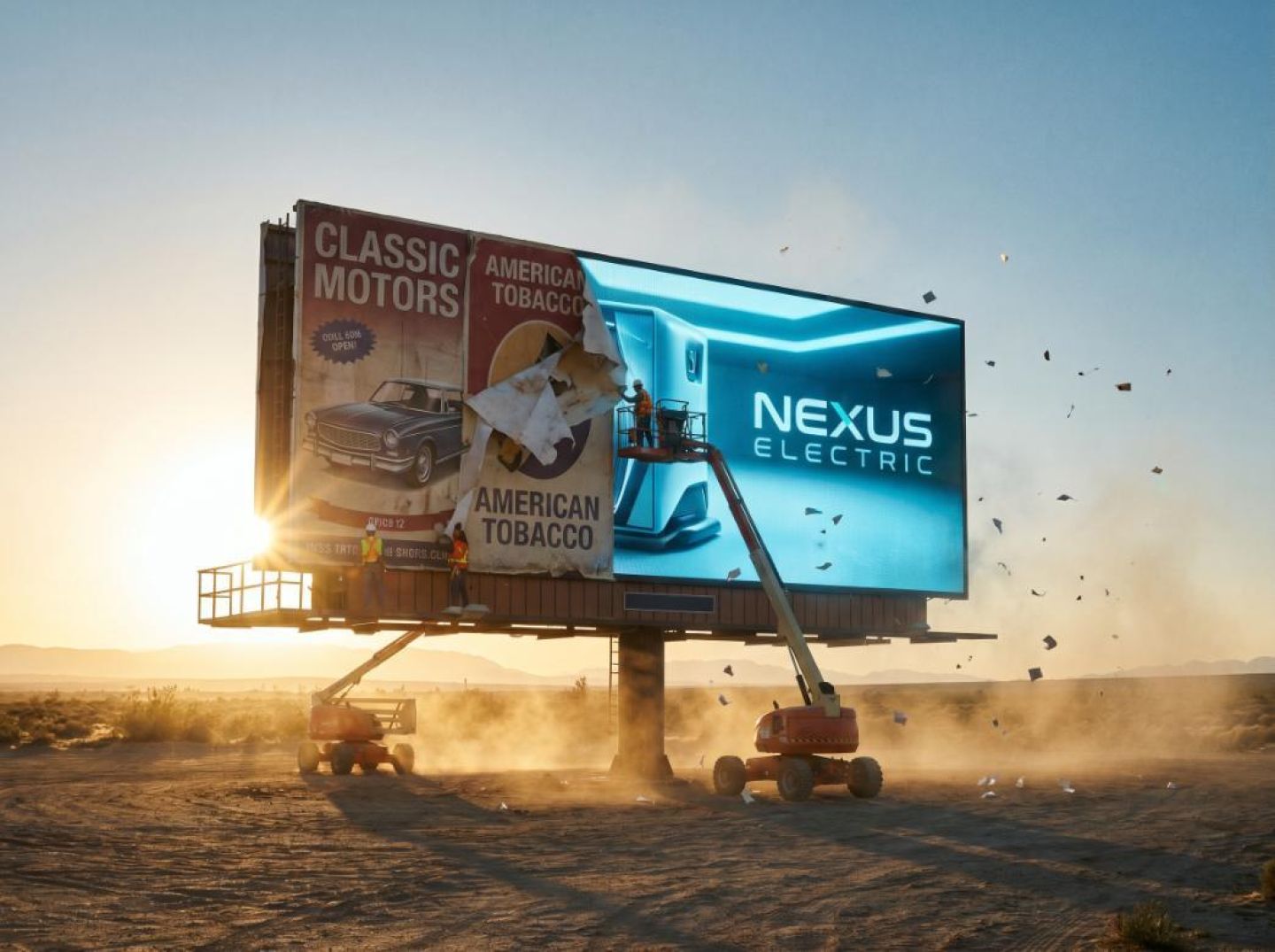
Start with the physical world, because that's where the competitive intelligence playbook has evolved most dramatically. Traditional billboard monitoring used to mean sending an intern with a camera to drive around town. Today, platforms like AdQuick have transformed that process into something far more sophisticated. Their exclusive partnership with OUTFRONT Media — a deal that includes up to $20 million in investment and a multi-year licensing agreement for AdQuick's AI-powered sales cloud — illustrates how the industry is moving toward unified, data-rich campaign tracking. The collaboration standardizes audience and market insights across roadside, transit, and digital out-of-home formats, meaning advertisers can now benchmark their own OOH performance against what competitors are doing with far greater clarity and confidence. When reporting connects plan inputs to delivery and measurement outputs in a single loop, you're no longer guessing whether a rival's Sunset Strip billboard is actually driving foot traffic — you can model it.
But competitive intelligence doesn't stop at the curb. In the digital arena, the mechanics of tracking are built on cookies, pixels, and URL parameters that let you monitor how users interact with brands across the web. As AdPushup explains, competitive ad tracking is supported by search- and social-focused technologies that reveal where a business's advertising is effective, where it falls short, and where improvements can boost engagement and sales. For competitive intelligence purposes, the same principle applies in reverse: by studying a competitor's tracking pixels, landing page structures, and retargeting patterns, you can reverse-engineer their funnel strategy. One often-overlooked tactic is using annotations — custom notes tied to specific dates in your analytics — to correlate spikes in your own traffic or ad costs with observable competitor activity, preventing the kind of guesswork that leads to wasted budget.
Pay-per-click advertising adds yet another dimension. PPC platforms offer real-time performance tracking that lets you monitor key metrics such as click-through rates, conversion rates, and return on investment, adjusting bids and targeting on the fly. Tools like Google's Auction Insights report and third-party platforms such as SEMrush or SpyFu allow you to see which keywords competitors are bidding on, estimate their ad spend, and identify gaps in their strategy that you can exploit. The most effective competitive PPC analysis focuses on long-tail keywords where rivals may be overspending — or where they're absent entirely.
The bridge between physical and digital competitive intelligence is increasingly the QR code. When a competitor places a QR-enabled billboard at a transit stop, each scan creates a trackable digital entry point. As MyHoardings details, scanning a QR code on a billboard lets the advertiser see exactly which board was scanned, at what time, and on which day — effectively transforming OOH from a brand-awareness play into a performance marketing channel. For the competitive analyst, scanning a rival's QR code yourself reveals their landing page strategy, promotional offers, and retargeting approach in a single interaction.
The takeaway is clear: the walls between outdoor, search, social, and display advertising have crumbled. A modern competitive intelligence playbook treats every channel as a data source, stitching together physical sightings and digital forensics into a unified picture of what your rivals are doing — and, more importantly, what they're planning next.
In January 2026, AdQuick announced that OUTFRONT Media had poured twenty million dollars into its platform on a single, audacious bet: that billboard advertising — the oldest mass medium still standing — could finally be measured with the same rigor marketers expect from a Google Ads dashboard. The investment wasn't just a vote of confidence in one startup; it was an admission from one of the largest out-of-home media owners in North America that the industry had spent decades flying blind. AdQuick's pitch was irresistible because it promised to deliver what OOH has always lacked — daily, granular attribution that tracks verified store visits, correlates physical ad exposure with web analytics, and quantifies the "halo effect" that billboards have on adjacent digital campaigns. For an industry built on gut feel and estimated traffic counts, that level of transparency felt revolutionary.
But here's the twist that should keep every digital marketer up at night: everything AdQuick is building toward — real-time performance data, audience-level targeting, closed-loop attribution — is something you already have at your fingertips and almost certainly underuse. Consider the raw capability gap. OOH measurement still relies heavily on modeled estimates; as the Clearcode Blog explains, vendors can approximate audience size using mobile location data and anonymized panels, but standing near a board isn't the same as seeing the ad, and true impression counts remain elusive. Even the most sophisticated programmatic DOOH campaigns wrestle with viewability challenges that digital display solved years ago. Meanwhile, platforms like Google Ads hand you verified impressions, click-through rates, conversion paths, and real-time cost-per-acquisition figures the moment a campaign goes live. As Stream Companies noted in a recent breakdown of PPC strategy, the ability to monitor campaigns in real time and make adjustments on the fly is one of TikTok-ads-payment-problems-how-to-add-a-payment-method" target="_blank" rel="noreferrer noopener">digital advertising's most powerful — and most overlooked — structural advantages.
The OOH world knows this, which is why it's racing to close the gap. QR codes on billboards have become the industry's latest workaround, turning a passive glance into a tracked ecosystem where brands can see exactly which board a customer scanned, at what time, and on which day. It's clever, but it's also an acknowledgment that outdoor advertising is still borrowing digital's playbook, not the other way around.
So why do so many digital advertisers ignore the competitive intelligence sitting right in front of them? The answer is equal parts complacency and complexity. When you've always had access to a firehose of data, it's easy to mistake having the data for actually using it. Most marketing teams run their own campaigns in a silo, tracking their own click-through rates and their own cost-per-click — and never once turning those same analytical tools outward to study what their competitors are doing, spending, and testing in real time. They glance at a rival's ad the way a driver glances at a billboard: a momentary impression that fades before the next exit.
That's the gap this playbook is designed to close. If a $20 million investment can electrify the OOH industry just by promising parity with digital measurement, imagine the competitive edge waiting for any team willing to exploit the intelligence advantages they already possess. The tools exist. The data is flowing. The only thing missing is the discipline to treat competitive monitoring as a core operational function rather than an occasional curiosity. What follows is a step-by-step framework for doing exactly that — borrowing the same systematic, data-first mindset that AdQuick brought to the Sunset Strip and applying it to the digital campaigns unfolding across your competitive landscape right now.
That twenty million dollars wasn't just a vote of confidence in one platform — it was an indictment of how lazily the rest of the advertising world has been treating measurement. For decades, out-of-home advertising operated on gut instinct: you bought a billboard, you hoped people saw it, and you pointed at "brand awareness" when your CFO asked for proof. The fact that OOH players are now spending tens of millions to close that accountability gap should make every digital marketer squirm, because many of them already have access to measurement tools they barely use.
Consider the irony. The oldest advertising medium in existence is racing to adopt the kind of granular, impression-level tracking that digital marketers have taken for granted since the early days of Google Analytics. As Clearcode's deep dive into DOOH infrastructure explains, the billboard industry now models traffic near screens using mobile location data, deploys privacy-safe computer vision to classify aggregate audience attributes, and leans on IAB-standard "likelihood to see" metrics — all to answer a question digital advertisers can resolve with a single UTM parameter: Did anyone actually see this ad?
And yet, digital campaigns routinely run with broken tracking pixels, misconfigured conversion events, and dashboards nobody checks after launch week. The gap isn't capability — it's complacency. OOH's measurement obsession has exposed an uncomfortable truth: the availability of data does not guarantee the discipline to use it.
The parallels between competitive intelligence in OOH and digital are striking once you look past the medium. When AdQuick catalogs every billboard on the Sunset Strip — logging its dimensions, pricing, audience estimates, and availability — it is doing exactly what a competitive intelligence analyst should do with a rival's paid search campaigns, display placements, and social ad library. The difference is that AdQuick had to build that infrastructure from scratch, while digital marketers already sit on a mountain of observable signals they routinely ignore.
The attribution problem that has haunted billboard buyers for generations illustrates the point perfectly. As MyHoardings notes, the biggest struggle with traditional billboards has always been proving that the person who bought your shoes actually saw the board on the I-95. QR codes are now bridging that gap by pulling physical observers into a tracked digital ecosystem — essentially forcing OOH to earn the kind of click-level accountability digital channels were born with. If billboard operators are willing to reinvent their entire workflow to get what amounts to a scannable link, why are so many PPC managers still running campaigns without proper conversion tracking or competitor benchmarking?
The wake-up call here isn't about billboards. It's about standards. The real-time performance tracking that platforms like Google Ads provide — click-through rates, conversion rates, cost-per-click, return on ad spend — represents the exact measurement rigor that OOH spent twenty million dollars trying to replicate. Digital marketers don't need to build that infrastructure; they need to actually use it, and more importantly, they need to turn those same analytical instincts outward, toward their competitors.
That is where the competitive intelligence playbook begins: not with a new tool, but with the realization that the data you need to reverse-engineer a rival's strategy is already sitting in plain sight — on ad libraries, in auction insights, across SERP landscapes, and within the creative rotations you scroll past every day without documenting. The OOH industry's $20 million bet is proof that even the hardest-to-measure channels refuse to stay unmeasured. Your fully trackable digital campaigns have no excuse.
AdQuick's measurement suite tackles what has historically been OOH's most embarrassing weakness: proving that a campaign actually worked. As the company describes it, its proprietary API and measurement tools act as "the connective tissue between OOH and the rest of a brand's marketing stack," feeding daily, granular insights into multichannel models so marketers can finally calculate ROI instead of hand-waving about impressions. The platform tracks verified store visits, correlates billboard exposure with web analytics, and — perhaps most valuably — quantifies the "halo effect" that OOH campaigns exert on adjacent digital channels. For an industry that spent decades defending itself with traffic counts and demographic guesswork, those capabilities represent a genuine leap forward.
But here's the uncomfortable truth OOH evangelists don't love hearing: even at its most sophisticated, billboard measurement is still playing catch-up to what digital marketers have taken for granted for over a decade.
Consider viewability. In DOOH, each impression can technically be seen by dozens of people passing a screen, yet as Clearcode's deep dive into the DOOH ecosystem explains, vendors can only model traffic near a screen using mobile location data — and standing near a board isn't the same as actually seeing the ad. Early attempts to deploy facial recognition for demographic estimation triggered fierce privacy backlash and regulatory scrutiny under GDPR, pushing the industry toward "likelihood to see" metrics that remain, by definition, probabilistic. Digital campaigns, by contrast, can verify whether an ad rendered in a viewable portion of a browser window, whether a user scrolled past it or lingered, and whether that same user later converted — all deterministically, at the individual level.
Then there's the speed of optimization. AdQuick deserves credit for compressing the OOH planning cycle from weeks to as little as 48 hours, but digital campaign managers routinely adjust bids, swap creative, and reallocate budgets within minutes of spotting underperformance. PPC platforms like Google Ads let advertisers track performance in real time and make adjustments as needed — refining keyword targeting, tweaking cost-per-click thresholds, or pausing underperforming ad groups on the fly. A billboard on the Sunset Strip, no matter how precisely its foot traffic is modeled, cannot be swapped out mid-afternoon because your A/B test declared a winner.
The targeting gap is equally significant. AdQuick can help you choose the right billboard for the right neighborhood, but digital intelligence lets you target by intent — the exact search query someone typed three seconds ago, the product page they abandoned yesterday, the lookalike audience built from your highest-value customers. That level of precision simply doesn't exist in physical media, even with anonymized mobile-location panels and computer-vision overlays.
None of this diminishes what AdQuick has accomplished. The company has dragged a century-old medium into a data-driven era, and its attribution capabilities — particularly around correlating OOH exposure with downstream digital engagement — offer a blueprint that competitive intelligence professionals should study closely. The lesson isn't that billboards are obsolete; it's that the measurement frameworks OOH is now racing to adopt already exist in mature, battle-tested form across digital channels. If you're running digital campaigns and not exploiting those capabilities with at least the same intensity that billboard buyers bring to foot-traffic modeling, you're leaving intelligence — and money — on the table.
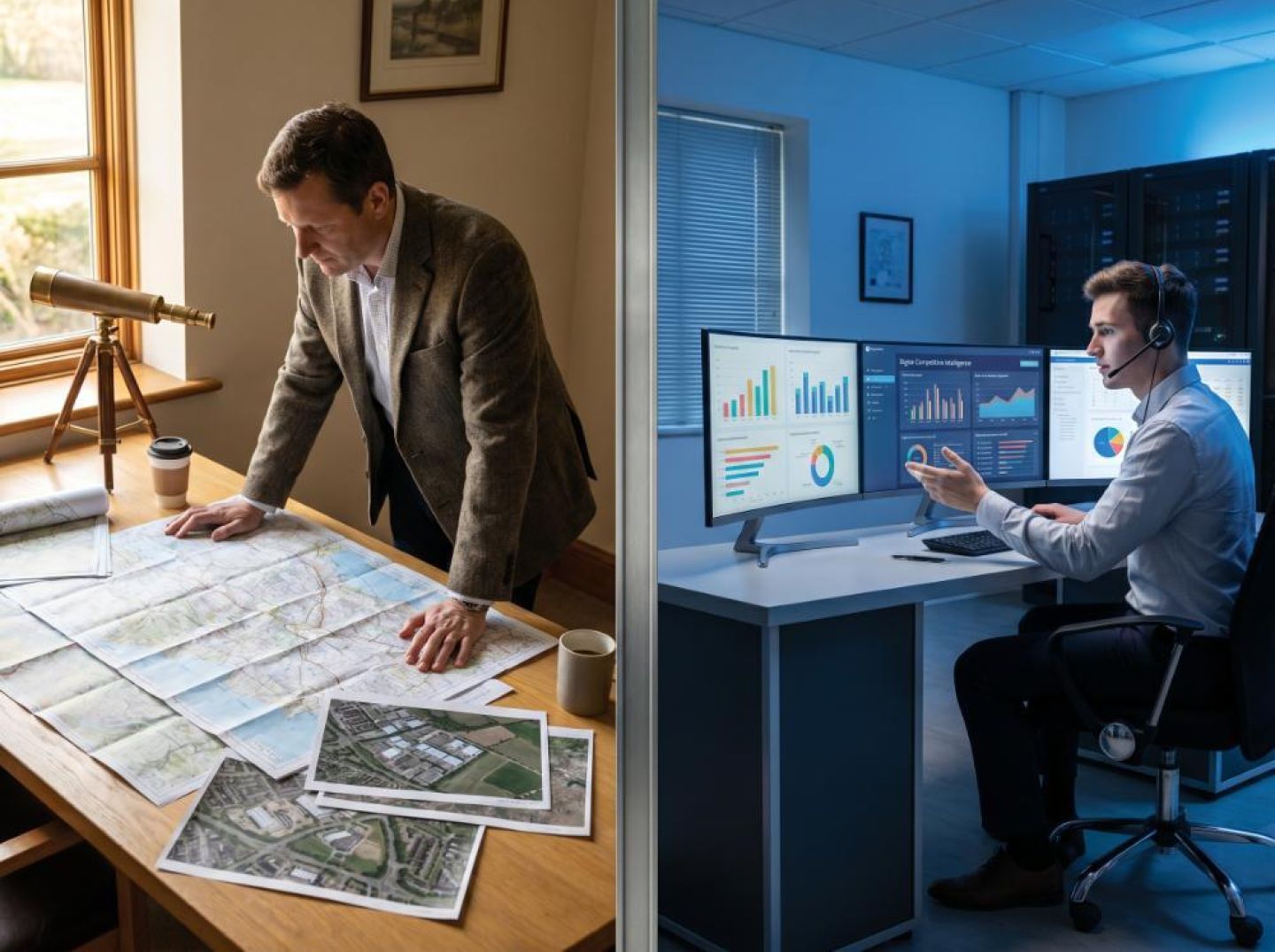
If AdQuick built its surveillance system to watch physical walls, your job is to build the digital equivalent — a layered stack that watches every screen, search result, and social feed where your competitors show up. The good news: because digital campaigns leave far richer data trails than a vinyl sheet bolted to a freeway overpass, the intelligence you can extract is orders of magnitude more granular. The challenge is stitching it all together so it actually tells a coherent story.
Layer 1: Ad Creative & Placement Tracking
The foundation of any competitive intelligence stack is knowing what your rivals are running and where they're running it. Meta's Ad Library, Google's Ads Transparency Center, and TikTok's Commercial Content Library give you free, real-time access to every active ad from any brand. But free tools only get you so far. Dedicated platforms like Pathmatics, Adbeat, or Semrush's AdClarity layer on estimated spend data, network-level placement maps, and historical creative archives — essentially building the same kind of timestamped surveillance AdQuick applies to billboard placements, except across millions of digital surfaces simultaneously. As AdPushup explains, competitive ad tracking supported by search- and social-focused technologies shows your business where its advertising is effective, where campaigns fall short, and where they need to improve in order to boost engagement and sales. That principle doesn't only apply to your own campaigns; it applies equally well when you point those same tools at competitors.
Layer 3: Social Listening & Share-of-Voice Dashboards
Creative screenshots and keyword lists tell you what a competitor is doing. Social listening tells you how the audience is reacting. Platforms like Brandwatch, Talkwalker, or Sprout Social track mention volume, sentiment, and share of voice across every major social platform. When a rival launches a new campaign, you want to see real-time audience response — not just their ad, but the conversation around it.
Layer 4: Attribution & Outcome Modeling
The most sophisticated layer borrows directly from the DOOH playbook. Just as the industry has moved toward tying campaigns to footfall lift, brand-lift studies, and QR or NFC engagement rather than relying on raw exposure metrics, your digital stack should connect competitor activity to observable market outcomes. Did their new campaign correlate with a spike in branded search volume? Did their app downloads jump the week they flooded Instagram with retargeting ads? Layering Google Trends data, SimilarWeb traffic estimates, and app-store ranking trackers on top of your ad-tracking tools turns isolated creative observations into a causal narrative.
Stitching It All Together
No single tool covers all four layers, which is exactly why this is a stack. The brands that dominate competitive intelligence treat it the same way AdQuick treats the Sunset Strip: as a living, continuously monitored system rather than a quarterly report. Build a shared dashboard, update it weekly, and assign someone to own it. The billboard watchers already learned that lesson. Now it's your turn.
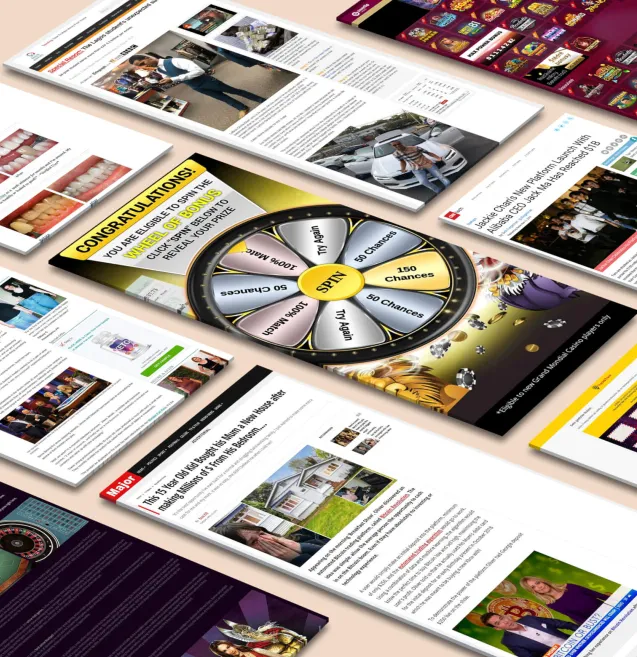
Now that your stack is assembled, let's get tactical. Think of these five moves as the digital equivalent of what AdQuick does when it scouts a stretch of premium billboard inventory — except instead of driving past a highway, you're logging into Anstrex and systematically disassembling your competitors' paid strategies. Each move maps to a stage of the campaign-planning process, so by the time you sit down to write your next brief, you'll already know what the market is doing, what's working, and where the white space lives.
Move 1: Run a "Market Census" by Vertical. Before you zoom in on any single competitor, pull back and survey the entire category. Use Anstrex's filtering tools to isolate ads by vertical, traffic source, and geo. You're looking for volume trends — which product categories are attracting the heaviest spend, which ad networks are carrying the load, and whether seasonal spikes are visible. This mirrors the way OOH platforms standardize audience and market insights so advertisers can build and compare plans across formats with greater clarity. The goal isn't to copy anyone; it's to understand the terrain before you place a single dollar.
Move 2: Isolate Your Top Three Rivals and Catalog Their Creatives. Filter by advertiser or domain and sort by longest-running campaigns. Ads that survive for weeks or months are almost certainly profitable — nobody pays for media that doesn't convert. Screenshot the landing pages, note the headline formulas, and tag recurring visual patterns (lifestyle photography versus product cutouts, warm palettes versus high-contrast neons). Build a simple spreadsheet: competitor, creative theme, CTA language, estimated run duration.
Move 3: Decode the Offer Stack. Look beyond the image. What is each ad actually promising — a discount, a free trial, a lead magnet, a time-limited bundle? The offer is the engine of any direct-response campaign, and as Stream Companies emphasizes, the most successful paid campaigns focus on targeting approaches that are both relevant and cost-effective rather than simply chasing broad, high-competition terms. If every competitor in your space leads with "20% off," that tells you the category has conditioned buyers to expect a discount — and it also tells you that a value-based angle ("no contracts, no setup fee") might cut through precisely because it's different.
Move 4: Map the Funnel from Ad to Checkout. Click through the landing pages Anstrex archives and document every step. How many form fields? Is there a chatbot? Do they retarget with a different creative on a different network? Mapping the full funnel reveals friction points you can eliminate in your own flow and conversion tactics worth testing.
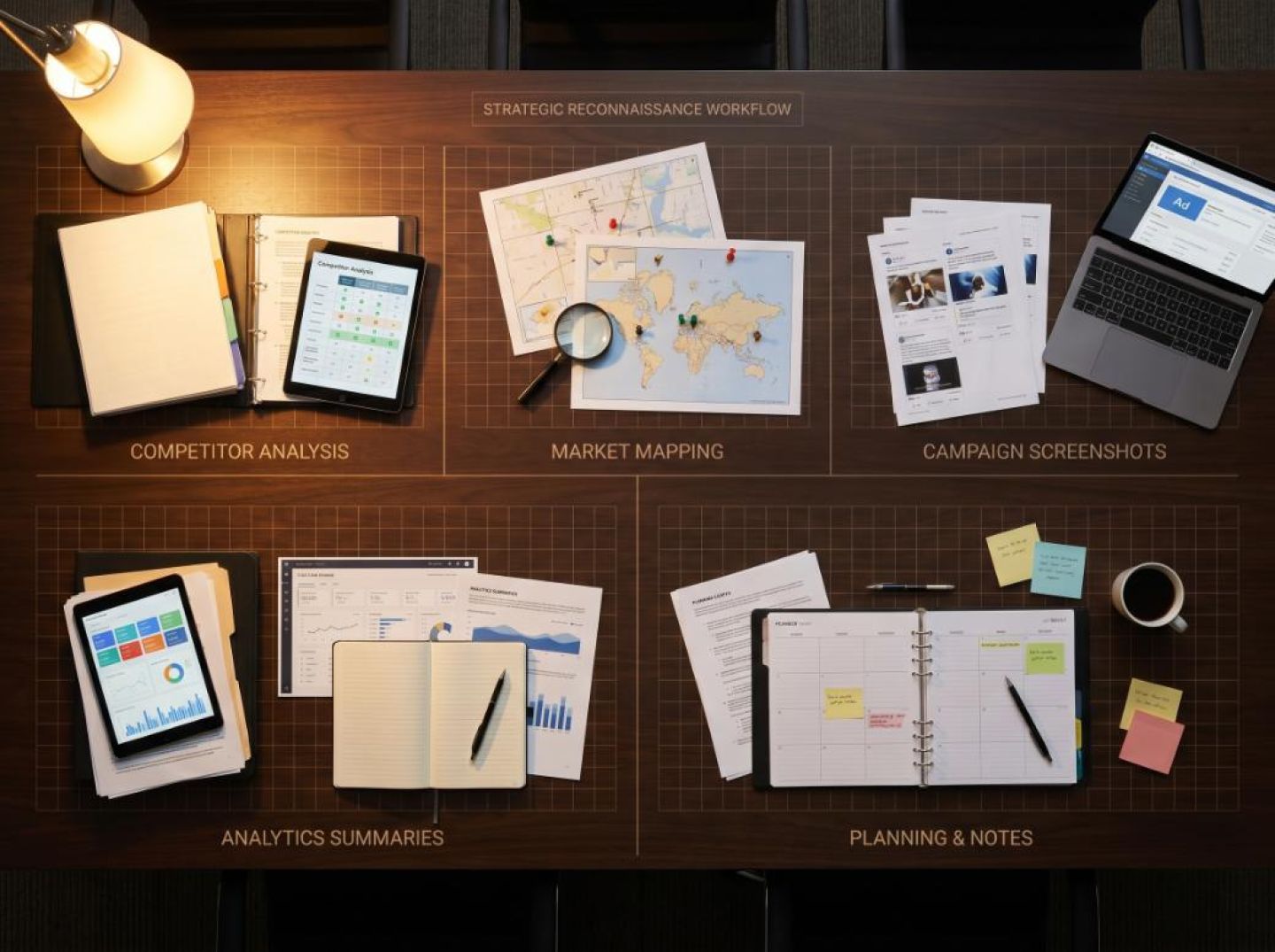
Move 5: Build a "Counter-Brief" Before You Build Your Brief. Compile everything from Moves 1–4 into a one-page counter-brief that answers three questions: What is the market consensus creative approach? Where are competitors underinvesting (neglected ad networks, ignored demographics, untested formats)? And what offer or message angle has no one tried yet? This document becomes the strategic backbone of your own campaign brief, ensuring every decision is grounded in observed market behavior rather than gut instinct. Just as QR-enabled billboards let OOH advertisers finally tell the CFO exactly how many dollars that vinyl sheet actually generated, a data-backed counter-brief lets you justify every creative and budget decision with competitive evidence instead of guesswork.
Execute these five moves consistently — ideally on a monthly cadence — and competitive intelligence stops being a one-off research project and starts functioning as a living input into every campaign you launch.
Receive top converting landing pages in your inbox every week from us.
Must Read
Discover how native advertisers can transform everyday moments into memorable, high-performing campaigns through eventization. Learn to use scarcity, time-sensitive offers, contextual targeting, and always-on micro-events to engage audiences, improve campaign relevance, and uncover winning competitor strategies with Anstrex.
Priya Kapoor
7 minOct 11, 2026
Featured
Discover how to turn brand-led stunts and viral marketing campaigns into high-ROI performance campaigns. Learn how to build hidden funnels with retargeting, landing pages, native ads, push ads, pop ads, and TikTok campaigns that transform brand awareness into measurable conversions and revenue.
Samantha Reed
7 minOct 10, 2026
Guide
Discover why celebrity endorsements and global intellectual property don’t automatically translate into advertising success. This guide uses ad spy intelligence to explore how audience relevance, placement context, creative testing, and post-click performance help advertisers build high-ROI campaigns without expensive celebrity partnerships.
Elena Morales
7 minOct 9, 2026