8 minJune 15, 2026

Our spy tools monitor millions of native ads from over 60+ countries and thousands of publishers.
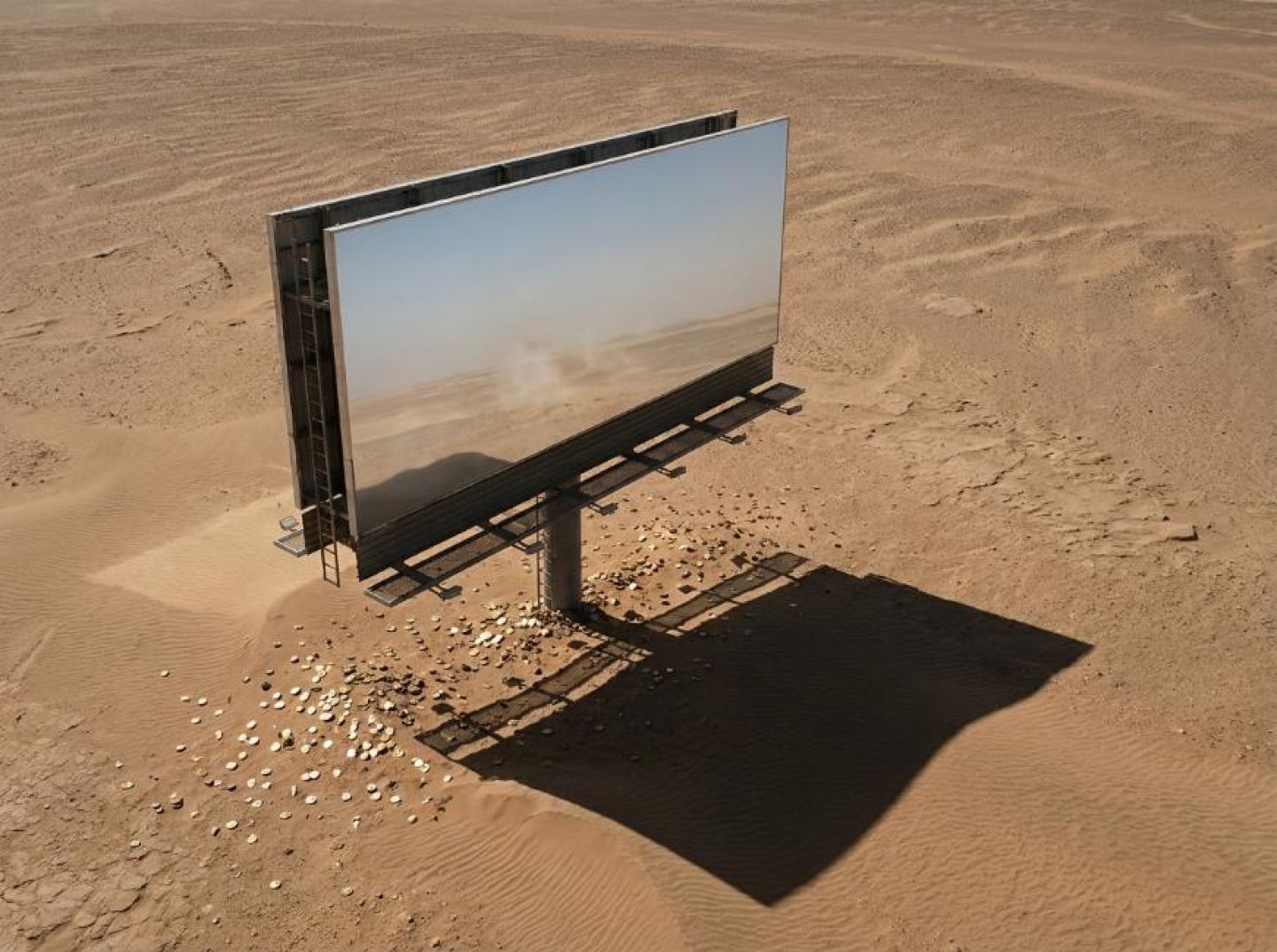
Get StartedOut-of-home advertising isn't broken. It's incomplete — and that incompleteness is costing advertisers billions in unrealized value every year.
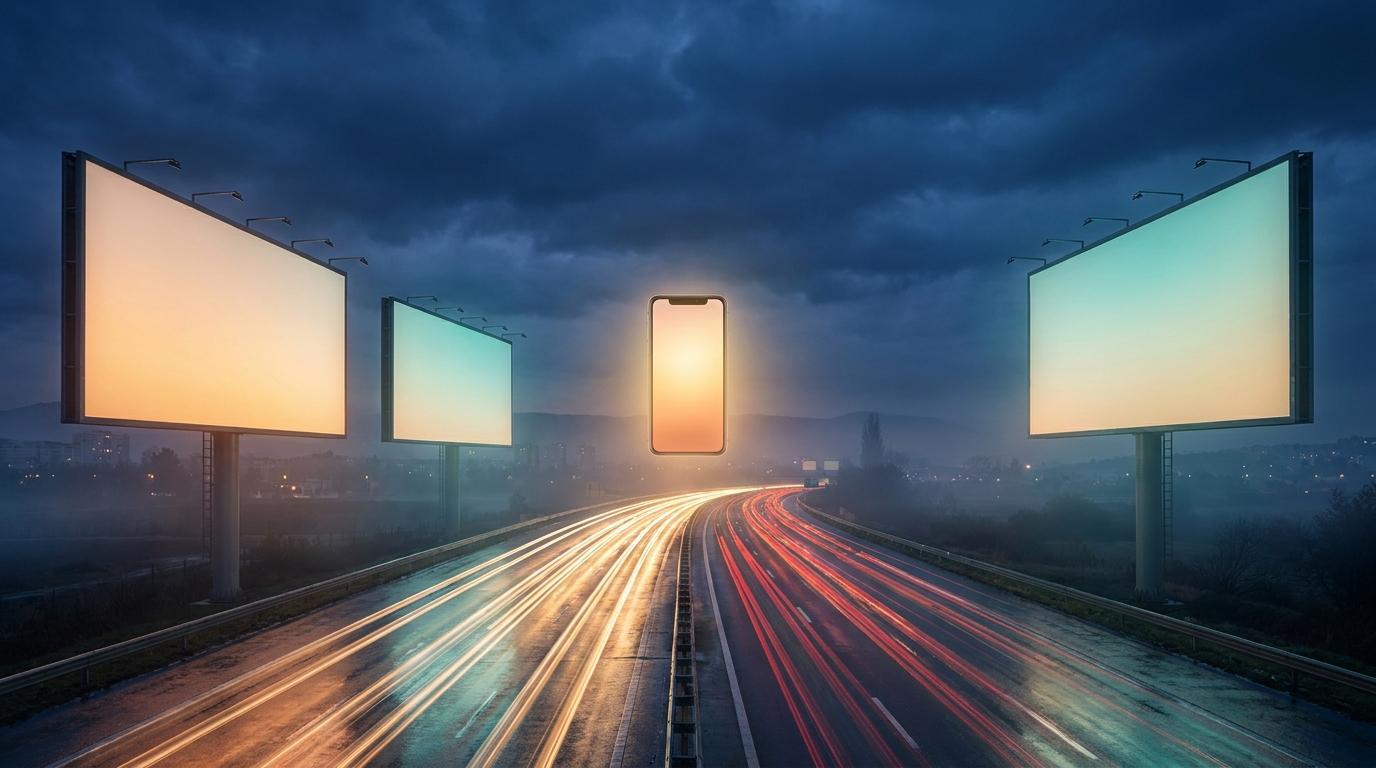
OOH remains one of the most powerful awareness channels in existence. A single highway billboard can reach hundreds of thousands of eyeballs per week. A transit shelter ad saturates a commuter corridor with unskippable frequency. Digital out-of-home screens in malls, airports, and urban centers deliver dynamic creative that commands attention in ways a skippable pre-roll never could. Unlike digital display, OOH ads are completely immune to ad blockers and cannot be skipped by the viewer. The medium's top-of-funnel potency has never been in question.
What has always been in question is what happens next.
OOH operates in a fundamentally one-to-many environment. A billboard doesn't know who saw it. A bus wrap can't distinguish between a qualified prospect and a passing tourist. Even as the industry has evolved from static vinyl to programmatic digital screens, the structural limitation persists. As the Clearcode Blog explains, because OOH ads are physical media operating in shared public spaces, there is no way to target individuals or conduct advanced attribution as is done in the online world with cookies and device IDs. The best DOOH can offer is reaching a certain demographic at a certain time based on environmental data — ticket sales, foot-traffic sensors, mobile location signals from third-party brokers. That's useful context, but it's a far cry from the deterministic, user-level tracking that performance marketers rely on to justify spend.
This gap creates a paradox that haunts media planners: OOH consistently lifts brand metrics and downstream conversions, but it often can't prove that it did. Consider the cautionary tale of Saatva, the DTC mattress brand that nearly killed its OOH program because a direct-attribution model made the campaign look like a failure. Only after applying a more sophisticated framework — one that accounted for search lift, brand-direct traffic, and aided recall over a realistic lag period — did the team realize that OOH was actually their highest performing channel. Most brands never dig that deep. They see a blank attribution column and reallocate budget to channels that can claim the last click.
The danger of this blind spot only intensifies as the media landscape shifts. OOH Today paints a stark picture of the road ahead: as autonomous vehicles and in-car entertainment screens absorb passenger attention, static billboards that remain disconnected from digital ecosystems will become a silent actor performing in a theater where the audience has left the room. Without connectivity, without the ability to link exposure to action, a billboard generates awareness that evaporates before it converts.
None of this means advertisers should abandon OOH. It means they should stop treating it as a standalone buy. The real problem isn't that billboards can't close the loop — it's that no one has wired the mid-funnel infrastructure to catch the demand they generate. Between the moment a consumer registers a billboard message and the moment they're ready to convert, there's a vast vacuum where intent goes to die. Performance channels — specifically push notifications and native advertising — are structurally built to fill exactly that gap. The question isn't whether OOH works. It's whether advertisers are willing to build the funnel that OOH has always been missing.
A consumer who has just driven past a billboard exists in a peculiar psychological limbo. They're aware — a brand name, a color palette, a provocative tagline has lodged itself somewhere in working memory — but they are entirely uninstructed. They haven't clicked anything. They haven't opted into a journey. They haven't signaled intent. They are, in marketing-funnel terms, primed but directionless. The question every smart advertiser should be asking is: what kind of digital touch converts that ambient awareness into deliberate action without squandering the goodwill the billboard just built?
The instinctive answer for most media buyers is standard display retargeting — serve them a programmatic banner the moment their device ID shows up in a bid stream. But this is precisely the wrong move. Display banners are the loudest format in the quietest room. A person who was passively absorbing a highway message five minutes ago is now passively scrolling a news article or recipe blog; hitting them with a flashing 300×250 unit triggers the same defensive reflex that the ad industry has been documenting for years: banner blindness. When consumers learn to unconsciously ignore anything that looks like an advertisement, even a well-targeted impression becomes invisible noise.
Native ads succeed where banners fail because they operate on trust rather than interruption. As Taboola explains in a Voluum guest post, native formats "avoid the disruptive pitfalls of pop-up or pre-roll ads in favor of a more respectful bargain with users, allowing people to discover and engage with branded content they may like on their own terms." That respectful bargain is critical when the audience you're reaching has been primed by an equally passive, ambient medium. The billboard didn't shout "CLICK HERE." It planted a seed. A native ad — styled as a recommended article, an in-feed card, a content suggestion — waters that seed by meeting the consumer in the same content-consumption mindset they were already in. The format feels like a continuation of editorial browsing, not a jarring commercial redirect.
Push notifications add a complementary dimension: urgency and personalization. Where native ads mirror the passive-discovery experience of billboard exposure, push notifications compress it into a single, timely nudge delivered directly to a device's lock screen. For a consumer who saw a transit ad for a weekend flash sale that morning, a well-timed push notification that afternoon creates a closed loop between physical awareness and digital action — no search query required, no social feed algorithm to hope for.
The metric that validates this approach isn't impressions; it's clicks. Brax's analysis of mid-funnel measurement makes the case plainly: for audiences who "have crossed the awareness phase," ad clicks become "your headlights in the dark," revealing whether your creative is actually compelling people to move to the next stage of the funnel. Billboard-exposed consumers have, by definition, crossed the awareness phase — the physical medium handled that job. What they need next is a format engineered not for impression volume but for engagement, one that earns a deliberate tap rather than hoping for a passive glance.
This is why the native-plus-push combination is structurally superior to social or display retargeting for billboard follow-up. Display ads optimize for viewability — a metric the billboard already maxed out. Social retargeting competes with friends, reels, and algorithmic noise. Native and push ads, by contrast, are built to convert ambient familiarity into a measurable click, which is the single event that transforms an anonymous passerby into a trackable prospect. The billboard handles the impression. Native and push handle the click. Together, they complete the funnel that OOH alone never could.
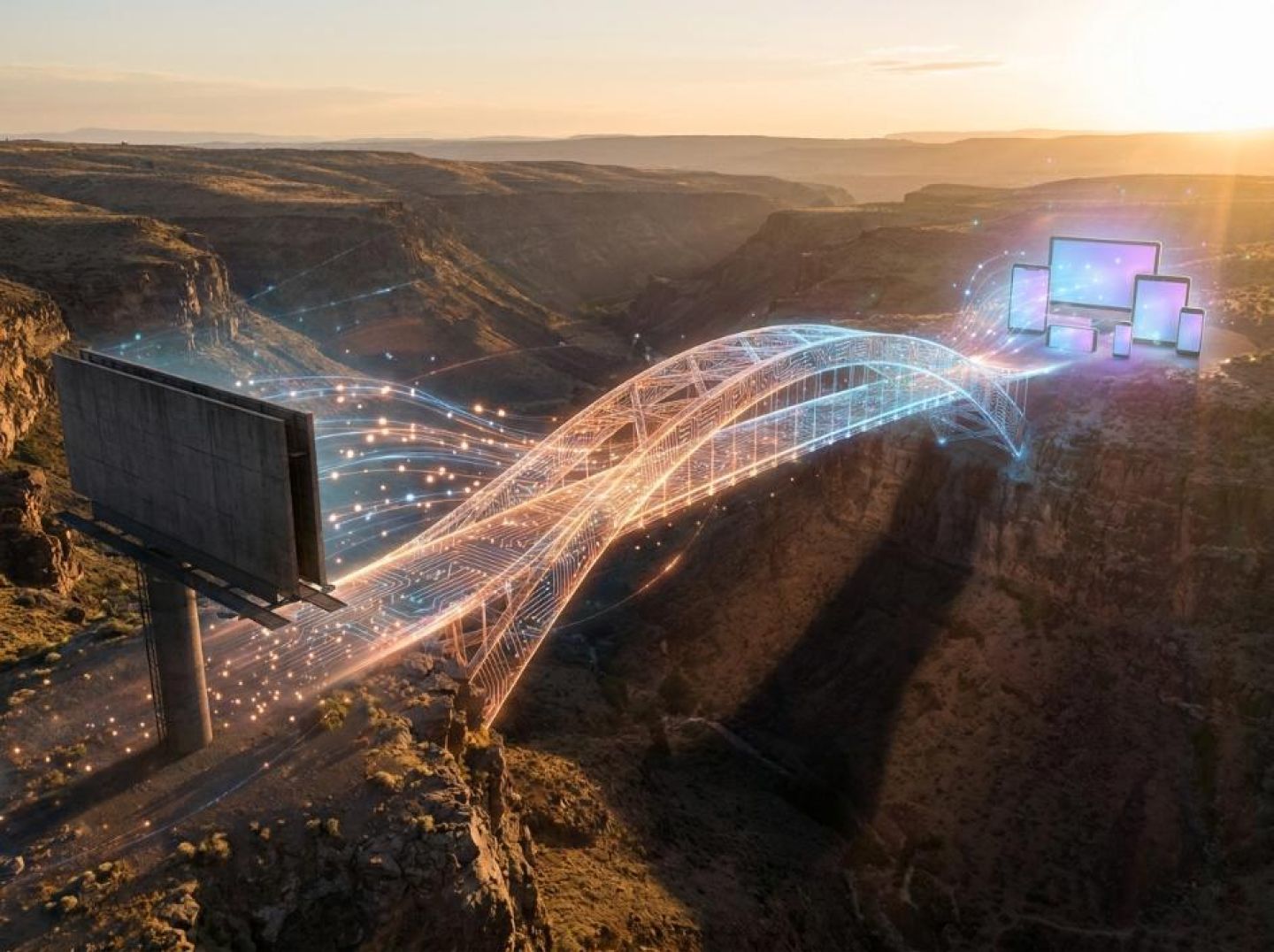
The technical infrastructure to connect a billboard impression to a digital retargeting sequence isn't theoretical — it exists today, sitting inside the same demand-side platforms most performance advertisers already use. The problem isn't capability. It's imagination. Most media buyers still treat OOH as an isolated awareness line item, disconnected from the programmatic stack that powers everything else. Here's how to wire them together, step by step.
Step 1: Select Billboard Placements With Retargeting in Mind
Before a single creative is designed, choose billboard locations based on the density and quality of mobile signal data available in the surrounding area. High-traffic corridors, transit hubs, and retail-adjacent placements don't just deliver impressions — they deliver identifiable device clusters. DOOH targeting typically relies on data collected from the environment, including mobile location data from ad exchanges and data brokers, ticket sales, IR sensors, and third-party measurement companies like Nielsen. The richer the data environment around your placement, the more robust your retargeting pool will be downstream.
Step 2: Deploy Geofences to Capture Exposed Devices
Once placements are locked, draw geofences — virtual perimeters defined by GPS or beacon signals — around each billboard location. When a mobile device enters that perimeter during the campaign flight, its anonymized device ID is captured and logged into an audience segment. This is the critical bridge: the moment physical exposure becomes a digital data point. The geofence radius should match realistic viewing distance — typically 200 to 500 meters for highway boards, tighter for street-level placements.
Step 3: Activate DOOH-Exposed Audiences Inside Your DSP
This is where the architecture gets powerful. Rather than exporting these audience pools into a separate workflow, the recommendation from Clearcode is to treat DOOH as a full-funnel channel by activating it inside the same DSP as your display, mobile, and CTV campaigns. When DOOH-exposed audiences feed retargeting pools directly, attribution can account for the billboard's role across the entire journey rather than measuring it in a silo. This unified activation is what transforms a billboard from a branding expense into the top of a measurable conversion funnel.
Step 4: Build Sequential Native and Push Campaigns
With your geofenced audience segments now living inside a DSP, pipe them into native ad platforms — Taboola, Outbrain, or MGID — where they'll encounter the second touch. As Taboola explains on the Voluum Blog, native ads reach audiences at highly impactful moments when people are already consuming content and open to discovering something new, making them ideal for converting billboard-primed awareness into consideration. Design sequential creative that references the billboard — same visual language, same tagline, but now with a click-through destination, an offer, or a content piece that advances the narrative. Push notification campaigns follow the same logic: a short, direct message that echoes what the consumer already saw on the highway.
Step 5: Close the Loop With Measurement
The beauty of this architecture is that it enables true cross-channel attribution. You can measure the incremental lift in click-through rates, site visits, and conversions among the geofenced audience versus a control group that was never exposed to the billboard. OOH already triggers mobile search behavior organically — this framework simply ensures you're there when it happens, with the right message, on the right screen, at the right moment in the decision cycle.
The playbook isn't exotic. It's a geofence, a DSP, a native platform, and creative sequencing logic. Every piece already exists in most enterprise ad stacks. The only missing ingredient is the willingness to stop treating the billboard as the end of the conversation — and start treating it as the beginning.
The biggest mistake advertisers make at this stage is treating the native or push ad as an entirely separate campaign — a fresh pitch to a cold audience — rather than what it actually is: the second act of a story the billboard already began. That disconnect is what turns a carefully orchestrated awareness-to-action sequence into what feels, from the consumer's perspective, like two strangers shouting unrelated things. The creative strategy for the digital follow-up must be built on a principle of narrative continuity: echo the billboard, don't repeat it.
Consider what a billboard actually delivers. In roughly six seconds of windshield-level attention, it deposits a visual signature — a color, a face, a provocation. "Rethink Your Mattress." That's the seed. The native ad that follows days later on a news site or lifestyle blog isn't there to plant the same seed again. It's there to water it. So the headline shifts from provocation to proof: "Why 12,000 Back-Pain Sufferers Switched This Month." The palette stays recognizable — same brand blue, same typographic family — but the format now allows for informational depth a highway placement could never carry. The push notification, meanwhile, plays a different role entirely: it manufactures the urgency the billboard structurally cannot. "Your trial mattress ships free until Friday" closes the temporal gap between curiosity and commitment.
This is where native advertising's inherent advantage becomes critical. Because native ads present themselves in a format the user is already comfortable with, they carry an automatic higher foundation of trust compared to aggressive display units or interstitials. That trust is precisely what a retargeted billboard audience needs. These people didn't click a banner; they drove past a sign. The digital touchpoint has to feel like a natural extension of content they're already consuming — an article about sleep health, a listicle about home upgrades — not a flashing rectangle demanding immediate action. When the creative mirrors the editorial environment, the emotional continuity from billboard to screen remains unbroken, and the consumer experiences discovery rather than interruption.
But continuity alone isn't enough without measurement, and this is where most OOH-to-digital handoffs collapse into guesswork. The feedback mechanism that refines the entire sequence is deceptively simple: clicks. As Brax's analytics framework explains, tracking which headlines, visuals, or calls to action are most effective at generating interest and prompting action gives advertisers concrete evidence of what resonates with a retargeted audience versus what falls flat. For mid-funnel and bottom-funnel customers who have already crossed the awareness phase, clicks function as what Brax aptly calls "headlights in the dark" — the only reliable signal that the message is landing.
This makes disciplined A/B testing non-negotiable. Run the proof-oriented headline ("Why 12,000 Sufferers Switched") against the curiosity-gap headline ("The Mattress Secret Chiropractors Won't Post Online"). Test the billboard's exact hero image against a lifestyle variant that adds human context. Test a soft CTA ("See the Research") against a direct one ("Build Your Mattress Now"). Each click delta tells you whether your second act is succeeding or whether the narrative thread snapped somewhere between the highway and the homepage. The billboard gave you the audience. The native creative has to finish the conversation — and only the data can tell you whether it's finishing with a handshake or a hang-up.
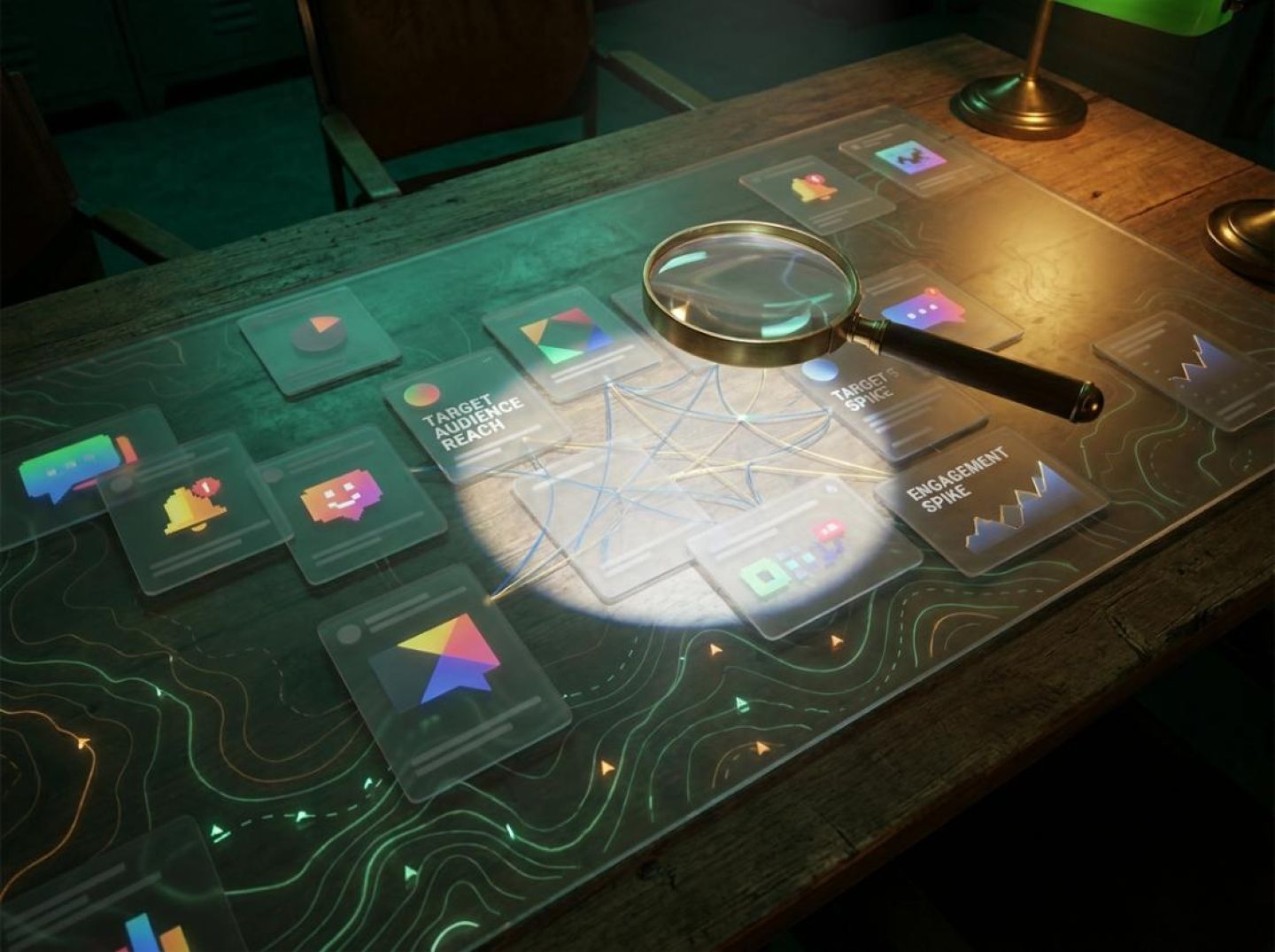
Every smart military strategist studies the enemy's playbook before drawing up their own. The same principle applies here: if a competitor is running a major OOH campaign in a given market, their native and push ads appearing in the same geography during the same flight window are almost certainly the digital follow-up layer. And those creatives are hiding in plain sight, waiting to be reverse-engineered.
Competitive intelligence tools like Anstrex, AdPlexity, and SpyOver exist specifically to surface what other advertisers are running across push notification networks and native ad platforms. These tools let you filter by geography, date range, device type, and even traffic source — which means you can isolate exactly what a competitor deployed in, say, the Dallas–Fort Worth metro during the same two weeks their highway billboards were live. When you find that overlap, you're not looking at random digital activity. You're looking at the second half of their funnel, the part they built to convert the awareness their billboards created.
The intelligence you extract here is more valuable than most advertisers realize. You're not just seeing headlines and thumbnail images — you're seeing which conversion angles a competitor tested, how long each creative ran (longevity being a strong proxy for profitability), and which landing page structures they paired with those ads. As Brax has noted, tracking performance across all your ads allows you to identify trends and patterns, revealing which headlines, visuals, or calls to action are the most effective at generating interest and prompting action. Competitive intelligence tools let you apply that same analytical framework to someone else's campaigns — at scale, and without spending a dollar on testing.
Here's what to look for when you're running this kind of surveillance. First, creative consistency: does the native ad echo the visual language of the billboard? Shared color palettes, similar typography, or repeated taglines are dead giveaways that the digital creative was designed as a sequential touchpoint, not a standalone effort. Second, message escalation: a billboard might say "Finally, insurance that doesn't punish good drivers," while the native follow-up ad says "See your personalized rate in 60 seconds." That shift from brand promise to specific CTA reveals the conversion architecture. Third, format selection: the native advertising landscape now extends well beyond static images to include carousel ads, click-to-watch video, and animated formats — and the format a competitor chooses for their retargeting layer tells you what level of engagement they're optimizing for. A carousel suggests product consideration. A click-to-watch video suggests storytelling that needs more room than a billboard allowed. An instant-play video with an embedded CTA suggests aggressive direct response.
The practical workflow is straightforward. Set up monitoring in your competitive intelligence tool for the specific advertisers you know are running OOH in your markets. Filter for the same DMAs and overlapping flight dates. Export the creatives that have the longest run times — those are the winners, the ones generating enough return to justify continued spend. Then dissect them: What emotional hook did they use? What specificity did they add that the billboard couldn't? What was the landing page architecture — long-form advertorial, short lead-gen form, or product page?
You're not copying. You're calibrating. When you can see that a competitor's highest-performing native follow-up to an OOH campaign uses urgency-driven headlines paired with editorial-style thumbnails rather than polished brand imagery, that's a data point worth more than a dozen brainstorming sessions. As Voluum's exploration of native strategy emphasizes, the right platform and creative combination can maximize ad spend while driving goals across the full spectrum from brand awareness to down-funnel conversions. Competitive intelligence simply collapses the learning curve, letting you arrive at those winning combinations by studying what's already surviving in the market rather than burning budget to discover it yourself.
Receive top converting landing pages in your inbox every week from us.
Most Read
Discover how to connect ad spy data with on-site behavior, CRM insights, and revenue outcomes to uncover the real drivers of ROI. Learn how to turn Anstrex from a creative swipe tool into a closed-loop system for testing winning ad angles, funnels, and customer journeys.
Dan Smith
7 minSep 9, 2026
Must Read
Agentic AI is moving product research and comparison upstream, often before buyers ever click a native or push ad. This article explains how marketers can adapt to the shift by making product feeds, offers, creative angles, proof points, and landing experiences easier for AI systems to understand and recommend. It also explores how high-intent clicks are changing, why AI-generated recommendations are reshaping creative angles, and how advertisers can optimize for both AI-mediated decisions and human action.
Samantha Reed
7 minAug 30, 2026
Editor’s Pick
As organic clicks decline and paid acquisition becomes more competitive, advertisers need to look beyond CTR and CPC and focus on the conversion architecture connecting ad creative, landing pages, offers, and post-click experiences. This article explains how to reverse-engineer competitor funnels, identify patterns that have survived real-world testing, and use those insights to build stronger, original conversion systems.
Dan Smith
7 minAug 29, 2026