12 minAugust 9, 2026

Our spy tools monitor millions of TikTok ads from over 55+ countries. Biggest TikTok Ad Library in E-commerce and Mobile Apps!
Try It FREEMost advertisers glanced at TikTok's recent AI transparency announcements and filed them under "creator-side news." That's a mistake. What TikTok is building isn't a policy update — it's detection infrastructure, and infrastructure scales in ways that policies never do.
Start with the numbers. TikTok has now labeled more than 3 billion videos as AI-generated content, drawing on a trio of methods: Content Credentials, creator disclosures, and proprietary watermarking technology. Three billion is not a pilot program. It's a signal that the platform has operationalized detection at a scale most advertisers haven't fully internalized.
But labeling is only one layer. TikTok also relies on invisible watermarking, embedding signals directly into the pixels of images and videos — marks that are imperceptible to the human eye but machine-readable on the back end. As TikTok's head of AI safety Tom Sear explained, the platform can use these watermarks to verify whether AI-generated content circulating anywhere on the internet was actually produced using one of its own creativity tools. This is provenance tracking baked into the media file itself, not a metadata tag that can be stripped or spoofed. When detection lives at the pixel level, it travels with the content wherever it goes.
Then there's the institutional positioning. TikTok has joined the steering committee of the Coalition for Content Provenance and Authenticity (C2PA), the cross-industry body developing the open standard for tracking the origin and modification history of digital content. As Search Engine Journal reported, TikTok was the first video platform to implement C2PA Content Credentials two years ago, and the committee seat gives it a direct hand in shaping how the standard evolves across the broader ecosystem. This isn't a platform acting alone — it's a platform positioning itself at the center of an industry-wide provenance framework.
And enforcement is already live. TikTok dismantled over 86 million fake accounts in the first three months of this year alone, and it is now testing enhanced detection systems specifically targeting accounts that post AI-generated spam in high-risk categories: politics and current events, financial advice, and medical content. The testing operates at the account level, meaning the platform isn't just flagging individual posts — it's evaluating entire accounts for patterns of synthetic content production.
This is where most advertisers lose the thread. They see account-level enforcement aimed at spam bots and assume their paid campaigns exist in a separate lane. But consider the trajectory: invisible watermarking that tracks provenance across the open web, an industry-standard framework for content authentication, and account-level enforcement testing that's already dismantling millions of accounts per quarter. When a platform builds tooling this comprehensive, the tooling doesn't stay confined to organic content. YouTube updated its monetization guidelines to address inauthentic content last July, and Meta followed almost immediately. The pattern is consistent: detection infrastructure precedes monetization policy changes.
As Billo CEO Donatas Smailys put it, platforms don't spend money fighting content that works — they fight content that makes people scroll past. TikTok's investment in detection isn't a philosophical stance about authenticity. It's an economic decision backed by system-level engineering. And for advertisers leaning on synthetic creative, the question isn't whether these tools will eventually be pointed at paid content. It's how much runway you have before they are.
Let's cut through the PR language. TikTok didn't invest in detection infrastructure and label three billion videos because it suddenly developed a conscience about synthetic media. It did it because AI content is bad for business — specifically, TikTok's business.
The logic chain is brutally simple. AI-generated content drives lower engagement. Lower engagement means users spend less time on the platform. Less time on the platform means fewer available ad impressions. Fewer impressions mean reduced inventory value. Reduced inventory value means lower CPMs. And lower CPMs mean TikTok's advertising revenue — which has been growing at 43 percent year over year — starts to flatten or decline. Every piece of synthetic content that makes a user scroll past without engaging is, from TikTok's perspective, a direct tax on its revenue model.
Billo CEO Donatas Smailys put it bluntly in his analysis for the World Branding Forum: "It would be naive to read this as TikTok taking a moral stance. The platforms can see in their own data what audiences respond to, and they're quietly rebuilding their rules around real people." He went further, noting that "platforms don't spend money fighting content that works. They fight content that makes people scroll past, and feeds full of AI videos are doing exactly that."
That framing — TikTok treating AI content the same way it treats spam — is the detail advertisers should be circling in red ink. Spam filters don't just label content and let users decide. They actively suppress distribution. They reduce reach. They penalize accounts. If TikTok's internal data shows that AI-generated videos produce engagement patterns similar to spam, the algorithmic consequences for advertisers using heavily synthetic creative are likely identical: quiet demotion in both organic distribution and paid auction dynamics.
This is where the platform's economic incentives and your campaign performance collide. TikTok has been aggressively positioning itself as a full-funnel advertising engine, one where ad formats are designed to feel native to the content people are already watching. The entire value proposition depends on users staying engaged, trusting what they see, and interacting with content — including ads — as if it belongs in their feed. AI-generated creative that looks synthetic, sounds synthetic, or feels synthetic breaks that contract. It signals to both users and the algorithm that something doesn't belong.
And TikTok has every financial reason to act on that signal aggressively. The platform isn't just protecting user experience as an abstract principle. It's protecting a $15-billion-plus commerce ecosystem, a premium ads tier it's actively expanding, and engagement rates that remain its primary competitive differentiator against Meta and YouTube. AI content that erodes any of those pillars threatens TikTok's core argument to advertisers: that it delivers attention other platforms can't.
So when you see TikTok announce AI literacy campaigns and content credential partnerships, don't read it as ethics. Read it as platform self-preservation dressed in transparency language. The practical takeaway for advertisers is stark: TikTok's algorithm is economically motivated to suppress content that feels artificial. If your ad creative triggers those same signals — even subtly — you're not just risking a label. You're likely paying more for less reach in an auction system that has already decided synthetic content is a liability.
The platform risk is only half the equation. While TikTok sharpens its detection systems, a parallel regulatory apparatus is taking shape — and for advertisers running AI-generated creative in paid campaigns, the convergence of these two forces creates a compliance exposure that most media teams haven't priced in.
New York has already moved. The state's synthetic performer disclosure law now requires advertisers to clearly disclose when AI-generated likenesses, voices, or digital personas appear in commercial content. As branding strategist Smailys noted in analysis of the law's implications, this isn't a soft guideline — it carries real enforcement teeth, and it applies regardless of whether the synthetic content is a fully fabricated spokesperson or a digitally altered version of a real person's voice. The legislation reflects a growing bipartisan consensus that consumers have a right to know when the person selling them something doesn't actually exist. And if you think this stays confined to New York, you haven't been paying attention to how state-level tech regulation works in the U.S. California, Illinois, and Texas have all shown appetite for synthetic media legislation, and the pattern from privacy law (CCPA begetting copycat bills) suggests a patchwork of disclosure requirements is inevitable within the next 18 months.
Now layer that onto what TikTok itself is doing. The platform has announced it will test improvements to its detection systems specifically targeting accounts posting AI-generated content about politics, financial advice, and medical topics — describing these as areas where misleading content could damage public trust or well-being. These aren't random categories. They are three of the highest-spend advertiser verticals on the platform: health and wellness DTC brands, fintech and insurance companies, and advocacy organizations. If your paid media strategy involves AI-generated creative in any of these spaces, you are now operating under dual jurisdiction — TikTok's enforcement layer and an emerging legal framework — and neither one cares about your ROAS targets.
The practical danger here is more specific than most compliance teams realize. When TikTok's detection system flags an ad as containing undisclosed AI-generated content, it doesn't just suppress the creative. It creates a record. That record — a platform-level determination that your brand distributed synthetic content without proper labeling — becomes discoverable evidence in any subsequent regulatory action. You're not just losing impressions; you're generating the paper trail that a state attorney general's office would use to build a case. For a fintech brand running AI-voiced explainer ads or a supplement company using a synthetic spokesperson, one flagged campaign could trigger both an account-level enforcement action on TikTok and a disclosure violation under state law simultaneously.
The categories TikTok named also align with the verticals where AI-generated content is most prevalent on the platform — health content ranks among the highest for synthetic saturation, which means detection algorithms in these areas will be calibrated aggressively from the start. The platform has every incentive to make examples early, particularly in verticals where a misinformation scandal could invite federal scrutiny.
For paid media teams, the action item is unglamorous but urgent: audit every active TikTok campaign for AI-generated elements, verify that disclosure protocols meet both platform requirements and the most restrictive state-level standard currently in effect, and build a decision tree for what happens when — not if — a creative gets flagged. The brands that treat this as a legal ops problem today will avoid treating it as a crisis communications problem tomorrow.
So what are the advertisers who aren't sweating TikTok's detection crackdown actually doing differently? They're not scrambling to disguise AI-generated assets or testing how much synthetic content they can sneak past the filters. They're doing something far more strategically sound: they're treating human-first creative as a competitive moat — and the performance data overwhelmingly validates the approach.
The pattern is consistent enough to be considered a rule. User-generated content consistently outperforms highly polished advertisements on TikTok, because UGC feels casual, authentic, and trustworthy in a feed where users are there for entertainment, not sales pitches. That insight isn't new, but its strategic importance has multiplied now that the platform is actively penalizing synthetic content. A smartphone-shot testimonial from a real customer doesn't just feel more native — it's structurally immune to the AI-labeling risk that could tank a polished, machine-generated creative overnight. The top-performing ads visible through competitive intelligence tools like Anstrex Instream confirm this at scale: the creatives that run longest — the best proxy we have for sustained performance — are overwhelmingly human-forward. Real faces, real voices, real environments.
But the strategic calculus goes deeper than just passing detection scrutiny. As MarTech's framework makes clear, on platforms where algorithms increasingly control distribution, creative is no longer just a persuasion tool — it's a targeting signal. This is the shift most advertising teams haven't internalized yet. When TikTok's recommendation engine decides who sees your ad, it reads behavioral data from how viewers interact with your content. Every headline, hook, and call to action provides context about the intended audience and desired action.
This is where the self-qualifying opener becomes the most powerful device in a TikTok advertiser's arsenal. Consider a law firm running a workplace injury campaign that opens with: "Were you injured on the job within the last 12 months?" That single line accomplishes three things simultaneously. It passes AI-detection scrutiny because it's a real person speaking to camera. It signals authenticity to viewers in a way that no synthetically generated avatar can replicate. And — critically — it gives TikTok's algorithm sharper behavioral data about your ideal audience, because qualified prospects are more likely to continue watching and take action while unqualified viewers scroll past, creating a self-selection process that improves audience learning over time.
That self-selection mechanic is why the best TikTok advertisers are now building creative and media strategy as a single discipline rather than treating them as sequential steps. The hook is the targeting. The aesthetic is the compliance strategy. The person on camera is the trust signal that no amount of AI sophistication can manufacture — at least not without triggering the very detection systems TikTok has spent billions building.
This is also where competitive intelligence becomes a structural advantage rather than a nice-to-have. Brands using Anstrex Instream to monitor which competitor creatives are surviving and scaling in real time can reverse-engineer what TikTok's own systems are rewarding. And right now, the signal is unambiguous: human-forward creative isn't just safer in the current detection environment — it's performing better precisely because it aligns with how TikTok's algorithm learns and distributes. Advertisers who are still guessing at creative strategy while their competitors are reading the data in real time are operating with a blindfold in a landscape that's moving faster than intuition alone can track.
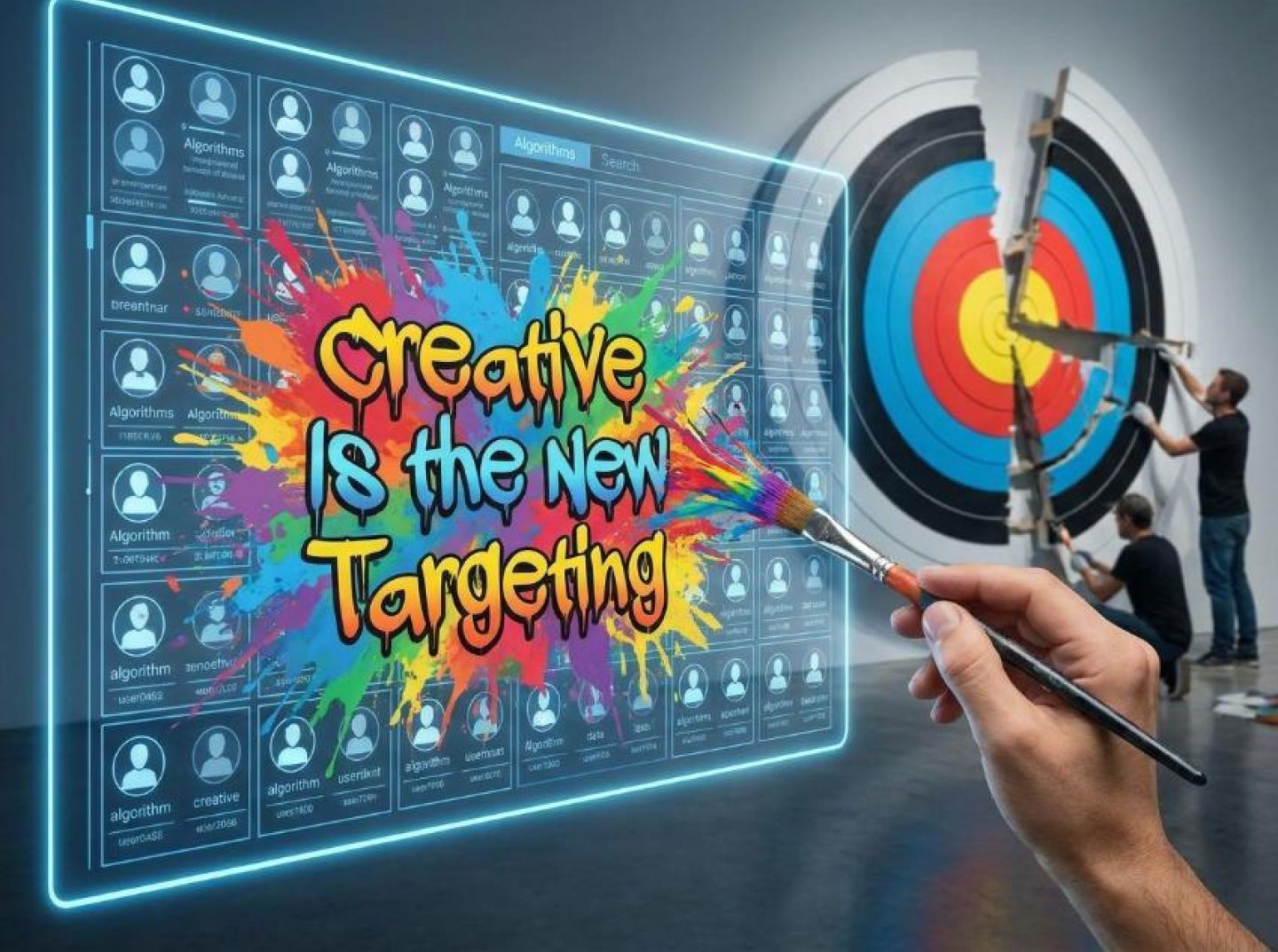
There's an underappreciated collision happening inside TikTok's ad ecosystem right now, and most media teams are treating its two halves as separate developments when they are, in fact, a single strategic inflection point. On one side, TikTok is aggressively broadening automated audience expansion — its algorithm increasingly decides who sees your ad, with advertisers ceding granular targeting control in favor of machine-driven distribution. On the other side, the platform is simultaneously tightening its AI content detection apparatus, having already labelled more than 3 billion videos as AI generated and removing tens of millions of fake accounts in just the first quarter of 2026. The result is a pincer movement that reshapes the entire advertiser value chain: your creative is no longer just an asset that rides on top of a targeting strategy. It is the targeting strategy, the compliance mechanism, and the authenticity signal — all compressed into a single variable.
This isn't a theoretical framework. The "creative is the new targeting" thesis has been gaining traction across performance marketing for the past two years, and TikTok's simultaneous moves on both fronts have turned it from a provocative conference talking point into an operational reality. When the platform's algorithm controls audience expansion, the primary lever you have left to influence who engages — and how they engage — is the creative itself. A polished, obviously synthetic asset doesn't just risk an AI-generated label that suppresses organic reach; it also fails to serve as an effective signal to TikTok's recommendation engine about which audiences should see it. As WordStream's advertising guide puts it bluntly, user-generated content consistently outperforms highly polished advertisements on TikTok because it feels more casual, more authentic, and more trustworthy. That performance gap isn't just a creative preference — in an environment where the algorithm is making targeting decisions on your behalf, it's a distribution gap.
This is where most advertisers' mental models break down. They still sequence strategy as: define audience, set targeting parameters, then produce creative to fit. But when TikTok automates the first two steps and simultaneously penalizes synthetic content through detection and labeling, the entire sequence inverts. Creative authenticity becomes the independent variable that determines distribution breadth, cost efficiency, and downstream lead quality. It's not a brand value to aspire to — it's a performance metric to optimize against, as measurable as click-through rate or cost per acquisition.
The implications extend beyond TikTok's walled garden. As illumin has documented, the broader adtech landscape is shifting toward AI-driven dynamic creative optimization systems that select optimal creative combinations in real time. But here's the tension: those systems are only as effective as the creative inputs they're fed. If your asset library is populated with synthetic content that TikTok's detection infrastructure flags, suppresses, or labels, no amount of algorithmic optimization downstream will compensate for the distribution penalty imposed upstream.
The advertisers who are winning right now have internalized this convergence. They're not treating authenticity as a creative brief checkbox — they're treating it as the single most consequential variable in their media plan. They're investing in real creators, real footage, and real testimonials not because it sounds good in a brand deck, but because in TikTok's current architecture, authentic creative is the only lever that simultaneously optimizes for algorithmic distribution, regulatory compliance, and audience trust. When your creative does the work of your targeting, your compliance team, and your brand strategy all at once, underfunding it isn't a creative shortfall — it's a structural disadvantage that compounds across every dollar you spend.
Receive top converting landing pages in your inbox every week from us.
Editor’s Pick
Discover how to turn food, sports, and tech trends into structured creative testing hypotheses instead of one-off ad ideas. Learn how to build vertical-specific blueprints, test them across Native, Push, Pops, and TikTok, and use performance data to continuously improve your creative strategy.
Dan Smith
7 minSep 20, 2026
Guide
Award-winning ads can inspire powerful performance creative, but they need to be rebuilt for the way algorithms, feeds, and users behave across Native and TikTok. This guide shows how to reverse-engineer high-profile creative into scalable hooks, angles, formats, and AI-driven testing systems that can improve performance.
Elena Morales
7 minSep 19, 2026
In-Depth
Learn how to apply the Network Operations Center (NOC) model to modern media buying by connecting creative, delivery, site, CRM, and revenue signals in one operating system. This guide shows how to use Anstrex, AI tools, alerts, guardrails, and incident runbooks to monitor TikTok and paid media performance and respond faster to problems.
David Kim
7 minSep 17, 2026