

12 minJune 15, 2026

Our spy tools monitor millions of native ads from over 60+ countries and thousands of publishers.
Get StartedFor most of its history, out-of-home advertising has run on instinct. A media buyer drives a route, eyeballs an intersection, studies a traffic count from last quarter, and makes a call. That process isn't careless — it's often informed by decades of local knowledge — but it is structurally handicapped. As AdQuick has pointed out, OOH planning has traditionally relied on intuition and "gut feel," and the channel lagged behind not because it lacked impact, but because it lacked infrastructure. The data that digital marketers treat as table stakes — real-time performance metrics, granular audience segmentation, rapid creative testing — simply didn't exist in OOH at a comparable resolution until very recently.
The consequences of this deficit compound over time. When placement decisions rest on geographic assumptions and backward-looking traffic studies, even skilled buyers are essentially pricing risk with incomplete information. They know where people physically travel, but not what those people are responding to in the broader advertising ecosystem. They can estimate impressions, but they can't easily see which creative angles, offers, or product categories are surging in consumer attention right now. Every billboard booking becomes a high-stakes bet placed with yesterday's cards.
The industry is aware of the gap, and a new generation of platforms is working to close it. The shift underway is significant: as OOH Today reported in its coverage of Trillboards' integration with hellOOH, the more relevant question for sales organizations is no longer "What happened?" but "What is happening, why, and what is likely to happen next?" hellOOH's predictive demand engine, for example, analyzes historical campaign patterns and cross-market behavior to identify likely repeat advertisers, emerging category-level shifts, and early buying signals before the broader market catches on. That kind of machine-modeled intelligence represents a genuine leap forward — from static reports to living demand models.
AdQuick, meanwhile, has attacked the problem from the buying and measurement side, building AI-powered optimization and a proprietary measurement suite that correlates OOH exposure with web analytics and tracks verified store visits in real time. Together, these platforms are dragging OOH toward something resembling data parity with digital channels.
But here's the critical nuance: even the most advanced OOH intelligence tools are still modeling media demand — who is buying inventory, where, and when. What they are not modeling is creative and offer-level demand signals: which headlines are generating clicks right now, which product angles are resonating with audiences in specific geographies, which calls to action are outperforming others by statistically significant margins. That layer of intelligence — the kind that tells you not just where to place an ad but what that ad should say — lives almost entirely in the digital performance ecosystem. And within digital, nowhere is it more transparent than in native advertising, where third-party analytics tools surface granular data on everything from time-of-day engagement patterns to the comparative performance of emotional versus factual headlines through rigorous A/B testing.
This is the specific blind spot that native ad spy data can fill. OOH's structural data deficit isn't just about knowing traffic counts or predicting which advertisers will re-up next quarter. It's about the absence of a real-time creative feedback loop — the kind of signal that tells you consumers in Phoenix are clicking on solar financing offers at three times the rate of home security pitches, or that urgency-driven language is outperforming aspirational copy in the Midwest by a meaningful margin. That intelligence exists. OOH simply hasn't been wired to receive it — until now.
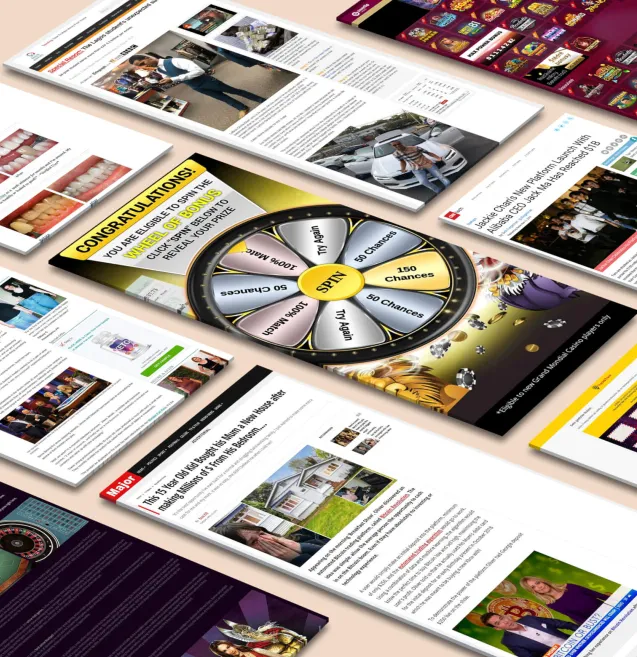
Native ad spy platforms like Anstrex function as living dashboards of commercial intent. They crawl major native networks — Taboola, Outbrain, Revcontent, MGID, and others — and catalog every ad unit they find, indexing creatives, headlines, landing pages, affiliate offers, geographic targeting, publisher placements, and, critically, how long each ad has been running. That last metric — ad longevity — is the one that transforms raw data into actionable intelligence. When a DTC skincare brand or a personal finance offer has been running the same native creative for 90 or more consecutive days across premium publishers, that is not a guess or a branding experiment. That is a verified, profit-positive signal. The advertiser has done the math, tested the funnel, and concluded that the unit is generating enough downstream revenue to justify sustained spend. Multiply that signal across thousands of advertisers and dozens of verticals, and you have what amounts to a crowdsourced R&D lab revealing which consumer pain points, messages, and product categories are converting right now.
The depth of this data is staggering. You can filter by vertical — health, finance, e-commerce, insurance, education — and instantly see which sub-niches are attracting aggressive spend. You can study the landing pages behind top-performing ads to reverse-engineer the emotional hooks and value propositions that are moving audiences to act. You can compare geographic targeting to learn whether a supplement brand is scaling into the Midwest or a fintech company is concentrating budget on coastal metros. And because Taboola's own trend data has shown that creative variables like color imagery and simplified visuals drive significantly higher engagement, spy tools also let you see which of those best practices winning advertisers are actually deploying at scale versus which are merely theoretical.
Here is what makes this relevant far beyond the performance marketing world: every one of these signals maps to a real consumer demand pattern. If debt consolidation ads are surging in Texas and Florida, that tells you something about regional economic pressure — information an OOH buyer placing billboards in those markets would pay dearly to know. If a pet insurance brand has been scaling native spend for three straight months, that category momentum doesn't stop at the browser; those same pet owners drive past digital billboards and wait at transit shelters.
The OOH industry is beginning to appreciate this kind of cross-channel intelligence. As Clearcode has documented, the shift from traditional OOH to DOOH is fundamentally about adopting the same data-driven principles — targeting, tracking, attribution, and measurement — that have powered online display for years. DOOH platforms already ingest mobile location data, weather feeds, and event schedules to optimize placements. Native ad spy data is simply the next logical signal layer: a real-time demand heat map showing which products, offers, and verticals are generating enough consumer response to sustain paid media at scale.
Yet almost no one in the out-of-home ecosystem is looking at it. Media owners are building predictive demand engines and campaign intelligence graphs to understand advertiser behavior within their own channel, but the richest publicly observable signal about what consumers are responding to — millions of tracked native ad units updated daily — sits untouched. OOH buyers who ignore this data are essentially choosing to plan campaigns without consulting the largest open-source library of proven commercial messaging available anywhere. The information is there. The competitive advantage belongs to whoever reads it first.
The smartest OOH strategy starts before you ever look at inventory. It starts in the data — specifically, in the real-time demand signals that native ad spy tools make visible. If you can see what's scaling in performance marketing right now, you can position physical media to intercept that same demand in the real world. Here's a practical, four-step framework for doing exactly that.
Step 1: Identify the top-spending verticals in native. Open your spy tool and sort by ad spend volume or network gravity — whichever proxy the platform offers for scale. You're looking for verticals that have multiple advertisers spending aggressively, not just one outlier. If you see five different solar panel installation companies running native campaigns with high frequency across Taboola and Outbrain, that's a category signal, not a brand signal. The same logic applies to telehealth, home insurance, Medicare Advantage, or any vertical where spend density clusters visibly. You want verticals where competition is intensifying because that competition reflects proven consumer demand.
Step 2: Filter by geography and ad longevity. Raw spend data alone is noisy. The sharpening filter is geo-targeting combined with duration. An ad that has been running for 60 or 90 days in Phoenix, Tampa, and Charlotte — and is still live — tells you the unit economics work in those metros. That longevity is not a vanity metric; it's a profitability signal. Now you have both a vertical and a set of specific markets where that vertical is demonstrably scaling. This transforms a vague hunch about "Sun Belt growth" into a prioritized list of metros with validated commercial traction.
Step 3: Cross-reference with OOH audience and demographic data. This is where the native intelligence layer meets physical-world planning infrastructure. Platforms like AdQuick now leverage AI-powered optimization that incorporates consumer, demographic, and behavioral data to evaluate trillions of possible OOH unit combinations. When you bring your native-derived shortlist of verticals and metros into that system, you're not browsing inventory cold — you're asking a pointed question: which billboard faces, transit placements, or DOOH screens in these specific markets index highest against the demographic profile that native data tells you is already converting? The alignment between digital response data and physical audience measurement creates a planning foundation that neither data set could provide alone.
Step 4: Select placements that amplify the digital signal. The final move is strategic reinforcement. As Clearcode has explained, DOOH content can be tied to weather and time-of-day data along with third-party measurement inputs, enabling dynamic creative that responds to real-world conditions. If your native spy data reveals that solar advertisers are winning with urgency-driven hooks — "2025 tax credit expires soon" — you can deploy that same emotional angle on digital billboards in the exact metros where those native campaigns are concentrated. The billboard doesn't replace the native ad; it primes the audience before they ever encounter the content widget on their phone. This is the documented halo effect at work: OOH exposure lifts digital response rates because brand recognition has already been seeded in the physical environment.
What makes this framework powerful is its directionality. You're not starting with available OOH inventory and trying to justify it with a media rationale. You're starting with proven digital demand — validated by real money from real advertisers over real time — and using it to select OOH placements with surgical confidence. The difference between "let's try this market" and "the data says this market is ready" is exactly this sequence.
Native advertisers live and die by their dashboards — CTR, CPA, ROAS, all tracked to the decimal point. It's a discipline that digital marketers have refined into a science. But that obsession with granular performance metrics can create a dangerous blind spot: the assumption that if something isn't clickable, it isn't working. OOH advertising challenges that assumption in ways that native-only marketers need to understand, because the data increasingly shows that physical-world exposure doesn't just build brand awareness — it actively primes the digital conversions native advertisers are already chasing.
The most obvious advantage OOH holds over native is structural. You can install an ad blocker. You can scroll past a sponsored post. You can skip a pre-roll video. But you cannot skip a billboard on your morning commute or ignore a transit wrap on the bus you're riding. As Clearcode has documented, DOOH inventory is fundamentally immune to the ad-blocking and banner-blindness problems that erode native reach over time. For native advertisers watching their effective CPMs climb as audiences develop "content blindness" to sponsored recommendations, that unskippable quality isn't a novelty — it's a strategic counterweight to the creative fatigue cycle that plagues every scaled native campaign.
But the real unlock isn't just about impressions that can't be avoided. It's about what those impressions do to downstream digital performance. AdQuick's proprietary measurement suite now makes it possible to draw direct lines between OOH exposure and digital outcomes, including correlating OOH campaigns with web analytics data and tracking verified store visits in real time. Their attribution capabilities also quantify what they call the "halo effect" — the measurable lift that OOH exposure creates across adjacent digital campaigns. This isn't theoretical brand-building. It's a documented performance lever: people who see your message on a physical billboard or digital screen before encountering your native ad in a content feed convert at higher rates, because the brand is no longer unfamiliar when the click decision happens.
Consider the typical native advertiser's plateau problem. You've tested hundreds of headlines. You've iterated on images. You've exhausted lookalike audiences and expanded into new geos. Analytics tools can reveal the specific time windows and geographic regions where your ads perform best, but even with that granular optimization, you eventually hit a ceiling where incremental improvement flatlines and costs rise. The audiences you're targeting simply don't know who you are yet, and no amount of headline testing can substitute for pre-existing brand recognition.
This is precisely where even a modest DOOH layer changes the equation. Native advertisers who identify their highest-converting metros — data they already have from their campaign dashboards — can deploy targeted OOH in those same neighborhoods, warming audiences in the physical world before they ever scroll past a Taboola or Outbrain unit. The geographic precision of modern OOH, which can target at the neighborhood and even street level, maps cleanly onto the geo-targeting data native advertisers already optimize against.
The strategic reframe is straightforward: stop thinking of OOH as a separate, top-of-funnel branding exercise and start treating it as a conversion-rate multiplier for the native campaigns you're already running. The halo effect isn't a nice-to-have line item for brand marketers with surplus budgets. It's a measurable input that reduces your effective CPA by making every downstream native impression more efficient. Native advertisers who ignore it aren't just leaving brand equity on the table — they're leaving performance on the table, too.
The advertisers who will own the next decade aren't the ones with the biggest budgets or the most premium placements. They're the ones who build the fastest, tightest feedback loops between what they learn online and what they deploy in the physical world — and then cycle the results back again.
hellOOH's thesis, as OOH Today reported, is exactly right: "The next era of OOH will not be won by the companies with the most inventory — it will be won by the companies with the fastest intelligence loops." But here's where the thesis needs to be expanded. That intelligence loop shouldn't be confined to OOH data alone. The compounding advantage hellOOH describes — where organizations operating with better models of demand "see the market earlier than everyone else" — becomes exponentially more powerful when it ingests demand signals from outside the out-of-home ecosystem entirely.
Consider the flow. Native ad spy tools surface, in near real-time, which creative angles are scaling, which product categories are surging in spend, and which advertisers are aggressively testing new markets. That's a demand signal with extraordinary predictive value. Feed those signals into an OOH planning layer — one that already maps campaign history, decision-maker relationships, and geographic expansion patterns — and you don't just react to trends. You anticipate where physical-world attention needs to be placed before your competitors even recognize the opportunity exists.
Now close the loop. DOOH platforms have evolved to the point where they can be activated inside the same DSP as display, mobile, and CTV campaigns, meaning DOOH-exposed audiences can feed retargeting pools and attribution can account for out-of-home's role across the full customer journey rather than measuring it in a silo. When that OOH attribution data — foot traffic lifts, brand search increases, geographic conversion patterns — flows back into the native advertising planning process, the native team suddenly has intelligence it could never generate from clickstream data alone. They know which messages resonated in physical space, which neighborhoods showed outsized response, and which creative themes drove real-world behavior that preceded digital conversion.
This is the cross-channel intelligence loop, and its value compounds with every cycle. Each rotation sharpens both sides. The native team's spy data makes OOH placement smarter. OOH's environmental and behavioral data makes native targeting more precise. Over time, the organization doesn't just get better at either channel — it builds a proprietary understanding of demand that no single-channel competitor can replicate.
The transition hellOOH describes — from human-interpreted market understanding to machine-modeled demand intelligence — is the infrastructure that makes this possible. But the machine needs fuel from every available source. Native spy data is among the richest, most real-time fuel available, and yet almost no OOH operator is ingesting it systematically. Likewise, native advertisers sitting on mountains of performance data rarely consider how OOH exposure data might explain the mysterious "dark" conversions that appear without a traceable click path.
The competitive moat, then, isn't about mastering programmatic DOOH buying or becoming a native advertising savant. It's about refusing to let those disciplines operate as separate kingdoms. The advertisers who connect these intelligence streams — who treat native spy signals as leading indicators for physical placement and OOH attribution as a feedback mechanism for digital creative strategy — will find themselves operating with a decision-making advantage that widens with every campaign cycle. Everyone else will still be optimizing channels. These teams will be optimizing systems.
Receive top converting landing pages in your inbox every week from us.
Most Read
Discover how to connect ad spy data with on-site behavior, CRM insights, and revenue outcomes to uncover the real drivers of ROI. Learn how to turn Anstrex from a creative swipe tool into a closed-loop system for testing winning ad angles, funnels, and customer journeys.
Dan Smith
7 minSep 9, 2026
Must Read
Agentic AI is moving product research and comparison upstream, often before buyers ever click a native or push ad. This article explains how marketers can adapt to the shift by making product feeds, offers, creative angles, proof points, and landing experiences easier for AI systems to understand and recommend. It also explores how high-intent clicks are changing, why AI-generated recommendations are reshaping creative angles, and how advertisers can optimize for both AI-mediated decisions and human action.
Samantha Reed
7 minAug 30, 2026
Editor’s Pick
As organic clicks decline and paid acquisition becomes more competitive, advertisers need to look beyond CTR and CPC and focus on the conversion architecture connecting ad creative, landing pages, offers, and post-click experiences. This article explains how to reverse-engineer competitor funnels, identify patterns that have survived real-world testing, and use those insights to build stronger, original conversion systems.
Dan Smith
7 minAug 29, 2026










)