
11 minAugust 25, 2026

Our spy tools monitor millions of native ads from over 60+ countries and thousands of publishers.
Get StartedThe out-of-home advertising industry is in the middle of a genuine intelligence arms race — and it's building the weapons from scratch. That's both admirable and, frankly, a little baffling when you consider that performance marketers have been running analogous systems for over a decade at a fraction of the cost.
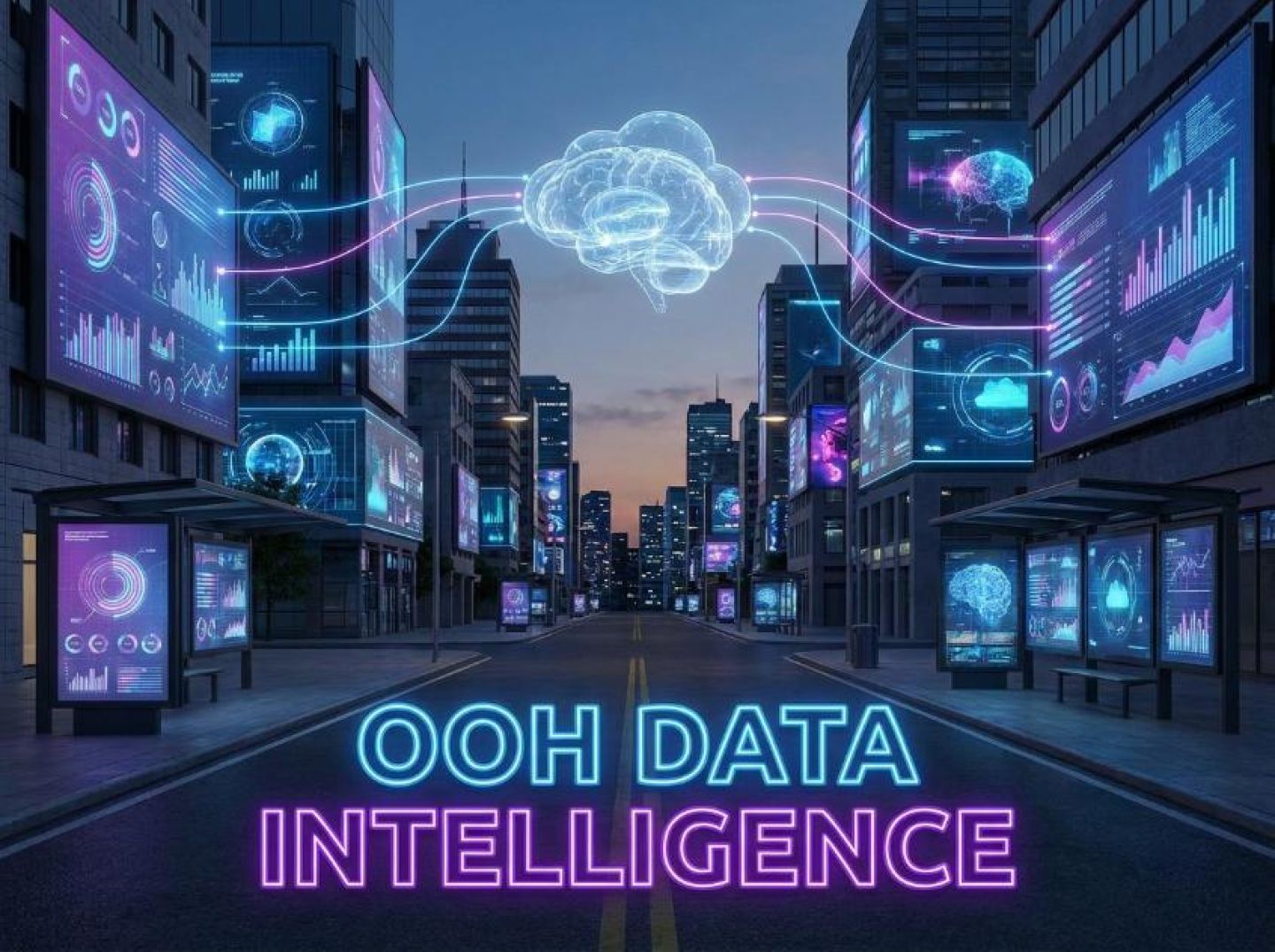
Consider the recent announcement that Trillboards has partnered with hellOOH to deploy a four-layer intelligence model designed to answer a question the OOH sector now treats as existential: "What is happening, why, and what is likely to happen next?" The system is genuinely sophisticated. Its Verified Campaign Intelligence Graph maps real campaign activity over time, attributing spend at the advertiser level across formats and geographies. Its Decision-Maker & Agency Intelligence Layer structures the human side of ad spend, hierarchically mapping holding companies, independents, and brand-side buyers into what amounts to a navigable graph of influence. A third layer builds contact infrastructure linking verified people to campaign data. And the crown jewel — a Predictive Demand & Market Intelligence Engine — analyzes historical patterns and cross-market behavior to surface likely repeat advertisers, emerging category shifts, and early buying signals before the broader market catches on.
If you work in native advertising or any flavor of performance marketing, that architecture should sound familiar. Swap "OOH campaign activity" for "competitor creatives," swap "agency intelligence layer" for "publisher placement mapping," and swap "predictive demand engine" for "trending angle detection," and you've essentially described what tools like Anstrex, AdPlexity, or even Brax's own analytics integrations have been doing for years. Native ad spy tools already track competitor creatives across networks, identify which publishers are running which offers, map spend patterns by vertical and geography, and — through granular analytics and A/B testing data — help advertisers predict which angles and formats are gaining momentum before saturation hits.
The parallel is almost structural. hellOOH's campaign graph is the OOH equivalent of a creative spy tool's historical ad database. The decision-maker mapping mirrors the publisher and network relationship graphs that affiliate and native marketers use to understand where money flows. And the predictive engine? That's the same pattern-recognition logic that performance marketers apply when they notice a supplement angle trending on Taboola three weeks before it floods Outbrain.
None of this diminishes what hellOOH is building. The OOH industry has unique data challenges — physical inventory, fragmented ownership, a buying process that, as AdQuick has argued, has historically been driven more by intuition than precision. Transforming OOH from a channel powered by guesswork into one powered by data is a real and necessary project. But the framing matters. When OOH organizations treat competitive intelligence and predictive demand modeling as entirely novel capabilities, they risk overlooking a decade's worth of hard-won architectural lessons from digital performance marketing — lessons about data normalization, signal decay, false positives in predictive models, and the difference between intelligence that informs and intelligence that actually accelerates a sales cycle.
The gap isn't that OOH leaders don't recognize the need for intelligence infrastructure. They clearly do. The gap is that they're engineering solutions without fully surveying what already exists in adjacent disciplines — tools that could serve as blueprints, benchmarks, or even starting points, saving millions in development costs and years of iteration.
Native ad spy tools are, at their core, competitive intelligence engines — and they've been quietly refining that function for years while the OOH industry has been building its own from the ground up. Understanding what these tools actually do, feature by feature, reveals just how much transferable intelligence OOH strategists are leaving on the table.
The foundational capability is the creative library: a searchable, filterable archive of every native ad a competitor has run across major content networks. These libraries capture headlines, thumbnail images, ad copy variations, and the publishers where each creative appeared. For an OOH planner, this answers a deceptively simple question: What is my competitor actually saying to people right now? Not what their brand guidelines suggest, not what their agency pitched in a deck six months ago, but what they're running today, at scale, with real money behind it.
Then there's run-time duration tracking — and this is where the intelligence gets genuinely actionable. When a spy tool shows you that a competitor has been running the same headline angle across 14 publishers for 90 days, that's not just persistence; it's a durability signal. It means the creative is profitable. Nobody spends for three months on a native campaign that isn't converting. As Brax has documented, advanced analytics tools enable advertisers to dissect granular performance data — from click-through rates to conversion rates — and use A/B testing to systematically identify which headlines, images, and calls to action outperform alternatives. The creatives that survive that gauntlet and keep running month after month are battle-tested messages. OOH strategists can read those signals to understand which messaging themes competitors have already validated digitally before committing six figures to a physical placement that can't be swapped out with a click.
Geographic targeting data adds another layer. Native ad platforms allow advertisers to target by region, metro area, and sometimes city — and spy tools often expose those targeting parameters. If a DTC mattress brand is hammering native ads geo-targeted to Dallas-Fort Worth with a specific sleep-quality angle, an OOH team planning inventory in that same DMA now has a directional read on competitive messaging strategy and market prioritization. Pair that with publisher and network filtering — which reveals whether a competitor favors premium editorial environments or high-volume content recommendation widgets — and you start to build a psychographic profile of the audience they're chasing.
The parallel to what hellOOH is constructing for the OOH industry is striking. As OOH Today reported, hellOOH's Verified Campaign Intelligence Graph maps real, verified OOH campaign activity over time, creating a "longitudinal dataset of how demand behaves" rather than simple snapshots. That's exactly what native ad spy tools provide by default — longitudinal creative tracking that reveals not just what a competitor ran, but how long they ran it, where they ran it, how the creative evolved, and when they finally killed it. The difference is that native spy tools already exist, cost a few hundred dollars a month, and cover virtually every major advertiser running digital campaigns.
The point isn't that OOH-specific intelligence platforms like hellOOH are unnecessary — they're building something purpose-built and valuable. The point is that OOH teams don't need to wait for those platforms to mature before they start learning from competitor behavior. Much of that behavior is already visible in digital native campaigns, indexed, searchable, and waiting to inform the next billboard brief.
The case for OOH as an attention medium is essentially settled. As AdQuick demonstrated with its Cannes Lions 2026 activation, which reached an estimated 15,000 attendees and generated immediate organic amplification, out-of-home remains one of the only advertising channels that reaches people directly, without algorithmic filtering. But that unmediated, unfiltered attention is only as valuable as the creative it carries. A billboard commands a gaze that no pre-roll skip button or AI-curated feed can replicate — and then wastes it entirely if the headline falls flat, the imagery feels generic, or the emotional hook misses the mark. This is precisely where native ad spy tools transform the OOH creative process from intuition-driven guesswork into something far more rigorous.
Think about what a native ad spy tool actually surfaces when you analyze a competitor's top-performing creatives. You see which headlines earn clicks at scale, which thumbnail images stop thumbs mid-scroll, which emotional registers — urgency, curiosity, social proof, fear of missing out — consistently outperform others. As Brax has documented, analytics tools make it possible to identify trends, patterns, and areas of concern that may not be immediately visible through standard reports, including the A/B testing of headlines, images, and calls to action that reveal statistically significant performance differences. When a DTC skincare brand's top fifty native ads all lead with a specific pain point — say, "dermatologists won't tell you this" rather than "our patented formula" — that's not a copywriter's hunch. That's a data-backed signal distilled from thousands of impressions and clicks, and it should be the starting point for what goes on the billboard, not an afterthought discovered in a post-campaign debrief.
The argument for this kind of cross-channel creative intelligence becomes even stronger when you consider the convergence already underway between retail media and outdoor advertising. The concept that "the aisles become avenues" — where a single consumer encounters brand messages across digital feeds, in-store digital screens, and roadside placements within the same shopping trip — means creative consistency isn't a nice-to-have. It's structural. A consumer who sees a pain-point-driven native ad on their phone, then passes a billboard echoing that same language on the drive to the store, and finally encounters a DOOH screen reinforcing the message at the point of purchase is experiencing something far more powerful than three isolated impressions. They're experiencing a coherent brand narrative that builds on itself.
This is also why the operational friction that AdQuick identified at Cannes — the reality that planning and buying are still more manual than digital channels, causing OOH to get left out of fast-moving media plans — extends beyond media buying into the creative briefing process itself. When OOH creative briefs begin with a blank whiteboard and a brainstorm session disconnected from digital performance data, they're ignoring the richest source of audience-validated messaging available. The spy tool data doesn't replace creative vision; it constrains it productively. It tells you which emotional territories your audience is already responding to, which proof points carry weight, and which framings fall flat — all before you've spent a dime on vinyl or digital screen time.
The shift in DOOH toward programmatic buying and data-driven execution makes this integration even more natural. When you can swap DOOH creatives in near real-time based on daypart, weather, or audience composition, the ability to pre-load those creatives with messaging angles validated through native ad performance data turns dynamic capability into dynamic intelligence. The OOH creative brief shouldn't start with what feels bold. It should start with what's already working.
Every OOH campaign begins with a market selection question: where should we show up? The traditional answer draws on a mix of traffic counts, demographic overlays, and — if we're being honest — instinct shaped by whatever data the operator or agency happens to have on hand. But there's a parallel data stream most OOH planners never consult, and it's hiding in plain sight inside native ad spy tools.
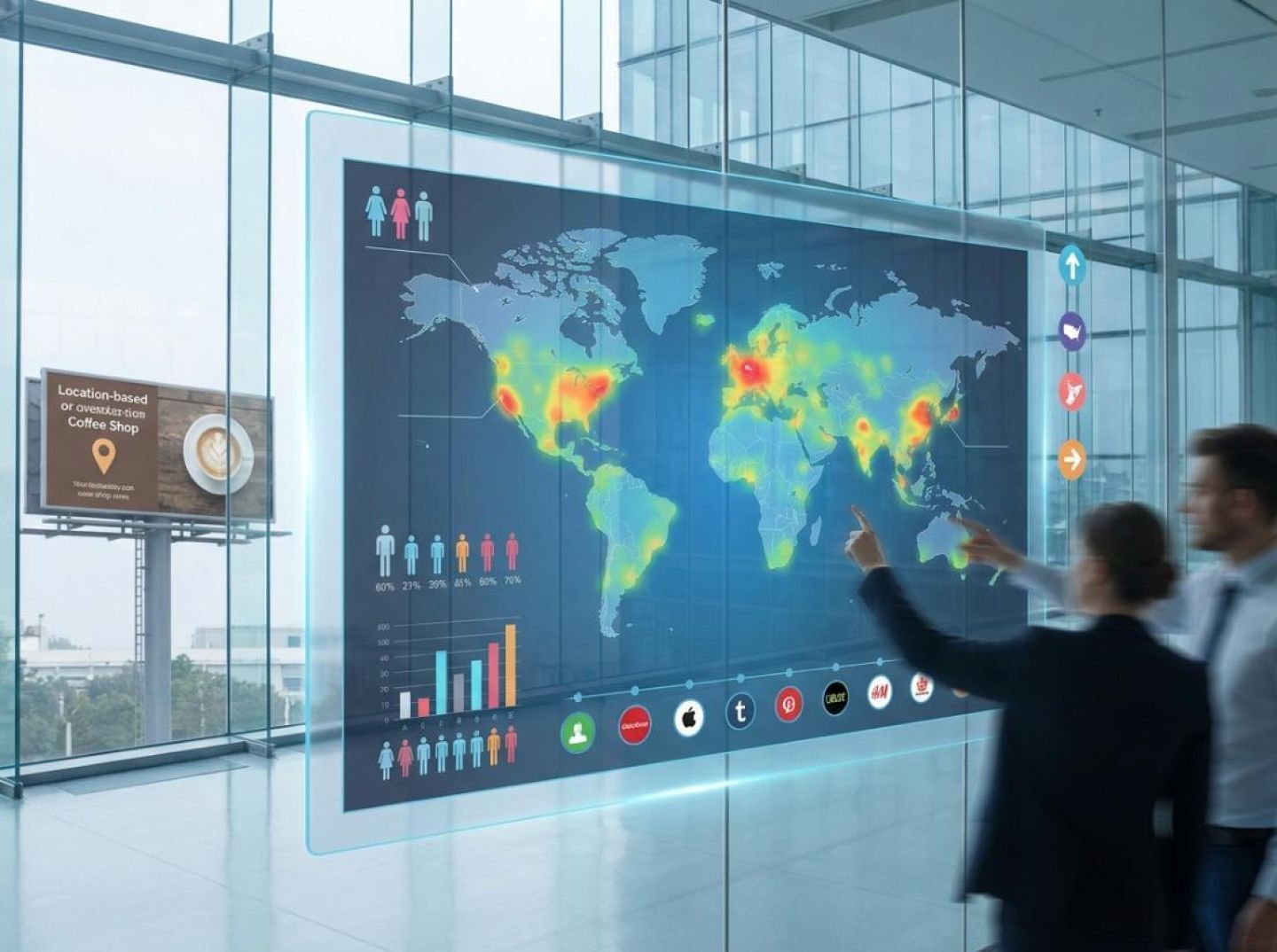
Native advertising platforms generate granular geographic and demographic performance data by design. As analytics tools in this space have matured, they can now identify geographic regions or cities where ads perform exceptionally well, facilitating geo-targeted campaigns — and that capability doesn't just serve native advertisers. When you run a competitor's brand through a spy tool and discover they're concentrating native spend on specific metros — say, Phoenix and Austin — you're looking at a demand signal. That brand has already tested messaging in those markets, validated audience receptivity, and decided the ROI justifies continued investment. For an OOH planner, that intelligence is worth more than a dozen impression estimates derived from highway traffic sensors.
The logic here isn't speculative. AdQuick's platform already leverages advanced machine learning and AI to analyze trillions of possible combinations of OOH units, incorporating consumer, demographic, and behavioral data to place every ad dollar strategically. That kind of optimization engine is powerful, but it operates on the data it's fed. When you layer in competitive geographic intelligence from spy tools — confirming where rivals are already investing digitally and which audience segments they're pursuing — you're giving the optimization model a sharper starting point. You're not just asking "where could our audience be?" You're asking "where is our competitor already proving demand exists?"
This matters for independent OOH operators as much as it does for advertisers. The visibility problem cuts both ways. As OOH Today reported, buyers are increasingly searching for, evaluating, and shortlisting outdoor advertising options before any sales rep picks up the phone — and the operator who isn't visible in that search "never knew a deal existed." The same blindness afflicts competitive intelligence. If a regional operator can't see that a fast-growing DTC brand is saturating Austin with geo-targeted native content — content that could logically extend into OOH placements along the I-35 corridor — that operator has no way to proactively pitch inventory to a buyer who's clearly investing in that market. The deal evaporates before it forms.
Spy tools fill this gap by making competitor spending patterns visible at the market level. Publisher-network data reveals which regional and local content sites a competitor is buying through, which often maps neatly to metro-level targeting. Demographic filters show whether the competitor is skewing toward younger urban professionals or suburban families, which in turn informs whether a digital transit shelter or a highway bulletin is the right format. None of this replaces the behavioral modeling and attribution capabilities that platforms like AdQuick have built. It precedes them. It's the reconnaissance that sharpens the mission brief.
The practical takeaway is straightforward: before you finalize your next OOH market list, run your top three competitors through a native ad spy tool and map their geographic concentration. You'll almost certainly discover markets where digital spend is heavy but OOH presence is light — and that gap is your opening. Competitive intelligence doesn't replace data-driven OOH planning. It tells you where to aim it.
The constraint in out-of-home advertising is no longer infrastructure execution but intelligence asymmetry — a phrase that should be tattooed on the forearm of every OOH campaign strategist. Trillboards' adoption of hellOOH's predictive demand engine represents an important step toward closing that gap, building what the platform describes as a "living model of demand" across verified campaign data, agency relationships, and market signals. But here's the practical reality: most OOH teams cannot wait for a single monolithic intelligence platform to arrive fully formed before they start competing on insight. They need a workflow they can build today, using tools that already exist — including native ad spy tools that were never designed for the billboard industry.
What follows is a repeatable five-step process that any OOH planning team can integrate into their existing cadence without hiring a data scientist or purchasing enterprise software.
Step one: Build your competitive and adjacent-brand watchlist. Start with your direct competitors, but don't stop there. Include brands that share your audience but operate in adjacent categories — the DTC supplement brand that targets the same 28-to-40 urban demographic as your fitness client, for instance. Native ad spy tools are organized around advertisers, so your watchlist becomes the input that drives everything downstream.
Step two: Catalog active creatives, landing pages, run durations, and geographic signals. Run each brand on your watchlist through native ad spy tools and document what you find. Which headlines are they testing? How long has each creative been running? What landing pages are they driving traffic toward, and do those pages reveal market-specific offers or region-locked promotions? As outlined in Section 4, the geographic and audience signals embedded in these campaigns are surprisingly granular — and they're available without filing a single media request.
Step three: Cross-reference those findings with OOH-specific platforms for placement optimization. This is where intelligence translates into action. Platforms like AdQuick already leverage machine learning to analyze trillions of possible combinations of OOH units, incorporating consumer, demographic, and behavioral data to maximize placement precision. When you layer in the geographic and creative intelligence you've gathered from spy tools — say, a competitor hammering Phoenix and Austin with urgency-driven messaging — you can use that context to inform which markets, formats, and corridors deserve priority in your buy.
Step four: Use creative durability as a messaging filter. Not every headline that appears in a spy tool deserves attention. The ones that matter are the ones that survive. When a competitor has been running the same core value proposition across native placements for eight or twelve weeks, that longevity is a performance signal. It tells you the message is converting. For OOH, where creative changes carry real production costs and longer commitment windows, these durability signals are invaluable. They help you prioritize messaging themes that have already been market-tested at someone else's expense.
Step five: Monitor on a recurring cadence to detect strategic shifts early. The real power of this workflow isn't a one-time audit — it's the compounding advantage of regular surveillance. hellOOH's predictive engine is designed to identify likely repeat advertisers and emerging demand shifts before market visibility peaks. You can approximate a version of this by checking your spy tool watchlist biweekly. When a competitor suddenly launches a new creative cluster targeting a geography they've never touched, that's an early signal — potentially weeks or months before those same brands appear on a billboard in your market.
This workflow won't replace purpose-built OOH intelligence tools. But it eliminates the excuse for operating blind while those tools mature. The brands that close the intelligence asymmetry first won't necessarily be the ones with the biggest budgets — they'll be the ones with the most disciplined process for pulling insight from wherever it lives.
Receive top converting landing pages in your inbox every week from us.
Guide
Discover why celebrity endorsements and global intellectual property don’t automatically translate into advertising success. This guide uses ad spy intelligence to explore how audience relevance, placement context, creative testing, and post-click performance help advertisers build high-ROI campaigns without expensive celebrity partnerships.
Elena Morales
7 minOct 9, 2026
Guide
Discover how native advertisers can turn the psychology behind big brand stunts like “Break Conference” and “World Menu Heist” into measurable performance campaigns. Learn how to use scarcity, owned IP, fandom, participation, and cross-channel funnels to build native and TikTok campaigns that generate attention and conversions.
Marcus Chen
7 minOct 8, 2026
Most Read
Learn how to turn sports, snacks, creator trends, and pop culture moments into high-ROI advertising funnels without relying on big budgets. This guide shows how to use Anstrex Native, Instream, and Push intelligence to identify emerging cultural angles, analyze ad duration and gravity, and adapt proven concepts to lower-cost placements.
Rachel Thompson
7 minOct 7, 2026









)