
6 minJuly 25, 2026

Our spy tools monitor millions of native ads from over 60+ countries and thousands of publishers.
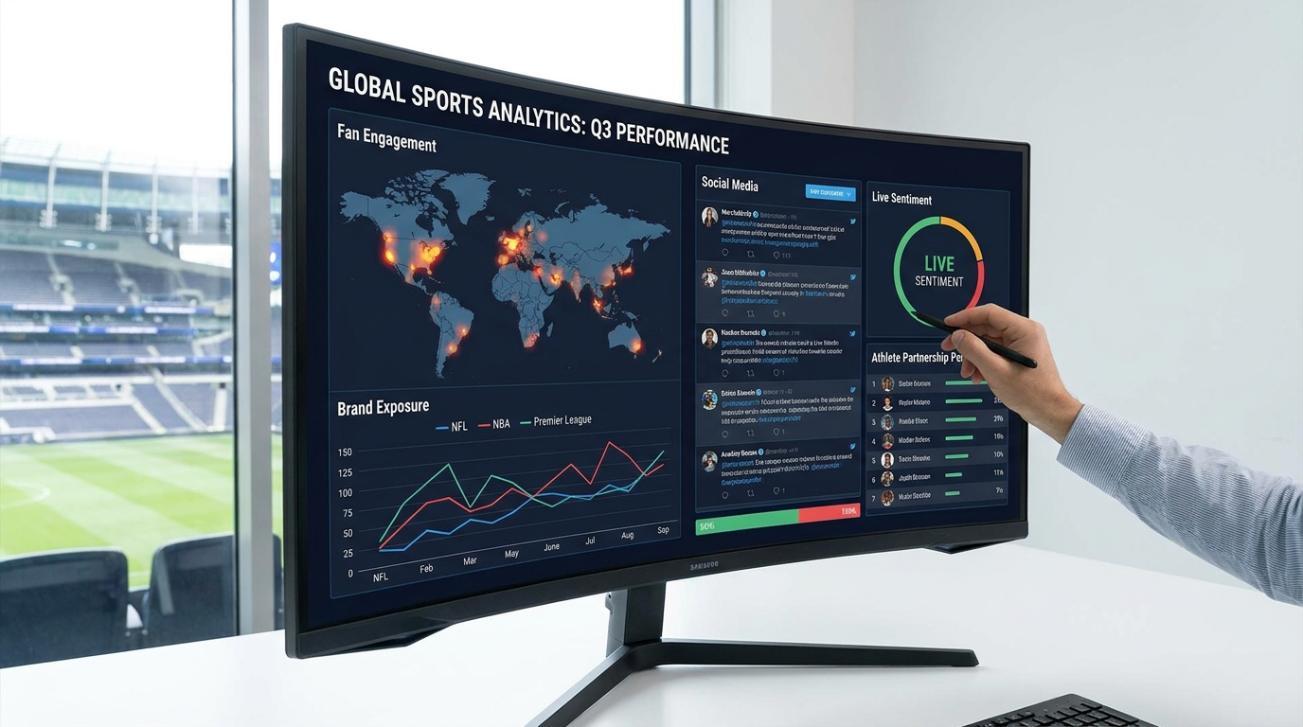
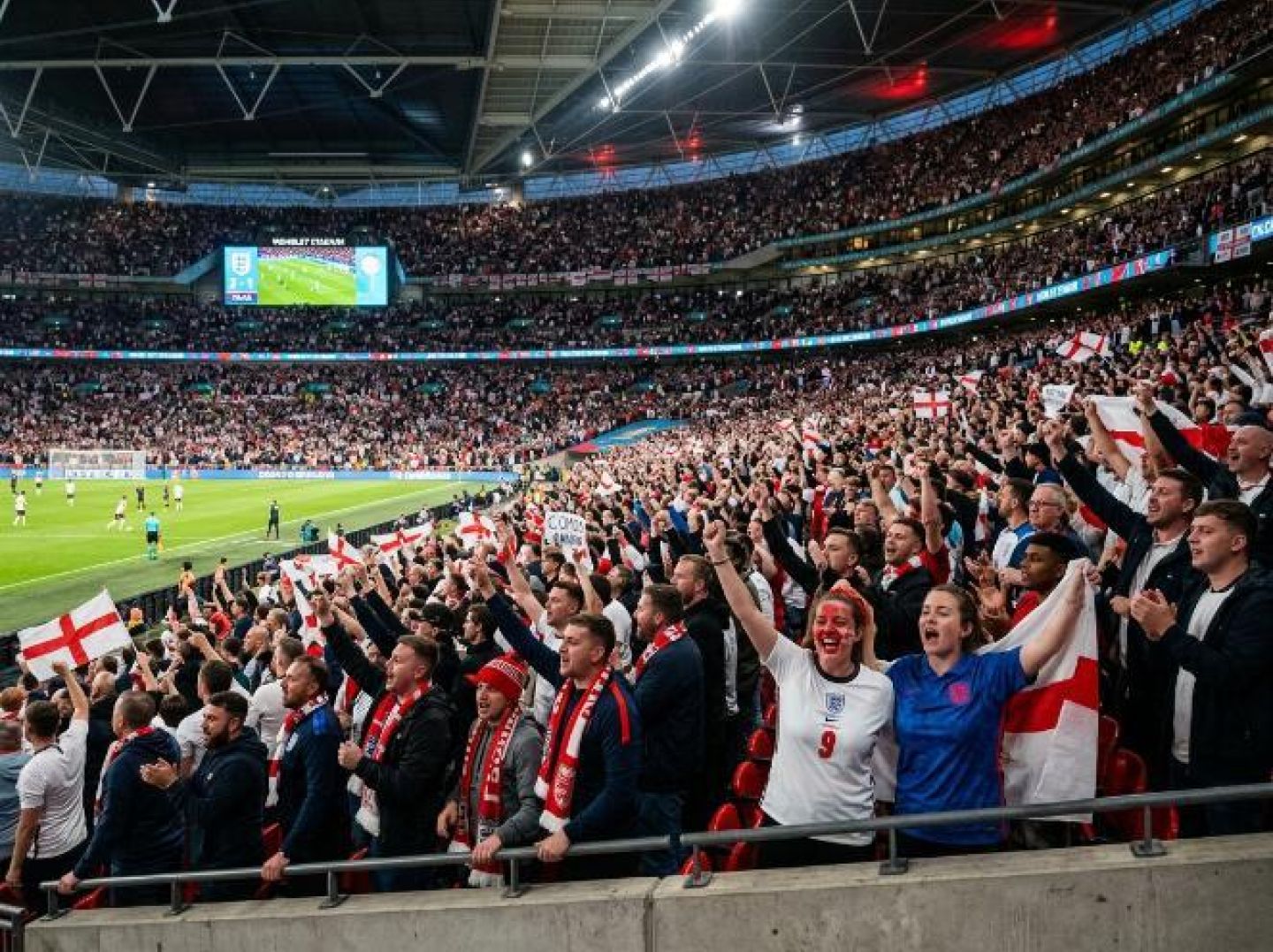
Get StartedWhen the 2026 FIFA World Cup kicked off across North America, it didn't just unite billions of fans — it detonated one of the largest coordinated advertising blitzes in modern marketing history. Official sponsors like Coca-Cola and Budweiser, ambush marketers like Nike and Modelo, and global confectionery giants like Mondelēz all converged on a single cultural window, collectively injecting more than $10 billion into the ad market across out-of-home, connected TV, social, and native channels. For the average performance marketer scrolling past the spectacle, those numbers feel like dispatches from another planet — budgets so massive they might as well be denominated in a foreign currency. But that's exactly the wrong way to read the moment.
Here's a more useful frame: every dollar those brands spend is a data point. When the most analytically sophisticated marketing organizations on earth — companies with armies of econometricians and brand-lift researchers — all place enormous bets on the same tentpole event, they're telling you something about where attention actually lives. As Gartner's Nicole Greene argued in Marketing Dive, fragmented digital environments have made it increasingly difficult to capture genuine engagement, while the World Cup "concentrates attention" by bringing together "emotion, ritual and shared context over an extended period of time." In other words, the tournament creates conditions that personalization alone simply cannot replicate — and the world's biggest advertisers know it.
That concentration of attention is also reshaping how marketers buy media. The shift from linear broadcast to live sports streaming has opened up programmatic buying opportunities that barely existed a cycle ago. As MiQ's Mohammad Chughtai explained to AdExchanger, streaming supply has "massively outpaced demand," driving down inventory costs and making CTV during tentpole sports events accessible to a wider range of advertisers. Marketers are now layering programmatic buying with marketing mix modeling to squeeze measurable returns from live sports — turning what was once a pure brand play into something that looks a lot more like performance marketing.
Meanwhile, the creative intelligence leaking out of these campaigns is just as valuable as the media strategy. Nike's "Rip the Script" spot surpassed 66 million YouTube views in under a week, engineered with layered cameos and Easter eggs that practically demanded rewatches. Adidas countered with "Backyard Legends," a community-first narrative that leaned into grassroots authenticity. And off-screen, brands like Nike deployed mobile activations that brought the game directly to fans on city streets, proving that presence — physical, contextual, impossible to scroll past — still outperforms pixels in the right moment.
This is the part performance marketers consistently miss. You don't need a seven-figure sponsorship deal to benefit from a seven-figure sponsorship deal. You need to watch what the sponsors are doing — which audiences they're targeting, which emotional triggers they're pulling, which formats they're doubling down on, and which channels they're fleeing — and reverse-engineer those signals into your own campaigns. When Coca-Cola, Adidas, Nike, Budweiser, Modelo, and Mondelēz all converge on a single cultural moment, they're essentially running the most expensive A/B test in advertising history. The results are public. The creative is public. The channel mix is legible to anyone paying attention.
Ignoring all of that isn't discipline. It's leaving free intelligence on the table.
A decade ago, the biggest FIFA sponsors ran their campaigns through linear TV buys and stadium signage — channels that were essentially invisible to anyone outside the media agency that booked them. That world is gone. As live sports programming keeps shifting to streaming and programmatic buying, the campaigns that major brands deploy during the World Cup now leave digital breadcrumbs across every platform a performance marketer already knows how to read. The same PMP deals, social placements, and native ad blitzes that Coca-Cola and Adidas run are indexed, archived, and searchable — if you know where to look.
Here's the four-step framework for turning their seven-figure playbooks into your five-figure campaigns.
Step 1: Identify Vertical Spikes in Real Time
Start by setting up monitoring dashboards across Adplexity (for native and push), Anstrex (for pop and native), and Meta Ad Library and TikTok Creative Center (for social). Filter by keyword clusters tied to the tournament — "World Cup," "match day," team names, host city names — and watch which verticals surge week over week. During group-stage play, you'll see predictable spikes in sports betting, streaming subscriptions, and VPN services as fans scramble for geo-restricted broadcasts. As the tournament progresses into knockout rounds, expect jersey and merch e-commerce, food delivery, and travel offers to climb as emotional intensity — and impulse buying — escalates. Log the volume of new creatives per vertical per week; the rate of change matters more than the raw count, because it tells you where buyers are scaling spend, not just testing.
Step 2: Catalog Creative Angles and Hooks
Once you've identified the hot verticals, screenshot and tag every unique creative angle you find. Pay attention to the hooks brands are A/B testing: countdown urgency ("Stream every match before the Final"), national pride plays ("Rep your country"), group-watch social proof ("Join 2M fans watching live"), and loss-aversion framing ("Don't miss the goal that changes everything"). The shift toward programmatic and CTV means brands are running dozens of creative variants simultaneously, and spy tools surface each one. Sort your swipe file by hook type, not by brand — you're reverse-engineering persuasion frameworks, not logos.
Step 3: Map Audience Segments and GEOs
Big brands aren't spraying ads uniformly. As illumin details in its World Cup playbook, sophisticated advertisers are building location-based audience segments — retargeting stadium visitors and fan-zone attendees across screens for up to 30 days after a match. You can't replicate that exact first-party location data, but you can observe its effects. Check which GEOs show the highest creative density in your spy tools: host cities like New York, Los Angeles, Dallas, and Miami will over-index, but so will diaspora markets — Mexican-American communities in Houston, Colombian pockets in South Florida, German expat hubs in the Midwest. These audience concentrations are your targeting shortlist.
Step 4: Note Timing and Frequency Patterns
Finally, track when campaigns appear and how often they rotate. illumin's own framework reveals that brands are serving ads at a frequency of 3x per day across cross-screen retargeting windows — a cadence that tells you the saturation threshold major advertisers have tested and validated. Monitor which days of the week spy tools show the most new creatives launching (typically 24–48 hours before marquee matches) and which days show the most paused campaigns (immediately after a team's elimination). This timing data lets you ride the same attention waves without competing head-on during peak CPM hours.
The bottom line: every dollar a FIFA sponsor pushes through programmatic, CTV, or social channels generates a data trail that didn't exist in the broadcast-only era. Your job isn't to outspend them — it's to out-read them.
In cycling, "drafting" means tucking behind a rider who's doing all the work punching through wind resistance, letting their effort pull you forward at a fraction of the energy cost. The same physics apply to cultural tentpole events — except the wind is consumer attention, and the riders out front are billion-dollar FIFA sponsors burning through a collective $10 billion in ad spend to heat up demand around soccer, national pride, and summer competition. Performance marketers who understand the drafting concept don't need to match that spend. They just need to be positioned correctly in the slipstream.
Here's why the slipstream is so wide open: despite all that investment, the vast majority of World Cup conversation remains completely unbranded. Research conducted by Samy found that less than 1% of total U.S. World Cup-related social media conversations have featured brand mentions, even with Nike, Adidas, Coca-Cola, and Budweiser all running massive campaigns simultaneously. That stat should stop every performance marketer mid-scroll. It means ninety-nine-plus percent of the cultural conversation around the tournament is a brandless vacuum — millions of people talking passionately about matches, players, upsets, and bracket drama without any commercial attachment. That gap between attention generated and attention captured is the arbitrage opportunity.
The mechanics work on multiple levels. When mega-brands pour money into premium inventory — CTV placements during live matches, homepage takeovers on sports sites, primetime YouTube pre-rolls — CPMs on those channels predictably spike. But the attention surge doesn't stay confined to premium slots. It spills into native ad networks, push notification platforms, and programmatic display across the long tail of the web, where pricing often remains remarkably stable. A fan who just watched Coca-Cola's halftime spot doesn't stop browsing after the match; they open tabs, scroll Reddit threads, check bracket predictions, and hunt for replica jerseys. That downstream behavior is where performance budgets thrive.
Long-tail keyword opportunities multiply as well. Search demand around phrases like "World Cup group stage predictions," "best soccer cleats 2026," or "how to watch USA vs. Mexico" surges during the tournament but attracts relatively little competition from the official sponsors, whose campaigns are built for awareness rather than search capture. These queries carry genuine commercial intent, and the cost per click stays low precisely because the brands generating the underlying demand aren't bidding on them.
There's a compounding effect, too. As Nicole Greene of Gartner wrote for Marketing Dive, consumers are becoming more adept at avoiding, skipping, and blocking ads, which means the expensive awareness work that sponsors do increasingly struggles to convert on its own. Precision targeting has improved, she argues, but impact has not kept pace. That disconnect between brand spend and brand results is exactly what creates leftover intent for agile operators to harvest. When a massive campaign primes someone to think about soccer but fails to close any transaction, a well-timed push notification offering match-day drink deals or a native ad featuring fan gear can catch the warm lead that a seven-figure sponsorship heated up but never converted.
The tactical playbook writes itself around the tournament calendar. Match days, group-stage eliminations, quarterfinal upsets — each inflection point creates a fresh attention spike that performance marketers can ride within hours using pre-built creative variants and rapid deployment. You don't need permission from FIFA, you don't need a sponsorship badge, and you don't need a celebrity cameo engineered for rewatchability. You need speed, relevance, and the willingness to launch while the conversation is still hot and still almost entirely unbranded.
You can't afford Kylian Mbappé. You probably can't afford the craft services budget on a Nike shoot. But what you can afford is the structural blueprint that made one World Cup ad collect nearly ten times the views of its closest competitor — and that blueprint translates directly to native ad headlines, push notification hooks, and fifteen-second TikTok creatives.
Start with the numbers. Nike's "Rip the Script" surpassed 66 million YouTube views in less than a week, while Adidas' "Backyard Legends" sat below 7 million after more than a month on the platform. Same sport, same cultural moment, comparable brand equity — wildly different outcomes. The gap wasn't budget. It was behavioral design.
Curiosity-gap density. Nike packed the spot with cameos, Easter eggs, and blink-and-you-miss-it details that made a single viewing feel incomplete. As Method1's Arling-Giorgi put it, the ad was "engineered for craving: blink and you miss something, so you choose to go back for seconds and thirds". Performance marketers can replicate this without a single celebrity. In a native ad headline, it means opening a loop the thumbnail alone can't close — "The warm-up drill that three national team coaches banned" beats "Five great soccer drills" every time. In push notification copy, it means hinting at a payoff that demands the tap: specificity plus mystery. In short-form video, it means front-loading a visual non-sequitur in the first frame — something that doesn't make sense until the viewer watches through.
Rewatch mechanics. Replay value isn't just a vanity metric; it's an algorithmic accelerator. Every platform rewards watch-time density — the ratio of total seconds consumed to video length. When Nike engineered a spot people voluntarily replayed, they effectively multiplied their paid distribution with organic behavior. You can build the same mechanic into a six-second bumper ad by layering text that moves faster than comfortable reading speed, or into a UGC-style TikTok by burying a second punchline in the background that comment sections will gleefully surface for you.
Identity permission. The deepest lever Nike pulled was psychological. Arling-Giorgi noted the ad worked because it gave "people permission to define greatness on their own terms" — a message that positioned the viewer as protagonist, not spectator. Adidas told a story about backyard legends. Nike told a story to them. For performance creative, identity-based messaging means swapping benefit statements ("Save 20% on running shoes") for identity statements ("You don't wait for perfect conditions"). The shift is subtle, but it moves the reader from evaluating a product to recognizing themselves.
Cultural participation over interruption. Nike extended this philosophy offline with mobile activations that brought the game directly to fans in parking lots and neighborhoods, embodying the principle that smart brands meet the audience where they are, not where you wish they were. For a performance marketer without a mobile tour budget, the translation is platform-native creative: ads that look, move, and sound like the content surrounding them rather than interrupting it. A TikTok ad shot in portrait mode with ambient street audio will always outperform a landscape brand spot cropped to fit.
Strip away the celebrities, the production budget, and the global media buy, and what remains is a repeatable formula: stack curiosity gaps so the audience can't look away, embed rewatch triggers so algorithms amplify what you paid for, frame the viewer as the hero, and show up inside the culture instead of shouting over it. None of that requires seven figures. It requires stealing the right structure.
Receive top converting landing pages in your inbox every week from us.
In-Depth
Discover how multi-location brands can unify local SEO, out-of-home (OOH) advertising, and native ad intelligence to make smarter marketing decisions across every market. Learn how to connect location data, search intent, creative testing, and performance measurement to identify winning messages, improve local visibility, and allocate budgets more effectively.
Priya Kapoor
7 minOct 24, 2026
Must Read
Discover how AI-driven search and agentic shopping are reshaping traffic, advertising visibility, and the performance marketing funnel. Learn how to use competitive ad intelligence and AI search insights to uncover emerging buyer priorities, strengthen campaign messaging, build more effective landing pages, and identify opportunities beyond traditional clicks.
Samantha Reed
7 minOct 24, 2026
Must Read
Discover how AI-generated ad fatigue is making native, push, and TikTok campaigns increasingly look alike, weakening engagement and reducing competitive advantage. Learn how to use competitive ad intelligence tools to identify repetitive creative patterns, develop more distinctive ads, and stand out in AI-driven advertising auctions.
Liam O’Connor
7 minOct 14, 2026






)