9 minAugust 8, 2026

Our tools monitor millions of native, push, pop, and TikTok advertising campaigns.
Get StartedNot long ago, the ability to produce polished, scroll-stopping ad creative was a genuine competitive moat. Brands with bigger budgets hired better photographers, retained top-tier agencies, and outspent scrappier rivals on production alone. That era is over. Today, product images that once required a studio shoot costing hundreds or thousands of dollars can be generated for a couple of cents, and the quality gap between a well-prompted AI render and a professional photograph has shrunk to the point of near invisibility. Any e-commerce brand with a laptop and a subscription can now produce studio-grade visuals at a pace that would have been unimaginable three years ago.
But the shift goes deeper than cheap imagery. The platforms themselves are demanding more creative volume than ever. Meta's Andromeda update changed the calculus by treating hundreds of slight variations of the same ad as a single creative, which means advertisers now need genuinely different ad variations — not just color swaps and headline tweaks — to keep feeding the algorithm. AI makes that volume achievable without a massive team or a massive production budget, effectively handing every advertiser the same superpower that was once reserved for the best-resourced players in the market.
On the optimization side, the acceleration is just as dramatic. Leading advertisers are now deploying continuous creative optimization loops in which AI evaluates engagement signals and automatically evolves messaging to improve performance in near real time. Speed itself has become a competitive advantage: brands that can test and adapt hundreds of variations quickly can respond to cultural moments, seasonal shifts, and competitive moves far faster than those still relying on traditional production cycles. The result is a creative arms race where cycle times have collapsed from weeks to hours, and the raw ability to produce and iterate is no longer the bottleneck.
Here is the paradox that most marketers haven't fully reckoned with: when everyone can produce at the same speed, quality, and volume, creative output becomes table stakes. The supply of ads has exploded — across Meta, Google, TikTok, and programmatic channels — but the signal about what is actually working gets buried under an avalanche of competent-looking content. More creative does not automatically mean more insight. In fact, the opposite is often true. As one practitioner observed, people who keep producing the same mediocre-looking ad on a mass scale end up with no results and the feeling that they were lied to, because volume without strategic differentiation is just noise at scale.
This is the core tension that defines the current moment. AI has democratized the production of advertising, but it has not democratized the understanding of what makes advertising work. Every brand can now generate a hundred ad variants before lunch; very few can tell you why variant forty-seven outperformed the other ninety-nine, what competitor insight it echoed, or which emerging creative pattern in the market it tapped into. The bottleneck has shifted from execution to intelligence — from the ability to make ads to the ability to decode what the flood of ads is actually telling you. And that shift is precisely what makes competitive intelligence not just relevant in an AI-saturated landscape, but indispensable.
There's a seductive logic circulating in marketing circles right now: if AI can generate your ads, test them, and optimize them in real time, why would you still need to study what your competitors are doing? The assumption sounds reasonable on the surface. Underneath, it confuses two fundamentally different jobs — and that confusion is quietly costing marketers the strategic edge they think they're gaining.
Generative AI, at its core, is an inward-facing capability. It takes your brand assets, your messaging, and your audience data and makes them better, faster, and cheaper. As illumin explains, AI in AdTech can automatically test different combinations of headlines, images, and calls to action, identify which variations perform best for specific audiences, and personalize messaging at scale. Dynamic Creative Optimization systems adapt your creative for different channels, formats, and segments — but every single one of those inputs originates from inside your own walls. The system is optimizing what you already have. It has no window into what anyone else is running, how much they're spending to scale it, or which messages the broader market is actually rewarding.
Competitive intelligence does the opposite. It is outward-facing by definition. It reveals which creatives your rivals are testing across platforms, which campaigns they're sustaining with real budget (a reliable proxy for performance), how their messaging is shifting quarter over quarter, and where whitespace exists that your team hasn't considered. No generative model, no matter how sophisticated, can surface those insights from your own first-party data alone. Without broad, consistent cross-media data drawn from the real competitive landscape, AI simply accelerates incomplete analysis — it makes you faster at guessing, not better at knowing.
This distinction matters even more as AI begins to move upstream from execution into strategy. Industry analysts note that AI is increasingly becoming part of the planning process itself, modeling campaign scenarios before media dollars are ever spent. That's a genuine leap forward — but the quality of those models depends entirely on the quality of the inputs. Feed an AI planner nothing but your own historical performance data and it will generate a plan that is optimized for your past, blind to your present competitive reality, and dangerously confident about both.
Meanwhile, as MarTech has reported, leading advertisers are deploying continuous creative optimization loops in which AI evaluates engagement signals and automatically evolves messaging to improve performance. That capability is powerful, but it operates inside a closed feedback loop — your ads, your audience, your metrics. It tells you which of your headlines converts better. It cannot tell you that three competitors just launched nearly identical value propositions, that the category leader shifted its spend away from Facebook and into connected TV, or that an emerging challenger is testing a positioning angle your team hasn't even discussed.
Conflating generation with intelligence is the fundamental error. One builds the plane; the other reads the terrain. Marketers who assume that a better creative engine eliminates the need for a competitive radar are effectively flying faster with their eyes closed. The irony is that AI's speed and scale actually make competitive intelligence more critical, not less — because when every brand can produce and iterate creative at machine speed, the only durable advantage is knowing something your competitors don't about what the market is actually responding to. Without that external signal, generative AI doesn't replace research. It just produces more of what you hope works, faster than ever before.
When every brand feeds the same generative models the same best-practice prompts, the output inevitably converges. Product shots start sharing the same soft lighting and negative space. Headlines lean on the same cadence of benefit-driven hooks. Color palettes drift toward the same muted pastels or punchy gradients that the models have learned perform well in aggregate. The result is what marketers are increasingly calling a "sea of sameness" — a feed-level phenomenon where thousands of ads look, sound, and feel interchangeable despite coming from entirely different brands.
The problem isn't that AI produces bad creative. It's that AI produces competent creative at a scale that drowns out distinctiveness. As one marketing leader put it, audiences were already growing weary of AI slop even before generative tools went mainstream; before that, they were tired of clickbait, obvious advertisements, and the relentless feeling of being sold to with every scroll. AI hasn't introduced sameness to advertising — it has industrialized it. When everyone's creative sits comfortably in the middle of the quality bell curve, the entire bell curve flattens, and the distance between average and invisible shrinks to almost nothing.
This convergence has a structural cause. As Social Media Examiner has explained, AI is only as good as the context and instructions you give it, and most brands feed in remarkably similar context: the same competitor references, the same audience personas built from the same data sources, and the same platform-specific best practices recycled across the same marketing blogs. The models dutifully synthesize those inputs into polished, professional — and profoundly generic — output. Marketers with strong creative instincts can steer models toward something original, but as one practitioner observed, people without that background tend to accept the generic, recognizable look these tools produce straight out of the box. The majority of advertisers fall into that second camp, which means the majority of AI-generated ads default to the mean.
Here's why this matters for competitive intelligence: in a homogeneous creative landscape, you can no longer judge a campaign's effectiveness by studying the ad itself. A polished carousel or a clean product-lifestyle image tells you almost nothing about whether that campaign is actually working, because a thousand other brands are running something visually indistinguishable. The outliers — the campaigns genuinely breaking through — become harder to identify by creative inspection alone.
What still separates signal from noise is spend-backed performance data from live campaigns. When a competitor is actively scaling budget behind a specific creative concept, that allocation is a revealed preference that no amount of creative analysis can replicate. Spy data on real, in-market campaigns — what's running, where it's running, and how aggressively it's being funded — becomes the only reliable indicator that a particular approach is resonating with a real audience rather than simply passing the aesthetic bar that AI has made trivially easy to clear.
The ideas that actually stop people mid-scroll, as Cohesity's Lisa Marcyes argued, still come from humans — from teams that deeply understand their audience and are willing to take creative risks no model would suggest on its own. But finding those ideas in the wild, amid the flood of AI-polished mediocrity, now requires more than a swipe through a competitor's ad library. It requires intelligence infrastructure built to surface the rare campaigns that are genuinely winning, not just the ones that look like they should be.
The competitive intelligence playbook that worked five years ago — screenshot a competitor's Facebook carousel, log it in a spreadsheet, share it in a Monday standup — was designed for a world where brands produced dozens of ads per quarter. That world no longer exists. With U.S. businesses expected to spend $57 billion on AI-powered advertising this year, creative volume has exploded beyond any human team's ability to manually track. When a single competitor can generate, test, and iterate hundreds of variations in a week across platforms, formats, and geographies, the old approach doesn't just become inefficient — it becomes meaningless. You're capturing snapshots of a river.
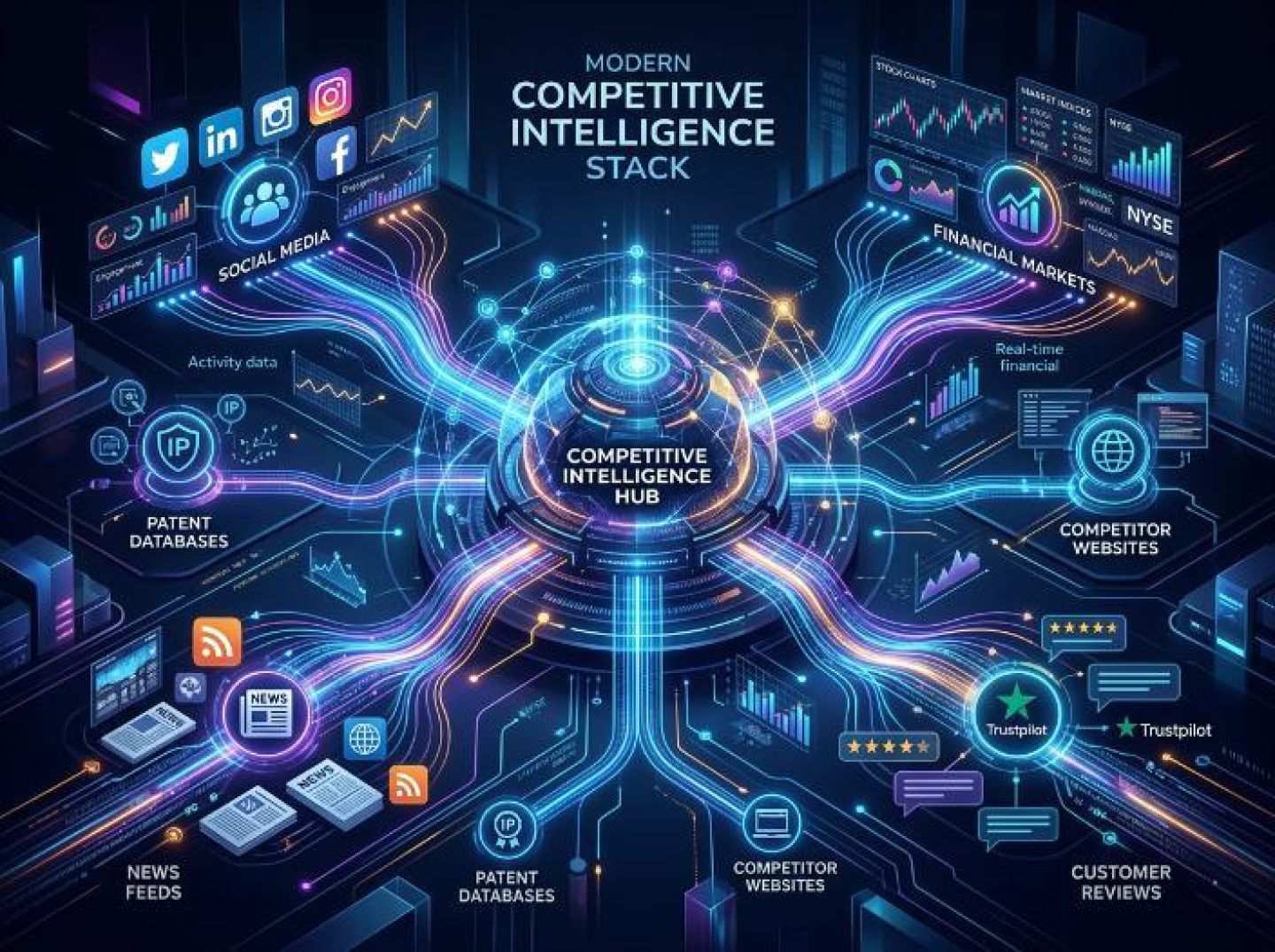
The intelligence stack needs to evolve along three dimensions simultaneously.
First, the data foundation must be unified, cross-media, and methodologically consistent. This is the least glamorous requirement and the most important. Partial data — scraped from one platform, estimated on another, missing entirely from a third — creates a distorted picture that gets worse the more AI accelerates the competitive landscape. As AdExchanger has argued, without broad, consistent cross-media and cross-market data, AI simply accelerates incomplete analysis. Differing methodologies across channels make comparisons unreliable, and fragmented coverage obscures the full competitive picture. Intelligence platforms need to apply a consistent methodology across media types and markets so teams can compare activity on a like-for-like basis without constant recalibration. Spend-verified data matters more than ever because when every brand is producing more creative, the signal that actually differentiates strategy from noise is where the money goes.
Second, the interface must become conversational. Traditional dashboards force analysts to know what they're looking for before they start looking. But in a landscape where competitors shift creative strategies overnight and new entrants appear in channels they never occupied before, the most valuable questions are often the ones nobody thought to ask. Conversational AI changes the workflow from navigating reports to interacting with data directly — asking questions, exploring patterns, and receiving structured answers with context. A brand manager should be able to ask which competitors increased connected TV investment in a specific market, see how that compares with their strategy elsewhere, and identify which creatives supported the shift — all in seconds rather than days.
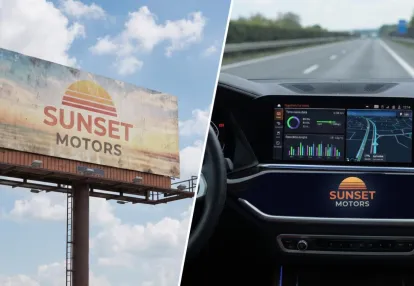
Third, intelligence must become proactive, not reactive. The shift from "reporting what happened" to informing what should happen next is what separates modern competitive intelligence from expensive archives. AI can surface changes that teams may not have thought to investigate, flag anomalies in competitor spend patterns, and contextualize why a shift matters before it becomes obvious in market share data. This is especially critical as advertising itself becomes more embedded and less visible as a standalone activity — with products increasingly discovered through conversational interfaces that interpret intent and recommend options in real time, brands need intelligence that tracks competitive presence across these emerging touchpoints, not just legacy ad placements.
Here is the uncomfortable truth for teams still relying on legacy tools: the same AI revolution that flooded the market with creative has rendered those tools inadequate. The answer isn't to abandon competitive intelligence — it's to demand intelligence infrastructure that matches the pace and complexity of the environment it's trying to monitor. When AI is the multiplier on both sides of the equation — for your competitors producing ads and for your team analyzing them — the quality of the underlying data foundation becomes everything. Bad data, accelerated by AI, doesn't just fail to help. It actively misleads.
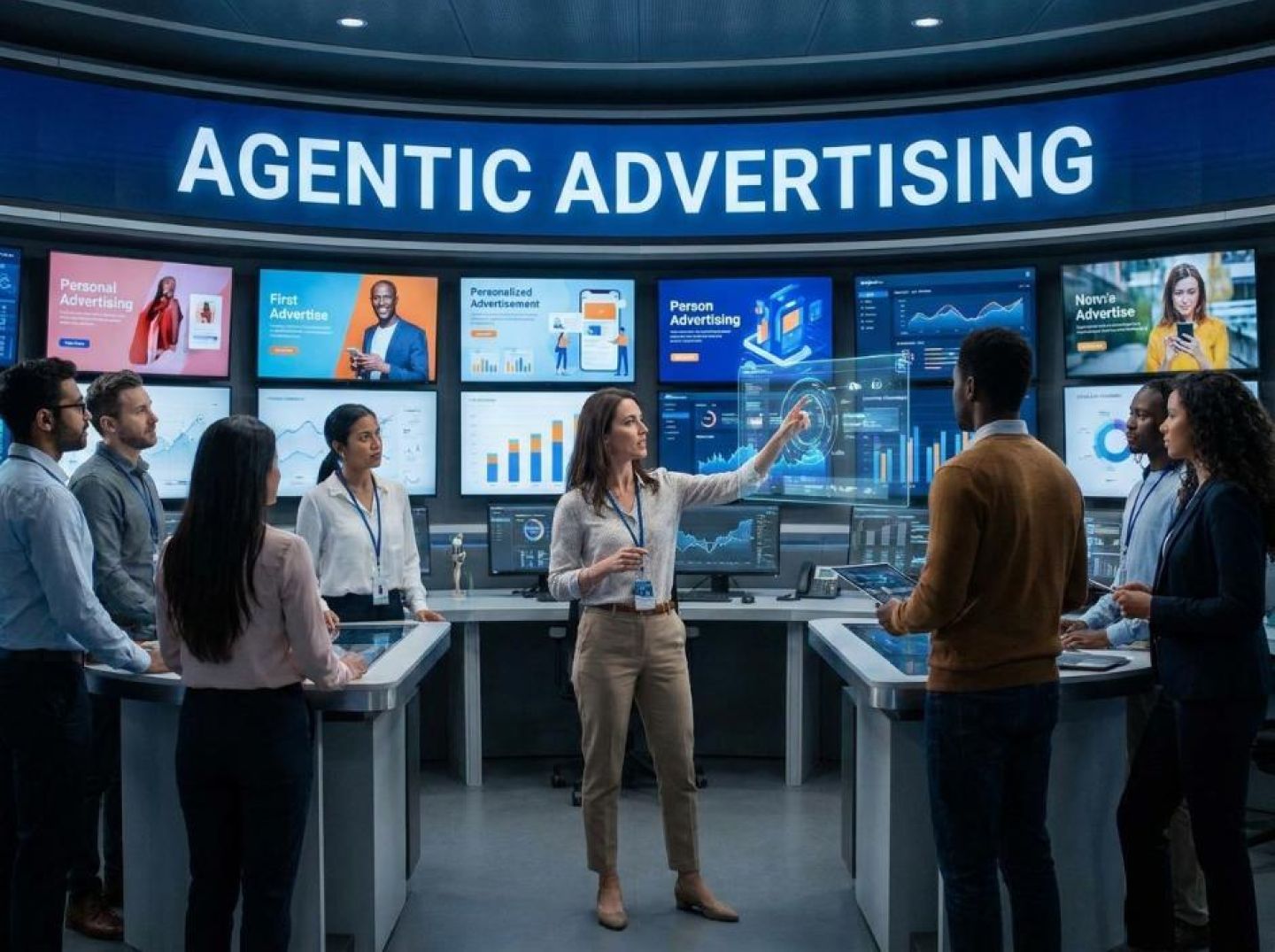
Everything discussed so far — the flood of creative variants, the convergence toward sameness, the need for a modern intelligence stack — assumes that a human marketer is still the one pressing "launch." That assumption is already expiring. The next wave of advertising technology doesn't just assist marketers; it acts on their behalf. Agentic AI systems are beginning to autonomously reallocate budgets, adjust targeting parameters, and refine creative without waiting for a human to approve the change. As illumin notes, AI advertising is expanding beyond campaign optimization into decision intelligence, forecasting, and strategic planning — evaluating multiple paths and forecasting outcomes before media dollars are ever spent. When that strategic layer merges with autonomous execution, the result is an advertising engine that thinks, acts, and iterates on its own.
This matters enormously for competitive intelligence because it changes the fundamental nature of what you're trying to observe. In a human-driven model, a competitor's strategy leaves readable traces: their ad spend follows predictable weekly rhythms, their creative rotates on a cadence tied to internal review cycles, and their targeting choices remain stable long enough for you to notice patterns. Autonomous systems obliterate those rhythms. An agentic system might shift thirty percent of a campaign's budget from Instagram to connected TV at 2 a.m. on a Tuesday because a real-time signal indicated higher conversion probability — then reverse the decision six hours later. No human decided it, no one announced it, and by the time you check the competitor's public-facing ads the next morning, the window has already closed.
The opacity compounds when you consider what's happening on the media-buying side. AI-driven platforms are making transactions more efficient by reducing unnecessary steps in the buying process, streamlining how inventory is bought, optimized, and measured across the entire ecosystem. That efficiency, however, comes at the cost of external legibility. Fewer intermediary touchpoints mean fewer places where a competitor's strategy leaves a visible footprint. Programmatic transactions that once involved multiple exchanges, each offering a partial view into bidding behavior, now collapse into opaque, machine-to-machine negotiations that outside observers simply cannot see.
The practical consequence is straightforward: casual monitoring becomes useless against an autonomous competitor. You cannot reverse-engineer a strategy that changes faster than your team can screenshot it. Spot-checking a competitor's ad library once a week tells you what their system happened to be serving at that specific moment — not why, not for how long, and not what it pivoted to an hour later.
This is precisely why structured, real-time competitive intelligence infrastructure shifts from a nice-to-have to a survival requirement. You need systems that continuously ingest competitor creative across platforms, flag anomalous shifts in spend or messaging, and surface patterns that no human analyst could detect through manual observation. Think of it as matching autonomy with autonomy: if your competitor's ad decisions are being made by an agent operating at machine speed, your intelligence apparatus needs to operate at that same speed to remain relevant.
The brands that will struggle most in this environment are those still relying on the old model — a junior analyst pulling screenshots, a quarterly competitive review deck, a vague sense that "we know what they're doing." Against an agentic competitor, that approach doesn't just fall behind. It becomes blind.
For most of the digital advertising era, competitive intelligence occupied a familiar position in the marketing workflow: somewhere near the end. A team would develop a campaign concept, produce the creative, build the media plan, and then — often as a final sanity check — someone would pull up a competitor's recent ads to make sure the new work wasn't accidentally duplicating a rival's message or missing an obvious trend. Competitive research was validation, not foundation. It confirmed instincts rather than shaping them.
That sequence no longer holds. When AI systems can generate hundreds of creative variants in the time it once took to brief a designer, and when agentic platforms can autonomously test, iterate, and optimize those variants without waiting for a human to review performance dashboards, the production layer is no longer the bottleneck. The bottleneck is strategic direction — knowing what your AI should be building toward and, equally important, what it should be building away from. As MarTech has argued, creative strategy must shift upstream when AI handles execution at scale, and brands need to strengthen the strategic inputs that guide those systems: brand narrative, messaging architecture, and audience understanding. Without those inputs, AI doesn't produce bad creative so much as undifferentiated creative — technically competent work that lacks strategic intent.
AdExchanger captured this shift precisely, describing the real transformation as the moment when ad intelligence moves from reporting what happened to informing what should happen next. That single sentence encapsulates an entirely different organizational relationship with competitive data. In the old model, intelligence was a rearview mirror. In the new model, it's a navigation system — one that feeds directional signals into the AI engines responsible for creative production, bid optimization, and audience targeting.
Consider the practical implications. If your competitive intelligence reveals that three major rivals have simultaneously shifted spend toward short-form video testimonials on Meta, that insight should inform the parameters your AI creative tools operate within — perhaps steering them toward a contrasting format or tone that avoids the emerging cluster of sameness. If your intelligence stack detects a competitor pulling budget from programmatic display and reinvesting in CTV, that signal should reach your agentic media buying system before it auto-reallocates your own budget into the channels your competitor just vacated — or, depending on your strategy, precisely because they vacated them.
The brands that win in an AI-native advertising landscape will not be the ones generating the most ads or even the most polished ads. They will be the ones whose strategic inputs — the competitive awareness, the brand differentiation, the audience insight — are sharp enough to give their AI systems a meaningful direction to optimize toward. Production speed is table stakes. Strategic clarity is the new competitive moat. And that clarity is impossible without moving competitive intelligence from its traditional position as an afterthought to its necessary position as the very first conversation in the room.
Receive top converting landing pages in your inbox every week from us.
Most Read
Discover how digital ad intelligence is reshaping OOH by connecting proven digital creative, audience signals, and performance data with physical media. This guide explores how ad-spy insights, mobile billboards, and intelligence layers can turn OOH into a measurable, iterative performance channel.
David Kim
7 minSep 22, 2026
Featured
AI-driven ad intelligence is changing how brands evaluate creative, shifting the focus from individual creative leaders to scalable, data-driven systems. This guide explores how competitive ad intelligence, automated testing, and large-scale advertiser data can help teams generate, evaluate, and optimize creative faster.
Samantha Reed
7 minSep 21, 2026
Quick Read
OOH is increasingly becoming a measurable performance channel, but many industry roles are still built around selling inventory rather than outcomes. This guide explores how OOH careers can evolve toward performance marketing through attribution, ad intelligence, funnel design, landing-page data, and measurable campaign optimization.
David Kim
7 minSep 20, 2026