10 minJune 24, 2026

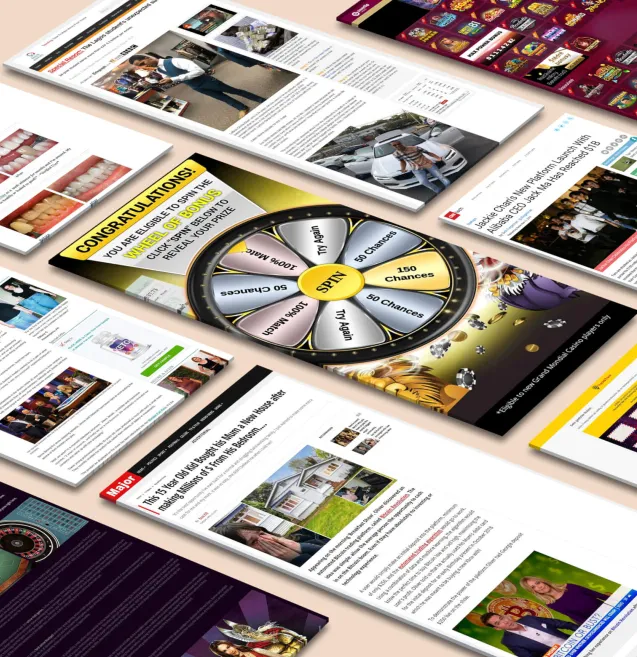
Our spy tools monitor millions of native ads from over 60+ countries and thousands of publishers.
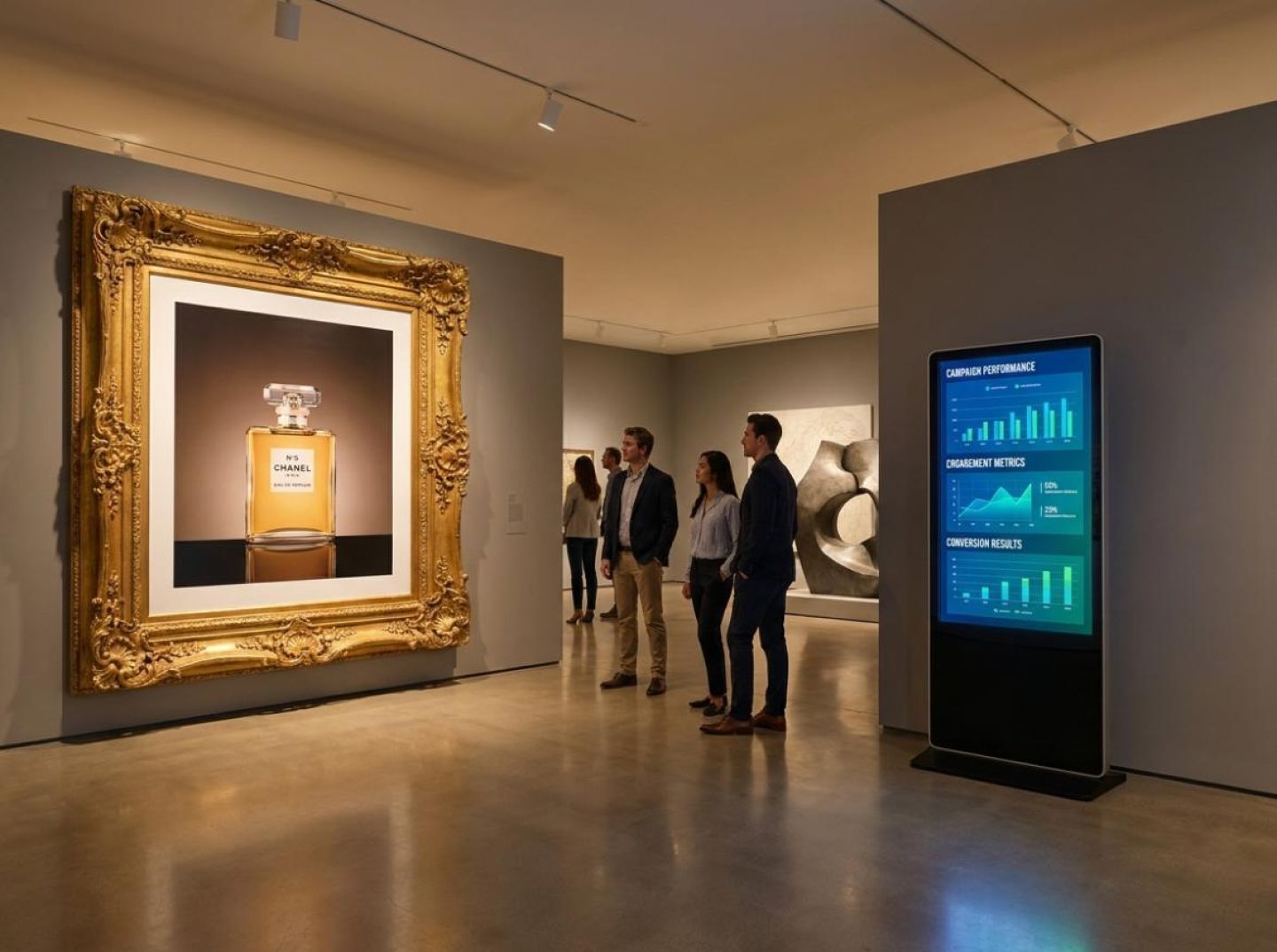
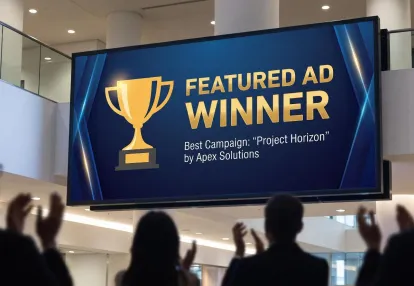
Get StartedEvery June, the advertising world gathers at Cannes to crown its lions. The winners share a familiar DNA: sweeping cinematography, gut-punch emotional arcs, and narratives so polished they could pass for short films. These are ads that announce themselves proudly as advertising — and then dare you to love them anyway. They are engineered to make you stop, feel something profound, and remember the brand that made you feel it. It's a formula that has defined creative excellence for decades, and it is almost perfectly wrong for native.
The central tension is philosophical, not tactical. Award-winning creative demands attention by disrupting whatever you were doing before it arrived. A Super Bowl spot hijacks the living room. A Cannes Grand Prix winner turns a YouTube pre-roll into a two-minute emotional journey you didn't ask for. The entire prestige model of advertising rests on a single wager: that the quality of the interruption can redeem the interruption itself. But audiences have been settling that bet against advertisers for years, a phenomenon captured by the spread of banner blindness, where display ads are simply filtered out of conscious perception no matter how clever or beautiful they are.
Native advertising exists precisely because that wager stopped paying off. As AdPushup explains, the basic philosophy of native revolves around making ads appear less like ads — not through deception, but through alignment. A native ad earns its click by offering something that looks and feels like a natural extension of the content a person is already consuming. It succeeds not by announcing itself, but by dissolving into the feed.
Consider BuzzFeed's "The Evolution of Pizza" — a piece of branded content sponsored by Pizza Hut that illustrates the concept perfectly. It would never win a D&AD Pencil. There's no soaring score, no celebrity cameo, no cinematic climax. It's a listicle. But it's a listicle that speaks the exact language of the platform it lives on, delivering genuine entertainment value in a format that BuzzFeed's audience already trusts and enjoys. That's not a creative compromise — it's a creative discipline most award-chasing agencies never learn.
This distinction matters because native ads work by building trust through relevance and format familiarity. Voluum's research on native best practices underscores that the most effective native campaigns focus on added value — giving users something genuinely interesting to read, watch, or experience in a way that relates to the content environment they chose to be in. The data backs this up: sixty-one percent of consumers say that if the advertising message is good, they don't care whether it's sponsored by a brand. The message matters, but so does its packaging. Prestige packaging — the kind that screams "this is an advertisement and it's magnificent" — actively works against the mechanism that makes native convert.
These are not just different tactics deployed along the same spectrum. They are opposing philosophies of attention. Award-winning advertising commands attention through spectacle. Native advertising earns attention through belonging. One interrupts and hopes to be forgiven; the other integrates and hopes to be useful.
For performance marketers raised on a diet of case-study reels and Cannes highlight compilations, this requires a genuine unlearning. The instinct to make creative "better" — more polished, more emotional, more obviously impressive — is the instinct that will kill your native campaigns before they start. Before you can study what actually works in native, you have to let go of the prestige bias that taught you what "great" looks like in the first place.
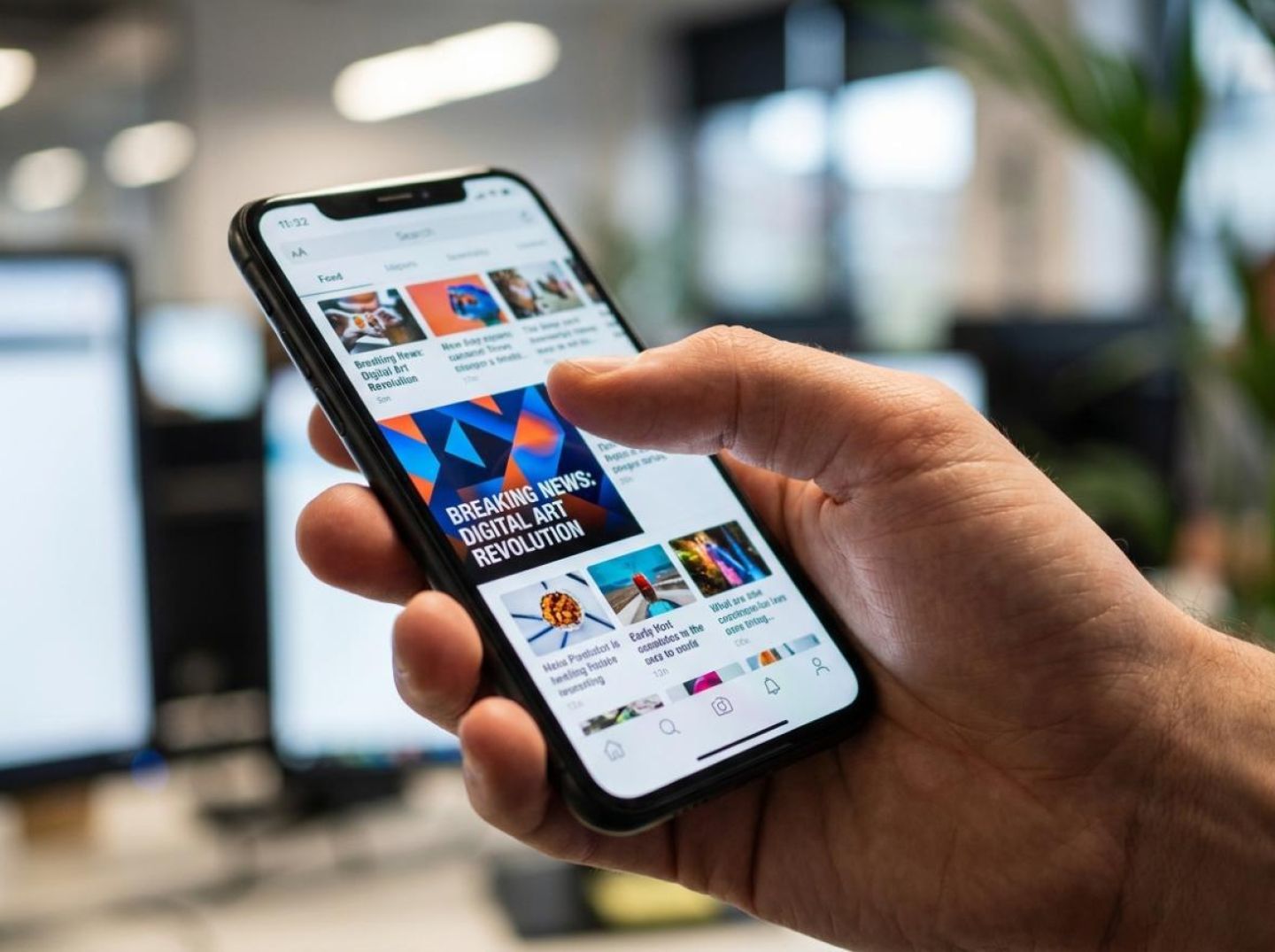
Strip away the brand film, the soaring soundtrack, and the celebrity cameo, and ask a deceptively simple question: what is a native ad, physically? It is a thumbnail — often no larger than 300×200 pixels — paired with a headline that rarely exceeds 70 characters. That's it. That tiny parcel of text and image is dropped into a feed of genuine editorial content, where it must earn a click not by announcing itself as advertising but by mimicking the rhythm and promise of journalism. The skills required to win in this format have almost nothing in common with art direction and almost everything in common with tabloid editing and behavioral psychology.
The headline: engineering an open loop. The most reliable lever in native advertising is the curiosity gap — the deliberate space between what you reveal and what you withhold. A headline like "Dermatologists Can't Explain Why This Works" does three things at once: it introduces a credible authority figure, implies a benefit worth discovering, and creates an information asymmetry the reader can only resolve by clicking. Specificity amplifies the effect. Numbers, place names, and unexpected qualifiers ("the $4 trick," "in rural Ohio," "after age 50") all function as credibility signals that separate a native headline from clickbait. The distinction matters because clickbait overpromises and underdelivers, eroding publisher trust, while a well-constructed curiosity gap actually frames a legitimate story. Great native copywriters treat every character the way a wire-service editor treats a chyron: every word must earn its slot, and the last word should leave the reader mid-thought.
The thumbnail: a 300×200 battleground. If the headline opens a cognitive loop, the thumbnail's job is to arrest the scroll long enough for the headline to be read at all. Emotional faces — surprise, concern, delight — outperform product shots and logos almost universally because the human visual cortex processes faces before anything else. Unexpected imagery works for the same reason: a close-up of a strange food, an oddly colored liquid, or an out-of-context object creates a micro-moment of confusion that the brain wants to resolve. Visual contrast matters, too. A warm-toned image surrounded by cool-toned editorial photos will physically pop off the page. As the Voluum Blog emphasizes, all ad elements should truly stand out from the crowd, and without deliberate design skills, creating a high-converting campaign becomes an enormous challenge.
The interplay: headline and image as a single unit. The most dangerous mistake in native creative is treating the headline and thumbnail as independent assets. They function as a system. The thumbnail stops the scroll; the headline supplies the narrative reason to click. When they tell slightly different stories — when the image raises one question and the headline hints at a different answer — the combined curiosity is multiplicative, not additive. This is why split-testing in native is so granular: experienced buyers will test five thumbnails against five headlines, yielding 25 permutations from just ten assets.
The stakes of getting this right are especially high on mobile, where native CTRs exceed 1 percent compared to just 0.15 percent on desktop. That nearly sevenfold gap reveals something crucial: on a phone, the feed is the entire viewport, and the scroll-stopping moment is the only moment. There is no sidebar, no leaderboard, no second chance. The thumbnail and headline are not the gateway to the creative — they are the creative. Award juries have no rubric for evaluating a 70-character headline paired with a postage-stamp image, which is precisely why performance marketers need an entirely different creative vocabulary — one built on open loops, facial salience, visual contrast, and relentless iteration rather than narrative polish and cinematic craft.
Every marketing course, every creative director's manifesto, every awards-show keynote rests on the assumption that good advertising obeys transferable principles. Emotion beats logic. Simplicity wins. Show, don't tell. These maxims are taught as gospel because, in the world of television spots and print campaigns, they often are. But native advertising operates under a different physics — one where the gravitational pull of context warps every rule you thought was universal.
Ask a seasoned native media buyer what headline angle works best, which thumbnail style drives the highest CTR, or whether long-form advertorials outperform short listicles, and you will almost always receive the same two-word answer: it depends. As Voluum's native advertising guide puts it bluntly, "there are often numerous factors at play, and one solution doesn't fit all." That phrase — "it depends" — is simultaneously the most honest and most dangerous thing a newcomer can hear. Honest because it reflects genuine structural uncertainty: what converts for a keto supplement on Taboola's health-publisher inventory on mobile in the United States may catastrophically underperform for an automotive lead-gen offer on Outbrain's premium news placements on desktop in Germany. The network differs, the vertical differs, the device differs, the geo differs, and the editorial environment surrounding your tiny thumbnail reshapes user psychology in ways no universal creative principle can predict. Dangerous because it leaves a vacuum — and into that vacuum rushes every borrowed "best practice" from brand advertising that a marketer can grab.
This is where the damage happens. A marketer steeped in Cannes-winning creative philosophy enters native convinced that emotional storytelling and minimalist design will carry the day. They craft a beautiful, brand-safe thumbnail with tasteful typography. They write a headline that hints at grand narrative. And they watch their spend evaporate into single-digit CTRs because the feed they're competing in rewards raw curiosity, not aesthetic refinement. The rules they imported were never tested against the specific intersection of platform algorithm, publisher audience, and content context that defines their campaign.
The only reliable antidote is data — your own data, earned through systematic testing. Voluum frames this in refreshingly concrete terms: you need to invest at least $500 to $1,000 just to learn and gather meaningful performance signals. That figure isn't a media budget; it's tuition. It's the cost of discovering that everything you assumed about "good creative" may be wrong in this channel. And the warning that accompanies it is equally stark: a small budget paired with inexperience doesn't just underperform — it can lead to what Voluum calls "a complete disaster," where you lose your entire investment and learn nothing from the experience.
This is why competitive intelligence — studying the actual ads that are running, surviving, and scaling in your specific vertical on your specific network — is exponentially more valuable than any creative framework imported from awards culture. When native-mobile CTRs can exceed 1% while desktop native hovers around 0.15%, you begin to appreciate that even device type alone can make the difference between a profitable campaign and a write-off. Layer in vertical, geo, publisher quality, time of day, and landing page format, and the combinatorial complexity makes universal rules almost meaningless.
The marketers who win in native are not the ones who arrived with the best creative instincts from brand advertising. They are the ones who accepted "it depends" not as a cop-out but as a research mandate — and then spent their first thousand dollars proving, disproving, and rebuilding their assumptions from raw click and conversion data rather than borrowed certainty.
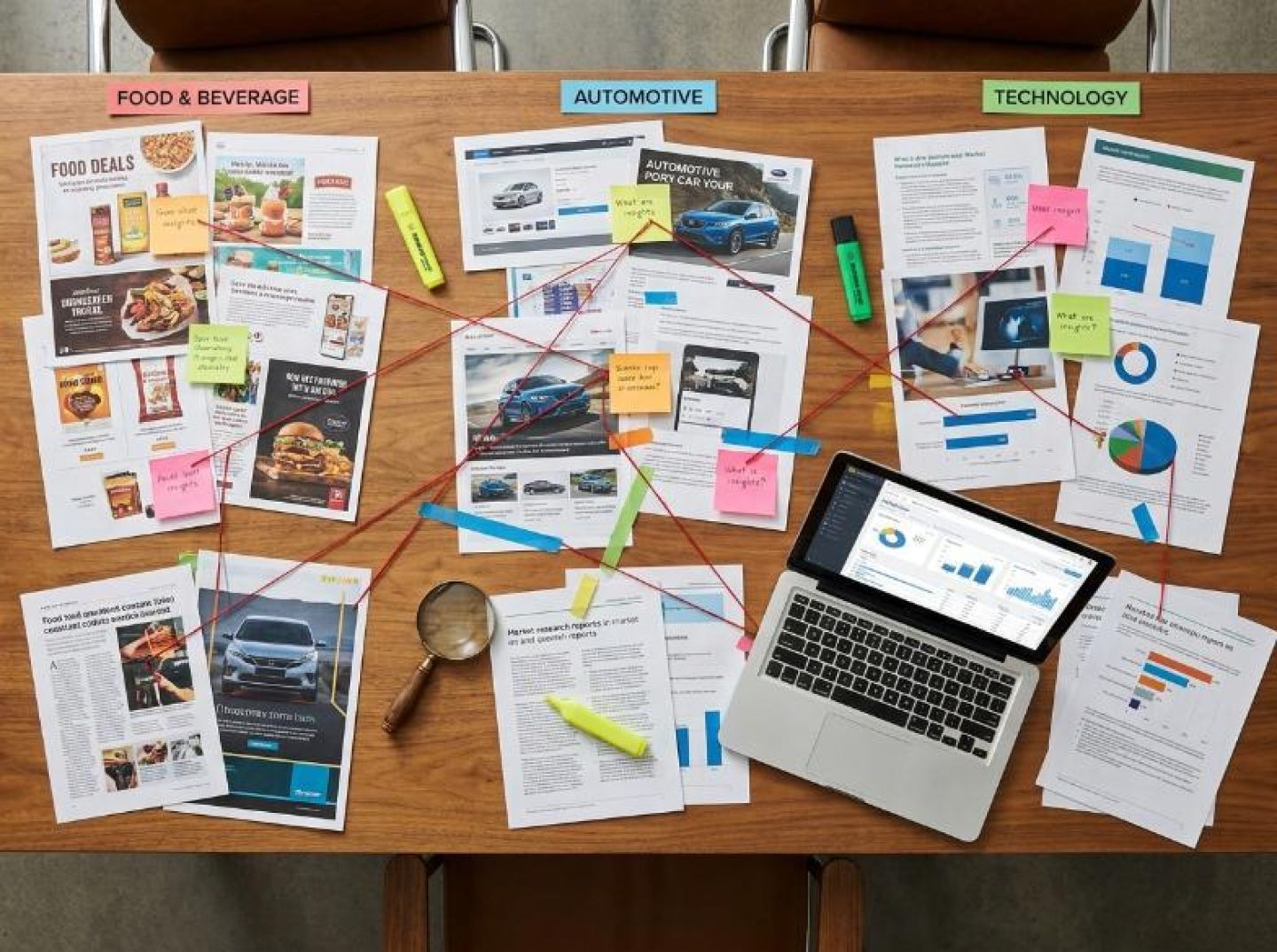
Here is the uncomfortable irony: the same verticals that dominate the Cannes Lions shortlists — food, automotive, and technology — are also among the heaviest spenders in native advertising. They compete on the same stages, chase the same consumers, and often employ the same holding-company agencies. Yet the creative that wins a Grand Prix and the creative that scales across Taboola or Outbrain might as well belong to different species.
Consider food. A Cannes-winning campaign for a quick-service restaurant chain might feature a lush, slow-motion hero shot of cheese pulling from a slice, scored to an indie ballad and wrapped in a narrative about community. Meanwhile, the native ad that actually moves volume looks more like the Pizza Hut partnership with BuzzFeed — a sponsored listicle titled "The Evolution of Pizza" that lives inside a food editorial feed, earns clicks through curiosity rather than cinematic ambition, and converts because it never breaks the reader's sense of belonging on the page. The format works precisely because native opens up space for creativity and provides unique content that audiences find more appealing than a traditional ad — not because the creative itself is "award-worthy" by any conventional standard.
Now consider automotive. A two-minute branded film about a sedan conquering a mountain pass at sunrise might sweep the Film Craft category. But pull up any competitive intelligence tool — Anstrex, PowerAdSpy, the Meta Ad Library — and study what the biggest automotive spenders are actually running at scale, and you will find something closer to a close-cropped dashboard photo paired with a headline like "Engineers Can't Explain Why This SUV Gets 47 MPG." The image is mundane. The headline is engineered for a gap in the reader's understanding, not for aesthetic admiration. And the ad has been live for six months, which is the single most reliable indicator of profitable performance: longevity equals signal.
Technology follows the same split. Apple's "Shot on iPhone" billboard might earn a standing ovation at an awards show, but the native ads for a SaaS product or a consumer device that actually sustain spend week after week tend to lean on specificity, numbers, and low-production images that could pass for editorial thumbnails. As Voluum's analysis of native campaign tracking makes clear, native ads work best at the sweet spot where they blend enough to avoid being perceived as intrusive while standing out just enough to be noticed — a calibration that has almost nothing to do with production value and everything to do with contextual fit.
This is why the real curriculum for performance marketers is not an awards annual but a spy tool dashboard. Study what competitors are actually running. Filter by longevity — any creative alive for 90 days or more has almost certainly cleared its return threshold. Note which headline structures repeat across the top spenders in a vertical: the question format, the number-led claim, the implied secret. Note which images dominate: close-ups of products, unpolished photos that mimic editorial art, faces making eye contact. These patterns do not emerge from creative intuition handed down at festivals. They emerge from thousands of dollars in daily spend and ruthless optimization cycles.
The native ad ecosystem already possesses a higher foundation of trust among audiences because the format meets readers inside content they have chosen to consume. Performance marketers who understand this stop chasing the aesthetic validation of awards and start building a library of competitive patterns — sorted by vertical, indexed by longevity, and updated weekly. That library, not a trophy shelf, is what separates the marketers who scale from the ones who simply admire.
The previous sections outlined what performance marketers should study — the competitive intelligence signals hiding in plain sight across verticals. But knowing what to look for is only half the equation. The real advantage belongs to teams that build a system for turning those observations into testable hypotheses, running them at speed, and feeding the results back into the next round of creative production. This is the shift from campaign thinking to continuous optimization, and it fundamentally changes the relationship between creative and data.
Start by reframing how creative ideas originate. In brand advertising, a concept typically emerges from a brief, survives several rounds of internal review, gets produced at high cost, and launches with fanfare. In native, the concept should emerge from competitive intelligence — what angles are scaling in your vertical right now, what thumbnail styles are earning clicks, what headline structures are outperforming — and it should move from hypothesis to live test in days, not weeks. The creative team's job is not to produce a single brilliant ad but to produce a volume of intelligent variations, each designed to isolate a specific variable: image treatment, emotional hook, value proposition framing, or editorial tone.
This volume approach only works if the testing infrastructure supports it. That means choosing a pricing model that rewards creative discovery rather than punishing it. As the Voluum Blog explains, advertisers running CPM campaigns can find their best-performing creative sets while keeping costs predictable — each additional click makes the offer more visible without increasing spend, whereas CPC models can turn a winning creative into a negative-ROI proposition as click volume climbs. The implication for testing is significant: CPM bidding gives you a stable cost floor against which to measure creative performance, making it easier to identify statistical winners without budget volatility distorting the signal.
Once the pricing model enables iteration, the testing cadence itself must become systematic. A practical framework looks like this: each week, launch a batch of three to five creative variations built around a single hypothesis drawn from competitive research. Run them for a defined impression threshold — enough to reach statistical significance but not so much that you waste spend on obvious losers. Kill the bottom performers within 48 to 72 hours. Promote the top performer and use it as the control for the next batch. This creates a compounding effect: each cycle's winner becomes the baseline that the next cycle's challengers must beat, and creative quality ratchets upward over time.
The mindset shift also demands that creative and media teams stop operating in silos. The media buyer watching real-time performance data needs a direct feedback loop to the designer producing the next round of thumbnails and to the copywriter drafting headline variants. When AdPushup notes that brands will need to get more creative with their ad formats in order to stand out from the competition, that creativity cannot live in a quarterly brainstorm — it has to be embedded in a weekly operational rhythm where insights from last Tuesday's test inform this Thursday's production queue.
Finally, document everything. Build a living creative library organized not by campaign name but by hypothesis tested, variable isolated, and result observed. Over months, this library becomes the most valuable strategic asset your native program owns — a proprietary dataset of what actually works for your audience, your offer, and your vertical. No award jury assembled it. No case study gifted it to you. You earned it one test at a time, and that is precisely why your competitors cannot replicate it simply by watching your ads. They can see the output, but they cannot see the system that produced it — and the system is the moat.
Receive top converting landing pages in your inbox every week from us.
Editor’s Pick
Discover how to turn food, sports, and tech trends into structured creative testing hypotheses instead of one-off ad ideas. Learn how to build vertical-specific blueprints, test them across Native, Push, Pops, and TikTok, and use performance data to continuously improve your creative strategy.
Dan Smith
7 minSep 20, 2026
Guide
Award-winning ads can inspire powerful performance creative, but they need to be rebuilt for the way algorithms, feeds, and users behave across Native and TikTok. This guide shows how to reverse-engineer high-profile creative into scalable hooks, angles, formats, and AI-driven testing systems that can improve performance.
Elena Morales
7 minSep 19, 2026
In-Depth
Discover how city-level ad intelligence can help marketers build campaigns that feel local while scaling globally. Learn how to use Anstrex to uncover geographic, language, creative, and funnel patterns across Native, TikTok, Push, and Pops, then turn those insights into repeatable localized campaigns.
Elena Morales
7 minSep 16, 2026