

10 minMay 30, 2026

Our spy tools monitor millions of native ads from over 60+ countries and thousands of publishers.
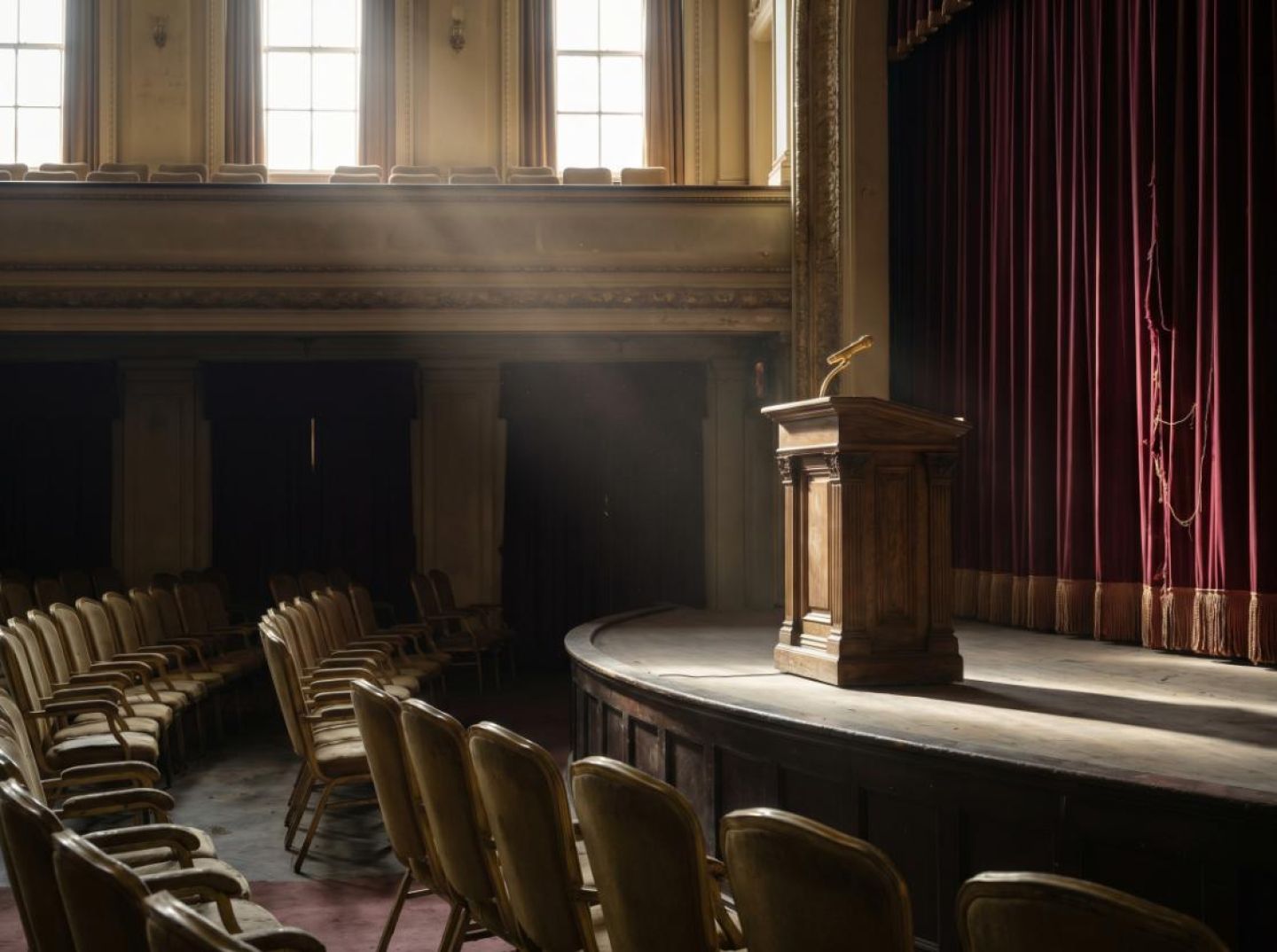
Get StartedIf the advertising industry truly believed its own awards proved creative effectiveness, it wouldn't need to keep redesigning them. Yet that's exactly what's happening at the most prestigious ceremony in the business — and performance marketers should be paying attention, not because the drama matters, but because of what it reveals about the fragile logic connecting creative prestige to commercial results.
In May 2026, Cannes Lions retired its Creative Company of the Year award, a trophy that, as it turns out, essentially rewarded the holding company that submitted the most entries. The previous year's winner was WPP — crowned on stage even as, in the words of industry observers, "the wheels were coming off the British-owned holding company in all directions." The optics were damning: the industry's highest creative honor had nothing to do with business health and everything to do with entry volume, which is really just a proxy for budget. Spend enough on submissions and you, too, could be Creative Company of the Year.
The rot went deeper than mere optics. Omnicom's DDB network won Network of the Year despite having to withdraw three ads for cheating — fabricated or ineligible work dressed up for judges. DDB has since been folded into TBWA, effectively retired from the stage it fraudulently won on. Meanwhile, Publicis — one of the four major holding companies — had already made a statement by skipping Cannes entries entirely one year, saving a reported €50 million. That a company of Publicis's scale could walk away from the festival without apparent commercial consequence tells you everything about the award's actual relationship to business performance: there isn't one.
Cannes Lions' official response was to introduce caps on shortlist contributions and adjust weighting to emphasize "quality over quantity," promising a framework "grounded in credibility, integrity and excellence." Read that language carefully. When an institution publicly commits to credibility and integrity, it's confessing it previously lacked both. The new rules are an implicit admission that the old system rewarded the biggest checkbooks, not the best ideas — and certainly not the ideas that moved revenue needles.
This matters for performance marketers because the Cannes mythology has long been used to make data-driven practitioners feel like they're playing a lesser game. Brand agencies cite Lions as proof that "big creative" justifies its costs, while performance teams are left defending their spreadsheets. But the industry's own corrective actions undermine that hierarchy. As DAIVID CEO Ian Forrester put it when describing the disconnect his company is trying to solve, "Creative is a key driver of advertising outcomes, but for too long it has been measured in isolation, disconnected from media results." That statement wasn't aimed at Cannes specifically, but it captures the exact pathology: an entire apparatus for evaluating creative that never bothered to close the loop back to what the creative actually accomplished in-market.
The takeaway isn't that creativity doesn't matter — it does, enormously. The takeaway is that the industry's most celebrated mechanism for measuring creative quality was measuring wallet size and political influence instead. If you're a performance marketer who has ever felt a twinge of inadequacy for optimizing click-through rates instead of chasing gold Lions, consider this your permission to stop. The emperor's tailors just admitted they've been stitching air.
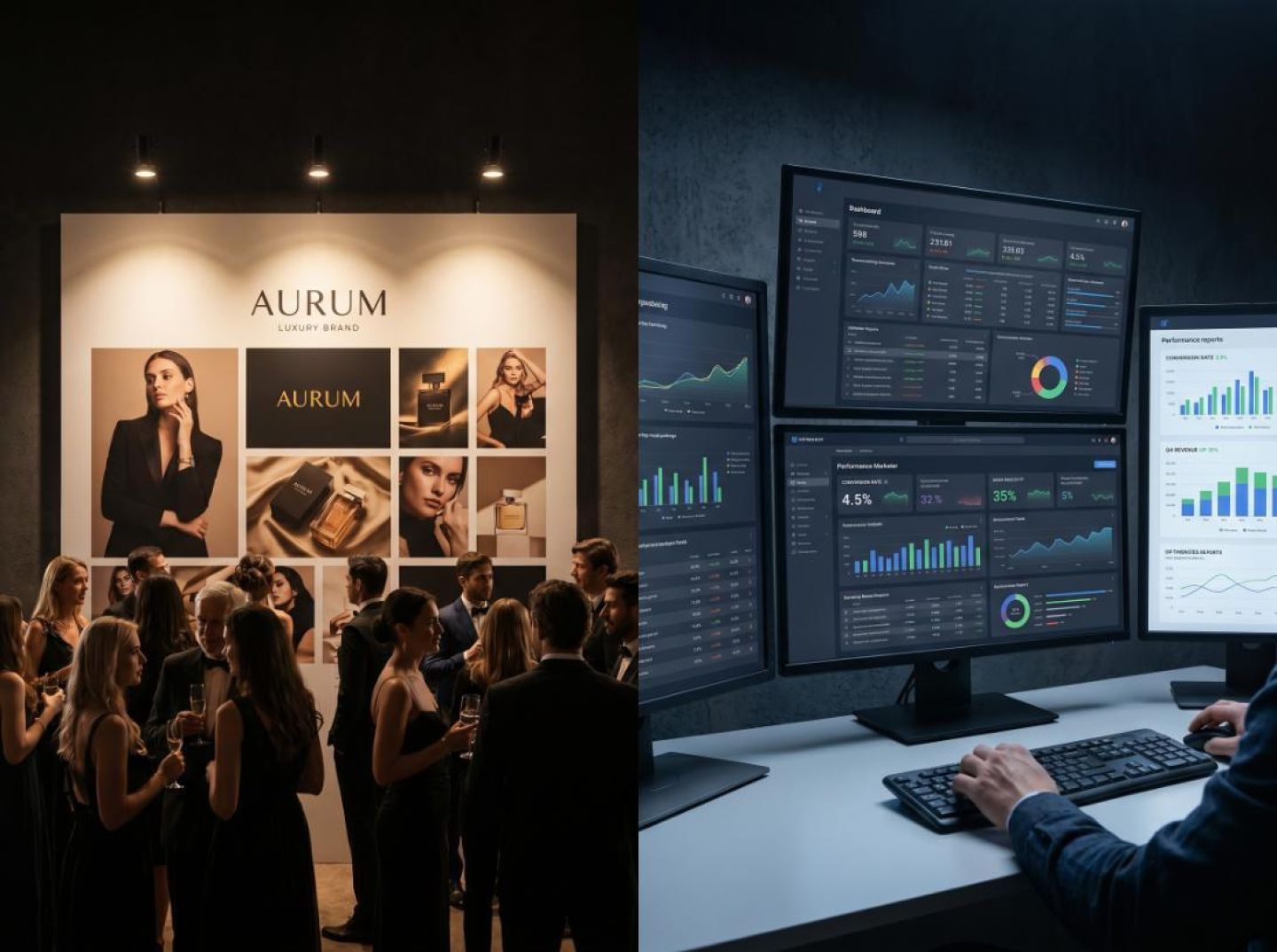
Every year, Cannes Lions rewards campaigns engineered to make juries feel something — awe, empathy, surprise, cultural relevance. Those are legitimate goals, but they are not the goals that keep a performance marketer employed. The fundamental disconnect between brand-prestige advertising and direct-response marketing isn't about which discipline is "better." It's about what each one actually measures, and the chaos that unfolds when marketers mistake one set of metrics for the other.
Prestige advertising optimizes for what you might call the atmosphere of attention: cultural impact, emotional resonance, earned media impressions, social sharing velocity, and — most candidly — jury votes. These are signals of visibility, not signals of intent. A Cannes Grand Prix winner might generate hundreds of millions of impressions and blanket social feeds for a week, but none of that tells you whether a single viewer opened a wallet. Performance marketers, by contrast, live and die by the metrics that sit further down the funnel — click-through rate, cost per acquisition, conversion rate, and return on ad spend. For an affiliate running native campaigns, a creative that wins applause but doesn't win clicks is a creative that loses money.
The clearest way to understand why these two worlds talk past each other is through the impressions-versus-clicks framework. As Brax's analysis of ad impressions versus ad clicks explains, impressions serve as a baseline performance benchmark — each one represents an instance where an ad had the potential to influence a user — but high impressions paired with low engagement often signals that a creative isn't resonating with its audience, regardless of how beautiful or provocative it looks. In the Cannes universe, massive impression counts are proof of success. In the performance universe, they're just the denominator in a CTR equation, and a bloated denominator at that.
This isn't merely a philosophical distinction; it shapes how money is spent. Agencies and brands running native ads typically choose between CPM and CPC pricing models depending on whether their objective is awareness or performance — and the economics of each model punish the wrong creative strategy in different ways. A CPM campaign rewards high click-through rates because you pay for eyeballs regardless of whether they engage, meaning a compelling creative effectively lowers your cost per click. A CPC campaign, meanwhile, can turn a "winning" creative into a money pit if it generates plenty of curiosity clicks but no downstream conversions. Cannes-caliber storytelling — emotional, abstract, brand-first — tends to optimize for the CPM side of that equation. It's built to saturate a market with feeling, not to extract a specific action from a specific user at a specific moment.
Neither approach is wrong on its own terms. Impressions matter when you need market saturation, competitive visibility, or top-of-mind positioning against rivals. Clicks and conversions matter when you need to prove that a dollar of ad spend returned more than a dollar of revenue. The expensive mistake — the one that burns through budgets faster than any bad media buy — is conflating the two: judging a direct-response campaign by how cinematic it feels, or judging a brand campaign by its cost per acquisition. Cannes juries have never provided a practical decision tree for knowing which metric regime to apply and when. Performance marketers need that decision tree, and it starts with a brutally simple question: am I paying for potential visibility or assured interaction? Answer that honestly, and the rest of the creative strategy — what the ad looks like, what it says, where it runs — follows from the math, not from the mood board.
Performance marketers who try to replicate the look of a Cannes Lion winner are making the same mistake as someone who photographs a cathedral's stained glass and assumes they understand how the building stays standing. The aesthetic is the most visible layer and the least transferable one. What actually travels — what can be extracted, tested, and iterated on — is the structural architecture underneath: the narrative arc that creates tension and resolves it, the pattern interruption that halts a thumb mid-scroll, the emotional sequencing that moves a viewer from curiosity to desire to action, and the contrast mechanisms that make a value proposition feel urgent rather than decorative.
This distinction matters more now than it ever has, because creative effectiveness is no longer something that gets debated in a judging room and awarded months after a campaign has run its course. It's becoming a computational discipline. The partnership between DAIVID and ADIN.AI illustrates where the industry is heading: DAIVID's creative effectiveness models are being integrated directly into ADIN.AI's media platform, creating a live feedback loop between creative scoring and campaign execution. Before a campaign even launches, marketers can identify which creative assets are most likely to succeed and allocate budget accordingly. While campaigns run, high-performing assets get scaled and underperformers get paused in real time. As DAIVID CEO Ian Forrester put it, "creative is a key driver of advertising outcomes, but for too long it has been measured in isolation, disconnected from media results" — a problem his company's integration with ADIN.AI is explicitly designed to solve.
The implication for performance marketers is significant. "Creative intelligence" is becoming a measurable, optimizable input — not a subjective opinion defended over cocktails at a festival. When algorithms can score an ad's emotional resonance, predict its attention curve, and link those predictions to downstream conversion data, the entire concept of "good creative" shifts from aesthetic judgment to engineering specification. You don't need a jury. You need a hypothesis, a structure, and a feedback mechanism.
And the structural playing field is more level than most marketers realize. As the Voluum blog notes in its native advertising guide, "you and your competitor get the same amount of pixels for an ad." Differentiation doesn't come from a bigger production budget or a more cinematic color grade. It comes from structural creative decisions — where the hook sits, how the value proposition is framed, what curiosity gap compels the click, and how the emotional payload is sequenced across the first three seconds. These are the load-bearing walls. Everything else is ornament.
So when a Cannes winner uses a ninety-second slow build to establish emotional context before revealing the brand, the useful takeaway isn't "we should make a ninety-second cinematic film." It's "delayed brand reveal after emotional priming increased recall in this context — can we test a compressed version of that sequence in a six-second pre-roll?" When a Grand Prix-winning print campaign uses radical visual contrast to isolate a single message, the lesson isn't about hiring that photographer. It's about testing whether high-contrast, single-message layouts outperform busy multi-benefit compositions in your next round of native placements.
Study the cathedral, absolutely. But study it the way a structural engineer would — measuring the forces that keep it upright, not admiring the light through the windows. The stained glass won't help you build anything that stands on its own.
The old creative workflow followed a painfully linear path: conceive an idea, produce it, launch it, and then wait weeks or months to learn whether it worked. That model was tolerable when a brand ran a handful of hero spots per quarter. It becomes absurd when the scale of content production explodes past any human's ability to evaluate it. When Unilever announced it would work with 300,000 creators — 71% of whom are using AI tools to produce content distributed across dozens of platforms in hundreds of markets simultaneously — the traditional quality-control mechanisms quietly broke. Human panels are too slow. A/B testing individual pieces across a network that large is logistically impossible. Quarterly brand-tracking surveys tell you what happened last quarter, not what's working right now.
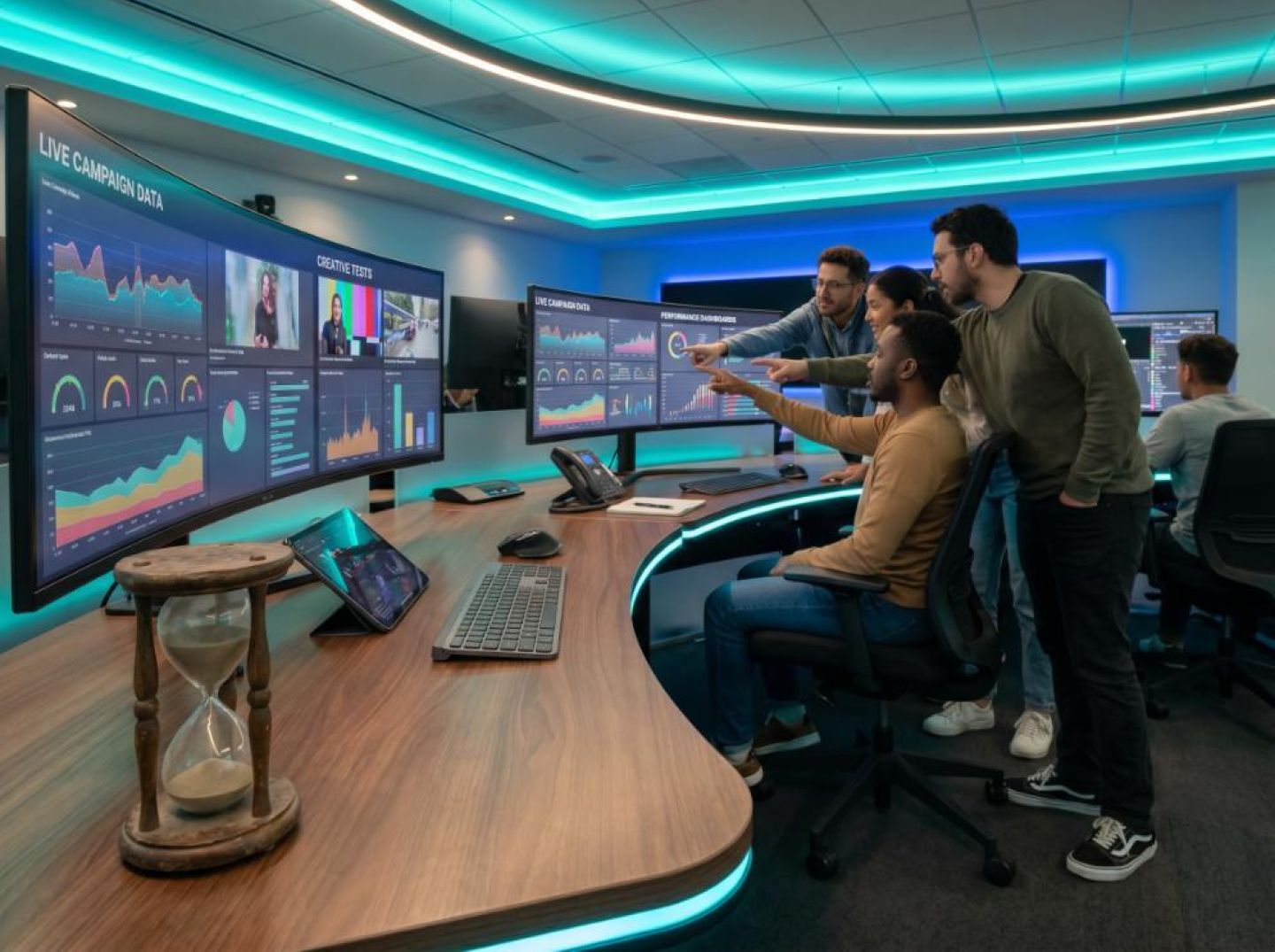
The infrastructure emerging to solve this problem looks nothing like a Cannes jury deliberation room. DAIVID and ADIN.AI have integrated creative effectiveness scoring directly into a media execution platform, building what amounts to a live feedback loop: score creative before launch to allocate budget toward the assets most likely to perform, scale winners and kill losers during a flight in real time, and feed historical performance data back as benchmarks for future planning. As DAIVID CEO Ian Forrester explained to Search Engine Journal, "Creative is a key driver of advertising outcomes, but for too long it has been measured in isolation, disconnected from media results."
If that three-phase loop — pre-score, optimize in-flight, feed back — sounds familiar to anyone running native or programmatic campaigns at scale, it should. It's essentially what sophisticated affiliates and media buyers have been doing with tracker data, ad spy tools, and platform-level optimization for years. The difference is that brand advertisers are finally building the same kind of decisioning infrastructure rather than relying on subjective judgment and post-mortem reports.
The scaling problem is structurally identical even if the magnitude differs. A media buyer running sixty native ad variations across four traffic sources faces the same fundamental challenge as Unilever's 300,000-creator army: too many variables for manual evaluation, too much budget at risk to wait for retrospective analysis. DSPs already collapse this complexity into automated bid decisions. As Yahoo DSP's Joshua John described the process to AdExchanger, "We're taking thousands of signals — audience, context, frequency, budget — and reducing it to a single bid decision in milliseconds." The creative layer is simply catching up to the same logic: reduce thousands of creative signals to a single effectiveness score in something closer to real time.
This is where the Cannes paradigm becomes structurally obsolete — not wrong, but irrelevant to the speed at which decisions now need to be made. A panel of judges evaluating work months after it ran provides historical analysis, not operational intelligence. For performance marketers, the value proposition was never "better taste." It was always better infrastructure — faster feedback, tighter iteration loops, and the ability to reallocate spend before a losing creative burns through the budget. What the DAIVID model represents isn't a revolution for the performance world. It's confirmation that the brand world is finally adopting the logic performance marketers have operated under all along: measure everything, measure it quickly, and let the data — not a jury — decide what runs next.
Enterprise brands are investing millions in creative intelligence platforms — systems that score, rank, and optimize creative assets before a single dollar of media is spent. Performance marketers don't have that luxury. But they have something arguably more powerful: direct access to what the market is already rewarding with sustained spend.
Ad spy tools are the scrappy equivalent of those enterprise scoring systems. Where a brand like Ajinomoto might plug DAIVID's creative effectiveness models into a platform to identify which creative is most likely to succeed before launch, a media buyer can accomplish something structurally similar by monitoring which competitor creatives have been running the longest. Flight time is a brutally honest proxy for profitability. Nobody keeps spending on an ad that isn't converting. When you see the same native ad creative running across multiple publishers for sixty or ninety days, you're looking at a creative that has survived the only jury that matters: the P&L statement.
The framework for extracting these insights is straightforward but requires discipline. First, identify creatives with sustained flight times in your vertical and catalog their structural elements: headline formula, image composition, emotional register, and the relationship between the ad unit and the landing page. You're not copying the ad. You're mapping the architecture — the same principle that separates studying a Cannes winner's emotional arc from stealing its footage. Second, cluster those structural patterns. Do the longest-running health ads consistently use first-person problem statements? Do finance creatives lean on specificity over abstraction? These patterns become hypotheses. Third, translate each hypothesis into a minimum of three testable native ad variations, changing one structural element at a time so your tracker data can isolate what's actually driving performance.
That third step is where many media buyers stall, because they skip the foundational work that makes testing meaningful. As Voluum's native advertising best practices emphasize, the starting point is always to know your audience — building a demographic and behavioral profile so that the structural patterns you've extracted actually map to the problems your specific audience is trying to solve. A headline formula that crushes in the weight-loss vertical might crater in SaaS, not because the structure is wrong but because the audience's relationship to urgency is different. Equally important is setting specific performance goals before you launch a single variation. Are you optimizing for click-through rate on the ad unit, for time on page after the click, or for downstream conversion? Each goal demands a different creative emphasis, and conflating them turns your test into noise.
The final piece — and the one most often neglected — is focusing on added value within the ad itself. The 61% of consumers who don't care whether content is sponsored aren't giving you permission to be lazy. They're telling you the threshold is usefulness, not disclosure. When you reverse-engineer a competitor's long-running creative, ask what value it's delivering in the three seconds before the click: a surprising data point, a reframed problem, a credible promise of resolution.
This is the creative development process that no awards show will teach you. It's grounded not in what impresses a jury in a screening room but in what sustains profitable spend across millions of real impressions. The signal is already in the market. The only question is whether you're systematically reading it or waiting for someone at Cannes to interpret it for you.
Receive top converting landing pages in your inbox every week from us.
Must Read
Discover how native advertisers can transform everyday moments into memorable, high-performing campaigns through eventization. Learn to use scarcity, time-sensitive offers, contextual targeting, and always-on micro-events to engage audiences, improve campaign relevance, and uncover winning competitor strategies with Anstrex.
Priya Kapoor
7 minOct 11, 2026
Featured
Discover how to turn brand-led stunts and viral marketing campaigns into high-ROI performance campaigns. Learn how to build hidden funnels with retargeting, landing pages, native ads, push ads, pop ads, and TikTok campaigns that transform brand awareness into measurable conversions and revenue.
Samantha Reed
7 minOct 10, 2026
Guide
Discover why celebrity endorsements and global intellectual property don’t automatically translate into advertising success. This guide uses ad spy intelligence to explore how audience relevance, placement context, creative testing, and post-click performance help advertisers build high-ROI campaigns without expensive celebrity partnerships.
Elena Morales
7 minOct 9, 2026









)