
12 minAugust 15, 2026

Our spy tools monitor millions of TikTok ads from over 55+ countries. Biggest TikTok Ad Library in E-commerce and Mobile Apps!
Try It FREEWhen Medicube's PDRN Pink Collagen Volume Multi Balm started flooding For You pages in mid-2026, it looked like another random TikTok beauty moment — the kind where a product appears from nowhere, sells out overnight, and disappears just as fast. But if you pull the moment apart, there was nothing random about it. This product had a specific constellation of traits that made its breakout not just possible but almost inevitable.
Start with the ingredient stack. PDRN — polydeoxyribonucleotide, a regenerative compound derived from salmon DNA — had already been building momentum as one of K-beauty's most talked-about actives, riding the "glass skin" wave that dominates skincare discourse. But Medicube didn't stop at a single trending ingredient. As The Sun detailed in its breakdown of the product, the balm combines PDRN with collagen, Volufiline, retinol, caffeine, and vitamin E — packing multiple proven actives into a single SKU. That density matters because it gives creators more talking points per video and consumers more reasons to click "add to cart."
Then there's the positioning against a known predecessor. The Ordinary's Volufiline Serum had already caused mass sell-outs the previous year with its "Botox in a bottle" reputation, which meant Medicube didn't have to educate consumers on what Volufiline does — that work was already done. Instead, the brand could position its balm as the upgrade: same hero ingredient, better format, lower price. At roughly £12 in flash deals compared to The Ordinary's higher-priced serum, the value proposition was immediately legible in a three-second scroll. And the balm format itself was a genuine innovation over a liquid serum — it glides on without feeling greasy, it's portable, and it can be reapplied throughout the day on dry patches, under-eyes, even lips. That versatility gave creators natural variety in their content. One person demos it on nasolabial folds; another uses it as a lip plumper; a third applies it under makeup. Each video is different enough to avoid the algorithmic penalty of repetition while reinforcing the same product.
This is where TikTok's structural dynamics took over. The platform's content-to-commerce loop is compressing faster than any other channel in retail. As a TikTok Shop executive told Marketing Dive, the most successful products on the platform are those that are "easy to demonstrate and appealing to creators" — items where authenticity and visual proof do the selling. A balm that visibly plumps skin in real time, filmed in bathroom-mirror lighting by a creator with no production budget, is exactly the kind of content that thrives. It generates the "living room-type recommendation experience" that TikTok's own data shows drives users to be 1.5 times more likely to purchase a product discovered on the platform compared to other channels.
So what we're really looking at isn't a viral product. It's a viral archetype: a trending hero ingredient layered on top of a recognized predecessor, offered at a lower price in a more demonstrable format, entering an ecosystem engineered to compress discovery and purchase into a single session. Every one of those traits was identifiable before the first video hit a million views. The question is whether you're looking for them — or just watching the explosion after the fact.
Here's the uncomfortable truth about the way most marketers approach TikTok: they're playing a game that's already over by the time they show up. The dominant playbook looks something like this — subscribe to a handful of "what's trending now" newsletters, monitor rising hashtags and sounds, scan viral product roundups, and then scramble to source inventory or spin up content that drafts off the moment. It feels proactive. It feels fast. But it's fundamentally a losing strategy, because it optimizes for mimicking virality rather than anticipating it.
Think about the timeline. By the time a product appears in a trending roundup or gets covered by a news outlet, it's already been circulating organically for days or weeks. Thousands of creators have already posted about it. The algorithm has already identified and saturated the most responsive audience segments. And every other performance marketer reading that same roundup is now bidding on the same audience, driving CPMs through the roof precisely when the product's organic momentum is beginning to plateau. You're paying peak prices for declining attention.
This is where the misconception about virality does real damage. Many marketers still treat breakout moments as essentially random — a lucky alignment of creator, product, and algorithm. But as Brax has noted, campaigns that spark strong emotions, relatability, and genuine engagement are the ones that spread, and that structure can be identified in advance. Virality isn't lightning in a bottle. It's a pattern with recognizable precursors — specific product attributes, emotional triggers, and content formats that consistently generate outsized engagement. When you treat it as luck, you default to a reactive posture, and reactive marketers are always buying attention at its most expensive.
The creative side of this trap is equally costly. When you're chasing a trend, you're producing content under pressure, which almost always results in the kind of overproduced, information-stuffed ads that TikTok's audience scrolls right past. WordStream's guide to TikTok advertising highlights that packing too much into the first few seconds of a video can actually harm performance, with research showing 17% lower engagement from front-loaded content. The best-performing TikTok ads feel native, authentic, and unhurried — qualities that are almost impossible to manufacture when your team is racing to capitalize on a trend that's already cresting.
There's a deeper structural problem, too. As MarTech has reported, platforms like TikTok are increasingly using creative itself as a targeting signal, meaning the algorithm decides who sees your content based on the message, hooks, and visual cues within the video. When you're reacting to a trend, you're typically copying the aesthetic and structure of content that's already saturated the algorithm's understanding of that audience. You're not adding a new signal — you're echoing an old one. The algorithm has less reason to distribute your version aggressively, because it's already served that content pattern to its optimal audience.
The result is a vicious cycle: you spend more to reach fewer people with diminishing creative impact, all while congratulating yourself for being "on trend."
The alternative isn't to ignore cultural moments entirely. It's to stop building your entire product and content strategy around them. Performance marketers who consistently win on TikTok aren't monitoring what's trending today. They're reading signals that predict what will trend next week — structural signals embedded in product design, audience psychology, and early-stage engagement patterns that show up long before the roundups do. That shift, from cultural trend-following to signal-based product detection, is where the real margin lives.
If you accept that waiting for trending lists means you're already late, the natural next question is: what should you be watching instead? The answer lives in the paid media infrastructure that brands quietly build underneath a product before it ever crosses into mainstream visibility. Here are five structural signals — each observable through ad intelligence tools like TikTok Creative Center, Minea, PiPiADS, or AdSpy — that consistently precede breakout moments.
1. Ingredient or feature trend convergence. The strongest pre-viral products don't ride a single trend — they sit at the intersection of two or more individually trending attributes. Think of a skincare serum that combines PDRN with Volufiline, or a snack that merges high protein with a nostalgia flavor profile. When ad intelligence shows a new SKU stacking multiple search-trending ingredients into a single product, that convergence is often the catalyst for disproportionate creator interest. Brands that understand this principle prioritize items that are easy to demonstrate and visually distinctive — and convergence products are inherently both.
2. Format disruption of a proven winner. A product doesn't need to invent a category. It needs to improve the form factor of something already selling. A stick version of a viral cream, a dissolvable tablet replacing a liquid supplement, a squeeze pouch that replaces a jar — these format shifts create natural "wait, what is that?" reactions that fuel organic content. When you spot a new entrant running ads against a known viral SKU with a clearly differentiated format, pay attention.
3. Ad creative velocity. This is perhaps the most mechanically reliable signal. When a brand that previously ran two or three ad variants suddenly scales to fifteen or twenty distinct creatives within a week, it almost always means they've found early organic traction and are pouring paid amplification behind it. A sudden spike in creative volume is a brand betting real budget on a product they believe is about to move.
4. UGC-native ad ratios. Watch the composition of a brand's ad library, not just its size. When the ratio shifts heavily toward testimonial-style, unboxing, and talking-head content — and away from polished brand spots — it signals message-market fit. As WordStream's advertising guide explains, user-generated content consistently outperforms highly polished advertisements on TikTok because it feels more casual, authentic, and trustworthy. Brands don't pivot their entire creative strategy toward UGC on a whim; they do it because their data is screaming that it converts. That pivot itself is a signal you can read from the outside.
5. Engagement velocity versus follower count. The last signal lives on the organic side but directly informs paid strategy. When creators with modest followings — five thousand, fifteen thousand followers — start generating engagement rates wildly out of proportion to their audience size on posts featuring a specific product, it suggests genuine pull rather than paid seeding. TikTok's algorithm is famously agnostic about follower count; as SilverPush has documented, the speed at which narratives scale on the platform means a single resonant post from a small account can outperform a sponsored placement from a creator ten times its size. Disproportionate engagement from small accounts is the clearest sign that audience demand is leading supply.
None of these signals require you to predict culture, guess at aesthetics, or have some mystical sense of what's about to trend. They're infrastructure signals — the scaffolding that brands erect around a product when internal data tells them something is working. The goal is to read that scaffolding before the rest of the market notices the building going up.
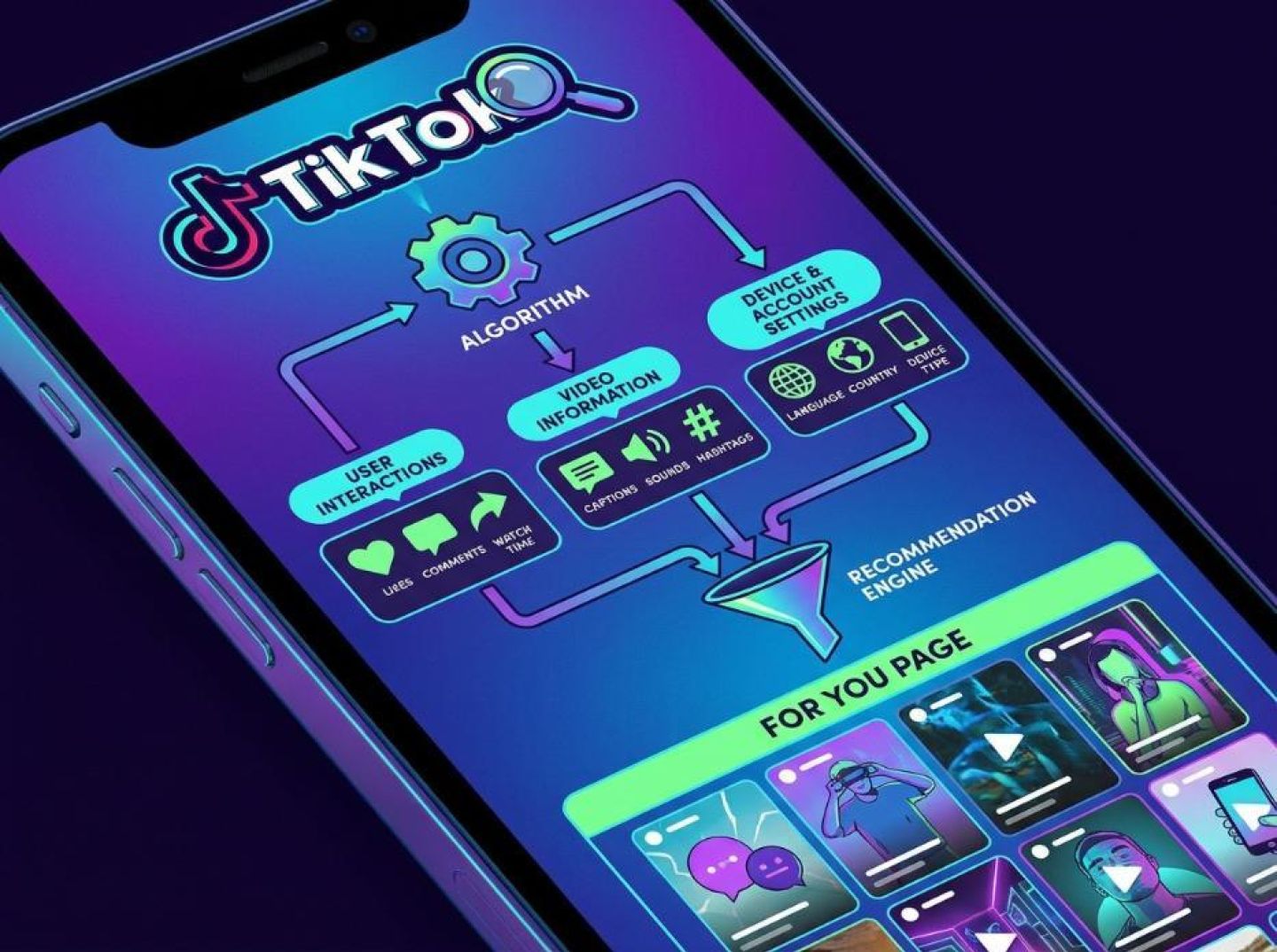
Every other major social platform distributes content through a follower graph. Instagram, YouTube, and X all weight reach toward accounts that have already built an audience, which means a product post from a brand with twelve thousand followers lives and dies inside that twelve-thousand-person bubble unless something extraordinary happens. TikTok inverts that logic entirely. Its interest-graph algorithm evaluates each piece of content on its own engagement signals — watch time, replay rate, shares, comments, saves — and routes it to progressively larger audience pools regardless of who posted it. A video from a zero-follower account selling a ceramic mug can land on the same For You Page as a clip from a creator with ten million subscribers, provided the early engagement metrics justify it. That single architectural decision is what makes pre-viral detection on TikTok both uniquely possible and uniquely urgent.
The scale amplifies the stakes. TikTok now reaches more than 1.9 billion monthly active users globally, with the average user spending over ninety minutes per day inside the app. That combination of audience size and session depth means a product video that catches algorithmic lift doesn't just trend — it detonates. A niche skincare serum can accumulate millions of impressions before the brand's own marketing team has finished its Monday stand-up. And those impressions convert at a rate that no other discovery platform can match: research from TikTok Marketing Science shows that users are 1.5 times more likely to purchase a product they discover on TikTok than on competing platforms, with discovery and conversion often collapsing into the same session.
This is the opportunity that makes small brands euphoric. A DTC startup with no media budget and no influencer relationships can genuinely break through to a mass audience, something that was structurally impossible on Instagram circa 2018 or Facebook circa 2015. As Brax has noted, content that resonates with the masses can go viral and provide marketing on a global scale without requiring a large budget — and TikTok's algorithmic architecture is precisely the mechanism that makes that promise real rather than aspirational.
But the same dynamics that create the opportunity compress the window for capitalizing on it. Silverpush's analysis of more than eighty TikTok campaigns across nine APAC markets found that trends typically peak within 48 to 72 hours. That is not a generous timeline. If you're a retailer waiting for a product to appear on a "trending now" dashboard before placing inventory orders or briefing your creative team, you are operating inside a window that has already half-closed. By the time volume-based social listening tools register the spike, the cost of creator partnerships has inflated, the original content format has been saturated with imitations, and the audience's attention is migrating to the next thing.
This is where the interest-graph architecture becomes a strategic advantage for anyone willing to watch the right signals. Because TikTok doesn't gate distribution behind audience size, the earliest engagement data on a product — the first few hundred shares, the initial save-to-view ratios, the comment sentiment on a single organic video — carries far more predictive weight than equivalent signals on follower-gated platforms. On Instagram, a post with three hundred shares from an account with fifty thousand followers tells you almost nothing about broader market demand. On TikTok, a post with three hundred shares from an account with two hundred followers tells you the algorithm is already testing that content against wider audiences and finding positive signal. The early data is cleaner because it isn't polluted by pre-existing audience loyalty.
The implication is straightforward but consistently ignored: reactive marketers arrive after peak ROI precisely because TikTok's viral mechanics are faster than traditional trend-monitoring workflows. The brands and investors who win disproportionately on this platform are the ones reading engagement patterns during the first algorithmic test cycle — not the ones who notice the product three days later when it's already on every trending list in their inbox.
You do not need a six-figure ad intelligence subscription to catch a product before it breaks out. TikTok's own free tools, combined with a disciplined daily routine and a simple scoring framework, can give performance marketers a meaningful head start. The competitive moat isn't the software — it's the consistency of showing up, reading the signals, and acting faster than everyone else. Here's a five-step workflow you can implement this week.
Step 1: Monitor creative volume spikes daily. Open TikTok Creative Center every morning and filter by your target product categories. What you're looking for isn't the ads with the most impressions — it's sudden clustering. When three or four new advertisers launch creatives around the same product type within a short window, that convergence usually signals that media buyers with real data have identified early demand. Flag any category where new ad creative volume jumps noticeably compared to the prior week.
Step 2: Track keyword velocity with complementary signals. Type ingredient names, product features, or benefit-driven phrases into TikTok's search bar and watch what the autocomplete suggestions surface. When a term like "peptide lip treatment" or "mushroom coffee" starts populating multiple long-tail suggestions, search interest is accelerating. Cross-reference those terms in Google Trends to confirm whether the velocity is platform-specific or spreading across the broader internet. A keyword climbing on both TikTok search suggest and Google Trends simultaneously is a far stronger signal than either alone.
Step 3: Score every candidate against the five structural signals. Take the pre-viral indicators from Section 3 — ad creative volume spikes, influencer seeding patterns, review infrastructure buildout, search interest acceleration, and inventory positioning — and build a simple spreadsheet rubric. Assign one point for each signal you can confirm. Any product that scores a three or higher deserves immediate attention and moves to the next step.
Step 4: Launch a fast-test protocol. When a product clears your scoring threshold, don't wait for a polished campaign. The most effective TikTok ads feel native to the platform — simple smartphone footage, authentic testimonials, and casual delivery consistently outperform highly produced creative. Film two or three UGC-style variations, each built around a different hook, and launch them at minimal budget. Because TikTok's algorithm uses creative itself as a targeting signal — a dynamic that, as MarTech has explained, means your ad's opening seconds help the platform determine who should see it — the first three seconds of each variation should qualify the viewer immediately. Lead with a specific question or scenario that only your ideal customer would relate to, and let the algorithm do the rest of the qualification work.
Step 5: Pre-build your execution infrastructure. Speed is the entire advantage. If you wait until a product scores well to source inventory, design a landing page, and write ad copy, the window closes before you ship. Prepare templatized landing pages with modular sections you can swap product images and benefit copy into within hours. Negotiate flexible minimum order quantities with suppliers in advance. Have a shared creative brief template ready so a UGC creator can start filming the same day you identify a candidate. The brands that consistently catch pre-viral products aren't necessarily smarter — they've simply removed execution as the bottleneck so that when the signal appears, the response is nearly automatic.
Run this workflow daily for thirty days and you'll start recognizing patterns that no tool can package for you — the rhythm of how products move from paid seeding to organic traction, and the narrow window where getting in early still matters.
Receive top converting landing pages in your inbox every week from us.
Most Read
Learn how OOH employers can move beyond selling billboard inventory and start monetizing the full funnel impact of every outdoor impression. This guide shows how to connect OOH with Native and TikTok-style funnels using competitive intelligence, creative research, tracking, retargeting, and performance-focused roles.
Rachel Thompson
7 minSep 28, 2026
Must Read
Learn how to transform one powerful brand moment into scalable Native, Push, and Pop funnels instead of relying on a single hero ad. This guide covers modular creative, TikTok funnel thinking, competitive intelligence with Anstrex, cross-channel testing, and a repeatable creative supply chain.
Dan Smith
7 minSep 26, 2026
Recently Updated
Learn how TikTok spy libraries can become a pre-testing engine for OOH creative, helping marketers identify winning hooks, formats, and messaging before deploying truck-side and DOOH campaigns. This guide presents a hybrid workflow for mining digital ad patterns, testing them digitally, validating them in physical environments, and feeding the results back into a reusable creative intelligence system.
Samantha Reed
7 minSep 23, 2026







)