

10 minJuly 19, 2026

Our spy tools monitor millions of native ads from over 60+ countries and thousands of publishers.
Get StartedU.S. businesses are on track to spend $57 billion on AI-powered advertising this year, roughly 12% of total ad spend. That's not a tentative experiment — it's a full-throated bet that automation is the path to competitive advantage. And on the surface, the bet looks smart. AI tools are generating ad copy variations at scale, dynamically resizing creative across platforms, reallocating budgets in real time, and adjusting bids without waiting for a human to review a dashboard. The machinery is impressive. The problem is that it's optimizing in the dark.
The latest generation of ad tech doesn't just assist marketers — it acts on their behalf. As MarTech reports, the industry is moving rapidly toward agentic AI, systems that make decisions autonomously rather than waiting for manual triggers. These self-optimizing agents experiment continuously, reallocating budget, adjusting targeting, and refining creative without human intervention. Early adopters report lower acquisition costs and shorter sales cycles, which only accelerates the push to hand over more control.
But here's what those efficiency gains obscure: every one of these systems is optimizing against a closed loop of your own historical performance data. Your AI knows what worked for you last quarter. It knows which headlines drove clicks from your audience segments, which placements delivered the lowest CPA in your campaigns, and which creative variants outperformed in your A/B tests. What it doesn't know — and can't know, without external inputs — is what your competitors are running, what messaging is gaining traction across your category, or where rival brands are shifting spend.
This is the difference between efficiency and effectiveness, and the industry has dangerously conflated the two. An AI system that continuously refines your creative is performing what mathematicians call hill-climbing — iterating toward the best possible outcome within a constrained set of variables. Without competitive context, that system is climbing toward a local maximum. It's getting exceptionally good at the wrong thing, perfecting messaging that may be redundant, undifferentiated, or directly colliding with a competitor's better-funded campaign pushing the same value proposition.
The risk compounds as autonomy increases. When a human media buyer reviews performance, there's at least an instinct to glance sideways — to ask what the category leader just launched, to notice a competitor's aggressive new positioning, to wonder whether the market has shifted in ways that internal data can't capture. Agentic AI doesn't have that instinct. As DAIVID CEO Ian Forrester put it when describing the disconnect between creative intelligence and media execution, "Creative is a key driver of advertising outcomes, but for too long it has been measured in isolation, disconnected from media results." The same principle applies at the competitive level: creative and spend decisions made in isolation from market-level intelligence aren't just incomplete — they're structurally fragile.
And fragility at $57 billion in annual spend isn't a rounding error. It's a systemic blind spot baked into the fastest-growing segment of the advertising industry. The more budget flows into autonomous systems that lack external awareness, the wider the gap grows between what these tools can optimize and what they actually should be optimizing for. The machinery is getting faster, smarter, and more independent. The strategic inputs feeding it haven't kept pace.
When Unilever announced plans to build a 300,000-creator network powered by AI-generated content, the advertising industry treated it as a glimpse of the future. And it is — just not the utopian version most marketers imagine. The initiative illustrates a fundamental paradox: the same generative AI tools that make it trivially cheap to produce ad creative at scale also guarantee that every competitor in your category is doing exactly the same thing. The result isn't a creative renaissance. It's a signal-to-noise crisis that gets worse with every new variation pumped into the market.
The math is unforgiving. If one brand can generate thousands of ad variations per week, so can ten others in the same vertical. AI creative tools pull from overlapping training data, follow the same engagement-pattern heuristics baked into their models, and converge on the same "optimized" hooks, color palettes, and formats. As Social Media Examiner noted, Meta's Andromeda update already penalizes this approach by treating hundreds of slight variations of the same ad as a single creative, effectively punishing the spray-and-pray volume strategy that generative AI makes so tempting. Advertisers need genuinely different variations — but "different" is meaningless without knowing what the competitive baseline looks like in the first place.
The industry is starting to recognize this gap. The DAIVID/ADIN.AI partnership, for instance, represents an attempt to build creative evaluation infrastructure — predicting how a piece of content will perform before it ever runs. That's a step in the right direction, acknowledging that producing more creative without a way to assess it is just accelerating waste. But even sophisticated predictive scoring measures your creative's likely performance in a vacuum. It can tell you whether an ad is likely to generate attention or emotional resonance in the abstract. What it cannot tell you is whether three competitors already saturated the market with the same angle last week.
This is where the absence of competitive creative data becomes most damaging. AI-powered dynamic creative optimization systems can significantly improve conversion performance by dynamically selecting optimal creative combinations, adjusting messaging in real time based on audience signals. But optimization without competitive context is just efficient convergence toward the same local maximum everyone else is finding. You're running a faster race on a treadmill.
The deeper problem is structural. Traditional A/B testing was designed for a world where you produced a handful of creatives and tested them sequentially. At the scale Unilever and others are now operating — thousands or hundreds of thousands of variations — sequential testing is mathematically impossible. You'd burn your entire budget on learning before you ever scaled a winner. So brands are forced to rely on AI-driven prediction and automated optimization, which works well for internal performance metrics but remains completely blind to the external creative environment.
What's still missing is the grounding question that should precede every creative brief: what are actual competitors running right now? What formats, messaging angles, and landing page strategies are demonstrably working in your specific market? As AdExchanger has argued, without broad, consistent cross-media data, AI simply accelerates incomplete analysis — partial data and fragmented coverage obscure the full picture rather than clarifying it. Until generative creative tools are informed by real competitive intelligence, they're not optimizing for differentiation. They're generating creative into a void, adding to the noise while calling it signal.
The competitive intelligence that actually matters doesn't live in quarterly earnings calls, analyst reports, or industry trend decks. It lives in the auction — in the real-time decisions your competitors are making about where to spend, what creative to run, and which audiences to pursue right now. As AdExchanger reports, the most valuable signals in modern advertising are hidden in media allocation decisions, efficiency trends, placement strategies, and channel shifts, and they appear first in the auction long before they surface anywhere else.
So what does competitor creative intelligence actually consist of in practice? It's not a single metric or a dashboard summary. It's a composite layer of live data: the actual ad creatives running across channels right now, the landing pages behind those ads, the offer structures embedded in those pages, the geographic targeting patterns that reveal market priorities, the channel allocation shifts that signal strategic pivots, and the spend efficiency trends that separate brands winning the auction from brands merely participating in it. This is fundamentally different from the data your AI ad tools can access, because it exists entirely outside your own ecosystem. No amount of first-party optimization — no matter how sophisticated — can surface what a competitor is doing on a different platform, in a different geography, with a different creative strategy.
Consider the insurance category example that AdExchanger highlighted. Competitive intelligence analysis revealed that Progressive wasn't just outspending rivals — it was outbuying them, achieving lower acquisition costs through audience precision and diversified placement rather than sheer budget size. That's a strategic signal invisible to any competitor relying solely on internal performance data. If you're a rival insurer watching your own CPMs climb while your conversion rates flatten, your internal AI will tell you to adjust bids or test new copy. It won't tell you that Progressive has quietly shifted into placements you haven't considered, in geographies you've deprioritized, with creative approaches your optimization loop has never encountered.
This is where the gap becomes structural. As MarTech emphasizes, AI-native advertising requires clear positioning and differentiated value propositions — but differentiation is impossible without knowing what you're differentiating from. When a competitor's CPM drops, when they concentrate budget in a specific geography, when they change their landing page offer structure — each of these is a signal revealing what the market is actually rewarding. Without that external reference point, your AI is optimizing in a vacuum.
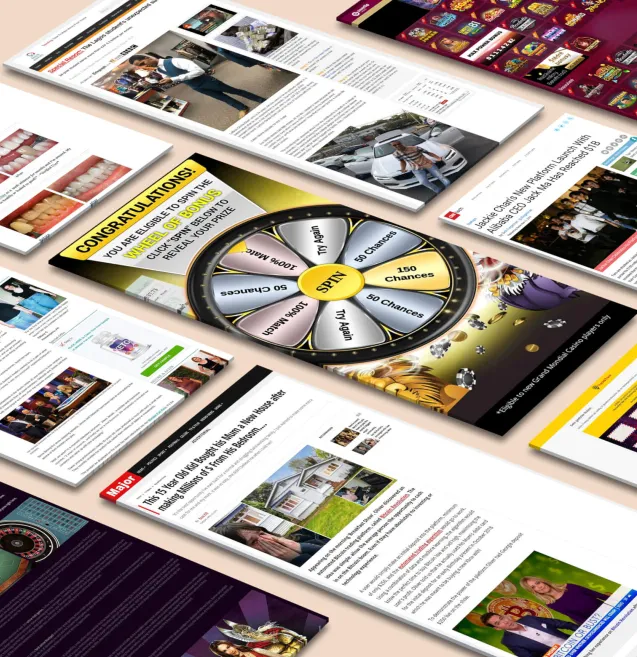
Tools like Anstrex exist precisely to surface this category of raw competitive creative data. The platform tracks actual ads running across native, push, pop, and social channels, exposes the landing pages behind them, and provides duration and scale signals that indicate which creatives are surviving and thriving over time versus which flamed out after a few days. That persistence signal alone — how long an ad has been running and at what scale — is a powerful proxy for profitability that no internal dataset can replicate.
The takeaway is straightforward but uncomfortable: the signals that would most improve your AI's decision-making are the signals it structurally cannot see. Your optimization algorithms are locked inside a feedback loop built from your own historical performance. The competitor who just discovered a new channel mix, a new offer angle, or a new geographic pocket of demand is operating on information your system doesn't have and can't generate. That asymmetry doesn't shrink as you run more tests internally. It only grows as the market moves without you.
Every AI advertising function improves when it stops operating in a vacuum and starts processing competitive context as a foundational input. This isn't a theoretical argument — it's a practical reality you can trace across the four core functions where AI touches your ad operations today.
Creative generation is the most obvious beneficiary. Most teams prompt their AI tools with brand guidelines and audience personas, then hope for the best. The output is competent but generic — divorced from what the market actually looks like right now. A fundamentally different approach starts by feeding generative AI the top-performing competitor creatives from a platform like Anstrex: their hooks, visual treatments, CTA patterns, offer structures, and emotional framing. Instead of asking AI to "write 10 ad variations for our SaaS product," you ask it to identify whitespace — the angles no one else is running, the emotional registers left untouched, the formats competitors haven't adopted. As Social Media Examiner emphasizes, AI creative quality depends entirely on the context and instructions you provide, and the brands achieving the best results are those that systematically build a knowledge base before generating anything. Competitor creative data is the most potent context you can add to that knowledge base, because it grounds every output in market reality rather than internal assumptions.
Bid and budget optimization is where the stakes compound fastest. Today's agentic AI systems can reallocate budget and adjust targeting autonomously, experimenting continuously to lower acquisition costs. But those agents are optimizing against their own historical CPA curves — they have no visibility into what competitors are doing with their spend. When competitor intelligence reveals that a rival is pulling budget out of a channel or geographic market, an agentic system armed with that signal can exploit the vacuum by shifting spend before CPMs recalibrate. Without it, the same system simply chases diminishing returns in increasingly crowded auctions.
Targeting benefits through a similar logic of avoidance and exploitation. Competitor creative data reveals concentration patterns — which demographics are being hammered with messaging, which geographies are oversaturated, and which segments are being ignored. Observing where competitors are doubling down lets your AI identify the saturated zones where incremental cost-per-acquisition will be punishing, and the underserved segments where a first-mover advantage is still available. As illumin notes, AI-driven audience modeling can already identify high-probability converters from behavioral signals, but layering competitive saturation data on top tells you where those converters can be reached most efficiently.
Messaging and positioning strategy may be the function where competitive blindness causes the most lasting damage. MarTech's framework for AI-native advertising stresses that brands must establish differentiated value propositions to remain visible in conversational discovery environments — the answer engines that are increasingly mediating purchase decisions. But differentiation is a relative concept. You cannot differentiate without knowing what positions competitors have already claimed. If three rivals are all leading with "save 40% on implementation time," your AI will happily generate a fourth variation of that same claim unless it has been shown the competitive landscape and instructed to find an unoccupied position.
Across all four functions, the pattern is the same. Competitor creative intelligence is the grounding layer that transforms AI from a sophisticated pattern-matching engine — one that optimizes in isolation — into something closer to a competitive strategist that understands the board before making its next move.
The most common pushback to the competitive intelligence argument goes something like this: "I don't need a data feed — I already know my market. I can just tell the AI what my competitors are doing." It's a reasonable objection, and for a skilled marketer working a narrow niche with two or three direct competitors, it might even work for a while. But as a structural solution to the problem of AI tools operating without competitive context, prompt engineering from personal knowledge breaks down in three fundamental ways.
First, human market knowledge is episodic, not continuous. You might browse a competitor's Instagram ads once a week, screenshot a few landing pages during a quarterly review, or notice a rival's new positioning when someone on your team flags it in Slack. But you're not tracking every creative rotation, every copy variation, every audience signal embedded in their targeting choices across every platform simultaneously. When you prompt an AI tool with competitive context drawn from memory, you're feeding it a snapshot — and usually a stale one. The competitive landscape your AI needs to understand isn't what your competitor did last month; it's what they're doing right now, across dozens of creative executions you probably haven't seen. As MarTech has noted, brands that can test and adapt hundreds of variations quickly gain a speed advantage that those relying on traditional production cycles simply cannot match. Your manual observations can't keep pace with that velocity, which means your prompts are always lagging behind reality.
Second, prompt-based competitive context doesn't scale. A senior media buyer might be able to articulate useful competitive framing for a single campaign brief. But modern AI ad operations don't run on single briefs — they run on continuous optimization loops generating hundreds of creative variations, adjusting bids across dozens of audience segments, and reallocating budget in real time. You cannot manually inject competitive context into every one of those micro-decisions through prompting. The gap isn't knowledge; it's infrastructure. Search Engine Journal captured this problem precisely when reporting on the challenge enterprise brands face at scale: they know what they want to do, but the evaluation infrastructure required to actually execute that vision across thousands of creative assets and real-time decisions simply doesn't exist when it depends on human judgment alone. The same principle applies to competitive intelligence — knowing your market isn't the bottleneck; having a system that can operationalize that knowledge at the speed and scale your AI tools require is.
Third, individual knowledge carries blind spots that systematic data collection doesn't. You notice the competitors you're already watching. You register the creative approaches that contrast with your own. But you systematically miss the flanking moves — the new entrant testing aggressive pricing creative in your secondary markets, the established player quietly shifting from product-focused to lifestyle messaging across their entire portfolio. These are patterns that only emerge from structured, comprehensive monitoring, not from a marketer's curated mental model of the competitive landscape.
The result is a kind of confidence trap. Skilled marketers feel equipped to guide their AI tools because they genuinely do understand their markets. But understanding and operationalizing are different problems. As Fraser Cottrell has emphasized, getting AI to produce what you actually want requires significant effort in building context — and competitive context is no exception. The difference is that brand context can be documented once and referenced indefinitely, while competitive context changes daily, requiring a systematic collection layer that no amount of prompt craftsmanship can replace.
Receive top converting landing pages in your inbox every week from us.
Recently Updated
Discover how TikTok, YouTube, and LinkedIn are turning creator content into performance marketing opportunities, and why brands should look beyond influencer fit and engagement metrics. Learn how to evaluate creator campaigns using earnings per click (EPC), marketing efficiency ratio (MER), and arbitrage margins to identify profitable creative, improve campaign decisions, and scale what works.
Dan Smith
7 minOct 16, 2026
Featured
Discover how performance marketers can turn the post-holiday advertising period, known as Q5, into an opportunity for lower-cost testing and smarter campaign optimization. Learn how to use Anstrex ad spy data to identify winning creatives, analyze competitor funnels, launch original landing pages, and turn Q5 insights into scalable Q1 campaigns.
Elena Morales
7 minOct 14, 2026
In-Depth
Explore what Pure Leaf’s “Break Conference” reveals about the gap between polished brand marketing and measurable performance. This guide breaks down how Native, Push, TikTok, and affiliate-style funnels use creative testing, clear offers, first-party data, and hard performance metrics to turn cultural moments into revenue.
Rachel Thompson
7 minOct 1, 2026











)