Explore how media buyers can move beyond using AI as a creative shortcut and turn it into a competitive spyglass for decoding auction signals, competitor strategies, creative performance, and emerging agentic advertising opportunities.

Our spy tools monitor millions of TikTok ads from over 55+ countries. Biggest TikTok Ad Library in E-commerce and Mobile Apps!
Anstrex data reveals why award-winning ads and top-grossing ads often follow different rules, and how marketers can test emotional, award-worthy concepts against proven direct-response workhorses using measurable performance signals.
Discover how OOH professionals can turn their real-world attention expertise into high-ROI ad intelligence skills by applying billboard strategy, audience insight, and creative analysis to digital and native advertising.
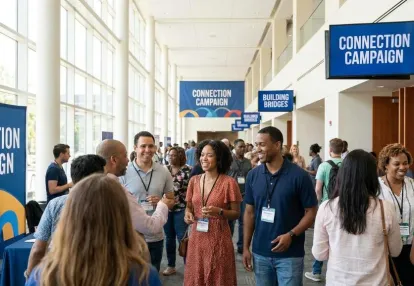
Learn how performance marketers can turn emotional “connection” campaigns from vanity-driven viral moments into measurable growth by analyzing winning creatives, emotional patterns, and downstream ROI.
Discover how OOH roles are becoming full-funnel performance drivers by connecting physical advertising exposure to measurable digital journeys, retargeting, attribution, and media optimization.
OOH buyers are increasingly researching vendors before ever speaking with a sales rep, making competitive intelligence a critical part of winning campaigns. This article explains why OOH operators should consider hiring a Media Spy who can monitor competitor activity, reverse-engineer funnels, identify market gaps, strengthen creative and placement strategy, and turn intelligence into sales-ready insights.
Winning ads contain more than creative ideas—they reveal the offers, promises, problems, and proof that already move a specific audience to action. This article shows how to turn those proven ad insights into audience-first, offer-centric topic clusters, connecting paid media, SEO, and PR to build content around topics that can drive both search visibility and revenue.
As organic clicks decline and paid acquisition becomes more competitive, advertisers need to look beyond CTR and CPC and focus on the conversion architecture connecting ad creative, landing pages, offers, and post-click experiences. This article explains how to reverse-engineer competitor funnels, identify patterns that have survived real-world testing, and use those insights to build stronger, original conversion systems.
A 20-year-old reseller making £20k a month on TikTok and a $100M+ CPG marketing machine represent two very different approaches to media: channel discovery versus channel loyalty. This article argues that the reseller's advantage isn't bigger budgets or better creative, but the ability to constantly test where attention is undervalued, move money quickly, and abandon channels when the economics change. It shows how enterprise marketers can adopt the same mindset through competitive ad intelligence, small explicit channel bets, and a rapid spy → test → decide loop.
AI-generated ad copy has made traditional competitor research increasingly unreliable because a single observed ad may be only one temporary permutation from a much larger creative system. This article explains why advertisers should move beyond snapshots and focus on patterns, recurrence, and longevity—tracking which messages, offers, landing-page structures, and creative angles survive over time. It then presents a three-layer AI-era competitive intelligence system: automated monitoring, pattern extraction, and human strategic interpretation.
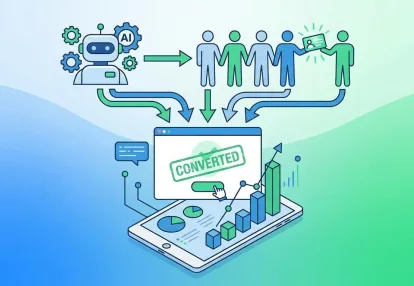
AI referrals are exposing an old conversion problem: visitors arrive with highly specific intent but are often sent to generic homepages or poorly matched pages. This article explains why native advertisers solved this problem years ago through pre-sell pages, advertorials, intent-matched landing pages, and continuous competitive intelligence. It then expands the challenge into a triple-audience model—traditional search visitors, AI-informed human visitors, and autonomous AI agents—and explains why marketers need landing-page experiences that combine human persuasion with machine-readable structure.
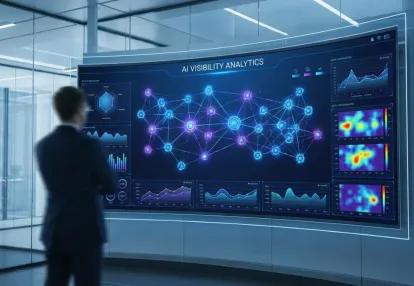
AI visibility is becoming a major focus for SEO teams, but visibility scores, citation counts, and AI mentions can be difficult to connect directly to revenue. This article contrasts that uncertain measurement environment with performance marketing's more observable signals: competitor ad spend, creative longevity, landing pages, offers, and conversion-focused intent. It presents a practical five-step framework for using competitive ad intelligence alongside AI search data to prioritize high-intent opportunities, improve content strategy, and build a measurable full-funnel feedback loop.
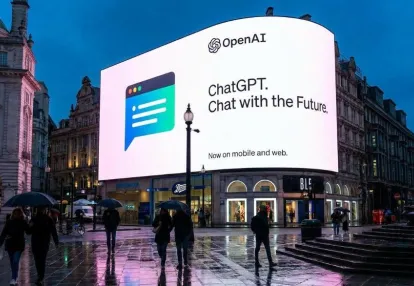
AI advertising is creating a new competitive intelligence gap: while marketers can easily monitor ads across traditional platforms, ChatGPT ads and AI-served Google placements are far harder to observe and attribute. This article explains how advertisers can close that gap by monitoring the limited signals available in AI environments—such as ad copy, destination URLs, and prompt-level visibility—and using native, push, display, and landing-page intelligence as cross-channel proxies. It also explores how attribution uncertainty can reward early movers who build their own AI advertising intelligence systems before standardized measurement catches up.