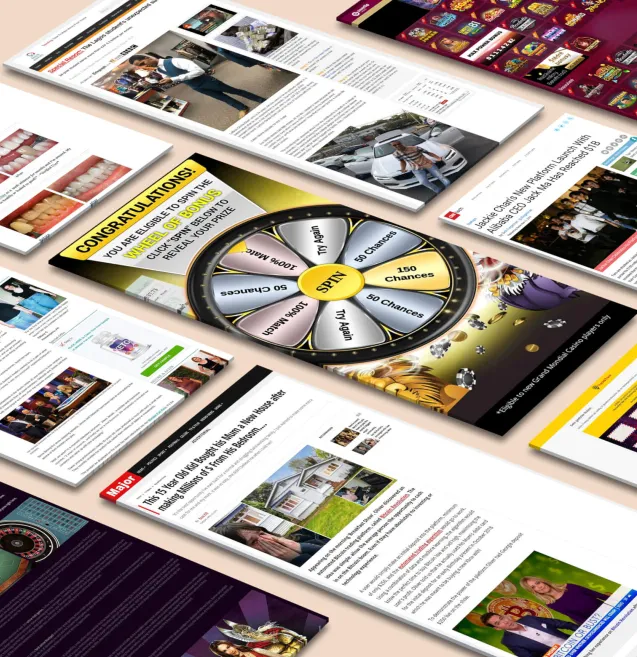

Our spy tools monitor millions of push notification ads from over 90+ countries and thousands of publishers.
Get StartedThe ruling landed like a slow-motion earthquake. When a federal court found that Meta and Google had knowingly designed features to exploit the neurological vulnerabilities of minors — infinite scroll, autoplay, intermittent reinforcement loops — it didn't just expose two companies to billions in potential liability. It reclassified the entire social media advertising ecosystem in the public imagination. What was once an annoying but tolerated part of the internet experience now carried a court-stamped label: manipulative by design. For every brand still buying impressions inside that ecosystem, the implications extend far beyond legal risk. This is a brand-safety crisis with no opt-out button.
The uncomfortable truth is that the verdict didn't reveal anything the data hadn't already been screaming. Long before a judge weighed in, consumers were voting with their attention — or, more precisely, withholding it. As AdQuick's analysis of 2026 ad trends detailed, roughly 91% of users now ignore social ads entirely, and most report feeling that there are simply "too many ads" in their feeds. Social ad fatigue has been shown to cut click-through rates by around a third while inflating costs per click by approximately 20% in some campaigns. Ad inventories keep expanding, CPMs keep rising, and attention keeps dropping — a toxic trifecta that was already forcing CMOs to question unit economics before any courtroom drama began.
But the verdict did something the data alone could not: it gave consumers a vocabulary for their discomfort. There is a meaningful difference between a user who instinctively swipes past a sponsored post and one who can now articulate why the platform serving that post was found harmful. The former is a measurement problem. The latter is a reputational contagion event. Every brand whose logo appears inside a feed that a court has called psychologically exploitative inherits a share of that stigma, whether or not its own creative was part of the problem.
This reputational spillover compounds an infrastructure challenge that was already eroding advertiser confidence. Across the industry, publishers like Penske Media Corporation have observed that users are increasingly opting out of intrusive ad experiences altogether — through VPNs, ad blockers, and privacy tools that render entire audience segments invisible. As PMC's VP of Data Science noted in an AdExchanger report, "Many of these users aren't opposed to supporting the publishers they read. They've just opted out of an experience that felt intrusive." When even publisher-side executives acknowledge that the prevailing ad model has pushed audiences into the shadows, the signal is unmistakable: the trust contract between platforms, advertisers, and consumers has fractured at a structural level.
Meanwhile, auction dynamics on the platforms that remain viable are growing more volatile, not less. The post-sale turbulence around TikTok demonstrated how quickly governance changes can destabilize CPMs before they touch the product itself, with algorithm retraining cycles and fluctuating advertiser confidence creating unpredictable cost swings mid-campaign.
Stitch these threads together and the picture is stark. Attention is cratering. Costs are climbing. Audiences are actively hiding. And now, a legal ruling has given the public a moral framework for distrusting the very platforms where most digital ad dollars still flow. The verdict didn't create the trust gap — it named it, dated it, and made it citable. For advertisers who continue to treat social feeds as default media buys, the question is no longer whether the economics still work. It's whether their brand can afford the association.
Between the moment consumers lose faith in an incumbent platform and the moment they fully settle into whatever replaces it, a window opens. Call it the trust gap — a measurable interval during which audiences are actively looking for advertising experiences that respect their autonomy, but haven't yet been corralled into the next walled garden. This gap is real, it's quantifiable, and it's already closing.
Understanding why the gap exists requires separating two things that marketers routinely conflate: hostility toward advertising and hostility toward surveillance. Consumers aren't tearing out the wiring; they're replacing the locks. The data bears this out. As AdQuick has documented, privacy anxieties, ad-blocking adoption, and fraud concerns are accelerating simultaneously — not because people refuse to be marketed to, but because they're migrating toward less ad-dense, less intrusive environments where they feel some measure of control. The distinction matters enormously. A person who installs an ad blocker isn't boycotting commerce; they're boycotting a specific model of attention extraction that the social media addiction verdict has now legally validated as manipulative.
This is the insight that should anchor every media plan written in the next twelve months. Reporting from AdExchanger and Penske Media crystallized the point when it found that many users who block ads aren't opposed to supporting the publishers they read — they've simply opted out of an experience that felt intrusive. The operative word is felt. Consent isn't a binary switch; it's a spectrum of perceived agency. Formats that require explicit, browser-level permission — push notifications, email opt-ins, SMS sign-ups — sit on the right side of that consent line because the user has to take an affirmative action before a single message arrives. The psychological framing is inverted: instead of "How do I escape this ad?" the user's internal narrative becomes "I chose to receive this."
But here's the part that should create urgency rather than comfort: the trust gap is temporary by nature. Three forces are already compressing it.
First, regulation will normalize every channel eventually. The same legislative energy that produced the social media addiction verdict will, within a cycle or two, turn its attention to push notification frequency, data usage in consent-based messaging, and opt-in dark patterns. No format stays unregulated once it reaches scale.
Second, big-budget advertisers follow audiences on a delay, not permanently. As Neil Patel's analysis of TikTok's post-sale auction dynamics illustrates, paused budgets always resume, and CPM pressure rises once advertiser confidence returns. The same pattern will play out in push and pop channels: the moment Fortune 500 brands validate consent-based inventory with test budgets, programmatic demand will flood in behind them.
Third, the cost arbitrage that makes these channels attractive right now is a direct function of low competition. CPMs in push notification networks today sit at a fraction of social display rates precisely because most major buyers haven't arrived yet. When they do — and the verdict is accelerating their curiosity — the economics will converge toward the mean.
The implication is stark. Advertisers who move now get to build subscriber lists, refine creative cadence, and establish audience trust at rates that will look absurdly cheap in retrospect. Advertisers who wait will enter a normalized market where consent-based channels carry the same crowding, the same CPM inflation, and the same diminishing returns they were trying to escape in the first place. The trust gap rewards first movers — but only if they move before it closes.
Most marketers still file push and pop advertising under "remnant inventory" — the bottom-of-barrel performance channels you turn to when budgets are tight and standards are flexible. That reflexive dismissal is a category error, and it's about to become an expensive one.
Consider the basic mechanics. A push notification ad cannot reach a user's device unless that user has actively granted permission through a browser or app prompt. There is no ambiguity in the consent chain: the user said yes, the notification arrives, and the user can revoke access at any time. Pop advertising operates on a similar logic — whether user-initiated through a click action or publisher-triggered as an interstitial, the format includes a visible, immediate exit. Neither channel hides its commercial intent behind an algorithmically curated feed designed to blur the line between organic content and paid placement. Neither channel relies on infinite scroll or autoplay to manufacture engagement that can then be monetized. These aren't bugs of the format; they're defining structural features.
Now compare that architecture to what regulators are actively trying to impose on social platforms. The entire thrust of post-verdict legislation — from proposed federal age-verification mandates to the EU's tightening of the Digital Services Act — is to make explicit, informed consent the baseline for any advertising interaction. Social media companies built their business models on the opposite principle: implicit consent buried in terms-of-service agreements, sustained by design patterns that make opting out harder than opting in. Retrofitting genuine consent architecture onto those platforms will be technically complex, legally fraught, and enormously costly. Push and pop channels won't need to retrofit anything. They'll simply need to scale what already works.
The alignment goes deeper than permissions dialogs. As Penske Media's head of data noted, the real opportunity in a privacy-first landscape lies in "reestablishing what we'd call a fair value exchange" — reconnecting with audiences who "aren't opposed to supporting the publishers they read" but "have just opted out of an experience that felt intrusive." That concept of a fair value exchange isn't aspirational for push advertising; it's the default operating model. The user grants notification access because they perceive value — a deal alert, a content update, a service reminder — and the advertiser delivers against that expectation. When the value disappears, the user revokes. The feedback loop is immediate, transparent, and self-correcting in a way that no algorithmic feed has ever been.
Meanwhile, the broader industry is scrambling to replace the signal infrastructure that privacy changes have already eroded. As illumin's analysis of programmatic performance makes clear, pixel-based retargeting is growing "increasingly ineffective" as cookie deprecation and evolving privacy expectations narrow the pool of trackable users. Marketers reliant on Meta's retargeting ecosystem are optimizing against what illumin describes as "a narrow slice of potential customers" while missing the broader decision journey. Push channels sidestep this problem entirely — they don't depend on third-party cookies, cross-site tracking pixels, or probabilistic identity graphs. The relationship is first-party by definition, built on a direct permission grant from a known device.
None of this means push and pop channels are a panacea. Scale remains a genuine constraint, creative sophistication lags behind richer formats, and brand-safety controls need maturation. But the structural argument is difficult to dismiss: channels whose core mechanics already satisfy the consent standards that regulators are forcing onto the rest of the industry aren't behind the curve. They're ahead of it — and the post-verdict landscape is about to make that advantage visible.
Theory is comfortable. Tactics pay the bills. And the advertisers who will extract the most value from the trust gap aren't the ones who simply recognize that push and pop channels align with a post-regulation landscape — they're the ones who understand what's already working in those channels right now, before the migration wave brings a crush of new competitors and inflates costs to the point where the arbitrage disappears.
The pattern is familiar to anyone who's watched a channel mature. Early movers enjoy low CPMs, high engagement, and creative latitude. Then a tipping point arrives — a regulatory shift, a platform scandal, a cultural mood change — and budget floods in from adjacent channels. Within months, the economics look entirely different. We're standing at exactly that inflection point. The social media addiction verdict has created the catalyst, but the window between catalyst and crowd is finite. As AdQuick noted in its 2026 outlook, it's now imperative for advertisers to "update processes and technologies" and "understand the latest culture shifts" to capitalize on a changing world. In push and pop, that imperative translates into a single, urgent priority: competitive intelligence.
First-mover advantage here isn't about being the first to run an ad on a push notification network. It's about being the first to understand the landscape — which creatives competitors are running, which landing pages are converting, which geos and verticals remain underserved, and how long specific campaigns have been live (a reliable proxy for profitability, since no one keeps an unprofitable campaign running for weeks). This is reconnaissance, not guesswork. Tools like Anstrex Push and Pops give advertisers exactly this visibility, functioning as a competitive intelligence layer across push notification and pop traffic networks. You can filter by ad network, country, device type, and vertical to see what's actually performing — then reverse-engineer the strategy before spending a dollar.
The logic mirrors what's happening in more sophisticated programmatic environments. Consider how illumin describes the shift beyond pixel-based retargeting: instead of waiting for users to arrive at your site before building audiences, modern marketers model engagement signals — impressions served, video completions, upstream intent data — to capture interest earlier in the funnel. The parallel to push and pop competitive intelligence is direct. You're modeling what you can't yet see from your own campaigns by studying what others have already validated. You quantify the unknown audience pool against known competitor behavior, and that quantification becomes your entry strategy.
Without this step, advertisers entering push and pop channels are essentially flying blind into an auction that rewards specificity. They'll test generic creatives against broad geos, burn through budget discovering what a fifteen-minute competitive analysis would have revealed, and arrive at optimization insights their more diligent competitors operationalized weeks earlier. With it, they walk in holding a playbook — one built not from assumptions about what might work in a permission-based, consent-driven ad format, but from empirical evidence of what already does.
The math is straightforward. Social ad fatigue is cutting click-through rates by roughly a third while pushing costs per click up by around twenty percent in some campaigns. Budgets will move. The only question is whether you've done your homework before they arrive — or after, when the economics have already shifted against you. Competitive intelligence isn't a nice-to-have. Right now, in the narrow window between verdict and migration, it's the entire game.
The trust gap is real, the window is open, and the competitive landscape hasn't yet priced in the advantage. But none of that matters if push and pop advertisers squander the opportunity by replicating the exact behaviors that created the backlash against social media in the first place.
The most predictable mistake is also the most tempting: treating consent-based channels like high-frequency bombardment machines. When advertisers discover a channel with strong initial engagement and low CPMs, the instinct is to scale volume aggressively — flood devices with notifications, rotate pop creatives at maximum frequency, and extract every possible impression before costs rise. This is precisely how you collapse a channel's value proposition. Research from AdQuick has shown that ad fatigue can cut click-through rates by a third while inflating cost per click by roughly 20 percent, proving that oversaturation doesn't just annoy users — it actively destroys the economic efficiency that made the channel attractive in the first place. Push notifications are particularly vulnerable to this dynamic because the user's opt-in is revocable at any moment. Unlike a social media feed where users endure intrusive ads because they're locked into a content ecosystem, a push subscriber who feels spammed simply disables notifications. That permission, once revoked, doesn't come back.
The second mistake is importing social-media-style creative deception into a channel whose entire competitive advantage rests on trust. Misleading notification copy, fake urgency indicators, bait-and-switch landing pages — these tactics may generate short-term clicks, but they poison the well for every advertiser in the channel. The distinction that matters here is the one between deliberate ad avoidance and passive ad tolerance. As AdExchanger has warned, undermining the user experience is what drives audiences from passive scrolling past ads they don't love to actively installing blockers or revoking permissions that shut out entire channels. Social media platforms learned this lesson the hard way: when ads on platforms like TikTok and X began crowding out user-generated content, the resulting user resentment didn't just hurt individual campaigns — it eroded trust in the platforms themselves. Push and pop advertisers who mimic those patterns will trigger the same backlash in a fraction of the time, precisely because the consent relationship is more direct and more fragile.
The third risk is subtler but equally lethal: ignoring quality signals during the scaling phase. As budgets migrate into push and pop channels, networks will face pressure to expand inventory by loosening subscriber quality standards. Advertisers who chase volume without scrutinizing engagement depth — who optimize for raw delivery numbers rather than post-click behavior — will find themselves buying impressions from disengaged or incentivized subscribers who never intended to receive commercial messages. This mirrors the programmatic trap that has plagued display advertising for years, where scale and quality exist in constant tension.
The antidote to all three mistakes is the same: treat the consent-based trust advantage as a finite resource that depletes with every low-quality interaction. Cap notification frequency well below what the channel technically allows. Hold creative standards higher than you would on platforms where users expect to be sold to. Audit subscriber quality continuously rather than quarterly. The advertisers who protect the channel's trust architecture will be the ones still profiting from it when competitors who strip-mined the opportunity have already moved on to blame the channel for their own poor results.
Receive top converting landing pages in your inbox every week from us.
Must Read
Discover how Pure Leaf’s “Break Conference” can be deconstructed as a full-funnel strategy spanning Native, Push, and Pop advertising. This guide shows how marketers can use creator content, TikTok Instream, Anstrex, search data, and PR signals to turn a feel-good brand stunt into a measurable performance engine.
Priya Kapoor
7 minSep 27, 2026
Must Read
Learn how to transform one powerful brand moment into scalable Native, Push, and Pop funnels instead of relying on a single hero ad. This guide covers modular creative, TikTok funnel thinking, competitive intelligence with Anstrex, cross-channel testing, and a repeatable creative supply chain.
Dan Smith
7 minSep 26, 2026
Guide
Celebrity sports campaigns can generate enormous attention without necessarily producing profitable traffic, leads, or sales. This guide shows how to mine Anstrex Push and Pop data to identify scalable athlete creatives, build high-intent fan audiences, and connect sports activations to conversion-focused landing pages and funnels.
Priya Kapoor
7 minSep 24, 2026