6 minSeptember 3, 2026

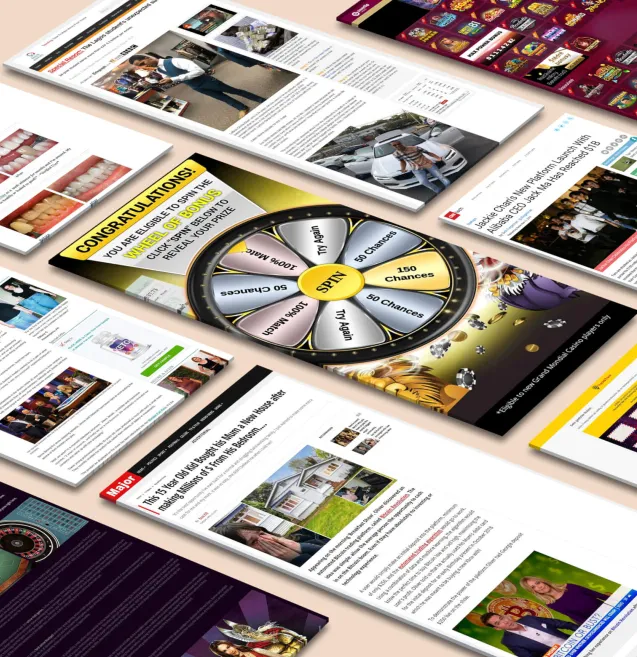
Our spy tools monitor millions of native ads from over 60+ countries and thousands of publishers.
Get StartedEvery marketer has a story about “the one that got away.”
The ad your team loved. The client loved. The focus group loved. The one the CMO called “career-making” in the pre-read. You launch it, watch the first few days’ metrics trickle in… and then reality hits. Great qualitative feedback, decent click-through, maybe even a spike in branded search—but when you zoom out to total revenue, new customers, or long-term lift, it just doesn’t move the business.
Meanwhile, some scrappy, slightly off-brand variant you almost killed in review quietly crushes it in the auction and becomes the workhorse of the entire quarter.
This isn’t bad luck. It’s a structural problem.
Modern advertising has become a paradox: we’ve never had more data, more AI, or more ability to generate “great” ads on demand—yet predicting which of those ads will actually scale profitable growth is still mostly guesswork. The industry’s default answer has been to shove more AI into the problem, usually by auto-generating thousands of micro-variations and letting black-box systems pick winners.
As Erez Levin argues in his analysis of hyper-personalization, this arms race leads to billions of AI-tailored creatives that are technically “relevant” but commercially incoherent. You may win a lot of cheap clicks, but you lose the macro-cultural signal that gives a brand its authority. In the process, it becomes nearly impossible to understand which ideas actually create durable demand versus which ones simply harvest intent that was already there.
At the same time, much of what we call “data-driven” Anstrex.com/blog/how-ai-powered-marketing-is-changing-the-game" target="_blank" rel="noreferrer noopener">creative optimization is stuck in the shallow end of the pool. Articles comparing impressions and clicks have educated a generation of performance marketers to chase CTR and CPC as primary proxies for success. Those metrics matter, but they are rearview-mirror signals—and they skew heavily toward short-term, bottom-funnel behavior. A creative that pulls a high click-through rate in retargeting is not necessarily the creative that will profitably scale cold, incremental reach at 10x the spend.
Real predictive power doesn’t come from more variants or prettier dashboards. It comes from how deeply you connect creative decisions to underlying behavioral data.
In a conversation on how deep learning is reshaping marketing, Cognitiv CEO Jeremy Fain explains that AI’s real advantage emerges when it can ingest massive log-level data sets, learn from granular audience signals, and run continuous prediction loops—not when it’s simply generating more headlines and images on command. As he puts it, deep learning in advertising is fundamentally a big data problem, not a creative toy: the system is only as smart as the structure and quality of the data you feed it.
That distinction matters, because the economics of advertising are shifting toward speed and intent. AI-native brands already test hundreds of creative variants, identify winners in days, and redeploy spend in near real time. As one overview of AI-native advertising notes, execution is becoming increasingly automated; the competitive edge is moving upstream, into the strategy and frameworks that shape what you test in the first place.
In other words, the question is no longer “Is this ad good?” or even “Does this ad get clicks?” The question is: “Given everything we know about behavior in our category, what is the probability this idea will scale profitably across a population, not just a handful of segments—and how confident are we in that prediction before we spend real money?”
This article is about building that confidence. Not another “best practices” list, not a celebration of clever one-offs, but a practical, data-driven framework for separating the ads that merely look great in a deck from the ones that can carry your next growth curve.
In performance media, “great ad” is the wrong unit of analysis.
What feels like a hit in the room is usually being judged on aesthetics, storyline, and stakeholder excitement. Platforms, however, are judging something entirely different: how reliably an asset produces marginal conversion and revenue when dropped into a hyper-competitive auction that recalculates value every few milliseconds.
Modern buying systems don’t see your Cannes case study; they see log-level signals. Deep learning platforms evaluate millions of impressions and make real-time decisions based on predicted lift, not creative intent, as Jeremy Fain explained in his discussion of how predictive models now forecast creative performance before impressions are purchased, allowing brands to direct spend toward statistically advantaged assets rather than the ones that merely seem promising in a deck, a point he explored in depth on.
That asymmetry—humans optimizing for “wow,” machines optimizing for “what works next”—is why so many beloved ads fail to scale once they hit real budgets.
Old-school media planning made it easier to believe a single great execution could carry a quarter. You picked a hero film, cut a few variants, and pushed reach. Now, media is a live system that updates itself thousands of times per day.
AI-driven buying engines evaluate every impression in context: user history, device, placement, time of day, prior response to your brand, and even the surrounding content. As illumin’s analysis of AI in AdTech describes, these systems continuously learn from performance and make “thousands of small adjustments in real time” to bids, budgets, and audiences. To them, an ad is just another feature in the model—a variable that either improves the predicted outcome or gets quietly deprioritized.
A “great” ad that doesn’t consistently improve those predictions at the margin will be outbid, throttled, or buried under higher-probability options, no matter how many people raved about it in the focus group.
Human reviewers can meaningfully evaluate a handful of concepts. Performance media demands that you evaluate hundreds or thousands of variations across placements, formats, audiences, and markets—often in parallel.
That’s why attempts to scale “the winner” so often stall. The evaluation infrastructure that once separated good decisions from bad ones simply doesn’t keep up when creative volume explodes. As Shelley Walsh noted in her discussion of DAIVID and ADIN.AI’s partnership, when an advertiser like Unilever coordinates content from a 300,000-creator network—71% of whom are using AI tools—“human panels are too slow” and A/B testing every piece is “logistically impossible,” making it essential to connect creative scoring directly to live media performance so budgets can follow what is working now rather than what seemed promising last quarter, a challenge explored in depth in.
The same dynamic holds for your “great ad.” By the time you’ve run enough clean tests to feel confident it’s a universal winner, the platform’s own learning systems have already moved on, discovered better-performing alternatives, and reshaped auction dynamics around them.
There’s also a more uncomfortable truth: many things that make an ad feel special to humans—novelty, long build-ups, slow reveals, heavy branding at the end—can be liabilities in performance environments.
Algorithms reward fast clarity, strong pattern recognition, and a tight link between message and downstream behavior. In outdoor, Global’s “Billboards by Global” initiative leans into this by making distinctive brand assets “the creative idea, rather than a signature added at the end,” because in a medium with only seconds of attention, memorability comes from immediate brand recognition, a principle they highlight in their launch overview. Performance media behaves similarly: if people don’t know who you are and what you want them to do within the first second or two, platforms see weaker engagement and discount your chances of winning future auctions at efficient prices.
So your “great ad” might:
In all of those cases, the systems controlling distribution will protect overall efficiency by limiting your favorite ad’s exposure. From their perspective, it’s not “the one that got away”—it’s the one that didn’t pull its weight at scale.
In a world where AI is becoming a strategic partner in media planning as well as execution—forecasting scenarios and modeling outcomes before dollars are spent, as described in illumin’s overview of AI advertising trends—calling something a “great ad” based only on taste or early engagement is no longer enough. Until you understand how and why it fits into the platform’s optimization logic, you have no idea whether it can actually scale.
If you want to predict which “great ads” will actually scale, you have to get out of the realm of vibes and into a language algorithms understand: structured attributes.
Platforms don’t “see” your campaign the way your team does. They see patterns across thousands of small creative decisions and how those patterns correlate with downstream outcomes: who clicks, who converts, who keeps buying. As broad, AI-driven targeting turns headlines, visuals, and CTAs into core qualification signals, creative itself is becoming a proxy for audience definition, as one analysis of Google’s Performance Max and Meta’s Advantage+ notes when it argues that “creative is the new targeting”.
That only works in your favor if you treat every ad as data: a bundle of discrete, codable attributes that can be learned from and replicated.
Start by defining an “attribute grid” — a taxonomy that breaks each asset into the smallest meaningful creative decisions. At minimum, that grid should capture four dimensions:
Each dimension is made up of variables that you can tag, test, and scale.
In a world where AI systems are continuously reallocating spend and placements, you need to tell the algorithm what job each creative is meant to do. One piece might be built to harvest in-market demand; another to build mental availability. When commentators warn that black‑box optimization is brilliant at “harvesting existing demand” but disastrous as a holistic strategy, they’re really pointing at a missing label: the platform doesn’t know the intended role of any given asset.
For each ad, explicitly tag whether the core message is:
Over time, you’ll see not just “which ad worked,” but which combinations of message roles and placements are dependable revenue drivers.
As targeting shifts from static cohorts to real‑time intent signals, the content of the ad becomes the primary way to hint at where the user is in their decision journey. Instead of segment names in your media plan, you encode those choices inside the creative:
These become variables in your grid. A single video can be tagged as “switching + cost pressure + B2B budget season” — not as a retroactive explanation but as an upfront design target.
Performance isn’t just about what you say; it’s about how the information is sequenced and packed into the format the platform favors.
Here you codify:
Because AI‑assisted systems can test hundreds of creative variations quickly, the question is no longer “Is this edit good?” but “Which combinations of hook pattern + narrative + pace reliably drive revenue per impression?”
Your attribute grid is what makes those patterns legible.
In fragmented feeds, the assets that scale are the ones that are instantly, unmistakably yours. Outdoor specialists have long argued that the best billboards “make a brand easy to recognize, and impossible to ignore,” turning distinctive brand assets into the idea itself rather than a logo sticker at the end, as one overview of high‑impact OOH campaigns puts it.
Build those assets into your grid:
Tag them as rigorously as you would a CTA. Over time, you can distinguish “any ad that converts” from “ads that convert and build branded recall,” avoiding the hyper‑personalized sameness that, as critics of generative‑first approaches warn, can dilute your macro‑cultural signal.
Once your creative universe is labeled against this grid, your unit of analysis shifts. You’re no longer arguing about which single ad is “great.” You’re looking for scalable patterns: certain hooks that always work for “switchers,” particular brand codes that lift repeat purchase, message roles that over‑index in a given placement.
That’s the foundation for a predictive framework. The algorithm doesn’t need to love your ad; it needs to recognize and reward the variables inside it — and those are entirely within your control.
If Section 2 was about naming the attributes that matter, this is where we start pulling those attributes out of the wild at scale. And for that, tools like Anstrex stop being “spy tools” and become noisy but incredibly valuable training data.
Most teams open Anstrex with one question: “What are my competitors running?” That’s fine for mood-boarding, but it leaves 90% of the value on the table. The more useful question is: “What repeatable, quantifiable patterns show up in the ads that actually survive ruthless auction pressure?” That’s the same predictive mindset Jeremy Fain describes when he talks about using deep learning to forecast creative performance before you buy impressions, by learning from massive, structured datasets rather than from isolated hunches, as outlined in his conversation with Adspeak by.
Anstrex, imperfect as it is, gives you a proxy for those survival signals. No, it doesn’t expose conversion data. But it does show duration in market, placement density, creative variants, and funnel configuration. If you treat those like weak labels for “this ad probably pulled its weight,” you can start mining for predictive signals, not just inspiration.
A practical workflow looks something like this:
2. Segment by objective and funnel stage.
Don’t mix “get a quote” DR banners with broad awareness or listicle pre-landers. Hyper-personalized, bottom-funnel units live in a different performance universe than dual-purpose, brand-plus-response assets, a distinction Erez Levin underscores in his piece on the paradox of personalization. Build separate Anstrex views for prospecting, retargeting, and offer harvesting so you’re not averaging apples and rocket ships.
3. Map surviving ads to your attribute grid.
This is where “spy” turns into “signal.” For each cluster of surviving ads, codify the attributes you defined in Section 2: headline style, hook type, visual composition, brand asset prominence, offer framing, social proof elements, and landing-page architecture. You’re essentially creating a labeled dataset: “These are the patterns that survived the market’s stress test for this objective and audience.”
4. Look for overrepresented patterns, not one-off bangers.
In an ecosystem where AI systems make thousands of micro-optimizations per day, tiny edges compound. That’s the same logic behind the “3% incremental improvement at scale” advantage Jeremy Fain describes when he talks about deep learning-driven creative optimization in Adweek. In Anstrex, that means ignoring the one crazy ad that ran for 8 days and went viral, and instead asking: “Across 200+ survivors, which hooks show up 5–10x more than chance? Which layouts repeat? Which CTAs refuse to die?”
5. Cross-check against channel realities.
A pattern that works in native arbitrage may crumble in out-of-home or CTV. Outdoor, for instance, rewards simplification and the fusion of distinctive brand assets with the core idea, a principle the “Billboards by Global” launch articulates when it notes that the best billboards make a brand both easy to recognize and impossible to ignore, with brand codes functioning as the creative itself rather than a final logo stamp. When you mine Anstrex, always ask: “Is this pattern native to the auction mechanics and format I’m about to enter?”
The final, crucial step is to treat Anstrex not as the source of truth, but as a candidate generator for your own predictive models. The industry is shifting toward AI as a strategic planning partner that can model scenarios before you spend, as highlighted in illumin’s discussion of AI-driven decision intelligence and campaign forecasting. Your Anstrex-derived attribute patterns are raw material for that modeling: hypotheses you can encode, test in controlled experiments, and then feed back into your grid.
When you approach Anstrex this way, you stop screenshotting “cool ads” and start building a data-backed prior about what’s likely to scale in your specific context. You’re no longer guessing which “great” creative will win; you’re stacking the odds in favor of the assets whose underlying patterns have already survived contact with the algorithmic battlefield.
“Great creative” isn’t a universal object; it’s a pattern that only exists in context. The same concept that prints money on TikTok will die quietly in native, and a pop winner might actively hurt you in push. If your framework stops at “angles, offers, formats,” you’ll overfit to one channel and then wonder why nothing scales.
This is where structured attributes get really useful: you can define what “great” looks like per channel, then translate the same underlying idea into native expressions that algorithms and users actually reward.
On native (Taboola, Outbrain, MGID, Revcontent, etc.), the algorithm is optimizing primarily around click and post-click engagement on publisher inventory. What wins here is an ad that behaves like a piece of journalism:
From a predictive standpoint, you want to score creative not only on surface attributes (headline length, image type, presence of humans) but also on “editorial plausibility” and “curiosity density.” Deep-learning systems that treat creative as data, like the models described by Jeremy Fain in his discussion of predictive advertising, thrive when those attributes are structured and tied to downstream metrics like scroll depth and add-to-cart, not just CTR.
Push (browser push, app push, wallet notifications) is the most interruption-native format of the bunch. Users didn’t come to scroll; you’re barging into their lockscreen or notification tray. That changes the definition of “great”:
Here, your predictive model should heavily weight short-term actions (open, tap, session depth) while tracking long-term signals like opt-out rates and mute behavior as negative outcomes. A “great” push that gets clicks but doubles your unsubscribe rate is not scalable great; your attributes need to capture that tradeoff.
Pop (pop-under, interstitial, forced-view) lives on the far end of the interrupt spectrum. You’re trading user goodwill for sheer exposure, so the bar for staying power is different:
With pop, the creative’s “quality” only resolves over several steps: did the user get through your page, complete the form, not charge back or churn immediately? This is classic bottom-funnel harvesting terrain where black-box systems like Google’s Performance Max shine, but as that analysis of hyper-personalized performance engines notes in the discussion of black-box tools in performance campaigns, treating these tactics like holistic marketing strategies is a mistake. Your framework should flag pop angles that win cheaply but attract toxic traffic—people who opt in to everything and retain on nothing—so they don’t get scaled just because the CPA in the first 48 hours looks pretty.
TikTok is the opposite of pop: people are there to be entertained, not converted. “Great” TikTok ads behave like TikToks the algorithm already promotes:
TikTok is also where predictive creative modeling can operate almost in real time. When deep-learning systems ingest frame-level, audio, and text attributes tied to engagement and conversion—as approaches like the
If all this talk about attributes, comparables, and channel nuance doesn’t collapse into something you can actually open in a Google Sheet on Monday, it’s just theory. You don’t need a Ph.D. in machine learning or a custom prediction market; you need a lightweight framework that’s:
Think of it as building a “pre-flight checklist” for creative, not a black-box oracle.
Start by defining “scales” in a way that’s both predictive and operational.
Pick a small set of target metrics that map to business reality, not just ad-platform vanity stats. For most performance marketers, that’s some mix of:
Use a single, consistent evaluation window—e.g., the first 3,000–5,000 impressions or the first 2–3 days of spend at your normal bid levels—so you’re comparing apples to apples. As the team behind Brax’s breakdown of impressions versus clicks points out, trend analysis only becomes meaningful when you normalize the timeframe and context behind the metrics.
Your prediction question now becomes concrete: “Given what I know about this ad before launch, what is the probability it will hit Target Metric X by Day 3 at Y spend?”
Next, formalize the inputs you’re going to score against. You’ve already defined attributes in earlier sections (angle, format, hook type, offer framing, social proof, etc.). The move now is to make them machine-readable.
Create a schema like:
Every ad concept gets tagged before it ever spends a dollar. This is the “log-level” equivalent for creatives: you’re capturing granular, structured inputs at the unit level, just as deep learning systems operate on event-level data streams instead of rollups.
You don’t need AI to start; you just need discipline and a drop-down menu.
Once you have a few dozen launches coded, you can start with the most analog predictive framework possible: a weighted scorecard.
Now your process is:
This isn’t AI; it’s a simple, transparent heuristic. But it gives you a consistent, falsifiable prediction you can improve over time—the exact sort of incremental, compounding gain that deep-learning leaders like Cognitiv’s Jeremy Fain argue is where AI’s real advantage shows up: repeated 2–3% improvements at scale.
A framework is only predictive if you keep testing it against reality.
Set a recurring review cadence (every 4–6 weeks) where you:
This is where AI tools can become strategic partners rather than just optimization engines. As illumin’s overview of AI advertising trends points out, modern systems are moving upstream into planning, scenario modeling, and decision intelligence. Your attribute database and historical scores are exactly the kind of structured input those systems can analyze to suggest attributes, combinations, or budget allocations you might miss manually.
Two final constraints keep this usable:
When you’re done, you don’t have magic. You have something better: a shared, testable language that links “this feels like a great ad” to “this has a quantified chance of scaling,” and a feedback loop that gets a little smarter every launch.
Receive top converting landing pages in your inbox every week from us.
Must Read
Discover how AI-generated ad fatigue is making native, push, and TikTok campaigns increasingly look alike, weakening engagement and reducing competitive advantage. Learn how to use competitive ad intelligence tools to identify repetitive creative patterns, develop more distinctive ads, and stand out in AI-driven advertising auctions.
Liam O’Connor
7 minOct 14, 2026
How-To
Learn how to connect out-of-home (OOH) advertising with digital performance campaigns to create measurable cross-channel funnels. Discover how to plan LED truck routes, coordinate search and social ads, optimize mobile landing pages, and track conversions so physical advertising drives measurable business results.
Samantha Reed
7 minOct 13, 2026
How-To
Discover how big-brand sports sponsorships use fan behavior, geographic targeting, and cross-channel advertising to reach high-intent audiences beyond celebrity endorsements. Learn how to reverse-engineer sponsorship strategies, validate audience segments with competitive intelligence, and build cost-effective campaigns around local fandom, CTV, mobile, and creator content.
Dan Smith
7 minOct 12, 2026