7 minOctober 18, 2026

Our spy tools monitor millions of TikTok ads from over 55+ countries. Biggest TikTok Ad Library in E-commerce and Mobile Apps!
Try It FREEWe’re living in an ad era defined less by “campaigns” and more by tiny, serialized narratives that follow people across screens and moments.
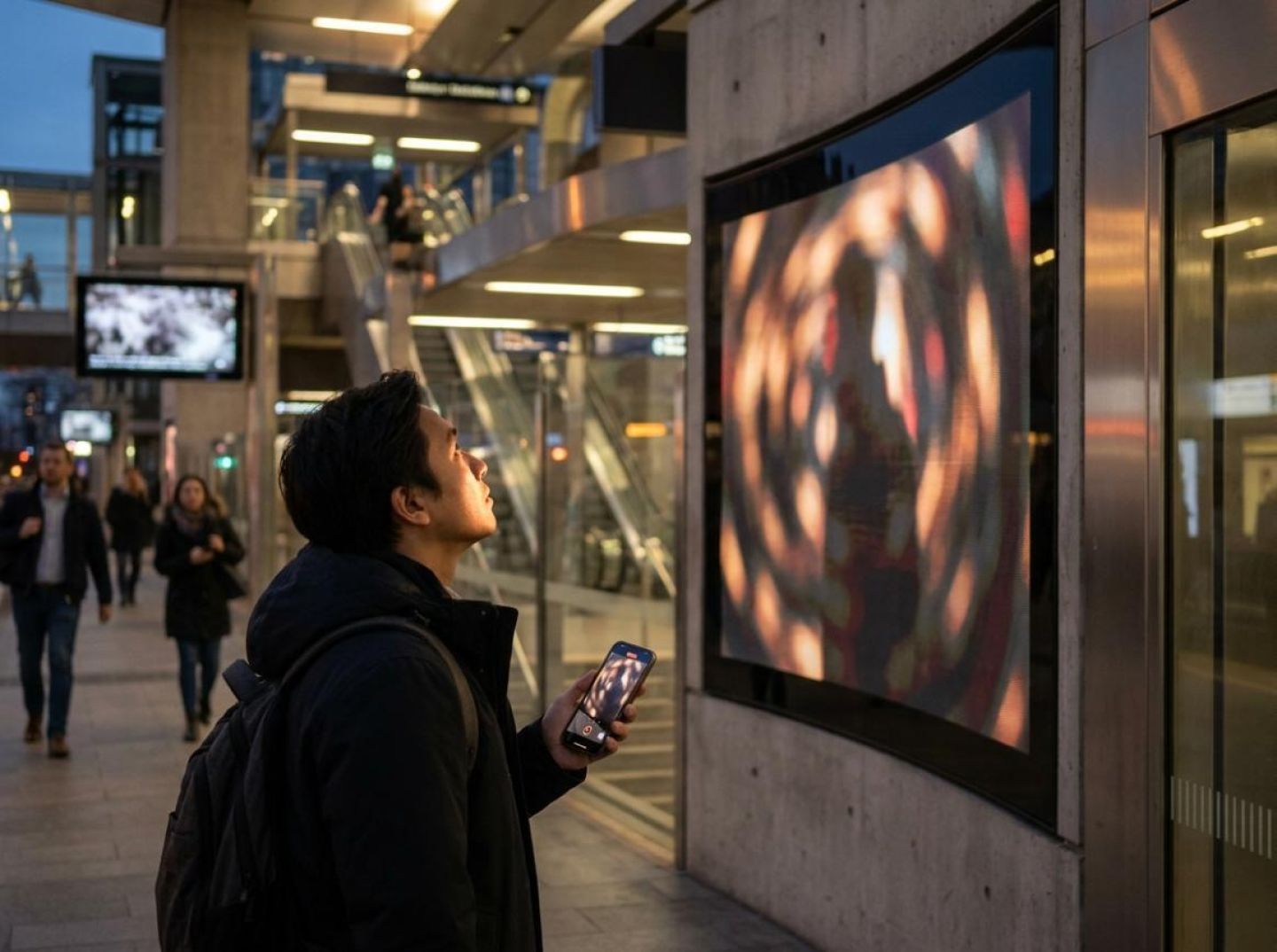
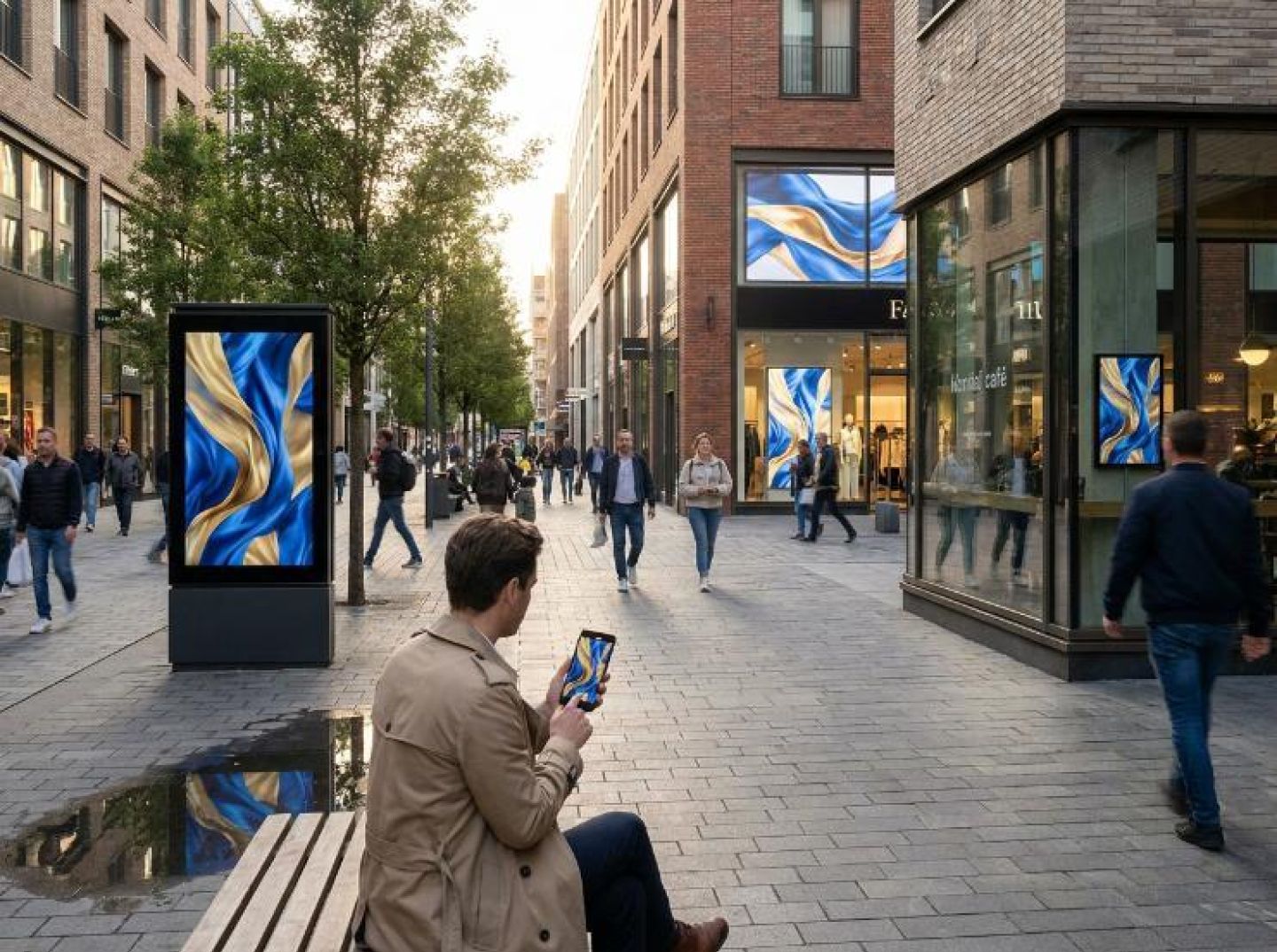
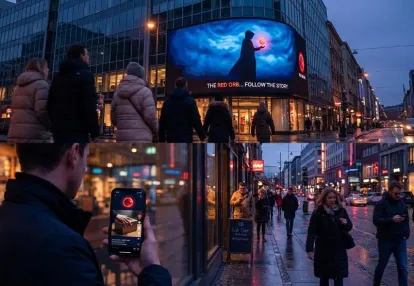
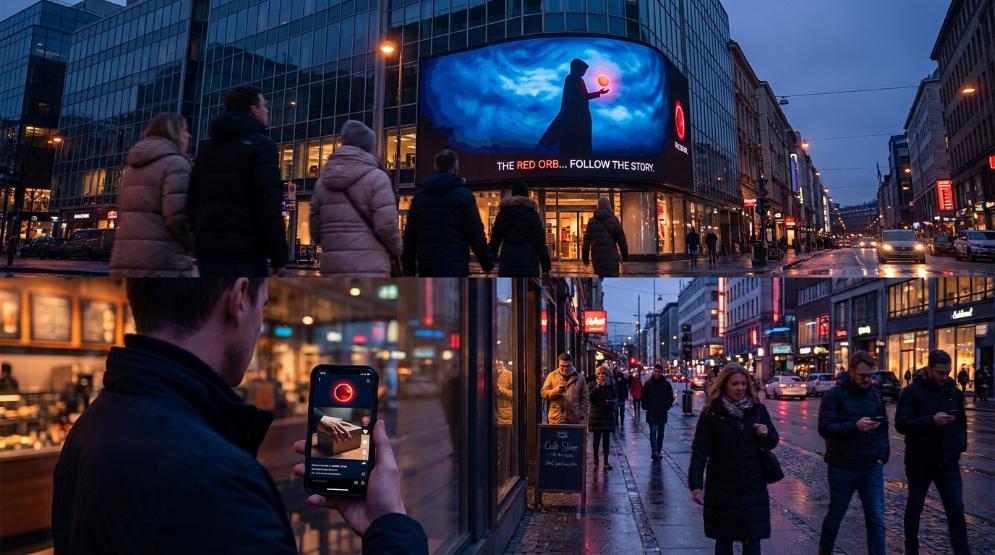
On the physical side, digital out‑of‑home has quietly become a storytelling canvas. TikTok’s own Out of Phone program pipes Anstrex.com/blog/write-like-a-pro-10-copywriting-books-to-outshine-90-of-creators" target="_blank" rel="noreferrer noopener">creator content into gyms, taxis, supermarkets, and shopping centers across Europe, giving brands a way to extend social videos into real‑world DOOH placements and sponsor sequences of clips that feel like you’ve stumbled into someone’s For You Page while standing in line at a bar, as Social Media Examiner describes. When a creepy billboard, elevator screen, or gas pump spot “talks to you” with a message that clearly riffs on something you just saw on your phone, it doesn’t feel like a billboard anymore. It feels like the next beat in a story.
On the digital side, TikTok has industrialized this logic. The platform’s Premium Burst format can deliver up to three ads from the same brand to the same user within a 15‑minute window, timed to high‑engagement periods or big cultural moments, turning what used to be a one‑off impression into a micro‑series you binge inside a single session, as Neil Patel explains. That’s TV‑style sequential storytelling, but compressed into mobile attention spans and driven by creator‑native aesthetics.
What actually makes these sequences work isn’t length; it’s structure. Winning TikTok ads—and the confession‑style TikToks they mimic—are built as micro‑stories: a sharp hook, a tension‑building middle, and a payoff or CTA. TikTok’s own AI “skills” now analyze top‑performing ads to extract that structure, modeling everything from hooks to calls to action so marketers can pattern their own videos on proven narrative arcs, a capability Social Media Examiner highlights. That gets you to about 70% of a solid story; the remaining 30% still demands human judgment to inject specific product benefits, nuance, and brand voice.
At the same time, TikTok’s ad environment rewards ads that look like content, not like commercials. Its algorithm favors creative quality over account size, meaning a tight, creator‑style narrative can reach far beyond your followers if it feels native to the feed, as Neil Patel’s breakdown of TikTok’s ad model notes. That’s precisely why confessionals, jump‑cut monologues, and lo‑fi “this weird thing happened…” stories dominate: they blend seamlessly into what people already came to watch.
This isn’t just an aesthetic preference—it has performance consequences. Research summarized by the WordStream guide to TikTok ads found that stuffing too much information into the first few seconds can actually depress engagement by around 17%. Instead of cramming the entire pitch into the opener, effective micro‑stories use a clean, curiosity‑driven hook to stop the scroll, then reveal context and product details over the next ten or twenty seconds. The story breathes, which gives persuasion room to work.
The same piece stresses that user‑generated, talking‑to‑camera content consistently beats polished brand spots on TikTok because it feels casual and trustworthy—exactly the tone of those “creepy” OOH pieces that act like they know you and those late‑night confession TikToks that feel almost too personal to be ads, as the WordStream team points out. When that style is stretched into a sequence—ad one: the unsettling or intriguing premise; ad two: escalation or reveal; ad three: resolution plus CTA—it becomes a lightweight, high‑ROI funnel disguised as entertainment.
Add AI into the mix, and you get scale without losing that serialized feel. TikTok’s Symphony Creative Studio ingests trends, high‑performing ad signals, and brand guidelines to generate scripts, storyboards, avatars, and finished videos from a brief, effectively auto‑producing episodes in a branded micro‑series that marketers then refine scene by scene, as Social Media Examiner reports. Layer that on top of sequential formats and Out of Phone inventory, and you have an ecosystem where a single narrative can chase a viewer from the For You feed to the sidewalk screen—and every touchpoint feels like the next part of the same story.
High‑ROI media already behaves less like a set of isolated impressions and more like a serialized show with episodes, arcs, and callbacks—whether marketers consciously plan it that way or not.
The reason is structural. As platforms automate targeting, they’re quietly turning “campaigns” into always‑on story engines. Google’s Performance Max, Meta’s Advantage+, and TikTok’s recommendation system all ask you to hand over broad audiences and conversion goals while their models decide who sees what, when. As one analysis put it, this shift makes creative the new targeting: your hooks, visuals, and offers are now the primary signals that tell algorithms, “Show this to people who care about X, not Y.”
Once creative becomes a signal, the system starts to behave like a narrative sequencer. People who respond to “episode one” of your message (say, a raw UGC explainer) are automatically fed “episode two” (a social proof clip) and “episode three” (a direct offer) because engagement and conversion data tell the machine they’re in‑market. Even if you only built “three variations” in your media plan, the platform is quietly turning them into chapters that roll out over time to different viewers.
TikTok has made this explicit. Its premium lineup includes a multi‑ad unit that, as one breakdown notes, is “a sequential format that delivers up to three ads from the same brand to the same user within a 15‑minute window,” enabling a continuous story across exposures instead of a single shout into the void. That is textbook serialization: establish the premise, build tension, then resolve—compressed into a quarter of an hour on a For You feed.
The same logic is stretching off‑platform. TikTok’s global ad network now lets brands run content across roughly 400,000 third‑party apps through a single interface, with performance tools like GMV Max automatically pushing more spend behind well‑performing content. A video that starts as an “origin episode” in‑feed can become a retargeting or reminder episode in a mobile game or news app days later, because the system has learned who that story resonates with and follows them into other contexts.
Layer AI agents on top and the serialized behavior accelerates. TikTok’s Model Context Protocol now allows marketers to plug external AI tools—agents that can analyze patterns in real time—straight into its ecosystem. As one industry overview explains, marketers can connect their preferred assistants, then use conversational prompts to manage campaigns while these tools surface winning creative patterns and budget moves. In practice, that means the machine can identify the “pilot episode” that hooks a particular segment and dynamically spin out follow‑up creatives tailored to what kept them watching or clicking.
Even the creative formats that outperform look suspiciously like serialized scenes rather than polished one‑offs. Practitioners consistently report that raw, unpolished video with conversational intros beats glossy, standalone TV‑style spots on TikTok. Those lo‑fi moments feel like slices of an ongoing story—a confession, a demo, a reaction—rather than a self‑contained commercial. When you upload multiple pieces in that style, the platform stitches them into a bingeable feed where each ad is just “the next clip” in a narrative the viewer has already opted into.
For performance marketers, the takeaway is that your best campaigns are already being consumed as sequences. Algorithms cluster viewers based on what they responded to last time, then decide which “episode” to show them next. Premium units explicitly bundle multiple touchpoints into a tightly timed arc. Cross‑app networks syndicate your strongest scenes into new channels where the story can continue.
If you keep planning as if people will only ever see one ad in isolation, you’re designing against the grain of the system. The brands extracting the highest ROI are the ones treating every asset as a chapter—built to be recombined, escalated, and extended—inside a living, serialized narrative that the platforms themselves are highly motivated to keep pushing forward.
Media buying used to be about renting isolated boxes of attention: a :30 TV spot here, a takeover there, some paid social on the side. Now the boxes are dissolving. The “canvas” for a campaign is whatever the algorithms can stitch together—across apps, screens, and even physical spaces—using your creative as the thread.
On the distribution side, TikTok is a useful preview of where this is going. Its new TikTok Ad Network pipes your ads and creator-style units into roughly 400,000 third‑party apps, all managed inside the same TikTok Ads Manager interface you use for in‑feed campaigns, while partners like Integral Ad Science monitor viewability and brand safety across that surface area. As Marketing Dive explains, this instantly turns one “channel” into a mesh of micro‑placements, each one another potential episode in your ongoing narrative.
At the same time, TikTok is lowering the friction to participate in that mesh. Instead of learning a new dashboard, you can now plug the tools you already use—agents and models from providers like Claude, Perplexity, and Snowflake—into TikTok’s ads ecosystem via its Model Context Protocol. That integration, as Social Media Examiner notes, lets you plan, launch, and iterate on creative through natural‑language conversations with AI, while TikTok’s own creative studio turns a short brief into ready‑to‑edit video ads tuned to current trends.
The result is a new kind of story canvas: your “show” can be scripted, produced, and trafficked in near‑real time by a composite of human and machine collaborators. A strategist outlines the arc, AI tools draft 20 variants of each beat, and TikTok’s recommendation engine decides which beat belongs on the For You Page, which belongs in a mobile game via the Ad Network, and which should be remixed for digital out‑of‑home via programs like Out of Phone. The edges between “media planning,” “production,” and “optimization” blur into one continuous authoring loop.
Crucially, this is not just an executional upgrade; it reshapes how sequences themselves work. As platforms shift toward broad, AI‑driven targeting, they rely far less on your audience settings and far more on the signals inside the ads. According to MarTech’s analysis of creative-led targeting, the headlines, visuals, and calls to action in each creative asset now help the algorithm infer who should see it and what they are likely to do next. Creative has quietly become both your persuasion layer and your targeting logic.
That makes each “episode” in your ad sequence do double duty. A creepy OOH teaser leaning into a specific fear, a TikTok micro‑story featuring a niche subculture, a testimonial that name‑checks a job role—those details aren’t just flavor. They’re how the system recognizes, “This is for night‑shift nurses,” or “This is for first‑time investors,” and routes the rest of the campaign accordingly. Your narrative choices literally determine who shows up in later chapters.
At the same time, rawness beats polish in this environment. TikTok users respond best to spots that feel like organic content, not commercials, and that extends to ads the platform syndicates elsewhere. Guides to TikTok performance routinely emphasize that user‑generated, unpolished video consistently outperforms high‑production creative because it feels native and trustworthy. That aesthetic aligns perfectly with the always‑on story engine you’re now running: you need lots of small, modular scenes—product reactions, duets, stitches, quick confessions—that algorithms can rearrange and recontextualize based on what’s working.
Layer in agentic AI, and the canvas becomes adaptive. TikTok’s GMV Max already monitors affiliate commissions, coupons, and referral fees to automatically push more budget toward creative that drives commerce, improving ROI without manual tinkering, as Marketing Dive reports. The same feedback loops can, in effect, rewrite your sequence on the fly: dropping underperforming chapters, extending breakout storylines, and cloning top‑performing hooks into new settings and surfaces.
For marketers, the shift is subtle but profound. You’re no longer designing isolated assets for discrete channels. You’re outlining a universe: a set of characters, tensions, motifs, and visual languages that can live across in‑app vertical video, third‑party apps, and digital out‑of‑home, then letting AI expand and route that universe in real time. The brands that will win in this environment treat every placement as part of an evolving series, every piece of creative as both a narrative beat and a targeting signal, and every algorithmic decision as an edit to the script.
“Content that feels native” only becomes a growth lever when you treat it like a scripted journey instead of a lucky one‑off. The job of a high‑ROI ad sequence is to turn raw, scroll‑stopping familiarity into a measurable path: from voyeur, to participant, to buyer, in four to five touches you can actually track.
The big unlock is accepting that the story arc is now your targeting. As MarTech explains, broad, automated systems like Performance Max, Advantage+, and TikTok’s recommendation engine are downgrading manual audience settings and upgrading creative as the primary qualification signal. That means your “creepy” OOH vignette or TikTok micro‑story isn’t just vibes—it’s a filter that attracts the right people into a structured flow.
Think of that flow in four roles, each mapped to a different touch and a different metric:
2. The Eavesdropper – Deepen intrigue with native context.
Once someone has watched or lingered, your next touch should feel like they “stumbled into” more of the same world: a follow‑up TikTok from another angle, a creator “reacting,” a retargeted clip that looks like a continuation instead of an ad. User‑generated styles routinely outperform polished spots on TikTok because, as WordStream points out, users come for “authentic content—not polished sales pitches.” Here you start layering social proof and problem context, but you still behave like content. Measure mid‑funnel engagement: finished views, shares, comments, saves, and clicks to a profile or landing page.
3. The Confidant – Reveal the product without breaking the spell.
Now you earn the right to sell. TikTok’s own positioning of itself as a “full‑funnel engine where entertainment, commerce, and performance meet,” as Neil Patel describes, is the blueprint: the creative still feels like a story beat, but the product moves closer to the center. Think creator demos, side‑by‑side comparisons, or “here’s what I actually used” reveals that would be at home in someone’s FYP even without paid spend. This is where you introduce clear offers and CTAs, often tied to direct actions like add‑to‑cart or lead submit. Success shifts to hard metrics: CTR, cost per add‑to‑cart, lead, or shop view.
4. The Co‑Conspirator – Close the loop with tailored performance creative.
In the last one or two touches, the viewer is no longer a stranger; they’re a character in the story. Your ads should reflect their behavior: dynamic creative that references what they watched, the product they hovered on, or the creator they engaged with. TikTok is leaning into automated spend shifting—its GMV Max product “automatically puts more spend behind well‑performing content” to improve ROI, as Marketing Dive reports—which means your best‑performing story beats will naturally get more reach. Your final assets can be more direct response–oriented (offer urgency, bundles, reviews), because the narrative groundwork has already been laid. Here you live and die by purchase‑level metrics: ROAS, CAC, LTV‑indexed payback.
The power of this arc is that it translates the fuzzy mandate “make it feel native” into a repeatable sequence design:
When you design ad stories this way, “native content” stops being a happy accident. It becomes the front end of a system: a serialized, platform‑native narrative that AI can distribute, optimize, and extend across placements—while you track the economics of each episode in the arc.
If you open Anstrex thinking, “Cool, I can just clone this landing page,” you’re already leaving most of the leverage on the table.
The real value is not in ripping layouts. It’s in reverse‑engineering the narrative spine of a winning campaign—then rebuilding it so it fits your offer, your voice, and today’s algorithmic reality.
Start by treating each competitor campaign you find in Anstrex as a mini‑series, not a single ad. Filter for offers similar to yours, then look at everything that’s running, not just the top performer. You want to identify patterns across 5–10 creatives:
This is where the “creative as targeting” shift becomes practical. As MarTech explained, broad, AI‑driven systems like Performance Max and Advantage+ are now using your actual headlines, visuals, and CTAs as signals to decide who sees what. So when you use Anstrex, you’re not just seeing someone’s persuasion tactics—you’re seeing how they’ve trained the algorithms to find and qualify the right people, step by step.
A useful workflow:
You’ll quickly see that strong campaigns reuse the same structural beats even when the aesthetics are wildly different.
3. Abstract the pattern into a reusable arc. For example, you might discover a common flow:
That’s the asset you actually wanted from Anstrex: a portable story architecture.
Now, upgrade it.
Remember, platforms are actively helping even small teams crank out decent, “good enough” creative. TikTok’s Symphony tools can already generate near‑finished scripts and storyboards from a brief, reaching “about 70%” of the needed quality before humans refine them, as Social Media Examiner noted. If you simply mirror what you find in Anstrex, you’re competing with auto‑generated lookalikes and every other spy‑tool user.
So instead:
Finally, reality‑check your rebuilt arc against how the platform actually works. If you’re using the TikTok Ad Network to syndicate creative across hundreds of apps and surfaces, as Marketing Dive reported, your sequence has to survive being seen out of order. That’s another reason to think in beats instead of cloned templates: each piece should communicate its own mini‑story and fit into a larger arc.
Anstrex is your microscope, not your copier. Use it to see how winning advertisers choreograph their story across multiple touches—then re‑script that choreography so it’s unmistakably yours and explicitly optimized for the way AI distributes and qualifies attention now.
Story-first performance only works if you operationalize it: score the story, not just the click; let AI handle the grunt work; and build a publishing rhythm that matches how people actually encounter your sequence across screens.
1. Define “story KPIs” instead of channel KPIs
Most teams still track campaigns as isolated blasts: CTR on ad A, CPA on ad B, ROAS by platform. A sequence mindset needs different scaffolding.
At the sequence level, build a simple scorecard:
This is where broad, AI‑driven targeting actually helps you. As MarTech explains, platforms like Performance Max, Advantage+ and TikTok’s recommender shift qualification from audience settings to your creative itself. Your job is to measure whether each creative beat is qualifying the right people for the next beat, not just for a one‑shot sale.
Practically, that means building cross‑ad funnels in your analytics: custom sequences in GA4, “exposed to X, then Y” breakdowns in platform reports, and UTM structures that mark each creative with both its scene (S1, S2, S3) and role (hook, proof, close). Your weekly review is no longer “which ad is cheapest?” but “where in the arc do we leak attention or intent?”
2. Let agentic AI run the loop, not the show
You now have too many variables to manage manually: dozens of micro‑stories, placements from phones to out‑of‑home, and constantly shifting algorithms. This is exactly where agentic AI and native tools shine.
TikTok’s expanding agentic ecosystem is designed for this kind of orchestration. A new Model Context Protocol lets you plug external agents directly into TikTok’s ads stack, and those agents can already talk to platforms like Claude and Snowflake through TikTok’s own MCP layer. Pair that with skills that automatically summarize which hooks are working and when fatigue sets in, and you get a daily creative health check without opening a spreadsheet.
As one expert told Social Media Examiner, TikTok’s ad‑focused AI skills can reliably get raw concepts to about “70%” ready: hooks, beats, and CTAs that match platform norms. That’s where you want AI: generating variant scripts for Scene 2 and 3, suggesting structural tweaks (“cut straight to the creepy reveal in the first 1.5 seconds”), and flagging when a particular micro‑story is burning out.
Use AI agents for three recurring loops:
The human role becomes judgment and taste: keeping the “creepy OOH meets TikTok folklore” tone coherent, rejecting AI ideas that lean generic, and insisting on specific proof (screenshots, numbers, faces) the tools can’t invent.
3. Set a creative cadence that matches attention decay
Story‑first performance dies when creative cadence lags behind attention. TikTok’s recommendation system, and especially its newer AI‑powered creation tools like Symphony Creative Studio described by Social Media Examiner, are built around rapid, iterative publishing. Your cadence must follow suit.
A practical operating rhythm:
Notice what you’re not doing: endlessly slicing micro‑segments by demographic. As broader targeting and AI optimization make creative your primary qualification layer, the highest‑ROI habit is a ruthless cadence of story testing. You don’t ask, “Who is my audience today?” You ask, “Which narrative spine is earning four or five willing touches in a row—and how fast can I ship the next one?”
Receive top converting landing pages in your inbox every week from us.
Most Read
Discover how performance marketers can build cross-channel verification journeys that turn skeptical prospects into confident buyers across TikTok, native, push, and pop advertising. Learn how to coordinate creative messaging, reinforce trust at every touchpoint, and measure the hidden influence of fragmented customer journeys using competitive ad intelligence.
Elena Morales
7 minOct 20, 2026
Recently Updated
Discover how creepy out-of-home advertising, TikTok micro-stories, and AI-powered creative tools can turn isolated ads into high-performing serialized campaigns. Learn how to map competitor ad sequences with Anstrex, build story-driven funnels, measure performance across multiple touchpoints, and optimize creative for stronger conversions and ROI.
Samantha Reed
7 minOct 18, 2026
Most Read
Discover why viral TikTok ads don't always translate into profitable, sustainable campaigns. Learn how performance marketers can use Anstrex ad intelligence to identify winning hooks, map audience motivations, manage brand-safety risks, and turn cultural trends into repeatable advertising strategies.
David Kim
7 minOct 17, 2026