Native Ads, Pop Ads, Push Ads, TikTok Ads
7 minOctober 20, 2026

Our spy tools monitor millions of native ads from over 60+ countries and thousands of publishers.
Get StartedYour customers don’t “see an ad and convert” anymore. They see a TikTok, scroll past a native article, tab through a sketchy-looking popunder, get a push notification two days later, and spend that whole time quietly running a background process in their head: Is this brand for real, or am I about to get burned?
This article is about turning that messy, paranoid verification dance into a deliberate, cross-channel funnel—using TikTok’s full-funnel ad ecosystem, which platforms like HubSpot describe as spanning everything from TopView to TikTok Shop, combined with the raw reach and “ugly but effective” formats of native, push, and pops. You’ll see how to orchestrate those channels using competitive intelligence from Anstrex-style spy data that reveals exactly which creatives, angles, and placements are already working in the wild, so every random touchpoint a skeptical user stumbles across starts to feel less like chaos—and more like proof they’re dealing with a brand they can trust.
The “verification loop” is the quiet, constant behavior where people bounce between TikTok clips, native articles, push alerts, and even sketchy-looking pops to cross-check whether your brand is legit before they ever click “buy” — and because every platform’s analytics still worship the last click, this messy but decisive journey stays invisible in your reporting even as it makes or breaks performance.
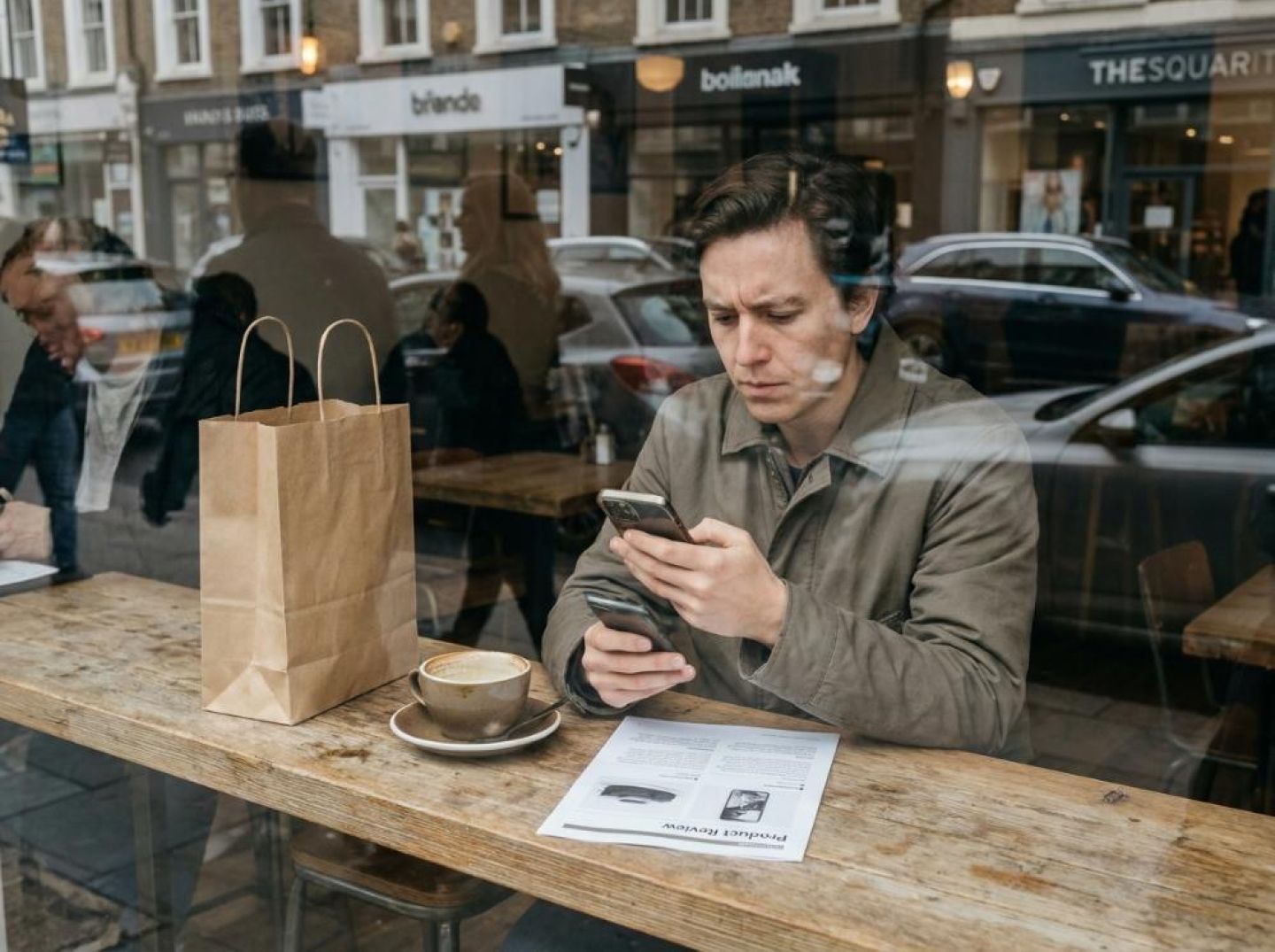
Most marketers still see funnels as neat stacks of campaigns: top-of-funnel to spark awareness, mid-funnel to educate, bottom-of-funnel to close. But your buyers don’t move in straight lines; they run loops. They watch a TikTok ad, ignore the call to action, and later Google your brand name. They see a native advertorial on a news site, don’t opt in, then click a push notification two days later when the brand feels more familiar. Along the way, they’re asking, “Do other people trust this? Does it look like a scam? Is this worth my data, my card, or my time?”
This loop is strongest in the “messy middle” that sits between first exposure and the final transaction. As one breakdown of multi-channel strategy notes, mid-funnel touchpoints like comparison pages, educational content, and nurture sequences exist mainly to help people “build confidence” and remove hesitations about trust, fit, and risk, not just to trigger immediate clicks, according to Search Engine Journal’s overview of coordinated channels. Verification is the mental work a prospect does in that zone, even when they never opt in, never comment, and never show up in your CRM.
The problem is that your tracking stack is still wired for straight lines, not loops. Most dashboards are dominated by last-click performance — the channel that happened to be in the right place at the right time when the prospect finally converted. But those “winning” channels are often just catching demand that other channels quietly created days or weeks earlier. That’s why lower-funnel tactics like branded search and retargeting routinely look like heroes in attribution reports while upper- and mid-funnel campaigns get slashed, even when they’re the ones doing the credibility-building that makes the last click possible, as Search Engine Journal’s guidance on keeping last-click in context explains.
You can see platforms scrambling to patch this measurement gap. YouTube rarely drives same-session purchases; viewers are in an “entertainment-first” state and often return later via direct visit or branded search. Google’s own team introduced metrics like Attributed Branded Searches and view-through optimization because they recognized that if advertisers only look at immediate post-click conversions, channels like YouTube appear to be expensive dead weight even while they are amplifying direct and search performance downstream, as analyzed in Search Engine Journal’s piece on YouTube’s downstream impact. Those tools are essentially formal acknowledgments that the verification loop exists and that it leaves fingerprints in delayed, cross-channel behavior rather than in clean click paths.
TikTok is heading down a similar road. It now positions itself not just as a discovery engine but as a full-funnel demand and commerce platform, with formats that move people from awareness to consideration to purchase — and a strong emphasis on signals like quiz completion, messaging intent, and in-app form fills as proof that viewers are warming up, as HubSpot’s deep dive into TikTok demand-gen highlights. That shift toward measuring readiness instead of raw reach is a response to the same reality: the TikTok view that started the relationship is rarely the same touchpoint that gets credit when the sale finally fires in your pixel.
Across all of this, the verification loop remains fundamentally undercounted. When someone watches your TikTok, Googles your brand later, scrolls through a native review, and finally converts off a retargeting ad or a push, your reports tell a simple story: “Search” or “retargeting” drove the win. What actually happened is that the person used every channel you run — and a few you don’t control — to answer one question: “Is this brand for real?” Last-click reporting can’t see that behavior, but its absence in your dashboards doesn’t make it any less powerful in your funnel or any less critical to design for on purpose.
Native, push, pops, and TikTok are not “channels” so much as checkpoints in an ongoing background audit where the user keeps asking, Does this add up? The only way to win in that environment is to deliberately cast each format as a specific verification stage with a distinct psychological job to do.
TikTok is your “first impression plus proof of life” touchpoint. People don’t open it to shop; they open it to be entertained and educated. TikTok knows this and is rebuilding the entire funnel inside the app, from creation to search to purchase, with AI tools like Symphony designed to crank out TikTok‑first creative and shoppable experiences in one continuous flow, as Social Media Examiner explains. That makes TikTok the ideal place to answer the user’s first verification question: Is this a real brand with real people and a coherent story? Short, native-feeling videos, creator integrations, and TikTok Shop formats pull double duty here: they entertain and seed a believable narrative about who you are, who buys from you, and what happens after the purchase. Even when a user doesn’t click through, they’re logging a mental “this looks legit enough to investigate later” that will show up downstream as direct visits, branded search, and faster conversions—just as YouTube view‑through behavior has been shown to influence post‑impression actions rather than instant clicks.
Native ads and advertorials then become your “coherent story and rationalization” verification stage. Here the job is not to hard‑sell but to let the user try on a believable explanation for why this brand might actually work for them. Long‑form native gives you space for comparison logic, before/after narratives, and objection handling that classic “funnel” diagrams would dump into mid‑funnel nurture. In reality, that content is performing a forensic role in the verification loop: it supplies plausible cause‑and‑effect. As Search Engine Journal notes, mid‑journey touchpoints like educational content and comparison pages are what reduce hesitation by clarifying differences and showing proof, not simply hammering users with retargeting. That’s exactly how you should think about native: a place where skeptical readers can say, Okay, the story tracks. I can see why this might work. You’re not asking for a decision; you’re furnishing the logic they’ll later use to justify one.
Push notifications function as your “continuity check.” By the time someone agrees to receive a web push or app notification, they’ve implicitly said, I’m open to being reminded. The verification job of push is to prove consistency over time: does the brand keep its promises, behave predictably, and show up with the same tone, offer logic, and value they saw on TikTok and in native content? Small nudges—updates, limited‑time reminders, new proof assets—reassure users that this wasn’t a one‑off stunt. Push is where you stabilize the story they’ve been piecing together and give them opportunities to re‑engage on their own terms rather than forcing a binary “buy now or vanish” decision.
Pop and popunder traffic, meanwhile, is your “stress test” verification stage. These formats are inherently high‑friction and high‑skepticism: most users assume anything in a new tab or sudden window is spammy by default. Instead of fighting that, use pops to answer the harshest version of the verification question: If this brand shows up in the sketchiest environment, do they still look like themselves? Here the job is tight: load fast, mirror the offer and creative cues from TikTok and native, and provide ultra‑clear social proof and safety signals that survive a hostile frame. When a user sees the same core message, same brand voice, and same type of testimonials they already watched on TikTok and read in native content, the cognitive dissonance drops. You’ve turned a potentially brand‑damaging moment into a brutal but useful validation that your story holds up even when the context is working against you.
Reframing these formats as verification stages forces you to design not just for clicks or cheap conversions but for the specific psychological work each touchpoint is supposed to perform. TikTok plants believable first impressions. Native assembles a rational, defensible story. Push proves continuity over time. Pops pressure‑test your coherence in the worst possible light. String those jobs together, and you’re no longer running four siloed tactics—you’re orchestrating a deliberate, cross‑channel verification journey that matches how people actually decide whom to trust.
Treat TikTok as the engineered “first sighting” in your verification journey, not just another reach play. The job of your TikTok creative is to plant a specific narrative and proof point that users can later recognize — and subconsciously validate — when they meet your brand again via native, push, or even a sketchy pop.
That starts with creative that’s architected around readiness, not raw impressions. As TikTok’s own Anny Havercroft argues, the platform’s strength for demand gen lies in signals — how far people watch, whether they interact, whether they opt into a lightweight action — rather than just reach, and those signals are what separate casual scrollers from people who are open to your message according to her breakdown of lead-gen best practices. In practical terms, your first-touch TikTok needs three ingredients:
From there, design TikTok formats as chapters in the sequence, not interchangeable slots. TopView placements — those full-screen videos that appear when someone first opens the app — are ideal for seeding the overarching claim plus a visual proof, because they prime the audience before they ever see your mid‑funnel touches. TikTok’s own guidance frames TopView as a top-of-funnel tool that also makes later formats more efficient by sending people into consideration already warmed up, a point reinforced in HubSpot’s analysis of format-by-funnel mapping. Follow that with in‑feed consideration ads that retarget people who watched or engaged, but instead of pushing a hard sell, use them to deliver the second proof: a quick testimonial, a price comparison, a “here’s what happened after 30 days” update.
Build your creative knowing that TikTok will increasingly be the engine behind what people see in other environments. With the TikTok Ad Network rolling out in the U.S., your short videos and hooks can already be syndicated into hundreds of thousands of other apps through the same Ads Manager, extending that first impression into a diffuse but coherent presence that feels like it’s “following” users in a reassuring way, as explained in Marketing Dive’s coverage of TikTok’s expanding ad network and AI stack. And with TikTok’s Symphony AI creative tools now lowering the production barrier for fast, TikTok‑native video variations, you can spin that core claim and proof into a matrix of tests — different creators, hooks, and angles — while preserving the same narrative spine, as demonstrated in Social Media Examiner’s walkthrough of.
The outcome is a deliberately architected “first proof point” that doesn’t live on a landing page; it lives in the user’s memory. Your TikTok is not just an ad they saw once — it’s the origin story they’re trying to confirm when they start spotting you everywhere else.
If TikTok is your “first sighting,” native advertorials are your funnel’s “Research” tab — the place people land when they’re half‑sold, a little skeptical, and quietly looking for reasons to believe (or to walk away).
By the time someone clicks a Taboola or Outbrain ad that smells like an article, they’re not in pure discovery mode anymore; they’re in self‑education mode. This is the same mid‑funnel territory where non‑brand search, comparison pages, and nurture sequences help prospects “build confidence,” as one strategist put it in a discussion of cross‑channel orchestration on Search Engine Journal. Your advertorial is simply the native ad equivalent of a Google results page: a long, scrollable surface where hesitant users test whether your narrative holds up under a bit of scrutiny.
The psychological shift matters. On TikTok, users encounter you while they’re in entertainment or discovery mode; they swipe, laugh, save, maybe click. When they later click into a native advertorial, they’re in evaluation mode. They’re asking:
Treating advertorials as this “research layer” changes how you write them. The job is not to hard‑close. The job is to simulate the experience of a thoughtful, third‑party deep dive — the kind of article you might hope to find after typing “Is [brand] legit?” or “[problem] solution review” into Google. When other channels like TikTok lean into direct response — lead forms, quizzes, and commerce tools that keep users in‑app, as outlined in recent breakdowns of TikTok’s full‑funnel feature set on Social Media Examiner — your native layer becomes even more important as the off‑platform place where people can sanity‑check what they just saw.
A strong advertorial therefore reads like an answer, not an ad. It mirrors how people naturally research:
In other words, where your TikTok creative is optimized to plant a single, memorable proof point in a few seconds, your advertorial is optimized to answer “What’s preventing this person from taking the next step?” — the exact question channel strategists now recommend using to architect mid‑funnel journeys on.
This is also where you can safely do the kind of narrative work that doesn’t fit in a 15‑second hook: nuanced FAQs, transparent pricing context, longer testimonials, deeper demos, and even light technical explanation. Platforms like TikTok are increasingly rebuilding the entire funnel inside their own walls, from AI‑assisted creative generation to in‑app purchase and lead capture, as recent coverage of its all‑in‑one funnel tools on Social Media Examiner makes clear. That makes your off‑platform verification surfaces — particularly native advertorials — the de facto “second opinion” channel where users can step outside the walled garden and validate the story on neutral ground.
If you architect that ground correctly, your native advertorial becomes less of a random content detour and more of a deliberate research waypoint: the long‑form, Google‑style article users feel smart for finding, read all the way through, and then exit from thinking, “I figured this out myself” — even though you designed every step of that verification journey.
Push notifications and pops only feel “spammy” when they’re unmoored from your overall journey. In a fragmented funnel, they should be engineered as explicit verification steps: short, sharp moments that resurface the story users first saw on TikTok or in a native advertorial, and then channel the people with the highest intent back into a clean, low-friction path to convert.
The mental shift is simple: stop treating push and pops as bonus impressions and start treating them like structured follow‑ups in a sales process. Your TikTok and native campaigns create demand; your pushes and pops confirm it. When a user has watched through a TikTok explaining your offer, clicked into an Outbrain-style article, and then bounced, you’re not “interrupting” them by bringing the offer back a day later — you’re giving them a chance to finish a buying decision they already started. This is the same downstream effect performance marketers see when video or upper‑funnel channels quietly boost direct visits and branded search before the final click ever happens, a dynamic Search Engine Journal has documented in YouTube campaigns that lift conversions even when the last touch belongs to another channel.
Design-wise, that means every push and pop in your stack must have a specific verification job, not just a catchy line. For example:
To build these flows coherently, align your tracking and triggers with the same signal‑based mentality that modern platforms are moving toward. TikTok’s broader ad ecosystem now spans its core app and a network of roughly 400,000 third‑party apps via the TikTok Ad Network, with independent partners like Integral Ad Science helping verify viewability and brand safety. That’s not just trivia; it’s a reminder that your user’s “journey” is no longer confined to one domain or one device. If your analytics and tagging can’t follow a user from a TikTok view to a native read, then into a web session where a cart is started, you’ll default to blasting generic pushes instead of triggering precise, behavior-based verifications.
The measurement frame also has to match this role. You shouldn’t judge push and pops purely by direct last‑click ROAS for the same reason you shouldn’t judge YouTube only by immediate post‑view purchases; many users will come back later via branded search or direct load and convert in a different channel. As Search Engine Journal explains, platforms like Google have had to introduce metrics like Attributed Branded Searches and post‑impression optimization because so much lift happens between the first exposure and the final click. Your verification touches are operating in that same murky, high‑impact territory.
When you architect pushes and pops as intent resurfacers and closers, three practical standards emerge:
In other words, the power of push and pops isn’t in their ability to shout. It’s in their ability to show up at the exact moment your prospect is looking for one more reason to say yes — and to do it in a way that’s clearly tethered to the story you’ve been telling all along.
Receive top converting landing pages in your inbox every week from us.
Most Read
Discover how performance marketers can build cross-channel verification journeys that turn skeptical prospects into confident buyers across TikTok, native, push, and pop advertising. Learn how to coordinate creative messaging, reinforce trust at every touchpoint, and measure the hidden influence of fragmented customer journeys using competitive ad intelligence.
Elena Morales
7 minOct 20, 2026
Most Read
Discover how performance marketers can combine AI-generated content and competitive ad intelligence to build effective campaigns across native, pop, and push advertising networks without sacrificing originality or consumer trust. Learn how to analyze competitor funnels ethically, develop distinctive landing pages with AI, and establish practical guardrails for transparent, compliant, and sustainable campaign optimization.
Priya Kapoor
7 minOct 19, 2026
Recently Updated
Discover how performance marketers can turn AI-generated answers into profitable creative opportunities for native, push, and TikTok advertising. Learn how to extract customer pain points, validate campaign angles with Anstrex and TikTok ad libraries, and build data-informed creative strategies that stand out from low-quality AI content.
Liam O’Connor
7 minOct 16, 2026