6 minMay 26, 2026

Our spy tools monitor millions of native ads from over 60+ countries and thousands of publishers.
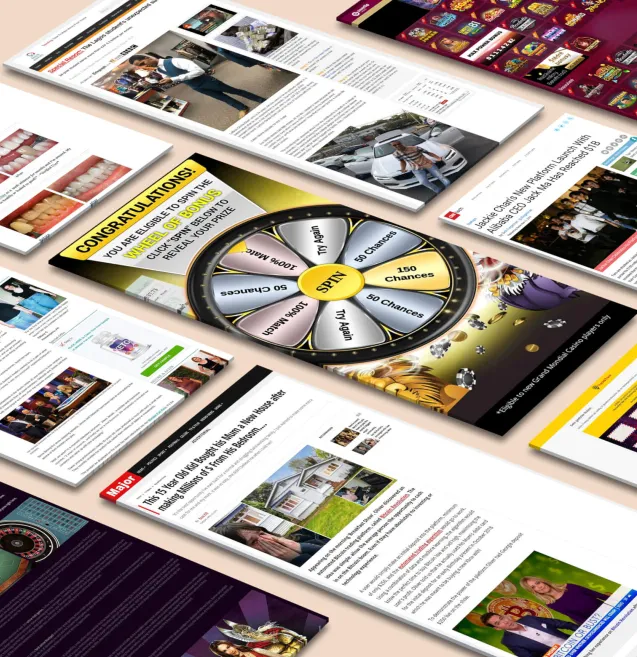
Get StartedThere's a particular kind of irony in watching a Fortune 500 brand spend six figures on a "content-led native strategy" that would have been instantly recognizable to any affiliate marketer running campaigns on content discovery platforms a decade ago. The editorial-style headline, the advertorial landing page, the seamless blend into the surrounding content — these weren't born in Madison Avenue boardrooms. They were forged in the scrappy, margin-obsessed trenches of performance marketing, where every click had to justify its cost and every creative had to earn its keep against cold, unforgiving data. And now, the biggest brands in the world are running the same plays, at a scale that's reshaping the economics of the entire ecosystem.
The timeline tells the story clearly. Native advertising first burst onto the scene around 2012, borrowing directly from the non-disruptive, content-first philosophy that affiliate and direct-response marketers had been refining for years. Back then, brand marketers dismissed these tactics as too aggressive, too "direct," or too unconcerned with prestige. But consumer behavior had other ideas. As ad blindness intensified and banner fatigue set in, it became clear that audiences responded to content that blended naturally into their browsing experience rather than interrupting it. Performance marketers had understood this intuitively; big brands took nearly a decade to catch up.
Catch up they did. By 2021, native advertising accounted for 62% of all display spend, according to eMarketer — a staggering majority that transformed what was once a niche tactic into the dominant advertising format online. The results validated the shift: research from ShareThrough and IPG Media Lab showed that native ads drove an 18% higher lift in purchase intent compared to traditional banner ads, along with a 9% lift in brand affinity. Numbers like those don't stay secret for long in corporate marketing departments with quarterly targets to hit.
What followed was a gold rush. As the Voluum Blog noted, it took time for agencies and brands to become convinced, but once they were, native advertising was quickly treated as a kind of out-of-the-box solution — a ready-made framework for embedding products into consumer consciousness while sidestepping the ad blindness plaguing traditional display. Suddenly, the same publishers who once partnered primarily with scrappy performance buyers were fielding seven-figure campaigns from enterprise brands. The New York Times built a branded content studio. The Washington Post followed. What had been the affiliate marketer's edge became every CMO's quarterly initiative.
Meanwhile, the convergence of native ads with programmatic buying accelerated the takeover further, enabling big brand advertisers to flood native inventory at unprecedented scale through exchanges like Google's DoubleClick. This wasn't a gradual blending of worlds — it was a hostile absorption of placements, creative norms, and audience attention.
Here's what smaller advertisers need to internalize: this isn't flattery. When enterprise budgets pour into placements you pioneered, they don't just validate your approach — they price you out of it. CPMs climb. Quality placements get locked into preferred deals. The creative bar rises because suddenly your editorial-style ad is competing against one produced by a dedicated content studio with a six-person team. The playbook that once gave you an asymmetric advantage is now table stakes for brands spending more in a week than you spend in a quarter. Understanding that this is a competitive threat — not a compliment — is the first step toward reclaiming your edge.
Most small advertisers have the relationship backwards. They watch enterprise brands launch native campaigns on Taboola or test push notification formats and think, "If they're doing it, we should too." But that logic inverts reality. By the time a Fortune 500 company commits budget to a channel you've been profiting from for eighteen months, they aren't leading — they're confirming. And that confirmation changes the economics of the entire auction.
Consider the machinery a large brand drags behind every media decision. There are agency reviews, procurement negotiations, brand safety audits, legal sign-offs, creative committee approvals, and quarterly planning cycles that make pivoting feel like turning an aircraft carrier. As Hill observed in discussing the divide between large and small advertisers, the biggest advertisers are "heavily invested in brand," operating with fundamentally different needs and growth trajectories than their smaller, more agile counterparts. That heavy investment in brand means every new channel must be vetted not just for ROAS, but for reputational alignment, viewability thresholds, and contextual suitability — processes that can add months or even quarters to a launch timeline.
This delay is your informational edge. When Dell starts buying native inventory at scale, it tells you that internal teams at one of the world's most data-rich companies have concluded the format works. That's validation you can use — not as creative inspiration, but as a timing signal. The format has been de-risked by thousands of smaller advertisers who tested, iterated, and proved unit economics long before any enterprise RFP was drafted. You were the proof of concept. They're just arriving at the conclusion.
But here's the part most affiliates miss: that arrival comes with a suitcase full of cash. Enterprise budgets don't trickle into auctions; they flood them. CPMs climb. CPCs inflate. The profitable margins you carved out during the channel's early-growth phase begin compressing under the weight of brand dollars that are optimizing for awareness, not cost-per-acquisition. As Voluum's competitive analysis framework makes plain, there is no more time to waste when competition intensifies — the landscape shifts fast, and the advertisers who hesitate find their once-profitable campaigns underwater.
So the play isn't to copy what enterprise brands do. It's to monitor their moves as market intelligence. Scrape their ad libraries. Listen to earnings calls where CMOs mention "diversifying into content discovery" or "testing performance-driven social formats." Track when major brands begin appearing in programmatic native placements alongside your own campaigns — because that's the moment the clock starts ticking on your current cost structure.
The smartest affiliates treat enterprise entry as a two-phase signal. Phase one: double down immediately, because the brand's presence will temporarily increase publisher inventory and audience trust in the format, lifting conversion rates across the board. Phase two: prepare your exit strategy or migration plan, because within two to three quarters, the bidding war will erode your margins to the point where the channel no longer pencils out at your scale.
This isn't defeatism — it's pattern recognition. You don't compete with brands that have nine-figure media budgets. You outmaneuver them by arriving first, extracting value while the channel is underpriced, and moving on before their procurement teams finish negotiating volume discounts. Their slowness isn't a weakness you mock. It's a signal you trade on.
Enterprise brands enter native advertising with a paradox they can never fully resolve: the same institutional infrastructure that lets them spend millions also prevents them from spending it well. Every creative asset passes through brand safety reviews, legal compliance checks, and multi-stakeholder approval chains that can stretch a single ad variation from concept to launch across weeks — sometimes months. Performance marketers, meanwhile, operate on a cycle measured in hours. You can launch fifty headline variations before breakfast, kill the bottom forty by noon, and reallocate every dollar to the winners before the enterprise team has even scheduled its next creative review meeting. In auction-based media buying, where cost-per-click fluctuates by the minute and algorithmic learning rewards volume and velocity of signal, this operational agility isn't a consolation prize. It is the single most valuable asset in the game, and no amount of budget can replicate it.
Consider the creative spectrum. As Basis has documented, native advertising ranges from large-scale bespoke productions crafted by specialized content teams using complex designs and UX principles to executions that are "more subtle, less flamboyant, yet just as impactful." Big brands almost always gravitate toward the high-production end of that spectrum — not because it performs better, but because their internal stakeholders need to see polish that justifies the spend. A rough, editorially authentic image paired with a curiosity-driven headline might outperform a studio-shot brand asset by three-to-one on click-through rate, but no VP of brand marketing is going to approve something that looks like it was made in Canva in twelve minutes. You will. And that willingness to test ugly-but-effective creatives — the kind that actually blend into editorial feeds rather than screaming "advertisement" — is a structural advantage that compounds over time as your data set grows and theirs stays thin.
Then there's the question of targeting granularity. A billion-dollar brand needs campaigns that move national awareness metrics. They cannot afford to obsess over a micro-niche of, say, left-handed bass guitarists interested in ergonomic accessories, because even a 400 percent return on that segment wouldn't register in their quarterly reporting. You, on the other hand, can build an entire business on pockets of demand that are invisible at their scale. The ability to define precise reach and align content to the exact voice and context of the sites where your ads appear — matching not just the audience demographic but the editorial mindset of the reader at that moment — is something performance marketers do instinctively. Enterprise teams delegate it to media agencies who optimize toward safe, broad placements.
This extends to goal structure itself. Large advertisers typically silo brand awareness from direct response, running separate campaigns with separate KPIs and separate teams. Smaller operators can merge these ambitions into one big strategy, treating every click as both a branding impression and a conversion opportunity, iterating the funnel in real time rather than waiting for a post-campaign analysis deck. When your optimization loop is measured in hours instead of fiscal quarters, you don't just react to data faster — you generate better data, because each iteration narrows the gap between what the audience actually wants and what you're showing them.
The enterprise brands crowding into your channels brought budgets. They did not bring speed, creative fearlessness, or the willingness to chase small, profitable segments that their own org charts render invisible. Those advantages are yours by default — but only if you refuse to abandon them by imitating the very playbook that handicaps your new competitors.
Every quarter, the same tension plays out inside enterprise marketing departments: the CMO presents a five-year brand vision at the leadership offsite, and then the performance team walks back to their desks and optimizes for this month's return on ad spend. These two mandates — build enduring brand equity and prove immediate ROI — coexist in theory but collide in practice. And that collision is silently handing performance-focused advertisers one of their biggest structural advantages.
The advertising industry's migration toward granular attribution and outcomes-based measurement was supposed to bring accountability to every dollar spent. But as On Device Research's Hill has argued, this emphasis on outcomes measurement has "put people into a short-termist mindset", one that rewards immediate conversions at the expense of the slow, compounding work of brand building. The result? Enterprise brands may sell more in a given quarter, but over time, Hill contends, "the power of their brands has deteriorated". Think about what that means for a CMO trying to justify a six-figure native advertising campaign. If the dashboard doesn't light up with attributable revenue within thirty days, the budget gets reallocated — regardless of whether the campaign was quietly shifting consideration metrics that would have paid off over the next two years.
This internal tug-of-war produces a distinctive kind of organizational paralysis. Brand teams hesitate to run direct-response creative because it feels "off brand." Performance teams can't run the campaigns they know will convert because legal wants softer language and the brand guidelines prohibit urgency-driven headlines. The compromise is usually a campaign that does neither job well — too polished to stop a scroll, too hedged to close a sale. Budget freezes follow. Agencies get reshuffled. And the cycle restarts next quarter.
Performance marketers operating without those constraints face none of this friction. When your only mandate is conversion efficiency, every decision becomes simpler: test the headline that drives clicks, scale the landing page that holds attention, kill the creative that doesn't convert. There's no brand council to appease, no six-week approval chain, no existential debate about whether a native ad's tone aligns with a positioning statement written three CMOs ago.
The format itself reinforces this advantage. Native advertising works precisely because it meets users in a content-consumption mindset rather than interrupting them, and research has consistently shown that this contextual alignment translates into measurable action — native ads generate an 18% lift in purchase intent compared to traditional banner placements. That kind of direct-response power is exactly what performance advertisers need, and they can exploit it fully because they aren't simultaneously trying to satisfy a brand-awareness KPI that dilutes the creative.
Meanwhile, the channels themselves are evolving in ways that compound this advantage. CTV and video advertising, once the exclusive province of enterprise budgets, are becoming more accessible to more advertisers as publishers reposition themselves as performance channels to attract smaller spenders. This means the same storytelling formats that big brands use for top-of-funnel awareness are now available to performance advertisers who can wield them with a single, uncompromised objective: drive the action that pays for the ad.
The irony is almost too clean. The industry's obsession with short-term metrics — the very force eroding big-brand effectiveness from the inside — is precisely the game that lean, conversion-focused advertisers were built to win. Enterprise brands are trapped between what they should do and what the dashboard rewards. You don't have that problem. While they're arguing about attribution windows in a conference room, you've already launched, tested, and scaled the campaign that works.
Knowing that big brands will eventually colonize your best-performing channels is only useful if you have a plan for what to do when they arrive — and, better yet, what to do before they get there. Here are five tactical moves designed to convert structural awareness into operational advantage.
1. Set Up Brand-Monitoring Tripwires. Treat competitive intelligence as a daily habit, not a quarterly report. Use ad spy tools — Adbeat, SpyFu, or the native-specific libraries inside platforms like Brax and Voluum — to track when Fortune 500 advertisers begin bidding on your highest-margin placements. The moment a well-funded brand appears on a widget or publisher site where you've been quietly printing money, start a 60-to-90-day countdown. That's roughly the window before their programmatic buying inflates CPMs past your profitability threshold. Use that time to test adjacent placements, negotiate direct deals with smaller publishers, or shift budget into the next move.
2. Go Where Brand-Safety Fears Keep Them Out. Enterprise compliance departments maintain long exclusion lists: push notification traffic, popunder inventory, emerging short-video platforms, niche forums. Those channels stay flagged because legal teams cannot individually vet every placement at scale. But for a lean operator who can monitor quality manually, these environments still convert — often at CPMs that are a fraction of mainstream programmatic rates. The key is disciplined tracking and fast kill switches. You're not lowering your standards; you're exploiting the gap between perceived risk and actual performance.
3. Out-Iterate, Don't Out-Spend. Your single greatest structural advantage is creative velocity. While a Fortune 500 team routes one ad through weeks of legal and brand-safety review, you can launch, measure, and kill fifty variations. Make that speed the centerpiece of your strategy. Commit to testing at least fifty creatives per week — new headlines, images, angles, hooks — and let the data pick the winners. Volume of iteration beats volume of spend every time because it compounds: each test teaches you something the next campaign benefits from. The enterprise advertiser optimizing one polished asset simply cannot match that learning rate.
4. Own the Micro-Niche. Big brands need big audiences. Their ROAS models require campaigns to clear minimum revenue thresholds that make segments of ten or twenty thousand people invisible. Those segments are your goldmine. Target hyper-specific demographics — left-handed guitar players over fifty, parents of children with rare food allergies, hobbyist beekeepers — where the audience is too small for enterprise math but perfectly profitable at your cost structure. As Voluum's branding guide emphasizes, defining reach means matching your ad's voice to the content environment where it appears, and micro-niches let you achieve that voice-content alignment with surgical precision.
5. Blend the Funnel on Purpose. Most performance advertisers treat native ads as pure direct-response tools — click, convert, move on. Most brand advertisers treat them as awareness plays — impressions, recall, sentiment. The real power, however, lies in merging both ambitions into a single strategy, combining awareness goals with performance metrics so that each campaign simultaneously builds recognition and drives revenue. When you do this deliberately — creating editorial-style landing pages that educate, entertain, and sell — you build what amounts to a mini-brand inside each campaign. As Basis has documented, the most effective native campaigns offer hyper-relevant content with authenticity, providing education and entertainment in a way that pure arbitrage simply cannot replicate. That authenticity becomes your moat: a competitor can copy your targeting, but they can't copy the trust you've earned with an audience that already sees you as a credible voice.
Execute all five moves together and you stop playing defense. Instead of reacting when a Fortune 500 brand lands on your best placement, you've already anticipated the incursion, diversified your channels, accelerated your testing, claimed audiences they'll never pursue, and built brand equity that makes your campaigns resilient to copycats. That's not just a playbook — it's an entirely different game.
The counter-playbook from the previous section gives you a set of immediate tactical moves, but tactics without a clear understanding of the terrain are just motion. So let's map what the competitive landscape actually looks like now that the old lines between "big brand marketing" and "scrappy challenger marketing" have dissolved.
The first thing to acknowledge is that the playing field has shifted from channels to formats — and the format that matters most is one you likely pioneered. Native advertising, once the province of nimble direct-to-consumer brands willing to experiment with content-led acquisition, has become the dominant advertising format, accounting for 62% of all display spend as of 2021. That number has only grown since. When a format moves from niche to majority share, it signals that enterprise budgets have arrived in force, and with them come the procurement departments, the agency holding companies, and the relentless pressure to commoditize everything that once felt artisanal.
Second, the infrastructure itself is tilting toward scale players. The convergence of native advertising and programmatic buying means that what used to require bespoke publisher relationships — the kind smaller brands excelled at cultivating — can now be executed through automated exchanges. As AdPushup has documented, Google's decision to let publishers expose native ad inventory in mobile apps to buyers on the DoubleClick Ad Exchange was expected to bring a flood of new advertiser dollars to native ads, including from big brand advertisers that routinely purchase at enormous scale. When buying becomes programmatic, the advantage shifts to whoever can bid highest and widest — and that is almost never the challenger brand.
Third, the consumer's attention threshold has risen. Audiences are progressively skeptical of modern advertising strategies, which means that the bar for what qualifies as genuinely non-disruptive, valuable content keeps climbing. Big brands are responding by commissioning bespoke productions from specialized content teams, the kind of high-production sponsored experiences associated with publishers like The New York Times and The Wall Street Journal. Smaller brands that once competed on authenticity alone now face competitors who can manufacture authenticity at scale, pairing genuine editorial craft with seven-figure distribution budgets.
Fourth, vertical saturation is accelerating. Industries that were once wide open for content-driven acquisition — wellness, personal finance, home goods — are now densely populated markets where differentiation requires more than showing up with a helpful article and a compelling headline. In the wellness sector alone, the market has ballooned to $4.75 trillion, attracting every legacy CPG conglomerate looking for growth. When those conglomerates adopt your native advertising playbook and layer it onto a recognized brand name, the cost of competing in the same content recommendation widgets goes up while your click-through rates go down.
So what does all of this mean in practical terms? It means the new competitive landscape is defined by three simultaneous pressures: rising media costs as programmatic consolidation favors deep pockets, rising creative costs as consumer expectations demand editorial-grade content, and rising strategic costs as differentiation requires ever more inventive positioning. The brands that thrive in this environment will not be the ones trying to outspend incumbents on their own former turf. They will be the ones who recognize that the landscape has changed and build their next advantage on terrain that scale cannot easily conquer — something we will explore in the final section.
Receive top converting landing pages in your inbox every week from us.
In-Depth
Explore what Pure Leaf’s “Break Conference” reveals about the gap between polished brand marketing and measurable performance. This guide breaks down how Native, Push, TikTok, and affiliate-style funnels use creative testing, clear offers, first-party data, and hard performance metrics to turn cultural moments into revenue.
Rachel Thompson
7 minOct 1, 2026
Must Read
Explore why traditional OOH experience is no longer enough as out-of-home advertising becomes more data-driven, measurable, and connected to digital channels. This guide outlines the cross-channel, measurement, AI, and competitive-intelligence skills modern OOH employers and candidates need.
David Kim
7 minSep 25, 2026
How-To
Learn how to measure whether sports-star and celebrity advertising actually delivers efficient CPC, CPA, search lift, and downstream conversions. This guide shows how to test celebrity creative against creator alternatives and use competitive intelligence and measurement to turn expensive star power into a measurable performance asset.
Elena Morales
7 minSep 25, 2026