8 minJuly 9, 2026

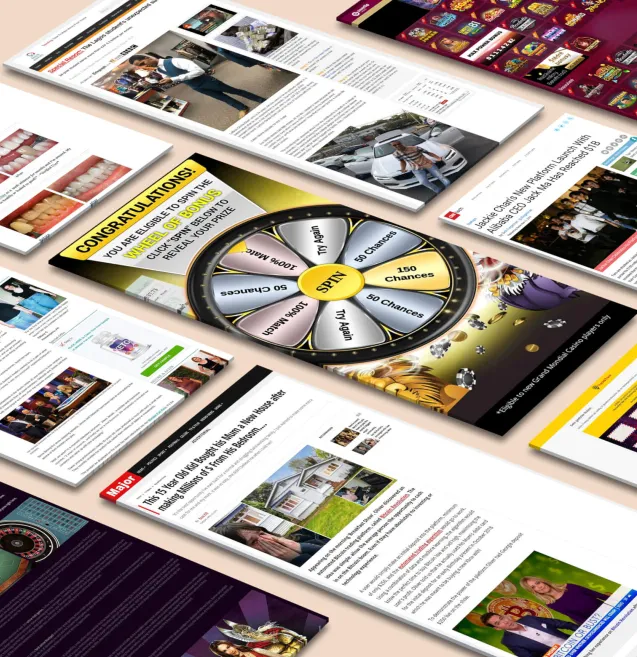
Our spy tools monitor millions of native ads from over 60+ countries and thousands of publishers.
Get StartedEvery enterprise marketing team seems to be chasing the same prize right now: getting their brand cited in AI-generated answers. And on paper, the logic is sound. AI-referred visitors already convert at 4.4 times the rate of organic visitors from traditional search, and 73% of B2B buyers now use AI tools during purchase research. The opportunity is real. But so is the fog surrounding it — and the fog is where the danger lives.
Consider the disconnect between spending and accountability. According to a survey of 300 enterprise marketing executives, sixty-five percent are now allocating at least a quarter of their entire marketing budget to AI search, with 28% committing more than half. Those are staggering figures for any channel, let alone one where the advertising models are still being built out. The same executives express confidence in their ability to measure outcomes, but a closer look reveals that two-thirds acknowledge their measurement frameworks have significant cracks. They're spending like they have certainty, but operating with the instrumentation of a beta test.
And it gets worse on the practitioner side. Despite the industry's rush toward AI visibility, only 22% of marketers currently track it at all. That means nearly four out of five marketing teams are investing in a channel they can't see, optimizing for outcomes they can't verify, and reporting results they're largely guessing at. This isn't a gold rush. It's a fog machine — one that's burning through budgets while producing dashboards full of hope rather than proof.
None of this means AI search optimization is wrong. It means it's dangerously incomplete when it becomes your primary growth strategy. The fundamental problem is one of control. As Moz's analysis of the new AI visibility landscape makes clear, we're moving from deterministic to probabilistic clicks. Traditional SEO relied on rankings you could track and positions you could defend. AI search operates differently — systems summarize options, cite sources, and resolve queries within the answer itself, all before a user ever reaches your site. Your brand might appear in a ChatGPT response today and vanish tomorrow because the model weighted a competitor's fresher content or a third-party review site changed its recommendation. You don't control the placement. You don't control the framing. You don't even control whether there's a link back to your site.
Now contrast that with a paid search or paid social campaign. You choose the audience. You write the creative. You set the bid. You see the click, the conversion, and the cost — in real time, with decimal-point precision. The outcome is deterministic: you pay, you appear, you measure. It's not glamorous, and it's certainly not new, but it produces the one thing AI citation chasing currently cannot — a closed-loop proof of return.
The smartest marketing leaders aren't abandoning AI search optimization. They're hedging. They're treating AI visibility as a long-horizon investment while keeping their demand generation engines — the paid campaigns, the retargeting sequences, the conversion-tested landing pages — running at full capacity. Because when your measurement has cracks and your visibility is probabilistic, the last thing you should do is gut the channels where you can actually prove what's working. The competitors who understand this distinction aren't louder about it. They're just still running their ads.
The panic around AI disrupting marketing is real, but it's also dangerously imprecise. When marketers talk about "AI stealing traffic," they're describing a specific phenomenon happening in a specific layer of the digital ecosystem — and conflating it with a market-wide collapse that simply isn't occurring. Drawing a sharp line between what AI actually disrupts and what it structurally cannot touch is the difference between strategic clarity and wasted budget.
Let's start with what's genuinely under threat. Neil Patel documents a 60 percent decline in search referral traffic for smaller publishers, a figure that reflects the growing tendency of AI Overviews and chatbot interfaces to answer informational queries without sending users to the source. This isn't a temporary dip. As Patel notes, AI platforms generated over a billion referral visits in mid-2025 — a 357 percent year-over-year increase — yet those AI referrals still account for less than one percent of total web traffic because the volume of search traffic being absorbed is enormous. The math is stark: AI is consuming far more clicks than it's sending back.
HubSpot's data reinforces this from the marketer's perspective. According to their research on what AI Overviews mean for SEO and website traffic, 49 percent of marketers report decreased web traffic from search as a direct result of AI-generated answers appearing above traditional results. Nearly half the industry is watching their organic search pipeline erode in real time.
But here's the critical nuance that most AI anxiety overlooks: this disruption is happening entirely within the search results layer. AI can intercept an informational query, synthesize your blog post into a three-sentence summary, and eliminate the click. What it cannot do is intercept a native ad unit served on a health and wellness publisher's page. It cannot summarize a push notification that lands on a user's lock screen. It cannot rewrite or absorb a programmatic display placement loaded inside a mobile app. These channels operate on completely separate infrastructure — they don't pass through a search engine, an AI model, or any intermediary that could strip out the advertiser's message before it reaches the user.
This distinction matters enormously for performance marketers evaluating where to allocate budget. Native ads, push notification campaigns, and in-app placements bypass the search layer entirely. The conversion pathway runs from publisher page (or device notification) directly to landing page — no AI summary can insert itself into that sequence. The user sees the ad, clicks, and arrives at the advertiser's destination with full context intact.
Even within paid search, the picture is more resilient than the organic doom narrative suggests. As WordStream's 2026 benchmarks analysis highlights, AI-powered ad campaigns tend to have higher conversion and relevancy rates, with business still happening at a profit even as standard search clicks shift. Paid placements within Google's ecosystem — including Performance Max and Demand Gen campaigns — continue to function because Google has a financial incentive to protect them. Ads are the revenue model; organic results are the product being disrupted.
The strategic takeaway isn't that AI disruption is overhyped — it's that it's miscategorized. Marketers who treat this as a universal traffic crisis will defensively retreat from channels that are performing fine. Marketers who recognize it as a search-layer phenomenon will reallocate toward channels where AI intermediation is architecturally impossible, protecting their conversion pathways while competitors pour budget into optimizing for citations that may never generate a click.
Tracking your competitor's citation share in AI-generated answers is useful — but it's also telling you what happened, not what's happening right now. When Semrush describes building an AI visibility dashboard that tracks mentions, citations, and prompt-level visibility across LLMs, they're offering a genuinely valuable framework for understanding where your brand shows up in the answer layer. And when HubSpot explains how citations function as trust signals for AI answer engines — selected based on clarity, authority, structure, and freshness — they're mapping a system that every marketer should understand. But both of these frameworks share a critical limitation: they reveal what competitors are saying, not what competitors are paying for.
That distinction matters more than most marketers realize. Citation tracking is inherently inferential. A competitor's citation share might spike because they published a comparison page, earned a media mention, or simply got lucky with how an LLM weighted their content on a given day. You're interpreting signals filtered through opaque algorithms you don't control. Competitor ad intelligence, by contrast, reveals the unfiltered reality of where money is moving. When you can see the exact creatives a competitor is running, the landing pages those ads point to, the ad networks they're buying inventory on, the geographic markets they're targeting, how long each campaign has been live, and whether it's optimized for mobile or desktop — you're looking at a live financial commitment, not a probabilistic inference.
This is the fundamental difference between monitoring AI search visibility and monitoring paid campaign behavior. A native ad that has been running continuously for 90 or more days tells you something no citation dashboard can: that campaign is converting profitably, or it would have been killed. Sustained ad spend is the most honest signal in marketing because nobody burns budget on creative that doesn't work. While enterprise executives are pouring at least 25% of their marketing budgets into AI search — often struggling to even measure the results — those same companies are simultaneously running paid campaigns whose performance is brutally transparent to anyone with the right tools.
This is where competitor ad spy platforms occupy a fundamentally different category of intelligence. Anstrex surfaces these signals across native, push, and pop traffic sources, letting you reverse-engineer what's actually working in your vertical right now. You're not guessing whether a competitor considers a particular audience segment valuable — you can see them actively buying impressions there. You're not speculating about which messaging resonates — you can study the exact headlines, images, and calls to action they've tested and kept running. You can filter by run duration to isolate the campaigns that survived optimization cycles, then trace them back to specific landing pages to understand the conversion architecture behind the spend.
None of this replaces AI visibility tracking. Understanding your citation share relative to competitors still matters for the answer layer. But the answer layer is only one surface where buyers encounter your brand. Meanwhile, your competitors are running campaigns across ad networks that AI search tools will never see — campaigns that reveal real-time budget allocation, winning creative angles, and validated audience segments. If you're spending all your competitive intelligence energy monitoring who gets cited in ChatGPT while ignoring where your competitors are actually spending money, you're reading the footnotes and skipping the balance sheet.
The most underused skill in paid media isn't bidding strategy or audience segmentation — it's reading your competitors' campaigns as a conversion map. When you borrow the annotation mindset that Semrush applies to tracking AI visibility signals and redirect it toward ad intelligence, you stop seeing competitor campaigns as noise and start seeing them as a living, breathing dataset of what the market will actually pay for.
Here's the five-step framework that makes this operational.
Step 1: Filter for longevity, not novelty. In any ad spy tool, the first filter you should apply is run time. An ad that has been live for 90 days or more is almost certainly profitable — no rational advertiser burns budget on a losing creative for three months. These long-running ads are your proof-of-concept library. They tell you which offers, hooks, and value propositions have survived real-world testing. Sort by duration, not impressions, and you immediately surface the campaigns that have earned their place.
Step 2: Reverse-engineer the landing page architecture. The ad is the invitation; the landing page is the conversion engine. Study what sits behind those long-running ads. Are competitors leading with social proof above the fold or a single bold claim? Do they use long-form sales pages or tight, single-CTA lead capture forms? As WordStream's analysis of over 15,000 Google Ads accounts found, platforms are rewarding tighter alignment between keywords, ads, and landing pages — meaning the structure you see on high-performing competitor pages isn't accidental. It's been engineered to satisfy both the algorithm's quality signals and the user's conversion psychology.
Step 3: Map spend concentration by network and geography. Where competitors allocate budget reveals where they've found yield. If three of your top five competitors are running heavily on YouTube and Display but barely touching Meta, that's a signal — either about audience behavior or about saturation economics. Track which ad networks and which geos absorb the most spend and use those patterns to either follow proven demand or deliberately exploit the gaps they've left open.
Step 4: Cluster the creative angles. Every niche develops dominant creative archetypes — fear-based urgency, curiosity-driven hooks, testimonial-heavy trust plays, listicle-style educational ads. Categorize every competitor creative you find into these clusters. When one angle dominates, you know it converts but you also know the audience is developing resistance to it. That's your opening to test an underrepresented angle with fresh positioning.
Step 5: Spot the white space. This is where competitive intelligence becomes competitive advantage. Identify the traffic sources, messaging angles, or audience segments your competitors haven't saturated. Maybe nobody in your vertical is running podcast ads or sponsoring niche newsletters. Maybe every competitor hammers bottom-funnel intent keywords while mid-funnel education content goes unbid.
This entire framework carries a structural advantage that organic strategies simply cannot match right now. As Search Engine Journal reported, SEO and AI search optimization sometimes pull in opposite directions — a brand can market itself as both "luxurious" and "affordable" across separate pages for search, but an LLM aggregating those signals will get confused by the contradiction. Paid campaigns sidestep this problem entirely. When you're buying a direct placement, your messaging doesn't need to satisfy an algorithm trying to synthesize your brand identity from conflicting pages. You control the frame, the offer, and the landing experience with zero risk that an AI model will flatten your positioning into an incoherent summary.
Your competitors' ad spend is public market research. Stop treating it as background noise and start treating it as the most honest signal of what converts in your category right now.
The conversion numbers are hard to ignore. As HubSpot reports, Semrush found that LLM visitors converted 4.4x better than traditional organic search visitors, while Ahrefs measured an even more staggering 23x conversion advantage for AI search traffic. And HubSpot's own internal data tells a similar story — their leads from LLMs are up 1,850% and convert 3x better than traditional search referrals. These are legitimate, noteworthy figures. But they contain a comparison flaw that should make any performance marketer pause before reallocating budget.
Every one of these statistics compares AI-referred traffic to traditional organic search traffic. Not to paid native. Not to push notification campaigns. Not to any channel where the marketer controls targeting, creative, landing page experience, and bid strategy. Organic search has always been a broad-intent channel — people arrive at varying stages of awareness, with varying degrees of purchase readiness. Saying AI traffic converts better than organic is a bit like saying a warm referral converts better than a cold call. True, useful, and completely beside the point when you're deciding where to put your next dollar.
The more relevant question — and the one conspicuously absent from the AI visibility conversation — is how AI-referred conversion rates compare to a well-optimized native ad campaign targeting in-market audiences with tested creatives and purpose-built landing pages. In that arena, the marketer isn't waiting to be chosen by an algorithm's interpretation of trustworthiness. They're actively engineering conversion conditions from impression to click to action.
There's also a scalability problem that the conversion data conveniently sidesteps. When Semrush describes building annotation layers to understand why citation share fluctuates — tracking content publishes, competitor moves, earned media spikes, and algorithm updates — they're essentially documenting how unpredictable the input-to-output relationship remains. A citation share jump two weeks after a content campaign makes causation "arguable," not provable. You can't A/B test which prompt response you appear in. You can't increase your citation share by spending more next Tuesday. You can't look at yesterday's performance data and decide to triple down on what's working by noon today.
With native and push campaigns, you can do all of those things. You can launch twenty creative variations on Monday, kill the underperformers by Wednesday, scale the winners by Thursday, and have statistically meaningful conversion data by Friday. The feedback loop is measured in hours, not in the weeks-long lag between publishing optimized content and hoping an LLM decides to cite it.
This is the controllability premium, and it's the argument that gets buried every time someone waves the 4.4x or 23x conversion stat. Yes, AI-referred visitors may convert at impressive rates — partly because the traffic volume is still small enough that only the highest-intent queries generate clicks through to source sites. As Moz notes, AI systems increasingly enable the user journey to unfold within the answer itself, summarizing options and citing sources without requiring a click at all. The visitors who do click through are self-selected for extreme intent. That's not a scalable conversion engine — it's a survivorship bias masquerading as a channel strategy.
None of this means you should ignore AI visibility. It means you should stop comparing it to the wrong benchmark. The real competition for your next marketing dollar isn't between AI citations and organic rankings. It's between a channel you can't control, can't scale on demand, and can't reliably test — and one where every variable from audience to creative to spend level bends to your will. The conversion quality argument for AI traffic is real, but it's incomplete. And incomplete arguments are expensive ones to bet your budget on.
Receive top converting landing pages in your inbox every week from us.
In-Depth
Explore what Pure Leaf’s “Break Conference” reveals about the gap between polished brand marketing and measurable performance. This guide breaks down how Native, Push, TikTok, and affiliate-style funnels use creative testing, clear offers, first-party data, and hard performance metrics to turn cultural moments into revenue.
Rachel Thompson
7 minOct 1, 2026
Must Read
Explore why traditional OOH experience is no longer enough as out-of-home advertising becomes more data-driven, measurable, and connected to digital channels. This guide outlines the cross-channel, measurement, AI, and competitive-intelligence skills modern OOH employers and candidates need.
David Kim
7 minSep 25, 2026
How-To
Learn how to measure whether sports-star and celebrity advertising actually delivers efficient CPC, CPA, search lift, and downstream conversions. This guide shows how to test celebrity creative against creator alternatives and use competitive intelligence and measurement to turn expensive star power into a measurable performance asset.
Elena Morales
7 minSep 25, 2026