8 minAugust 10, 2026

Our spy tools monitor millions of native ads from over 60+ countries and thousands of publishers.
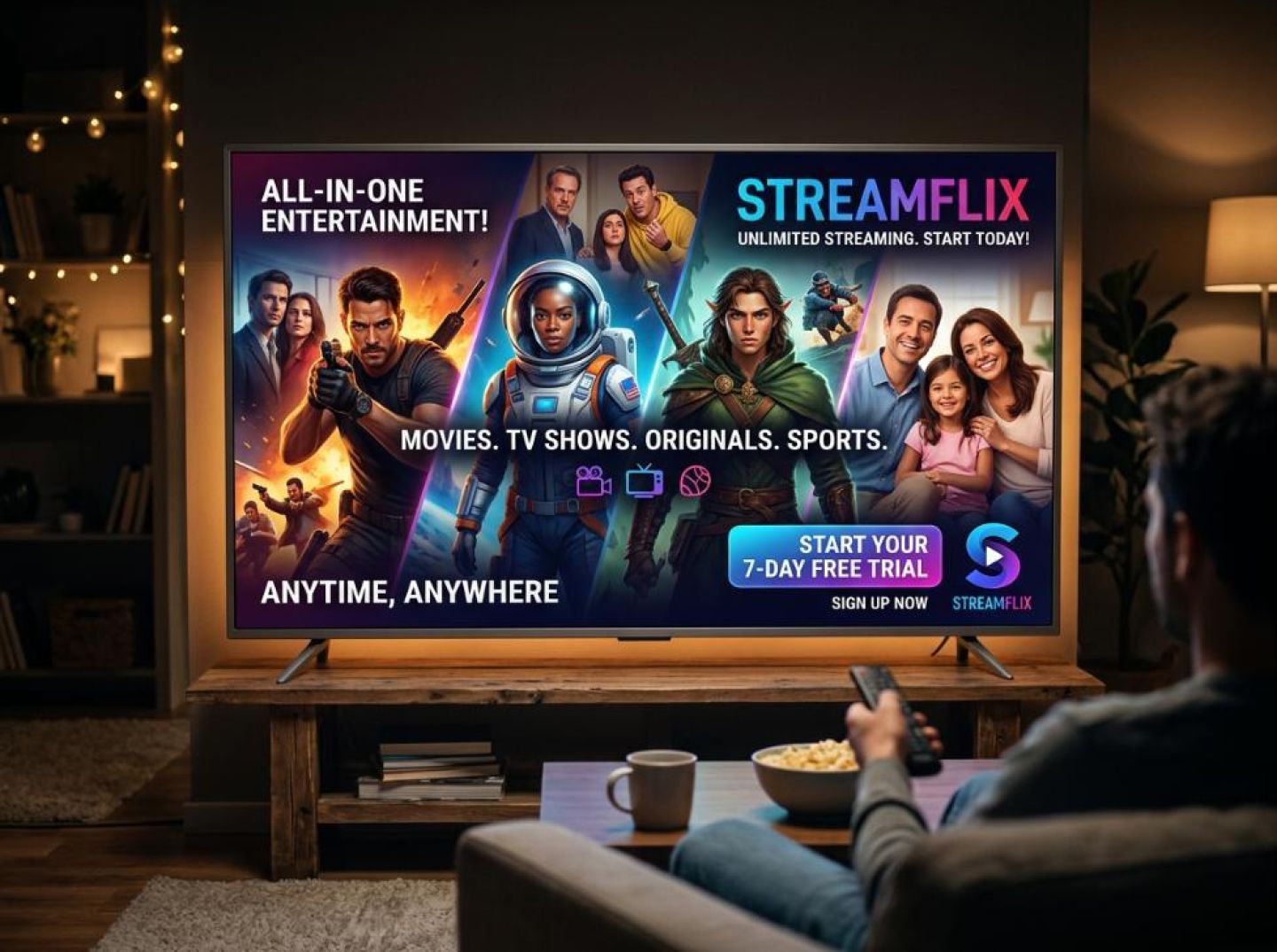
Get StartedSomething remarkable is happening in the advertising landscape: consumers are voluntarily choosing to watch ads. Two-thirds of consumers now say they don't mind watching ads as much as they used to, and 69% would actively opt into ad-supported content if it saves them money — an 11-point jump since 2021, according to Hub Entertainment Research. For native and push advertisers, this shift isn't just a streaming story. It's a signal that the rules of engagement across all digital advertising are being rewritten in real time.
The streaming data confirms what performance marketers have long suspected: people don't hate ads — they hate bad ads. When viewers willingly sit through commercial breaks on ad-supported tiers of Netflix, Hulu, and Amazon Prime, they're making a conscious transaction. They accept interruptions in exchange for value. This same transactional psychology underpins the best native and push campaigns. The audience is willing to give you their attention, but only if you've done the work to make the experience worthwhile.
Consider the parallels. American households now spend an average of $924 a year on recurring entertainment subscriptions, paying 19% more than they did in 2020 for TV, music, and other apps. That cost pressure is pushing consumers toward ad-supported options — and in doing so, normalizing the presence of advertising across content experiences. As Hub Entertainment Research's Mark Loughney put it, the future is looking a lot more like the past of TV, with the majority of people accepting advertising in the majority of what they watch. But he offered a critical caveat: don't take advantage of them.
That warning should echo loudly in native and push channels. Native advertising has already proven that format matters. Desktop native click-through rates average around 0.15%, while native-mobile ads achieve CTRs above 1%, according to data from Polar Media Group and Celtra — dramatically outperforming traditional display. The reason is straightforward: native ads match the form and function of the content surrounding them, reducing friction and building trust. Consumers hold a generally positive attitude toward these formats, but only when the ads are relevant and come from trustworthy brands.
Push advertising follows an analogous logic. Subscribers opt in, granting explicit permission for notifications. That permission is the push equivalent of choosing an ad-supported streaming tier — a conscious exchange. The moment advertisers overload that channel with irrelevant, excessive, or misleading notifications, they replicate the exact mistake Loughney warns about: recreating the bloated commercial breaks of linear cable.
The growth trajectory reinforces the opportunity. Global native advertising spend was projected to increase by 372% between 2020 and 2025, growing from $85.83 billion to a staggering $402 billion. That explosion is fueled by programmatic native buying and the expansion of in-feed and outstream video formats — channels that, like streaming, embed advertising within the content experience rather than interrupting it.
But scale without discipline is a trap. The streaming data makes one thing unmistakably clear: tolerance is not a blank check. Consumers are more open to advertising than they've ever been, yet that openness is conditional on restraint, relevance, and respect for the viewer's time. Native and push advertisers who internalize this lesson — who treat every impression as a privilege earned, not a slot to be filled — will thrive in this new era. Those who don't will find that tolerance evaporates just as quickly as it grew.
The advertising industry is, understandably, thrilled. But before anyone pops champagne, it's worth reading the fine print — because the same research that delivered this good news came wrapped in a very pointed warning.
Hub Entertainment Research's latest "TV Advertising: Fact vs Fiction" report, which surveyed 3,000 consumers between the ages of 16 and 74, paints a picture of a viewing public that has genuinely softened its stance toward commercial interruptions. The shift isn't subtle. Nearly seven in ten respondents said they'd willingly choose ads if it meant saving money, and the broader sentiment data confirms that two-thirds of consumers don't mind watching ads as much as they used to. For an industry that spent the better part of a decade watching audiences flee to ad-free tiers, these numbers feel like vindication.
But the celebration needs context. This tolerance isn't born from some newfound love of advertising. It's a transaction. American households now spend an average of $924 a year on recurring entertainment subscriptions — a figure that has climbed 19% since 2020, as Marketing Dive's coverage of the Hub data detailed. Consumers aren't embracing ads; they're accepting a trade. They're exchanging a slice of their attention for relief from a subscription bill that keeps growing. The moment that exchange feels unfair — when the ads become too frequent, too irrelevant, too intrusive — the deal collapses.
Hub's own senior consultant, Mark Loughney, made this explicit. "Viewers overall are way more accepting of ads than they've ever been," he told researchers, before pivoting to the caveat that should be tattooed on every media buyer's whiteboard: "don't take advantage of them." Loughney drew a direct line to the cautionary tale that should haunt every executive in the ad-supported streaming business — the cable-era meltdown, where networks kept stretching commercial breaks until viewers abandoned the format entirely. His advisory was blunt: don't replicate the bloated ad loads that drove audiences away from linear television in the first place.
This historical parallel matters because the structural conditions are eerily similar. As more platforms introduce ad-supported tiers and consumers spread their viewing across multiple services, the landscape is converging on something that looks, as Loughney himself put it, "a lot more like the past of TV." The difference this time is that consumers have options cable never gave them. They can downgrade, cancel, or switch platforms with a few taps. The switching cost is negligible, and the competition for attention is fiercer than ever — not just from other streaming services, but from social media platforms that have refined ad relevance into a science. As AdExchanger has reported, 69% of streaming sellers already identify attribution and incrementality as critical capabilities precisely because they need to compete with the performance accountability that social platforms deliver.
So the headline is real: consumers will watch your ads. But that willingness is a conditional lease, not an unconditional gift. It's purchased with subscription savings, sustained by reasonable ad loads, and revoked the instant the value exchange tips. For native and push advertisers looking to ride this wave, the implication is clear — the opportunity is enormous, but only for those disciplined enough to honor the implicit contract that makes it possible.
At first glance, a study about streaming television might seem like someone else's news — the domain of brand advertisers with seven-figure budgets buying pre-roll on Hulu or Peacock. If you're a performance marketer running native placements on content recommendation widgets or sending push notifications to opted-in mobile users, why should you care what people think about ads on Netflix's cheaper tier? The answer is deceptively simple: because the psychological contract between you and your audience is identical.
Think about the fundamental deal that ad-supported streaming offers. A consumer says, "I'll accept commercial messages woven into my content experience if it means I pay less — or nothing at all." Now think about what happens when a user scrolls through an article on a news site and encounters a sponsored content unit at the bottom, or when a subscriber who opted in to browser notifications receives a push ad. The exchange is the same. The user has implicitly agreed to the presence of advertising in return for access to content they value. As Marketing Dive noted, streaming ads aren't consumed the way traditional TV commercials were — they're experienced inline, inside the content environment itself, which means the old mental model of "ad break as bathroom break" no longer applies. Sound familiar? It should, because that inline consumption is precisely the territory where native and push advertisers have always operated.
This is what we might call the "tolerance economy" — a landscape in which consumers don't merely endure advertising but actively enter into arrangements where ads are the price of admission. The streaming data validates what native advertising practitioners have argued for years: people will accept commercial messages within content they value, provided those messages feel like they belong there. That isn't just a theory. By definition, native advertising is paid media that matches the content of a media source, integrating seamlessly enough that it doesn't rupture the user's experience. The entire format was built on the premise that context-fit earns tolerance, and tolerance earns attention.
But here's where the data becomes more than just validation — it becomes a warning. The same streaming research that shows rising acceptance also shows that tolerance is conditional. Consumers will watch your ad, but only if you've done the homework of making it relevant, well-timed, and respectful of the environment. Native and push advertisers face the exact same conditionality. Survey data shows that consumers hold a generally positive attitude toward native advertising, but that goodwill is contingent on two things: the ads must be relevant, and the brands behind them must be trustworthy. Violate either condition and you don't just lose a click — you risk triggering the kind of backlash that poisons the well for every advertiser in the ecosystem.
The performance data backs this up in hard numbers. When native ads are executed correctly — when the format genuinely fits the context — the response isn't merely tolerant. It's active. Desktop native click-through rates average around 0.15%, respectable enough, but native mobile CTRs exceed 1%, a figure that dwarfs standard display benchmarks. That gap tells a powerful story: mobile users consuming content in a feed environment will engage with advertising at rates that would make most display campaigns weep — but only when the ad feels native to the moment.
So no, this isn't just a streaming story. It's a story about a universal behavioral shift that performance marketers ignore at their peril. The tolerance economy doesn't care whether the content is a Netflix drama or a tech blog. It only cares whether you've earned the right to be there.
There's a dangerous conflation happening across the native and push advertising ecosystem, and it's costing advertisers far more than they realize. The Hub Entertainment Research data tells us that consumers are increasingly willing to sit through ads — but sitting through an ad and actually caring about it are two fundamentally different cognitive states. Tolerance is the floor. It means your ad wasn't annoying enough to provoke a skip, a scroll, or an uninstall. It does not mean your ad was relevant enough to provoke a click, a conversion, or a lasting brand impression. And yet, a startling number of advertisers treat these two outcomes as interchangeable, building entire campaign strategies on the assumption that if consumers aren't actively fleeing, the ads must be working.
They're not. What's actually happening is that the industry is absorbing an enormous, invisible cost — a relevance tax — paid in wasted impressions, suppressed click-through rates, and the slow erosion of publisher trust every time an ad is tolerated but ignored. This tax doesn't show up as a line item in any campaign dashboard. It manifests as the gap between where your metrics are and where they could be if you were earning attention rather than merely renting patience.
Consider how the industry uses benchmarks. Platforms like Taboola routinely publish performance data across verticals, and as Brax has noted, these industry-wide averages on CTRs, CPCs, and conversion rates serve as essential diagnostic tools, allowing advertisers to identify gaps and design better strategies. But there's a critical insight buried in that framing: if the industry average reflects a landscape where tolerance exists but relevance frequently doesn't, then operating at the average isn't a sign of competence — it's evidence of mediocrity. The average is being dragged down by every campaign that coasted on consumer patience instead of earning a click. Any advertiser benchmarking against those numbers and feeling satisfied is essentially celebrating the fact that they're no worse than an ecosystem full of irrelevant ads.
The real diagnostic power of benchmarks lies not in matching them but in understanding how far above them a genuinely relevant, well-targeted campaign can perform. The distance between the average CTR and the top-performing campaigns in any vertical is a direct measurement of the relevance tax the industry is collectively paying. That spread represents millions of impressions served to people who tolerated them and immediately forgot them.
And tolerance, it turns out, has a shelf life. Survey data shows that while consumers hold a generally positive attitude toward native advertising, advertisers and publishers must ensure that ads are relevant and are purchased by trustworthy brands to avoid the risk of mainstream backlash. This is the ticking clock behind every "tolerated but irrelevant" impression. Each one doesn't just waste budget in the moment — it chips away at the goodwill that makes ad-supported models viable in the first place. When a user sees a native recommendation that has nothing to do with the article they're reading, or receives a push notification that feels algorithmically lazy, they don't just ignore that individual ad. They begin to distrust the format. They start associating the publisher's content feed with low-quality interruptions. They opt out.
This is why the relevance tax is so insidious: it's not just your cost. It's a shared externality. Every irrelevant impression you serve degrades the environment for every other advertiser on that platform and every publisher relying on that revenue stream. Tolerance gave the industry a window. Relevance is the only thing that keeps it open.
Every performance marketer knows the optimization loop: write a headline, choose a creative, launch, measure, iterate. The problem isn't the process — it's the starting point. Most advertisers begin this cycle essentially blind, burning budget on untested hypotheses about what will resonate with their audience. They treat each new campaign as a blank canvas when, in reality, the market has already painted dozens of instructive pictures. Competitive intelligence is the fastest way to collapse this expensive learning curve and start your optimization from a position of informed strategy rather than educated guessing.
The foundational challenge of native advertising, as Voluum articulates it, is finding the "sweet spot" where ads "blend enough to not be seen as intrusive ads but stand out just enough to be seen." That dual mandate — simultaneously invisible and visible — is what makes native so powerful and so difficult to master. You only confirm you've reached that equilibrium through systematic testing: rewriting content, changing creatives, updating headlines, and tuning traffic targeting options until further adjustments stop yielding measurable performance gains. It's an iterative grind that can eat weeks of budget before you find traction.
But here's the operational insight most advertisers overlook: that sweet spot isn't a theoretical abstraction. Somewhere in your vertical, competitors have already found it — or at least gotten close. Their winning headlines, image styles, editorial angles, and landing page structures are live and observable. When you reverse-engineer what's already earning genuine engagement in your niche, you don't skip the optimization cycle; you start it several iterations ahead, armed with hypotheses grounded in market evidence rather than instinct alone.
This is where competitive intelligence transforms from a nice-to-have into a structural advantage. As Brax's analysis of benchmarking methodology makes clear, comparing your performance against the broader industry is essential, but the real power lies in going deeper — and the publication practically acknowledges as much when it notes that getting your hands on actual competitor data would be "even better" than relying solely on industry-wide averages. That phrasing is practically an invitation to leverage spy tools, ad libraries, and creative intelligence platforms that let you see exactly which headlines, thumbnails, and angles are running at scale across native networks.
This isn't about copying. It's about market-informed creative development. When you study a competitor's top-performing native placements, you're extracting signals: what emotional hooks are earning clicks in your vertical? Which image compositions consistently appear in high-volume placements? What editorial framing — listicle, question-based, how-to — dominates the recommendation widgets your audience is already scrolling? These patterns tell you where the sweet spot lives for your specific market, giving you a baseline from which to differentiate rather than a void from which to improvise.
The compounding benefit is speed. Every day you spend testing fundamentally misaligned creative — the wrong tone, the wrong visual language, the wrong promise architecture — is a day you're paying the relevance tax discussed earlier. Competitive intelligence doesn't eliminate testing; it makes testing dramatically more efficient by narrowing the variable space. Instead of testing fifty headline variations from scratch, you test ten informed variations that riff on patterns already validated by real audience behavior. Your first iteration starts where a less informed advertiser's tenth iteration might land.
For push advertisers, the same logic applies with even greater urgency. Push notifications live or die in the fraction of a second it takes a user to decide between tapping and dismissing. There's no editorial context to borrow credibility from, no content feed to blend into — just your headline, your icon, and your value proposition against the user's thumb. Knowing which message structures, urgency cues, and content angles are already driving engagement in your category isn't a luxury. It's the difference between a notification that earns a tap and one that accelerates opt-out fatigue.
The Voluum team put it bluntly: if you are not measuring anything, you are doing it wrong. That warning has always been good advice, but in a rising-tolerance environment — where two-thirds of consumers say they don't mind ads as much as they used to — it takes on a sharper edge. When viewers are less likely to skip an ad on a streaming service than on a broadcast channel, every traditional engagement signal starts to lie. A completed view might mean captivated attention. It might also mean someone was too busy scrolling their phone to bother looking for a skip button. Without the right measurement infrastructure, you cannot tell the difference — and the gap between those two states is where budgets go to die.
The first layer of that infrastructure is proper tracking architecture at the campaign level. Native ads, as Voluum explains, work best at a sweet spot where they blend enough to avoid feeling intrusive but stand out enough to be noticed. You will only know whether you've reached that point if you are measuring granularly — not just click-through rates but post-click behavior, time on landing page, scroll depth, and conversion path completion. A click on a native placement that leads to a three-second bounce tells a completely different story than one that results in ninety seconds of engaged reading followed by a newsletter signup. Tracking both events at the creative level, tied back to the specific headline, thumbnail, and traffic source combination that produced them, is what transforms raw data into actionable creative intelligence.
The second layer is choosing KPIs that actually distinguish tolerated impressions from valued ones. CTR remains a useful directional metric, and the performance gap is real — native-mobile ads have historically delivered CTRs above 1% compared to desktop native rates around 0.15%. But CTR alone cannot tell you whether someone clicked out of genuine curiosity or accidental thumb contact. The KPIs that matter most in a high-tolerance environment are downstream indicators: cost per completed action, return visit rate, assisted conversions, and engagement depth metrics that reveal whether your ad created a meaningful moment or simply occupied screen real estate without consequence.
The third layer — and the one most advertisers neglect — is the feedback loop connecting measurement data back to competitive intelligence and creative iteration. The spy tools and competitive research discussed in the previous section lose most of their value if the insights they produce are never validated against your own performance data. When you spot a competitor's advertorial running for eight consecutive weeks and decide to test a similar angle, your tracking stack needs to tell you not just whether that angle generated clicks but whether it attracted the same audience quality, produced comparable downstream engagement, and held up across different traffic segments. Without that closed loop, competitive intelligence becomes anecdote rather than strategy.
This is particularly critical because the tolerance data reveals an asymmetry that benefits disciplined advertisers. Consumers who regularly see targeted ads tend to be more accepting of them, which means the advertisers who measure rigorously, optimize continuously, and serve increasingly relevant creatives will compound their advantage over time. Each well-targeted impression makes the next one more welcome. Each poorly targeted impression — the kind that goes unmeasured and unoptimized — erodes the very tolerance that the broader market is building. The measurement framework is not overhead. It is the mechanism that converts a cultural shift in ad acceptance into a durable competitive moat.
Receive top converting landing pages in your inbox every week from us.
Editor’s Pick
Discover how to turn food, sports, and tech trends into structured creative testing hypotheses instead of one-off ad ideas. Learn how to build vertical-specific blueprints, test them across Native, Push, Pops, and TikTok, and use performance data to continuously improve your creative strategy.
Dan Smith
7 minSep 20, 2026
Guide
Award-winning ads can inspire powerful performance creative, but they need to be rebuilt for the way algorithms, feeds, and users behave across Native and TikTok. This guide shows how to reverse-engineer high-profile creative into scalable hooks, angles, formats, and AI-driven testing systems that can improve performance.
Elena Morales
7 minSep 19, 2026
In-Depth
Discover how city-level ad intelligence can help marketers build campaigns that feel local while scaling globally. Learn how to use Anstrex to uncover geographic, language, creative, and funnel patterns across Native, TikTok, Push, and Pops, then turn those insights into repeatable localized campaigns.
Elena Morales
7 minSep 16, 2026