11 minJune 24, 2026

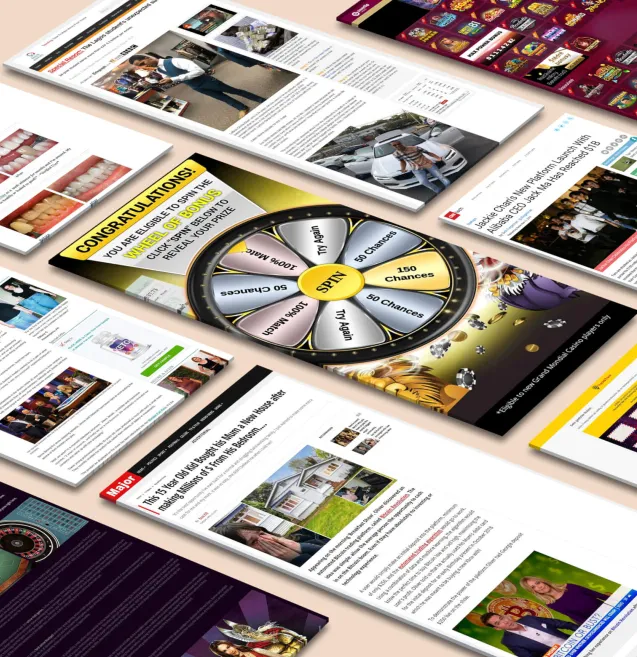
Our spy tools monitor millions of native ads from over 60+ countries and thousands of publishers.
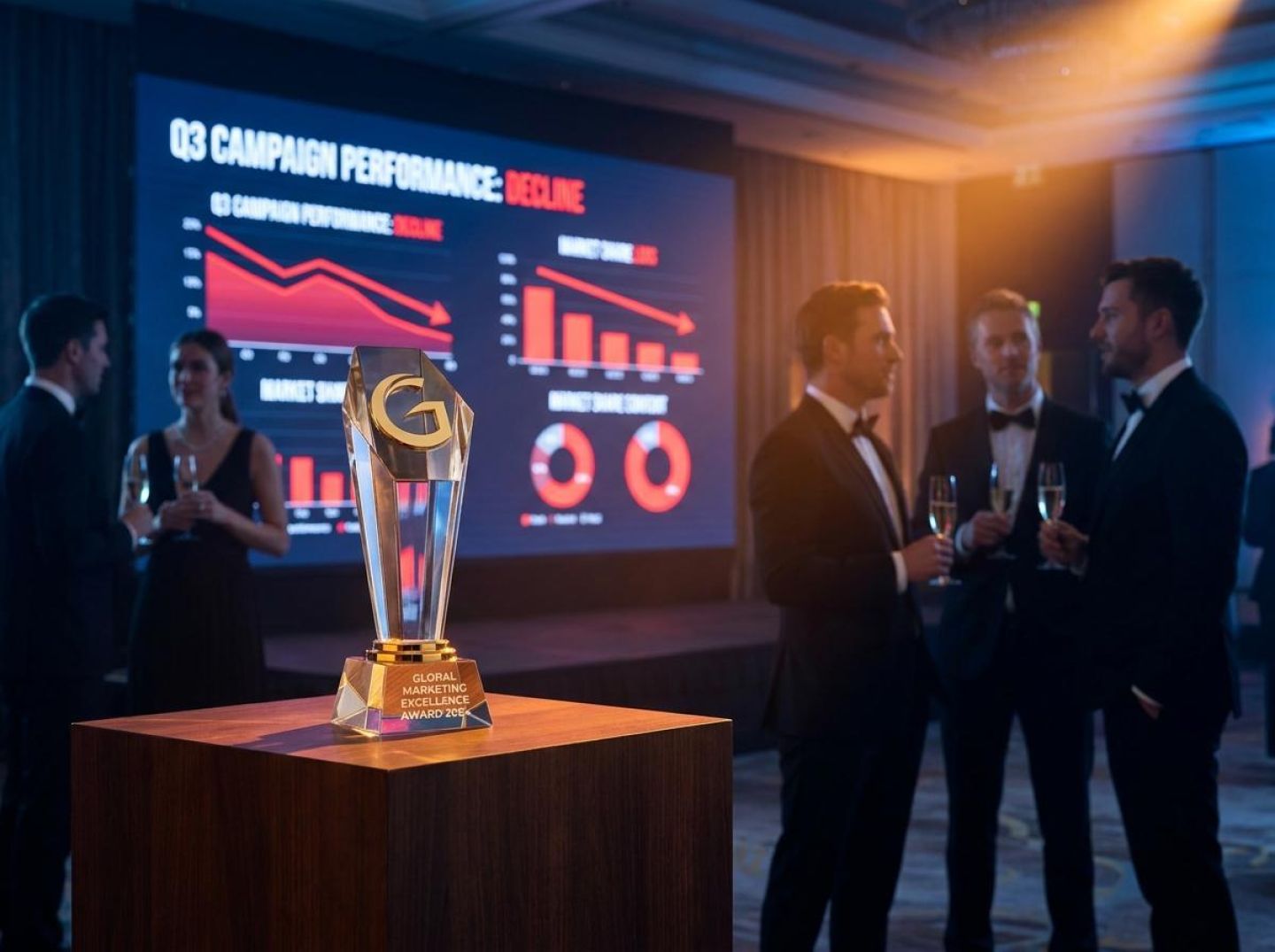
Get StartedEvery June, the advertising industry gathers to celebrate itself. Cannes Lions, the Clios, the One Show — these ceremonies crown creative excellence based on the collective taste of judging panels composed of peers, rivals, and the occasionally conflicted agency executive. The ads that win tend to be beautiful, provocative, emotionally stirring. They also tend to share a less flattering trait: nobody involved in choosing them can tell you, with any empirical certainty, whether they actually worked.
This is the award-show delusion, and it has persisted for decades because the industry lacked a credible alternative vocabulary for "great." But that era is over. A parallel world of performance-driven advertisers has quietly built an entirely different framework for evaluating creative — one measured not in peer admiration but in clicks, conversions, search lift, cost-per-acquisition, and real-time return on investment. The infrastructure to judge creative excellence objectively doesn't need to be invented. It already exists. The award-show model is simply legacy thinking dressed in a tuxedo.
Consider what happens when an emotionally resonant television ad actually lands with an audience. As MarTech recently demonstrated, search lift data now functions as a low-cost, real-time proof of concept for even the most expensive media investments. When Fox Sports aired its "Miracle" spot — a piece of creative that dared viewers to feel hope — branded search volume spiked by more than sixty percent. That spike wasn't a subjective opinion. It was behavioral evidence, captured in real time, that the creative triggered genuine consumer intent. Teams can now run small-scale tests on YouTube or connected TV, monitor branded search lift for each creative variant, and identify which ads actually drive digital action before committing massive budgets to broadcast. The creative brief, in other words, can be validated by data rather than ratified by a jury.
But search lift is only one dimension of the new measurement landscape. The most valuable signals in modern advertising are hiding in media allocation decisions, efficiency trends, placement strategies, and channel shifts — none of which appear in award show shortlists. When competitive intelligence platforms analyze real auction data across social and programmatic environments, they reveal which creative is actually winning in the marketplace. A competitor's CPM drops unexpectedly. Another brand shifts budget into unfamiliar placements. A third begins concentrating spend in a specific geography. These are not anecdotes; they are quantifiable signals about what the market is rewarding. And as AdExchanger's analysis of the insurance category showed, a brand like Progressive can simultaneously buy more inventory and pay less for it — an outcome that reveals a media strategy built on audience precision and creative efficiency, not just raw spending power.
The gap between these two worlds — the subjective panel and the data-driven marketplace — is no longer an intellectual disagreement. It is a strategic liability. Brands that define "winning creative" by the trophies on their agency's shelf are making decisions with last year's scorecard. Brands that define it by real-time efficiency, search lift, and competitive auction dynamics are operating with a live feed of what actually moves consumers to act.
The question isn't whether creative excellence can be measured. It's why so much of the industry still pretends it can't.
While the ad industry's establishment debates creative merit in ballrooms, a parallel universe of performance advertisers has been quietly building its own judging system — one where the verdict is rendered not by panels but by markets, not in a single evening but over weeks and months of continuous auction pressure.
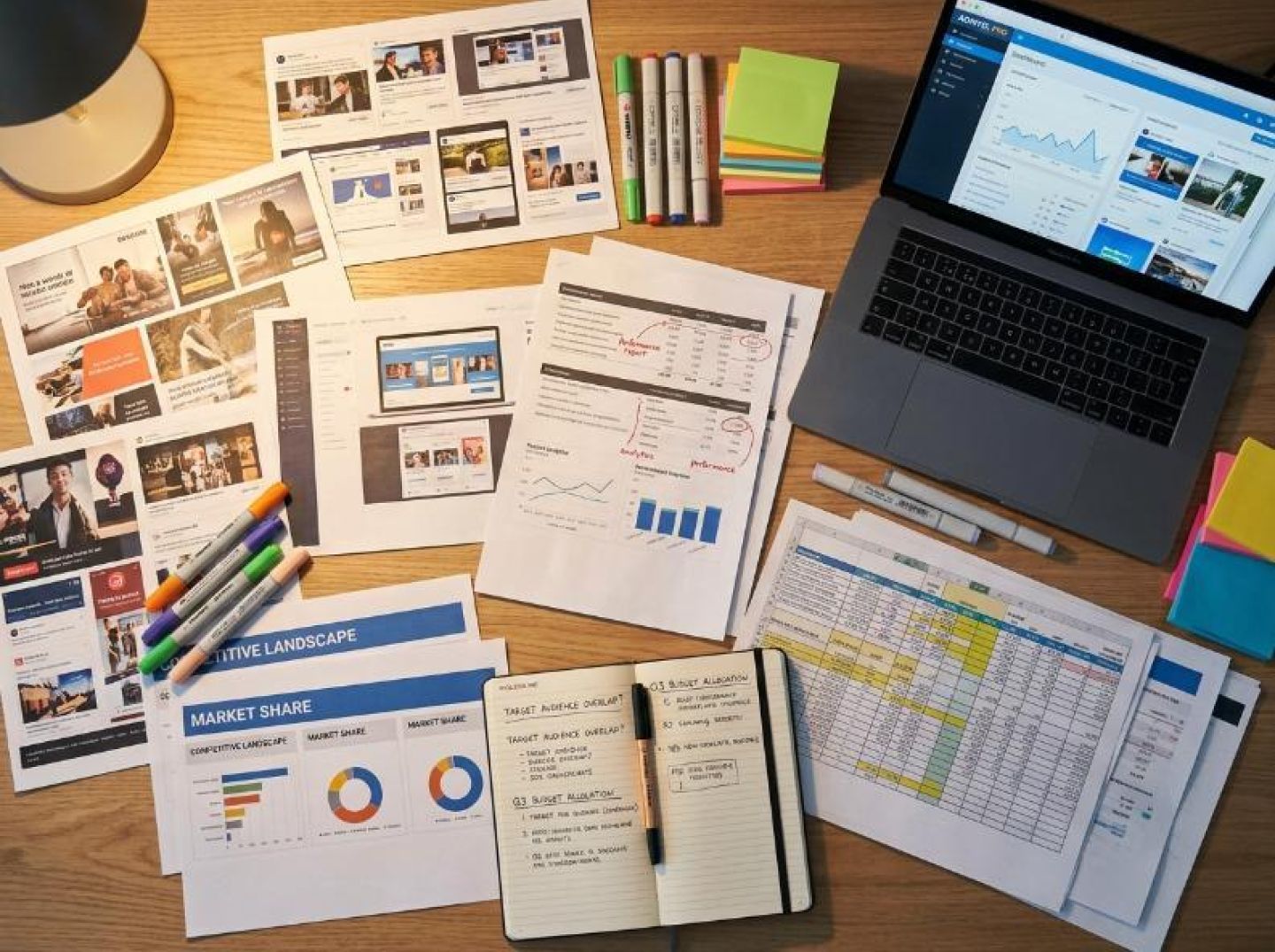
The methodology is called competitive ad intelligence, and it works on a deceptively simple principle: if you can see what your competitors are running right now, how long those ads have been live, and which creative formats dominate specific verticals, you can reverse-engineer what the market has already validated as profitable. Affiliate marketers and media buyers use platforms like Anstrex to monitor competitors' live campaigns across native, push, pop, and social ad networks at scale. These tools catalog everything — creative assets, landing pages, traffic sources, ad copy variations, geographic targeting, and critically, run duration. That last data point is the one that matters most. An ad that has survived sixty or more days in a competitive auction environment has passed the only test that counts: it made enough money to justify its continued existence.
This isn't a fringe practice. As AdExchanger reported in its analysis of insurance advertising on Meta, the most valuable competitive signals in advertising today aren't about total spend — they're about how that spend is being deployed in real time. The publication's examination of Progressive's media strategy revealed that the insurer wasn't simply outspending competitors; it was acquiring attention dramatically more efficiently, a pattern that only becomes visible when you track live auction behavior rather than relying on backward-looking annual reports and earnings calls. Traditional competitive intelligence, the article noted, focuses on creative libraries, estimated spend, or campaign archives — useful, but rarely actionable by the time most marketers learn a competitor has changed strategy.
What tools like Anstrex do is democratize that same real-time visibility for individual media buyers. Instead of analyzing six insurance giants on Meta, a solo affiliate marketer running weight-loss offers on native ad networks can filter by vertical, sort by longest-running campaigns, and instantly surface the creative concepts that have survived the market's relentless Darwinian pressure. The landing pages are visible. The ad copy is visible. The traffic sources are visible. And the duration data serves as the most honest performance rating any creative can receive.
This approach to creative evaluation also resonates with the infrastructure that DAIVID and ADIN.AI are building to score creative effectiveness at scale and link those scores to media performance in real time. As DAIVID's CEO Ian Forrester observed, creative has been "measured in isolation, disconnected from media results" for too long. Competitive intelligence tools solve that disconnect from the outside in — rather than scoring your own creative before launch, you study the creative that has already proven itself in live media environments and work backward to understand why it works.
Longevity in the auction is the truest award a creative can win. No judge conferred it. No subjective rubric elevated it. The ad simply kept converting at a cost that justified the spend, day after day, in an environment where underperformers are killed within hours. When a media buyer spots an ad that has been running profitably for ninety days across multiple traffic sources, they are looking at something more meaningful than a Gold Lion: they are looking at a market-validated winner that has survived a judging process far more rigorous than any panel — the sustained, unforgiving scrutiny of actual consumer behavior and advertiser economics.
The creative patterns hiding inside competitive intelligence databases aren't mysterious. They're remarkably consistent, frustratingly obvious in hindsight, and almost impossible to see when you're staring at a blank brief with nothing but instinct to guide you.
Start with the workflow that separates disciplined media buyers from everyone else: filter by vertical, sort by longest-running ads, analyze common elements, extract the pattern, then build variations. When you filter a competitive intelligence tool for health supplement campaigns that have been running continuously for six or more months, you don't find the cleverest headlines or the most cinematic visuals. You find the same structural patterns recurring with eerie regularity — specificity in claims, before-and-after visual architecture, testimonial-led hooks anchored in a single transformation story, and landing pages that frontload social proof before introducing the offer. In finance, the persistent winners lean on fear-of-missing-out framing paired with calculators or interactive tools. In e-commerce, unboxing-style creative and user-generated aesthetics dominate longevity charts. In insurance, comparison frameworks and "hidden cost" angles survive quarter after quarter while polished brand spots rotate out.
These patterns function as the creative equivalent of what MarTech described as search lift data — a signal about which emotional levers to pull again. When a branded search spike follows a particular TV spot, that spike isn't just a media metric; it's a creative brief for the next campaign. Competitive intelligence tools operate on the same principle but at the individual ad level. A headline structure that persists in paid social for 90 days across three competitors isn't lucky. It's a market-validated emotional trigger. A specific image treatment — say, a split-screen comparison or a close-up of a product in use rather than in isolation — that appears in every long-running campaign within a vertical is evidence of what audiences respond to, tested not in a focus group but in the unforgiving economics of daily ad auctions.
This is where the data-first playbook earns its real power: not by replacing the creative mind but by equipping it. As MarTech noted in its analysis of AI-native advertising, when execution is automated, differentiation comes from stronger inputs — clearer positioning, sharper messaging frameworks, and more distinctive brand narratives. The same logic applies when competitive intelligence automates the research phase. If AI and programmatic systems can generate and test hundreds of creative variants in days, then the quality of the strategic input — the hook, the angle, the emotional territory — becomes the only remaining lever for outperformance.
Consider what this means practically. A media buyer analyzing the top 20 longest-running Facebook ads in the pet insurance vertical might discover that 17 of them lead with a fear-based hook about unexpected vet bills, use a real photo rather than an illustration, and feature an odd-numbered dollar figure in the headline. That's not a creative straitjacket. That's a starting line. The buyer now knows the emotional territory that works, the visual style that earns trust, and the specificity threshold that drives clicks. From there, the creative team can push into unexplored angles — humor, community, identity — with the confidence that they're innovating from a position of knowledge rather than gambling from a position of ignorance.
The best creative minds have always drawn from reference points. Competitive intelligence simply replaces anecdote and memory with a structured, sortable, continuously updated database of what the market has already voted for with its wallets. Gut instinct doesn't disappear from this process. It gets better inputs.
When Unilever announced its plan to build a network of 300,000 AI-powered creators capable of producing social content at industrial scale, it signaled something most performance advertisers already understood intuitively: production is no longer the bottleneck. The ability to generate hundreds — even thousands — of creative variations has become trivially cheap. What hasn't become cheap is knowing which variations are worth producing in the first place.
This is the paradox of AI-assisted creative production. The same technology that liberates you from slow, expensive production cycles also drowns you in optionality. When you can spin up 500 ad variations in an afternoon, the question stops being "can we make this?" and becomes "should we make this?" The brands navigating this shift successfully aren't the ones with the most sophisticated generative AI tools. They're the ones with the strongest inputs feeding those tools.
That's where competitive intelligence transforms from a nice-to-have into the linchpin of the entire creative operation. Tools like Anstrex solve the input problem by revealing which patterns — hooks, formats, visual treatments, offer structures — are actually surviving in live ad auctions. Instead of guessing what might work or relying on a creative director's intuition about what "feels right," media buyers can extract validated patterns from competitors who've already spent the money to test them.
The resulting workflow is a tight, self-reinforcing loop: spy on competitors via Anstrex to identify winning creative patterns, feed those patterns into AI production tools to generate hundreds of variations, launch the variations into live auctions, let performance data pick the winners, then cycle the results back into the next round of competitive analysis. The entire loop runs in days. Traditional agency creative cycles — briefing, concepting, internal review, revision, production, trafficking — measure the same distance in weeks or months.
As MarTech noted in its analysis of AI-native advertising, brands that can test and adapt hundreds of variations quickly can respond to cultural moments, seasonal shifts, and competitive moves far faster than those relying on traditional production cycles. But that speed advantage only compounds when you're starting from informed hypotheses rather than blank canvases. A team generating 200 variations of a pattern they already know works will dramatically outperform a team generating 200 variations of an untested concept, no matter how clever that concept seemed in a brainstorm.
The same MarTech piece makes a subtler point that deserves attention: when execution is automated, creative strategy must shift upstream, toward clearer positioning, sharper messaging frameworks, and more distinctive brand narratives. Competitive intelligence is precisely that upstream shift. It replaces the vague creative brief — "make something that feels premium and urgent" — with a specific, evidence-backed directive: "this hook structure with this visual format and this CTA placement has been running profitably in our vertical for 90 days across multiple competitors."
Meanwhile, the human element doesn't disappear — it elevates. As Sabrina Barekzai of Slack observed, AI can't replace editorial judgment or discernment, and sometimes you just need to post the trending meme because you know it will perform well. The competitive intelligence loop doesn't eliminate creative intuition; it gives that intuition better raw material to work with. The media buyer still decides which patterns to prioritize, which angles to twist, which competitor moves represent genuine signal versus noise. AI handles the production volume. Competitive intelligence handles the strategic direction. Human judgment handles the editorial choices that make the difference between competent and exceptional.
The compounding advantage is real and accelerating. Every cycle through the loop generates more data, sharper pattern recognition, and faster iteration speed — a flywheel that traditional creative processes, no matter how talented the team, simply cannot replicate.
The old measurement cadence made sense when campaigns moved slowly. You planned a campaign, ran it for a quarter, waited for brand-tracking results, debriefed, and started again. Creative effectiveness was something you learned about after the money was spent. But that rhythm was designed for a world where production cycles were long, distribution was narrow, and the competitive landscape shifted in predictable increments. None of those conditions still hold.
As Search Engine Journal highlighted in its analysis of the Unilever creator network, the evaluation infrastructure that used to separate good creative decisions from bad ones simply stops working at modern scale. Human panels are too slow. A/B testing individual assets across a 300,000-creator network is logistically impossible. Traditional brand-tracking surveys capture what happened last quarter, not what's working right now. When creative is being produced and deployed across dozens of platforms in hundreds of markets simultaneously, quarterly reviews become post-mortems on money that's already gone.
Competitive intelligence replaces this retrospective approach with a continuous feedback loop — one that surfaces signals as they emerge rather than after they've already shaped the market. The mechanism isn't mysterious: auction-level data from paid media platforms generates a constant stream of efficiency, allocation, and creative performance signals that update in hours, not months. The challenge, as AdExchanger reported in its insurance category analysis, isn't access to information — it's interpretation. A competitor's CPM falls. Another shifts budget into new placements. A third begins concentrating in a specific geography. Individually, these are observations. The strategic question is what they mean when read together.
This is where the live loop becomes operationally transformative. Consider what the DAIVID and ADIN.AI partnership described in Search Engine Journal's coverage actually does in practice: before a campaign launches, marketers can identify which creative is most likely to succeed and allocate budget accordingly. While campaigns run, they can scale high-performing assets and pause underperformers in real time. After campaigns end, the historical performance data becomes benchmarks that guide future creative and media planning. That's not a measurement report. That's an operating system.
The same principle operates at the competitive level. Platforms like Polaris AI track competitor ad activity across social channels and the open web, delivering creative performance metrics — CTR, CPM, share of voice, spend efficiency — alongside proactive alerts when competitor activity shifts. When Progressive was simultaneously buying more insurance ad inventory than any competitor and paying dramatically less per impression, that signal didn't surface in an earnings call or an annual report. It appeared first in the auction data, visible in real time to anyone with the right tools and the discipline to look.
The implications for creative strategy are direct. When you can see which competitor ads are surviving and scaling in live auctions — and correlate those patterns with efficiency metrics that update daily rather than quarterly — you stop treating creative effectiveness as a question that gets answered after the campaign ends. You start treating it as a live signal that shapes decisions while the budget is still in motion. The annual award cycle, the quarterly brand tracker, the end-of-campaign debrief — these become supplementary at best. The real feedback loop runs continuously, driven by competitive data that never stops flowing, and the media buyers who learn to read it gain an advantage that compounds with every campaign cycle.
Receive top converting landing pages in your inbox every week from us.
Editor’s Pick
Discover how to turn food, sports, and tech trends into structured creative testing hypotheses instead of one-off ad ideas. Learn how to build vertical-specific blueprints, test them across Native, Push, Pops, and TikTok, and use performance data to continuously improve your creative strategy.
Dan Smith
7 minSep 20, 2026
Guide
Award-winning ads can inspire powerful performance creative, but they need to be rebuilt for the way algorithms, feeds, and users behave across Native and TikTok. This guide shows how to reverse-engineer high-profile creative into scalable hooks, angles, formats, and AI-driven testing systems that can improve performance.
Elena Morales
7 minSep 19, 2026
In-Depth
Discover how city-level ad intelligence can help marketers build campaigns that feel local while scaling globally. Learn how to use Anstrex to uncover geographic, language, creative, and funnel patterns across Native, TikTok, Push, and Pops, then turn those insights into repeatable localized campaigns.
Elena Morales
7 minSep 16, 2026