11 minSeptember 2, 2026

Our tools monitor millions of native, push, pop, and TikTok advertising campaigns.
Get StartedIf you only read the job listings, you’d think anstrex.com/blog/ooh-is-hiring-while-digital-advertisers-are-automating-heres-what-that-gap-means-for-your-campaigns" target="_blank" rel="noreferrer noopener">out-of-home advertising never made it past the ladder and the liftgate.
Every week, the classifieds on industry staples like OOH Today roll out the same familiar roles: Sales Manager – Outdoor Advertising in southern Illinois. National Account Executive selling premium boards in Los Angeles. Real Estate VP scouting new faces along the interstate. Sign Installer. LED Video Screen Service Tech. It’s a world of faces, boards, routes, and relationships—vital work that still sounds like it’s happening in a pre-click, pre-bid universe.
But outside those listings, the ground has already shifted under everyone’s feet.
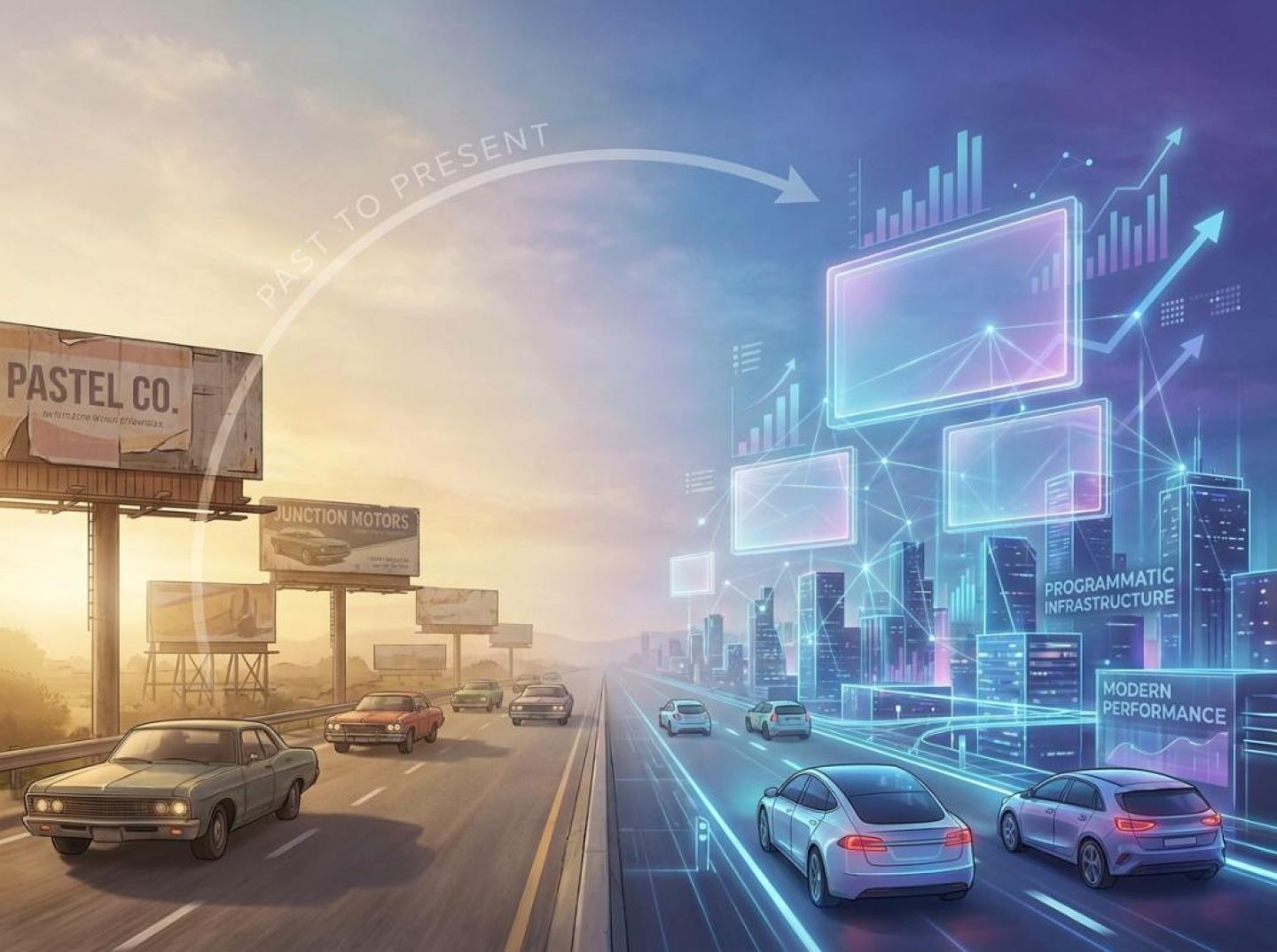
OOH is no longer a siloed, intuition-only medium you “just know” works. Platforms like AdQuick are wiring billboards, street furniture, and place-based screens into the same performance infrastructure that powers paid search and social. Location and mobility data, real-time impression modeling, and AI-driven planning now let teams test, optimize, and scale OOH with the same rigor they bring to their Meta, Google, or programmatic display budgets.
That shift has consequences—and not just for how brands buy media.
It means the people behind those “old-school” OOH roles are sitting on an underpriced asset in the digital economy: they already understand how attention moves in the real world. The Sales Manager who knows which side of the highway prints money on Friday afternoons; the Real Estate Director who can read a zoning map like a heatmap; the National Account Executive who’s spent a decade proving lift with nothing but foot traffic and phone calls—these are exactly the instincts performance marketers pay a premium for when they try to turn abstract metrics into actual behavior.
As AdQuick’s own team explains, modern OOH doesn’t just get measured; it exerts a “halo effect” on adjacent digital campaigns, lifting search, social, and ecommerce performance when it’s planned and sequenced correctly. That’s not a coincidence. Out-of-home pros have always been forced to think cross-channel, even before there was language for it: where will someone be, what will they be doing, what else will they see or search or buy in the next hour?
Now that the medium itself has been brought “into parity with modern performance channels” through real-time data and programmatic DOOH buying, the skill gap isn’t where you think it is. The tools have caught up. The talent narrative hasn’t.
Scroll through a recent batch of OOH employment opportunities and you’ll see language about “high-impact billboard and digital display solutions,” “results-driven campaigns,” and “growing revenue and market share.” What you won’t see are the words that dominate LinkedIn postings for growth marketers: CAC, ROAS, cohorts, funnels, creative testing. Yet the underlying job is converging. Whether you’re placing a spectacular in Times Square or a TikTok Spark Ad, you’re doing the same thing: buying attention, measuring response, and reallocating budget toward what works.
That’s where ad spy tools and performance marketing stacks come in.
The same pattern-recognition muscles used to scan a market for underpriced bulletin inventory can be retrained to tear through competitive Facebook Ad Libraries, TikTok creative galleries, or programmatic placement reports. The same negotiation instincts honed in billboard sales can be redirected toward ruthless bid optimizations and channel mix rebalances. And the same knack for telling a compelling story to a local car dealer can be repurposed into building airtight performance narratives for CFOs.
This article makes a simple argument: the “billboard jobs” that still populate pages of OOH classifieds aren’t relics—they’re a ready-made talent pipeline for modern performance marketing teams and power users of ad spy tools. The future of OOH is already “powered by intelligence, data, and access”; the question now is whether the people who built the medium will claim their seat in the performance era, or let someone else with less real-world experience sit in it.
Scroll through a few weeks of OOH Today classifieds and a pattern jumps off the page long before any candidate does.
Sales Manager – Outdoor Advertising in southern Illinois. Business Development Representative in NYC. National Account Executive in Los Angeles. Local Media Sales Executive in Denver. The list repeats with eerie consistency across multiple editions of their “12 OOH Opportunities” roundups: sales, sales, and more sales, plus a supporting cast of real estate, operations, installers, and the occasional graphic designer.
To most people, that looks like a niche job board for billboard sellers and sign techs. To anyone building performance teams, martech products, or ad spy tools, it should look like something very different: a dense, overlooked pool of people who already think in reach curves, locations, and lift — but who’ve been trapped in a channel that long pretended it couldn’t be measured.
These listings quietly encode a specific skill mix:
For years, the problem was that OOH wasn’t treated as a performance channel, so this talent never got credit for performance thinking. The work they did to “make the unmeasurable measurable” lived in spreadsheets, traffic counts, and back-of-the-envelope GRP math. That changed when platforms like AdQuick reframed OOH as a measurable, optimizable medium.
What AdQuick calls the move from “intuition to precision” isn’t just a tech story; it’s a talent story. If you’re a Sales Manager selling “high-impact billboard and digital display solutions” in southern Illinois, you’re suddenly operating in a world where:
That world looks strikingly similar to how performance marketers diagnose funnel gaps, how media buyers rebalance budgets, and how ad intelligence tools scan competitive landscapes.
Look again at the OOH Today descriptions. A typical Sales Manager role is tasked to “develop and execute sales strategies to grow revenue and market share” and “build and maintain relationships with local businesses, agencies, and regional advertisers” as the listing explains. Strip out the word “billboard” and you have the same mandate given to someone running mid-market SaaS or a performance agency P&L. The underlying capabilities — prospecting, pipeline management, account expansion, and data-informed targeting — are identical.
The gap is not talent; it’s translation.
Most of these professionals have spent their careers selling “boards,” not bidding strategies. They talk about “locations” instead of audiences, “rides” instead of impressions, and “postings” instead of flights. Meanwhile, modern OOH platforms are already integrating with the same programmatic and analytics stack used by performance and ad tech teams, bringing OOH “into parity with modern performance channels” via real-time data and AI-powered optimization.
That convergence means the classifieds are no longer just a jobs page; they’re an index of performance-ready operators who happen to be wearing high-vis vests and carrying site maps. If you’re building a performance marketing org, a programmatic DOOH offering, or an ad spy product, the “Sales Manager – Outdoor Advertising” and “National Account Executive – Billboard Ad Sales” roles aren’t peripheral. They’re the hidden signal: a constantly refreshed roster of people who already understand how attention behaves in the wild — and who are one vocabulary shift away from thriving in a fully data-driven ecosystem.
Out-of-home doesn’t need to become a performance channel one day in the future. It already is one. The technology, measurement, and buying rails are in place. The only thing that hasn’t modernized at the same pace is how the talent in OOH is described, developed, and deployed.
On the buy side, platforms like AdQuick have dragged OOH out of the realm of “trust me, it works” and into parity with search, social, and programmatic. They’re delivering campaign data in real time, exposing the “halo effect” that OOH has on adjacent digital campaigns, and using AI to analyze trillions of possible unit combinations to maximize performance. The result is OOH that’s targeted, optimized, and attributable—exactly how a performance marketer expects every channel to behave.
AdQuick’s own description of its platform reads like copy from a growth marketer’s tech stack, not a traditional OOH vendor. It talks about moving from intuition to “a future defined by precision and performance,” and about programmatic DOOH buying through a DSP that “aligns with how today’s marketers already operate across other channels,” putting OOH squarely inside the same optimization loop as Meta, Google, and the trade desk du jour. When you can plan, buy, and optimize OOH with the same rigor as a paid search campaign, you’re not selling “boards” anymore—you’re selling performance inventory that just happens to live in the physical world.
That shift is beginning to show up in how the industry talks to itself. In a widely shared provocation, Brent Baer asked what would happen if OOH simply stopped selling billboards. His argument is blunt: clients don’t wake up wanting a 14' x 48' unit on I‑95; they wake up wanting market share, launches that don’t flop, and momentum that outpaces their category. Location, impressions, CPMs, and advanced audience measurement are “still just tools.” The outcome is the product.
If you’ve spent any time inside performance marketing, that framing is instantly familiar. It’s the same mental model that powers bid strategies, LTV/CAC calculations, and conversion rate optimization. The irony is that OOH sales talent has been living adjacent to this mindset for years—talking about lift, share, and brand outcomes—but their job titles and compensation plans keep dragging them back to the billboard.
Scroll those same OOH classifieds and you’ll see the misalignment in black and white. A Sales Manager in southern Illinois is expected to “develop and execute sales strategies to grow revenue and market share,” to build regional advertiser relationships, and to lead a team that sells “high-impact billboard and digital display solutions” with a mission “to connect businesses with their audiences through strategic, creative, and results-driven campaigns.” That is not fundamentally different from what a performance marketing lead does when they stitch together paid social, search, and programmatic video around a specific revenue target.
The daily work of a strong OOH rep is already performance work: diagnosing a client’s growth problem, translating it into reach, frequency, and location strategies, then navigating a fragmented supply landscape to assemble a plan that hits budget and KPI constraints. The better ones know how to use mobile data, attribution studies, and post-campaign reporting to prove that those choices drove footfall, sign-ups, or sales. They may not call it media mix modeling or multi-touch attribution, but they’re solving the same math puzzle.
What’s missing is not the aptitude—it’s the narrative and the bridge. The industry has modern planning tools, programmatic pipes, and a growing expectation that OOH prove ROI in the same way as any other channel. Yet the talent market still advertises for “Account Executive – Billboard Ad Sales” instead of “Revenue Strategist – OOH & Omnichannel,” and still evaluates candidates on Rolodex depth instead of their fluency with data, experimentation, and performance frameworks.
Until that story catches up, OOH will continue exporting its most performance-ready people into other channels one by one, instead of positioning them as a ready-made cohort for performance marketing roles, bid-based platforms, and even ad spy tools that need people who understand how creative, context, and placement really move numbers in the wild. The tech has already crossed the bridge from billboards to performance. The talent story is just standing on the shoulder, waiting for someone to wave it across.
Scroll past that “Sales Manager – Outdoor Advertising” listing in southern Illinois on the OOH classifieds and you can almost hear the performance marketers yawning. Sales. Territory. Relationships. None of it sounds like bid strategies, conversion lift, or ROAS dashboards.
The problem isn’t the talent. It’s the translation.
A seasoned OOH seller already speaks in impressions, CPMs, flight dates, and makegoods. They understand reach, frequency, and markets down to specific exits and neighborhoods. Thanks to platforms that now deliver OOH data in real time and bring it “into parity with modern performance channels,” as the team at AdQuick describes, the distance between “billboard sales” and “performance media buying” is far smaller than it looks on a job board.
Take that southern Illinois Sales Manager – Outdoor Advertising role at D.O.T. Outdoor. On paper, the responsibilities are classic local media sales:
Read that through a performance lens and you get a very different story:
None of that is “soft.” It’s commercial intelligence. In channels where tools like AdQuick’s DSP already enable programmatic DOOH buying, media buyers who understand both the math and the messy offline context have an edge.
Where the pivot does require a shift is in three areas: time horizon, granularity, and tooling.
2. Granularity
Traditionally, you sell units and packages. Performance buyers think in micro-slices: segment-level bids, placement-level blacklists, creative-by-creative results. The move from “this board on I‑55” to “this impression from this anonymous mobile ID near I‑55 at 5 p.m.” is largely a data and vocabulary upgrade; the underlying logic—right message, right person, right context—hasn’t changed.
3. Tooling
The modern OOH stack is already algorithmic. Platforms now “analyze trillions of possible combinations of OOH units,” using demographic and behavioral data to place each dollar strategically, as AdQuick explains. That’s not conceptually different from how a paid social or programmatic display platform evaluates inventory and optimizes bids. The pivot is learning new interfaces and measurement models, not reinventing your brain.
If you’ve spent years in roles like Business Development Representative, National Account Executive, or Local Media Sales Executive that recur throughout OOH Today’s job listings, your next job title doesn’t have to be another variation of “sales.” It can be Performance Media Buyer, Growth Marketing Manager, or Programmatic Strategist.
The through-line is simple: instead of selling access to inventory, you’re allocating budget across inventory to produce measured outcomes.
You already know how to:
Performance marketing does the same work—but with dashboards and ad spy tools instead of avail sheets and rate cards. The leap isn’t from analog to digital; it’s from anecdote to instrumentation. And if you’ve helped clients connect real-world business results to “just a billboard,” you’ve been preparing for this pivot longer than you realize.
If you skim a typical OOH job board, the obvious “performance” roles sit on the sales side. But buried in the same OOH classifieds are the real sleeper hits for the performance era: Real Estate VP, Director of Operations, sign installers, LED techs. These are the people who know where the metal is bolted to the ground, how often it’s lit, when it’s down, and what it really takes to keep a placement live.
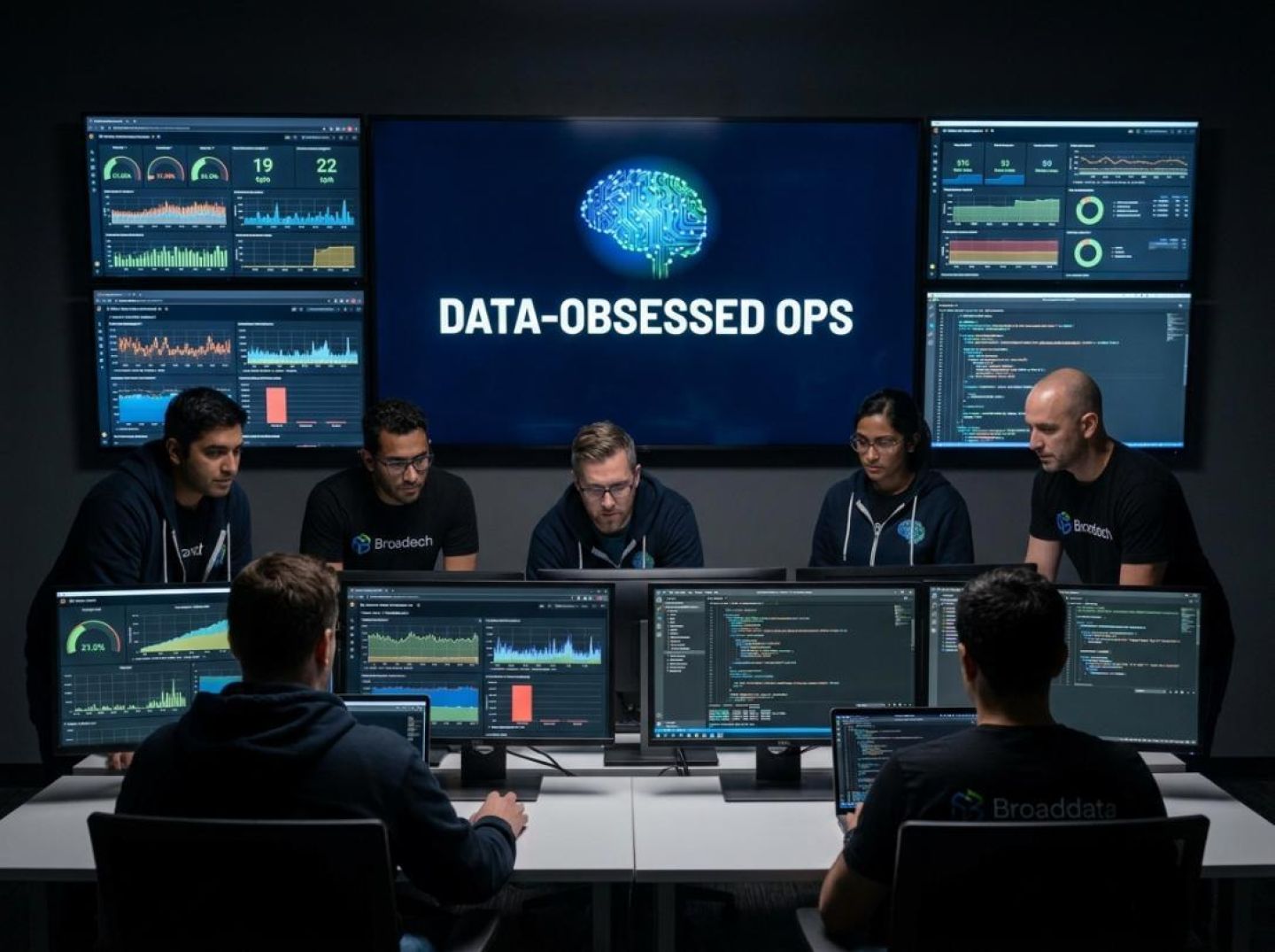
That’s not just back-office muscle. It’s the operational backbone that data‑obsessed ad ops teams are quietly trying to recreate in SQL and dashboards.
A Director of Operations at a national street‑level network spends their day orchestrating fleet schedules, installation windows, and service routes. In the OOH Today listings, those “Director of Operations” and “LED Video Screen Service & Installation Tech” roles are framed as maintenance and logistics. In practice, they’re managing:
That’s exactly how a performance marketer thinks about inventory quality and pacing. Where a DSP operator worries about “viewability” and “delivery caps,” an ops lead worries about “is the face lit, is the vinyl hung, is the screen online?” Translate the nouns and you get the same mental model: protect delivery, maximize usable impressions, and escalate quickly when a placement underperforms its theoretical potential.
Real Estate VPs and site acquisition associates are another overlooked goldmine. A “Real Estate VP/Director/Associate” in the employment listings might be described in terms of leases, landlords, and permits. Underneath that, they’re doing:
Modern platforms like AdQuick are now ingesting consumer, demographic, and behavioral data to pick “the right audience, in the right place, at the right time.” Real estate teams have been making those calls for years with a thinner data stack: DOT counts, local knowledge, and hard‑won intuition about commute flows and retail gravity.
The gap is not capability; it’s instrumentation. Hand a site‑selection pro a map with mobile movement patterns and CRM overlays and you suddenly have a geo‑targeting strategist who can speak fluently about reach curves and incrementality.
Installers and LED techs might seem like the farthest thing from performance marketers, yet their day‑to‑day mirrors live‑ops optimization. A “Sign Installer” or “LED Video Screen Service & Installation Tech” listed on OOH Today is responsible for:
In digital terms, they’re the last‑mile SREs for your ad server. As OOH buying is pulled into real‑time, data‑rich environments—where, as AdQuick describes, delivery and performance data show up “in real time” and can be optimized by AI—the value of accurate, timely ground truth explodes. Ad ops teams can only trust their optimization algorithms if someone close to the hardware is ensuring the inventory is actually live and behaving as modeled.
This is where install and service talent become essential partners to data teams: they can close the loop between what the log files say and what’s really happening on the catwalk.
When you step back, the connective tissue becomes obvious:
The future OOH stack that platforms like AdQuick are building—AI‑powered optimization, programmatic DOOH, and real‑time performance feedback—doesn’t replace operations, install, and real estate. It amplifies them. The better your backbone, the more trustworthy your data, and the more aggressive you can be with bids, tests, and attribution models.
For OOH veterans sitting in these “unsexy” roles, that’s the opportunity: not to abandon the physical world for dashboards, but to realize that your deep, site‑level reality is exactly what modern performance marketing—and the tools that spy on it—are suddenly desperate to ingest.
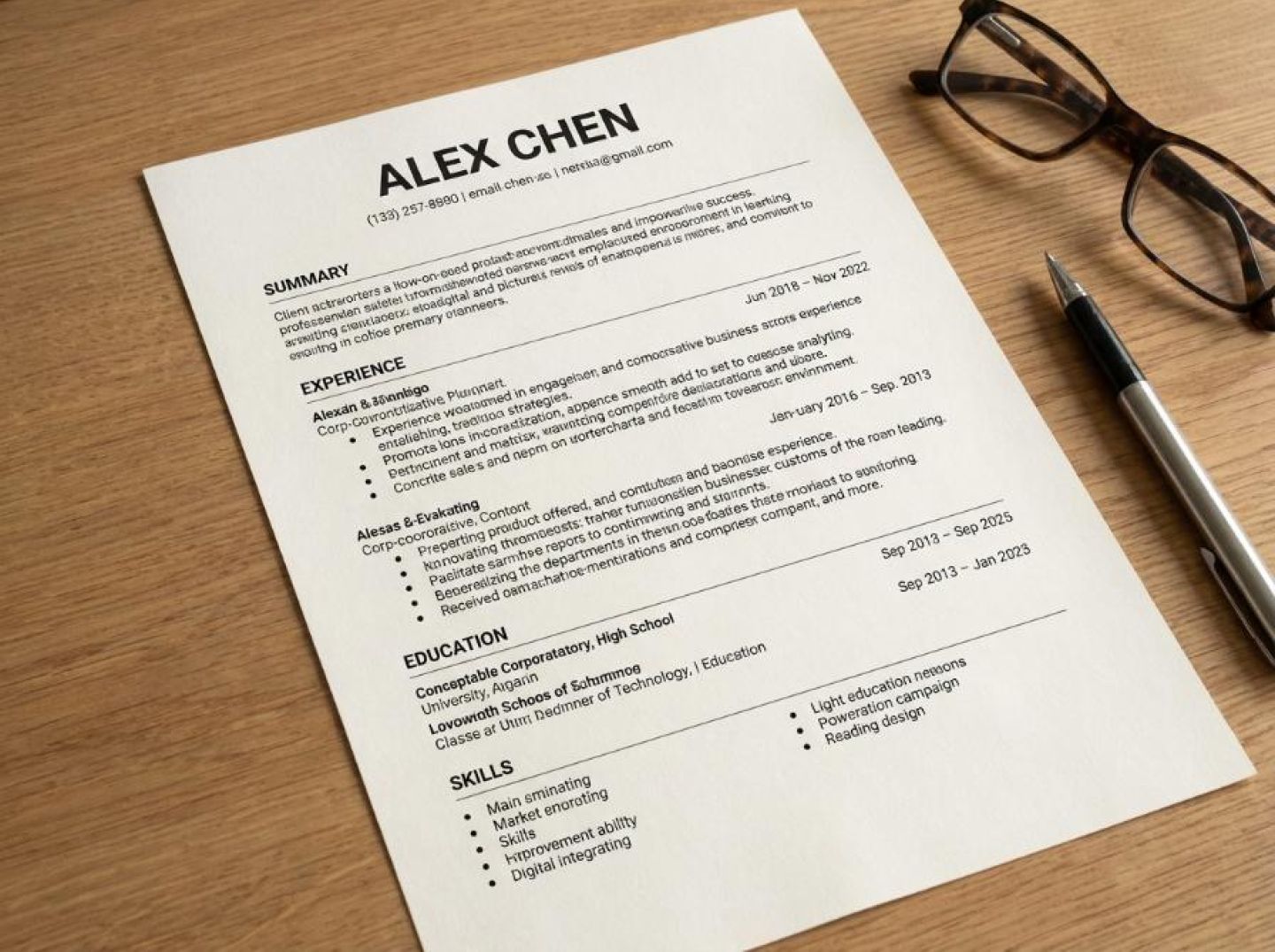
Here’s the uncomfortable truth: most OOH résumés look invisible to a hiring manager at a performance agency or an ad tech company. Not because the skills aren’t there—but because the nouns are wrong.
You say “Territory Management.” They’re searching for “pipeline ownership” and “funnel velocity.”
You say “board locations and permitting.” They’re filtering for “inventory strategy” and “supply-side management.”
You say “install crew scheduling.” They’re looking for “campaign operations” and “traffic management.”
Section 5 is about fixing that translation problem so your OOH background shows up as exactly what it already is: performance marketing muscle.
Start by rewriting your current role in the language of outcomes and levers, not locations and lists. A Sales Manager for outdoor advertising in Southern Illinois sounds old-school until you frame it as, “Led a multi-market revenue operation for a high-impact media network, owning strategy, pipeline, and performance for all local and regional advertisers.” That’s not embellishment—that’s just describing what the Sales Manager – Outdoor Advertising listing actually expects: leading a team, developing revenue strategies, expanding market share.
Performance teams don’t care that you “called on car dealers.” They care that you:
On the ops and real estate side, the reframing is even more potent. A Real Estate VP who negotiates board locations and traffic counts is, functionally, doing what a senior supply strategist does in a programmatic environment: curating and optimizing inventory so every dollar has better odds of working. If you’ve ever killed a site because line-of-sight was compromised, you already understand what “low viewability” means in display.
The secret is to take what AdQuick calls the shift from “intuition to precision” and show that you’ve been moving in that direction for years. If you’ve used mobile movement data to justify a new board, that’s audience modeling. If you’ve tracked lift in store traffic when a local client went up on three prime units, that’s incrementality analysis, even if you never called it that.
To catch the eye of performance marketers and ad tech recruiters, reframe your OOH experience into a few core buckets:
The same goes for job titles you pursue. That Director of Operations role at Encompass Media or the LED Video Screen Service & Installation Tech position at Formetco reads like pure OOH craft on OOH Today’s classifieds, but those responsibilities map cleanly into “campaign delivery,” “ad server reliability,” and “digital signage infrastructure”—all of which are legible to ad ops, programmatic, and martech hiring managers.
Finally, be explicit about the bridge between channels. Modern platforms treat OOH as a “non-negotiable part of modern marketing strategies,” integrating it with programmatic buying and reporting alongside other performance channels, as the AdQuick team describes. If you can articulate how your boards contributed to website traffic, store visits, or search volume, you’re no longer “just” OOH—you’re already thinking like an omni-channel performance marketer.
You don’t need to become a different person to break into performance and ad spy tools. You just need to describe what you’ve actually done in a language the algorithm—and the humans reading on the other side—can finally recognize.
Receive top converting landing pages in your inbox every week from us.
Must Read
Discover how AI-generated ad fatigue is making native, push, and TikTok campaigns increasingly look alike, weakening engagement and reducing competitive advantage. Learn how to use competitive ad intelligence tools to identify repetitive creative patterns, develop more distinctive ads, and stand out in AI-driven advertising auctions.
Liam O’Connor
7 minOct 14, 2026
How-To
Learn how to connect out-of-home (OOH) advertising with digital performance campaigns to create measurable cross-channel funnels. Discover how to plan LED truck routes, coordinate search and social ads, optimize mobile landing pages, and track conversions so physical advertising drives measurable business results.
Samantha Reed
7 minOct 13, 2026
How-To
Discover how big-brand sports sponsorships use fan behavior, geographic targeting, and cross-channel advertising to reach high-intent audiences beyond celebrity endorsements. Learn how to reverse-engineer sponsorship strategies, validate audience segments with competitive intelligence, and build cost-effective campaigns around local fandom, CTV, mobile, and creator content.
Dan Smith
7 minOct 12, 2026