8 minOctober 2, 2026

Our tools monitor millions of native, push, pop, and TikTok advertising campaigns.
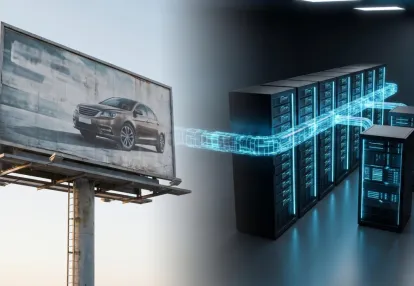
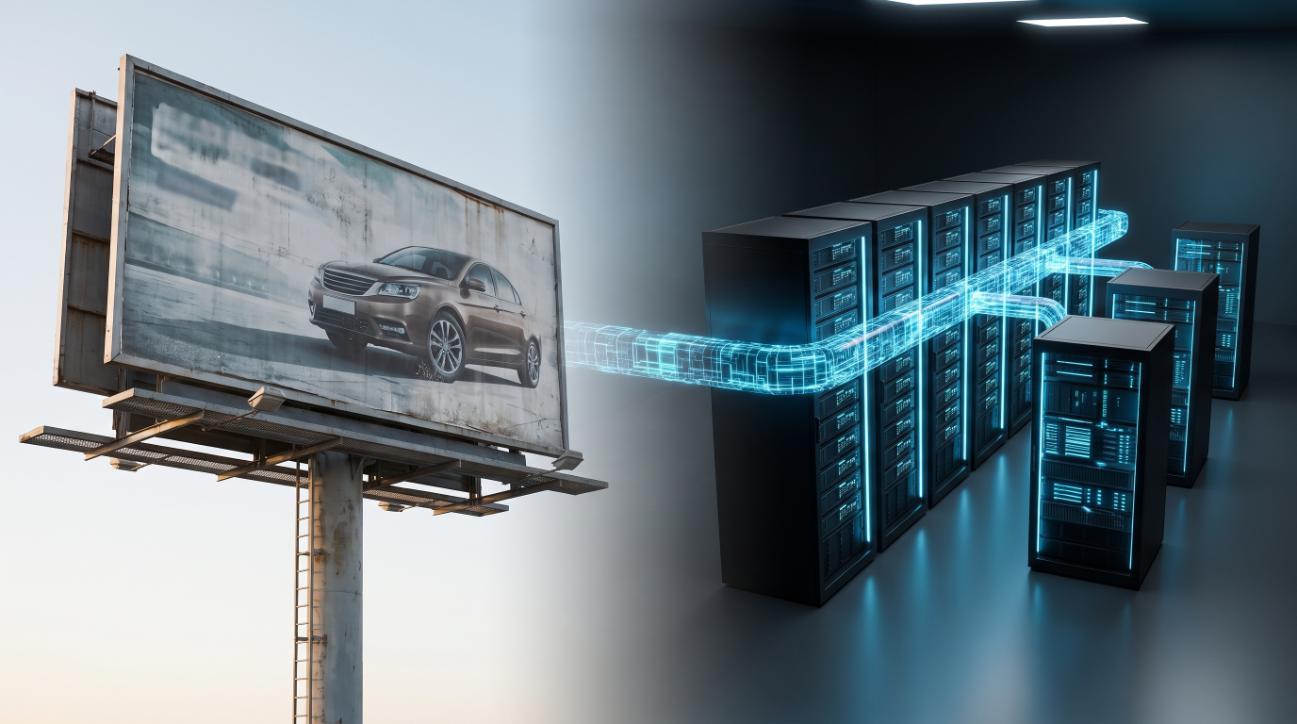
Get StartedOut-of-home has always been the “feel it in your gut” channel—the one you justified with intuition, traffic counts, and a really good montage in the case study deck. That world is disappearing. The steel structures are still there, but the value is increasingly in the signal streams flowing through them. OOH is quietly, but decisively, becoming a performance channel.
The shift starts with measurement. Where planners once relied on monthly impressions and rough demographics, modern OOH platforms now ingest mobility data, device graphs, point-of-sale signals, and campaign logs and expose them in real time. As the team behind AdQuick’s “universal adapter” platform explains, location, audience, and performance data can now be delivered continuously, bringing OOH into genuine parity with digital performance channels. This isn’t just a prettier dashboard; it’s a structural change in how campaigns are planned, optimized, and reported.
Data also reframes how OOH fits into the broader media mix. OOH has long produced a measurable “halo effect” on adjacent digital campaigns—think more search queries, higher branded click-through rates, and stronger social engagement when there’s a billboard in the market. What’s changing is that this uplift can now be quantified and attributed with much more precision. When impressions, movement patterns, and conversions are all stitched together, OOH no longer has to argue for its impact with anecdote; it can show its contribution with the same kind of evidence search or social teams bring to the table.
Crucially, the new OOH isn’t just measured—it’s optimized. Platforms like AdQuick leverage advanced machine learning to evaluate trillions of possible unit combinations, folding in consumer, demographic, and behavioral datasets to decide where each incremental dollar should go. Instead of “we’ll take the top ten boards on the highway,” the question becomes: which specific locations, formats, and dayparts maximize modeled outcomes for this audience and objective? That’s performance language, not traditional OOH language.
The same transformation is happening upstream on the supply and sales side. As OOH Today reported in its coverage of Trillboards and hellOOH, the bottleneck in OOH is no longer access to inventory or basic automation—those pieces are mostly solved. The constraint is intelligence: understanding fragmented demand signals in real time, at the level of individual decision-makers, and turning that into actionable strategy. hellOOH attacks this gap by structuring disparate market activity into a machine learning–driven intelligence layer, effectively modeling where demand is emerging before it shows up in your inbox.
That distinction matters for anyone with a traditional OOH background. The companies that win the next era won’t simply be those with the most faces; they’ll be the ones with the fastest intelligence loops—those who can see shifts in demand earliest, reallocate budgets fastest, and close the feedback loop between market behavior and sales action. In this world, OOH sales is less about “what we have to sell” and more about “what the market is about to want.”
On the buy side, that same logic is playing out through programmatic digital out-of-home. AdQuick’s platform, for instance, enables programmatic DOOH buying through a DSP, allowing campaigns to be executed with the same automated, data-driven workflows used for display, video, and CTV. Frequency caps, audience segments, performance thresholds, and dynamic creative rules—once foreign concepts in OOH—are now standard levers.
Put together, these trends have moved the medium from a world of intuition to one defined by precision and performance. Measurement parity with digital, AI-powered planning, machine-modeled demand intelligence, and programmatic execution mean OOH is no longer an outlier. It’s a fully integrated, data-native performance channel—one where the biggest opportunities now belong to people who understand the old, analog realities of the street and can translate them into the new, algorithmic logic of the screen.
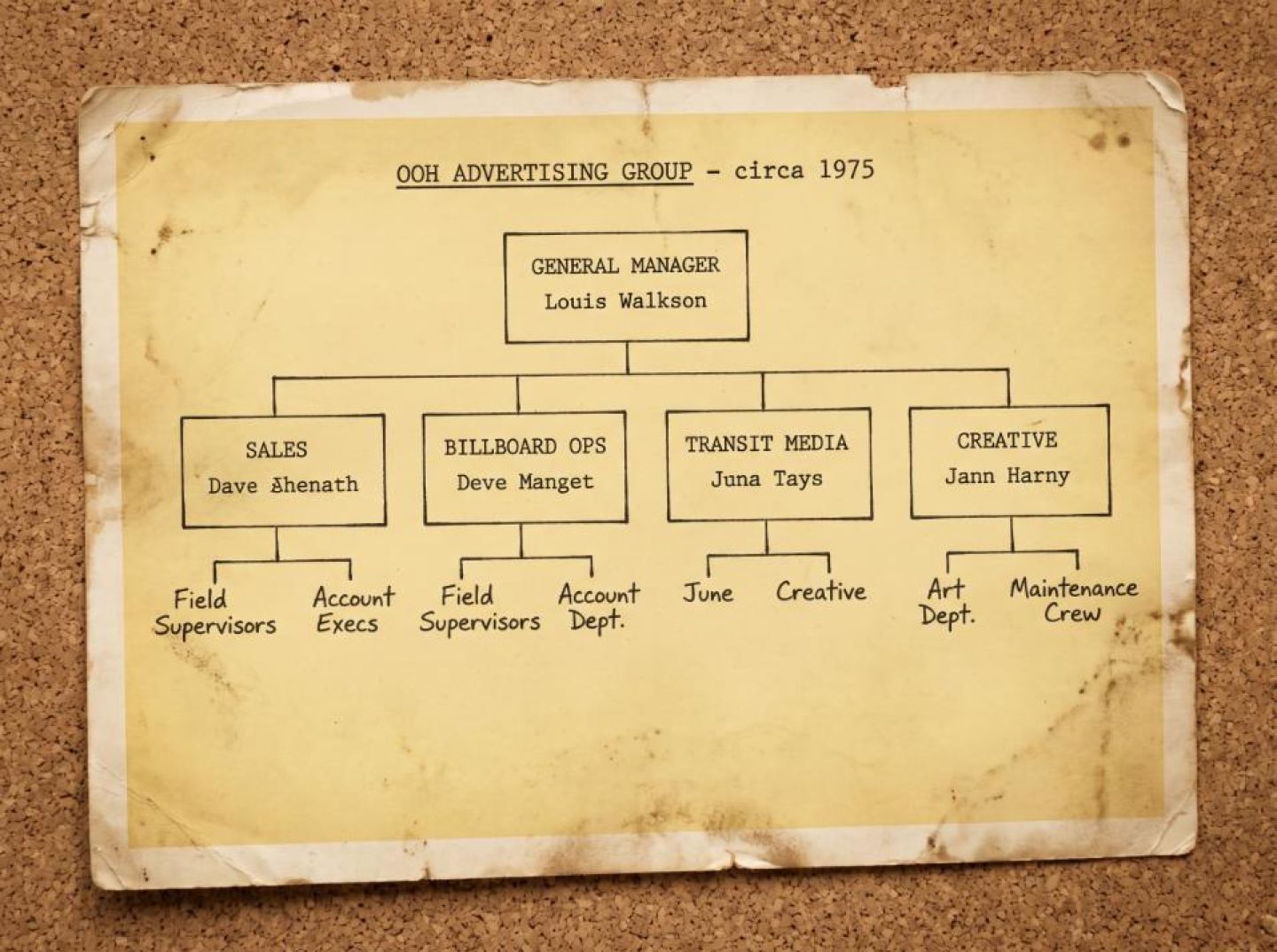
If you scroll through today’s OOH classifieds, you’re not just seeing jobs—you’re seeing a snapshot of the legacy org chart that built this industry. It’s still there in plain sight: sales, real estate, operations, creative, admin, and a scattering of specialists. The surprise is how many of those “old world” responsibilities already rhyme with what data‑driven ad intelligence companies need.
Take the sales-heavy listings in OOH Today’s recurring “New Sales Opportunity” roundups. Roles like Business Development Representative (Media Sales) for Liquid Outdoor, National Account Executive at SILVERCAST, or Local Media Sales Executive at Social Indoor are framed as classic new-business gigs: prospecting, pitching, and closing regional advertisers and agencies across key markets. Under the hood, though, these jobs teach you to:
Those are precisely the muscles you use in a data‑first environment. A platform like AdQuick’s “universal adapter” may optimize campaigns using machine learning and trillions of inventory combinations, but someone still has to frame the brief, translate performance metrics into a narrative a CMO will understand, and reconcile what the algorithm recommends with what the client actually believes. If you’ve been selling boards, walls, or place-based screens, you already know how to bridge that gap between a spreadsheet and a story.
Move over one column in the classifieds and you find the real estate and operations backbone: titles like Director of Operations at Encompass Media Group, Sign Installer and LED Video Screen Service & Installation Tech at Formetco. These roles are about inventory: where it is, what it can do, how reliably it works, and how it fits into municipal and landlord constraints. That operational literacy maps almost one‑to‑one onto the data layer. When a modern OOH platform ingests location, format, and contextual data to make once‑“unmeasurable” placements measurable in real time, it still needs people who:
If you’ve ever coordinated a vinyl swap in the rain, negotiated a tricky landlord, or rerouted a campaign around a construction closure, you’ve already done “real‑world QA” on what is now becoming a software problem.
Even on the creative side, the classifieds show underlying skills that carry forward. A listing for a Graphic Designer/Brand Marketing Specialist – OOH at SILVERCAST is framed around traditional deliverables—layout, branding, production. But designers who have spent time adapting creative to wildly different formats, legibility constraints, and dwell times are already thinking in variables: what has to stay fixed, and what can change by screen, by audience, or by context. That’s the same logic behind dynamic creative rules in programmatic DOOH, where platforms can adjust messages in real time based on the demographic, behavioral, or situational signals being fed into the buy.
Finally, the “Free Agents” and “Services” sections—those consultants, printers, and installers advertising for project work—hint at a culture of scrappy, self-directed problem solvers. In an industry where OOH is being pulled into parity with performance channels and stitched into broader media mixes through programmatic DOOH buying, that entrepreneurial streak is exactly what emerging ad intelligence teams look for: people who can own a slice of the puzzle without waiting for someone to hand them a fully defined job description.
In other words, the old OOH org chart isn’t obsolete; it’s a competency map. Sales becomes revenue strategy and measurement storytelling. Operations becomes inventory intelligence and data quality assurance. Creative becomes dynamic content logic. If you can read between the lines of the current classifieds, you’ll see that you’re not starting from zero—you’re already carrying around half the skill set the “black box” platforms quietly depend on.
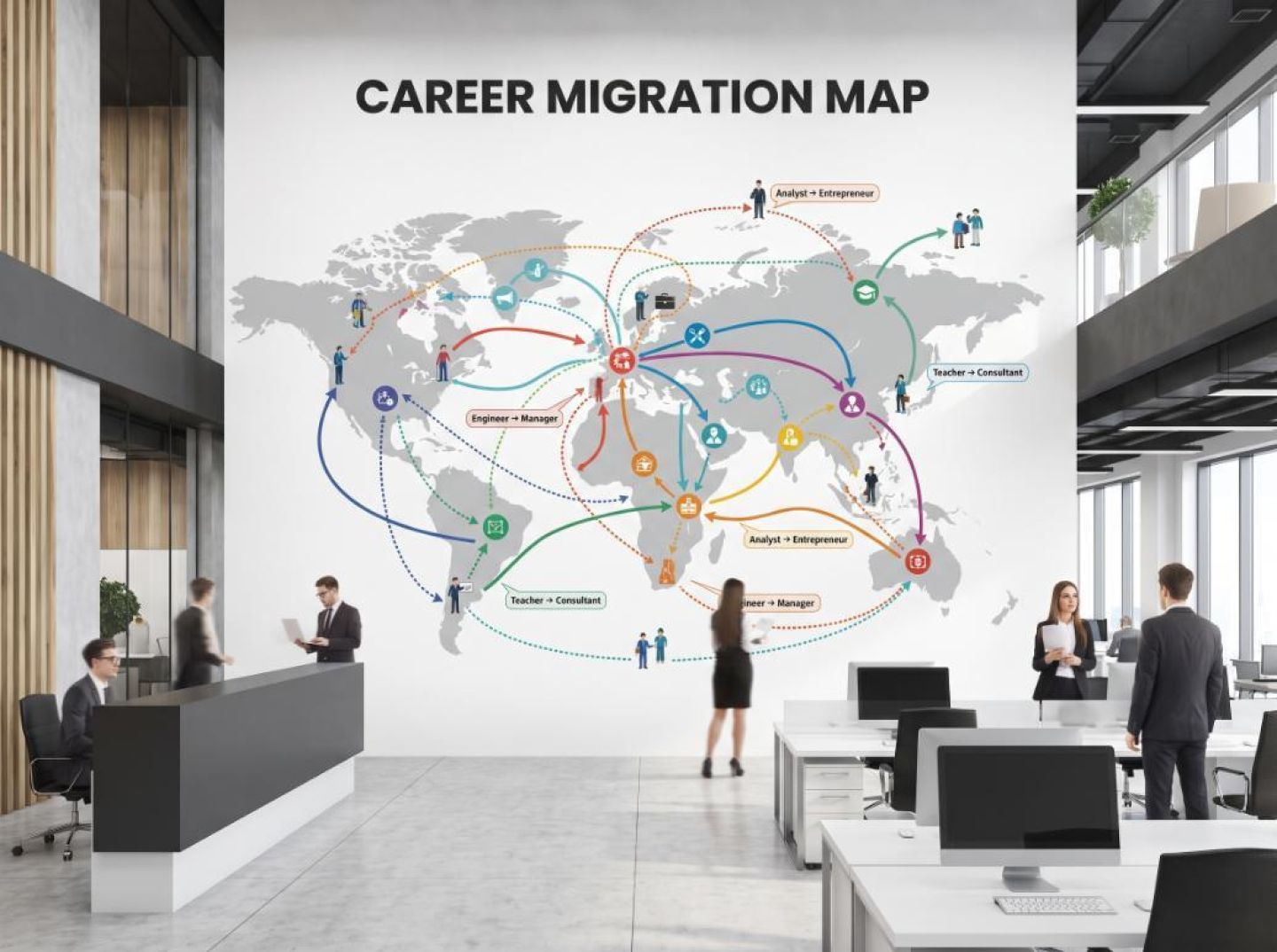
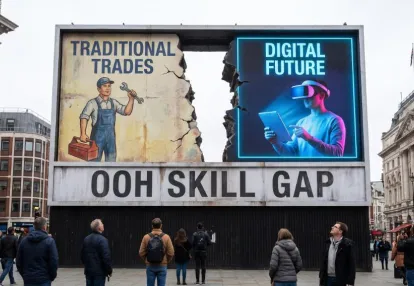
If you’ve spent years in OOH, you are not “behind.” You’re standing one click away from where the industry is already going. For almost every legacy OOH function you see in the classifieds, there is a near‑identical role sitting inside an adtech platform, a DSP, or an intelligence startup. The work hasn’t vanished; it has moved upstream into the data layer.
Think of it as a translation exercise, not a reinvention. You already understand audiences, locations, inventory quality, and campaign outcomes. Ad intelligence companies simply express those same realities in different vocabulary and tools—“impressions” turn into “modeled reach,” “rate cards” turn into “bid floors,” “good site lines” turn into “viewability and dwell time.” Platforms like AdQuick now pull real‑time location, mobility, and performance data into a unified layer that brings OOH “into parity with modern performance channels” and enables AI‑powered optimization. The people who know the streets, the clients, and the politics of inventory are exactly who these platforms need.
Let’s make that concrete by mapping the old org chart to its data‑driven twins.
Sales → Demand Intelligence, Revenue Operations, Platform Partnerships
If you’re an Account Executive or Business Development Rep like the roles listed for Liquid Outdoor, SILVERCAST, or Daktronics in the OOH classifieds, you already live in the demand side of the market. You know:
In an intelligence company, that becomes “demand modeling.” Titles shift to things like Market Intelligence Manager, Revenue Operations Analyst, or Demand Partnerships Lead. Instead of translating an advertiser’s brief into a physical plan, you’re helping product and data science translate market behavior into features and models—exactly what systems like hellOOH do when they turn fragmented history into “predictive demand signals.” Your client conversations become inputs into the machine, not just fodder for the next proposal.
Real Estate & Operations → Supply Analytics, Inventory Strategy, Network Optimization
If you’ve spent years negotiating leases, siting structures, or managing install and maintenance, you already think in terms of:
On the intelligence side, that mindset shows up in roles like Supply Strategist, Inventory Analytics Manager, or Network Optimization Specialist. Instead of driving the market in a pickup to scout poles, you’re driving the map inside a platform—ranking panels by performance potential, feeding “on‑the‑ground” constraints into algorithms, and helping ML systems, like those used by AdQuick’s planning engine, choose between “trillions of possible combinations” of units. What changes is the interface, not the judgment.
Creative & Brand Marketing → Product Marketing, Attribution Storytelling, Content for Sales
If you’re a Graphic Designer or Brand Marketing Specialist in OOH, you already craft narratives that connect place, audience, and message. In a data‑driven environment, that skill set becomes:
Your new canvas is a dashboard screenshot instead of a mockup, but the job is the same: make invisible value obvious.
Admin & Coordination → Data Operations, Customer Success, Platform Enablement
Those “glue” roles—coordinators, traffic, campaign ops—are already doing structured, repeatable work: collecting proof of performance, reconciling contracts, aligning installs with flight dates. In an intelligence company, this translates almost directly into data operations or customer success:
You’re still solving operational friction, but now the spreadsheet is the product.
The common thread: none of these jumps require you to become a software engineer or a PhD in machine learning. They require:
As intelligence layers spread—whether through universal adapters like AdQuick or demand‑modeling platforms like hellOOH—the companies that win will be those that blend machine‑modeled insight with human, market‑level intuition. You already own that intuition. The “migration map” is really an overlay: take your current box on the org chart, slide it one step into the data stack, and change the labels on the tools.
Walk any good OOH street rep through a city and you’ll see it: they’re running a live model in their head. They’re predicting attention, filtering noise, weighting context, and forecasting demand without ever opening a laptop. The difference in the new era isn’t that this intuition stops mattering; it’s that platforms are finally turning those instincts into explicit variables, training data, and machine‑learning feedback loops.
Think about what happens when you scout a new location. You don’t just see a board; you see rush‑hour choke points, sightline obstructions, traffic composition, neighborhood psychographics, and competitive clutter. In a data‑driven shop, that same bundle of observations becomes features in a model: dwell time, audience mix, frequency curves, creative density, category saturation. When a platform like AdQuick says it can analyze “trillions of possible combinations of OOH units” using behavioral and demographic signals, it’s essentially scaling the kind of multi‑factor reasoning a veteran real estate manager or planner has been doing for years — just with more math and less windshield time.
Your “gut feel” is not some mysterious sixth sense. It’s an unstructured dataset you’ve been accumulating across hundreds of campaigns. Every time you said, “this board always works for QSR but underperforms for B2B,” you were informally labeling training examples. In a machine‑learning workflow, those same patterns get captured as structured performance history, segment‑specific lift, and cross‑channel outcomes — like the documented “halo effect” OOH has on adjacent digital campaigns when placements are chosen with precision rather than broad assumptions.
The big shift is that intelligence is moving “upstream.” As transactional workflows and inventory management standardize, the bottleneck is no longer whether you can execute a buy, but whether you understand where demand and value will emerge next. That’s why a company like Trillboards chose hellOOH as its preferred intelligence layer: the constraint is no longer posting charts, it’s answering “what is happening, why, and what is likely to happen next?” at market speed.
Notice the language that hellOOH uses to describe that work. They talk about turning fragmented activity into “a system that can actually be learned from and acted on,” and about building a “machine learning–driven intelligence system” that structures market behavior, verifies campaign history, and maps decision‑maker relationships into predictive demand signals. Strip out the buzzwords, and you’re looking at three things OOH pros already do well:
What changes is the medium, not the mental muscle. Instead of a notebook full of war stories, you’ll help define schemas, flags, and scoring systems. Instead of telling a junior rep, “those hospital‑adjacent units always go early in Q4,” you’ll help product teams formalize that into a propensity score that surfaces earlier for healthcare demand. Platforms that already deliver performance data “in real time, bringing OOH into parity with modern performance channels,” as AdQuick’s team puts it, depend on exactly this translation: turning the tacit knowledge in OOH veterans’ heads into explicit signals machines can learn from.
If you’ve ever adjusted a buy on the fly, warned a client away from a “pretty but dead” location, or anticipated a category surge before the RFPs hit your inbox, you’ve already done the hard part. Machine‑learning systems don’t replace that judgment; they amplify it. Your next step is learning the vocabulary and tools so that what used to be instinct becomes the fuel that powers the black boxes everyone else is suddenly afraid of.
You don’t need to reinvent yourself as a quant. You need to wire the sales, planning, and creative instincts you already have into a loop where every hunch is tested, measured, and refined.
If you’ve sold billboards, you already know how to think in campaigns, not impressions. You’re used to stitching together locations to tell a story: airport arrival board → highway spectacular → urban wallscape → point‑of‑sale. Native, push, and TikTok campaigns are the same game, just with more knobs you can turn and more readouts you can watch.
The pivot is this: instead of arguing once in a conference room that “this exit ramp owns the evening commute,” you’re arguing every day with live numbers.
A classic OOH pitch sounds like: “This board hits weekday commuters, middle‑income families, plus weekend sports traffic. You’ll get a halo effect across local media and social chatter.”
In native:
Platforms like AdQuick have already shown how OOH can operate “in parity with modern performance channels” by feeding planners real‑time location and performance data and treating roadside units as optimizable inventory rather than static guesses, as their own platform overview makes clear. The same mindset applies when you shift from billboards to native units in a content feed: your “this feels right” gets plugged into a system that reports back—immediately—on scroll depth, click‑through, and post‑click behavior.
Your job is not to build the algorithm. Your job is to:
Example: instead of “this mommy blog will crush,” you define:
That’s an OOH test‑and‑learn mindset, just expressed in a dashboard.
Where OOH people shine on TikTok and push is their obsession with context and moment.
You’re already asking in the field: Who is here? What are they doing? What’s their emotional state? What’s around this board that either competes with or enhances attention?
On TikTok, that translates to:
On push, it becomes:
The intelligence layer now exists to support this kind of thinking. Companies like hellOOH structure fragmented behavior and campaign history into predictive demand signals, turning “I think this category is heating up” into a machine‑modeled trend that you can see and act on sooner, as their partnership with Trillboards to build faster “intelligence loops” around demand illustrates in their announcement. That same logic—shorter loops, earlier signals—is exactly what you want in digital creative and audience experimentation.
Concretely, transitioning into data‑driven ad intelligence roles means:
The mental upgrade is not from “seller” to “scientist.” It’s from one‑shot pitch to continuous, instrumented persuasion. Your street smarts don’t get replaced by models; they get amplified by a system that finally tells you, in real time, which of your instincts were right—and how to double down before the rest of the market catches up.
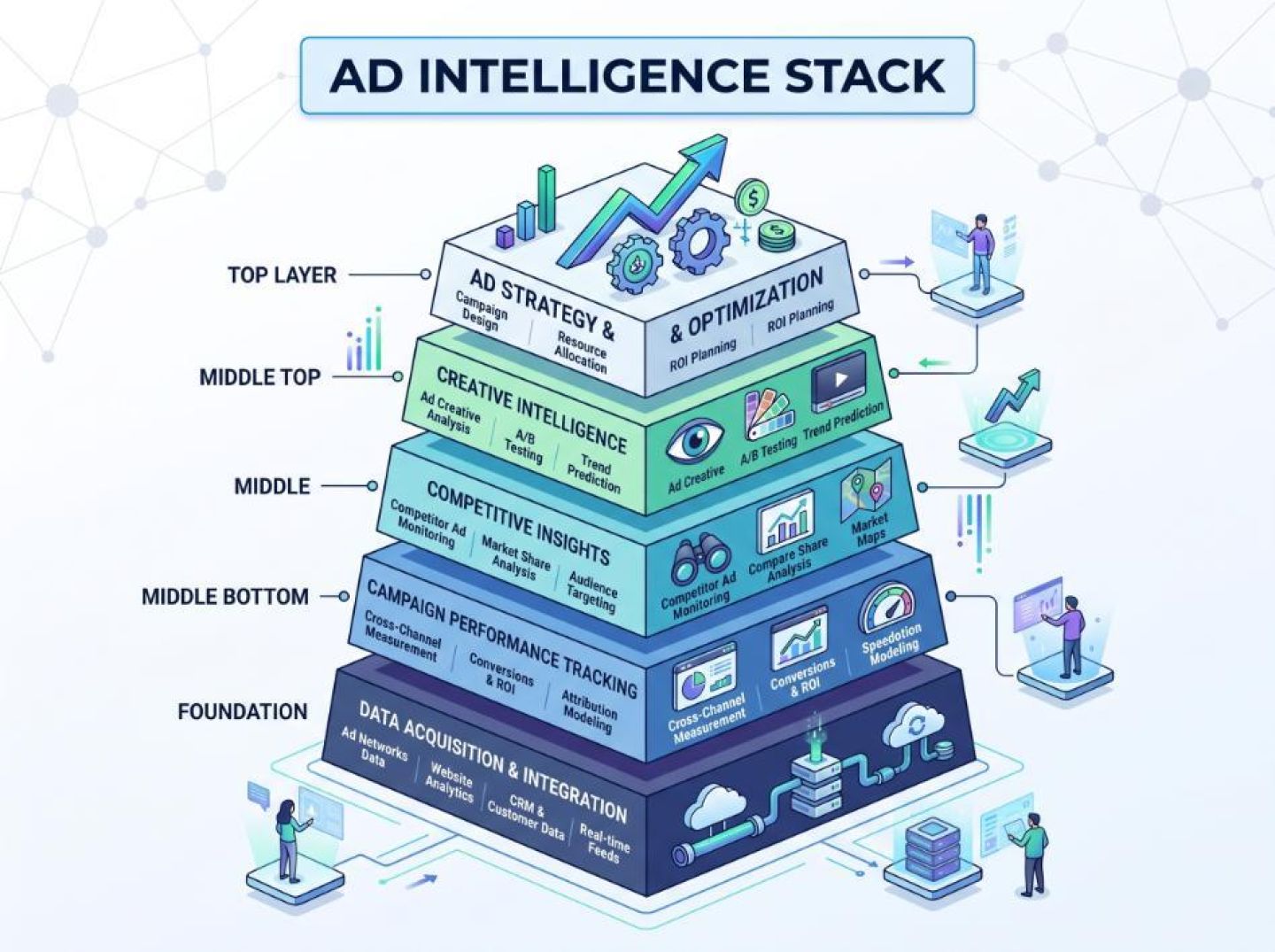
You don’t have to guess which platform to learn next. The stack is already sorting itself into a few clear layers, and OOH natives map cleanly onto each of them. The question isn’t “Which tool is hottest?” It’s “Where does my experience create unfair advantage inside this new intelligence loop?”
Think of the modern ad‑intel stack as three broad zones:
You’ve probably touched all three without naming them.
1. Intelligence layer: where your market sense becomes product
Platforms like hellOOH sit at the very top of the stack, turning messy market activity into structured, machine‑learnable signals. When Trillboards chose hellOOH as its preferred market intelligence platform, the move reflected a bigger shift: the constraint in OOH is no longer screens or servers, it’s “intelligence asymmetry” — knowing who is going to buy, what, and when, faster than the next operator.
If you’ve ever:
…you are already doing, manually, what this layer is trying to encode in software. Roles to look at here include market strategist, product specialist, or customer success for platforms modeling “predictive demand signals” the way hellOOH does. You become the translator between what the model thinks is happening and what the street knows is actually happening.
This is a strong fit if you:
2. Planning and activation: where OOH joins the performance stack
Further down the stack are universal adapters like AdQuick, which connect OOH into the same data and buying fabric as paid social, display, and CTV. Their pitch is simple: turn OOH from “hard to measure” into a performance channel, using machine learning to evaluate “trillions of possible combinations” of units based on behavioral and demographic data.
If your background is:
…then you’re wired for this layer. Titles may look like solutions consultant, campaign strategist, or platform planner. Instead of choosing 20 units from a static avail sheet, you’re shaping parameters and constraints that an AI uses to assemble and optimize an entire plan — sometimes tied directly into programmatic DOOH via a DSP, just as AdQuick describes.
This path fits you if:
3. Network and operator platforms: where operations becomes software
Finally, there’s the operator side — platforms that turn physical inventory into programmable, intelligent networks. Trillboards, for example, frames itself as a “software‑first digital signage network” that bridges SSPs and DSPs so local businesses can monetize their own screens while advertisers get “hyper‑local, high‑impact visibility” as.
If you’ve:
…this is home turf. Roles might have “publisher partnerships,” “supply,” or “network growth” in the title. You’re helping turn raw inventory into a liquid, data‑ready asset that intelligence and planning layers can actually use.
Choose this lane if:
How to pick your lane
Ask yourself three questions:
Your answers tell you which platform layer to prioritize. From there, your transition isn’t about becoming “a data person.” It’s about choosing the slot in the new ad intelligence stack where your OOH instincts stop being anecdotes and start becoming the engine.
Receive top converting landing pages in your inbox every week from us.
Guide
Discover how OOH professionals can transition from traditional billboard, sales, operations, and creative roles into data-driven ad intelligence careers. This guide maps existing OOH skills to intelligence, planning, activation, and network platforms while showing how street-level expertise can become a competitive advantage in modern performance advertising.
Marcus Chen
7 minOct 2, 2026
Guide
Discover how OOH professionals can transition from traditional sales, planning, real estate, and operations roles into data-driven ad intelligence positions. This guide explains how measurement, AI, predictive demand, optimization, and agentic systems are reshaping OOH careers and turning traditional industry experience into a competitive advantage.
Samantha Reed
7 minOct 2, 2026
Guide
Explore why traditional OOH sales experience is no longer enough as buyers become increasingly data-driven and equipped with AI, attribution, and competitive intelligence tools. This guide outlines the new OOH competency stack, from funnel intelligence and data literacy to outcome-based selling and strategic judgment.
David Kim
7 minOct 1, 2026