8 minSeptember 25, 2026

Our spy tools monitor millions of native ads from over 60+ countries and thousands of publishers.
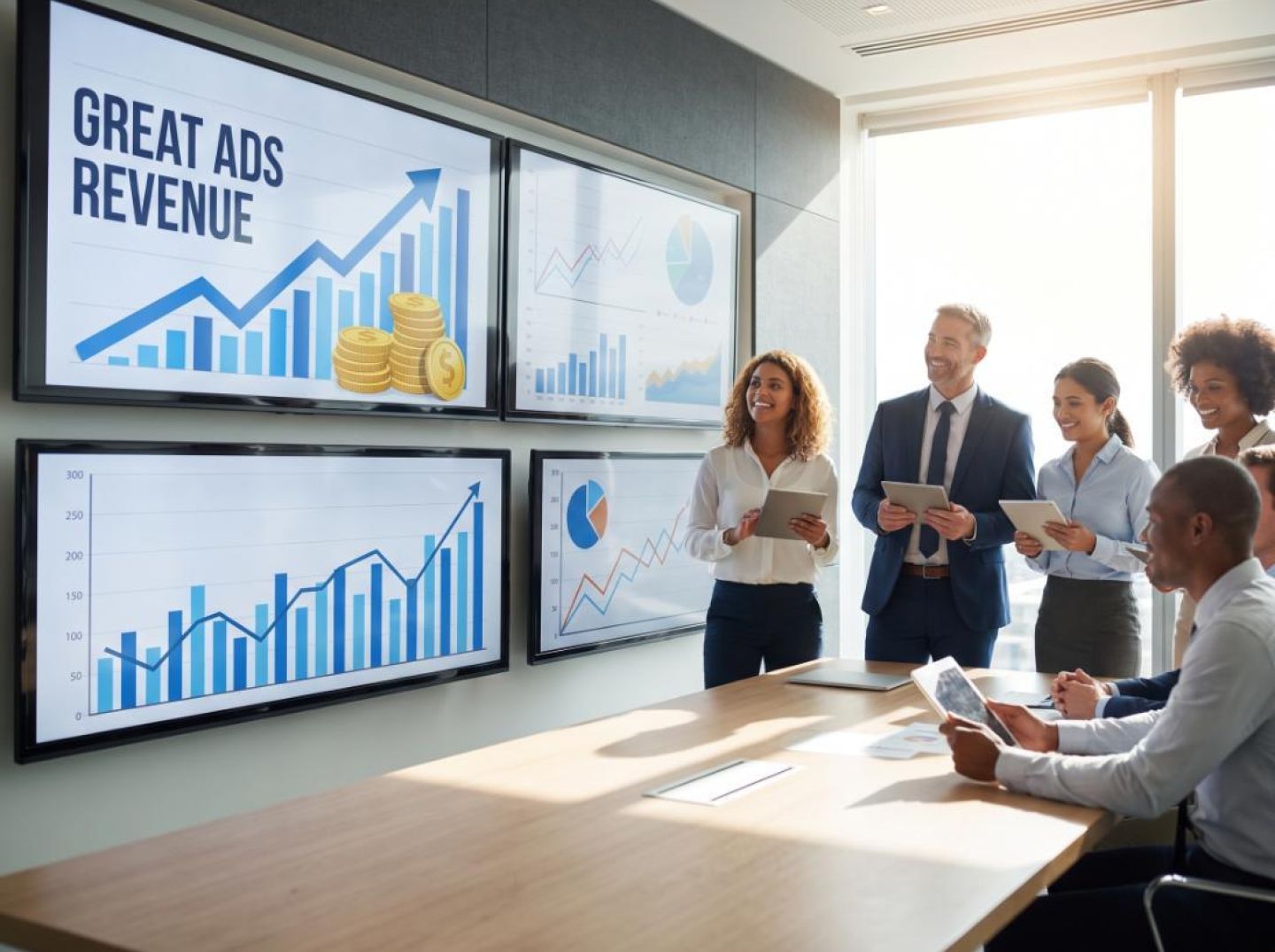
Get StartedIf you judged advertising by LinkedIn feeds and awards shows, you’d think the brands with the “coolest” creative were automatically winning. But the gap between what gets celebrated as a “great ad” and what actually drives profitable growth has never been wider.
A big part of the disconnect is that the systems we use to praise creative are completely different from the systems (when they exist at all) that measure business impact. The campaigns that rack up shares, comments, and Cannes Lions often look nothing like the ones quietly producing 3–5x return on ad spend.
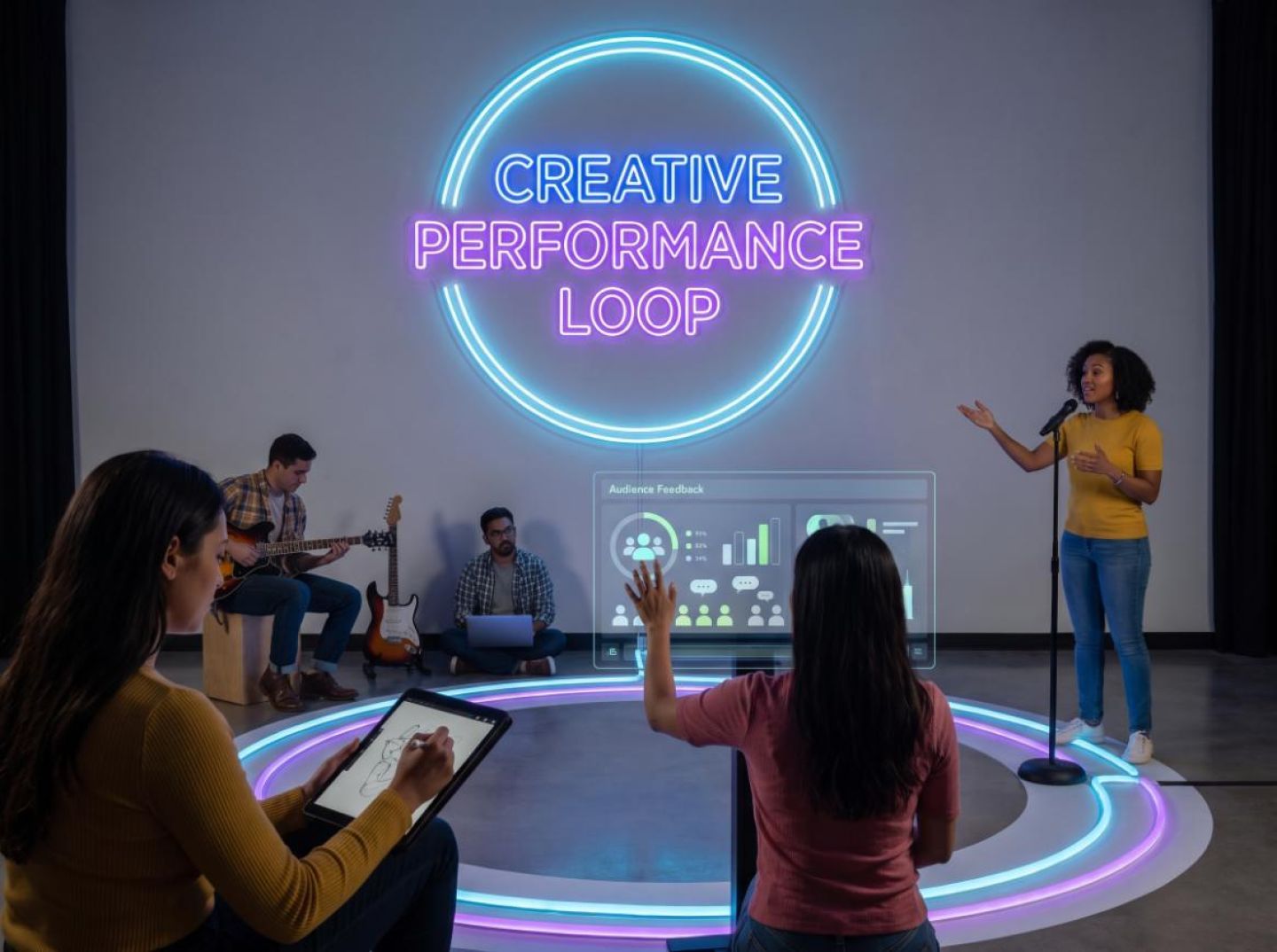
You can see this tension clearly in how new infrastructure is being built around creative. When DAIVID plugged its creative-effectiveness models into ADIN.AI’s platform, they created what they describe as a “live loop” between creative intelligence and media execution: before launch, marketers can predict which assets are most likely to win; during the campaign, they can scale those winners and pause losers in real time; afterward, performance data becomes the benchmark for the next round of creative and media planning, according to Search Engine Journal’s coverage of the DAIVID–ADIN.AI partnership. That’s not about making “cooler” ads. It’s about making creative accountable to outcomes.
Ian Forrester, DAIVID’s CEO, put a spotlight on the real problem: for years, creative has been “measured in isolation, disconnected from media results,” as he explained in that same Search Engine Journal piece. Awards juries, focus groups, and qualitative brand trackers can tell you if people like an idea in theory. They cannot tell you, at the speed of modern media, whether that idea is worth another $50,000 in budget tomorrow morning.
That speed is exactly where the hype machine falls apart. In a world where a company like Unilever can coordinate content from 300,000 creators, 71% of whom are using AI tools to crank out assets across dozens of platforms and markets simultaneously, the old evaluation infrastructure simply breaks. Human panels are too slow, A/B testing every variation is impossible, and traditional brand tracking tells you what happened last quarter, not what’s making or losing you money this week, as Search Engine Journal’s analysis of large-scale AI content networks makes painfully clear.
At the same time, the platforms themselves are quietly making “great creative” a performance necessity, not a nice-to-have. As Google, Meta, and TikTok automate away granular audience controls, your headlines, images, and videos are becoming the strongest signals for who actually sees your ads. Broad, AI-driven targeting systems like Performance Max and Advantage+ are shifting qualification from audience settings to the message itself, meaning creative is now a targeting signal as much as a persuasion tool, as MarTech’s examination of AI-driven campaign automation points out.
This is where creative-hype sites are especially misleading. They reward work that assumes precise, manual targeting will put the right ad in front of the right person. But when your targeting is broad and machine-led, vague “brand film” concepts or clever-but-generic visuals don’t just underperform—they actively confuse the algorithm about who the right audience is. You’re not just wasting impressions; you’re feeding bad signals into the system that’s deciding where your next thousand dollars go.
Practitioners who live in the numbers are already behaving very differently. Performance marketers on Meta, for example, are treating creative as their targeting and letting the platform optimize for a clearly defined conversion action. They iterate aggressively on imagery, headlines, and messaging, using constant A/B testing to learn what actually drives lower CPAs and higher ROAS, rather than what wins subjective praise, as recent WordStream benchmarks and expert commentary on Meta ads emphasize.
The net result: the market is quietly rewarding creative that sends strong, specific signals and proves its value in real time—while the hype cycle still celebrates work that was never designed to be accountable to performance in the first place. Until your definition of a “great ad” starts with financial impact, not creative applause, you’re optimizing for the wrong outcome.
If you feel like your targeting options keep getting stripped away while your CPMs go up, you’re not imagining it. Across Meta, Google, and TikTok, the shift to “let the algo handle it” has quietly turned your ad creative into a targeting input whether you like it or not.
As one recent analysis put it, AI is making creative the new targeting. Broad, automated campaign types—Performance Max, Advantage+, automated audience expansion—are designed to learn who to show ads to based on signals, not hand-picked audience definitions. Conversion data is still the strongest signal, but the system also has to use whatever else it can see: the headline, the visuals, the script, the offer, even the vibe.
In other words, what you say and show is increasingly how platforms figure out who should see the ad in the first place.
This is why a generic “back brace for back pain” ad shoved into broad targeting will underperform compared to a version that calls out “construction workers with chronic back pain” and shows people in hard hats on a job site. In Meta’s eyes, that more specific creative is a better hint about who the ad is “for.” That matches what performance practitioners have been doing for years: designing problem–solution ads that speak to a specific avatar and pain point so the algorithm can go find more people like the ones who respond, a pattern outlined in detail in this walkthrough on blowing up an eCommerce business with Facebook ads.
This doesn’t mean meticulous audience strategy is dead. It means the fulcrum has moved. We used to lean on audience settings to qualify who saw the ad and treat creative as the closer. Now, platforms push you toward broad inputs and use creative both to attract the right people and to infer who those “right people” are. Your ad concept is no longer just a persuasion device—it’s a qualification filter.
The automation trend on the “media” side is being mirrored on the “creative” side as well. Dynamic creative optimization and broader “programmatic creative” tools let you feed in components—headlines, images, offers—and let machine learning assemble and test thousands of variations on the fly. As one overview of programmatic creative vs. DCO explains, the promise is speed and personalization at scale: more relevant messages for more narrowly defined micro-audiences without you hand-building every single asset.
Used well, that’s a gift to performance marketers. You can manufacture more shots on goal, identify hit concepts faster, and avoid the old “one hero ad for the whole quarter” problem.
Used lazily, it’s a trap.
When you let a “cult of performance” mindset drive everything, it becomes very easy to abdicate judgment to the machine. We’re already seeing what happens when brands give AI-driven buying tools free rein to generate or select whatever will spike click-through, from cringe-inducing fake reviews to AI-generated product shots that no human would ever approve. One critique of this trend pointed out how automated systems like Performance Max and Advantage+ will happily dredge up the “yuckiest images” in a catalog—hypersexualized or grotesque, but clickable—if that’s what moves the needle in a narrow sense, an outcome that critics of performance worship argue is already showing up in the wild.
So yes, creative is the new targeting signal. But it’s still just one part of a performance system.
If your message is sharp but your conversion tracking is broken, the algorithm is flying blind. If your hook pulls in the right people but your landing page is slow, off-message, or confusing, the extra “relevance” you bought with better creative won’t show up in revenue. Research into what really drives paid media ROI has found that while marketers are pouring more into targeting, AI, and ad production, they consistently underinvest in the post-click experiences they admit have huge impact, a disconnect highlighted in a recent study on how marketers underinvest in what improves ROI.
The platforms are telling you something with their product roadmap: targeting knobs are turning into suggestion boxes; creative and conversion signals are doing more of the heavy lifting. But if you treat creative as both your only lever and your only source of truth, you’re just swapping one kind of tunnel vision for another. The advertisers who will win in this new environment are the ones who treat creative as a powerful signal inside a larger system—media, data, and post-click experience all working together—rather than as a magic performance button.
Inspiration sites are not the problem. Treating them as the whole process is.
“Great ads” galleries, award reels, TikTok moodboards—these are useful raw material. But they only help you if you deliberately convert admiration (“That’s cool”) into investigation (“Why might that work, for whom, and in what buying context?”) and then into structured testing.
The mental shift is simple: stop asking “How do I copy this?” and start asking “How do I use this as Step 1 of a performance workflow?”
When you see a piece of creative you love, pause and break it down into components you can actually test:
You’re not stealing the surface look; you’re reverse‑engineering the decisions.
Now you convert what you’ve dissected into hypotheses and variants that fit your product, positioning, and funnel stage.
Think in systems of variations, not one‑off ads. Programmatic creative approaches treat creative as modular—headlines, images, CTAs, offers—so you can dynamically assemble permutations and let the algo optimize, much like programmatic creative and DCO systems do when they generate and refine thousands of variants around data signals.
You can mimic that mindset even without enterprise tools:
You’re deliberately manufacturing “shots on goal” instead of hoping your one favorite concept is the winner.
Competitive libraries and inspiration feeds do offer clues—if you interpret them correctly. When you sort competitor ads by longevity and impressions, as performance practitioners recommend when mining Facebook’s Ad Library and tools like MagicBrief, you’re using time in market as a performance proxy: it’s hard for a bad ad to survive weeks of spend at scale, as one Social Media Examiner case study points out.
But remember: that’s a starting signal, not a verdict. You don’t know:
Treat these ads as hypotheses worth testing, not as “proven winners” you can safely clone.
Where most teams stop at “let’s try something like that,” high‑performers plug inspiration into an end‑to‑end feedback loop.
Modern creative‑intelligence stacks show what this looks like at scale. In one partnership between DAIVID and ADIN.AI, creative effectiveness models are wired directly into media execution: predicted winners get more budget upfront, live performance data automatically scales or pauses assets, and post‑campaign results become benchmarks that shape the next wave of creative. That closes the historical gap between “creative opinions” and “media outcomes.”
You don’t need that full stack to copy the principle:
Even if you’re buying on CPM—where strong creative can steadily improve ROI as impressions get cheaper and engagement compounds, as a native advertising analysis notes—you still need this loop. The ad isn’t “great” because a design blog loved it; it’s great because, in your system, with your audience, it repeatedly earns the right to be scaled.
Inspiration is the spark. Investigation is the process that turns that spark into repeatable, bankable performance.
Reverse‑engineering performance starts by accepting a brutal truth: every traffic source has its own “physics.” The same concept will behave differently on native, push, pop, and TikTok because the scroll speed, user intent, and auction mechanics are different. Your job isn’t to find a single “great ad.” It’s to understand what “great” means in each channel and then systematically rebuild that greatness in your own funnel.
On native, you’re buying curiosity in a low‑intent environment. Users are reading or browsing, not hunting for your product. That’s why experienced media buyers on native lean heavily into CPM: when a headline and thumbnail take off, your cost per thousand impressions can stay flat (or even fall) while each extra click is essentially “free margin” on top of the same spend, making ROI scale with winning creative sets, as a guide from the Voluum blog explains. So when you see a top‑performing native ad in a spy tool or gallery, don’t just copy the copy. Reverse‑engineer the engine:
Then look at how the landing page resolves that tension and transitions into your offer. Because native is interruption‑based, your benchmark for “good” isn’t just CTR; it’s CTR married to conversion rate and EPC. As Facebook advertisers have learned, evaluating metrics in isolation is misleading; it’s the relationship between them that reveals where the friction really is, a point emphasized in recent WordStream benchmarks. Apply that mindset to native: a high CTR but weak conversion rate means your hook is strong but misaligned with your page; a lower CTR with robust conversion might signal that your teaser is qualifying clicks well.
Push and pop traffic are even more “raw.” With push, the creative canvas is microscopic: a tiny image, a few words of copy, and a notification style that often lands when the user is doing something else entirely. Think of push as a stress test for clarity. Extract the strongest one‑line promise or curiosity angle from any ad you admire, then see if it survives the constraint of 40–60 characters and a 1:1 icon. Winning push affiliates often build families of creatives around the same core idea—slight variants on urgency, benefit, or device angle—then use programmatic creative systems and dynamic creative optimization to auto‑rotate and surface the best performer. As the team at MobileAds points out, programmatic creative plus DCO is essentially an ad factory where thousands of variations are assembled and refined by machine learning; your job is to feed the factory smart building blocks (angles, benefits, objections) and let the system discover which mix works on each GEO and device.
Pop (especially pops and redirects) is closer to a landing‑page game than an ad‑creative game. The “ad” is the surprise appearance of your page. So reverse‑engineering here means studying what high‑volume competitors do in the first 3–5 seconds: load speed, above‑the‑fold framing, and immediate relevance to the content they just left. Ask:
Performance on pops lives or dies on bounce rate and first‑step engagement, not just on your end‑of‑funnel CPA. Approach it like CRO on steroids: small structural changes (headline alignment with referring context, faster hero image, one fewer form field) can swing ROI more than big design overhauls.
TikTok, by contrast, is visual, social, and highly intent‑shaping. Users don’t arrive wanting your product; they’re there for entertainment, then discover needs mid‑scroll. High‑performing commerce advertisers on social increasingly rely on semi‑polished UGC: scripted but natural‑feeling videos produced by small creators that feel “of the feed,” not like glossy commercials, a pattern detailed in a Social Media Examiner breakdown of winning ecommerce campaigns. When you see a TikTok ad that “just works,” deconstruct it across three layers:
Remember that on TikTok and Meta alike, creative now functions as targeting input. Meta advertisers are finding that “treating your creative as your targeting” and letting the platform optimize for conversions often beats over‑engineered audience controls, as paid media pros quoted in WordStream’s latest analysis have observed. That lesson transfers to TikTok: the clearer you are about who the creative is for (visually and verbally), the more efficiently the algorithm can find lookalike users who respond.
Putting it all together, reverse‑engineering performance across channels is less about copying clever ads and more about dissecting how each ad matches its environment, intent level, and auction model. Native and push demand ruthless hook‑and‑promise discipline. Pop demands brutal landing‑page clarity. TikTok demands narrative that doubles as qualification. Once you understand those mechanics, inspiration sites stop being moodboards—and start becoming a structured source of hypotheses you can test, automate, and scale.
Most “great ad” breakdowns stop at the thumb‑stop. Performance marketers can’t afford to. The ad is only the opening scene; the conversion story is told on the landing page, checkout, and even post‑purchase flows. If you only copy the hook and visuals, you’re copying the least important part of what made that campaign profitable.
Think of it this way: every click is a fragile intent. Your job is to preserve and amplify that intent from impression to purchase. That means deconstructing the full post‑click experience with the same rigor you apply to creatives.
Start where the user lands. If your inspiration came from a native placement, analyze how tightly the landing page continues the promise made in the widget. Effective native campaigns do more than blend in with the feed; they “add value” by delivering content that feels contextually relevant and useful, as the team at Voluum notes in their overview of native advertising best practices. That value doesn’t magically appear on the ad—it’s usually delivered on the landing page via education, storytelling, or a comparison that resolves the curiosity sparked in the headline.
When you see a native ad that’s clearly scaled (massive impression counts, long runtime), reverse‑engineer:
On social, the same logic applies but with more volatility. High‑performing Facebook or TikTok ads are often just the loudest part of a well‑tuned funnel. When eCommerce practitioners talk about “manufacturing hits” with Facebook ads and emphasize matching creative format to funnel stage, they’re implicitly assuming that the landing environments are aligned with those stages too. In the “blow up an eCommerce business with Facebook ads” teardown, the strategist highlights that top‑of‑funnel video is attention‑heavy and problem‑aware, while middle and bottom‑funnel ads become more solution‑focused and specific to avatars like “construction workers who deal with chronic back pain.” That shift in message is wasted if the landing page is the same for everyone.
Deconstruction exercise: click through and map the journey for each funnel stage.
If you’re seeing aggressive personalization or dynamic elements, assume there is programmatic logic underneath it. Modern “programmatic creative” doesn’t just swap ad variants in isolation; it extends into the page experience by tailoring messages and offers to granular audience clusters. As one overview of dynamic creative explains, programmatic systems use data and automation to customize not just ad units but also the downstream messages, helping brands “maximize relevancy” and improve conversion rates across different devices and audience segments by continuously refining variations based on test results and performance signals from programmatic creatives. When you spy on a competitor, compare the experience across devices, geos, and referrers—you may be looking at different “skins” of the same funnel.
There’s also a darker lesson from the current “cult of performance.” When brands over‑optimize front‑end metrics, algorithmic tools can drift into bizarre or brand‑unsafe territory—like the AI‑generated Skechers campaign that leaned into hypersexualized images simply because they stopped thumbs in the feed, as one commentator described in a critique of performance‑obsessed marketing culture and its unintended consequences on creative choices. The same thing happens post‑click: if you blindly chase CTR and CVR without constraints, you end up with squeeze pages that convert but erode trust, generate refunds, and kill LTV.
So when you deconstruct the post‑click experience, don’t only ask “Why does this page convert?” Ask:
The point isn’t to worship someone else’s funnel. It’s to build a muscle: tracing the through‑line from impression to outcome. “Great ads” give you the spark. Great ROI comes from understanding—and rebuilding—the whole journey that spark ignites.
If you stripped the logos off most “creative intelligence” platforms, the underlying loop would look familiar: guess → launch → watch → refine → relaunch. You don’t need an enterprise stack to run that loop. You just need to make it explicit, lightweight, and repeatable.
Think in terms of four simple systems: inputs, testing, feedback, and decisions.
1. Turn inspiration into structured inputs
Instead of saving random “good ads” to a swipe file, break each one down into reusable building blocks:
When you study competitor ads in the Facebook Ads Library or tools like MagicBrief, follow the same approach that high‑volume buyers use to “manufacture hits” by reverse‑engineering what’s working and then adapting it to your brand and avatar, as Social Media Examiner explains. You’re not copying a finished ad; you’re stealing the underlying pattern.
Turn those patterns into a simple “creative brief template” in Notion, a Google Doc, or even a spreadsheet so every new asset starts from a clear hypothesis: “This is a problem–solution testimonial for X persona, using Y hook and Z proof.”
2. Design tests you can actually run every week
Your loop dies if each test is so big or complex that it takes a month to get an answer. Borrow from native buyers who know that once they “find [their] best‑performing creative sets,” ROI improves dramatically at the same cost base, especially on CPM models where better creative just gets cheaper over time, as the Voluum blog points out.
For a small or mid‑size account, that usually means:
Keep the test matrix embarrassingly simple. For example:
Aim for “time to verdict” under 7–10 days on your core channels so you can roll learnings into the next batch without waiting for quarter‑end reports.
3. Build a feedback loop that doesn’t require a data team
Enterprise players like DAIVID and ADIN.AI are wiring creative scores directly into media execution to create a “live loop between creative intelligence and media execution,” where assets are pre‑scored, then scaled or paused in real time and later used as benchmarks for the next wave of work, as Search Engine Journal describes.
You can mimic that logic in a spreadsheet:
Once a week, color‑code:
Then add one extra column: “Next move.” That might be “scale 2x,” “clone to new audience,” “new hook, same structure,” or “kill; do not revive.” The point is to treat every result as a creative insight, not just a bid adjustment.
4. Let creative do the targeting for you
As platforms automate audience controls, your ad itself becomes a qualification filter. Meta’s Advantage+ and Google Performance Max are explicitly shifting from audience inputs toward giving the algorithm broad signals and letting creative and conversion data tell the system who the ad is for, as MarTech notes.
Without an enterprise stack, you can still take advantage of this:
Over a few cycles, you’ll start seeing what the big systems are built to surface: repeatable winning patterns at the concept level, not just one‑off “great ads.” At that point, your stack almost doesn’t matter. You’ve built something more valuable: a creative–performance loop that teaches you, every week, what “great” actually means for your brand, your funnel, and your traffic.
Receive top converting landing pages in your inbox every week from us.
Most Read
Discover why award-winning and highly praised creative does not always translate into profitable advertising performance. This guide shows how to turn inspiration into structured testing, reverse-engineer winning ads across Native, Push, Pop, and TikTok, and build a repeatable creative-performance loop.
David Kim
7 minSep 25, 2026
Recently Updated
Featured ad lists capture the creative everyone talks about, but they often miss the quiet native ads that consistently drive performance. This guide shows how to combine viral “hero” creatives with under-the-radar winners in Anstrex AI to build, test, and continuously improve native advertising systems based on real performance signals.
Liam O’Connor
7 minSep 24, 2026
Guide
Track how new creative leadership can reshape competitor native campaigns by connecting executive hires with changes in ad libraries, creative patterns, and funnel strategies. This guide shows how to use Anstrex to monitor those shifts, identify emerging creative systems, and reverse-engineer competitor funnels without relying on internal performance data.
Marcus Chen
7 minSep 24, 2026