Native Ads, Pop Ads, Push Ads, TikTok Ads
7 minNovember 25, 2026

Our spy tools monitor millions of native ads from over 60+ countries and thousands of publishers.
Get StartedMarketing teams did not wake up one morning and decide they needed autonomous AI agents. They reached this point because the platforms and tools around them are changing how campaign work gets done.
Advertising platforms are introducing AI capabilities that can help with creative development, campaign setup, analysis, and optimization. TikTok's Symphony products, for example, have been described as tools for assisting with scripts, storyboards, avatars, and video production. Its evolving agent ecosystem has also attracted attention from marketers interested in connecting advertising workflows with external tools and data.
Across programmatic advertising, companies are exploring agent-based systems that can help discover inventory, coordinate transactions, and automate parts of media execution. Coverage from Adweek discusses the growing role of AI agents in advertising transactions and media operations. Meanwhile, MarTech's analysis of marketing operations restructuring explores how marketing operations teams may need to adapt as agents take on more responsibilities.
These developments point toward a different way of thinking about the marketing technology stack.
Traditional MarTech is organized around software products: analytics platforms, advertising dashboards, CRM systems, content tools, and automation software. An agentic marketing operation adds another layer. It organizes software around jobs that need to be completed, decisions that need to be made, and information that must move between systems.
In other words, the stack starts to behave more like a workforce.
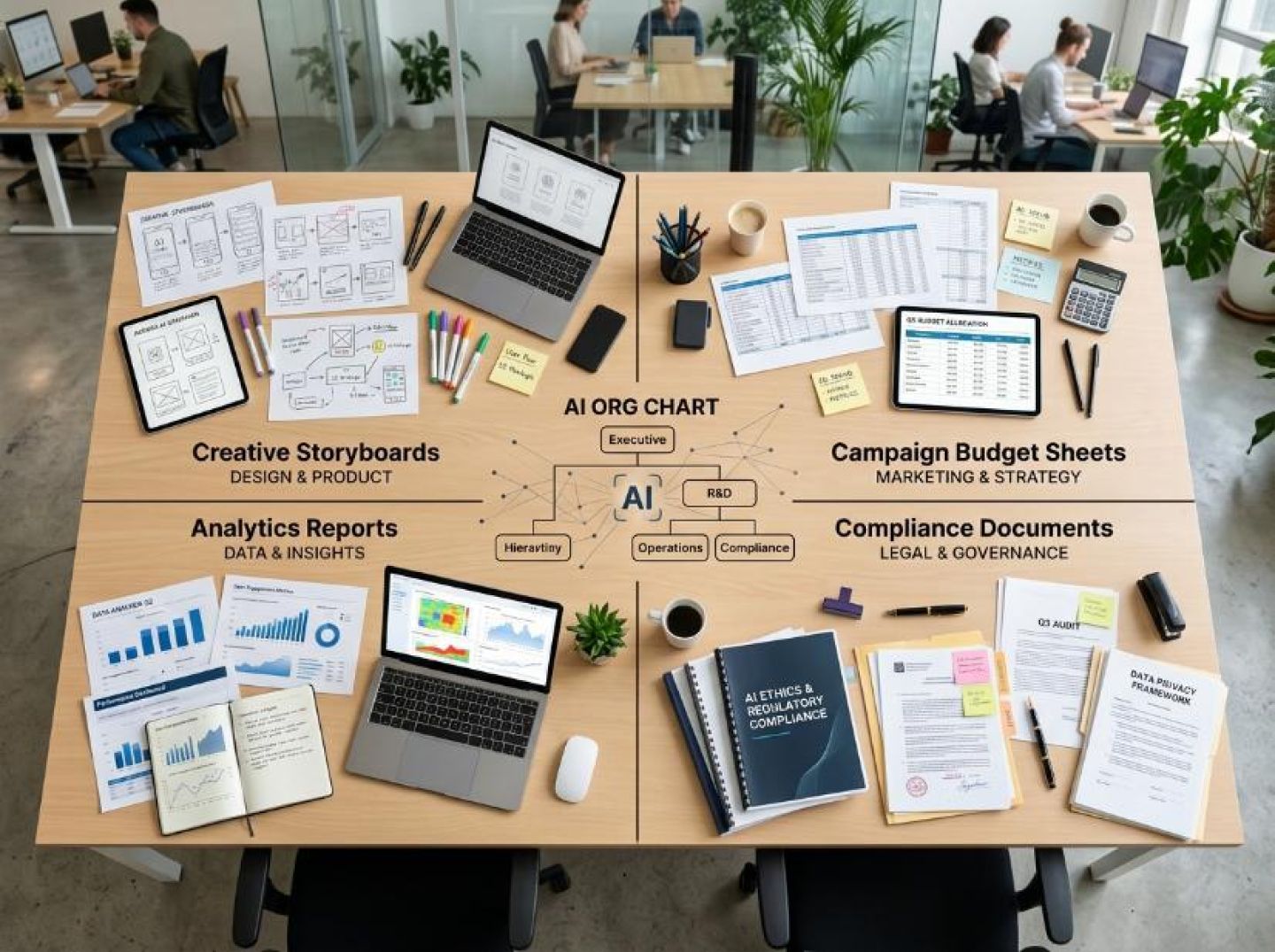
That workforce needs an org chart.
Traditional marketing operations often focuses on configuring platforms, maintaining integrations, launching campaigns, and preparing reports. In an agentic environment, teams also need to define which agents perform specific jobs, what information they can access, and when they must hand a decision to a human.
An agent that can generate advertising concepts is not automatically qualified to publish them. An agent that can analyze campaign performance should not necessarily have permission to change budgets. A system that can inspect landing pages should not be allowed to collect or retain every piece of information it encounters.
The operating model must define responsibilities and limits before autonomy expands.
This is why context and data architecture matter. Agents need access to relevant information such as product details, approved offers, campaign history, brand guidelines, and performance data. Integrations and context protocols can help systems exchange information, but connectivity alone does not guarantee that the information is accurate, complete, or safe to use.
Teams must also decide how much autonomy each task deserves.
Low-risk activities may be suitable for automation with routine monitoring:
Higher-impact actions need stronger controls:
A practical system should make these approval boundaries explicit.
When agents perform more work, measuring software adoption alone is not enough. Teams need to understand what the agents accomplish and what it costs to operate them.
Useful operational measures include:
The objective is not to maximize the number of agents. It is to improve the quality, speed, and consistency of the work without creating uncontrolled costs or operational risk.
The teams that make progress will not necessarily be those with the largest collection of AI tools. They will be the teams that define clear responsibilities, reliable handoffs, measurable outcomes, and appropriate human oversight.
A common mistake in AI adoption is to organize the strategy around product names.
A team might say it uses one platform for TikTok, another for video production, and another for campaign analysis. That explains the software stack, but it does not explain how work gets done.
A stronger approach begins with roles.
Which responsibilities should be supported by agents? Which decisions require human approval? What information must each role receive, and what should it deliver to the next role?
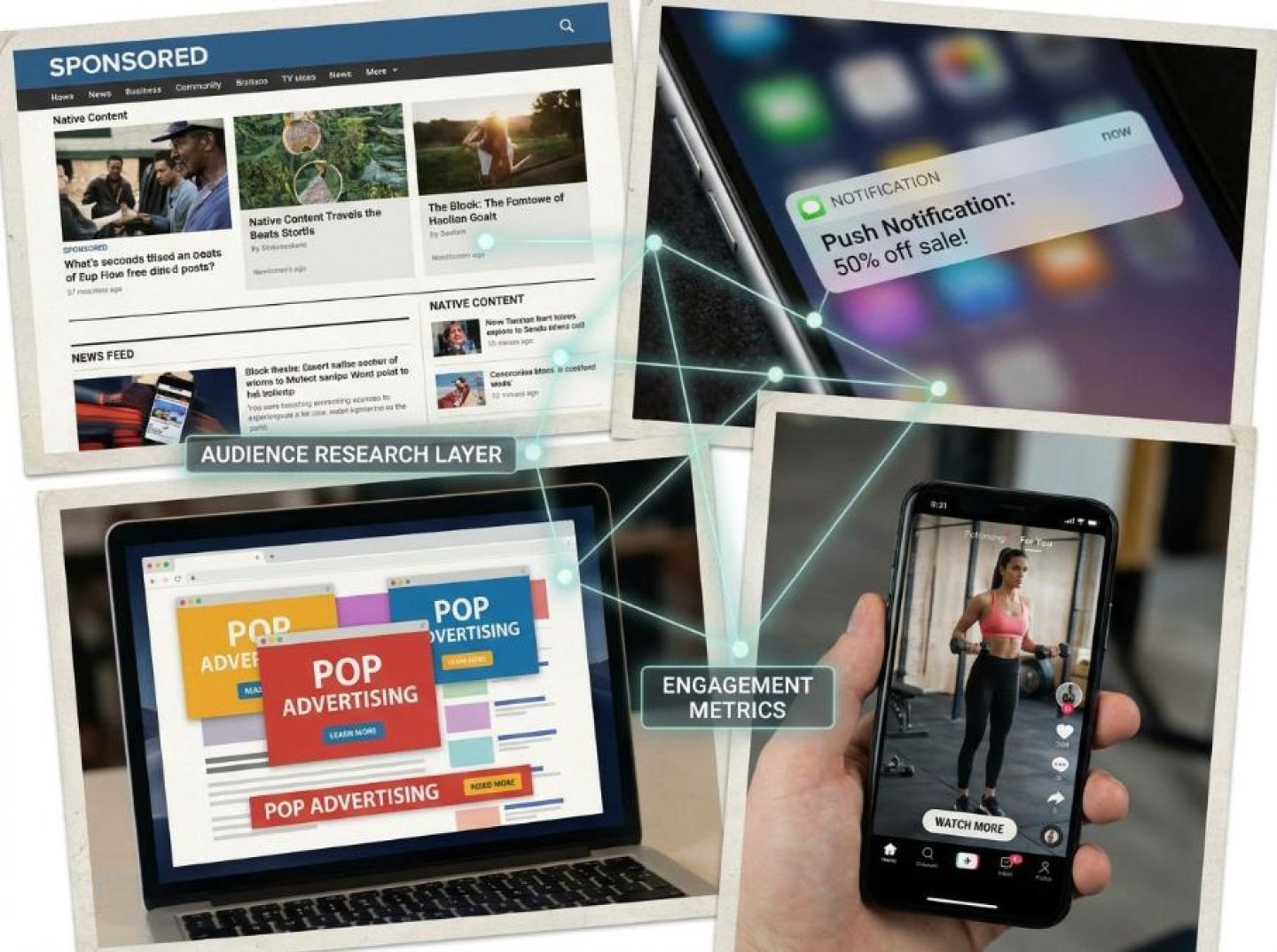
For native, push, pops, and TikTok advertising, four foundational roles provide a useful starting point.
These are functional roles, not necessarily four separate software products. One agent may perform several tasks, while multiple specialized agents may work under a shared role.
The Creative Generator supports the work typically handled by copywriters, designers, editors, and creative strategists.
Its job is to turn a campaign brief into structured creative concepts and variations that can be reviewed and tested.
Responsibilities include:
A video-generation tool may support TikTok creative production, while language models can help draft native headlines, push messages, and landing-page copy.
The role remains the same even when the underlying tools change.
Human oversight is still necessary for product accuracy, brand voice, cultural context, rights, and claims. A generated creative should not become publishable simply because an agent has completed its draft.
The Channel Trader supports media execution and optimization.
Depending on the integrations and permissions available, it may help prepare campaigns, monitor performance, identify potential adjustments, and execute changes within predefined limits.
Its responsibilities may include:
The Channel Trader should not assume that yesterday's return on ad spend will continue tomorrow. It should evaluate performance over an appropriate period and consider sample size, conversion lag, attribution limitations, and campaign constraints.
For a team working across native, push, pops, and TikTok, channel responsibilities can be grouped by operating characteristics rather than creating a separate agent for every platform.
For example:
The specific division should reflect the team's channels, access permissions, and operational complexity.
The Insights and Attribution Analyst turns available performance information into decisions that other roles can use.
It does more than create dashboards. It helps explain what has changed, which patterns deserve investigation, and what the team should test next.
Responsibilities include:
The analyst must distinguish observed results from inferred explanations.
For example, if a creative's conversion rate declines, the agent can flag the change and investigate possible causes. It should not automatically conclude that the audience is fatigued without checking other factors such as delivery changes, tracking problems, offer changes, or landing-page performance.
Attribution also requires careful boundaries. An agent can analyze the data available to it, but it cannot create reliable cross-channel measurement where the underlying tracking and data are incomplete.
Its outputs should include confidence, data coverage, and the assumptions behind each recommendation.
As agents gain access to more tools and decisions, governance must become part of the operating model rather than a final review step.
The Compliance and Governance Officer checks whether work follows approved rules before it moves to the next stage.
Its responsibilities may include:
This role can be supported by policy rules, automated checks, and AI-based review. It should not be treated as a substitute for legal or specialist compliance review when that review is required.
New integrations and tool permissions should also pass through governance. Before an agent receives access to a new advertising account, connector, or data source, the team should establish what it can read, what it can change, and what information it may retain.
A practical starting model might look like this:
The number of agents can grow as the operation becomes more complex. The important part is that every agent has a defined purpose, inputs, outputs, permissions, and escalation path.
Tools will continue to change. Clearly defined responsibilities make the organization easier to maintain.
A channel specialist on a traditional marketing team often owns campaign execution and becomes the person everyone contacts for platform knowledge.
In an agentic organization, a Channel Intelligence Agent supports that specialist role by continuously collecting and organizing relevant channel information.
Its purpose is not necessarily to buy media. It is to help the rest of the organization understand the environment in which campaigns operate.
Native, push, pops, and TikTok have different formats, user experiences, creative requirements, and policy considerations. A single generic research process may miss important differences.
A channel-specific intelligence role can help maintain that knowledge.
A useful channel intelligence system can perform four recurring activities.
1. Creative pattern analysis
The agent organizes visible advertising examples by message, format, creative structure, and audience context.
For TikTok, that may include opening hooks, narrative structure, editing patterns, and calls to action.
For native advertising, it may include headlines, thumbnails, advertorial formats, and pre-lander structures.
For push and pops, it may include notification wording, teaser messages, landing-page formats, and redirect behavior where that information is lawfully and appropriately accessible.
The purpose is to identify patterns worth researching—not to copy competitors' creative work.
2. Channel and placement monitoring
The agent can organize available information about placements, publishers, inventory, and campaign delivery.
Where authorized data is available, it may help identify changes in delivery, placement quality, or market conditions.
However, public creative observations do not reveal actual auction prices, competitor bids, or verified inventory performance. Those insights require appropriate platform, vendor, or measurement data.
3. Fatigue and opportunity alerts
Channel intelligence can help identify patterns that deserve further investigation.
Examples include:
These observations can prompt a human review or a controlled test. They should not automatically trigger a budget decision.
4. Channel knowledge management
Over time, the agent can maintain a structured record of channel-specific practices, policy requirements, creative formats, and validated test results.
This knowledge base should distinguish three types of information:
Keeping these categories separate prevents an agent from treating an unverified competitor pattern as an established performance rule.
A Channel Intelligence Agent sits between approved information sources and the shared decision layer.
Its upstream inputs may include:
Its downstream outputs may include:
Marketing operations determines how frequently the agent runs, which data it may use, and whether an observation can trigger an action or only a recommendation.
This is important because the role of an intelligence agent is different from the role of a buying agent. Research should inform decisions without silently becoming permission to spend.
Native, push, pops, and TikTok do not share identical creative or delivery environments.
Native advertising often relies on headlines, thumbnails, and editorial-style content experiences. Push advertising places significant emphasis on short messages and the context in which notifications are delivered. Pop formats can involve rapid redirects and landing-page transitions. TikTok is a short-form video environment where storytelling, sound, editing, and audience engagement influence how creative is experienced.
These differences justify channel-specific research and creative guidance.
They do not justify assuming that one format or message will always outperform another. Performance depends on the offer, audience, geography, placement, device, and execution.
The purpose of channel intelligence is to preserve these differences in the organization's shared knowledge rather than flattening them into generic advertising advice.
The four core organizational roles provide the overall structure. Specialized channel agents supply the detailed research needed to support each environment.
The following designs are proposed operating models. They should be adapted to the tools, permissions, and data actually available to the team.
The Native Creative Mining Agent maintains a structured view of advertising patterns across native placements and content-recommendation environments.
Its job is to organize competitive creative observations into useful research that creative strategists and media buyers can investigate.
Core workflow: Ingest, cluster, and label
The agent collects permitted advertising examples from public ad libraries, licensed research tools, and approved internal sources.
It then groups those examples across three dimensions:
Angle
Format
Vertical
Semantic clustering can reveal that different advertisers are addressing a similar customer concern even when their wording and visuals are very different.
The agent can then produce a structured record for each pattern:
Competitor performance data is often unavailable. The agent may therefore record observable signals such as:
These are research indicators, not proof that an advertisement is profitable or has a high click-through rate.
Where the agent analyzes your own campaigns, it can use actual first-party metrics. Those results must remain clearly separated from competitor observations.
The output should help the team understand what is happening in the market and identify ideas worth testing—not automatically declare a competitor's creative a winner.
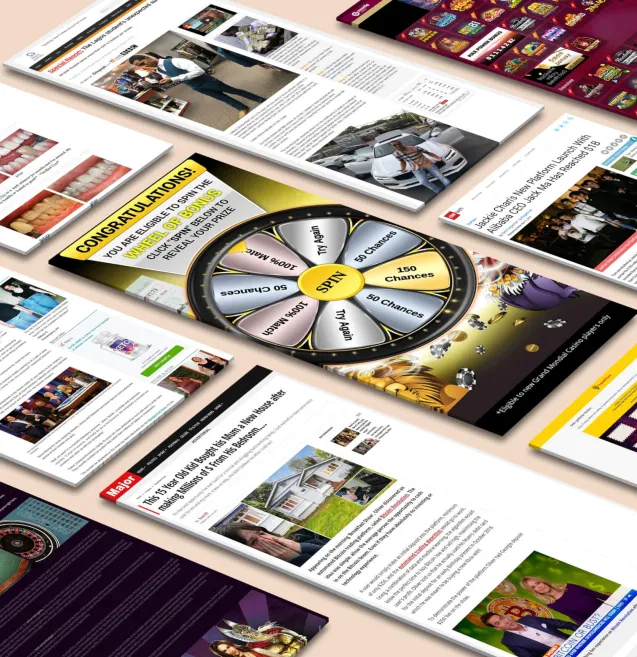
The Push/Pops Offer Radar Agent focuses on the creative and landing-page journeys associated with push and pop advertising.
It helps organize information about messages, pre-landers, offer categories, and destination pages.
Its research can be divided into three layers:
1. Ad-level artifacts
2. Landing-page journeys
3. Offer and campaign context
The agent can organize these findings into structured research records, helping the team compare how different offers are presented.
For example, it may identify several observed campaigns in a particular category that use educational quizzes before presenting a product offer. That observation can inspire a test of a different educational format.
It should not infer confidential payout structures, private affiliate terms, or actual competitor return on investment from visible landing pages.
The Offer Radar can send an observed messaging pattern to the Creative Generator.
The Creative Generator can then produce original variations based on the underlying customer problem while following approved brand and compliance rules.
For example, if a group of advertisements focuses on helping users solve a common device problem, the agent may identify the customer concern and recommend a clearer educational explanation.
It should not reproduce deceptive alerts, fabricated security warnings, false scarcity, fake testimonials, or unsupported claims.
This distinction is especially important in sensitive categories such as health, financial services, and utilities.
The agent can also track whether observed messages and landing-page formats change over time.
It may flag:
These alerts can help the team decide what to investigate next. They are not substitutes for first-party performance analysis.
The agent's organizational definition is:
The TikTok Trend Detection Agent focuses on identifying relevant changes in short-form video culture and translating them into creative research.
It sits closer to creative research than direct media buying.
Its purpose is not simply to list trending sounds or hashtags. It should help the team understand whether a trend fits the audience, offer, brand, and creative objective.
Its workflow has three stages.
1. Signal capture
The agent monitors approved and accessible sources for information such as:
The team should respect platform access rules and avoid assuming that every public signal is available through an authorized API.
2. Pattern interpretation
Raw trend lists are not enough. The agent should organize examples into recognizable creative structures, such as:
It should also record the context behind each pattern: audience, category, tone, format, and the type of message being communicated.
A trend may be popular but unsuitable for a particular product. Popularity alone is not a reason to use it.
3. Offer and audience pairing
The agent compares an emerging creative pattern with the team's approved product and offer information.
It can assess:
The result should be a production-ready creative brief rather than a vague suggestion.
A useful brief includes:
The agent can send that brief to the Creative Generator for production support. A human reviewer should approve the final concept before publication.
Its organizational definition is:
Specialized agents are useful only when their work connects.
Without a shared operating layer, the Native Creative Mining Agent may identify a pattern that the Creative Generator never receives. The TikTok Trend Detection Agent may recommend a concept without knowing that the offer has changed. The Channel Trader may optimize a campaign using outdated conversion information.
A shared intelligence layer helps prevent these disconnected workflows.
The organization should maintain structured information about:
Each record should include useful metadata, such as when it was created, where it came from, who approved it, and when it was last reviewed.
Most importantly, the system should distinguish between facts, observations, hypotheses, and decisions.
For example:
This separation helps agents avoid turning a weak observation into a confident but unsupported recommendation.
Every agent should have a predictable output format.
A Native Creative Mining Agent might send a creative pattern record to the Creative Generator. The Creative Generator then returns draft concepts with the original research reference. The Compliance Officer reviews the concepts. The Channel Trader receives only approved assets and campaign parameters.
The Insights Analyst then evaluates the team's actual campaign results and sends validated learning back to the creative and channel roles.
The result is a connected workflow rather than a collection of isolated bots.
Every important recommendation should preserve its origin.
If an agent proposes a new hook based on competitive research, the team should be able to see which observations informed the idea.
If an agent recommends a budget change, it should identify the first-party campaign data and assumptions behind the recommendation.
This makes the system easier to audit, correct, and improve.
An autonomous media-buying swarm can create operational leverage, but it can also amplify mistakes.
An inaccurate product claim can appear in many creative variations. An incorrect performance interpretation can influence multiple budgets. A compromised integration can expose information across several connected systems.
Governance must therefore be built into the architecture.
A practical system can use three levels of autonomy.
Level 1 — Automatic research and drafting
Suitable tasks may include:
These activities still need quality checks, but they generally do not directly change live campaigns.
Level 2 — Recommendation with approval
This level may include:
The agent prepares the recommendation, but a designated person approves the action.
Level 3 — Restricted execution within limits
Some low-risk, repeatable actions may be permitted to run automatically once the team has tested them.
Examples could include pausing a campaign when a clearly defined technical failure occurs or applying a pre-approved adjustment within a strict spending limit.
Even these actions need monitoring, logs, and a way to reverse changes.
Each agent should receive only the access it needs.
A creative research agent may need permission to read approved ad-library information but should not automatically receive access to payment details or customer records.
A reporting agent may need read-only campaign data. A Channel Trader may need limited campaign permissions but should not be able to change its own spending limits.
The team should also establish:
Agents that read webpages, advertisements, documents, and other external content can encounter misleading or malicious instructions embedded in those sources.
External content should be treated as data to analyze, not as instructions that can override the agent's system rules.
Use access controls, input validation, logging, and isolation between research sources and execution permissions.
This is particularly important when several agents share context or pass information to one another.
Governance should be measurable.
Track:
A system that completes many tasks but creates frequent errors is not necessarily more efficient.
The goal should not be to deploy a fully autonomous media-buying organization in one step.
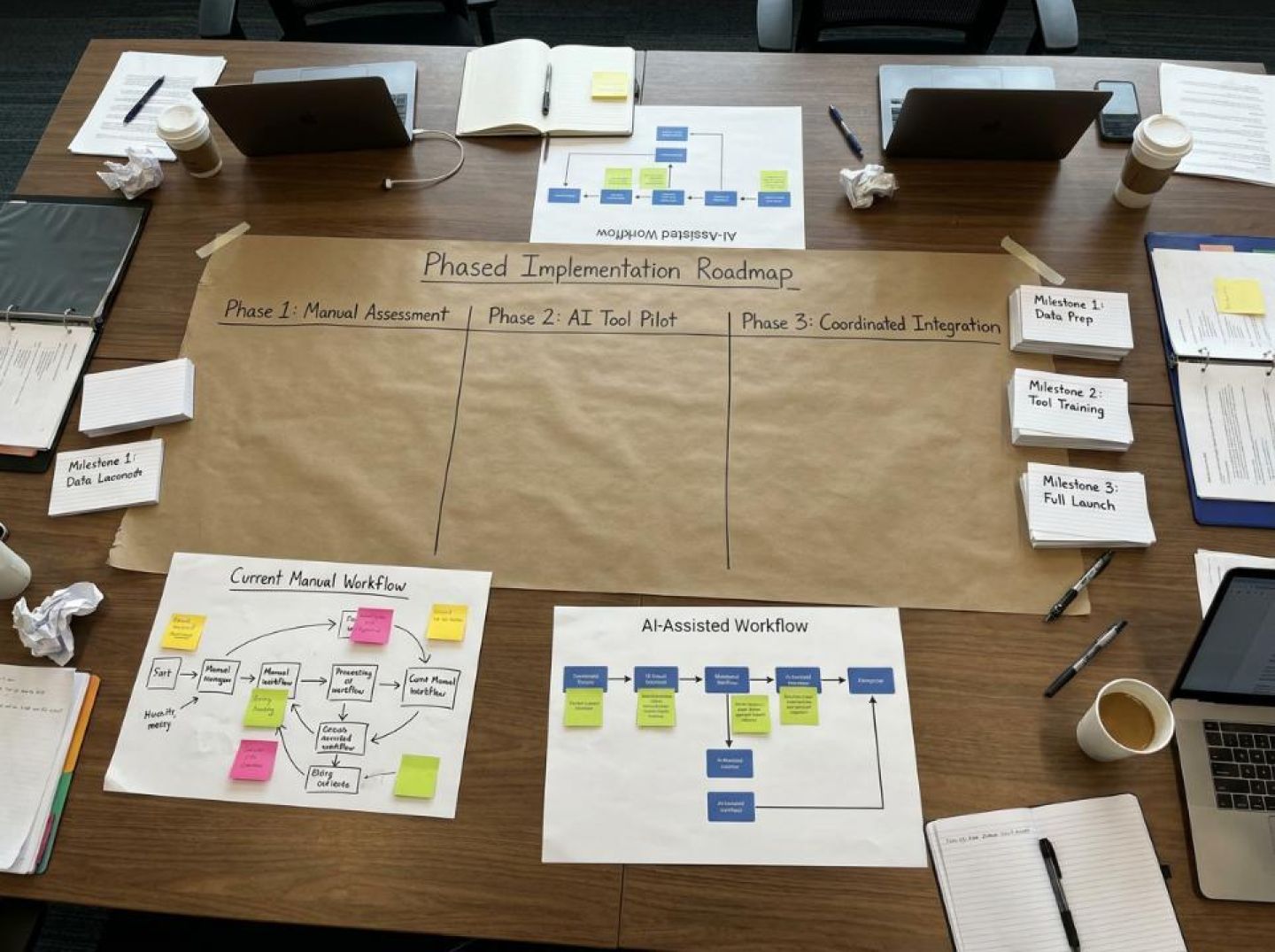
Start with a small number of clearly defined jobs, test their outputs, and expand autonomy only when the system performs reliably.
Document the team's existing media workflow.
Identify who currently handles:
Then identify which tasks are repetitive, rules-based, and suitable for agent support.
Do not begin by selecting a large number of tools. Begin with the work that needs to improve.
Create reliable source material for the agents.
This should include approved product details, offer terms, campaign objectives, creative guidelines, and relevant first-party reporting.
Set up a consistent naming structure for campaigns, creatives, and research observations.
If the information is incomplete or contradictory, resolve those issues before giving agents permission to make important decisions.
Start with agents that research and prepare work rather than execute live media changes.
A reasonable initial combination is:
Evaluate whether their research is accurate, relevant, and useful to the human team.
Keep outputs reviewable and traceable to their sources.
Once the research and reporting workflows are reliable, connect the Channel Trader to supported campaign systems.
Begin with recommendations or limited actions under strict spending and permission boundaries.
Compare agent-assisted decisions with the team's existing process. Monitor not only campaign outcomes but also errors, rework, and operating costs.
Increase automation only when the team has demonstrated that the relevant workflow is stable.
For each task, define:
This makes autonomy an earned capability rather than a default setting.
The move toward agentic advertising is not simply about adding more AI products to an already crowded MarTech stack.
It is about reorganizing work.
A Creative Generator can help turn research into testable concepts. Channel Intelligence Agents can maintain channel-specific knowledge. A Channel Trader can support controlled campaign execution. An Insights Analyst can connect available results to future decisions. A Compliance and Governance Officer can make sure the entire system operates within approved boundaries.
The value comes from how these roles coordinate—not from the number of agents deployed.
For teams working across native, push, pops, and TikTok, the opportunity is to combine specialized channel knowledge with a shared intelligence layer and clear operating rules.
Competitive ad intelligence can contribute to that system by helping teams understand visible creative patterns, messaging approaches, offers, and landing-page journeys. Anstrex can support this research layer, while first-party campaign data and appropriate measurement tools provide the evidence needed to validate decisions.
The most effective media-buying swarm will not be the one that gives every agent unrestricted authority. It will be the one that knows exactly what each agent is responsible for, what information it can trust, when it can act, and when a human must take over.
The stack gives your team tools. The org chart gives those tools a job. The operating model makes the whole system accountable.
Receive top converting landing pages in your inbox every week from us.
Must Read
Explore an AI-powered media-buying org chart built around creative generation, channel trading, performance intelligence, and governance—with specialized agents for native, push, pops, and TikTok.
Priya Kapoor
7 minNov 25, 2026
In-Depth
Ad platforms promise smarter bidding, but their automated systems do not always prioritize your business economics. Discover how to identify hidden optimization conflicts, audit default settings, use competitor spy data as an independent benchmark, and recalibrate bidding, creative, and funnel signals around profitable growth.
Marcus Chen
7 minNov 22, 2026
Must Read
Digital advertising often prioritizes the first click or three-second hook, but effective campaigns need more than a moment of attention. By studying how out-of-home advertising uses dwell time, utility, and repeated exposure, performance marketers can build stronger creative sequences and more engaging experiences across native, push, pop, and TikTok formats.
Elena Morales
7 minNov 20, 2026