10 minFebruary 3, 2019

Our spy tools monitor millions of native ads from over 60+ countries and thousands of publishers.
Get StartedIf you are an affiliate, chances are you've heard the term ‘native advertising’ bouncing around numerous affiliate forums. It is a different and innovative type of advertising that has grown around the space of social media platforms and websites through the years. And because it is fairly new and is still developing, there are a lot of descriptions and characteristics to go through when talking about native advertising definitions. Here are some of the best characteristics and definitions of native advertising and what they mean.
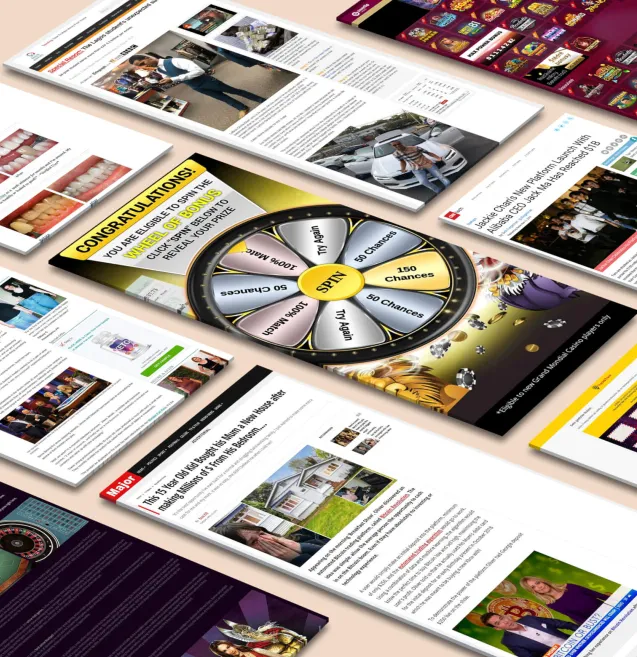
As opposed to the traditional way of online promotion that is banner advertisement (also known as display advertisement), native advertising is done in such a manner that both promotion and information are seamlessly balanced.
As Bartosz Wojdynski explained in his paper Native Advertising:Engagement, Deception, and Implications for Theory, his native advertising definition is that it "...involves presenting online content consumers with advertisements that resemble, in format and content ,the non-advertising content that is published on the same platform.".
Simply put this means that mainly, native advertising is done by carefully inserting a sponsored content in a website’s regular posting as if it is a natural part of the editorial. It takes on the behavior of the previous postings and with its seamless balance of information and promotion becomes an advertisement in disguise.
As native advertising takes on many forms, it can be found adapting to various environments and websites, mostly (but not limited to) social media platforms like Facebook, Twitter, and even Tumblr. It can also be widely seen in Forbes, Amazon, and Foursquare among others.
As Outbrain explains the topic on their brief article What is Native Advertising, “Native ads are often found in social media feeds, or as recommended content on a web page. Unlike display ads or banner ads, native ads don't really look like ads.”
When done right, native advertising can be invisible to the eyes of the common consumer, and it has been found recently in a Stanford University study that even when it is an obvious advertisement, consumers tend not to care because native advertising keeps the consumer engaged in the conversation. By acting as if part of the environment and catching the attention of the consumer, native advertising gives a higher lift that banner ads.
Outbrain also tackled native advertising’s ability to fend off the usual ad fatigue or ad blindness that consumers develop because of the abundance of ads in every corner of the internet.
“Native ads are brand exposure cloaked in editorial content, so they don’t tire out the audience. As long as the content is relevant and interesting, native advertising engages the audience.” (Outbrain)
Because native advertisements are ‘non-disruptive’, it does not create the gap between the ad and the consumer but bridges it slowly using the well-written informative piece surrounding the brand. By explaining the niche and casually inserting the brand in the conversation, native advertising engages the consumer longer than banner ads, making them more memorable.
As years passed, various companies and professionals have perfected the technique in writing native advertisements. And because it relies heavily in cloaking itself, there was a need to place ethical regulations so its use will not be abused.
The Interactive Advertising Bureau created the Native Advertising Playbook, where it categorized the six types of Native Advertising: Paid Search Units, Recommendation Widgets, Promoted Listings, In-Ad (With Native Elements) Units, In-Feed Units, and Custom/“Can’t Be Contained” for those that do not fall into the five previous types (Spotify, Hearst, Tumblr, etc).
According to ClickZ, hen a native ad is successful, it is because it adhered greatly to the three-part structure that has been perfected through the years.
First is Ad Integration. Carefully inserting the native ad in a platform is of utmost importance; its form should not deviate from the previous ones.
Second is Aligned Objectives, where the ad must be aligned to the need of the consumer at that given moment, which are with better odds when the ad and the website somehow belongs to the same niche.
Last is Ad Transparency, an etiquette play where the brand reveals its ad intent with keywords such as Suggested Post, Recommended Post, and Sponsored, among others, in order to build trust and rapport.
Native Advertising is still young and evolves as the use of internet evolves. Be sure to remember these native advertising definitions in order to help you create or recognize them in the future!
Tags
Receive top converting landing pages in your inbox every week from us.
How-To
GA4 is one of the most powerful tools for understanding your own website performance, but it was never designed to reveal what competitors are doing. This article explores the limitations of Google Analytics for competitive intelligence, explains what competitor data actually looks like, and outlines a practical framework for combining first-party analytics with ad intelligence tools, AI visibility tracking, and market monitoring to uncover opportunities your dashboards can't show you.
Priya Kapoor
7 minJun 23, 2026
Most Read
Traditional creative briefs and structured "young creatives" programs were designed for an era of long campaign cycles and slow feedback loops. Today, performance marketers operate in a world where creative ideas are tested, validated, and discarded in days—not months. This article explores how data-driven advertisers are replacing static briefs with real-time competitive intelligence, creative effectiveness data, and continuous market observation. It argues that the modern creative advantage comes not from demographic intuition or institutional processes, but from pattern recognition, creative velocity, and the ability to learn directly from what is already working across thousands of live campaigns.
Samantha Reed
7 minJun 23, 2026
Editor’s Pick
The rapid hiring surge across the out-of-home advertising industry is revealing far more than growth—it’s exposing where media budgets, technology investments, and consumer attention are headed next. This article explores how digital advertisers can use OOH hiring trends as a form of competitive intelligence, uncover emerging geographic opportunities, identify retail media convergence signals, and build a practical monitoring framework that turns job listings into actionable marketing insights.
Liam O’Connor
7 minJun 21, 2026