6 minJune 23, 2026

Our spy tools monitor millions of native ads from over 60+ countries and thousands of publishers.
Get StartedEvery marketer knows the calendar's pressure points. Black Friday, Valentine's Day, back-to-school, election season — these windows are when budgets swell, creative teams sprint, and entire categories flood the market with new ads, landing pages, and offers. As Semrush notes, these high-demand seasons are precisely when paid ads let brands capitalize on spikes in demand, turning surging consumer intent into revenue. The logic is obvious: when people are actively shopping or engaging with a cultural moment, you spend to be seen. But here's the paradox almost no one talks about — the very thing that makes these windows so valuable for running campaigns also makes them invaluable for studying campaigns, and almost nobody sticks around to do that second part.
The pattern is remarkably consistent across industries. Teams pour weeks of effort into holiday creative. They test headline variations, swap hero images, experiment with discount structures, and build dedicated landing pages that exist for no other purpose than to convert during a narrow window. Then the window closes, the war room disbands, and everyone moves on to the next quarter's OKRs. The ads get paused. The landing pages go dark. And all of that competitive intelligence — the exposed strategies of every rival who was also testing at full throttle — evaporates from organizational memory like confetti swept off a sidewalk.
This isn't just a retail problem. The concentration of spend in seasonal windows is a universal phenomenon, and perhaps nowhere is it more dramatic than in political advertising. A Basis study found that 50% of digital ad budgets for the 2022 midterms were spent in the last 30 days before Election Day, with half of that amount crammed into just the final ten days. Think about what that means from an intelligence perspective: in a single month, campaigns collectively revealed their best-performing messaging frameworks, their most aggressive audience targeting, and their highest-conviction creative bets — all compressed into a window so narrow it practically begs to be analyzed after the fact. Yet most political consultants, like most brand marketers, file the results and never look back.
The math here is straightforward but underappreciated. When an entire category doubles or triples its ad spend inside a four-week period, it simultaneously doubles or triples the volume of testable competitive data available to anyone paying attention. More ads mean more creative variants exposed to the public. More landing pages mean more conversion hypotheses laid bare. More spend means higher statistical confidence in what worked and what didn't, because the sample sizes are enormous. These seasonal peaks don't just produce more noise — they produce a disproportionate share of signal, the kind of signal that in quieter months would take quarters to accumulate.
And yet the default behavior for most organizations is to treat these peaks as execution-only periods — heads down, run the playbook, hit the numbers, exhale, repeat. The aftermath is treated as recovery time, not research time. Competitive analysis, if it happens at all, is a standing monthly report that smooths over the very spikes where the most revealing data lives.
The brands that consistently outperform during seasonal moments don't just execute well in the heat of the campaign. They treat the post-season silence as the most productive research window on their calendar. While competitors go dark, these teams are cataloging every creative variant, deconstructing every landing page, and mapping the arc of messaging that their rivals refined under maximum competitive pressure. The richest dataset your competitors will ever hand you arrives gift-wrapped every holiday season. The only question is whether you bother to open it.
Competitive intelligence during holiday windows isn't a casual scroll through a competitor's Facebook page — it's a systematic, multi-channel audit of every creative decision, offer structure, and format choice your rivals deployed while attention was at its peak. The advertisers who consistently win seasonal cycles treat each channel as a distinct intelligence layer, and they catalog what they find with the same rigor they'd apply to their own campaign data.
Start with the channels where intent is highest. As Semrush explains, paid search ads are text ads that appear at the top of Google results when someone searches for a specific term — meaning you're bidding to intercept a shopper who already wants what you sell. During seasonal surges, the intelligence value here is enormous: which competitors suddenly appeared on branded or category terms they normally ignore, what ad copy variations they tested, and whether they leaned into urgency-driven CTAs like countdown language or limited-stock messaging. Shopping ads offer an even richer data layer because they expose price, product imagery, and merchant name simultaneously — letting you reverse-engineer a competitor's promotional pricing strategy without ever visiting their site.
Then there's paid social, which operates on an entirely different logic. Platforms like Meta, TikTok, and Pinterest serve ads to people who aren't actively searching but are browsing, making them better suited for building awareness, showcasing products visually, and retargeting. During holiday windows, the intelligence you pull from social channels is less about keyword strategy and more about creative execution: which video formats outperformed static images, which influencer-style UGC ads appeared alongside polished brand content, which carousel structures walked users through gift guides versus single-product pitches. The top advertisers screenshot everything — the hook, the thumbnail, the first three seconds of video, the landing page that loads after the click — because each element is a data point about what that competitor believed would convert during the most expensive media-buying period of the year.
What makes seasonal intelligence gathering especially critical right now is that the platforms themselves are flooding the market with new ad tools timed to tentpole moments. As Clix Marketing documented, Google, Microsoft, TikTok, Meta, and LinkedIn all released major advertising updates within a single week — from the expansion of video ads in Performance Max campaigns to TikTok announcing new ad options at its "TikTok World" event and Meta expanding AI ad control options. When every major platform ships new seasonal capabilities simultaneously, your competitors gain access to formats and targeting mechanisms they didn't have during the last holiday cycle. If you're not tracking which of those new tools your rivals actually adopted — and how they used them — you're benchmarking against a landscape that no longer exists.
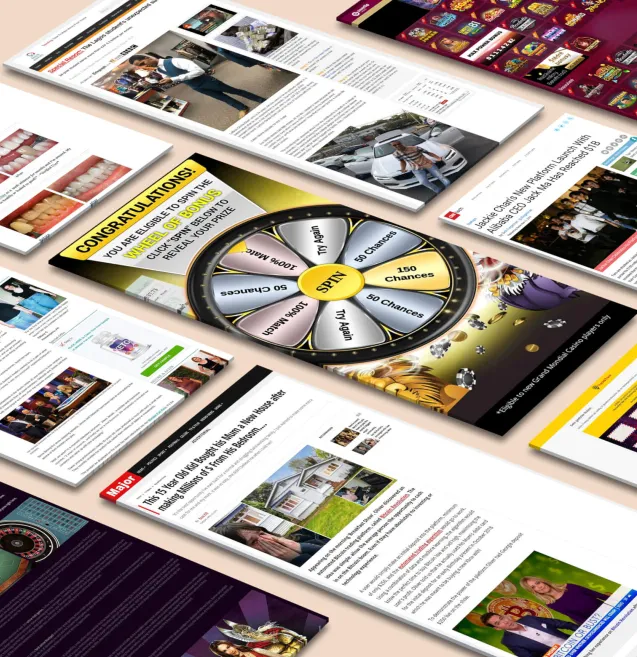
Native ad networks and push notification campaigns round out the intelligence stack. Native ads are particularly revealing during seasonal windows because they expose the editorial angles competitors believe will drive clicks: which listicle-style headlines appeared, which advertorial landing pages were designed to warm up cold traffic before a purchase, and which verticals surged unexpectedly — think pet insurance spiking around the December gifting season or meal kits exploding during back-to-school. Push notification campaigns, meanwhile, reveal timing and frequency strategies that are invisible in every other channel.
The discipline here is methodical collection. You're capturing headlines, discount structures, visual treatments, and landing page architectures — then testing offers with different headlines, discounts, or CTAs against what you observed, so that what your competitors revealed through their spending becomes the foundation for your own seasonal playbook. The brands that treat this as an operational process, not a curiosity, are the ones that enter every holiday window with a structural advantage their competitors never see coming.
Every major cultural moment — the Super Bowl, the World Cup, Black Friday, Election Day — leaves a measurable wake. Not just in impressions served or social mentions counted, but in what people actually did afterward: what they searched, where they navigated, and how quickly they returned. The smartest competitive researchers have learned to read that wake like a demand map, reverse-engineering which rival campaigns genuinely moved the needle versus which ones simply burned budget for fleeting visibility.
The concept is straightforward but underutilized. When a competitor launches a high-profile seasonal campaign — say, a cinematic holiday spot or a limited-time offer tied to a tentpole event — it generates a cluster of downstream signals that are visible to anyone who knows where to look. Branded search volume spikes in the hours and days following the creative's debut. Direct traffic surges as consumers type the brand URL into their browsers rather than clicking through an ad. Returning user cohorts swell in analytics platforms as awareness converts to curiosity and curiosity converts to action. Individually, each signal is suggestive. Triangulated together, they reveal which campaigns actually drove demand and which merely generated noise.
The key is isolating the campaign window tightly enough to attribute the lift. By monitoring a competitor's branded search volume through tools like Google Search Console or third-party keyword trackers, you can identify the precise moments when search interest departs from its baseline. When those spikes align with concurrent jumps in direct traffic and new-versus-returning visitor ratios — all observable through competitive analytics platforms — you have strong circumstantial evidence that a specific campaign broke through. This is especially valuable during high-demand seasons like Black Friday or back-to-school, when dozens of campaigns launch simultaneously and raw impression counts tell you almost nothing about relative effectiveness.
Emotional engagement data adds a critical third dimension. Rankings like the ones DAIVID produces for major events — scoring ads on metrics such as intense positive emotion, brand recall, and purchase intent — function as a proxy for the kind of creative resonance that precedes a search surge. When emotional engagement scores are high and branded search lifts follow, you're looking at a campaign that didn't just entertain but actually created demand. When emotional scores are high but search stays flat, the creative likely succeeded as content but failed as advertising. Competitors' ad libraries can tell you what they tried; this triangulation tells you what worked.
This approach becomes even more powerful when you layer in physical-world signals. As Clearcode explains, DOOH campaigns tied to sporting events or holidays can now be measured alongside digital touchpoints, with exposed audiences feeding retargeting pools and attribution models accounting for out-of-home's role across the full journey. That means a competitor's billboard blitz during a tentpole moment isn't invisible to your demand map — its effect shows up in the same branded search and direct traffic patterns you're already tracking.
The practical takeaway is that seasonal competitive intelligence doesn't end when you've cataloged a rival's ad creatives and offer structures. That catalog tells you what they shipped. The demand map — the convergence of emotional engagement data, branded search lifts, and direct traffic patterns — tells you what the market actually rewarded. And that distinction is the difference between copying a competitor's homework and understanding why they got the answer right, so you can build something better the next time the calendar hands you a cultural moment worth winning.
Most teams make the same mistake every seasonal cycle: they promise themselves they'll study the competition this time, then the campaign launches, the war room spins up, and every hour gets consumed by bid adjustments, creative swaps, and fire drills. By the time the dust settles, everyone takes a breath, moves on to the next priority, and the competitive audit never happens. The irony is brutal — the richest vein of competitive data exists in precisely the window most organizations treat as recovery time.
The two-to-four-week corridor immediately after a seasonal peak is the only period where two conditions overlap: your team has the bandwidth to do deep analytical work, and the artifacts of your competitors' campaigns are still intact. Ad libraries on Meta and Google still surface seasonal creatives. Landing pages haven't been swapped out or redirected yet. Search trend data on platforms like Google Trends and Semrush is still fresh enough to query at weekly granularity. Social engagement metrics — shares, saves, comment sentiment — are frozen in their final state, not yet buried under the next content cycle. Wait another month and the evidence starts disappearing: creatives rotate out, seasonal URLs go dead, and the signal dissolves into noise.
This counter-cyclical logic has a proven analog in political advertising. As Basis documented, 50 percent of digital ad budgets for the 2022 midterms were concentrated in the last 30 days before Election Day, with half of that spend crammed into the final 10 days. The result was predictable: costs spiked, inventory tightened, and latecomers competed for scraps. The strategic advantage belonged to advertisers who acted counter-cyclically — locking in favorable pricing through PMP deals and programmatic guaranteed buys while competitors were still clustering their budgets toward the end. The same principle applies to intelligence work. When your competitors' teams are decompressing from their own seasonal push, they're not monitoring what you're archiving. The asymmetry is yours to exploit.
There's a methodological argument here, too, not just a practical one. Calibrating any competitive benchmark requires a clean baseline, and the post-season window provides exactly that. As MarTech has outlined, understanding the lag between a demand-generating event and its downstream search impact is essential — 75 percent of incremental search activity from a TV spot happens within the first two minutes, but the full attribution tail stretches much further. Establishing those lag windows requires studying the data while it's still granular and timestamped, not reconstructing it months later from memory and summary dashboards. A quiet marketing phase, free from the distortion of your own active campaigns, is the ideal moment to calibrate that historical baseline — separating what your competitors' efforts actually drove from the ambient lift of seasonal demand.
Think of it as a triage framework. During the seasonal rush, your job is to execute, capture screenshots when you can, and bookmark what catches your eye. In the dead zone, your job is to process — to turn those raw captures into structured intelligence. Pull every competitor creative from ad libraries before they expire. Scrape landing pages while the URLs still resolve. Export search volume curves at the tightest interval available. Map engagement data against creative format, CTA type, and offer structure.
The teams that treat the dead zone as downtime will start their next seasonal cycle from scratch, rebuilding hypotheses from gut feeling and faded memory. The teams that treat it as an intelligence sprint will start with a playbook — one built on evidence their competitors already discarded.
Everything you've gathered from post-season audits, competitive teardowns, and behavioral signal mapping is worthless if it stays trapped in a spreadsheet no one opens in August. The difference between teams that dominate seasonal windows and those that scramble to catch up is a living competitive playbook — a structured system that converts last cycle's intelligence into next cycle's pre-built advantage.
Start by organizing your findings into a competitive creative library. This isn't a random folder of screenshots. It's a tagged, searchable archive organized by competitor, campaign theme, channel, creative format, offer structure, and timing. Every entry should include the ad or landing page itself, the approximate run dates, the messaging angle, and any performance signals you could infer — did this creative run for six weeks or get pulled after four days? Was it backed by heavy spend or quietly tested? Over two or three seasonal cycles, patterns emerge that no single snapshot can reveal: which competitors always lead with percentage-off discounts versus gift-with-purchase, who shifts creative tone between Thanksgiving and Christmas versus running a single message through the entire corridor, and where the white space sits that nobody is filling.
From those patterns, build a set of testable hypotheses for the next window. This is where paid media becomes your laboratory. As Semrush's ecommerce strategy guide explains, running two versions of an ad with different headlines, discounts, or CTAs tells you what messaging resonates with your audience before you commit to it across other channels. If your competitive library shows that three out of four rivals hammer urgency-based countdown messaging during Black Friday, your hypothesis might be that a calm, confidence-driven creative — "no rush, our deals last" — could stand out. Run that test in paid search or paid social eight weeks before the holiday window opens, when CPMs are lower and the data is cheaper to collect. The intelligence you extract can then shape not only your holiday ads but your organic content, email sequences, and even AI-visible product pages that surface in conversational search results.
Pre-building campaign assets based on proven patterns is the final multiplier. If your library shows that your top competitor launches a gift-guide landing page every year in the second week of November, don't just plan to match it — have yours designed, QA'd, and staged in your CMS by mid-October. Build modular creative kits with interchangeable headline and offer components so your design team isn't starting from a blank canvas when the brief arrives. Write three or four ad copy variants for each hypothesis so you can launch A/B tests on day one instead of day ten.
This kind of preparation also means staying current with platform capabilities in the months before peak season. Google, for instance, has been piloting promo-focused budget tools that give advertisers more flexibility for promotions and cross-campaign spending — features specifically designed for the kind of rapid scaling holiday windows demand. The advertisers who test these tools in September are the ones who deploy them flawlessly in November; the ones who discover them during Black Friday week are running tutorials while their competitors are running campaigns.
Your playbook, then, isn't a document you write once. It's a cycle: collect intelligence, archive it structurally, extract hypotheses, test cheaply in low-season paid campaigns, pre-build assets around the winners, and pressure-test new platform features before stakes are high. Do that consistently and you'll never be the team that starts from scratch — you'll be the team your competitors are trying to reverse-engineer.
Receive top converting landing pages in your inbox every week from us.
Editor’s Pick
Discover how to turn food, sports, and tech trends into structured creative testing hypotheses instead of one-off ad ideas. Learn how to build vertical-specific blueprints, test them across Native, Push, Pops, and TikTok, and use performance data to continuously improve your creative strategy.
Dan Smith
7 minSep 20, 2026
Guide
Award-winning ads can inspire powerful performance creative, but they need to be rebuilt for the way algorithms, feeds, and users behave across Native and TikTok. This guide shows how to reverse-engineer high-profile creative into scalable hooks, angles, formats, and AI-driven testing systems that can improve performance.
Elena Morales
7 minSep 19, 2026
In-Depth
Discover how city-level ad intelligence can help marketers build campaigns that feel local while scaling globally. Learn how to use Anstrex to uncover geographic, language, creative, and funnel patterns across Native, TikTok, Push, and Pops, then turn those insights into repeatable localized campaigns.
Elena Morales
7 minSep 16, 2026