9 minJuly 2, 2026

Our spy tools monitor millions of native ads from over 60+ countries and thousands of publishers.
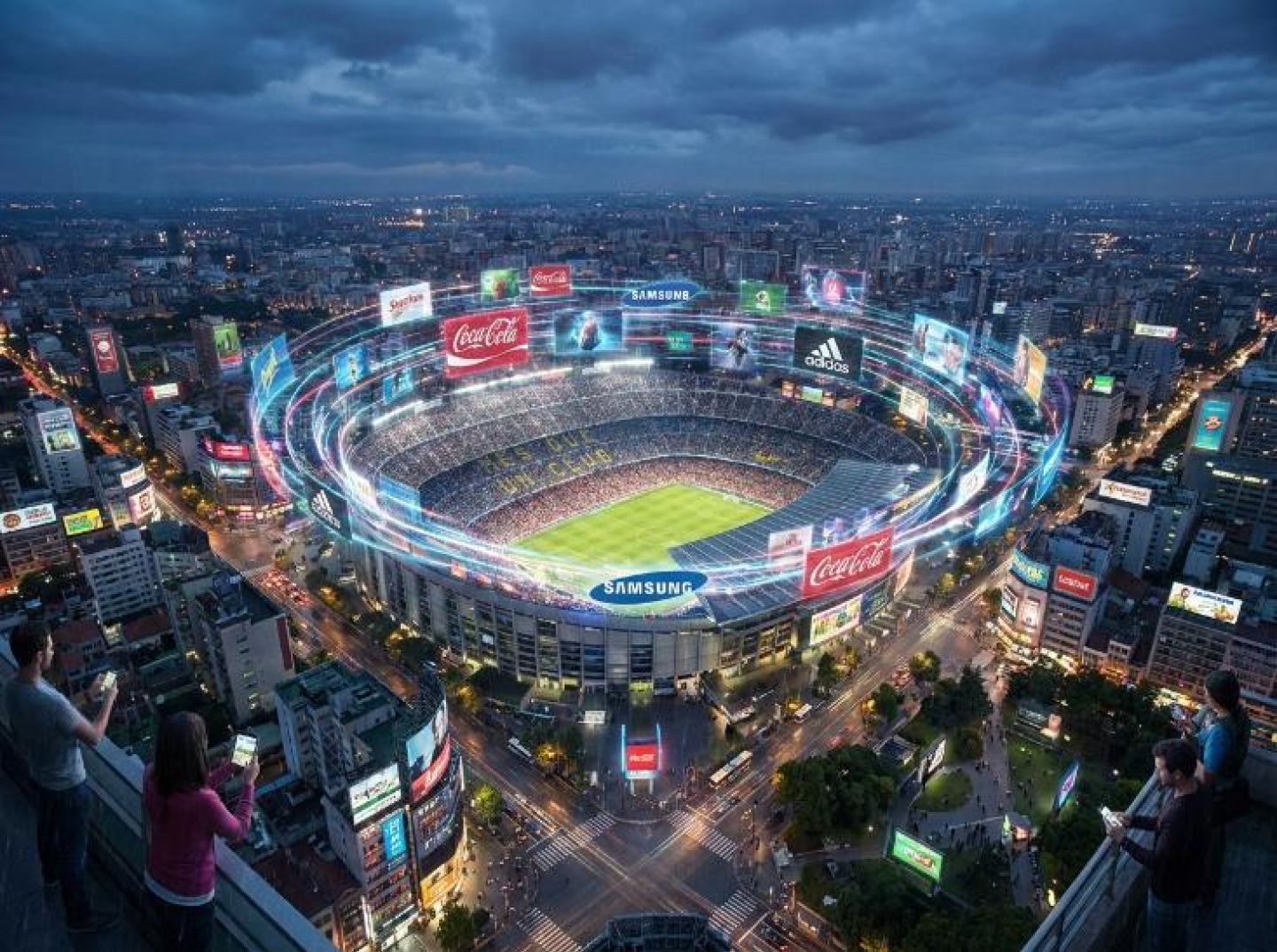
Get StartedEvery four years, the World Cup doesn't just capture the world's attention — it detonates a spending bomb that reshapes the entire advertising landscape. The 2026 tournament, sprawling across North America with an expanded 48-team format, is expected to inject more than $10 billion into the ad market as brands from Coca-Cola to Modelo jostle for a slice of the most-watched live event in history. With anticipated viewership exceeding 1.5 billion people, this isn't just a sporting spectacle — it's a gravitational force that pulls consumer attention, engagement, and spending into a concentrated window that fragmented digital media simply cannot replicate.
For performance marketers watching from the sidelines, that tidal wave of spend might seem irrelevant. After all, you're not bidding on stadium signage or cutting seven-figure checks for official FIFA partnerships. But here's the counterintuitive truth: you don't need to. Big-brand spending creates what you might call a "wake effect" — a downstream surge of surplus inventory, heightened emotional engagement, and loosened consumer wallets that lifts every boat in the water, including yours.
The mechanism is straightforward. When Nike drops a single ad like "Rip the Script" that surpasses 66 million YouTube views in less than a week, it doesn't just sell shoes. It trains billions of eyeballs on World Cup content ecosystems — social feeds, streaming platforms, sports news sites, highlight reels — inflating audience pools across every adjacent channel. Platforms respond by expanding ad inventory to meet demand, and that creates pockets of efficiency for smaller advertisers who know where to look.
What makes this opportunity even more striking is the staggering gap between attention generated and attention captured. Research from social analytics firm Samy found that less than 1% of total U.S. World Cup-related social media conversations have featured brand mentions. Let that sink in: billions of dollars are flooding the market to fuel conversations that are, overwhelmingly, about the sport itself — the goals, the upsets, the drama. The vast majority of that swelling attention remains unmonetized, an ocean of engaged consumers talking passionately about something without a brand anywhere in the frame.
Gartner analyst Nicole Greene frames this dynamic precisely, arguing that unlike fragmented digital environments, the World Cup concentrates attention by bringing together "emotion, ritual and shared context over an extended period of time." These are conditions where consumers are leaning in rather than tuning out — a stark contrast to the banner blindness and ad-skipping behavior that plagues everyday digital campaigns. Greene notes that marketing budgets remain heavily digital even as consumers become more adept at avoiding ads, skipping them, blocking them, or ignoring them entirely. The World Cup temporarily reverses that dynamic, creating an environment where people actually want to engage with content — and, by extension, with the brands smart enough to show up alongside it.
And the opportunity extends far beyond screens. According to AdExchanger, 65.7% of soccer fans show travel intent for the 2026 World Cup, representing roughly 40 million people whose purchase signals ripple outward into hotels, restaurants, rideshares, retail, and experiences. Meanwhile, Adweek reports that 49% of viewers will seek free ways to watch — through FAST channels, bars, or friends' homes — meaning millions of highly engaged fans will be consuming the tournament through ad-supported environments ripe for performance campaigns.
The big brands create the wave. But most of the ocean remains unclaimed. Performance marketers don't need a sponsorship deal to ride it — they just need to be in the water when the tide rises.
The World Cup isn't a single event — it's a rhythm. And that rhythm is entirely predictable, which makes it one of the most exploitable media planning opportunities a performance marketer can find. Understanding the cadence of fan attention across the tournament's 104 matches lets you build a media calendar that's not based on guesswork but on the fixed schedule FIFA publishes months in advance.
The key insight comes from illumin's framework, which breaks fan engagement into three distinct stages — pre-match anticipation, match-day emotional peaks, and post-match conversation — each of which creates fundamentally different content consumption behaviors and, crucially, different ad inventory dynamics. In the pre-match phase, fans are researching lineups, debating predictions, consuming previews, and scrolling social feeds for team news. This is where search volume surges around team and player names, where YouTube preview content racks up views, and where display inventory adjacent to sports editorial is relatively underpriced compared to match-day slots. For performance marketers, it's the window to capture intent — running prospecting campaigns against audiences consuming prediction content, fantasy league tools, and schedule lookups.
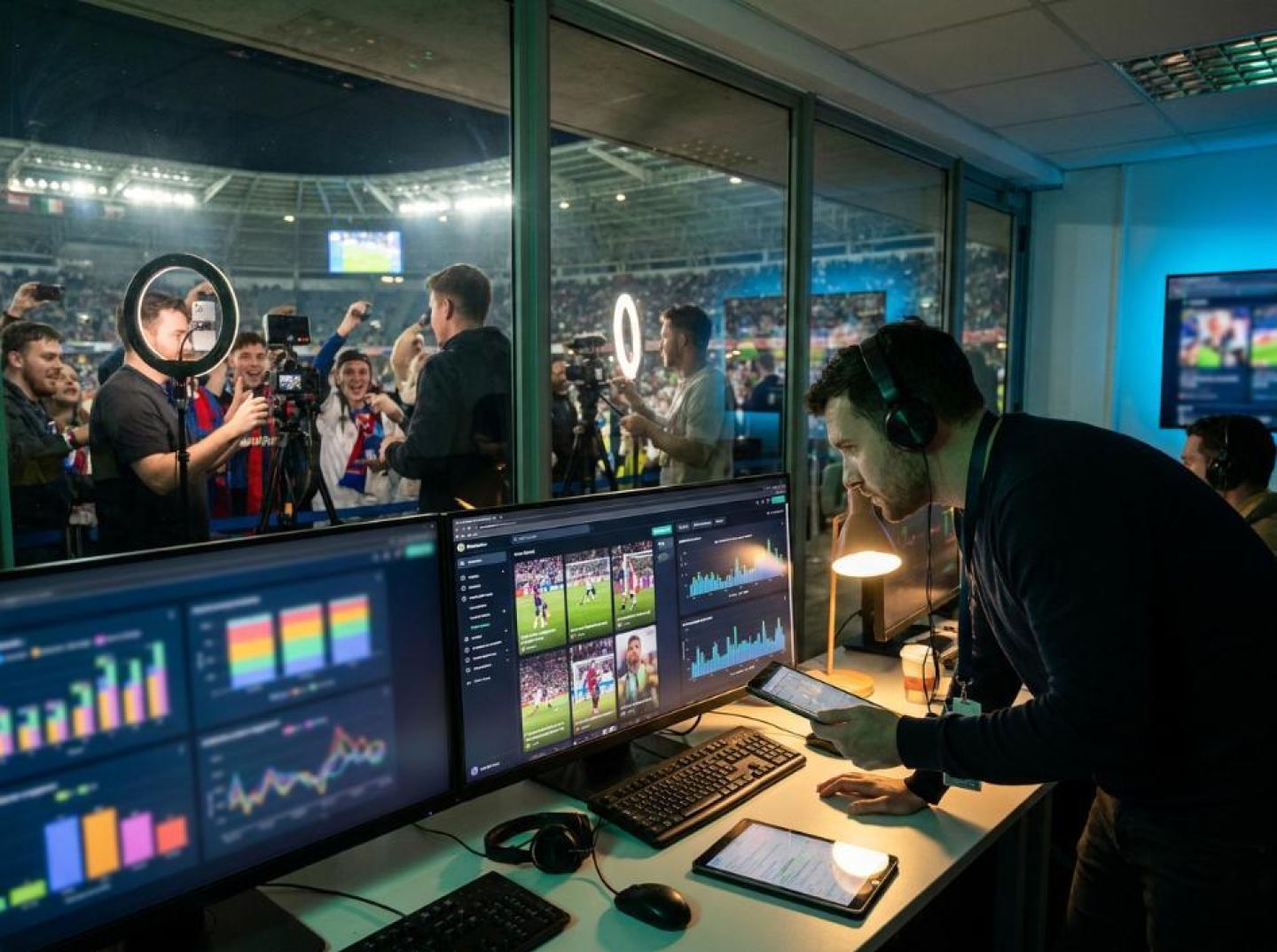
Match day is where emotion spikes hardest, but it's also where attention fragments in ways that benefit smaller advertisers. The same illumin analysis reveals that 80% of fan engagement happens outside stadium walls — in bars, fan zones, transit hubs, and on millions of second screens. That fragmentation means audiences aren't locked into a single premium broadcast placement. They're on Twitter reacting to goals, on TikTok watching clips, on YouTube hunting highlights, and on messaging apps arguing with friends. Every one of those touchpoints creates programmatic inventory that doesn't carry Super Bowl–tier pricing.
Then comes the post-match phase, which is arguably the most underexploited window of all. After a dramatic result — a penalty shootout, a host-nation upset, a controversial red card — conversation volume explodes across platforms for 12 to 24 hours. Highlights, memes, reaction videos, and hot takes dominate feeds. Search volume around eliminated teams, breakout stars, and controversial moments creates keyword targeting opportunities that barely existed an hour earlier. This is the domain of reactive spending, and even major brands build it into their strategy explicitly. As AdExchanger reported, Degree's head of marketing described the brand's approach as finding "the balance between being proactive and reactive," splitting spend into two buckets: pre-committed event-driven placements and flexible programmatic buys informed by real-time audience signals. Their agency, WPP Unite, locks in direct buys on properties like Telemundo and YouTube months in advance while keeping budget fluid for programmatic opportunities that emerge as the tournament unfolds.
The lesson for performance marketers operating at a fraction of Degree's budget is that you can adopt the same structural logic without the same dollar commitment. Your "proactive" bucket is the match schedule itself — pre-planned campaigns timed to group stage matchups involving the U.S., Mexico, or other high-interest teams. Your "reactive" bucket is reserved budget triggered by real-time signals: a sudden spike in searches for an underdog team, a trending meme format, or a controversial VAR decision that dominates social conversation for hours.
The tournament's predictability is the arbitrage. You know when matches happen. You know which matchups will generate disproportionate attention. You know that most weekday games start during U.S. working hours, which means mobile and streaming inventory — not linear TV — will carry the bulk of eyeballs during those windows. Map your campaigns to these three phases, allocate spend across proactive and reactive buckets, and you have a media plan that rides the same attention wave the billion-dollar brands are generating — without footing the bill for the wave itself.
The biggest brands aren't winning the World Cup ad wars with budget alone — they're winning with creative intelligence. When Nike launched its "Rip the Script" campaign, it wasn't simply a lavish production; as Marketing Dive detailed, the spot was engineered for craving, packed with Easter eggs that demand rewatches and fuel organic sharing loops. That's a creative philosophy, not a line item. Similarly, Unilever's World Cup playbook leans heavily on creator-native content designed to feel organic rather than interruptive — social-first assets that blur the line between entertainment and advertising. These principles aren't locked behind eight-figure budgets. They're patterns, and patterns can be decoded.
This is where competitive intelligence becomes a performance marketer's sharpest weapon. Tools like Anstrex let you monitor native ad networks and push notification campaigns in real time, filtering by geography, device, ad network, and date range to isolate exactly which World Cup-adjacent creatives are scaling right now. Instead of theorizing about what might resonate with tournament audiences, you're looking at what the data already validates — which headlines are surviving long flight times, which imagery styles (jersey close-ups, flag motifs, match-score hooks) are earning clicks, and which emotional triggers (national pride, rivalry tension, FOMO around knockout rounds) are converting at scale.
The practical workflow is straightforward. Start by searching event-related keywords — "World Cup," "FIFA 2026," specific team names, host city names — within Anstrex's native or push ad databases. Sort results by longevity and traffic weight, because ads that have been running for weeks with increasing spend are proven winners, not experiments. The creatives that survive are the ones generating positive ROI, and their sustained presence is your signal.
Once you've identified the top performers, screenshot and deconstruct everything: the headline structure, the thumbnail composition, the emotional angle in the copy. Then click through and analyze the landing page architecture. Are they using long-form advertorial pages or short, punchy squeeze pages? Is the offer tied to a prediction contest, a merchandise discount, a streaming deal, or a betting angle? Map the complete funnel from ad impression to conversion action.
What you'll typically find during mega-events mirrors what the major brands already know. AdExchanger's reporting on Degree's World Cup strategy revealed how the brand splits its spend between proactive, event-driven placements and reactive, programmatic buys informed by audience signals — a dual approach that performance marketers can replicate at micro scale. Your proactive layer is the calendar-based creative you've already built from phase mapping; your reactive layer is what spy tools reveal is working in the wild, adapted to your offers within hours.
The key adaptation step is critical: you're not copying creatives wholesale. You're extracting the proven pattern — the emotional architecture, the visual language, the headline cadence — and rebuilding it around your specific offer and compliance requirements. If the top-performing native ads across three networks all use a "Will [Country] survive tonight?" curiosity hook paired with action imagery and a national color palette, that's your creative brief. You've reverse-engineered a validated formula from live market data rather than brainstorming in a vacuum.
As illumin's World Cup analysis argues, the brands that win won't be the ones with the biggest budgets but the ones with the smartest orchestration. Spy tools are how performance marketers orchestrate without guessing — turning the billions in World Cup ad spend from a competitive barrier into a free research lab.
When Unilever announced it would deploy over 35 brands through influencer collaborations and a real-time "Locker Room" content hub on YouTube and TikTok, it wasn't just making a sponsorship play — it was flooding platform algorithms with a volume of sports-adjacent content that fundamentally changes what those platforms surface to users. For performance marketers without a fraction of Unilever's budget, this algorithmic reshaping is the real gift. Every piece of creator content tagged, hashtagged, or topically linked to the World Cup trains recommendation engines to prioritize event-adjacent material, temporarily inflating organic reach for anyone producing content in the same thematic orbit. You don't need to be an official sponsor to ride that wave; you just need to be in the water.
The mechanism is straightforward. Platforms like TikTok and YouTube optimize for engagement velocity — when millions of users suddenly cluster around World Cup content, the algorithms expand the aperture of what qualifies as relevant. A skincare brand creating a "match-day glow" routine or a snack company riffing on halftime rituals gets pulled into the same recommendation streams as official tournament highlights, because the algorithm sees topical proximity and user engagement, not sponsorship tiers. Unilever's own strategy reflects this logic: by positioning its activation as "social-first storytelling" designed to "show up in spaces where fandom lives," it's betting that native, creator-driven content outperforms traditional advertising in algorithmic environments. Performance marketers can replicate the principle at a fraction of the cost by producing event-themed ad creatives — short-form video, carousel ads, even static images with tournament visual language — that catch algorithmic tailwinds without requiring a single licensing fee.
The second lever is audience building. Every user who engages with World Cup creator content — liking a TikTok from Unilever's Locker Room, commenting on a match recap, or sharing a meme — is signaling an interest profile that platforms make available for targeting. Performance marketers can build retargeting pools from users engaging with World Cup-adjacent content categories, then create lookalike audiences that extend reach well beyond the tournament itself. These aren't casual browsers; as AdExchanger noted, sports fandom generates intent signals across the entire consumer journey — from travel planning to merchandise purchasing to organizing watch parties — meaning the audiences you capture during the tournament carry durable commercial value long after the final whistle.
The third and perhaps most tactically immediate opportunity comes from the match schedule itself. Fox One's campaign leans heavily into the insight that most weekday World Cup matches start during U.S. working hours, with its creative depicting people sneaking glances at smartphones and tablets when they should be focused on their jobs. That behavioral reality — millions of fans glued to mobile devices at their desks — creates a predictable, repeatable window for push notification campaigns, SMS promotions, and app-based offers timed to kickoff and halftime. Open rates during these windows will spike not because your message is better, but because the phone is already in-hand and the user is already in a consumption mindset. Match the cadence of your outreach to the published fixture list, and you're essentially drafting behind the attention infrastructure that Fox, Unilever, and FIFA have spent billions to build.
The cumulative effect of all this creator content, platform saturation, and schedule-driven mobile behavior is a temporary but powerful restructuring of the digital attention economy. Performance marketers who recognize that the algorithm doesn't care about your budget — only about topical relevance and engagement signals — can capture outsized returns by aligning creative, targeting, and timing with the rhythms that mega-spenders have already established.
Strategy without the right offer is just expensive theory. The World Cup creates a predictable surge in consumer intent across specific verticals, and performance marketers who align their offer selection with those emotional and behavioral patterns can capture outsized returns — even without a sponsorship deal or a celebrity endorsement.
Start with what the data makes obvious. When Degree began running ads featuring Christian Pulisic months before kickoff, it wasn't a random brand play — the antiperspirant brand was deliberately positioning itself at the intersection of personal care, athletic identity, and peak-season demand. That positioning reveals a broader truth about which verticals naturally align with major sporting events: personal care, sports apparel, athleisure, hydration and nutrition products, sports betting, streaming subscriptions, and consumer electronics all see measurable lifts when a tournament of this magnitude takes hold of public attention. For affiliate marketers, the lesson is to select offers that fit the emotional arc of the event rather than forcing unrelated products into a sports wrapper.
The emotional triggers themselves follow a reliable three-stage pattern. As illumin's marketer guide to the tournament outlines, fan engagement breaks into pre-match anticipation, match-day peak emotion, and post-match reflection — each stage generating distinct conversion opportunities. Pre-match is where research-driven offers thrive: streaming service trials, merchandise comparison pages, food and beverage delivery sign-ups for watch parties, and sports betting account registrations all align with the planning mindset fans adopt in the hours before kickoff. Match-day itself is the domain of impulse — limited-time discounts on apparel, quick-serve food delivery promotions, and in-play betting offers convert when urgency meets adrenaline. Post-match, the window opens for reflective purchases: highlight-reel subscriptions, commemorative gear, and fitness products that channel the "I could do that" aspiration every spectacular goal inspires.
Messaging alignment matters as much as offer selection. You don't need to mention FIFA, the World Cup, or any team by name — and you shouldn't, given the aggressive trademark enforcement that governs official tournament marks. Instead, anchor your landing page copy to universal sporting emotions: the thrill of competition, the camaraderie of gathering with friends, the pride of national identity, the physicality of athletic performance. A deodorant brand doesn't need to say "World Cup" when it can say "engineered for the moments that make you sweat." A streaming offer doesn't need a FIFA logo when it can promise "every goal, every upset, every match-day moment."
The verticals with the deepest conversion potential often sit adjacent to fandom rather than inside it. Among soccer fans, roughly 65.7% show travel intent for the 2026 tournament — representing approximately 40 million people planning trips, booking accommodations, and searching for local experiences in host cities. That makes travel affiliate offers, rideshare promotions, luggage deals, and even mobile payment app sign-ups high-probability conversion targets for marketers who can reach those audiences with contextually relevant creative.
The core principle is simple: don't sell the event, sell the lifestyle the event activates. Select offers that solve a problem the World Cup creates — the need to watch, gather, travel, look the part, fuel up, or recover — and your landing pages become natural extensions of the fan experience rather than interruptions of it. That alignment is what turns borrowed attention into owned revenue.
Receive top converting landing pages in your inbox every week from us.
Must Read
Explore why traditional OOH experience is no longer enough as out-of-home advertising becomes more data-driven, measurable, and connected to digital channels. This guide outlines the cross-channel, measurement, AI, and competitive-intelligence skills modern OOH employers and candidates need.
David Kim
7 minSep 25, 2026
How-To
Learn how to measure whether sports-star and celebrity advertising actually delivers efficient CPC, CPA, search lift, and downstream conversions. This guide shows how to test celebrity creative against creator alternatives and use competitive intelligence and measurement to turn expensive star power into a measurable performance asset.
Elena Morales
7 minSep 25, 2026
Quick Read
Ad-spy tools and performance marketing are helping reshape OOH from a traditional media channel into a data-driven, programmable performance environment. This guide explores how competitive intelligence can influence OOH hiring, talent requirements, funnel strategy, measurement, and agentic AI workflows.
Dan Smith
7 minSep 23, 2026