8 minJuly 22, 2026

Our spy tools monitor millions of native ads from over 60+ countries and thousands of publishers.
Get StartedLet's start with the number most marketers don't want to hear. According to Ahrefs' analysis of 422,421 real websites, the median whole-site organic click-through rate falls between 1% and 2%. Not 10%. Not 5%. One to two percent — and that's the honest, typical benchmark across every industry they track.
If that figure feels impossibly low, it's because the mental model most of us carry is outdated. We've been trained on the "position 1 gets 30–40% of clicks" heuristic, a stat that refers to a single top-ranking page for a single query. It has almost nothing to do with how an entire website performs across thousands of impressions in Search Console. Ahrefs is explicit about this distinction: their benchmarks represent whole-site CTR, not position-1 CTR, which is why the numbers "sit far below" the figures you'll see quoted in most SEO guides — and why they match the dispiriting reality in your own GSC overview.
The picture gets worse when you look at the structural forces pushing that ceiling even lower. Anstrex.com/blog/your-competitors-ai-overview-problem-is-your-native-ad-opportunity-heres-how-to-exploit-it" target="_blank" rel="noreferrer noopener">AI Overviews now sit atop an enormous share of informational queries, effectively answering the question before a user ever needs to click. Google, as Ahrefs puts it, is "increasingly siphoning clicks away and keeping people inside its own properties", which means the ceiling on organic CTR is not just low — it's lower than it used to be, and largely outside your control. You can optimize title tags, earn featured snippets, and nail search intent, but even if you execute perfectly, Ahrefs concedes that "you can't guarantee a big jump in clicks" because the environment itself has changed.
And the paid side of the ledger isn't offering relief. WordStream's 2026 Google Ads benchmarks show cost-per-lead climbing sharply in multiple verticals, with industries like Automotive—For Sale seeing CPL jump nearly 14% year over year and sectors like Health and Fitness up more than 7%. The escape hatch of "just spend more on ads" is getting structurally more expensive at the same time organic clicks are getting structurally scarcer. As Varun Penatsa, Senior Digital Marketing Manager at Freshpaint, noted in WordStream's analysis, "CTR and CPC can look good on paper, but they don't mean much if traffic isn't converting" — a reminder that even when you do pay for attention, the downstream economics still have to work.
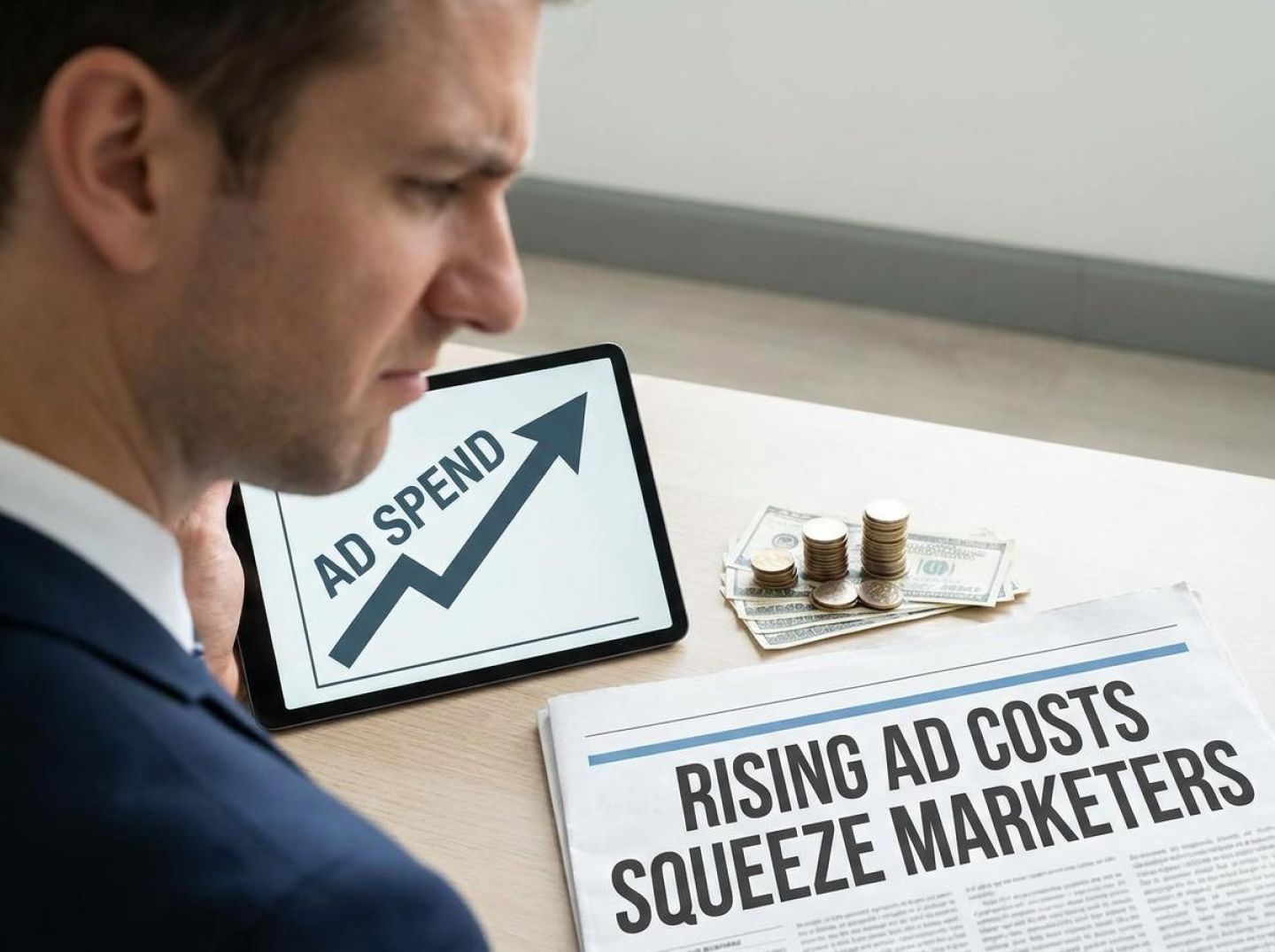
This is the squeeze modern marketers face: a shrinking organic click pool on one side and inflating ad costs on the other. The instinct is to double down on SEO tactics — rewrite meta descriptions, chase long-tail keywords, test new schema markup. And those things aren't worthless; they help you compete for the clicks that remain. But they cannot reverse a platform-level shift in how Google distributes attention.
That's the critical reframe. SEO isn't dying, but it is becoming necessary-but-insufficient. When the best-case scenario for most sites is a low-single-digit CTR, the strategic question stops being "how do I get more clicks?" and starts being "what do I do with the visitors who actually arrive?" The answer, as we'll explore, lies not in your own conversion experiments but in the battle-tested architecture your competitors have already built — and that you can reverse-engineer today.
So organic clicks are cratering. The natural instinct is to compensate with paid media — throw more budget at Google Ads, scale spend until the pipeline numbers look right again. But here's the problem: paid isn't picking up the slack. It's getting more expensive to underperform.
The latest Google Ads benchmark data from WordStream paints a grim picture across verticals where competition was already cutthroat. Cost per lead in the Automotive sector rose nearly 14% year over year — a staggering jump for an industry where margins are already razor-thin. Health & Fitness and Career/Employment weren't far behind, with CPL climbing over 7% in both verticals. These aren't anomalies or blips caused by seasonal demand shifts. They represent a structural trend: more advertisers chasing fewer high-intent clicks, each paying progressively more for leads that may never convert.
The temptation, of course, is to optimize your way out of the squeeze. Tighten your audience targeting. Rework your ad copy. Tweak bidding strategies to chase a lower CPC or higher CTR. But this is where most advertisers fall into a trap that looks like discipline but is actually denial. As Varun Penatsa noted in WordStream's benchmark analysis, "CTR and CPC can look good on paper, but they don't mean much if traffic isn't converting." That single observation should stop every performance marketer mid-dashboard. You can win the auction and still lose the customer.
This is the same dynamic playing out at a macro level across the advertising industry. Research highlighted by VideoWeek found that while ROI as a metric has risen by 4 percent since Covid, incremental profit generated — the measure that actually reflects business growth — has fallen by 11 percent in real terms. The IPA Databank research behind those figures argues that an obsession with efficiency is systematically destroying effectiveness. Marketers are optimizing individual metrics into oblivion while the overall system produces less. The report's authors go so far as to say that this short-termism is "killing our industry," and that tight targeting, far from being sophisticated, is increasingly a symptom of underinvestment disguised as strategy.
The parallel to paid search is almost perfect. When you optimize CPC without examining what happens after the click — the landing page, the form, the offer framing, the trust signals, the follow-up sequence — you're doing the digital advertising equivalent of polishing the storefront while the sales floor is empty. You're not solving a traffic problem. You're revealing a conversion architecture problem.
And this is exactly where the conventional playbook breaks down. Most advertisers treat the funnel as a series of isolated metrics: impressions at the top, CTR in the middle, CPA at the bottom. They optimize each layer independently, celebrate the ones that trend green, and wonder why revenue stays flat. But the funnel isn't a series of independent variables. It's a system, and the weakest layer — almost always the conversion layer — determines the output of every dollar spent above it.
The bottleneck isn't traffic acquisition efficiency. It never was. The bottleneck is what happens when someone actually arrives. And the businesses winning right now aren't the ones bidding highest or ranking first. They're the ones whose conversion architecture turns mediocre traffic into outsized results — an architecture you can study, reverse-engineer, and, frankly, steal.
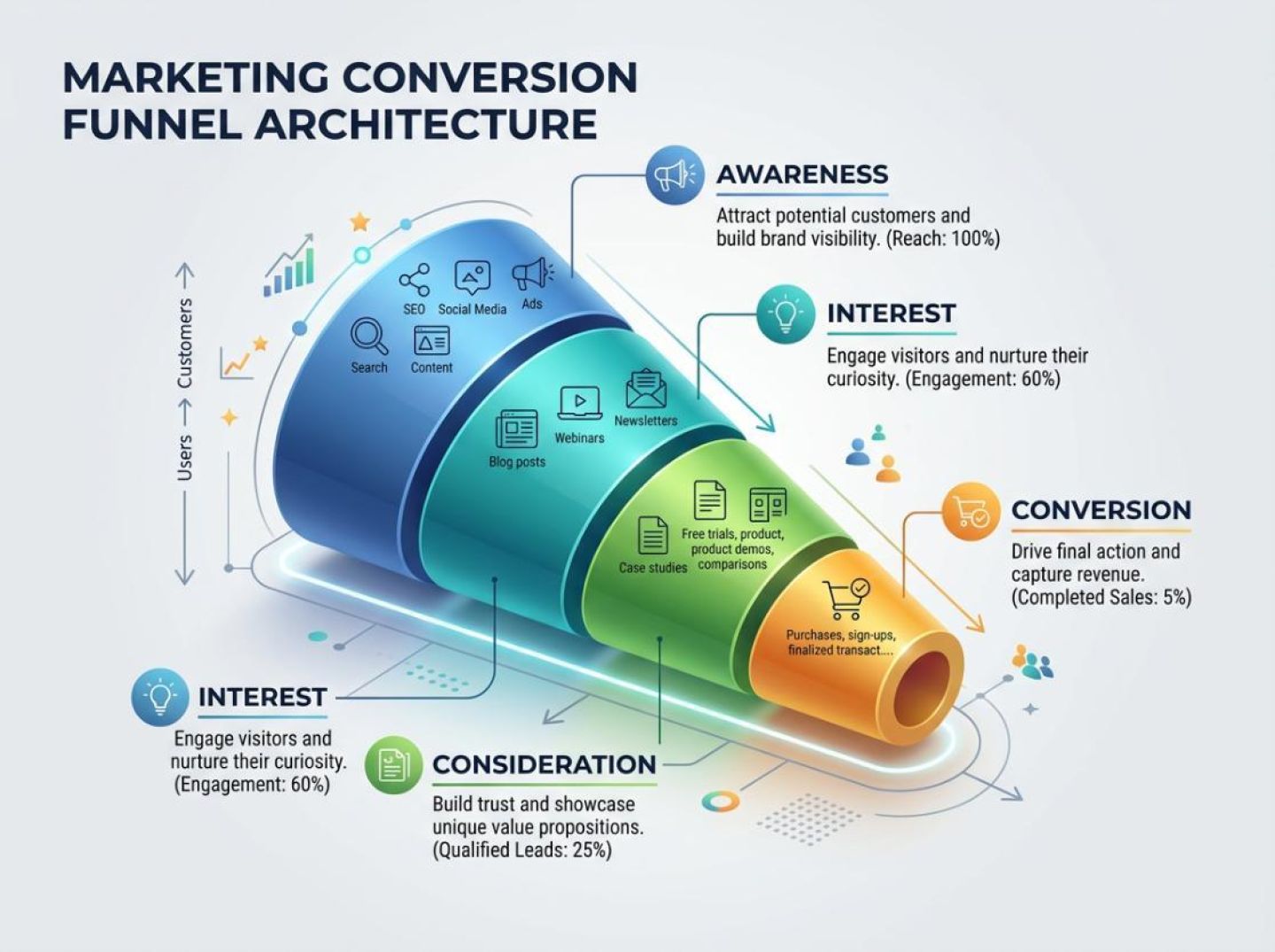
Most marketers think about their ads, their landing pages, and their offers as separate workstreams — creative team handles the ads, web team builds the pages, product or sales decides the offer. That compartmentalization is exactly why so many campaigns bleed money. The advertisers consistently winning in high-CPL verticals aren't operating with a collection of disconnected assets. They've built what I call conversion architecture: the integrated system spanning ad creative → landing page → offer structure → post-click flow, where every layer is designed in concert with every other layer.
Think of it as a series of promises and payoffs. The ad makes an implicit promise — through its headline, imagery, and tone — about what the click will deliver. The landing page either fulfills that promise or breaks it. The offer either feels like the logical next step or introduces friction that sends the visitor bouncing. And the post-click flow — the thank-you page, the email sequence, the retargeting creative — either compounds the initial momentum or lets it dissipate. Each layer constrains and enables the others. You can't design any one of them in isolation without degrading the whole system.
This is why raw click-through rate is such a dangerously misleading metric when viewed alone. As The Native Agency's breakdown of high-performing ad creatives warns, advertisers who chase CTR above 0.5% by leaning on sensationalized imagery need to be careful — super clickbait images will lower your conversion rate. The click itself isn't the goal; it's merely the handoff between the first layer and the second. A high-CTR ad paired with a misaligned landing page doesn't just waste money on clicks that never convert — it actively trains the ad platform's algorithm to find more of the wrong people. You end up paying premium CPCs to attract an audience your funnel was never built to serve.
The same principle operates in reverse. A meticulously optimized landing page means nothing if the ad creative attracted the wrong visitor. This is why The Native Agency emphasizes using both a picture of the ideal customer combined with a filtering headline — the ad itself functions as a qualifying mechanism, not just an attention-grabber. When the creative pre-filters the audience correctly, the landing page can focus on deepening engagement rather than re-establishing relevance from scratch.
This multi-layer interdependence is also why WordStream's benchmarking philosophy pushes advertisers to evaluate performance across multiple metrics simultaneously rather than fixating on any single KPI. A campaign with an exceptional CTR, a mediocre conversion rate, and an inflated cost per acquisition isn't "almost working" — it has an architectural problem. One layer is out of alignment with the others, and optimizing the wrong metric in isolation will only widen the gap.
This is the real moat. Bid strategies can be copied in an afternoon. Audience targeting options are available to everyone on the same platform. But the interlocking system — where creative tone, landing page narrative, offer positioning, and follow-up sequencing all reinforce a single coherent through-line — is genuinely difficult to build from scratch. It requires dozens of iterative decisions that compound on each other, and the result is a machine where each component's performance is partially dependent on the quality of every other component. That's what makes conversion architecture worth studying in your competitors' campaigns, and it's precisely the layer most marketers never bother to examine.
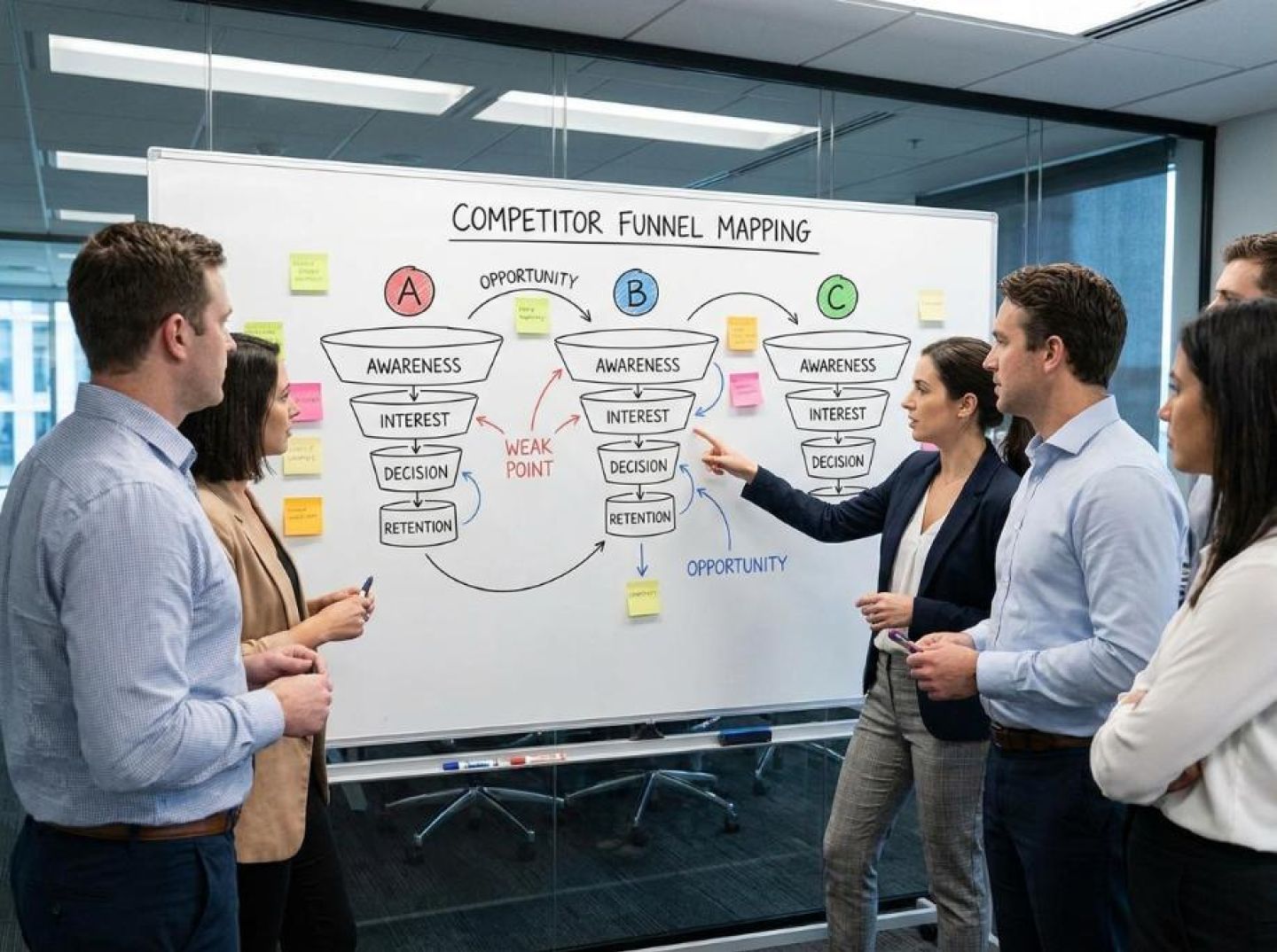
The most expensive mistake in competitive intelligence is treating it like a scrapbook project — grabbing random screenshots of competitor ads, bookmarking a few landing pages, and calling it research. What you actually need is a systematic methodology that separates signal from noise, and the single most reliable signal available is time. An ad that has been running continuously on Taboola, Outbrain, or a push notification network for sixty or more days is almost certainly profitable. No competent media buyer keeps funding a campaign that bleeds money for two months straight. Spy tools like Anstrex, AdPlexity, and SpyPush let you filter by run duration, which means you can immediately isolate the campaigns that are working and ignore the thousands of tests that flamed out in a week.
Once you've identified sustained campaigns, the deconstruction begins across four layers: creative patterns, landing page structure, offer framing, and traffic source segmentation.
Creative patterns are where most people stop, but they're actually just the starting point. You're not looking for a single winning headline — you're looking for the underlying formula. Catalog every active creative from a given competitor and map them by network, geography, and device. This kind of segmentation reveals that the same advertiser often runs completely different angles depending on whether they're targeting mobile users in Germany versus desktop users in the United States. The creative that works on one native network under one set of conditions may fail entirely under another, which is why systematic categorization matters far more than cherry-picking individual ads.
Landing page structure is the second layer, and it's where conversion architecture becomes visible. Record the full page — not just the hero section but the scroll depth, the number of proof elements, the placement and frequency of calls to action, the type of social proof used (testimonials, counters, trust badges, media logos), and whether the page uses a single-step or multi-step conversion flow. Competitors who've been spending for months have already A/B tested these elements on your behalf. Your job is to document the patterns that survive.
Offer framing is the third layer and often the most overlooked. Two competitors can sell functionally identical products but convert at wildly different rates because one frames the offer as a risk-reversal ("Try it for 30 days, pay nothing today") while the other leads with a discount. Note the specific language around pricing, guarantees, urgency mechanisms, and bundling strategies.
Traffic source segmentation is the final layer. This is especially important as newer channels mature. As Search Engine Journal has documented, push notification advertising has evolved significantly toward higher-quality, higher-CTR traffic, with click-through rates improving by roughly 1.5 to 2x over the past two years as networks pruned low-quality subscribers and refined targeting. Channels undergoing this kind of quality inflection reward intentional architecture disproportionately — advertisers who bring well-tested funnels into a maturing channel capture outsized returns before saturation sets in.
Meanwhile, the broader measurement landscape actually works in your favor here. As AdExchanger has reported, attribution systems structurally overcredit lower-funnel channels positioned closest to observable conversion activity, which means your competitors running native and push campaigns are likely operating with less sophisticated measurement — and therefore leaving more tactical intelligence exposed. They're optimizing by feel and by spend continuity rather than by multi-touch models, which makes their surviving campaigns even more reliable as profitability signals.
The output of this process isn't a mood board. It's a structured database: competitor name, network, geo, device, creative angle, landing page type, offer structure, and run duration. That database becomes the blueprint from which you build — not copy — your own conversion architecture, informed by months of someone else's testing budget.
Copying a competitor's landing page verbatim is the strategic equivalent of photocopying someone's exam answers without understanding the subject — you might get a few right, but you'll fail the moment the questions change. The patterns you extracted in Section 4 aren't templates to replicate; they're architectural blueprints to interpret through the lens of your own positioning, audience, and offer economics. The distinction between blind plagiarism and informed architectural design is the difference between a campaign that flatlines in week two and one that compounds over quarters.
Start with the structural logic, not the surface elements. If your competitor's funnel uses a long-form advertorial before a product page, the insight isn't "we need an advertorial." The insight is that their audience requires education and trust-building before they're ready to evaluate an offer. Your version of that education will look different because your brand voice is different, your proof points are different, and your unique value proposition occupies a different position in the market. Take the sequencing — the order of psychological commitments the visitor makes — and rebuild each step with your own materials.
This is where offer differentiation becomes non-negotiable. Two companies in the same vertical can use identical funnel architectures and get wildly different results because the offer itself carries the conversion. If your competitor leads with a free trial and you lead with a money-back guarantee, the surrounding copy, the objection handling, and the urgency mechanics all need to shift accordingly. The architecture tells you where to place persuasion elements; your positioning tells you what those elements say.
Brand voice is another layer that resists duplication. A competitor selling to enterprise procurement teams will use language, social proof formats, and credibility signals that would feel absurd on a page targeting independent freelancers. When you map a competitor's page structure — headline, subhead, proof block, CTA, objection handler, secondary CTA — you're extracting a rhythm. Populate that rhythm with copy that sounds like your brand actually wrote it, not like you ran their page through a synonym generator.
There's also a parallel strategic consideration that extends beyond any single funnel. As Ahrefs has argued, building brand recognition and earning citations in AI-generated answers is becoming an essential layer of visibility as organic click-through rates erode. Your adapted funnel architecture should reinforce brand recall, not dilute it by echoing a competitor's voice. Every touchpoint — from the ad creative through the thank-you page — is a branding opportunity that compounds over time, and borrowed language actively undermines that compounding.
Once your adapted architecture is live, measurement becomes the mechanism that separates hypothesis from knowledge. The temptation is to track everything your competitor appears to optimize for, but as Search Engine Journal has noted, the most effective reporting structures prioritize metrics tied to your specific business outcomes — pipeline generated, revenue influenced, customer acquisition cost — rather than vanity proxies. Your competitor might optimize for lead volume because they have a large inside sales team that thrives on high-volume, low-quality leads. If your model depends on self-serve conversions, optimizing for the same metric would be architectural malpractice.
The real value of competitive intelligence was never the specific page or the specific ad. It's the underlying logic of persuasion sequencing, validated by market spend, that you can stress-test against your own positioning. Adapt the architecture. Own the voice. Measure what matters to your business, not theirs. That's how borrowed intelligence becomes a proprietary advantage.
Receive top converting landing pages in your inbox every week from us.
Recently Updated
Discover how TikTok, YouTube, and LinkedIn are turning creator content into performance marketing opportunities, and why brands should look beyond influencer fit and engagement metrics. Learn how to evaluate creator campaigns using earnings per click (EPC), marketing efficiency ratio (MER), and arbitrage margins to identify profitable creative, improve campaign decisions, and scale what works.
Dan Smith
7 minOct 16, 2026
Featured
Discover how performance marketers can turn the post-holiday advertising period, known as Q5, into an opportunity for lower-cost testing and smarter campaign optimization. Learn how to use Anstrex ad spy data to identify winning creatives, analyze competitor funnels, launch original landing pages, and turn Q5 insights into scalable Q1 campaigns.
Elena Morales
7 minOct 14, 2026
In-Depth
Explore what Pure Leaf’s “Break Conference” reveals about the gap between polished brand marketing and measurable performance. This guide breaks down how Native, Push, TikTok, and affiliate-style funnels use creative testing, clear offers, first-party data, and hard performance metrics to turn cultural moments into revenue.
Rachel Thompson
7 minOct 1, 2026