8 minJune 29, 2026

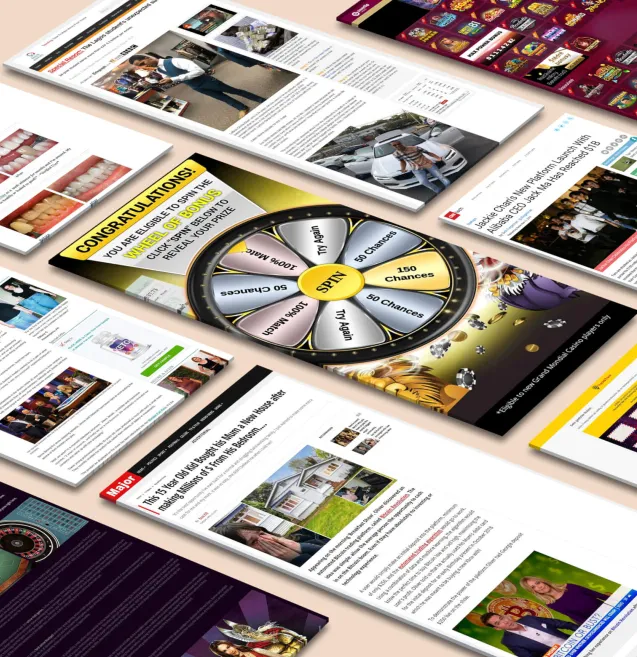
Our spy tools monitor millions of native ads from over 60+ countries and thousands of publishers.
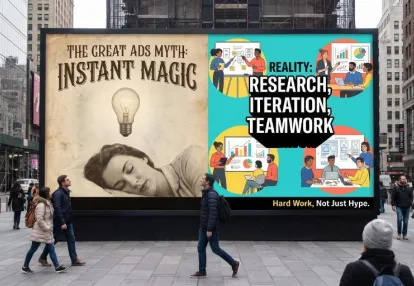
Get StartedThere's a persistent myth in marketing that award-winning creative and performance creative occupy separate universes — that one is art and the other is science, that Cannes Lions winners and your best-performing Meta ad have nothing in common. It's a comfortable fiction, and it's wrong. Strip away the cinematic color grading, the celebrity cameos, and the six-figure production budgets, and what you find underneath an award-winning campaign is the same skeleton that holds up every high-converting direct response ad: clear positioning, an emotional hook that earns attention, and a messaging architecture that moves people from curiosity to action.
The gap between a Cannes Grand Prix and your next thumb-stopping UGC ad isn't strategic. It's cosmetic. Both succeed or fail based on the quality of their inputs — the thinking that happens before a single pixel is placed or a single frame is shot.
This convergence is becoming harder to ignore as AI reshapes how ads get made. As MarTech argues, when execution is automated, "differentiation comes from stronger inputs: clearer positioning, sharper messaging frameworks, and more distinctive brand narratives." In other words, once everyone has access to the same generative tools — the same ability to spin up hundreds of creative variants in days — the only remaining competitive moat is the strategic blueprint you feed into those tools. That blueprint is exactly what award-winning campaigns document in meticulous detail through their case studies. The positioning rationale, the audience insight, the tension the campaign exploits — it's all there, published openly for anyone willing to study it.
Performance marketers already understand this principle intuitively in other contexts. In native advertising, for example, the playing field is deliberately equalized. As Voluum's best-practice guide puts it, "you and your competitor get the same amount of pixels for an ad. What differentiates you from others is your creativity." No amount of budget can buy you a bigger thumbnail or a longer headline on a Taboola widget. You win by understanding your audience more deeply and crafting a creative concept that earns the click — which is precisely the same challenge a brand team faces when competing for attention at the Super Bowl or during a YouTube pre-roll.
Voluum's own guidance reinforces the point further: success in native campaigns starts with knowing your audience at a demographic and behavioral level, understanding what problems they're trying to solve, and then building creative around that insight. Swap "native ad" for "award entry" and the process is identical. Every effectiveness case study from the IPA, the Effies, or D&AD begins with an audience tension, articulates a strategic response, and then — only then — describes the execution.
The real waste isn't the performance marketer who can't afford a $500,000 production. It's the performance marketer who ignores the strategic architecture behind that production when it's sitting in a publicly available case study, essentially functioning as an open-source strategy deck. These case studies spell out how brands identified underserved emotional territories, how they sequenced messages across a funnel, and how they measured effectiveness — the same messaging architecture and audience understanding that MarTech identifies as the foundational requirement for AI-native advertising.
So before you dismiss the next award shortlist as irrelevant vanity work, consider what you're actually looking at: a curated library of battle-tested frameworks, organized by category, complete with results data, and free to reverse-engineer. The only price of admission is the willingness to look past the production polish and study what's underneath.
Before you steal, you study. That principle — borrowed from every creative discipline worth its name — is the foundation of what I call the Framework Extraction Method. It's a systematic process for breaking award-winning campaigns into their component parts so you can rebuild those structures inside a native ad card, a Meta carousel, or a YouTube bumper. And it mirrors exactly how the best AI-driven creative teams operate: the first step in producing effective ad creative at scale is building a deep knowledge base — researching who customers are, what the brand stands for, and what a great ad actually looks like — before anyone generates a single asset. You're going to do the same thing, except your knowledge base isn't about your own brand. It's about the award-winning campaign you're dissecting.
Step 1: Map the Emotional Hook Structure. Every celebrated campaign runs on one of a handful of narrative engines: tension → relief, aspiration → identity, or problem → transformation. Pull up a Cannes-winning automotive spot — say, a recent Grand Prix winner showing a driver navigating chaos to reach a moment of stillness. The structure is tension (urban sensory overload) resolved by relief (open road, silence, the car). Now translate that to a native ad card for, say, a noise-cancelling headphone brand: lead image shows a crowded subway (tension), headline promises "Silence starts here" (relief). Same emotional scaffolding, zero production budget.
Step 2: Decode the Category-Specific Visual Language. Food campaigns lean on warmth, close-up textures, and steam — soft lighting that makes you feel proximity to the meal. Automotive work uses motion blur, horizon lines, and desaturated backgrounds that isolate the vehicle. When you're building a swipe file, tag every saved reference not just by industry but by its dominant visual grammar. A Cannes-winning food campaign — think a slow pan across hand-torn bread with golden-hour backlighting — translates directly to a DTC supplement ad if you swap the bread for a scoop of powder caught mid-pour against the same warm palette. You're borrowing the visual vocabulary, not the product.
Step 3: Extract the Headline Cadence and Audience-Intent Map. Award-winning copy tends to follow a rhythm: short declarative opener, emotional pivot, brand resolution. "Every road has a story. Yours starts now. [Brand]." That three-beat cadence works in a Facebook primary text just as well as a Super Bowl voiceover. But the deeper extraction is the implicit audience-intent mapping — identifying which stage of awareness the ad targets. Most Cannes winners address problem-unaware or solution-unaware audiences because that's where emotional storytelling shines. Performance marketers can steal that framing for top-of-funnel prospecting and reserve direct-response copy for retargeting.
This might sound like an exercise only enterprise teams with creative effectiveness platforms can pull off. It's true that companies like DAIVID have built models that score creative elements and link those scores to media performance in real time, giving large brands a data-rich feedback loop between creative quality and campaign outcomes. But the analytical rigor those platforms encode — isolating variables, identifying which creative elements drive attention and emotional response, benchmarking against historical performance — is exactly the rigor you can apply manually with a swipe file and a framework template. You don't need an enterprise scoring system. You need a spreadsheet with columns for emotional structure, visual grammar, copy cadence, and funnel stage. Fill it in for ten award winners, and patterns will surface that no amount of intuition alone would reveal.
The extraction method isn't about copying ads. It's about recognizing that celebrated creative and high-performing creative share structural DNA — and giving yourself a repeatable process for transplanting it.
Here's the counterintuitive truth about translating award-winning frameworks into native and push ad formats: the constraint isn't a limitation — it's a compression engine that forces you to isolate the single most potent structural element of any campaign and discard everything else. That ruthless reduction is exactly what makes framework theft not just possible in performance marketing, but easier than it is in the big-budget world.
Consider what you're actually working with. A native ad is a thumbnail and a headline. A push notification is an icon, a title, and a short description — maybe forty characters of visible text on most devices. There's no room for the three-act emotional arc of a 60-second television spot, no space for the slow-build tension of a Cannes Grand Prix film. And that's the point. When you extracted your framework in Section 2 — the hook type, the visual grammar, the tension pattern — you identified multiple structural layers. In a native ad, you only need one. You pick the strongest layer and let the format do the rest.
Take the "hero shot" grammar of food advertising, a visual language so deeply encoded that consumers process it without conscious thought: the steam rising from a freshly cracked surface, the cross-section revealing unexpected texture, the overhead angle that turns a plate into a landscape. That entire visual vocabulary, refined over decades of print and television production, compresses perfectly into a native thumbnail. The emotional arc doesn't need 60 seconds; it needs one image that triggers the right sensory association and one headline that introduces a gap — an unanswered question, an unresolved tension — that the click promises to close.
The same logic applies to automotive's "POV freedom" grammar: the empty road stretching toward a vanishing point, the aerial sweep over terrain, the dashboard perspective that places the viewer inside the experience. These aren't complex narratives. They're single-frame visual arguments that took the original advertisers enormous budgets to photograph on location but can be replicated for almost nothing today. As Social Media Examiner details, current AI image generation models produce results "nearly indistinguishable from professional photographs," and product images that once cost hundreds or thousands of dollars can now be generated for a couple of cents. That means the hero shot, the POV sweep, the textural close-up — any category-specific visual grammar you've extracted — can be rendered in an AI tool with the right prompt engineering and tested across dozens of variations in an afternoon.
This matters enormously under CPM pricing models, where Voluum's native advertising breakdown makes clear that finding your best-performing creative sets creates compounding ROI: each additional click makes your offer more popular while your cost per thousand impressions stays flat or even decreases. When you combine that economic dynamic with AI's ability to produce visual variations at negligible cost, you get a testing loop that would have been financially impossible even two years ago. You're not paying a photographer to reshoot the hero angle with different lighting; you're generating twenty versions of the same visual grammar for less than a dollar and letting the data identify which compression of the framework performs best.
The production gap between a performance marketer and a brand agency has collapsed. What remains is the framework gap — the ability to recognize why a celebrated campaign works structurally and to isolate the one element that survives compression into a thumbnail. You and your competitor, as Voluum puts it, get the same number of pixels. The differentiator was never budget. It was always the underlying structure — and now you know exactly where to find it.
You've extracted a framework from an award-winning campaign and compressed it into a native ad card. Now what? You need two things: proof that the structure actually works in performance contexts before you spend real money, and a system for generating enough variations to find the winners fast. The good news is that the same infrastructure powering enterprise-scale AI advertising is now accessible — in simplified form — to solo media buyers and lean performance teams.
Validate Before You Spend
Ad spy tools exist for exactly this purpose. Platforms like AdPlexity, Anstrex, and the native ad libraries built into Meta and TikTok let you search by vertical, format, and longevity. When you've extracted a framework — say, the tension-resolution-reframe structure from a Cannes Grand Prix winner — your first move isn't to produce creative. It's to search spy tools for ads that already use that same structural pattern in your vertical. If you find native ads or social creatives running the same framework for weeks or months with consistent spend, you've got market-validated evidence that the structure converts. The framework isn't theoretical anymore; it's a proven hypothesis with someone else's media dollars behind it. This is the cheapest research you'll ever do, and it collapses the risk of building creative around an untested idea.
Generate at Scale
Once validation confirms the framework has legs, AI-powered creative generation lets you explode a single structural template into hundreds of testable variants. Different hooks, different imagery, different emotional registers — all built on the same underlying architecture you extracted. As MarTech argues, "brands that can test and adapt hundreds of variations quickly can respond to cultural moments, seasonal shifts, and competitive moves far faster than those relying on traditional production cycles." That speed advantage isn't reserved for Fortune 500 budgets. Tools like Midjourney, Runway, and even ChatGPT with image generation can produce static and video variants for pennies per asset — creative that would have required studio shoots and freelance designers just two years ago.
Close the Loop
Generation without measurement is just content pollution. The real moat isn't producing hundreds of variants; it's the velocity loop of generate → test → score → iterate. This is precisely what the DAIVID and ADIN.AI partnership demonstrates at enterprise scale: creative is scored pre-launch to predict effectiveness, scaled or paused mid-flight based on real-time performance, and benchmarked post-campaign to inform the next round. Performance marketers can replicate a simplified version of this loop using their existing tracker, a creative AI tool, and a spy platform. Score your variants with pre-launch heuristics — hook strength, pattern interrupt, emotional clarity — then let the ad platform's algorithm do the mid-flight optimization while you monitor which structural elements consistently win.
The same MarTech analysis describes how agentic AI systems are now reallocating budget, adjusting targeting, and refining creative autonomously, moving beyond simple rule-based triggers into genuine self-optimization. You don't need a fully autonomous agent to benefit from this shift. Even semi-automated rules — pause any variant below a 0.5% CTR after fifty dollars in spend, scale anything above 1.2% — create a feedback loop that surfaces winners within days rather than the weeks traditional production cycles demand.
This is the compounding advantage of framework extraction paired with AI-native testing. Award-winning frameworks give you a dramatically better starting hypothesis than whatever your competitor dreamed up in a brainstorm. The velocity loop lets you validate that hypothesis at a speed and cost that makes the old model — produce three creatives, split test for two weeks, pick a winner — look like sending mail by horse. The framework is the seed. The loop is the engine. Together, they turn stolen creative intelligence into a systematic, repeatable edge.
You've extracted a framework from an award-winning campaign and compressed it into a native ad card. Now what? You need two things: proof that the structure actually works in performance contexts before you spend real money, and a system for generating enough variations to find the winners fast. The good news is that the same infrastructure powering enterprise-scale AI advertising is now accessible to solo operators and small teams willing to be methodical about it.
Start with competitive intelligence. Tools like Meta's Ad Library, AdSpy, and native-specific platforms like Anstrex let you search by keyword, advertiser, or even visual similarity. The goal isn't to copy someone's ad — it's to validate your stolen framework against what's already surviving in the wild. If you've extracted, say, a "confession-then-reveal" narrative structure from a Cannes Film Craft winner, search for ads in your vertical that use a confessional hook. If you find dozens of them with long run times (a proxy for profitability), you've got signal before you've spent a cent. If the landscape is barren, that's signal too — either you've found a gap or you've found a structure the market has already rejected. Spy tools turn gut instinct into an evidence base.
Once you've validated the framework's viability, the next step is generating volume — and this is where AI has fundamentally rewritten the economics. As Social Media Examiner detailed in a breakdown of AI-driven ad creative workflows, product images that once cost hundreds or thousands of dollars to produce can now be generated for a couple of cents. But raw image generation isn't the real unlock. The real power is in systematically training a generative model on your brand context — your customer profile, your positioning, your visual identity — so that it can produce genuinely distinct variations rather than cosmetic tweaks. This matters enormously because Meta's Andromeda update now treats minor variations of the same ad as a single creative, meaning the old "swap the background color and launch fifty ads" playbook is dead. You need structural differentiation within each variant, which is exactly what a well-defined framework provides: the skeleton stays the same, but the muscles and skin change meaningfully from version to version.
The broader industry trajectory supports this approach. According to iSpot's 2026 Video Ad Spend and Strategy Report as covered by Marketing Dive, four in ten advertisers are already testing AI creative this year while over a third are exploring AI workflows and operations — evidence that the experimentation phase is over and full-scale workflow automation is becoming standard. You don't need an agency's headcount when an AI pipeline can produce fifty headline-and-image combinations in an afternoon, each one a legitimate variation on your stolen framework.
Here's the practical workflow: feed your compressed framework into a prompt template that specifies the narrative arc, the emotional beat, and the visual composition rules. Generate twenty to thirty static variations. Run them through a quick internal scoring pass — does each one actually follow the framework, or has the model drifted into generic territory? Kill the drifters. Upload the survivors into your ad platform, split across two or three audience segments, and let the algorithm's own optimization layer do the final sorting. The native advertising best practice of focusing on added value still holds: your variations should each offer the viewer something genuinely interesting to look at or experience, not just a reshuffled color palette.
The entire loop — spy tool validation, AI generation, quality filtering, platform upload — can compress what used to be a two-week agency sprint into a single focused day. That speed advantage compounds over time, because every round of testing feeds new data back into your framework, tightening the structural template and making the next batch of variants sharper.
Receive top converting landing pages in your inbox every week from us.
In-Depth
Learn why “great ads” are no longer enough in an AI-first advertising economy, where creative is increasingly used as a targeting signal and performance input. This guide explains how to build data-obsessed creative teams, replace vibes-based inspiration with live creative intelligence, and turn every campaign into a learning engine.
Liam O’Connor
7 minSep 27, 2026
Most Read
Discover why many OOH job descriptions still reflect a 2008-era, inventory-first mindset and how operators can redesign roles around data, performance, and competitive intelligence. This guide shows how sales reps, general managers, mobile OOH teams, and performance marketers can turn OOH into a measurable, full-funnel growth channel.
Marcus Chen
7 minSep 27, 2026
Recently Updated
Explore what OOH job classifieds reveal about the future of competitive ad intelligence and why traditional sales skills alone may no longer be enough. This guide shows how sales, operations, installation, and creative teams can become intelligence nodes that help OOH companies spot market shifts and competitor activity faster.
Samantha Reed
7 minSep 26, 2026