8 minMay 22, 2026

Our spy tools monitor millions of native ads from over 60+ countries and thousands of publishers.
Get StartedYou've probably done it yourself: launched a native campaign on Taboola or Outbrain, watched the first week's ROAS come in lukewarm, and started slashing budgets or killing creatives before the campaign ever had a chance to breathe. It felt rational. The numbers were right there on the dashboard, and they weren't good. But the problem wasn't your campaign — it was the lens you were using to judge it.
ROAS was built for environments where intent is explicit and conversion windows are tight. Someone searches "buy running shoes size 11," clicks a Shopping ad, and purchases within the hour. The metric captures that loop beautifully. But native advertising operates on an entirely different psychological contract. As Voluum explains in its breakdown of native ads tracking, native ads are uniquely powerful because they slip through visitors' guards by leveraging the trust and credibility of the publisher site they appear on — resembling editorial content rather than overt sales pitches. The format's superpower is that it doesn't feel like an ad. And yet we insist on measuring it as if it were one.
This is the structural mismatch that quietly bankrupts native budgets across the industry. Native's strength is top-of-funnel trust-building: introducing a brand, seeding familiarity, educating a prospect who doesn't even know they have a problem yet. The payoff from that interaction is inherently delayed and compounding. A reader encounters your sponsored article on a financial planning site today, remembers your brand name two weeks later when a colleague mentions the same topic, and converts through an organic search a month after that. Same-session ROAS sees none of this. It stamps a zero on the campaign, and the media buyer panics.
The irony is that performance marketers in adjacent channels already understand this danger under a different name. Search Engine Journal describes a common failure pattern in Google Ads where there's a disconnect between what the business cares about and what the platform is currently chasing — a "disconnected goals" problem where bid strategies optimize for the wrong signal, filling pipelines with junk leads instead of revenue. Native campaigns suffer from a mirror-image version of the same disease. When ROAS becomes the north star, you're telling your optimization logic to favor placements and creatives that generate immediate, trackable purchases — which systematically biases the algorithm away from the high-trust, editorially rich content that makes native valuable in the first place. You end up with clickbait-adjacent headlines chasing impulse conversions, competing on the same terms as display ads but paying native CPCs.
Measuring native on same-session ROAS is like judging a retirement fund by its first-quarter returns. The whole point of the investment vehicle is long-horizon compounding, and the metric you've chosen is structurally incapable of capturing it.
Most marketers already understand the value of competitive intelligence. As Brax recommends, comparing your performance against competitors and industry standards is essential — it helps you understand the landscape and set realistic benchmarks. But here's the thing: almost everyone who follows that advice stops at the surface. They pull up average CTRs, glance at CPCs, maybe peek at conversion rate benchmarks, and call it a day. They're looking at the right data sources but extracting the wrong insights.
There's a far more powerful signal sitting in plain sight inside competitive intelligence tools like Anstrex Native, and almost nobody is talking about it: how long a specific creative has been running.
Think about what that data point actually implies. When you open Anstrex and spot an ad that's been live across Taboola or Outbrain networks for three, four, even six months straight, your first instinct might be to dismiss it. Stale creative. Lazy media buyer. Someone who forgot to check their dashboard. But that reading is exactly backward. What you're actually looking at is an implicit public declaration of profitability — one the advertiser never intended to make.
Here's the logic, and once you see it, you genuinely can't unsee it. A media buyer who's optimizing for short-term ROAS would have killed that creative in week one if the numbers didn't immediately justify the spend. That's the entire behavioral pattern of ROAS-driven optimization: launch, measure the seven-day return, cut the losers, scale the winners, repeat. A creative that survives one week under a ROAS framework is performing well. A creative that survives three months isn't just performing well on a ROAS basis — it's being sustained by something deeper. That advertiser has LTV data. They know the customer they're acquiring today will be worth multiples of the initial conversion over the coming months, and they have enough confidence in that back-end math to keep spending against a creative that might look mediocre on a surface-level return calculation.
This reframe matters because it changes what you should be reverse-engineering from your competitors. Instead of copying headline structures or image styles from top-performing ads (sorted by engagement or recency), you should be filtering by duration. The longest-running creatives are breadcrumbs leading you to the advertisers who've cracked the LTV equation in your vertical. Their landing pages, their offer structures, their funnel architectures — those are the blueprints worth studying.
As the Voluum blog notes, native ads serve varied goals beyond immediate sales, from brand awareness to app installs, and the only way to know you've hit the sweet spot is through continuous measurement and optimization. The advertisers behind those long-running creatives have clearly done that work. They've measured, iterated, and arrived at a funnel confident enough to sustain months of consistent spend. They aren't guessing — they have the tracking infrastructure to see the full customer journey, and the numbers justify patience.
So the next time you open a spy tool, resist the urge to sort by newest or highest engagement. Sort by duration instead. The creatives that have been running the longest aren't artifacts of negligence. They're the clearest competitive signal you'll ever get that someone in your space has solved the profitability puzzle — and they did it by looking far beyond ROAS.
Open Anstrex Native right now, pick any competitive vertical — supplements, finance, insurance — and sort by duration. You'll immediately see two distinct species of advertiser, and the difference between them reveals everything about how they think about profit.
The ROAS Chaser is easy to spot. Their fingerprints are all over the spy tool in short, frantic bursts. You'll see dozens of creatives uploaded in rapid succession, each running for a week or two before disappearing. Headlines shift constantly — different angles, different hooks, different emotional triggers — because every new variant is an attempt to squeeze another fraction of a percentage point out of this week's click-through rate. Their landing pages rotate just as quickly, and if you trace their history across a few months, you'll often notice them hopping between offers entirely. One month it's a keto supplement, the next it's a CBD cream, the next it's a sleep aid. The flight durations are short, the creative churn is relentless, and the overall pattern screams: optimize for today's return, worry about tomorrow later.
The LTV Player looks completely different. When you sort by longest-running ads, their creatives surface like quiet monoliths. The same headline, the same thumbnail, the same landing page — running for three, six, sometimes twelve months or longer. The angles are evergreen rather than trend-chasing. Their landing pages tend to be editorial-style presell pages with consistent branding and messaging. Spend appears steady rather than spiky. Where the ROAS chaser's history looks like a seismograph, the LTV player's looks like a flat horizon line.
Here's the critical insight: this isn't a simple good-versus-bad binary. The ROAS chaser pattern isn't inherently wrong — it's just the default mode that search and social advertising trained most of us to operate in. The Search Engine Journal data on Google Ads behavior illustrates this conditioning perfectly: advertisers are increasingly migrating toward looser, more intent-driven matching precisely because constant manual tinkering with exact-match keywords has hit diminishing returns. The same principle applies in native. Perpetual creative rotation eventually stops producing meaningful gains, and most ROAS chasers never realize when they've crossed that line because they're measuring the wrong thing.
The LTV player, by contrast, has found what Voluum describes as the sweet spot where native ads blend enough to avoid feeling intrusive but stand out just enough to be noticed — and they've made the deliberate decision to stay there. They understand that once further changes to creatives, headlines, or targeting options stop producing measurable performance increases, additional optimization becomes noise. The smart move isn't to keep testing; it's to hold position and let the campaign compound value over time.
When you're inside Anstrex Native, here's a practical framework for categorizing what you find. Pull up a competitor and ask four questions: How many unique creatives have they run in the last 90 days? How many distinct landing page URLs appear? Has their core angle or offer changed? And what's the longest a single ad unit has been active? If you see high creative counts, multiple landing pages, shifting offers, and nothing surviving past two weeks — that's a ROAS chaser operating on short feedback loops. If you see low creative counts, a consistent landing page, a stable offer, and individual ads running for months — that's an LTV player who has found their equilibrium and is extracting long-tail value from it.
The advertisers worth studying — and worth emulating — are almost always in the second camp. They aren't optimizing harder. They're optimizing once, correctly, and then letting duration do the heavy lifting.
If ROAS is the wrong scoreboard, what's the right one? The advertisers who dominate native over the long haul don't abandon measurement — they replace a single, misleading number with a stack of KPIs that reflect how customers actually behave after clicking an advertorial.
Cohorted revenue is the foundation. Instead of asking "did this click produce a profitable sale today?" LTV-optimized advertisers tag every customer by acquisition date and track their spending at 30, 60, and 90 days. A supplement buyer who purchases a $49 trial on day one might look like a money-loser at a 0.8x ROAS. But when that same cohort shows a 40% reorder rate by day 60 and a 55% rate by day 90, the true return on that initial click is often three to five times what the dashboard reported at checkout. Cohorted revenue doesn't guess at lifetime value — it measures it in rolling windows that get more accurate with every passing month.
Email and SMS list value turns "soft" conversions into hard dollars. Many native campaigns drive readers to content pages where the primary call-to-action is an opt-in, not a purchase. ROAS sees that click as waste. LTV players see it as an asset with a calculable yield — if your email list generates $1.20 per subscriber per month and your native campaign acquires subscribers at $0.85 each, you're building a compounding revenue engine that no single-session ROAS metric will ever detect. As Voluum's breakdown of native campaign goals makes clear, native is often used for brand awareness and engagement without any concrete, immediately measurable outcome — and that's by design, not by accident. The value chain is inherently longer than what a last-click pixel can capture.
Repeat purchase rate is the multiplier nobody talks about. Two campaigns can produce identical first-order ROAS, but if Campaign A attracts one-and-done bargain hunters while Campaign B attracts customers who reorder three times in six months, they aren't remotely equivalent. Tracking repeat purchase rate by traffic source — not just by product — reveals which placements and creatives attract the customers who actually build your business.
Blended CAC across channels keeps you honest. Sophisticated advertisers calculate customer acquisition cost by blending native, paid search, social, and organic together, because customers rarely convert through a single touchpoint. A native advertorial might be the first touch that makes a Google branded search possible two weeks later. Evaluating each channel in isolation punishes the one that did the hardest work — introducing a cold audience to your brand. Brax recommends comparing performance against industry standards and historical data for exactly this reason: no single metric in isolation tells the full story, and benchmarking blended CAC over time gives you an honest picture of true acquisition efficiency.
Here's the mental model that ties it all together: the same macro shift happening in paid search is happening in native. Optmyzr's 2026 study, as Search Engine Journal reported, found that Broad Match now represents 38.8% of non-branded Google Ads spend — the single largest bucket — because advertisers are learning to trust longer feedback loops and AI-driven signals rather than clinging to tight, click-level control. The parallel in native is almost exact. The best native advertisers have stopped trying to judge every click's immediate ROI and instead built measurement systems that let them see the full revenue arc a customer produces over months, not minutes.
This doesn't mean you ignore short-term data. It means you stop deciding on short-term data. Track your cohorted revenue, your list value, your repeat rate, and your blended CAC — then give campaigns the breathing room those metrics require before you pull the plug. What looks like a loss on day one often looks like your best campaign by day ninety.
Now that you understand the metrics that matter, the question becomes: how do you figure out which competitors are actually optimizing for lifetime value — and reverse-engineer their strategy? This is where Anstrex Native becomes your unfair advantage. Here's a step-by-step playbook for extracting LTV intelligence from publicly observable competitor data.
Step 1: Filter for longevity, not volume. Open Anstrex Native and sort competitor ads by the number of days they've been running. This is the single most important filter in your arsenal. Any ad that's been live for 90 days or more is almost certainly profitable — no media buyer keeps spending on a loser for three months. What you're looking for specifically are campaigns promoting subscription products, continuity offers, free trials, or multi-step funnels. These are the hallmarks of an LTV-optimized operation. Ignore the flashy creatives that appeared yesterday and disappeared next week; those are the ROAS chasers burning through test budgets.
Step 2: Map the full funnel, not just the ad. Click through on every long-running ad and document the entire post-click experience. You're looking for the landing page structure: is it an advertorial? A quiz? A lead capture form before a sale? Advertisers who are measuring beyond surface-level performance rarely send traffic directly to a product page. Instead, they use multi-step sequences designed to qualify visitors and begin a relationship. Screenshot each step. Note whether the offer is a low-price tripwire, a free-plus-shipping front end, or an email opt-in. Each of these structures signals a different LTV model — and tells you exactly how that competitor expects to recoup ad spend over time rather than on day one.
Step 3: Analyze creative evolution, not just creative quality. Anstrex lets you see historical variations of a competitor's ads. Pull up a long-running campaign and study how the headlines, images, and angles have shifted over months. If an advertiser is consistently testing new creatives within the same funnel, they're actively optimizing for downstream metrics. This is the behavior of a team that has solved the LTV equation and is now working to lower acquisition costs to widen the margin. Pay special attention to advertisers who rotate through dozens of creatives while keeping the same destination URL — that consistency suggests the back end is converting reliably and the front end is being refined.
Step 4: Cross-reference with tracking infrastructure. As the Voluum Blog explains, native ads tracking requires deliberate infrastructure to connect front-end clicks to back-end revenue events. When you click through a competitor's ad, inspect the URL parameters. Sophisticated advertisers will pass click IDs, sub-IDs, and tracking tokens through their URLs — visible evidence that they're piping data from ad platforms into analytics systems capable of measuring cohorted revenue. If you see clean, parameter-heavy URLs, you're looking at someone who takes post-click measurement seriously.
Step 5: Build your swipe file around business models, not ads. The final step is to organize what you've found — not by creative style, but by monetization structure. Group competitors into categories: subscription box, SaaS trial, supplement continuity, lead generation with backend sales team. Each model implies a different LTV curve and a different acceptable cost per acquisition. When you launch your own campaigns, you'll know exactly what acquisition cost the market can support because you've observed what the survivors are willing to pay month after month. That intelligence is worth more than any single ROAS calculation could ever provide.
Receive top converting landing pages in your inbox every week from us.
Guide
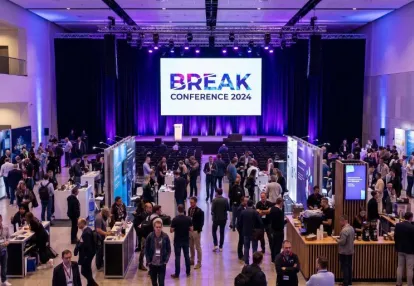
Learn how Pure Leaf’s Amanda Anisimova “Break Conference” can be reverse-engineered into a performance marketing framework for Native, Push, and TikTok advertising. This guide breaks down cultural storytelling, narrative hooks, celebrity-style targeting, format mimicry, and zero-click content to build high-CTR funnels that move audiences toward conversion.
Dan Smith
7 minOct 2, 2026
Recently Updated
Learn how Pure Leaf’s “Break Conference” transformed a celebrity sports moment into a scalable native advertising story. This guide shows performance marketers how to turn brand storytelling into measurable Native, Push, Pop, Affiliate, and TikTok campaigns using ad spy intelligence and narrative-driven creative.
Marcus Chen
7 minSep 29, 2026
Featured
Explore how creative operators and managing directors are shaping modern media buying by connecting creative strategy, AI, channel allocation, experimentation, and governance. This guide examines how leadership decisions influence Native, In-Stream, Creator, and Push campaigns, as well as the contracts and systems that determine how media teams operate.
Dan Smith
7 minSep 29, 2026