

12 minSeptember 13, 2026

Our tools monitor millions of native, push, pop, and TikTok advertising campaigns.
Get StartedPerformance marketers are operating in a paradox: you’re being asked to deliver more growth with less margin for error at the very moment AI is rewiring how performance is created, measured and policed.
On one side, there’s relentless commercial pressure. Budgets are flat or shrinking while revenue targets climb, and “good” performance is now benchmarked against what AI-enhanced competitors can achieve. As one analysis of performance marketing’s future argues, the old playbook of “add another vendor, buy another dataset, bolt on another tool” has hit a wall: the real constraint isn’t access to data, it’s the inability to make your existing data stack work as a coherent, AI-ready engine for growth, rather than a pile of disconnected systems and stale audiences that no model can rescue. That shift reframes the job — from manually operating complex ad platforms to orchestrating self-directed performance at scale, powered by a strong data foundation rather than more point solutions, as MarTech’s overview of modern stacks makes clear.
On the other side, that same AI is now looking back at you. Every campaign runs through layers of automated brand safety filters, fraud detection, privacy compliance checks, and platform-level quality scores. Machine learning systems are continuously scanning your creative, placements, traffic patterns, and conversion flows for anomalies. They do not care that “it’s end of quarter” or “we had to push harder on ROAS.” If your tactics resemble arbitrage, obfuscation or gray-area targeting, they will light up — and in a world where regulators, journalists, and platforms can all interrogate the logs, those lights can turn into headlines overnight.
Complicating matters further, the very definition of “audience” is changing. Non-human traffic used to be synonymous with waste or outright fraud. But with the rise of agentic AI, a growing slice of visits and queries comes from autonomous agents legitimately acting on behalf of consumers — researching options, comparing prices, and even making purchases. As one analysis of this trend notes, bot and agent traffic has already eclipsed human traffic on the open web, and brands now need to architect sites, content, and campaigns for a dual audience of humans and the AI intermediaries that filter which products ever make it into consideration. That same perspective, outlined in an AdExchanger deep dive on non-human traffic, underscores a looming measurement headache: marketers must separate low-value or fraudulent bot activity from high-intent agent traffic that actually signals purchase potential — under the scrutiny of platforms, auditors, and procurement teams that increasingly understand the distinction.
Meanwhile, AI is transforming the mechanics of performance work itself. Tasks like budget pacing, bid optimization, keyword expansion, audience lookalike modeling, and even creative rotation are steadily shifting from human “button pushing” to systems that can learn and optimize in real time. According to an analysis of marketing careers in the age of AI, job postings that emphasize execution-heavy responsibilities are already declining, while demand is rising for marketers who bring judgment, strategic framing, and the ability to direct AI systems rather than do their work manually. Companies, as that MarTech career report puts it, are “not hiring less judgment — they are hiring less execution.”
In parallel, AI is being woven into every layer of the ad tech stack itself. Smarter audience modeling can identify who is most likely to convert or churn; generative tools and dynamic creative optimization can remix headlines, images, and calls to action to continuously surface better-performing combinations; and AI-powered analytics can move you from backward-looking reporting to forward-looking prediction. As one guide to autonomous AI in advertising technology explains, these systems are already processing campaign data at a scale and speed no human team can match, surfacing trends, anomalies, and optimization opportunities automatically so marketers can decide why performance is shifting and what to do next, rather than spending their week building decks. That evolution, described in illumin’s examination of AI in AdTech, raises a new bar for what “good” stewardship of media looks like: results must be strong, but they also must be explainable and compliant.
Put together, this is the new reality: performance expectations are higher than they’ve ever been, the levers you pull are increasingly mediated by opaque models, and those same models — along with regulators and AI-savvy critics — are watching how you achieve your numbers. Staying aggressive is no longer about out-hacking platforms or stacking more tools; it’s about building a resilient, AI-ready foundation and developing the strategic judgment to push hard without crossing the invisible lines that can turn a great quarter into the next ad tech cautionary tale.
Most “competitive intelligence” in performance marketing is still a glorified rearview mirror. You get a Friday deck of what rivals launched, which creatives popped, which channels heated up — and by Monday, the battlefield has already shifted.
The problem isn’t that you’re not watching. It’s that you’re watching the wrong way.
As one recent playbook on AI-powered competitive intelligence puts it, most teams are stuck in a cycle of counting mentions and tracking activity “after the fact,” which is useful but fundamentally reactive, a rearview mirror version of competitive intelligence. You see what competitors did; you rarely see what they’re about to do, or how their moves will cascade into your performance KPIs over the next quarter.
To move from rearview monitoring to forward-looking, defensible intelligence, three things have to change: what you track, how you interpret it, and how tightly you connect it to your own decisions.
First, what you track can’t just be ad counts and spend estimates. AI is finally good enough to analyze patterns that used to be too messy or ambiguous for dashboards: shifts in messaging architecture, the arcs of content strategy, changes in how competitors describe value or price, and where those narratives are landing with specific segments. Teams that use AI well aren’t obsessing over the latest banner — they are using models to scan thousands of assets and spot emerging themes, positioning gaps, and sentiment trends at a scale that would overwhelm any human analyst, as described in the AI-centric competitive playbook.
Second, how you interpret signals has to evolve from “reporting” to “judgment.” The most valuable marketers in an AI-saturated environment are the ones who can decide which patterns matter, what to test, and where to push or pull back. In fact, the American Marketing Association’s career data shows that as AI takes over executional work like monitoring and routine reporting, companies are explicitly “not hiring less judgment — they are hiring less execution,” a shift unpacked in an analysis of marketing skills AI is making more valuable. In practice, that means your edge is not that you can pull a cleaner SpyFu export; it’s that you can look at a competitor’s AI-personalized landing pages and anticipate what they’ll test next, which cohorts they’re betting on, and where their strategy will strain channel economics or run into policy risk.
Third, forward-looking intelligence must be wired into your own optimization loops. Autonomy in ad tech isn’t just about bidding; it’s about continuously adjusting your stance as the ecosystem shifts. As AI becomes embedded in buying, targeting, optimization, and measurement, leading platforms are already using machine learning to reallocate budget toward higher-value micro-audiences, prune decaying segments, and update creative mixes in real time, as described in the overview of autonomous AI in AdTech. If your competitive intel is sitting in a slide library instead of informing these same systems — feeding experiments, informing exclusion rules, reshaping your creative testing roadmap — it’s theater, not strategy.
This is where “defensibility” comes in. In a world where bots and AI agents now account for more traffic than humans, and where some of those agents are becoming high-intent intermediaries that decide which brands make a user’s shortlist, you can’t just monitor human-facing ads anymore. You need to understand how rivals are optimizing for a dual audience of people and agents, what metadata, content structures, and offer logic they’re exposing, and how that might tilt algorithmic discovery in their favor, a shift outlined in the discussion of advertising’s next audience.
Done well, AI-powered competitive intelligence becomes less about “spying” and more about structured anticipation:
The net effect is that your “spy” work shifts from copying tactics a week late to shaping your roadmap a quarter early. You still watch the competition — but through a lens that asks: What does this imply about their constraints and bets? Where does that open space for us? And how do we build systems that learn from those signals faster than any individual campaign manager ever could?
Ethical ad spying starts from an uncomfortable but simple premise: you can be aggressively curious about competitors’ strategies without being secretly invasive about people.
The red line is data provenance. Competitive intelligence should come from signals that are clearly public, clearly permissioned, or clearly aggregated — not from gray-market logs, shadowy “co-op” audiences, or scraped personal data that would make your legal team sweat if it were described in a privacy policy. When a marketer pulls insights from public creative libraries, brand sites, app stores, search results, or contextual signals on the open web, they’re doing the equivalent of walking the aisles of a rival’s store. When they tap into raw bidstream data, shadow identifiers, or “sampled” MAIDs from dubious brokers, they’re stepping into territory that has already eroded consumer trust in AI-driven marketing, as recent research on data practices and distrust makes clear in a.
The second red line is intent. Ethical ad spying is aimed at understanding strategy — messaging shifts, channel bets, offer structures, funnel design — not reverse-engineering individuals. The new wave of AI-powered competitive tools is at its best when it’s grouping patterns across brands and content, not when it’s trying to deanonymize the humans behind each impression. The point is to see how a competitor is repositioning around value, creative motifs, or audience needs, then ask “what does this mean for us?” rather than “how do we steal this exact user?” That’s the distinction between forward-looking intelligence and the “rearview mirror” dashboards that merely regurgitate last week’s activity, which a recent MarTech playbook on AI competitive intelligence argues are fast becoming table stakes.
A third line is how you treat non-human audiences. As agentic AI starts to crawl sites, evaluate products, and even transact on behalf of consumers, non-human traffic is no longer synonymous with fraud. But not all bots are created equal. Scraping a competitor’s site with undetectable crawlers to harvest pricing logic or feed your own models crosses into the same bucket as unauthorized data extraction that the industry has long treated as problematic. In contrast, optimizing your site structure, content, and ads so that legitimate consumer-directed agents can parse and compare you fairly is both smart and defensible. That’s the shift some in ad tech are describing as the need to distinguish high-intent agent traffic from low-value or abusive bot activity, a distinction highlighted in a recent.
Ethical spying is also constrained by consent boundaries that are tightening, not loosening. With third-party cookies eroding and privacy regulation hardening, the most sustainable edge comes from combining first-party data you’ve earned with contextual and aggregated signals you can justify if regulators or journalists come calling. AI is making that contextual layer far more powerful — analyzing meaning, sentiment, and environment in real time without attaching it to an identifiable person, as recent discussions of AI-driven contextual targeting in a privacy-first ad tech overview make clear. When your competitive intelligence leans on these privacy-preserving signals, you’re future-proofing the strategy, not just tomorrow’s campaign.
Finally, ethical ad spying requires human judgment at the design stage, not just at the PR damage-control stage. If your team is plugging new AI scraping or benchmarking tools into the stack simply because they promise “unparalleled visibility,” someone needs to ask: What exactly are we collecting? Who could reasonably object? Would we be comfortable if our brand’s data were gathered the same way? As more AI systems are embedded into planning and optimization, industry observers have warned against “AI-washing” that hides old, risky behaviors under new branding, urging marketers to demand transparency and maintain active oversight of how insights are generated, as outlined in an illumin analysis of AI adoption patterns.
Aggressive, defensible ad spying is possible. It looks like modeling public moves instead of hoarding private exhaust, reading the field instead of stalking individuals, and using AI to understand context and strategy rather than to probe the gray zones of surveillance. Those are the red lines that keep you sharp in the market — and out of the next headline.
If ad spying is going to be augmented by AI agents, then the only sustainable way to stay aggressive is to borrow your guardrails from somewhere much stricter than performance marketing: enterprise AI governance.
The AI world has already wrestled with a version of your problem. It is one thing to spin up a clever agent to “spy on any website” in a sandbox; it is another to let that same agent plug into your buying stack, hit your ad server, or crawl competitor properties at scale. That is exactly why the IAB Tech Lab’s latest AAMP 2.3 framework isn’t about new AI tricks, but about permissions, workflows, and policy enforcement that make autonomous agents safe for production use, as MarTech explains. In other words: the innovation is governance.
Performance marketers can steal three patterns straight from those enterprise AI playbooks.
First, treat every “spy” capability like an enterprise integration, not a rogue browser extension. In AAMP 2.3, AI agents operate inside standardized workflows with embedded privacy checks from tools like the IAB Diligence Platform and SafeGuard Privacy, and with explicit pricing guardrails that limit what an agent can commit to on its own, according to coverage of the release. Apply the same discipline to competitive intelligence: if an agent is allowed to scan app stores, seller APIs, public ad libraries, or contextual inventory, its access should be routed through vetted connectors with hard-coded limits on rate, scope, and data use.
Second, make “privacy and compliance by default” part of your operating model, not an after-the-fact review. Advanced marketing teams that are already leaning into AI are more likely to build around structured project management and native approval workflows instead of tossing prompts into random tools, as one AI adoption study summarized by MarTech points out. Translate that into ad spying by codifying, in your ticketing and QA systems, which sources are allowed (ad libraries, contextual signals, publicly documented APIs), which are prohibited (scraped login areas, device-level IDs without consent, gray-market “co-op” data), and which require legal sign-off. Your spy stack should not have more freedom than your production stack.
Third, design your spying agents for a dual audience: regulators and machines. Agentic AI is rapidly becoming a legitimate “audience” in its own right, filtering which brands and offers ever reach a human’s consideration set, as AdExchanger’s analysis of non-human traffic argues. That same agentic layer is also how your practices will be inspected, audited, and, increasingly, scored. If your tools are hammering sites with opaque, bot-like requests, you are training both consumer agents and fraud filters to treat your brand as untrustworthy. If, instead, your agents self-identify, respect robots.txt equivalents, and adhere to emerging authentication and verification schemes, you are future-proofing your intelligence work against both fraud systems and AI-first browsers.
This is where “governance by design” becomes a competitive weapon rather than a compliance tax. Enterprise AI standards assume that AI is embedded in strategy, not bolted on as an afterthought. Industry research synthesized by illumin’s overview of AI advertising trends shows that leading organizations are now using AI as a strategic partner in planning, forecasting, and decision intelligence. If your governance model can confidently say, “We only ingest public or permissioned signals, we can prove provenance on every data source, and every agent action is logged and constrained,” then you can let your planning agents be far more aggressive in modeling competitor moves, simulating pricing responses, or recommending channel shifts. You unlock bolder strategy because you’ve narrowed and hardened the pipes it’s allowed to drink from.
Finally, measurement must inherit the same rigor as access. The gap in AI programs today is not just ethical; it is analytical. Most teams still judge AI-driven work by click metrics, even though their platforms can already connect engagement to revenue and opportunity data, according to findings summarized by MarTech. For ad spying, that means you should not be valuing your intelligence stack by “number of competitor ads captured” or “pages scraped,” but by attributable business outcomes: faster reaction time to new offers, higher win rates in head-to-head auctions, lower brand risk incidents. Governance by design is what lets you instrument those outcomes with confidence — and it is the difference between becoming the next headline and quietly outmaneuvering the brands that do.
Treat this section as your internal operating manual: the difference between “savvy” and “sketchy” isn’t vibes, it’s process. An ethical ad spy playbook gives performance teams permission to stay aggressive because everyone knows the rules of engagement — humans and AI agents included.
Start with a “sources of truth” map
Make it explicit where your competitive intel can and cannot come from. Put three buckets on a page and tag every input you use today:
This is your first and most important guardrail: if a signal wouldn’t pass a data governance review in your CDP, it doesn’t belong in your ad spy stack. The same way modern performance strategy is shifting from “buy more vendors” to “make your existing data foundation work harder,” your spy workflow should lean on first-party analytics and platform-native transparency instead of sketchy external feeds, as.
Define “allowed behaviors” for humans and agents
Next, write down what your people — and your AI tools — are allowed to do on competitor surfaces. For example:
Extend these rules to your AI stack. If you deploy “spy on any website” copilots or autonomous crawlers, encode constraints: respect robots.txt, stay within frequency caps, and ignore blocked paths. Think of this like the emerging distinction between high-value agentic traffic and low-value bot noise. As AdExchanger has pointed out in its coverage of agent audiences, not all automated visits are equal — your agents should clearly identify themselves and behave like legitimate research tools, not like fraud.
Instrument ethical measurement, not just clicks
You also need to decide what you will do with what you learn. Most teams still default to CTR and CPC when they copy competitor tactics, even as AI speeds up production. But when AI accelerates the rate at which you clone and launch ideas, shallow metrics drive you into a race to the bottom. According to research highlighted by MarTech, nearly 70% of marketers measure emails and landing pages by click-through rate, while less than half connect performance to revenue or pipeline.
Bake into your playbook that any competitor-derived hypothesis must be tested on business outcomes: incremental revenue per impression, contribution to qualified pipeline, or blended CAC — not just higher CTR. For AI-generated variants, require that experiments run long enough and broad enough to detect whether copying a rival’s angle actually improves your economics.
Create a review lane for “gray” ideas
Not every situation is black and white. Set up a simple escalation path: when someone wants to try a new ad spy tool, data source, or scraping tactic and it’s not clearly in your “yes” or “no” bucket, they file a short one-pager:
A cross-functional group (performance lead, legal/compliance, data governance) makes the call. This is the same pattern high-maturity AI advertisers are using as they move from experimentation to embedding AI in core decisions, as illumin has described in its discussion of AI becoming a strategic partner. You’re borrowing that rigor and applying it to competitive intel.
Document and train like it’s a product, not a memo
An ethical playbook only works if people remember it under pressure. Turn it into:
Finally, attach consequences and incentives. Celebrate teams that surface powerful public signals — smart use of ad libraries, SERP analysis, or creative trends — and shut down tools or vendors that can’t clearly explain how they obtain their data. When everyone knows that “we spy hard, but we spy clean,” you keep your edge without becoming the next cautionary headline.
Receive top converting landing pages in your inbox every week from us.
In-Depth
Emotional storytelling is becoming a powerful targeting signal as AI-driven platforms take over more audience selection and delivery. This guide shows performance marketers how to use spy data to reverse-engineer emotional arcs and build cross-channel sequences that move audiences from emotional hooks to solution moments, social proof, and conversion.
Liam O’Connor
7 minSep 13, 2026
Must Read
Performance marketers can stay aggressive without crossing ethical or compliance boundaries by turning competitive ad spying into a structured, defensible intelligence process. This guide covers AI-powered monitoring, ethical data practices, governance guardrails, and practical workflows for using competitor insights to drive smarter performance decisions.
Priya Kapoor
7 minSep 13, 2026
How-To
Spy tools are only valuable when they become part of a repeatable competitive intelligence workflow. This guide shows agencies how to turn ad intelligence into market reality checks, AI-powered monitoring, strategic narratives, and recurring client rituals that strengthen long-term partnerships.
Marcus Chen
7 minSep 12, 2026





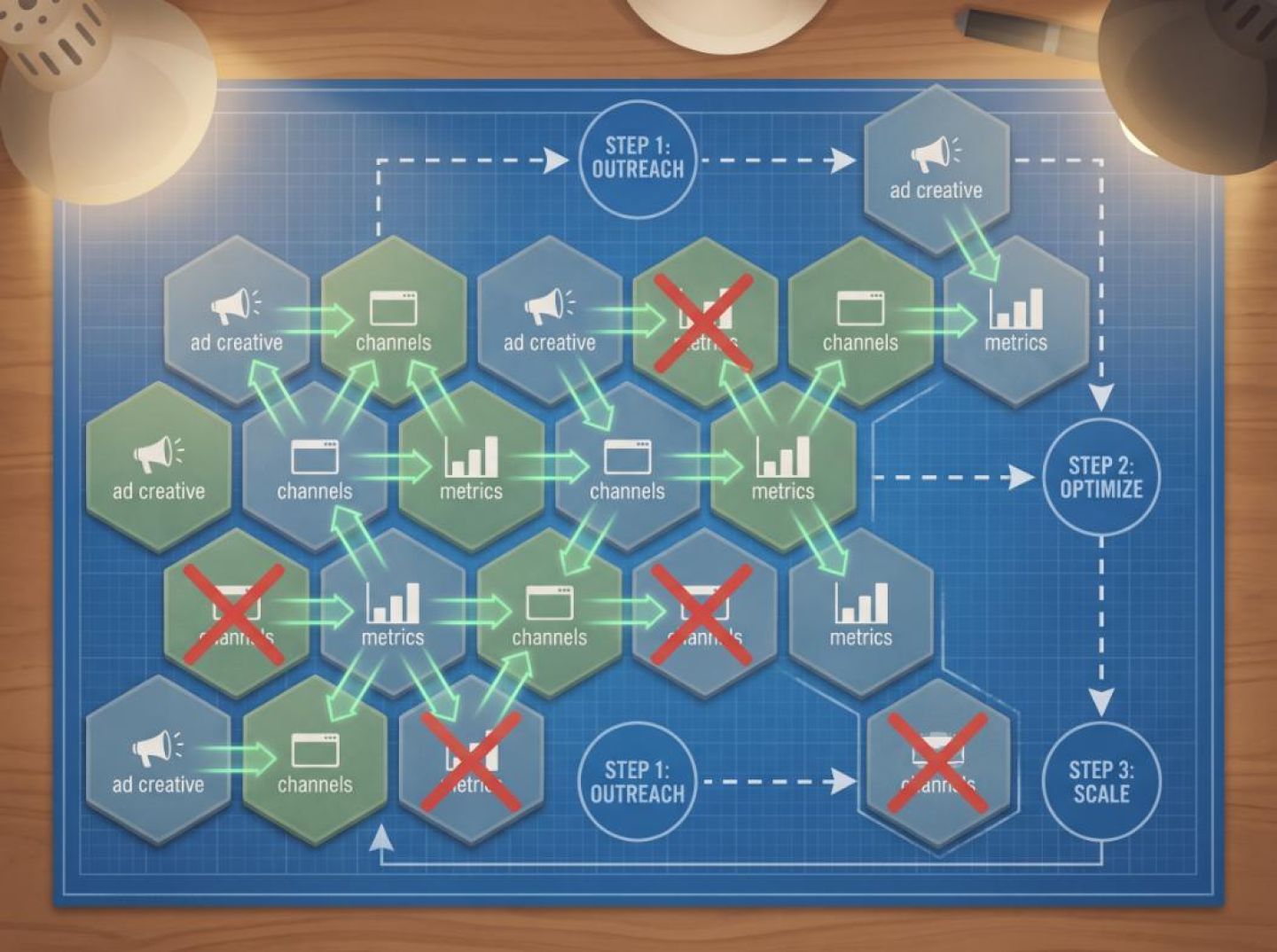






Spy: How Performance Marketers Can Stay Aggressive Without Becoming the Next Ad Tech Headline)