
Our tools monitor millions of native, push, pop, and TikTok advertising campaigns.
Get StartedIf you've spent any time studying AI search optimization in 2025, you've encountered a remarkably unified message: brand is the new moat. The playbooks converge on the same core thesis — that AI systems don't rank pages the way traditional search engines do but instead build a probabilistic understanding of your brand based on patterns across everything they've been trained on or can retrieve, from your site to press coverage, reviews, partner mentions, social content, and forum discussions. Semrush's team formalized this into a four-layer framework — Discoverability, Clarity, Authority, and Trust — where each layer answers a question AI is implicitly asking about your brand. Can it find you? Does it understand you correctly? Does it consider you qualified? The entire model hinges on a single premise: that you are an identifiable entity with a story consistent enough for a language model to corroborate.
HubSpot's approach reinforces the same logic from the measurement side. Their brand mention KPIs — total mentions, reach, sentiment, share of voice, and conversions — form a monitoring apparatus designed to connect a spike in coverage to a specific initiative rather than leaving teams to guess. They note that AI visibility improves when brand information is consistent, cited, and easy for systems to interpret, and that large language models draw on structured data and authoritative sources to decide which brands appear in AI-generated answers. The implicit instruction is clear: standardize your story everywhere, track how often your name surfaces, and measure whether branded search volume rises alongside your AI citation share.
These are serious, well-constructed frameworks. They represent genuine strategic thinking about a new discovery environment. And they are built for a business that has what most marketing advice takes for granted — a brand worth mentioning in the first place.
But what happens when there is no brand? What if you're running a Shopify store with a 90-day product cycle, an affiliate landing page promoting someone else's offer, a white-label SaaS resold under a name you registered last Tuesday, or a lead-gen funnel where the company name exists only in the footer and the privacy policy? The entire measurement apparatus — branded search volume spikes, share of voice tracking, sentiment analysis across web, social, reviews, forums, media, and AI systems — collapses when there is no entity generating those signals. You can't track share of voice for a name nobody is saying.
Meanwhile, Marketing Dive reports that AI engines are three times more likely to cite premium publisher content than brand-owned content, reinforcing that earned media and community discussion generate the external authority signals determining whether a brand gets recommended. That's sound strategy for a company with PR resources and an editorial footprint. It's irrelevant advice for a media buyer scaling a keto supplement offer through paid traffic, or a dropshipper rotating product pages faster than any AI system could index them.
The audience this consensus leaves behind is enormous and largely invisible in the AI visibility conversation: affiliates, media buyers, dropshippers, white-label resellers, and lead-gen operators. These aren't hobbyists. They represent billions in annual digital commerce, and their business model is built around selling the offer, not the company. They don't need AI to understand who they are. They need the transaction to happen before brand equity becomes a factor. The dominant AI visibility playbook doesn't just fail to serve them — it doesn't acknowledge they exist.
The advice to "measure and fix" your AI invisibility assumes there's a recognizable entity for the AI to find in the first place. As Neil Patel warns, AI invisibility is silent — you won't know it's happening unless you measure it. That's genuinely useful counsel for an established SaaS company or a consumer brand with years of digital footprint. But for the performance marketer spinning up a new supplement funnel, a limited-run coaching program, or a white-label product under a name that didn't exist three months ago, the problem isn't a measurement gap. It's an ontological one. There is no persistent entity for the model to locate, no matter how sophisticated the tracking.
To understand why, you have to look at how large language models construct their internal maps of the world. They don't index brands the way Google's crawler indexes pages. Instead, they build associative webs — clusters of co-occurring concepts, sentiments, and factual claims that get reinforced across billions of training tokens. Semrush's research describes this as a probabilistic understanding of your brand based on patterns scattered across the data the model has absorbed. A brand like HubSpot or Patagonia shows up in thousands of articles, reviews, forum threads, and comparison lists. Each mention adds another thread to the web, and by the time a user asks an LLM "What's the best CRM for small teams?" the model has enough pattern density to surface HubSpot with high confidence.
A pop-up brand has no such pattern. It hasn't been discussed on Reddit. It doesn't appear in trade publications. No independent review site has evaluated it. The LLM isn't biased against it — it simply has no basis on which to form a probabilistic opinion. And this isn't a failure of the marketer's strategy. It's a structural mismatch between how AI systems assign trust and how offer-first businesses are designed to operate. Performance marketers build lean, fast, and disposable. They test offers, iterate on landing pages, and let paid traffic do the qualification work. The entire model depends on not needing brand equity to convert.
The data reinforces how steep this cliff is. A Search Engine Journal study of 177 brands across five verticals found that 90% of brands have zero AI search mentions, and those were established companies with real domain authority — not weekend landing pages. If recognizable brands with years of organic presence are invisible to AI systems, a DTC offer running under a three-word name with a Shopify store launched last Tuesday has effectively zero probability of surfacing.
The standard response from AI visibility frameworks is to close this gap by investing in brand-building: publish thought leadership, earn media mentions, cultivate community discussion. And for companies with long time horizons and brand-centric business models, that's sound advice. But telling a performance marketer to "go build a brand" is like telling a day trader to "go buy real estate." It contradicts the operating logic of the business.
The more productive reframe is to ask a different question entirely: if the LLM can't model your brand, what can it model that you could attach yourself to? AI systems already have rich, well-developed entity models for product categories, problem spaces, ingredient profiles, regulatory frameworks, and vertical-specific pain points. The node of authority doesn't have to be your company name. It can be the category you operate in, the problem you solve, or the methodology you employ — as long as that node already exists in the model's associative web. The strategic challenge for offer-first marketers isn't earning brand mentions. It's learning to draft behind entities the AI already trusts.
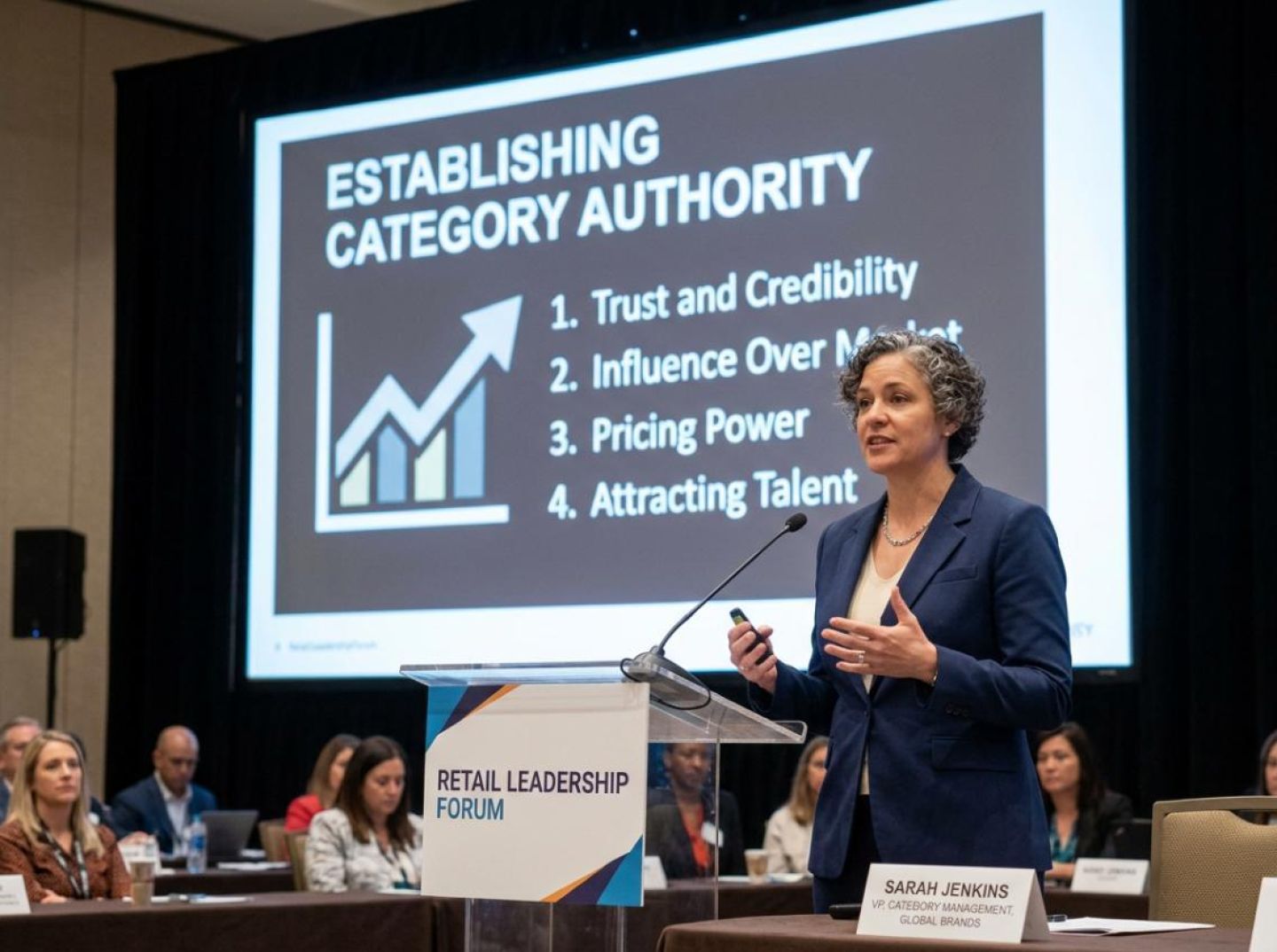
Here's the good news buried inside the brand-centric playbook: the actual mechanics of AI visibility have nothing to do with brand fame. They have everything to do with category authority — and that's a game anyone can win.
Strip the word "brand" out of HubSpot's framework and read what's left. AI visibility improves when information is consistent, cited, and easy for systems to interpret, and large language models rely on structured data, authoritative sources, and frequently cited content to decide what surfaces in AI-generated answers. Notice what's absent from that list: logo recognition, company age, advertising spend, or Fortune 500 status. The system doesn't care who you are. It cares whether you are the most structured, most corroborated, most consistently referenced source on a given topic. That's the opening for offer-first marketers — and it demands a different framework entirely.
Instead of building brand signals, build category signals. Become the most cited, most comprehensive, most corroborated authority on a specific product vertical or problem category. You don't need ChatGPT to recognize your company name. You need it to recognize your content as the definitive answer when someone asks, "What's the best portable ice maker under $100?" or "Which project management tool works best for freelance teams under five people?" In that framing, your page isn't competing as BrandX — it's competing as the category authority page that AI systems reach for when assembling a response about that specific slice of the market.
The payoff for getting this right is disproportionate. Semrush's data shows that traffic from LLMs is worth 4.4 times more than organic search visitors because those users have already done their research and arrive ready to act. That multiplier applies even more powerfully to offer-first marketers than to established brands. When someone lands on your page after an AI-driven recommendation for the category — not for your company — they've already been pre-sold on the problem, the solution type, and often the price range. All you need to do is close them on the specific offer. The AI did the top-of-funnel work for you, for free.
So what does the practical build look like? Four signal types form the foundation of category authority that AI systems can parse and trust:
This isn't a consolation prize for companies without brand equity. It's a structural advantage. Category authority pages can be built faster, targeted more precisely, and updated more aggressively than brand awareness campaigns — and the AI systems consuming them don't penalize you for being unknown.
Performance marketers have always had one advantage that brand marketers often lack: they know what's working right now because they follow the money. Every sustained ad campaign on a native or push network is a signal — someone ran the numbers, and the unit economics held. That same signal intelligence, typically used to inform ad creative and landing page strategy, turns out to be the missing input for an AI visibility workflow that most playbooks never mention.
The disconnect starts with how marketers frame their AI tracking. As Neil Patel argues, the quality of your prompt set determines the quality of what you can learn about AI visibility. For brand-first companies, that prompt set naturally revolves around brand-name queries — "Is [Brand X] good for enterprise teams?" or "How does [Brand X] compare to [Brand Y]?" But if you're selling an offer rather than a company, nobody is typing your brand into ChatGPT. They're typing the category problem: "best supplements for joint pain over 50," "cheapest way to get licensed as a contractor," "top budget CPAP alternatives." Your prompt set needs to mirror the category angles your competitors are already spending real money to promote.
Here's the workflow. First, use ad intelligence tools — platforms like Anstrex, AdPlexity, or SpyPush — to pull sustained native and push ad campaigns in your vertical. Filter for longevity. A campaign running for sixty or ninety days on Taboola or Outbrain isn't surviving on hope; it's surviving on margin. The angles those campaigns use — the specific problem framing, the category positioning, the comparison hooks — represent validated demand. Second, take those angles and run them as prompts through ChatGPT, Perplexity, and Google AI Overviews. Don't ask about brands. Ask the exact category-level and problem-level questions those ads are designed to intercept. Record which sources get cited in each response, and note whether the citations link to editorial roundups, niche review sites, forums, or brand-owned content. Third, reverse-engineer the cited content. Look at structure, depth, topical coverage, external linking patterns, and the type of entity signals present. You're trying to understand what made that specific page the one an AI system chose to endorse. Finally, build or acquire content assets — whether through guest placements, niche site partnerships, or your own editorial properties — that replicate those structural and topical signals within your vertical.
This isn't speculative. The data supports the underlying logic. Research covered by Search Engine Journal found that 90% of brands have zero AI search mentions, which means the citation landscape is sparse and the barriers to entry are far lower than most marketers assume. When the competitive field is that thin, a single well-structured content asset targeting a validated category angle can capture a citation position that a Fortune 500 company hasn't bothered to claim.
Think of this as category-position arbitrage. You're not trying to make an AI remember your brand. You're identifying the specific category frames where money is already flowing, confirming that AI systems are already generating answers for those frames, and then inserting yourself as the cited authority within that narrow lane. It's the offer-first marketer's version of the AI visibility measurement chain — just indexed to category share rather than brand share. The brand marketers are playing chess on a board labeled with their own name. You're playing on the board where the money actually moves.
Every existing AI visibility measurement framework assumes you have a brand name worth tracking. The core metric chain that Semrush recommends — where AI visibility increases lead to branded search volume growth, which then drives high-intent visitors who convert at higher rates — makes perfect sense for a SaaS company or an established retailer. But if you're an affiliate marketer promoting a keto supplement funnel, a lead generation page for solar installers, or a white-label info product, there is no branded search volume to correlate. The entire measurement model collapses at step one.
This isn't a minor inconvenience. It's a structural blind spot. When your business model is built around selling the offer rather than the company, you need to measure something fundamentally different: whether your content — your reviews, comparisons, how-to guides, and category analyses — is being absorbed into AI responses for the prompts your buyers actually type. You're not asking "Does ChatGPT know who we are?" You're asking "When someone asks ChatGPT for the best way to reduce energy bills, does our content shape the answer?"
The metrics that matter shift accordingly. Instead of share of voice measured by brand mentions, you track citation rate by domain. Did the AI platform link back to your site as a source? That distinction matters enormously because a study of 177 brands across five verticals found that mentions and citations are two separate signals — a platform can name a brand without ever linking to it, and it can cite a domain as a source without naming the entity behind it. For offer-first marketers, the citation is the prize. A mention of your brand name is worthless if you don't have one. A citation of your domain as a trusted source in a category answer is everything.
Here's a practical measurement framework that works without branded search as an anchor:
Category prompt coverage. Build a prompt set around the buying questions in your vertical — not around your name. Track how many of those prompts return responses that cite your domain or reproduce your content's framing across ChatGPT, Perplexity, Gemini, and AI Overviews. This is your visibility baseline.
Citation share versus competitors. Identify the other domains appearing in AI responses for your category prompts. Your share of citations relative to theirs is your competitive position. If three affiliate sites dominate AI responses for "best budget standing desks," you know exactly who you need to outperform in content depth and source authority.
Downstream conversion from AI-referred traffic. When AI platforms do cite your domain, the traffic they send tends to be remarkably qualified. As Marketing Dive reported, AI-referred traffic converts at up to four times the rate of traditional organic search traffic. Track this segment separately in your analytics. Even small volumes of AI-referred visitors can generate outsized revenue if your landing page experience is dialed in.
Content absorption rate. This is the qualitative metric most frameworks ignore. When an AI platform answers a category question, is it using your framing, your data points, your comparison structure — even without citing you? If so, you're shaping the answer but not capturing the credit. That tells you your content strategy is working but your authority signals need reinforcement through external validation, backlinks, and third-party mentions.
The measurement gap is real, but it's not insurmountable. It just requires abandoning the assumption that your company name is the unit of analysis and replacing it with your content's footprint across the category questions that drive purchases.
Receive top converting landing pages in your inbox every week from us.
In-Depth
The marketing industry often treats Gen Z authenticity as something that requires expensive brand activations, influencers, and cultural experiences. This article argues that the real issue is format sensitivity: younger audiences do not necessarily reject advertising—they reject disruptive advertising. Native ads can solve this scalability problem by matching the editorial environment, using contextually relevant creative, and combining brand-building with measurable performance. The article also presents a competitive intelligence framework for analyzing the headlines, visuals, voice, and landing-page structures that resonate with ad-averse audiences.
Samantha Reed
7 minAug 21, 2026
Guide
Copying a viral influencer format can create a dangerous gap between attention and actual conversion. This article explains why views and engagement do not necessarily predict purchase intent, how influencer credibility can collapse and contaminate associated creative styles, and why scaling synthetic AI content brings its own platform and trust risks. It argues that sustained paid ad activity offers a more stable conversion signal, helping marketers identify durable hooks, audience-qualification patterns, and creative structures that can inform original campaigns without blindly copying trends.
Dan Smith
7 minAug 21, 2026
Guide
Push and pop advertising may offer granular tracking, but many media buyers still optimize using incomplete platform-reported metrics. This article explores the measurement gap at the carrier-device layer, where differences in mobile networks, devices, operating systems, rendering, and traffic behavior can significantly affect downstream performance. It presents a practical framework for segmenting historical data, benchmarking creative by high-value traffic segments, and using independent verification to identify discrepancies between reported and confirmed conversions.
Rachel Thompson
7 minAug 21, 2026