6 minNovember 6, 2026

Our spy tools monitor millions of TikTok ads from over 55+ countries. Biggest TikTok Ad Library in E-commerce and Mobile Apps!
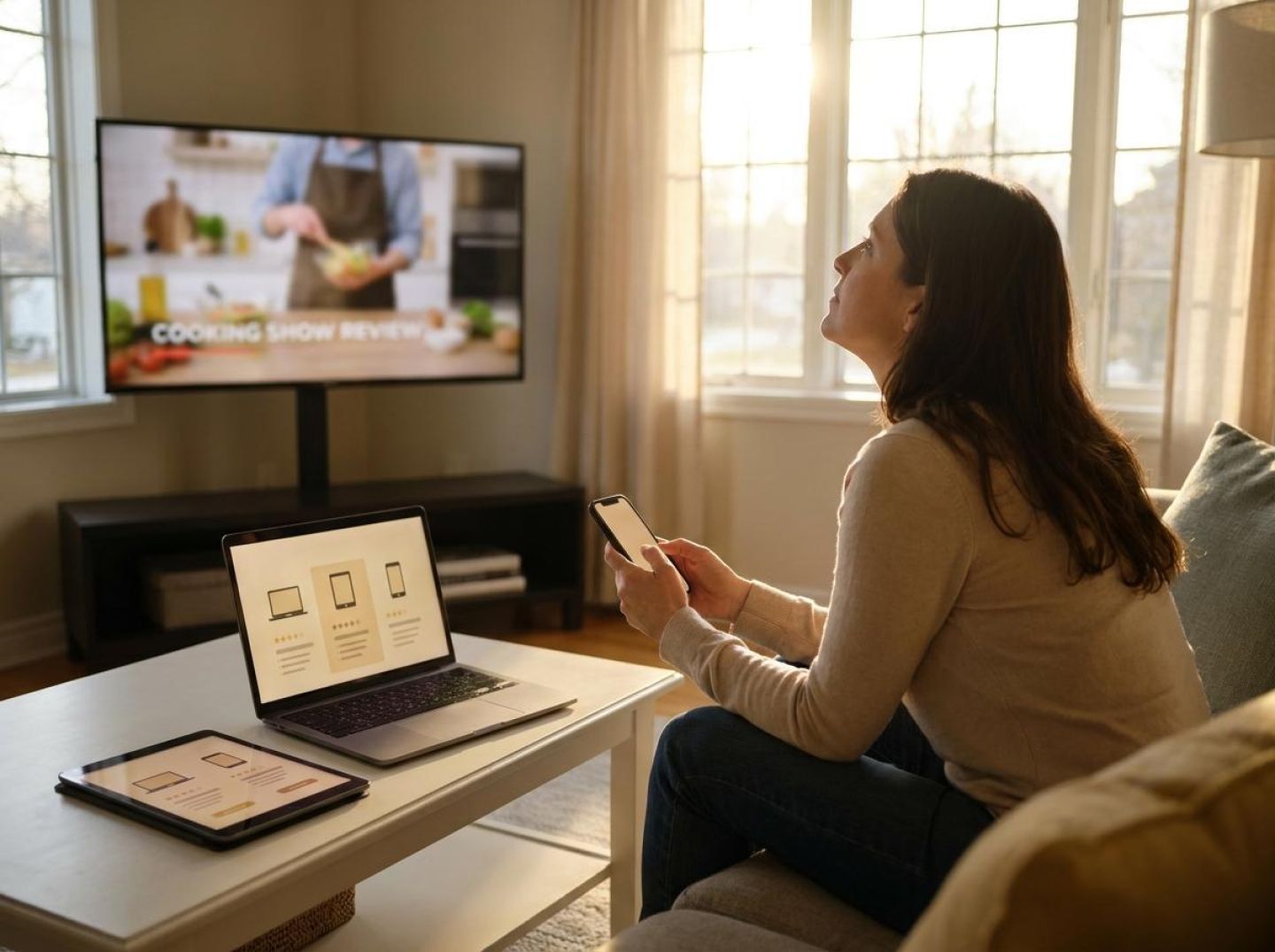
Try It FREEYouTube and TikTok are often treated as awareness channels, while native, push, and pop advertising are expected to deliver the conversions. But customers rarely move through such neatly separated stages. Someone might discover a product in a creator video, research it through search and editorial content, and only respond to a performance ad days later.
That journey creates an important challenge for marketers: the channel that receives the final click may not be the channel that first created the demand.
As Search Engine Journal explains in its discussion of making marketing channels work together, marketing channels are more effective when they support a connected strategy rather than operate as isolated campaigns.
For affiliates and performance marketers, this creates an opportunity to look beyond individual traffic sources. YouTube and TikTok can introduce products, demonstrate problems, and build familiarity. Search and content can help users validate what they have seen. Native, push, and pop campaigns can then provide additional opportunities to reach those users.
The result is what we can call the underground funnel: the less visible sequence of interactions that happens between the first impression and the final conversion.
The traditional marketing funnel is easy to explain. Video and display advertising create awareness, content and search support consideration, and performance campaigns drive conversions.
Real customer journeys are rarely that orderly.
A person might watch a creator review a product on YouTube, encounter a TikTok discussing the same category, and then move on without clicking anything. A few days later, that person might search for the product, read a comparison article, and encounter a native advertisement on a publisher website.
The final click may come from the native placement. But the user's interest could have developed through several earlier interactions.
This is one reason why last-click reporting can provide an incomplete picture. It identifies the interaction immediately preceding a conversion, but it does not necessarily explain what introduced the product, created familiarity, or encouraged the user to research it.
The idea of a more fluid customer journey also appears in broader industry discussions about cross-channel planning. Discovery, consideration, and purchase can overlap across platforms rather than follow a fixed sequence. See Search Engine Journal's discussion of connected marketing channels.
For media buyers, the distinction matters. Native, push, and pop campaigns are often evaluated according to their immediate performance. If a campaign meets its return-on-ad-spend target, it is treated as a winner. If it struggles, the traffic source or creative is often blamed.
But a campaign's performance may also depend on what users already know when they encounter it. Familiarity with a product category, brand, or problem can influence how someone responds to a later advertisement.
Video can contribute to that familiarity. YouTube creators, product demonstrations, and TikTok trends can introduce a product or make a particular problem more recognizable. Later advertisements may reach people who are no longer encountering the idea for the first time.
That does not mean every native, push, or pop conversion was caused by an earlier video impression. Without suitable measurement, the relationship remains a hypothesis. But it does mean marketers should avoid assuming that the last-click channel created the entire journey.
The broader media environment supports this connected view. In More About Advertising's analysis of YouTube and the changing content landscape, Omar Oakes discusses the cultural context in which advertising is consumed. Content can shape the environment in which brand messages become meaningful.
LinkedIn has also discussed video as a format that can contribute across the customer journey, rather than belonging exclusively to one funnel stage. See VideoWeek's coverage of LinkedIn's video strategy.
The funnel may not be disappearing. It may simply be harder to see when customers move between platforms, formats, and moments of intent.
For marketers, the practical implication is straightforward: evaluate channels as parts of a broader acquisition system, while being careful not to assign credit without evidence.
Upper-funnel video is often measured through reach, views, awareness, and engagement. Those metrics matter, but they do not tell the entire story of how a user may eventually respond to another advertisement.
A video can introduce a product, demonstrate how it works, explain a problem, or make a brand easier to recognize. Even when viewers do not click immediately, the exposure may influence what they search for or notice later.
YouTube gives brands and creators room to explain products in greater detail. A creator can demonstrate a product, compare alternatives, discuss its limitations, or show how it fits into an everyday routine.
That format can help viewers understand a category before they are ready to buy.
Google's advertising ecosystem also positions YouTube as part of a broader demand-generation and demand-capture strategy. For an overview of Google's marketing announcements and advertising direction, see Neil Patel's Google I/O 2026 breakdown.
For performance marketers, the useful takeaway is not that every YouTube viewer becomes a high-intent prospect. It is that video exposure can create familiarity that may become relevant when the same person encounters a later search result, product comparison, or performance advertisement.
TikTok operates differently. Its short-form videos can expose users to products, demonstrations, reviews, and category trends through a fast-moving recommendation feed.
A product may appear in several different contexts: a creator review, a tutorial, a comparison, or a user-generated demonstration. Repeated exposure can make a product or problem more recognizable, although recognition should not be confused with purchase intent.
TikTok's advertising formats also span different campaign objectives. Its premium placements and commerce tools can support discovery, consideration, and action within the platform. For a breakdown of TikTok's advertising formats and campaign planning, see HubSpot's guide to running TikTok campaigns.
For marketers who buy native, push, and pop traffic, the opportunity is to understand the creative themes that are gaining attention upstream. What problems are creators discussing? Which product benefits are being repeated? What demonstrations make the offer easy to understand?
These observations can inform downstream creative research. They do not prove that a specific user saw a particular video before clicking a native or push advertisement.
Consider a hypothetical example.
A user watches a YouTube review about a home fitness product. A few days later, the user searches for alternatives and reads a comparison article. Later that week, the user encounters a native advertisement featuring a benefit they remember from the original review.
The native advertisement receives the click. But the user's decision may have been influenced by the earlier video and research.
This is the kind of journey marketers should investigate. Rather than assuming video is only an awareness expense and native is only a conversion channel, they can examine how the creative messages and audience responses relate across platforms.
A YouTube view does not necessarily end the customer's journey. The viewer may search, compare, return later, or encounter the same product in another advertising environment.
To understand the underground funnel, marketers need to look beyond the individual platform and consider the possible sequence of interactions.
Imagine a user watches a creator explain the benefits of a product but does not click the video description. A few days later, that user visits a news website and sees a native advertisement featuring a related problem or product benefit.
The placement may attract attention because the subject is already familiar.
Native advertising is designed to fit within the surrounding content environment. That makes the headline, image, and editorial presentation especially important. A well-matched placement can provide another opportunity to introduce an offer or encourage further research.
However, a higher click-through rate does not automatically prove that YouTube created the interest. The native creative, placement, audience, timing, and offer may all contribute to the result.
Push advertising introduces another kind of interaction. A user may receive a notification while using a news app, utility, or other service that supports notifications.
If the notification relates to a product or problem the user already recognizes, it may feel more relevant than an unfamiliar offer.
For example, a notification about a limited-time offer could prompt someone to revisit a product they previously researched. But the marketer should not assume that the user saw a particular YouTube video unless the exposure can be established through suitable data.
The practical creative lesson is to maintain consistency. The message in a push notification should connect clearly to the product, benefit, and landing-page experience. It should not rely on misleading urgency or imply a relationship that does not exist.
Pop and pop-under campaigns are often approached as direct-response traffic sources. They can create a landing-page visit, expose users to an offer, or test how different angles perform across placements.
Because these formats can interrupt an existing browsing activity, relevance and landing-page quality are especially important.
A user who recognizes a product may respond differently from someone seeing it for the first time. But that is a possibility to test, not a universal rule. Pop traffic can still be poorly matched, and a familiar brand does not guarantee a conversion.
The broader idea is that video, search, content, native, push, and pop can play different roles in a customer's journey.
A possible sequence might look like this:
Not every customer follows this sequence. Some convert after the first exposure; others need more research or never purchase. The value of the model is that it gives marketers a framework for investigating the interactions that may be influencing performance.
The underground funnel can be understood through three broad stages. These are planning categories, not rigid steps that every customer must follow.
At the top of the journey, the objective is to make a product, brand, or problem recognizable.
This can happen through creator integrations, product demonstrations, comparison videos, tutorials, and skippable video advertisements. The strongest creative gives viewers a clear reason to pay attention and an easy idea to remember.
A creator's honest product demonstration may help explain a product in a way that a short banner cannot. A YouTube advertisement can introduce a problem, show a visual result, or establish a distinctive brand cue.
The goal is not necessarily to generate an immediate purchase. It may be to give the viewer enough context to recognize the product later.
Advertisers should still evaluate video campaigns using suitable measures, such as reach, completed views, brand-search changes, direct traffic, and controlled lift studies where available. These measures can help assess whether the campaign is contributing to demand, but they should not be treated as interchangeable proof of sales.
For more on why YouTube campaigns should not always be evaluated like search campaigns, see Search Engine Journal's analysis of running YouTube ads like search.
After discovering a product, many users want more information before making a decision.
They may search for the brand, look for reviews, compare competing products, read publisher articles, or ask questions in online communities. This stage is where a brand's broader content presence can support the original video message.
A useful content ecosystem might include:
The Content Marketing Institute's discussion of paid media budgeting explores the relationship between content and paid media. The broader strategic point is that content can help people understand a topic before paid placements encourage them to take action.
Native advertising can also appear during this validation stage. An editorial-style placement may introduce a guide, comparison, or product story that gives users another reason to investigate.
The important distinction is transparency. Sponsored content should be identified appropriately, and product claims should be accurate. Editorial presentation should not be used to disguise advertising as independent reporting.
At the bottom of the journey, the user may be ready to take a more direct action.
This is where native offers, push notifications, pop campaigns, retargeting, and direct-response landing pages can play a role. The message should make the next step clear and match the user's level of familiarity.
For example:
These are campaign hypotheses to test, not guaranteed audience behaviors.
The landing page must also deliver what the advertisement promises. If the creative promotes a specific benefit, the page should explain that benefit clearly. If the offer includes a price or promotion, the terms should be visible and accurate.
The bottom of the funnel is not simply about using more aggressive creative. It is about reducing uncertainty and making the next action relevant.
A connected customer journey is useful as a planning model, but marketers need evidence before claiming that one channel caused another channel's conversions.
This is where measurement becomes essential.
Last-click reporting is useful for understanding which source delivered the final tracked interaction. It is not a complete record of every influence that came before it.
A native campaign may receive the conversion credit even when a user previously encountered the brand through YouTube, TikTok, search, or another source.
Rather than discarding last-click data, treat it as one view of performance. Compare it with other available indicators, including:
These indicators can help identify relationships worth investigating. They do not independently establish causation.
If the advertising platform and measurement setup allow it, compare groups that were exposed to an upper-funnel campaign with similar groups that were not.
A well-designed test can help estimate whether video exposure contributed to changes in downstream behavior.
The design matters. Audience differences, campaign timing, budget changes, seasonality, and other marketing activity can influence the results. A simple before-and-after comparison may be misleading if several factors changed at once.
Use consistent campaign naming, UTM parameters, conversion definitions, and landing-page tracking across channels.
This makes it easier to understand which campaigns are driving visits and which are contributing to measurable actions.
It is also important to respect platform reporting limitations. Some platforms do not share user-level exposure data with other advertising networks. Marketers should not assume they can connect every YouTube impression to a later native, push, or pop click.
A longer-running advertisement, repeated creative variations, or activity across multiple placements can be useful research signals. They may indicate that an advertiser is continuing to test or distribute a campaign.
But those observations do not reveal the advertiser's actual return on ad spend, profit, customer lifetime value, or the reason a campaign remains active.
The same discipline applies to cross-channel analysis. If native performance improves during a YouTube campaign, that is a relationship worth examining. It is not enough on its own to prove that YouTube caused the improvement.
Understanding the underground funnel requires more than checking whether an individual campaign is active. Marketers need to investigate the creative messages, offers, landing pages, and advertising patterns appearing across different traffic environments.
This is where competitive ad intelligence can support the research process.
Anstrex gives marketers a way to investigate advertising activity across supported ad formats and networks. Instead of relying entirely on assumptions about what competitors are doing, users can examine observable campaign examples and use them to develop their own research questions.
With Anstrex Native, marketers can investigate native advertisements, compare creative approaches, and examine the landing pages associated with observed campaigns.
Look for recurring patterns such as:
These patterns can help identify how advertisers present an offer to people who may already be familiar with a category.
They do not reveal whether a competitor's campaign is profitable or whether its audience previously saw a YouTube or TikTok advertisement.
Push campaigns provide another useful source of creative research.
Study how advertisers frame short messages, communicate offers, and encourage users to click. Compare notification headlines, supporting images, calls to action, and destination pages where available.
A useful question is whether the message introduces a product from scratch or assumes that the audience already understands the problem or benefit.
That distinction can inspire different creative tests for your own campaigns.
Pop and redirect campaigns can reveal how advertisers present offers after a user reaches a destination page.
Pay attention to the landing-page structure, opening message, product explanation, offer presentation, and conversion path.
The landing page is particularly important because a pop advertisement may have very limited space to communicate its value. The destination must quickly explain what the user is seeing and what action is available.
The strongest research opportunity comes from comparing what appears across different advertising environments.
For example, a marketer might notice that a product category is being promoted through creator-style video content, while native advertisements emphasize problem-solving articles and push campaigns focus on short promotional messages.
That does not prove the campaigns belong to one coordinated funnel. It does, however, provide a useful basis for investigating how different advertisers communicate the same category or offer across formats.
A practical Anstrex research workflow could look like this:
The goal is not to copy a competitor's campaign or assume that every visible advertisement is a winner. It is to use competitive intelligence to understand the market, identify creative patterns, and develop better-informed experiments.
The underground funnel is a reminder that the last click is not always the beginning of the customer's journey.
YouTube and TikTok can introduce products, demonstrate benefits, and build familiarity. Search and content can help users validate what they have seen. Native, push, and pop campaigns can provide additional opportunities to present relevant offers and encourage action.
But these channels should not be treated as interchangeable, and their roles should not be assumed without testing.
For advertisers, the practical opportunity is to plan creative and measurement around the broader journey:
For Anstrex users, this also creates a more useful way to approach competitor research. Rather than looking at native, push, and pop advertisements as disconnected examples, compare the messages, offers, and landing-page approaches appearing across supported formats.
The objective is not to prove that every conversion began with a video view. It is to understand the different ways advertisers attract attention, develop interest, and invite action — then use that knowledge to build campaigns that work together.
The funnel has not necessarily disappeared. It has become more distributed, less linear, and harder to measure through a single platform's reporting.
The marketers who understand those connections will be better equipped to research creative opportunities, test channel combinations, and make more informed decisions about where their advertising budget goes.
Receive top converting landing pages in your inbox every week from us.
Trending
TikTok can reveal creative angles, audience problems, and offers worth investigating. Discover how to use Anstrex In-Stream to research TikTok campaigns, build in-app funnel experiences, and adapt the strongest messaging patterns for Native, Push, and Pop advertising.
Dan Smith
7 minNov 7, 2026
Must Read
YouTube and TikTok often get the attention for building brand awareness, but the customer journey can continue across search, native placements, push notifications, and pop traffic. Learn how to understand these connected touchpoints and use Anstrex to research the creative patterns behind them.
Elena Morales
7 minNov 6, 2026
Guide
Keyword tools show what people are already searching for. Native and TikTok ad intelligence can reveal the specific problems, audiences, and outcomes gaining attention before those signals become obvious in search data.
Marcus Chen
7 minNov 5, 2026