9 minJuly 4, 2026

Our spy tools monitor millions of native ads from over 60+ countries and thousands of publishers.
Get StartedThe numbers are damning, and they tell a story that most brand leaders are still not willing to fully confront. According to McCann's Truth About Global Brands study, which surveyed more than 20,000 people across 20 global markets, 72% of consumers now believe it's "more important than ever to prioritize truth" in the messages they receive. That sounds like an opportunity — until you pair it with the finding that 55% of those same respondents say brands were more truthful two decades ago than they are today. Consumers aren't just hungry for honesty; they're actively convinced that commercial communication has gotten worse at delivering it.
This isn't a perception problem that a rebrand or a new tagline can fix. It's a structural fracture in the relationship between audiences and the institutions trying to sell to them. And the consequences are already materializing in consumer behavior. Over two-thirds of consumers — 69% — report having already abandoned brands they no longer trust, a figure that transforms abstract sentiment data into a concrete revenue threat. Conversely, 80% say they'd actively choose brands they do trust, which means the gap between trusted and untrusted companies isn't narrowing — it's becoming a chasm that separates winners from the irrelevant.
What makes this moment uniquely dangerous is the accelerant that no brand can control: artificial intelligence. A striking 76% of respondents in the McCann study expressed fear that they'll soon be unable to distinguish actual humans from computer-generated ones. That anxiety doesn't just apply to deepfakes and chatbots — it bleeds into every piece of branded content a consumer encounters. When people can no longer trust their own ability to determine what's real, the default posture becomes skepticism toward everything. As McCann global CEO Tyler Turnbull told Adweek, "There's this yearning amongst consumers worldwide to find the truth, but it's harder than ever to do so in terms of the content that we're consuming, the AI generation that's happening, and frankly, the decline that we're seeing in trust amongst large institutions, governments, and brands."
This is the environment in which every branded message now competes — not just against rival brands, but against a rising tide of consumer cynicism that treats all direct commercial communication as suspect until proven otherwise. Traditional display advertising, already plagued by banner blindness and ad fatigue, becomes even more vulnerable in a trust-starved landscape. It's worth noting that native advertising has emerged as the most impactful channel for brand favorability precisely because it doesn't trigger the same defensive response; it operates within editorial environments where consumers have already extended a measure of trust to the platform itself. That distinction will become far more important as this analysis unfolds.
For now, the critical takeaway is this: the trust collapse is not a temporary dip caused by a few bad actors or a rough news cycle. It is a permanent reconfiguration of how consumers evaluate commercial messages, driven by decades of accumulated skepticism and supercharged by AI's corrosive effect on perceived authenticity. Brands that continue to rely on direct, branded communication as their primary vehicle for building credibility are fighting against a headwind that grows stronger every quarter. The vacuum left behind — the space between what consumers desperately want (truth) and what they believe brands are delivering (something far less) — is where the real battle for attention and loyalty is being waged. And it's a vacuum that a different kind of advertising is already filling.
Native advertising doesn't ask for your trust. It borrows someone else's.
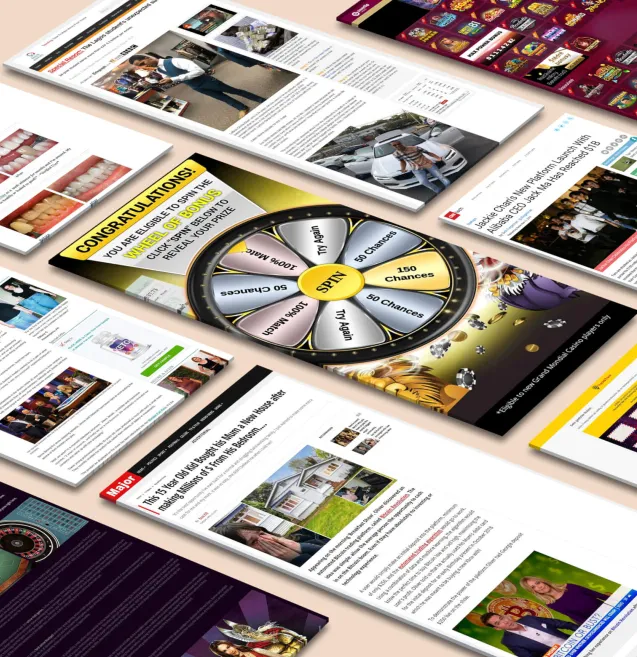
That single architectural principle — embedding paid messages inside environments that audiences already believe in — is what separates native from every other format competing for attention in a collapsing trust landscape. At its most fundamental level, native advertising is a form of paid media that mimics the look, feel, and function of its editorial environment, fitting so naturally alongside organic content that consumers sometimes don't even register they're engaging with an ad. When you're scrolling through a news site and a sponsored article mirrors the same typeface, tone, and layout as the investigative piece above it, the credibility of that editorial context doesn't vanish — it transfers. And that transfer is the entire game.
This isn't a niche tactic anymore. Native has quietly consumed the majority of the display advertising market, with US native ad spend accounting for almost 60% of total display ad spending last year. Close to three-quarters of native display dollars flow into social networks, where 97% of all social ad spending is already native by design. The format has become so pervasive that calling it an alternative to traditional display is like calling streaming an alternative to Blockbuster — the succession already happened.
What makes native structurally different from banners, interstitials, and pre-roll isn't its creative flexibility or targeting precision, although both matter. Its prime differentiator is non-disruption. Banner ads interrupt. Pop-ups obstruct. Native ads participate. They exist within the content stream rather than beside it or on top of it, and this distinction produces measurable behavioral differences that no amount of banner retargeting can replicate. Studies have shown that native ads generate 18% higher purchase intent and 9% higher brand affinity compared to traditional display — numbers that reflect not just attention but a qualitatively different kind of engagement, one rooted in context rather than coercion.
The mechanism at work is what behavioral economists might call trust arbitrage. Consumers arrive at a news site, an editorial feed, or a social platform carrying a set of pre-existing expectations about the quality and reliability of the content they'll find there. Native advertising inserts itself into that expectation framework rather than fighting against it. As Voluum's analysis of native branding strategies explains, native ads seamlessly combine with the fabric of the website, looking like another piece of its content — which makes them fundamentally more user-friendly than banner or display ads. This isn't cosmetic camouflage. It's a structural alignment between the ad and the psychological state of the person consuming it.
Consider the implications in light of the trust crisis outlined earlier. When 69% of consumers are actively abandoning brands they no longer trust, every traditional ad impression carries a hidden liability: the brand is announcing itself as a brand, in a moment when brand identity itself triggers skepticism. Native sidesteps this trap entirely. Instead of shouting its commercial intent from a rectangular box in the sidebar, it speaks in the voice of the environment — the same voice that users chose to engage with in the first place.
This is why framing native advertising as merely a "less annoying" ad format misses the point entirely. Native wasn't built to be polite. It was built to exploit the one resource that brands can no longer manufacture on their own: borrowed credibility. In a market defined by institutional distrust, the ability to inherit trust from a third-party editorial context isn't just clever positioning — it's the most capital-efficient strategy available to marketers who've watched their own brand equity erode beneath them.
Trust isn't some ethereal brand quality that you either have or you don't. In the highest-performing native campaigns, it's a set of discrete, reverse-engineerable signals embedded directly into the creative execution — signals that function like psychological keys, each one unlocking a different door in the reader's mind. When you study which native ads consistently outperform, a clear pattern emerges: the winners deploy three trust levers with surgical precision, and every one of them works by making the ad feel less like an ad.
Authority Framing: Borrowing the House's Credibility
The first and most powerful lever is authority framing — the native ad's ability to absorb the editorial credibility of its host environment. This isn't accidental. As Voluum's analysis of native branding strategy explains, native advertisements succeed when they share the same voice and flow as the website they appear on, because users enter that environment with a pre-established level of trust. When a sponsored article sits between two genuine editorials on a respected publisher's site, the reader's brain doesn't draw a hard boundary between them. The publication's authority becomes a halo, and the ad inherits it without having to earn it independently. ShareThrough and IPG Media Lab's landmark research demonstrated this effect quantitatively: consumers looked at native ads 52% more frequently than display ads and registered significantly higher brand lift, precisely because the content didn't break the environmental contract. The ad looked like it belonged there, so the reader treated it like it belonged there.
Social Proof: Implied Peer Validation
The second lever is subtler but equally potent. Top-performing native creatives almost never say "buy this." Instead, they imply that other people — people like you — have already engaged. Headlines structured around listicles ("7 Things Dermatologists Wish You'd Stop Doing"), trending topics, and community-validated insights carry an embedded social proof signal. They suggest consensus rather than assert superiority. This framing is why native ads consistently outperform traditional display, with mobile native click-through rates exceeding 1% compared to desktop display's anemic 0.15%, according to data from Polar Media Group and Celtra. The performance gap isn't just about placement — it's about the psychological weight of implied peer validation versus overt commercial persuasion. When a headline reads like something a friend might share rather than something a brand paid to place, the click becomes an act of curiosity rather than compliance.
Curiosity Gaps: Editorial Tone Over Ad Copy
The third trust lever is the curiosity gap — a headline architecture that mirrors editorial tone rather than promotional copy. The best native headlines open a loop in the reader's mind without promising a sales pitch at the end. "Why Cardiologists Are Rethinking Everything About Salt" performs differently than "Try Our Low-Sodium Heart Health Supplement." Both might lead to the same landing page, but the first passes through the reader's ad-detection filters because it mirrors how journalists actually write. Digital users are naturally averse to explicit promotion, and curiosity gaps exploit that aversion by offering information rather than demanding attention.
Here's what makes this framework actionable: competitive intelligence tools that surface top-performing native creatives across networks are essentially trust-signal decoders. When you spy on what's winning in any vertical, you're not just cataloging headlines and thumbnails — you're mapping which combination of authority framing, implied social proof, and curiosity architecture is generating the highest engagement in that specific audience context. The ads that win look the least like ads, and that's not a paradox. It's the entire strategy.
Two tribes of marketers are staring at the same trust crisis, and they're responding with diametrically opposed strategies — one noble and slow, the other pragmatic and immediate. The gap between them is widening every quarter.
Brand marketers, to their credit, are doing what the data tells them consumers want. They're drafting AI-disclosure policies, launching purpose-driven campaigns, and publishing transparency manifestos. This isn't theater — it's a direct response to real demand. McCann's Truth About Global Brands study, which surveyed more than 20,000 people across 20 markets, found that 53% of respondents said the most effective way to secure their trust is for brands to be upfront about whether they're using AI in their ads. That's a majority asking for exactly the kind of transparency that brand teams are scrambling to provide. The instinct is correct. The execution is well-intentioned. And the timeline is brutal.
Because here's what the transparency playbook actually looks like in practice: months of internal auditing, legal review of disclosure language, creative development around "authentic" messaging, and the slow, compounding work of proving — campaign after campaign — that your brand means what it says. The payoff is real but deferred. You're rebuilding a reputation one touchpoint at a time, in an environment where 55% of consumers believe brands were more truthful two decades ago than they are today. You're not just earning trust; you're digging out of a deficit that predates your current marketing strategy.
Performance marketers, meanwhile, have found a shortcut — and it's not a trick. Instead of rebuilding trust from scratch, they place their messages inside containers where trust already exists. A sponsored article on a respected publication doesn't need to earn credibility from zero; it borrows credibility from the editorial environment surrounding it. This is precisely why native ads register an 18% higher lift in purchase intent compared to banner ads, according to research by ShareThrough and IPG Media Lab. The trust transfer is immediate, not earned over quarters of careful brand-building but inherited the moment a reader encounters the content in a familiar, trusted feed.
The divergence creates a painful asymmetry. Brand marketers invest in the conditions that make trust possible — authenticity, disclosure, purpose — while performance marketers harvest trust that someone else cultivated. One team plants orchards; the other picks fruit from trees that already grew. And in a market where 69% of consumers say they've already abandoned brands they don't trust, the orchard planters are losing budget share to the fruit pickers every review cycle.
This isn't an argument that brand marketing is pointless. The data is unambiguous: consumers want transparency, and 80% say they'll actively choose brands they trust. The long game matters. But most CMOs don't have three years of patience capital stored up. They have quarterly targets, board decks, and a CFO asking why the brand campaign hasn't moved pipeline. Performance marketers — armed with native placements that sidestep the trust question entirely by embedding messages inside pre-trusted editorial environments — can show conversion lift this month.
The uncomfortable truth is that both approaches work, but they operate on radically different timelines. And in a landscape where trust is collapsing faster than any transparency campaign can rebuild it, the marketers who borrow trust are outpacing the ones trying to manufacture it from raw materials. The gap isn't closing. It's accelerating.
Here's the uncomfortable truth that native advertising's biggest champions don't want to confront: the same quality that makes it effective — its seamless integration into the content experience — is precisely what makes it dangerous. Every native ad exists on a spectrum between contextual relevance and deliberate deception, and the line between the two is thinner than most marketers admit.
Consider the arithmetic of distrust. McCann's global study found that 76% of consumers already fear they'll soon be unable to distinguish real humans from computer-generated ones, a anxiety that extends well beyond deepfakes into every piece of content that feels manufactured or inauthentic. Now layer native advertising on top of that baseline paranoia. You have a format explicitly designed to look like something it isn't — an editorial recommendation, a journalist's insight, an organic piece of content. When consumers who are already primed to suspect manipulation discover they've been engaging with a paid placement, the psychological backlash isn't proportional. It's exponential. The feeling isn't "oh, that was an ad." It's "I was deceived," and that distinction is everything.
The data supports the severity of this risk. The same McCann research showed that 69% of consumers have already abandoned brands they no longer trust, while 80% said they'd actively choose brands they do. That's not a sliding scale — it's a binary verdict. Trust or abandonment. And native advertising, by its very design, forces that verdict every single time a reader realizes the content they clicked was sponsored. The moment of recognition is a courtroom, and the brand is on trial.
This is why the FTC's disclosure framework — the little "Sponsored" or "Paid Content" labels — should be understood as a legal floor, not a trust-building strategy. Compliance keeps you out of regulatory trouble. It does nothing to address the emotional calculus happening in a reader's mind when they feel tricked. Survey data confirms that consumers hold a generally positive attitude toward native advertising, but with an important caveat: they expect ads to be relevant and to come from trustworthy brands, and any perception that those conditions have been violated risks triggering the kind of mainstream backlash that could undermine the entire format.
So what separates the native advertisers winning the trust war from those accelerating the crisis? It comes down to what happens after the click. The camouflage gets the click — the headline that mirrors editorial tone, the thumbnail that fits the content feed, the contextual alignment that bypasses ad-avoidance instincts. But camouflage is borrowed time. Every reader eventually realizes they're consuming branded content. The brands that survive that moment of recognition are the ones that have delivered genuine, substantive value in the interim — an insight they didn't have before, a tool they can actually use, information that justifies the time they spent.
The brands that don't survive it are the ones who used native's contextual integration purely as a Trojan horse for a pitch. Those brands don't just lose a customer. In an environment where 55% of people believe brands were more truthful two decades ago, they confirm the very narrative driving the trust collapse. Native advertising's ethical razor's edge isn't an abstract concern for industry panels. It's the operational reality that determines whether each campaign deposits trust or withdraws it. And that ledger, once overdrawn, doesn't offer overdraft protection.
If native advertising is winning the trust war, the logical next question is: what exactly can you steal from its playbook? The answer isn't abstract. It lives in the headlines running right now across recommendation widgets, in-feed placements, and sponsored content hubs — and the brands willing to study them systematically are the ones building a durable competitive advantage.
Start with headlines, because they're the first trust signal a user encounters. The highest-performing native headlines don't sell — they teach, reveal, or provoke curiosity in the same register as the editorial content surrounding them. Scroll through any Taboola or Outbrain widget on a premium publisher site and you'll notice a pattern: winners favor specificity over superlatives. "How Three Nurses Redesigned Their Retirement Plan" outperforms "The Best Retirement Plan You've Never Heard Of" because the first headline reads like journalism while the second reads like a pitch. This is the non-disruption principle at work — as Basis Native explains, the most effective native ads blend naturally into the form and function of the editorial habitat in which they live, offering hyper-relevant content that exudes authenticity. When you're analyzing competitor campaigns, catalog the linguistic texture: Are the winning headlines using first-person or third-person framing? Do they reference data points or anecdotal hooks? These micro-choices reveal which trust signals a specific audience responds to.
Next, examine imagery. Native ads that earn engagement tend to use editorial-style photography — candid shots, imperfect lighting, real people in real settings — rather than the polished stock imagery that screams "advertisement." The disconnect between a warm, curiosity-driven headline and a glossy hero image is one of the fastest ways to break the trust chain. Consistency of tone between the ad unit and its visual language is critical, and the same principle extends to the landing page. If your native headline promises an informative story and the click-through delivers a squeeze page with a countdown timer, you haven't just lost a conversion — you've confirmed every skeptical assumption the user carried into the interaction.
Landing page alignment is, in fact, the most underrated trust variable in the entire native ecosystem. Voluum's guidance on native branding makes this point explicitly: your ad and the website's content should have the same voice, because the user enters expecting a continuous experience. The best practitioners treat the landing page as the second act of the same story the headline began, matching not just topic but tone, pacing, and visual design. competitive intelligence tools let you see which landing page structures competitors are sustaining spend behind — a campaign that has been running unchanged for sixty days is almost certainly profitable, which means its trust mechanics are working.
The practical framework, then, looks like this: monitor networks weekly, screenshot and categorize the native campaigns that persist over time, dissect their headlines for editorial tone matching, evaluate their imagery for authenticity cues, and click through to audit landing page congruence. Build a swipe file organized not by industry but by trust signal — credibility markers, narrative structures, visual conventions.
This is more than a media-buying exercise. In a market where over two-thirds of consumers say they've abandoned brands they no longer trust, studying what works in native advertising is studying the mechanics of trust itself — how it's built in the first three seconds of attention, how it's sustained through a click, and how it's either reinforced or shattered on the page that follows. The brands that treat native campaigns as a living laboratory for consumer psychology won't just run better ads. They'll understand their audiences in a way that no brand-safety audit or purpose manifesto can replicate.
Receive top converting landing pages in your inbox every week from us.
Recently Updated
Learn how Pure Leaf’s “Break Conference” transformed a celebrity sports moment into a scalable native advertising story. This guide shows performance marketers how to turn brand storytelling into measurable Native, Push, Pop, Affiliate, and TikTok campaigns using ad spy intelligence and narrative-driven creative.
Marcus Chen
7 minSep 29, 2026
Featured
Explore how creative operators and managing directors are shaping modern media buying by connecting creative strategy, AI, channel allocation, experimentation, and governance. This guide examines how leadership decisions influence Native, In-Stream, Creator, and Push campaigns, as well as the contracts and systems that determine how media teams operate.
Dan Smith
7 minSep 29, 2026
Most Read
Learn how OOH employers can move beyond selling billboard inventory and start monetizing the full funnel impact of every outdoor impression. This guide shows how to connect OOH with Native and TikTok-style funnels using competitive intelligence, creative research, tracking, retargeting, and performance-focused roles.
Rachel Thompson
7 minSep 28, 2026