11 minJuly 19, 2026

Our spy tools monitor millions of native ads from over 60+ countries and thousands of publishers.
Get StartedLet's get the uncomfortable truth out of the way: the experiential marketing boom is real, but it isn't new. The numbers are genuinely impressive — research indicates that 85% of consumers are more likely to buy from a brand after attending a live event, and nearly 90% say brand experiences are more memorable than TV ads. Brands are restructuring entire programs around this insight. Pizza Hut recently overhauled its Hut Rewards loyalty system toward an experiential model. Heineken hijacked FIFA World Cup fever with a campaign that essentially gave people permission to skip work and watch matches together. These aren't fringe experiments. They represent a genuine reallocation of marketing budgets toward physical, participatory formats.
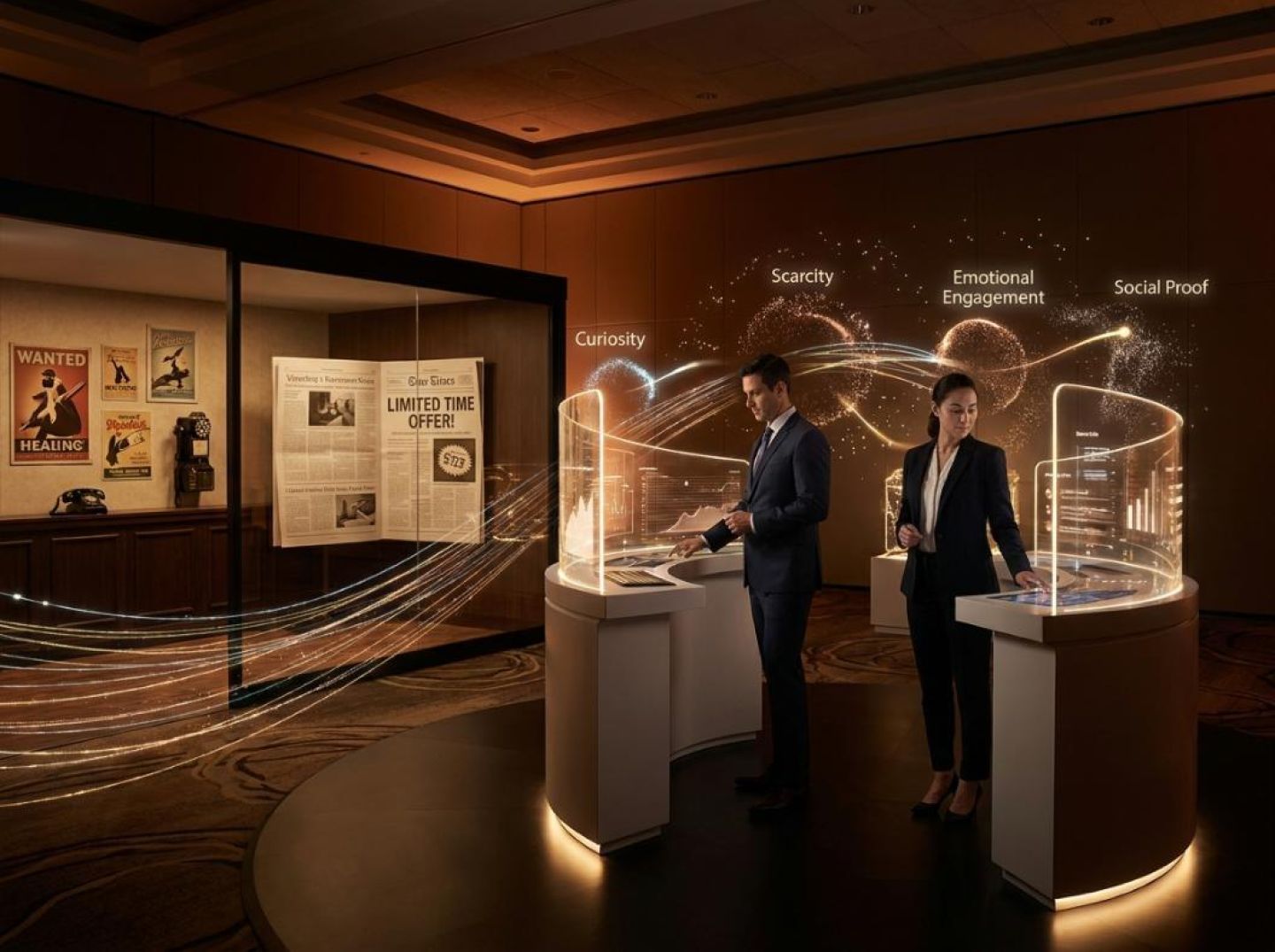
But strip away the industry breathlessness — the keynote slides, the trend reports, the LinkedIn posts declaring a "revolution" — and what you find underneath is a set of mechanics that direct-response marketers have relied on for decades. The curiosity gap. The scarcity trigger. The social proof loop. The emotional anchor that converts a fleeting impression into a durable brand memory. None of this required reinvention. It required relabeling.
Melissa Levy, president of experiential agency Sparks, captured the dynamic well when she told Marketing Dive that experiential's rise is tied to "the fragmentation of attention, digital fatigue, the desire of so many people to be in-person at events… and the rise of the 'Instagrammable' moment." She's right about the conditions, but those conditions didn't generate a new species of consumer psychology. They simply made brands rediscover old psychology in physical formats. Digital fatigue didn't rewire the human brain; it just raised the cost of capturing attention through a screen to the point where capturing it in person became comparatively efficient again.
Consider the so-called "Instagrammable moment" — the immersive installation, the branded photo wall, the pop-up designed to be shared. It functions identically to a curiosity gap headline, except it's geo-fenced. It exploits the same tension between what you're seeing and what you want to know more about, the same urge to signal participation, the same desire to be the person who surfaces something novel for their network. It's native advertising with a physical footprint.
And the downstream value chain? It's pure performance marketing architecture. As AllOver Media's blog outlines, well-designed interactive brand experiences function as UGC engines — they deliver the audience, the product, and the shareable moment that influencers need to create content, effectively turning every attendee into an unpaid media channel. That's not an experiential insight. That's an affiliate marketing insight wearing a lanyard.
The industry's excitement isn't wrong. The channel shift is real, the budget reallocation is significant, and the results speak for themselves. But framing this as a revolution misreads the situation. What's happening is that the oldest performance marketing playbook — create emotional proximity, lower friction to action, manufacture social proof, and make the audience do your distribution for you — has migrated from direct mail to email to social feeds and now, full circle, back to physical space. The playbook didn't change. The stage did.
Every viral brand activation you've ever envied — the ones that flood your LinkedIn feed with "genius marketing" takes — is running on the same three cognitive levers that top-performing native ads, push notifications, and landing pages have exploited for years. The difference isn't strategy. It's scenery. Once you strip away the fog machines and neon signage, you're left with pattern-matched psychological architecture that any performance marketer will instantly recognize from their creative testing data.
The Curiosity Gap: Unresolved Tension That Demands Engagement
Think about the Barrière hotel campaign where passersby stopped dead on the sidewalk wondering, "Is that a real tattoo?" That moment of cognitive incompleteness — something visually or conceptually unresolved — is precisely what direct-response copywriters engineer into every high-CTR headline. Neuroscientist Antonio Damasio's somatic marker hypothesis explains why this works at a biological level: as Search Engine Journal has detailed, our brains tag unresolved information with an emotional marker that functions like an itch, compelling us to scratch it by clicking, leaning in, or walking closer. In experiential marketing, the curiosity gap is a physical spectacle that doesn't immediately explain itself. In your native ad dashboard, it's the headline that withholds just enough — "The one ingredient dermatologists won't talk about" — to make scrolling past feel like a loss. Same lever, different medium. If your creative testing framework doesn't explicitly score for "unresolved tension," you're leaving your strongest engagement driver unmeasured.
Social Proof Triggers: Designing for Visible Participation
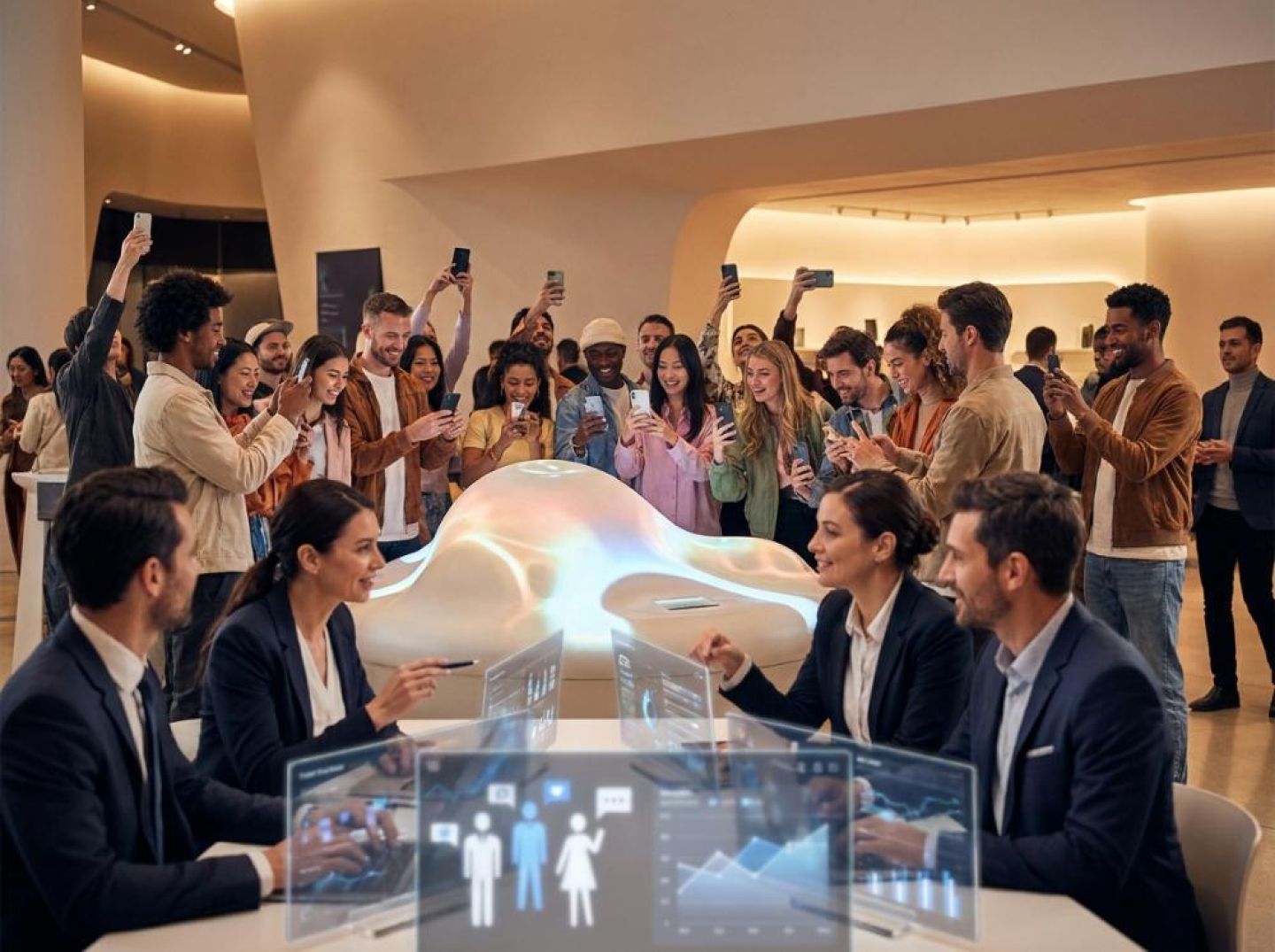
The second lever is the one hiding in plain sight — literally. Well-designed interactive booths succeed not just because they're fun, but because they create a visible queue. When attendees see others engaging, laughing, and lingering, the activation becomes what AllOver Media calls "the talk of the room," a destination within the event that attracts both core audiences and bystanders who convert into brand loyalists. This is social proof operating as safety validation — the same mechanism at work when your push notification reads "47,000 people switched this week" or your landing page displays a live purchase counter. We don't evaluate these signals rationally; familiarity bias and herd behavior short-circuit deliberation and replace it with trust. Performance marketers already A/B test social proof elements obsessively in digital creative. The experiential marketer's version is simply spatial: design the booth so the crowd is the ad.
Shareability Mechanics: Frictionless Capture-and-Distribute Loops
The third lever turns your audience into your distribution channel. The most successful activations aren't just photo-worthy — they're photo-engineered, built so that the act of capturing and sharing requires zero additional motivation. As the AllOver Media blog explains, well-designed experiences encourage influencers and customers alike to take photos, videos, and post about their experience online, generating organic user-generated content that extends a brand's reach far beyond the event itself. This is the physical-world equivalent of the "you won't believe what happened next" forward loop in push notifications — a built-in mechanic where consuming the content and distributing it are the same action. In your performance creative, you engineer this by making the value proposition so visually or emotionally striking that sharing it becomes an identity signal for the sharer, not a favor to the brand.
Here's the vocabulary mapping that matters: curiosity gap equals information asymmetry in your headline. Social proof trigger equals trust architecture on your landing page. Shareability mechanic equals viral coefficient in your creative brief. These aren't marketing tactics you bolt on — they're cognitive architecture you design around. The performance marketers who already spy on top native creatives see these three patterns daily. They just haven't had the language to recognize the same patterns operating at a pop-up in SoHo. Now they do.
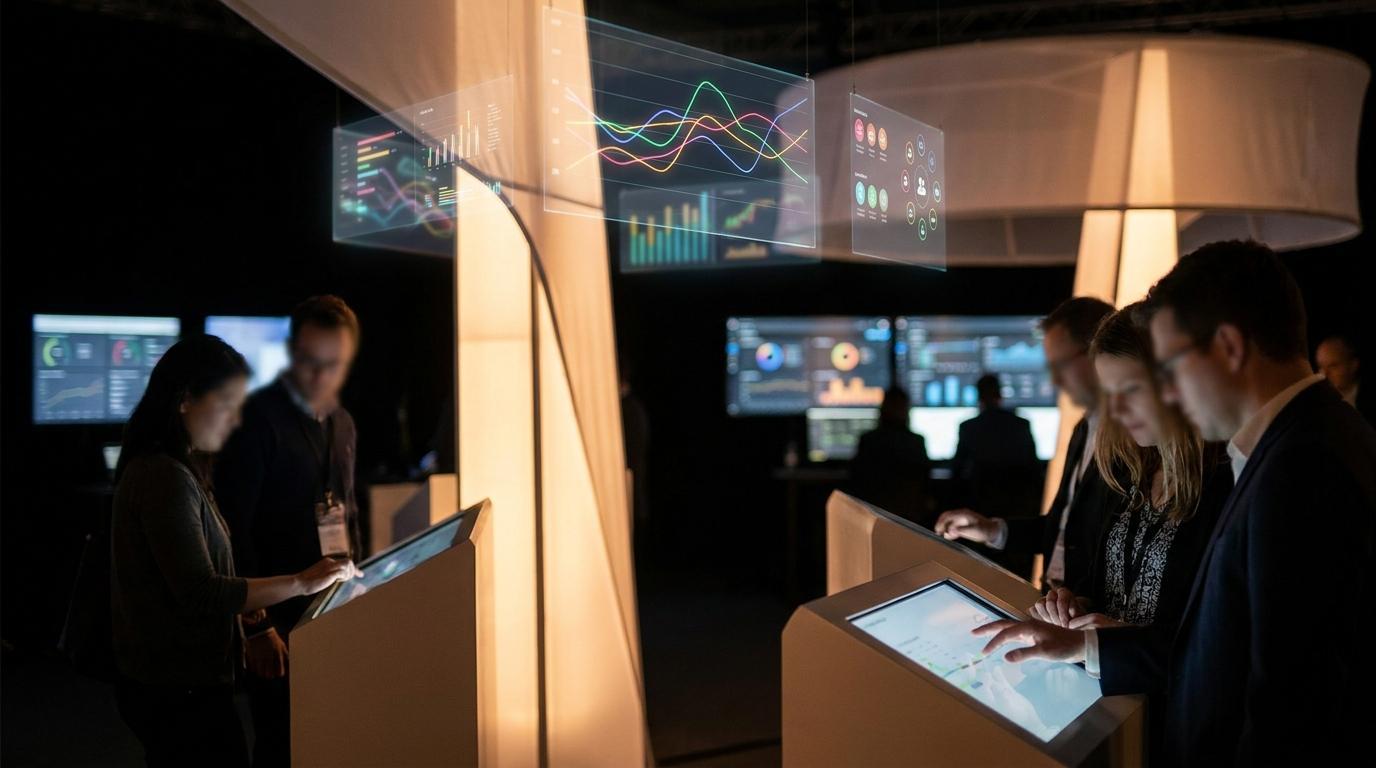
Here's what nobody in the experiential marketing world wants to admit: the most valuable output of a beautifully designed pop-up booth isn't the Instagram content, the foot traffic, or even the direct sales. It's the data. The smartest brands running immersive activations are quietly operating real-time qualitative research operations — and the fun, photogenic experience is just the cover story.
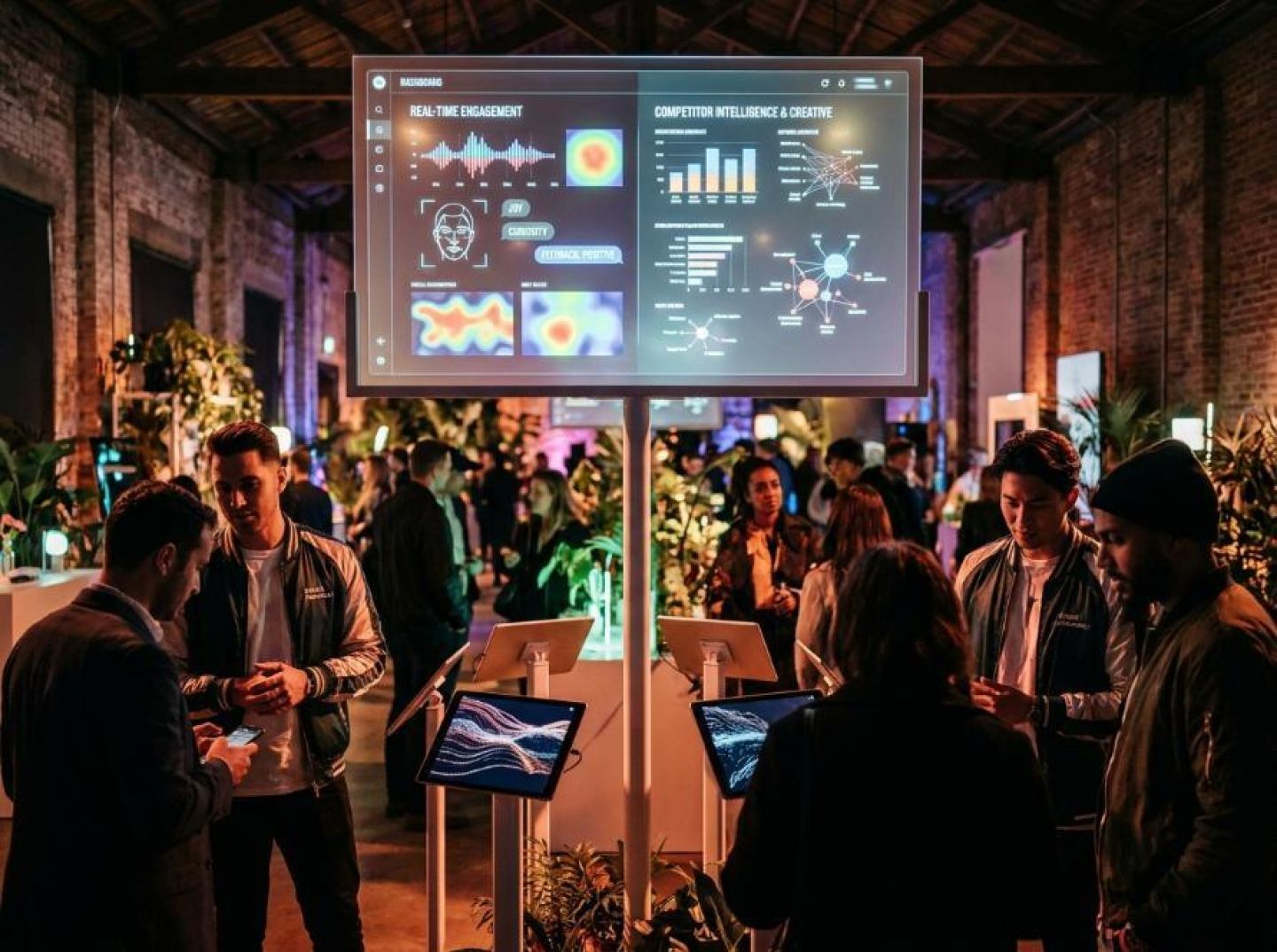
The mechanics are almost comically straightforward. As the AllOver Media Blog explains, highly innovative brands treat each customer interaction at marketing events as a micro focus group — offering free samples or demos, observing customers' initial reactions and general impressions, then diving deeper with follow-up questions about likes, dislikes, and competitor preferences. The data gleaned from those conversations sheds light on price sensitivity, customer interest, quality perceptions, and brand alignment. In other words, these brands aren't just building awareness. They're running structured qualitative research under the guise of a good time, gathering the kind of unfiltered, emotionally honest feedback that a formal research setting would never produce.
Now here's where this gets interesting for performance marketers who've never rented a booth in their lives.
That entire feedback loop — watch how people react, identify what resonates, probe for emotional triggers, iterate — is functionally identical to what happens when you sit down with spy tool data and study which hooks, angles, and creative formats your competitors are scaling. When you notice a competitor suddenly doubling spend on a specific video ad with a particular opening line, you're observing the market's initial reaction in aggregate. When you reverse-engineer why that hook works — what anxiety it addresses, what desire it activates — you're conducting the same qualitative analysis that a brand ambassador does when they watch someone's face light up at a sample table. The difference is medium, not method.
Performance marketers who dismiss this process as mere "competitive research" are dramatically underselling what they're actually doing. It's an always-on focus group, running 24/7 across every platform where ads are served, with a sample size that dwarfs anything a physical activation could achieve.
And the gap between these two worlds is closing fast. As MarTech reports, in today's automated media environment, ad platforms now handle most targeting and bidding, which means messaging and creative are the main variables marketers still control. Industry research consistently attributes roughly half of sales lift to creative alone. This is why the publication's Friendship Codes framework — an AI skill built on behavioral economics and need-state analysis — matters so much. It systematizes the exact kind of insight-gathering that experiential marketers do face-to-face: uncovering silent frustrations, identity signals, and unspoken motivators that customers share with friends but rarely reveal to brands directly. The difference is that AI can now perform this analysis continuously, across engagement data, customer prompts, and call recordings, without waiting for the next trade show.
Think about what this means practically. The experiential marketer watches a customer hesitate before picking up a sample and asks, "What made you pause?" The performance marketer sees a 47% hook rate drop at the three-second mark and asks the same question through data. Both are hunting for the same thing — the friction point, the unspoken objection, the emotional gap between curiosity and commitment. One does it with eye contact and conversation. The other does it with creative iteration cycles and engagement signals.
The brands winning at immersive experiences have always known this. The activation is the instrument; the insight is the product. Performance marketers already have the same instrument — they just need to stop treating their data like a scoreboard and start treating it like a conversation.
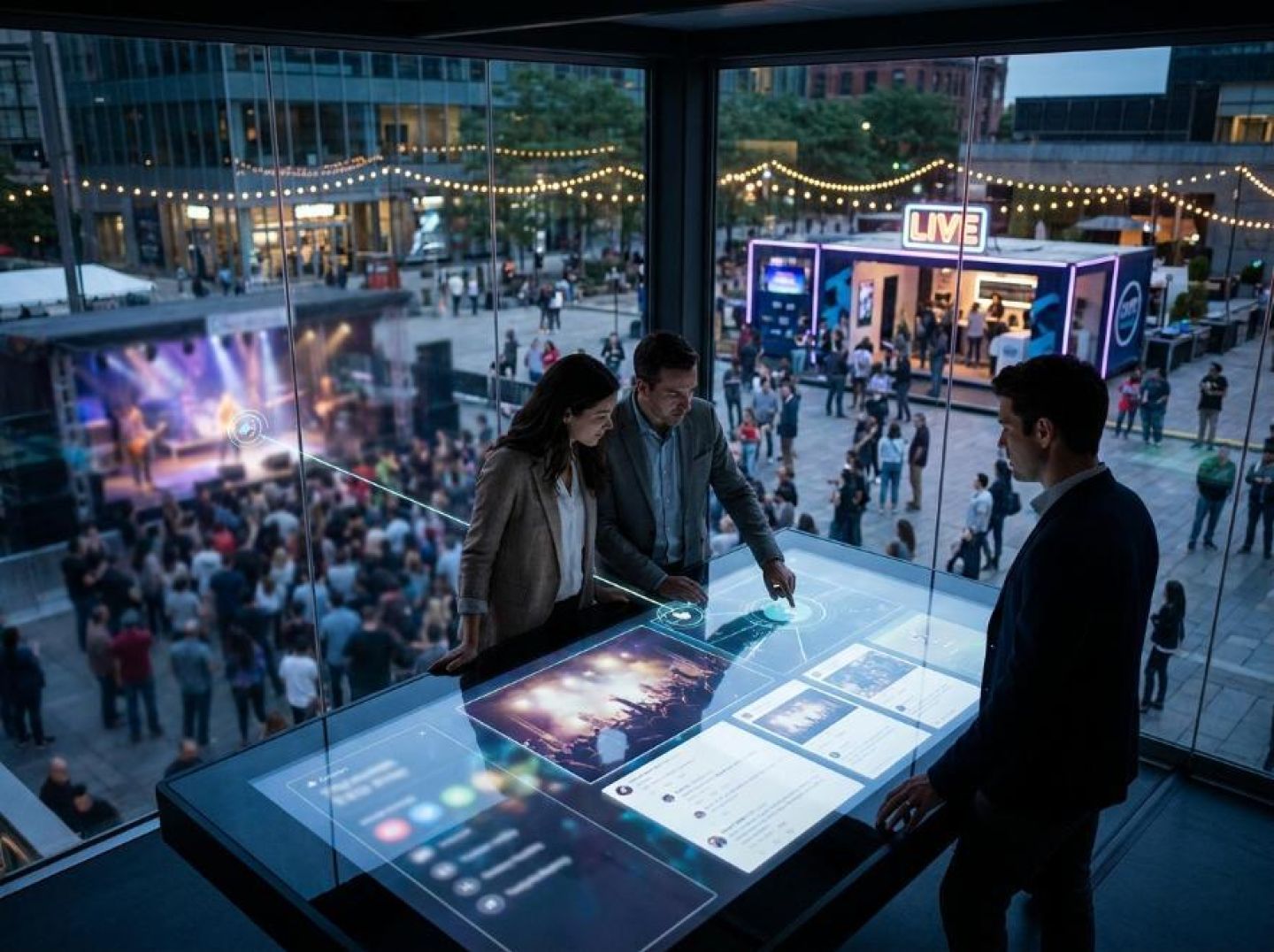
Every experiential marketer worth their day rate knows that a pop-up bar in Austin during SXSW is not the same activation as a pop-up bar in Austin on a random Tuesday in February. The venue is identical. The cocktails are identical. The difference is context — the density of receptive, culturally primed humans who are already in discovery mode, already open to new brands, already performing their engagement for social feeds. The entire value proposition of experiential marketing rests on this principle: intercept people at the moment their receptivity peaks, and you multiply impact without multiplying spend.
This is why Heineken tapped into FIFA World Cup hype for a campaign encouraging consumers to skip work and watch matches together — not because soccer fans are otherwise unreachable, but because the cultural moment created a gravitational well of attention that made the brand's message feel like a natural extension of what people already wanted to do. Trade show activations follow the same logic. Nobody books a booth at CES in January because the Las Vegas Convention Center has great acoustics. They book it because the entire industry is concentrated in a single intent-rich window, and showing up inside that window is worth ten times the equivalent spend scattered across the calendar.
Performance marketers have access to the digital equivalent of this principle — and most of them ignore it. They default to demographic segments, lookalike audiences, and retargeting pools, which are all forms of targeting the person rather than the moment. The distinction matters enormously. A 35-year-old travel enthusiast scrolling LinkedIn on a Monday morning and the same person watching a creator walk through the streets of Lisbon on YouTube on a Saturday afternoon are, for all practical purposes, two different audiences. One is cold. The other is already building a mental shortlist.
The data backs this up decisively. Unilever's YouTube strategy demonstrated what SilverPush described as a 50% lift in ROI from trending content placement — not from reaching more people, but from reaching them in the right moment. That distinction is everything. Reach is a commodity. Every platform sells it, every DSP optimizes for it, and the marginal cost of another thousand impressions approaches zero. What's genuinely scarce is relevance — the alignment between what someone is actively thinking about and what your brand is saying to them.
The smartest contextual strategies work by closing the gap between where intent lives and where your brand shows up, borrowing the credibility that creators and cultural moments have already earned rather than trying to manufacture attention from scratch. This is precisely what an experiential marketer does when they place a sampling booth at a marathon finish line or sponsor a lounge at an industry conference. They aren't creating demand. They're positioning themselves inside a moment where demand already exists and emotional receptivity is at its highest.
The performance marketer's version of "being at the right trade show" is showing up inside the right content moment on YouTube or in a native feed — adjacent to the travel vlog, the product review, the cultural conversation that has already captured the audience's attention. As Melissa Levy of experiential agency Sparks put it, "You have to create that emotional bond in order for someone to be brand loyal or have brand love." What she's describing is the output. The input — the mechanism that makes that bond possible — is timing. Not the time of day, not the day of the week, but the cultural and psychological moment when a person is already leaning forward. Experiential marketers have always understood this instinctively. The question is why so many performance marketers, armed with real-time contextual signals and trending content data, still choose to spray demographics when they could be intercepting intent.
Every performance marketer has said it, usually with arms crossed and a dashboard open on their laptop: "I can measure my cost per acquisition to the penny. What's the CPM on a foam pit?" It's a fair objection on its surface, but it rests on a faulty assumption — that what is easily measurable is automatically what matters most, and that what resists a tidy spreadsheet must be ineffective. The truth is that the emotional residue left by a well-executed experience doesn't just feel good; it operates on the exact same neurological mechanism that makes any marketing — including performance campaigns — actually convert.
Consider the concept of emotional encoding. When a person has a physiologically arousing encounter with a brand — the kind that comes from tasting something unexpected, laughing with a stranger in a branded environment, or physically interacting with a product for the first time — the memory is stored with greater intensity and retrieved more easily later. This is the same principle that separates the digital ad someone scrolls past from the one that makes them pause, screenshot, or click. The difference isn't the channel; it's the depth of the emotional imprint. How a person feels about a brand determines whether they trust it enough to engage, and that feeling is formed far more powerfully through lived experience than through a retargeted banner.
The data backs this up. Nearly 90% of consumers report that brand experiences are more memorable than television ads, and 85% say they're more likely to purchase after attending a live event. Those aren't soft metrics. They're direct predictors of the downstream conversion events that performance marketers optimize for every day. When someone remembers your brand vividly enough to search for it by name three weeks later, your branded search CPC drops, your click-through rate climbs, and your retargeting pool fills with warmer prospects. The experiential activation didn't replace the performance funnel — it supercharged the top of it.
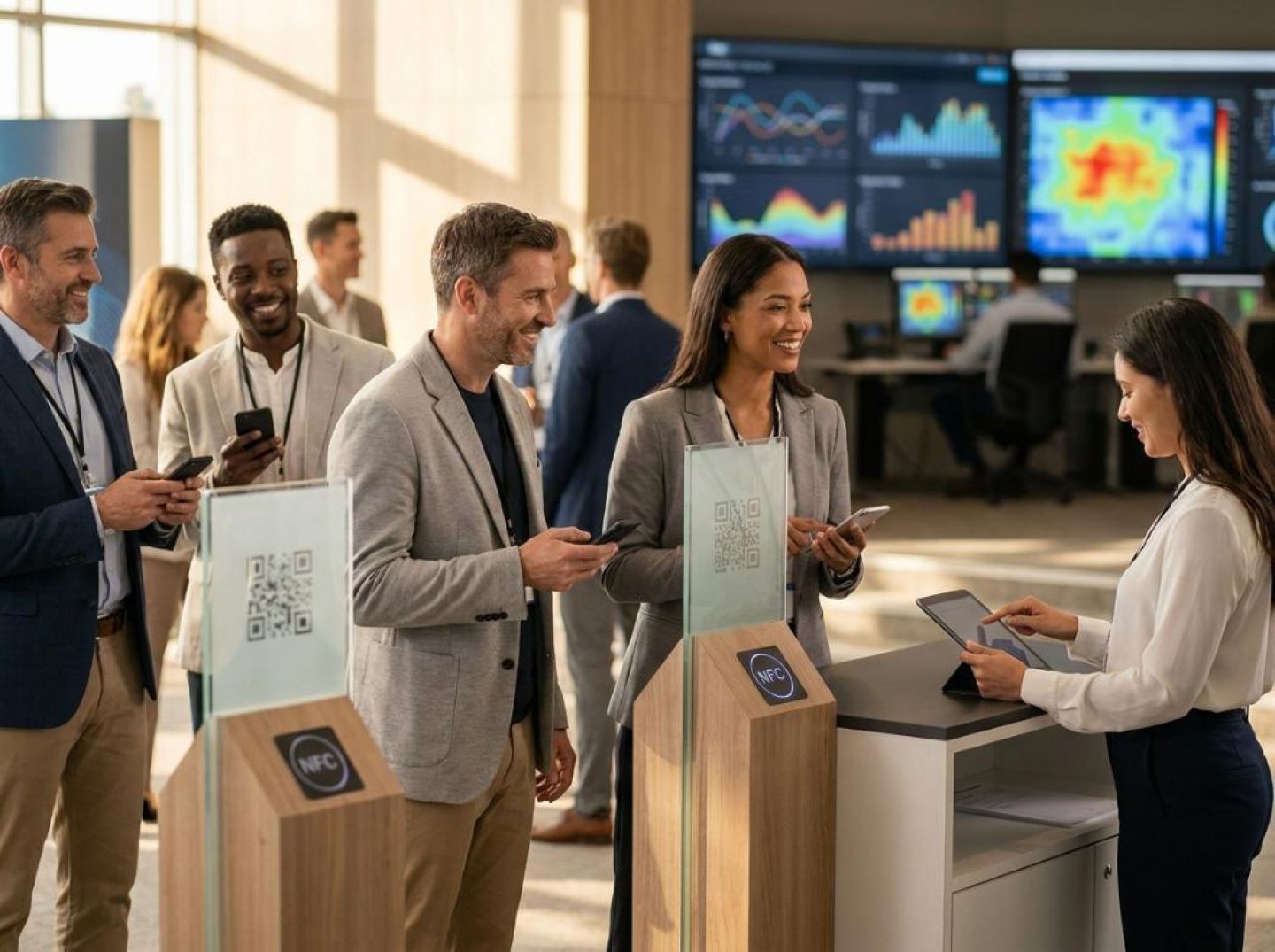
The measurement objection is also becoming increasingly outdated. As Melissa Levy, president of experiential agency Sparks, noted in a conversation with Marketing Dive, the industry is evolving rapidly in how it tracks experiential success, with procurement teams now demanding the same rigor they'd apply to any media buy. QR-code scans, NFC taps, email captures at the booth, post-event conversion tracking via CRM matching, and geo-fenced attribution windows all give brands the ability to draw a line from physical presence to digital action. The gap between "I felt something" and "I bought something" has never been narrower.
Meanwhile, the brands still clinging to exposure as their primary engagement metric are watching diminishing returns. As Branding Strategy Insider observed, visibility alone no longer ensures meaningful engagement; audiences have grown more selective in how they allocate attention and now favor interactions that provide genuine value. Experiences structured to evoke participation and emotional response create stronger associations and improve message retention without requiring repetition at scale. In other words, one powerful moment can do the work of dozens of impressions — and it sticks longer.
The smartest operators have stopped treating memorability and measurability as opposing forces. They design the experience for emotional resonance first, then instrument every surface for data capture. The foam pit gets a QR code. The cocktail station collects an email. The photo booth auto-tags to a CRM. You don't have to choose between making someone feel something and proving that feeling drove revenue. You just have to be deliberate enough to engineer both into the same moment.
Receive top converting landing pages in your inbox every week from us.
Recently Updated
Discover how TikTok, YouTube, and LinkedIn are turning creator content into performance marketing opportunities, and why brands should look beyond influencer fit and engagement metrics. Learn how to evaluate creator campaigns using earnings per click (EPC), marketing efficiency ratio (MER), and arbitrage margins to identify profitable creative, improve campaign decisions, and scale what works.
Dan Smith
7 minOct 16, 2026
Featured
Discover how performance marketers can turn the post-holiday advertising period, known as Q5, into an opportunity for lower-cost testing and smarter campaign optimization. Learn how to use Anstrex ad spy data to identify winning creatives, analyze competitor funnels, launch original landing pages, and turn Q5 insights into scalable Q1 campaigns.
Elena Morales
7 minOct 14, 2026
In-Depth
Explore what Pure Leaf’s “Break Conference” reveals about the gap between polished brand marketing and measurable performance. This guide breaks down how Native, Push, TikTok, and affiliate-style funnels use creative testing, clear offers, first-party data, and hard performance metrics to turn cultural moments into revenue.
Rachel Thompson
7 minOct 1, 2026