12 minAugust 19, 2026

Our tools monitor millions of native, push, pop, and TikTok advertising campaigns.
Get StartedThere's a number that should reframe how every marketer thinks about AI search optimization: AI-referred visitors convert at 4.4 times the rate of those arriving from traditional organic search. That's not a marginal lift you can table for next quarter's roadmap. It's a fundamentally different quality of traffic — and it's growing fast, with 73% of B2B buyers now using AI tools as part of their purchase research process, according to that same HubSpot analysis of 680 million AI citations.
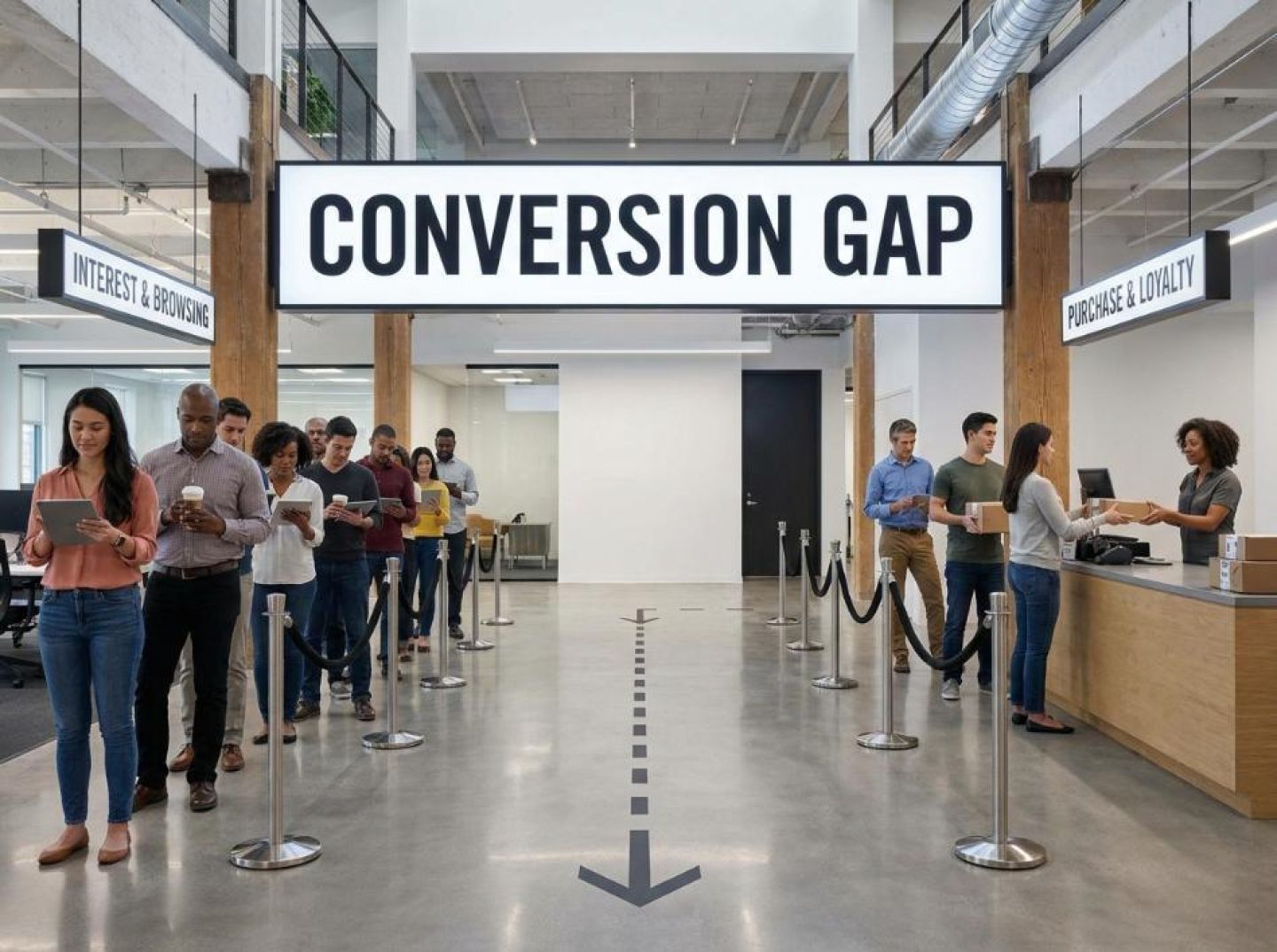
Yet here's the disconnect: despite that conversion premium, the entire Answer Engine Optimization tooling ecosystem — citation trackers, prompt monitors, share-of-voice dashboards — is built to measure one thing: whether you showed up. Not what happened next. Not which message resonated. Not which offer structure closed the deal. Just whether an AI model mentioned your name in a summary.
That's an awareness metric dressed up as a strategy.
The reason the gap matters more than it might seem is rooted in how AI search reshapes the buyer's journey. As HubSpot's research on AI search behavior explains, summary-first experiences resolve easy questions inside the answer engine itself. The person asking "what is AEO?" gets a definition and moves on without clicking anything. But the person who clicks after reading an AI-generated answer to something like "how can a B2B marketing team of five implement AEO on their blog" has already progressed past the surface layer. They've validated their problem, evaluated who got cited, and arrived at your site ready to compare or convert. That shift, as HubSpot puts it, changes the funnel shape entirely — clicks become a smaller, later signal in a journey that now plays out partly inside the answer engine.
This is precisely where the blind spot becomes expensive. AEO platforms tell you if you appeared. They don't tell you what messaging won the click downstream, what content format held attention once a buyer landed, or what competitive offer structure you lost to. And as Neil Patel has argued, the tools marketers are using were built for a deterministic system, not the probabilistic, context-shifting nature of AI-generated responses. The instinct to track visibility isn't wrong — it's just radically incomplete.
Consider the math. Only 22% of marketers currently track AI visibility at all, which means the vast majority are flying blind on even the top-of-funnel question. But among those who are tracking, almost none have instrumented the bottom of that funnel — the part where 4.4x conversion rates actually turn into revenue. They can see the citation. They can't see the conversion. And as AI-driven discovery increasingly replaces the traditional click-through journey, with consumers evaluating brands and making decisions without ever visiting a company's owned properties, the window to understand what's actually working downstream keeps narrowing.
So someone is winning those high-intent clicks. Someone's landing pages, offer structures, and messaging frameworks are converting AI-referred buyers at rates that would make any demand gen leader jealous. The question isn't whether that intelligence exists — it's where to find it. And the answer, counterintuitively, might already be sitting in plain sight: in your competitors' paid ad strategies, which reveal exactly what they've tested, validated, and scaled for the queries AI is now answering.
Every marketer has access to the same AEO dashboards, the same citation trackers, the same brand mention monitors. But there's a richer, more actionable data source hiding in plain sight — one your competitors are funding with their own budgets: their ads.
Here's the logic. Paid advertising is a lagging indicator of proven demand. No competent media buyer keeps spending on angles, headlines, or landing page structures that don't convert. When a competitor shifts their ad copy from "Learn More About Our Platform" to "See How We Compare to [Rival]" or restructures a landing page around a side-by-side evaluation framework, they're not guessing. They've tested, measured, and validated that a specific buyer intent signal converts at a rate worth their cost per acquisition. That validation is worth more than any AI visibility score because it's tied directly to revenue.
What makes this intelligence especially potent right now is the fundamental shift in who's clicking ads in the first place. The buyer arriving from an AI-generated summary is not the same buyer who typed a broad informational query into Google three years ago. As HubSpot explains, someone who clicks after reading an AI answer has typically progressed past the surface layer — they've validated their problem, seen who got cited, and want to verify, compare, or convert. That's not a browser. That's a buyer with a shortlist, looking for the final piece of evidence to make a decision.
This changes what "good ad creative" looks like at a structural level. Traditional search ads were built to capture attention at the top of a research journey — educate, intrigue, pull someone in. AI-era ads need to meet a buyer who already knows the category, already understands the core value propositions, and has likely seen your competitor's name surfaced in an AI recommendation alongside yours. The ads that win this traffic are optimized for verification and comparison, not discovery. Think pricing transparency, integration specifics, proof points that resolve the last objection standing between consideration and conversion.
And here's the competitive intelligence advantage most teams are ignoring: you can see exactly which competitors have figured this out. Tools like SpyFu, Semrush, AdBeat, and Meta Ad Library let you reverse-engineer running creatives, track how ad copy evolves over time, identify which landing page structures are paired with which campaigns, and spot when a competitor pivots their entire positioning angle. When you notice a well-funded competitor suddenly shifting every ad variant toward comparison-style messaging and pairing it with a landing page built around trust signals and third-party validation, that's not a creative whim — it's a decoded map of what converts after the AI summary has done the educating.
This matters even more because, as MarTech has reported, buyers now evaluate and compare options without ever visiting a company's owned properties, relying instead on what AI systems can surface from owned and earned media. By the time a buyer does click through to a website or ad, they've already formed opinions shaped by AI-synthesized sources. The competitor ads capturing those clicks are essentially the conversion-stage data that AEO dashboards can't provide — proof of what messaging, positioning, and page architecture close the deal with a pre-educated, high-intent buyer.
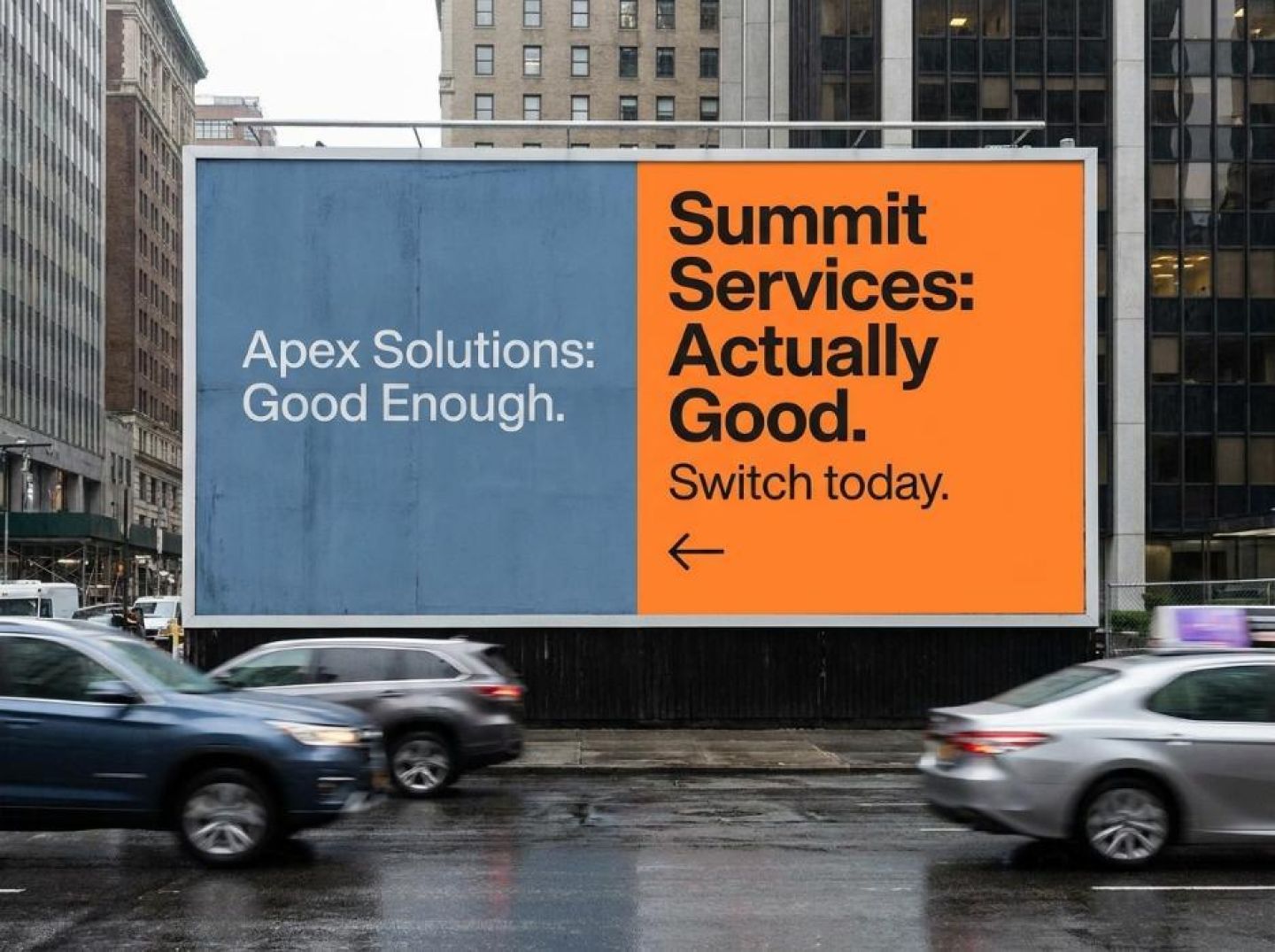
AEO tools tell you whether you're visible. Competitor ads tell you what to say once you are.
Reading competitor signals isn't about gut feelings or casual browsing — it requires a repeatable framework that surfaces what matters and filters out what doesn't. The method below works across any ad intelligence stack (SpyFu, Semrush, AdBeat, Meta Ad Library) and breaks the analysis into four signal layers, each revealing a different dimension of how competitors are adapting to AI-driven buyer journeys.
Signal Layer 1: New Ad Copy Themes. Start by pulling your top five competitors' active ad creatives from the last 90 days and sorting by newest first. What you're looking for are linguistic shifts that mirror how AI engines actually synthesize answers: comparison-heavy headlines ("X vs. Y"), specification-dense descriptions, and "best for [specific use case]" framing. When a competitor who previously ran benefit-driven emotional copy suddenly pivots to structured, factual phrasing — "fastest deployment for teams under 50" instead of "transform your workflow" — they're signaling that pre-informed, AI-educated buyers respond better to precision than persuasion. The ad creative tells you what angle is converting; your job is to catalog these shifts and map them against the AI-generated summaries appearing for the same category queries.
Signal Layer 2: Landing Page Structure Shifts. Follow each new ad to its destination and audit the page format. HubSpot's research found that lists and tables had 43% better extraction accuracy across six AI engines than the prose versions they replaced — and smart competitors are acting on that data. Watch for pages that have been rebuilt around bulleted comparisons, embedded specification tables, expandable FAQ sections, and structured proof points with schema markup. These aren't just conversion optimization experiments. A competitor who restructures a landing page around the same content attributes that earn AI citations — clarity, authority, structure, and freshness, the exact criteria that AI answer engines use to select sources — is building a page designed to do double duty: win the citation and convert the buyer who arrives from it.
Signal Layer 3: Offer Positioning Changes. AI-referred buyers arrive with significantly more context than traditional search visitors. They've already seen the comparison, read the trade-offs, and narrowed the field. When you notice competitors shifting CTAs from top-of-funnel offers ("Download our guide") to mid- and bottom-funnel actions ("Start your free pilot," "See pricing for your team size"), they're adapting to a buyer who skips the education stage entirely. As MarTech has noted, consumers now evaluate brands and compare options without ever visiting a company's owned properties — which means the first owned-property touchpoint needs to match the decision stage, not the discovery stage.
Signal Layer 4: Channel and Placement Patterns. Finally, look at where competitors are increasing spend. AI-referred traffic tends to land on branded search queries (the buyer learned your competitor's name from an AI summary, then Googled it), retargeting sequences (catching visitors who bounced after a brief, high-intent visit), and comparison-style content pages. If a competitor doubles branded search bids while pulling back on broad informational terms, they're betting that AI engines have taken over the top-of-funnel education role and reallocating budget to capture the demand those engines create.
Run this four-layer audit monthly. The patterns compound: a competitor who changes ad copy in month one, restructures landing pages in month two, and shifts channel mix in month three is executing a deliberate AI-search strategy — and every move they make is a data point you can reverse-engineer before committing your own budget.
AEO platforms and ad intelligence tools aren't competing data sources — they're complementary lenses focused on different stages of the same buyer journey. Dismissing either one leaves a dangerous blind spot, but understanding what each does best is the difference between a partial picture and a full-funnel AI search strategy.
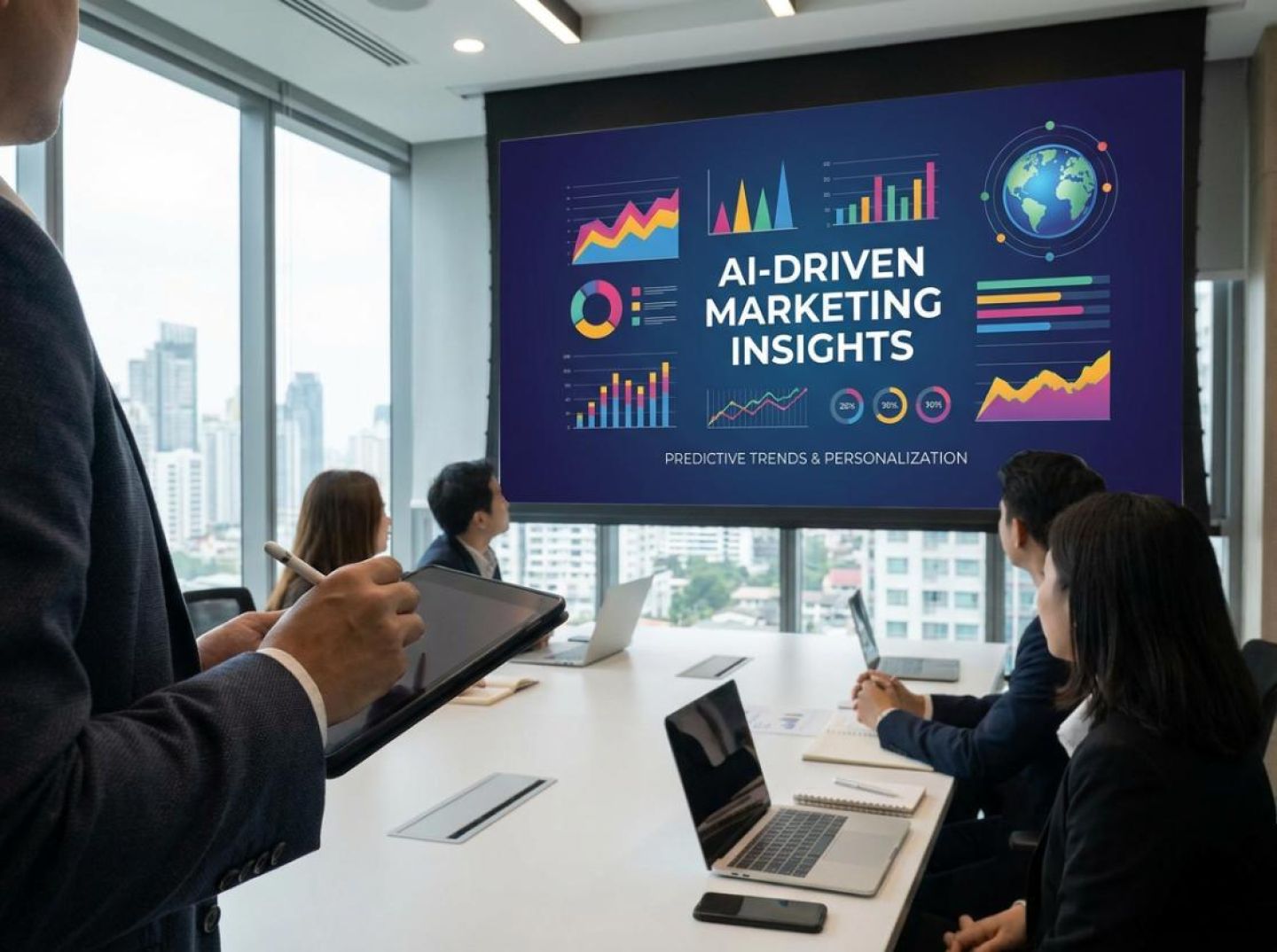
Citation trackers and AEO platforms like HubSpot AEO, Writesonic, and Profound excel at monitoring awareness-stage visibility. They answer the foundational question: are we showing up when buyers ask AI about our category? As HubSpot's breakdown of AI search analytics tools details, the core workflows these platforms enable fall into four categories — content planning, brand monitoring, competitive intelligence, and attribution — each designed to tell you where your brand stands in the AI-generated answer landscape. That means tracking which prompts trigger your brand mention, measuring share of voice against competitors across ChatGPT, Perplexity, and Gemini, and watching citation trends over weeks and months to identify whether your content strategy is gaining or losing ground.
This data is essential, not optional. When Neil Patel warns that AI invisibility is silent — that you won't know it's happening unless you measure it — he's describing a real risk that only dedicated AEO monitoring can address. Citation tracking tells you "we're being mentioned when buyers ask about CRM software" or "we lost three share-of-voice points on the prompt 'best project management tool for agencies' last month." Those are visibility signals, and they matter.
But here's the gap: visibility signals don't tell you what's converting.
Citation tracking can't tell you that your competitor just launched fourteen new ad variants targeting "best CRM for small teams," each driving to a landing page built around a comparison table format — and that they've been scaling spend on those variants for six consecutive weeks. That's not a visibility signal. That's a market signal. It tells you which messaging is resonating with high-intent buyers who've already moved past the awareness stage, which content formats are driving action, and which competitive positioning is winning deals rather than just mentions.
Ad intelligence fills this conversion-stage gap with data that AEO platforms were never designed to capture. When a competitor doubles down on a specific angle — say, "no implementation fees" or "migrate from [Your Brand] in 24 hours" — that's validated, budget-backed intelligence about what's closing pipeline. HubSpot's own research on citations in the AI search era found that 42% of CRM buyers use AI search during their evaluation process, which means the journey from AI-generated citation to conversion-ready landing page is shorter than most teams assume. Understanding what happens at both ends of that journey — which prompts surface your brand and which paid messaging captures the buyer who just read that AI answer — is where compounding advantage lives.
The combination creates a feedback loop that neither data source can produce alone. AEO data shows you that a competitor is gaining share of voice on a specific cluster of prompts. Ad intelligence shows you why — because they've built dedicated landing pages, sharpened their positioning, and are running paid campaigns that reinforce the exact narrative AI engines are now surfacing organically. Or the reverse: ad data reveals a competitor aggressively targeting a new keyword theme, and your AEO platform confirms that same theme is generating growing prompt volume in AI search.
Performance marketers and affiliates who combine both inputs operate with an unfair advantage. They see the full board — awareness through conversion, organic AI visibility through paid competitive positioning — while everyone else is staring at half the data and calling it a strategy.
Receive top converting landing pages in your inbox every week from us.
Guide
Discover how OOH professionals can transition from traditional billboard, sales, operations, and creative roles into data-driven ad intelligence careers. This guide maps existing OOH skills to intelligence, planning, activation, and network platforms while showing how street-level expertise can become a competitive advantage in modern performance advertising.
Marcus Chen
7 minOct 2, 2026
Guide
Discover how OOH professionals can transition from traditional sales, planning, real estate, and operations roles into data-driven ad intelligence positions. This guide explains how measurement, AI, predictive demand, optimization, and agentic systems are reshaping OOH careers and turning traditional industry experience into a competitive advantage.
Samantha Reed
7 minOct 2, 2026
Guide
Explore why traditional OOH sales experience is no longer enough as buyers become increasingly data-driven and equipped with AI, attribution, and competitive intelligence tools. This guide outlines the new OOH competency stack, from funnel intelligence and data literacy to outcome-based selling and strategic judgment.
David Kim
7 minOct 1, 2026