Brand and performance marketing don’t have to compete for budget—they can work together to create demand, capture demand, and build long-term enterprise value. Learn how to measure brand lift, map campaigns using the Hybrid Performance-Brand Matrix, and build campaigns that drive revenue today while strengthening future growth.

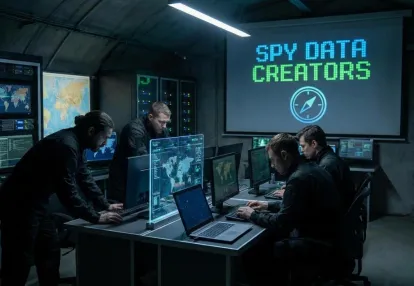
Our spy tools monitor millions of TikTok ads from over 55+ countries. Biggest TikTok Ad Library in E-commerce and Mobile Apps!
Learn how to use competitor funnels to build more realistic paid media forecasts when entering new verticals. This guide shows how to model reach, conversion rates, ramp-up, creative decay, profitability, and incrementality using competitive signals.
Learn how to turn competitor funnels into structured training data for your own AI ad engine. Using Anstrex, you can identify consensus patterns, uncover information gaps, and generate differentiated campaigns that are built to outperform generic AI-generated creative.
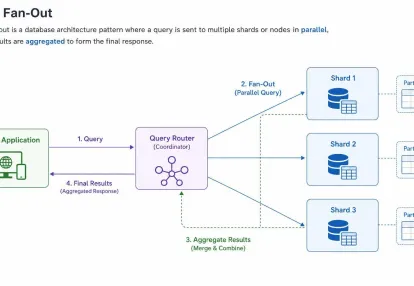
Query fan-out is changing how buyers research, compare, and discover products through AI search. Learn how to use Anstrex to reverse-engineer the winning angles, hooks, and funnels shaped by these hidden intent patterns and align your performance strategy with them.
Discover how to connect ad spy data with on-site behavior, CRM insights, and revenue outcomes to uncover the real drivers of ROI. Learn how to turn Anstrex from a creative swipe tool into a closed-loop system for testing winning ad angles, funnels, and customer journeys.
Discover how B2B marketers can combine Anstrex spy data with creator insights to identify proven ad angles, winning narratives, buyer roles, and creators that can drive stronger campaigns.
Explore how media buyers can move beyond using AI as a creative shortcut and turn it into a competitive spyglass for decoding auction signals, competitor strategies, creative performance, and emerging agentic advertising opportunities.
Record-breaking brand moments are more than viral stunts—they can become scalable creative systems. This article explores how performance marketers can turn big ideas into modular creative building blocks, use AI to generate disciplined variations, connect creative with media through a live feedback loop, and personalize campaigns without sacrificing the distinctive brand signals that make great ideas memorable.
OOH companies are hiring heavily for sales, operations, and installation—but rarely for the competitive intelligence needed to understand where competitors are winning advertisers, how campaigns are shifting, and where new demand is emerging. This article explores why competitive intelligence remains an overlooked function in out-of-home advertising and proposes a dedicated OOH Competitive Intelligence Manager role to turn market signals into revenue, positioning, and product decisions.
Most brands can generate massive awareness without creating a clear path to conversion. This article explains how to bridge high-concept brand campaigns and direct-response funnels by using competitive intelligence to map demand, reverse-engineer proven creative patterns, build intent-matched landing pages, and connect every stage of the customer journey. It also shows how the “missing middle” applies to dropshipping, lead generation, and arbitrage through full-stack funnel strategies.
ChatGPT is changing what happens after the ad click by replacing the traditional landing page with a live, brand-trained AI agent. This article explores how conversational destinations could reshape post-click conversion, what native and push advertisers can learn from the shift, and why competitive intelligence becomes even more important as AI platforms take greater control of the customer journey.
Apple’s record advertising quarter and The Trade Desk’s growth slowdown may look like proof that marketers should abandon the open web for walled gardens—but this article argues the opposite. It explains how the decline of cheap, low-signal reach is creating opportunities for sophisticated performance buyers who can use competitive intelligence, auction signals, creative intelligence, and AI-driven optimization to uncover undercrowded open-web opportunities before competitors do.
Agentic AI is moving product research and comparison upstream, often before buyers ever click a native or push ad. This article explains how marketers can adapt to the shift by making product feeds, offers, creative angles, proof points, and landing experiences easier for AI systems to understand and recommend. It also explores how high-intent clicks are changing, why AI-generated recommendations are reshaping creative angles, and how advertisers can optimize for both AI-mediated decisions and human action.