11 minJuly 13, 2026

Our spy tools monitor millions of TikTok ads from over 55+ countries. Biggest TikTok Ad Library in E-commerce and Mobile Apps!
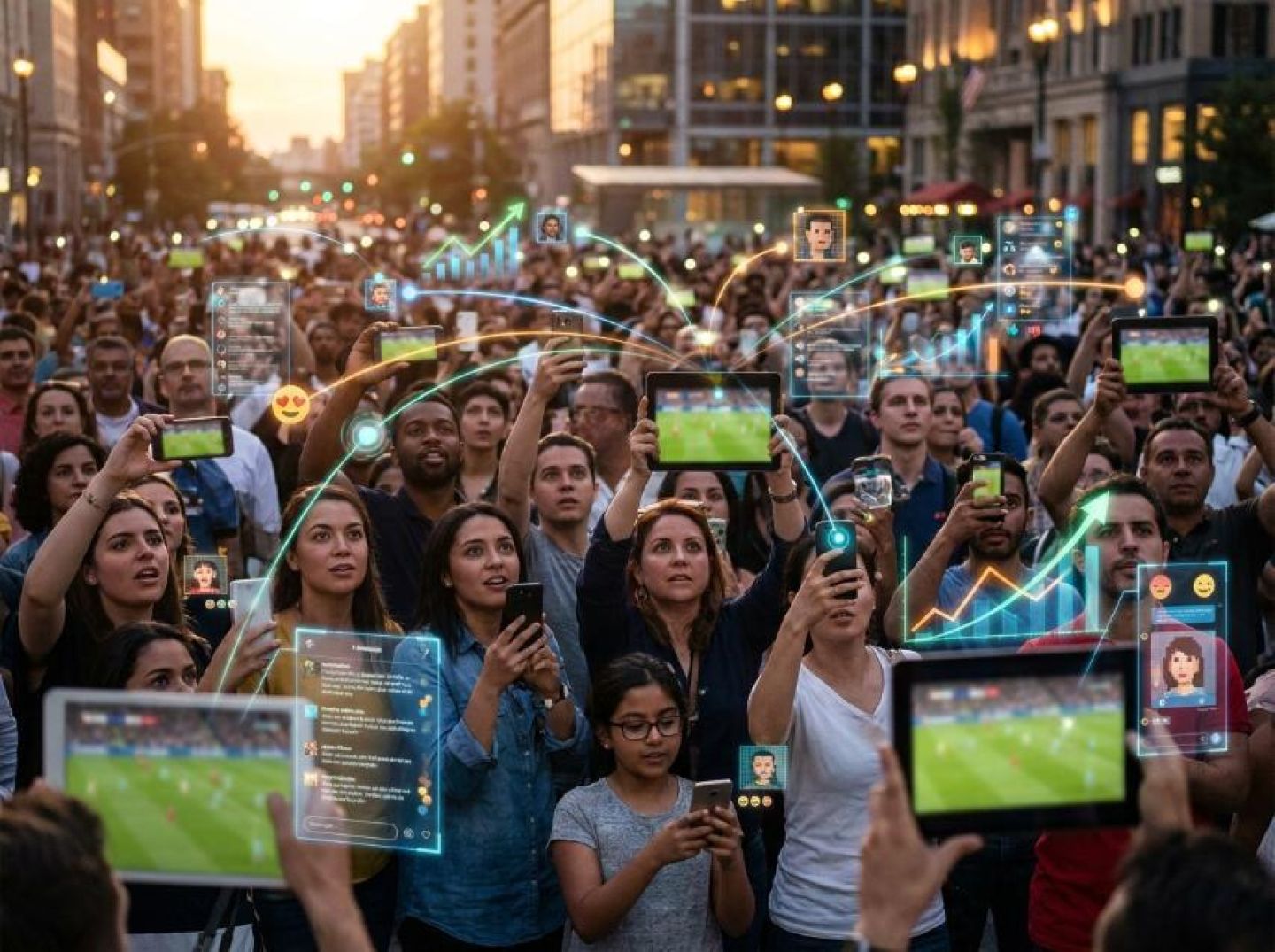
Try It FREEEvery time a World Cup match produces a moment — a last-minute goal, a goalkeeper's impossible save, a player's tearful celebration — millions of people don't just watch it. They remix it, react to it, stitch it, and reshare it within minutes. For most marketing teams, this flood of content registers as background noise, a cultural sideshow happening on a platform they still associate with dance trends and Gen Z humor. That dismissal is one of the most expensive mistakes in modern advertising.
Here's what's actually happening: TikTok during a cultural tentpole like the World Cup functions as a live, massive-scale focus group — one that would cost tens of thousands of dollars to replicate through traditional creative testing. Every trending sound, every format that explodes, every narrative arc that earns millions of organic views is a data point. It tells you which emotional triggers resonate, which storytelling structures hold attention, and which calls to action actually compel people to do something next. The content that rises isn't random. It's filtered by the most brutally honest feedback mechanism available: whether real people choose to spend their finite attention on it and then pass it along.
The downstream effects are measurable and significant. As MarTech has reported, search lift data serves as a low-cost, real-time proof of concept for expensive media investments — and emotionally resonant content tied to tentpole events can generate branded search spikes of 60 percent or more. That's not a vanity metric. It's a direct signal that creative has moved someone from passive viewing to active intent. When a piece of World Cup content goes viral on TikTok and you see a corresponding search spike, you're witnessing the exact moment curiosity converts into demand. Teams that monitor these signals in real time are effectively running creative validation at zero media cost, identifying which emotional levers to pull before committing massive budgets to broadcast or programmatic.
And TikTok isn't just where people watch — it's increasingly where purchase intent forms. The platform's audience has matured well beyond the teenager stereotype, with the 25-to-34 age group now representing its largest single cohort at 40 percent of users, and daily active users returning an average of five to fifteen times per day. That frequency of exposure, combined with ad formats designed to feel native to the content experience, drives engagement rates that dwarf other social channels. The platform's expanding commerce infrastructure means the distance between "I just saw something that moved me" and "I just bought something" is shrinking with every product update.
Consider what this means practically. During a World Cup window, you can observe in real time which content formats — reaction videos, duets, narrative recaps, meme templates — generate the highest engagement around emotionally charged moments. You can see which emotional registers land: is it pride, heartbreak, underdog defiance, communal joy? You can track which creator styles and production approaches outperform polished brand content. Each of these insights is a creative brief waiting to be written, validated not by a sample of 200 people in a research facility but by millions of users voting with their thumbs.
The brands that win aren't the ones with the biggest production budgets. They're the ones treating every viral sports moment as a signal rather than a distraction — and feeding those signals directly into their creative development pipeline before the cultural energy dissipates.
When a viral sports moment detonates on TikTok — say, a stoppage-time equalizer that sends an entire nation into hysterics — the emotional shockwave doesn't dissipate. It converts. And it does so on a timeline that should make every ad strategist uncomfortable with how slowly they currently operate. Research on the Fox Sports "Miracle" campaign found that 75% of incremental search activity occurs within the first two minutes of emotionally charged content airing. Two minutes. That's the window in which millions of people move from feeling something to doing something — and if you're not reading that signal chain in real time, you're not just missing data. You're missing the audience telling you exactly what your next ad should look like.
The chain itself is remarkably legible once you know what to watch for. As MarTech detailed in its analysis of TV-driven search behavior, emotionally resonant content generates a four-stage pathway: TV → Social → Search → Conversion. On TikTok, this pathway compresses and accelerates. A viral World Cup clip doesn't wait for a broadcast schedule. It hits the For You feed, triggers an avalanche of duets, stitches, and reaction videos, and within minutes those social signals spill over into search engines. People don't just share — they search for the song in the clip, the player's name, the brand that showed up in the overlay. Each of those searches falls into one of four distinct query types the research identifies: branded queries (who made this), campaign queries (what was that ad or moment), asset queries (what song was playing, who was the celebrity), and social mentions that function as their own discovery channel.
For TikTok ads intelligence, this four-type taxonomy is extraordinarily useful because each query type reveals a different layer of creative insight. Branded queries tell you whether your name is sticking. Campaign queries tell you whether the storyline landed. Asset queries — arguably the most valuable — tell you which specific creative elements the audience latched onto hard enough to actively seek out. When thousands of people search for the track behind a World Cup montage or the name of an athlete featured in a celebration clip, they're writing your creative brief for you. They're telling you which emotional levers pulled them from passive viewing into active pursuit.
This matters even more on TikTok because the platform is increasingly built to capture and monetize exactly this kind of intent. Features like Search Hubs give brands paid placement at the top of TikTok search results, meaning the search behavior that viral moments generate doesn't have to leak off-platform. You can intercept it right where it starts. Meanwhile, TikTok's engagement rate of 3.7 percent sits well above every major social competitor, which means the social sharing link in that signal chain — the step between emotional spike and search behavior — is stronger and faster here than anywhere else.
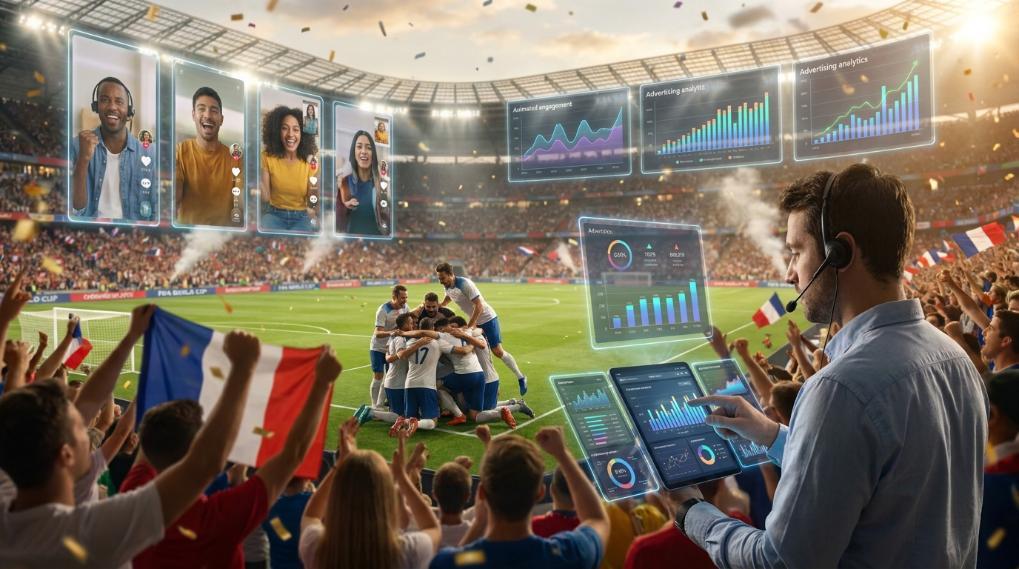
The strategic mistake most teams make is treating these signals as vanity metrics: nice-to-know social listening data that gets summarized in a monthly report no one reads carefully. But when you map the signal chain properly — emotion triggers sharing, sharing triggers search, search terms reveal which creative elements drove action, and conversion data closes the loop — you have something far more valuable than a performance dashboard. You have a real-time audience response test that cost you nothing to run. The audience watched a moment, felt something, and then told you through their behavior exactly what moved them. The only question is whether you're structured to listen fast enough to act on it.
Most marketers treat TikTok's premium ad formats as inventory to buy. That's a mistake. They're better understood as blueprints — reverse-engineered confessions of what creative structures actually convert during high-emotion cultural moments. If you read the format designs closely, TikTok is telling you exactly what works. The question is whether you're listening.
Start with Ads Curation, TikTok's sequential format that delivers up to three ads from the same brand to the same user within a 15-minute window, timed to high-engagement periods or major cultural moments. That design choice is not arbitrary. It's an admission that isolated messages fail during emotional peaks. When a World Cup knockout goal sends a nation into collective euphoria, a single ad impression gets swallowed by the emotional current. A three-part narrative arc — hook, develop, resolve — rides that current instead of fighting it. TikTok is essentially packaging the sequential storytelling advantage that television held for decades and rebuilding it for a mobile-first, swipe-driven environment. For performance marketers running campaigns off-platform, the implication is clear: structure your creative as a sequence, not a one-shot. Build a hook ad that mirrors the emotional moment, a second creative that deepens the connection, and a third that drives action. Even in push notification campaigns or native ad funnels, that three-beat cadence outperforms a cold, context-free offer.
Then look at what the expanded Pulse offerings reveal. Pulse Mentions places brands adjacent to conversations already happening about their category, while Pulse Tastemakers lets brands align their ads with specific creator communities. Both formats lean into a principle that should reshape how you think about targeting during cultural moments: adjacency to existing emotional narratives beats cold interruption every time. During the World Cup, fans aren't scrolling passively — they're actively participating in a shared emotional experience, engaging in what OOH Today describes as rituals tied to culture and identity, not just consuming content. Pulse Mentions codifies the idea that your ad should feel like a natural extension of the conversation people are already having, not a detour from it. If you're building native ad creatives for off-platform distribution, this means your copy and visual language should reference the emotional context your audience is already inside. Don't manufacture a new narrative. Attach to the one that's already running.
Creator alignment deserves special attention here because TikTok is reframing it as something most marketers still undervalue. Neil Patel's analysis of Pulse Tastemakers is blunt: treat creator community alignment as a targeting decision, not a creative one. The right creator community for your brand will outperform a broad placement every time. This flips the traditional influencer marketing hierarchy. You're not selecting a creator for their reach or production quality — you're selecting their audience's emotional alignment with your message. During a World Cup cycle, that might mean targeting communities built around specific national team fandoms, football culture commentary, or even the watch-party lifestyle niche. For performance campaigns beyond TikTok, the takeaway is to segment by community identity and emotional affinity, not just demographics.
The throughline across all three format innovations is consistent: narrative arcs over isolated impressions, cultural adjacency over cold interruption, and community alignment over broad targeting. TikTok built these structures because they work. You don't need to buy the premium placements to use the creative logic behind them.
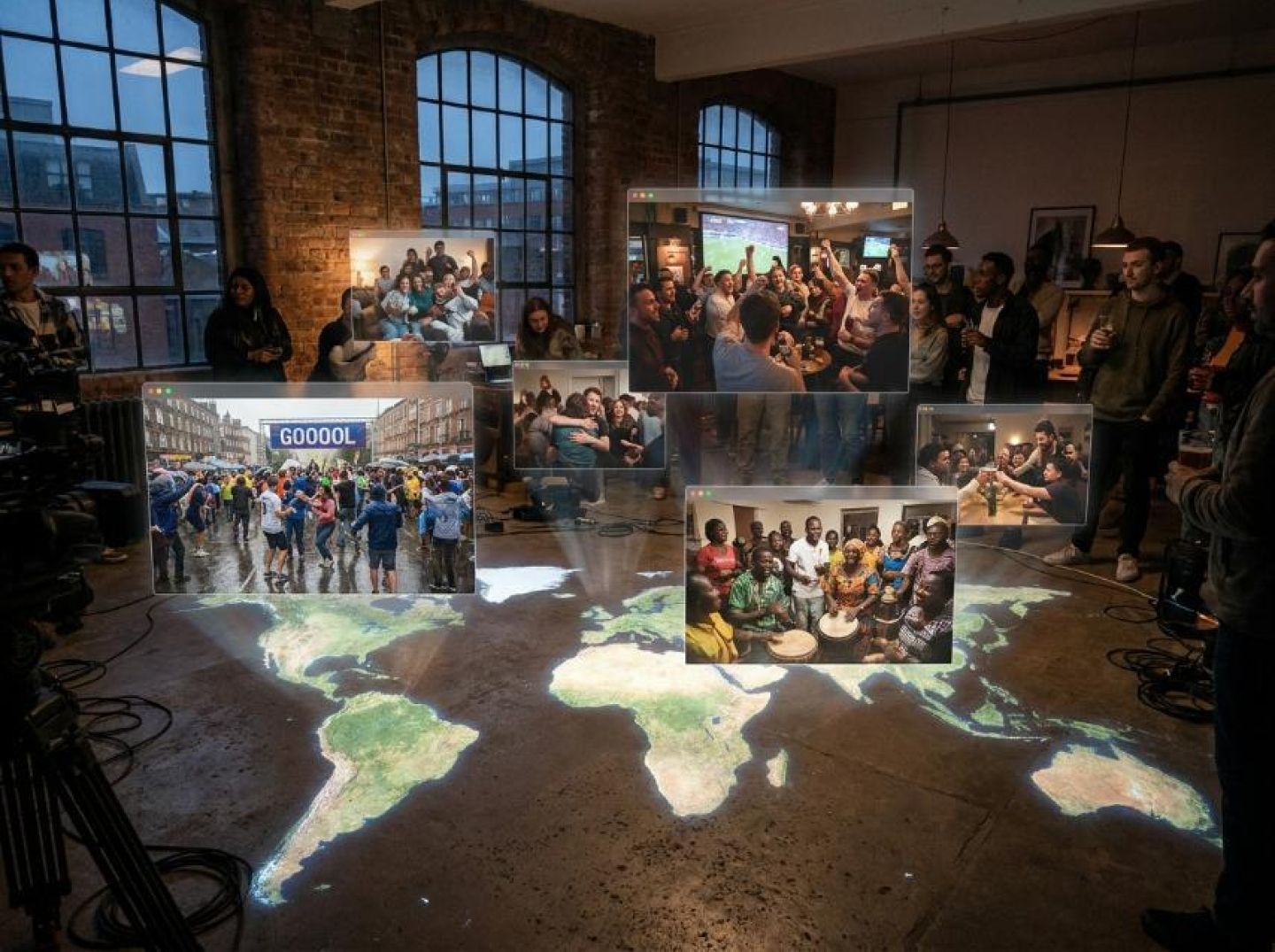
Most advertisers approaching the World Cup on TikTok make a fundamental category error: they treat it as a single, monolithic cultural moment and build one creative package to blanket every market. But as OOH Today argued in its analysis of World Cup media strategy, the tournament is "not a single global audience, but a collection of local moments happening simultaneously across different communities and environments." That observation was made about out-of-home media, but it applies with even greater force to TikTok, where the algorithm already fragments global events into hyper-local emotional feeds without any advertiser lifting a finger.
Think about what actually happens on TikTok during a match. When Mexico scores a dramatic equalizer against Germany, the content that trends in Mexico City — the memes, the duets, the sound clips, the creator reactions — carries a completely different emotional charge than the content circulating in Berlin about the same goal. One feed is euphoria; the other is dread. One community is celebrating with inside jokes rooted in decades of Mexican football culture; the other is processing frustration through a distinctly German lens of self-deprecation. The creative that converts in one context will feel tone-deaf, or simply invisible, in the other. The same match, the same scoreline, two entirely different advertising opportunities.
The advertisers extracting the most value from TikTok during sporting events understand this intuitively. They're not just monitoring what's trending globally — they're segmenting trending content by geography, language, and community context to build localized creative variants for their performance campaigns. When you track which sounds are being clipped, which creator formats are being replicated, and which emotional narratives are dominating market by market, you unlock targeting intelligence that no demographic dashboard can provide. You learn not just what to say, but where and to whom.
This matters even more when you factor in who's actually on TikTok now. The platform's audience has matured significantly: Neil Patel's analysis of TikTok's advertising data shows that the 25-to-34 age group now represents 40 percent of users, making it the platform's largest single cohort. The perception that TikTok skews exclusively toward teenagers is increasingly outdated. That 25-to-34 demographic is precisely the segment with disposable income, brand loyalty potential, and purchasing authority — and they're watching the World Cup through fiercely local emotional lenses shaped by their specific communities, languages, and football allegiances.
The operational implication is significant. As OOH Today noted, brands that win during the tournament will need to operate less like traditional campaign teams and more like live activation teams, responding quickly as cultural momentum shifts market by market. On TikTok, that means having creative infrastructure in place — modular templates, pre-approved copy variations, region-specific creator partnerships — that allows you to spin up localized ad variants within hours of a trending moment, not days.
The brands that will waste the most money during the World Cup are the ones running a single English-language creative across every market and calling it "global reach." The brands that will win are the ones who recognize that a penalty shootout in São Paulo and a penalty shootout in Seoul produce two completely different emotional audiences — and who have the creative systems to speak to both before the moment passes.
Theory is worthless if it stays in a slide deck. The previous sections have established that TikTok's viral moments during the World Cup are diagnostic — they reveal which emotional hooks, visual formats, and audience segments are converting in real time. Now the question is how to build a repeatable process that captures those signals and turns them into performance creative across every channel you operate. Here's a four-step framework designed to do exactly that.
Step 1: Monitor in Real Time
Before the tournament kicks off, set up your listening infrastructure. Track TikTok's Creative Center and Top Ads dashboard daily. Monitor hashtag velocity for tournament-related tags, noting which ones accelerate fastest in specific geographies. Watch the ad creative libraries for competitor spend patterns. Pay attention to which Spark Ads and creator-led formats are gaining traction within the first 24 hours of a match result. The critical point, as OOH Today emphasized in its World Cup analysis, is that brands need to operate less like traditional campaign teams and more like live activation teams — and that flexibility has to be built in before the campaign begins, not improvised once the tournament starts. Assign a daily monitoring rotation across your performance and creative teams so no signal window closes before you've captured it.
Step 2: Decode the Winning Structure
Raw trending data is noise until you parse it. For every piece of high-performing TikTok content you flag, document three things: the emotional hook (underdog hope, national rivalry, collective heartbreak, euphoric celebration), the visual format (raw reaction footage, duet structure, slow-motion replay with text overlay, creator-to-camera monologue), and the audience segment it resonated with (geographic market, age cohort, creator community). This decode step is what transforms a viral moment into a creative brief. You're not copying the TikTok — you're extracting the emotional lever and the structural pattern that made it work.
Step 3: Transplant Across Channels
This is where the real value lives. Take the decoded hook and adapt it into native formats on every non-TikTok surface. If the winning emotional lever was underdog resilience after a group-stage upset, your Google search ad headlines should mirror that tension. Your push notification copy should evoke the same narrative arc. Your landing page hero image should carry the same visual energy — raw, unpolished, human — rather than defaulting to stock photography. The principle Neil Patel's team articulated about thinking from a TikTok-first perspective rather than adapting assets designed for other channels applies in reverse here: you're adapting what already proved itself on TikTok into the native language of email, programmatic display, and paid search. The emotional core stays constant; the format wrapper changes.
Step 4: Test Fast, Kill Faster
Deploy the transplanted creative into controlled tests within hours, not days. As Neil Patel's analysis noted, the strategic advantage lies in testing early while competition for placements is lower and cost benchmarks are more favorable — a principle that applies to every channel during a cultural moment's initial velocity spike. Run three to four headline variants per emotional hook. Measure click-through and conversion against your non-event baseline within 48 hours. Scale what outperforms. Kill what doesn't. Then return to Step 1, because the next match will produce the next signal.
The framework is deliberately cyclical. Each match, each upset, each celebration generates a fresh round of cultural data. The brands that win aren't the ones with the biggest budgets — they're the ones running this loop fastest.
Receive top converting landing pages in your inbox every week from us.
How-To
Learn how to turn big brand-building stunts into measurable performance funnels across Native, Push, Pop, and TikTok. This guide breaks down how to repurpose stunt assets, build channel-specific sequences, design story-led landers, and measure their impact on conversions and revenue.
Priya Kapoor
7 minOct 5, 2026
Most Read
Discover how OOH teams can use Native, Push, and TikTok ad intelligence to move beyond location-first planning and build smarter, audience-driven campaigns. This guide shows how to translate digital creative, targeting, and performance signals into OOH ideas, test them in the physical world, and feed the results back into digital campaigns.
David Kim
7 minOct 4, 2026
Most Read
Learn how OOH employers can move beyond selling billboard inventory and start monetizing the full funnel impact of every outdoor impression. This guide shows how to connect OOH with Native and TikTok-style funnels using competitive intelligence, creative research, tracking, retargeting, and performance-focused roles.
Rachel Thompson
7 minSep 28, 2026