

6 minJuly 2, 2026

Our spy tools monitor millions of native ads from over 60+ countries and thousands of publishers.
Get StartedSomething strange happens when a mega-event like the 2026 FIFA World Cup rolls around: the fragmented, distracted, skip-happy internet briefly reconsolidates. Billions of eyeballs lock onto a single cultural moment with an intensity that no amount of programmatic targeting can manufacture on a normal Tuesday. As Nicole Greene of Gartner writes for Marketing Dive, the World Cup "concentrates attention" by bringing together "emotion, ritual and shared context over an extended period of time" — conditions that are "increasingly difficult to replicate in the media landscape." For performance marketers, this concentration isn't just interesting. It's exploitable.
Here's the paradox: the advertisers who flood into these events overwhelmingly aren't optimizing for clicks, conversions, or return on ad spend. They're brand-first players chasing logo placement and reach. Greene notes that many brands still treat large-scale events "primarily as visibility plays, focusing on logo placement, reach and exposure," even though those elements alone are no longer enough to differentiate. The result is a massive wave of brand budgets crashing into premium inventory — official sponsorships, in-stadium signage, hero spots during live broadcasts — while the enormous volume of adjacent traffic those events generate goes comparatively ignored.
The scale of that brand-dollar tidal wave is staggering. According to one media buyer speaking to Adweek, sports now represents "well over 50% and might be closer to 60%" of total upfront volume being transacted, up from roughly 30–35% just five or six years ago. That means the majority of television's biggest annual deals are now structured around live sports — and mega-events like the World Cup and Super Bowl sit at the apex of that spending. Disney is even building a year-long celebration of the Super Bowl with new shoulder programming designed to keep brand dollars flowing continuously.
All of this creates a predictable market distortion. Brand advertisers bid up premium placements — the 30-second live TV spots, the official FIFA sponsorship tiers, the homepage takeovers on major sports sites — because that's what their playbook demands. But the attention a mega-event generates doesn't stay neatly inside the broadcast window. It spills everywhere: into the news articles people read before and after matches, the highlight reels they consume on social platforms, the stats pages and fan forums they browse on their phones during halftime. That spillover traffic is emotionally primed, contextually relevant, and — crucially — not where the big brand budgets are competing.
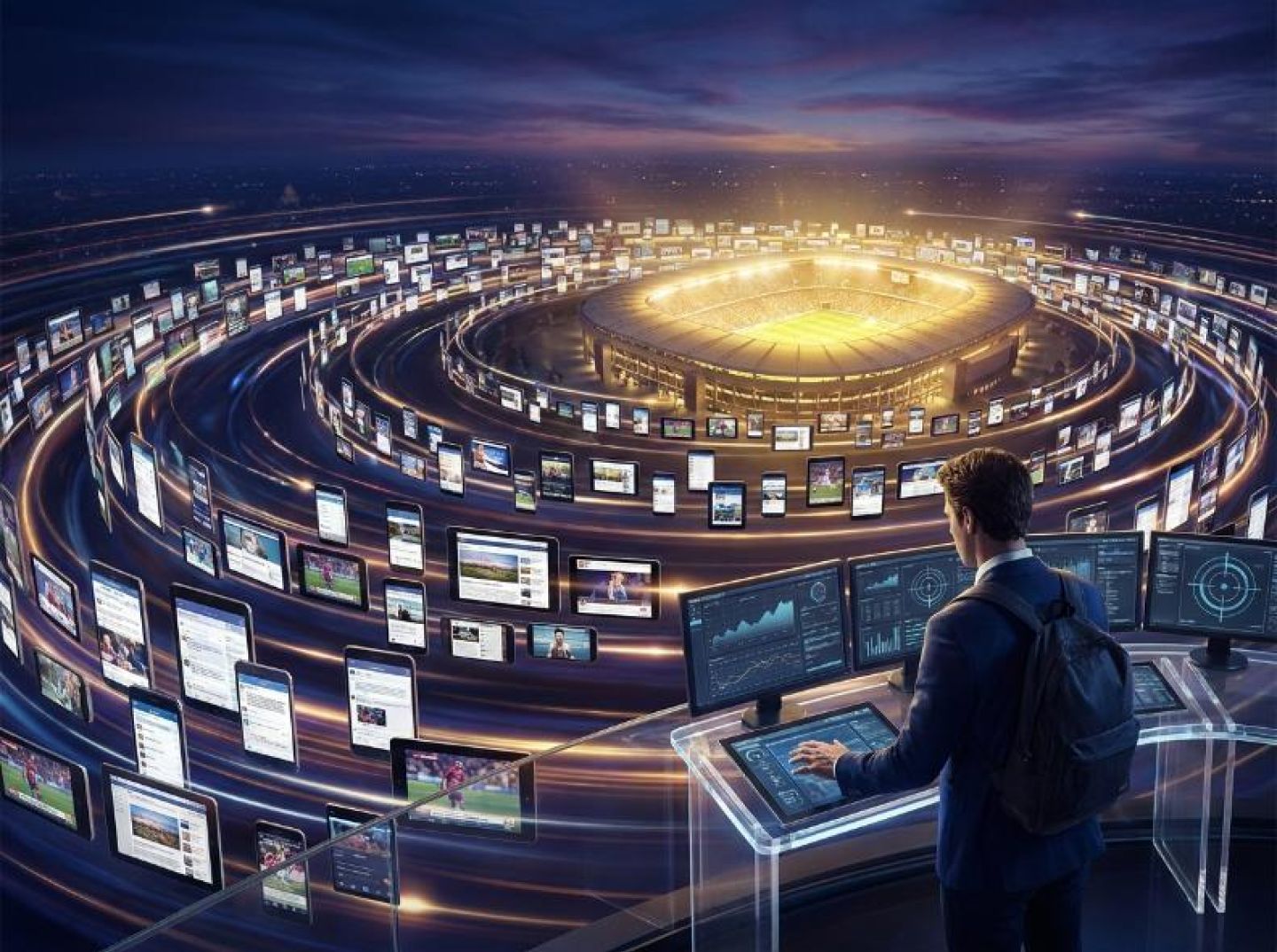
Think of a mega-event not as a walled garden you need $5 million to enter, but as a gravity well. The event itself is the dense center, expensive and crowded. But it pulls enormous volumes of high-quality traffic into surrounding orbits — native content placements on sports news sites, push notification traffic from score-alert apps, programmatic display across the long tail of World Cup coverage. Because brand advertisers are focused on the center, these peripheral channels often remain underpriced relative to the quality and engagement level of the audiences passing through them.
This is the asymmetry that performance marketers can exploit. You don't need an official sponsorship or a marquee TV buy. You need to recognize that the same emotionally engaged consumer who just watched a dramatic penalty shootout is, sixty seconds later, scrolling through match recaps on a mid-tier publisher — and that the CPM on that native placement is a fraction of what the brands paid for the in-broadcast spot. The attention is the same. The emotional priming is the same. The price is radically different. And unlike the brand advertisers competing for reach, you're competing for action — which means you can measure, optimize, and scale in ways they never will.
Not every vertical benefits equally when the world tunes into a mega sporting event, but a specific cluster of offer types — sports betting, fantasy leagues, sweepstakes, free streaming and VPN services, merchandise, and fan gear — experiences a conversion surge that consistently outpaces the corresponding rise in media costs. Understanding why requires mapping where the audience actually is, because during the 2026 World Cup, a massive share of viewers won't be sitting inside the neat, premium broadcast inventory that billion-dollar sponsors are bidding on.
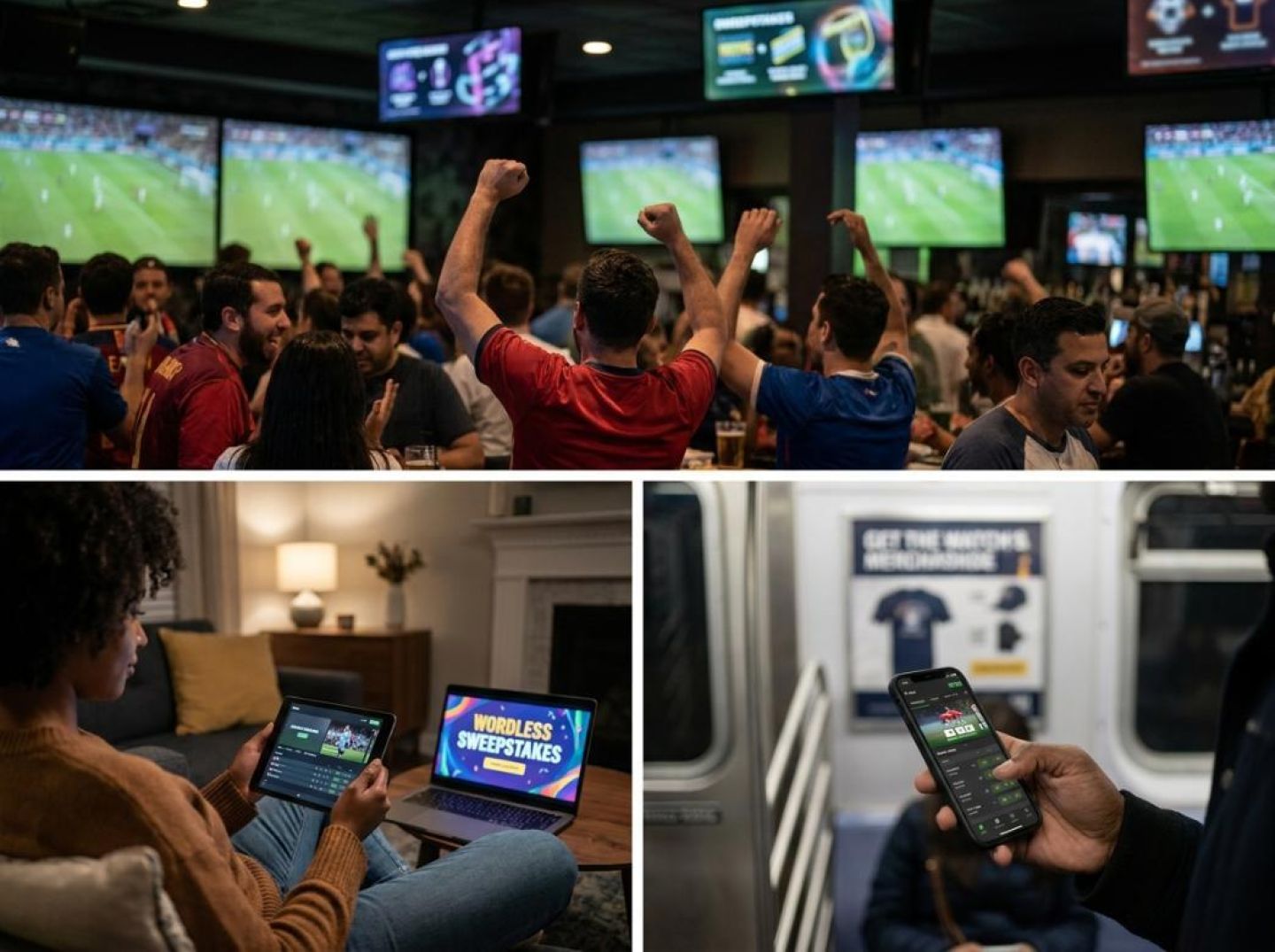
The numbers paint a striking picture of fragmentation. According to Adweek's analysis of Nexxen data, 49% of World Cup viewers will seek free ways to watch — through FAST channels, at bars, or via borrowed logins at friends' homes. An additional 19 million incremental viewers won't watch live matches at all, instead consuming highlights and news through secondary platforms. CTV viewership is projected to climb 14% compared to 2022, scattering eyeballs across a constellation of apps, devices, and ad-supported environments that look nothing like a traditional TV buy.
This is where performance marketers need to pay close attention. That 49% seeking free access isn't idly Googling "World Cup schedule." They're landing on unlicensed streaming aggregators, clicking through Reddit threads and Telegram links, downloading VPN apps to bypass geo-restrictions, and browsing ad-supported highlight sites monetized through pop-unders and native ad placements. In other words, they're traveling through the exact ecosystem where push notifications, native ads, and pop traffic dominate — the channels that Anstrex users already monitor, analyze, and deploy campaigns on daily.
The conversion math works in your favor for a specific reason: intent compression. During a normal week, someone browsing a sports news site might have mild, ambient interest. During a World Cup knockout round, that same person is emotionally heightened, tribally engaged, and actively seeking adjacent experiences — a bet on the match outcome, a fantasy league to join, a sweepstakes tied to a prediction, or a streaming deal that lets them catch the next game without paying for a cable package. The intent spike is real, immediate, and time-boxed, which means conversion rates jump dramatically within these verticals while the CPM increases concentrate primarily in premium programmatic and direct-sold inventory, not in the pop and native channels where these offers run.
There's another structural advantage worth noting. As Nicole Greene writes in Marketing Dive, many brands still "show up in the same way" during major events, treating them as visibility plays focused on logo placement and reach. That creative homogeneity among official sponsors actually reduces the competitive pressure on sports-adjacent performance offers. When every brand in the premium tier looks identical — slick production, generic "passion of the game" messaging, obligatory celebrity cameo — a well-targeted native ad offering a $200 free bet or a "watch every match free with this VPN" angle cuts through with startling efficiency. You're not competing against creative brilliance; you're competing against wallpaper.
The viewer journey during a fragmented mega-event effectively funnels millions of high-intent users toward the traffic sources performance marketers already own. Someone sees a highlight clip on a FAST channel, opens their phone to search for the next match time, lands on an ad-supported sports site, and encounters a native ad for a betting sign-up bonus — all within ninety seconds. Map your offers to that journey, and you're not hijacking traffic. You're meeting it exactly where it already wants to go.
The enterprise brands reshaping advertising infrastructure understand something that most performance marketers haven't internalized yet: by the time you've finished A/B testing your creative, the mega-event window has already closed. As DAIVID CEO Ian Forrester put it, creative remains "a key driver of advertising outcomes, but for too long it has been measured in isolation, disconnected from media results" — a problem that compounds exponentially when you're trying to capitalize on a two-week surge around the World Cup or March Madness. The traditional test-and-iterate cycle assumes you have the luxury of time. During a mega-event, you don't.
Big brands are solving this by building custom integrations — live loops between creative intelligence and media execution that score creative effectiveness before launch, reallocate budget to winners during flight, and feed performance data back into planning for the next cycle. These systems are impressive and, for most performance marketers, completely out of reach. They require six-figure contracts, months of integration work, and the kind of data infrastructure that assumes you're spending at the scale of a global food conglomerate.
But here's the part nobody talks about: the underlying logic of creative intelligence — identifying what's working before you spend — doesn't require proprietary AI scoring models. It requires visibility into what other advertisers are already running, where they're running it, and how long they've been running it. If a push notification creative for a betting offer has been live across six ad networks for 30 days and expanding into new GEOs, that's not a guess about effectiveness. That's market-validated signal. Someone else already paid for the R&D.
This is exactly where ad intelligence platforms function as the performance marketer's scouting report. Tools like Anstrex let you filter by vertical — betting, sweepstakes, streaming — and sort creatives by longevity and network spread, which are the two most reliable proxies for profitability. A creative that disappears after 48 hours probably didn't convert. One that's been running for weeks across multiple traffic sources almost certainly did. You're not copying ads; you're reading the scoreboard.
The specific workflow matters. Start by identifying the dominant creative patterns in your target vertical two to three weeks before the event: What hooks are leading? Are advertisers using countdown urgency, celebrity imagery, or odds-based CTAs? Which color palettes and thumbnail styles recur across the top performers? Then adapt those patterns into your own creative, applying your brand voice, your landing pages, and your offer mechanics. The goal is to arrive at the starting line with creative that already reflects what the market has validated rather than starting from a blank canvas and hoping your instincts are right.
This approach also addresses a structural problem that even sophisticated marketers struggle with. As Search Engine Journal's analysis of the DAIVID/ADIN.AI partnership noted, human panels are too slow and A/B testing individual creatives at scale is logistically impossible without serious infrastructure. Meanwhile, even upper-funnel and luxury brands are adopting data-driven performance perspectives for their live sports buys, validating that the linkage between creative quality and measurable outcomes is now table stakes across every tier of advertiser. The gap isn't awareness — everyone knows creative drives results. The gap is speed. Ad spy tools collapse the feedback loop from weeks to minutes, letting you crowdsource creative validation across the entire market instead of waiting for your own data to accumulate. In a mega-event window where CPMs spike and attention is fleeting, that speed advantage isn't a nice-to-have. It's the whole game.
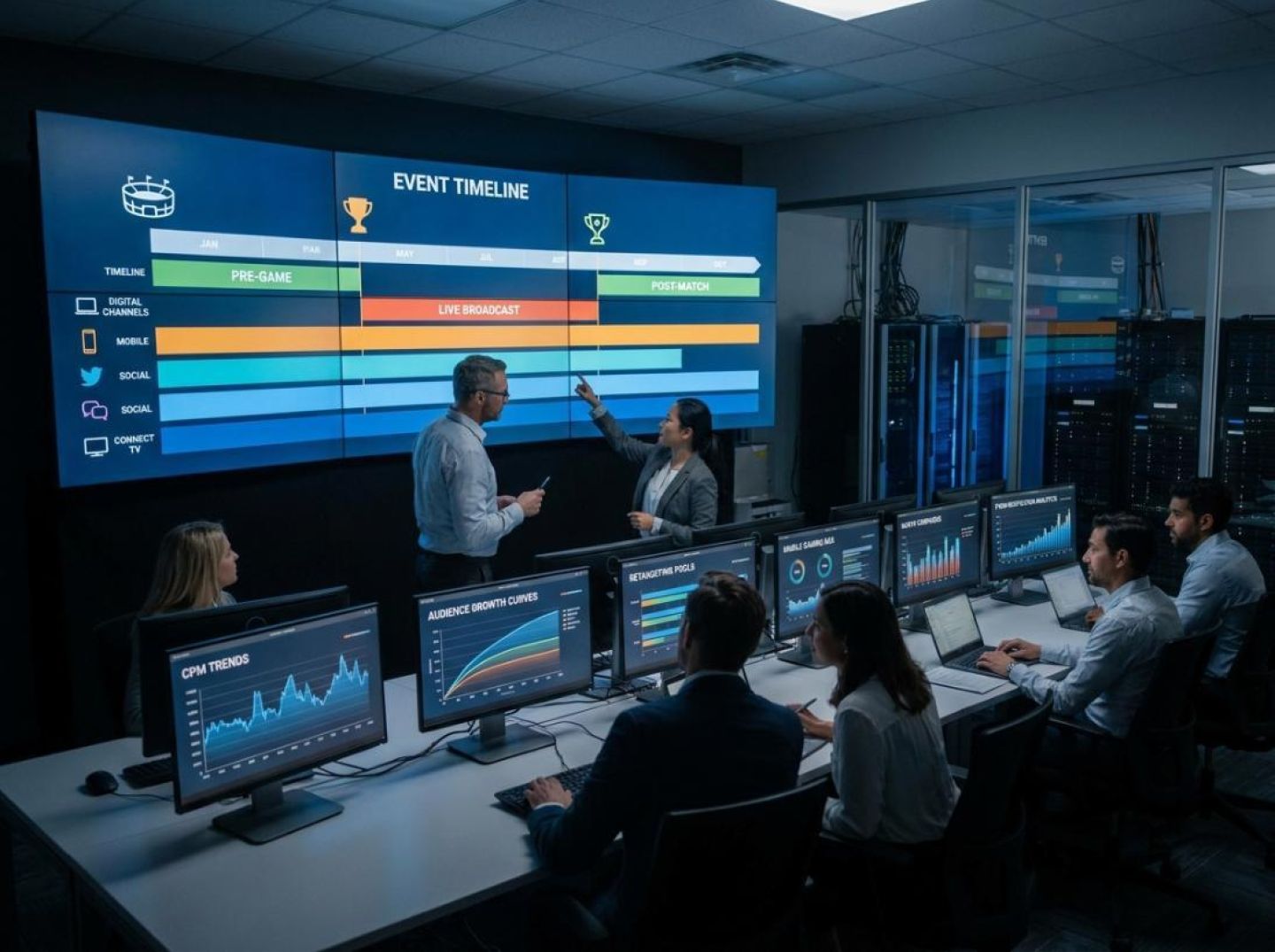
Every mega-event creates a CPM cycle that looks roughly the same from a distance: prices climb as the event approaches, peak during the main spectacle, and decay afterward. But zoom in, and the curve is far less uniform than most media buyers assume. Programmatic inventory adjacent to the event — sports news sites, highlight reels, fan forums, lifestyle content tangentially themed around the spectacle — doesn't reprice in lockstep with premium broadcast slots. There's a lag between when audience attention surges toward event-related content and when the bulk of brand advertising demand catches up to fill that inventory. That lag is your arbitrage window, and exploiting it methodically is how performance marketers extract outsized returns without competing directly against eight-figure media budgets.
The tactical timeline breaks into four distinct phases. Phase one — seeding (two to three weeks out) — is where the smartest operators gain their edge. Sports-themed content starts trending well before kickoff or tip-off: bracket predictions, player profiles, historical retrospectives, tailgate culture pieces. Audience engagement is climbing, but brand advertisers haven't yet activated the reserved inventory they negotiated during upfront season. This is the window to launch prospecting campaigns at suppressed CPMs, build lookalike audiences from early converters, and accumulate pixel data that will power every subsequent phase. The approach mirrors the logic behind what Disney is doing with a year-long celebration of the Super Bowl, creating shoulder programming and ad opportunities that keep brands engaged far beyond game day itself. Performance marketers should think the same way — the traffic opportunity extends weeks in either direction, and the cheapest impressions live at the margins.
Phase two — early event — is when you scale aggressively on the creatives that proved themselves during seeding. Your pixel pools are warm, your cost-per-click baselines are established, and you can bid confidently because you have conversion data that latecomers lack. Phase three — peak event — demands the opposite of broad scaling: tighten targeting to your highest-converting segments, shift budget toward offers with the strongest margins, and let retargeting carry the heaviest load. CPMs are at their zenith, so every impression needs to justify itself. Phase four — the post-event harvest — is pure retargeting. The audience pools you built in phases one and two are at maximum size, CPMs are falling as brand budgets exhaust their reserved commitments, and you can re-engage warm prospects at a fraction of peak-period costs.
But timing alone isn't enough if you're fighting over the same inventory as everyone else. The real multiplier is channel selection — specifically, channels that brand teams systematically ignore. Mobile gaming is the clearest example. According to EMARKETER and Admazing research covered by VideoWeek, more than 70 percent of US marketers rarely consider, deprioritize, or only consider mobile gaming advertising late in their planning — even though over 60 percent of those same marketers acknowledge it can deliver incremental reach beyond CTV and social. That disconnect is a gift to performance buyers. The audience overlap between mobile gamers and mega-event viewers is substantial — these are the same people killing time during halftime, scrolling between matches, or unwinding after a late-night game. Yet because brand dollars almost never flow into rewarded video placements, interstitial ads in casual games, or playable ad units, CPMs in mobile gaming inventory barely budge during event spikes.
The same logic applies to push notification networks, tier-two native platforms, and in-app placements outside the major social walled gardens. These channels are invisible to the brand teams negotiating upfront deals, which means they remain competitively priced precisely when premium inventory becomes unaffordable. The arbitrage, ultimately, isn't just temporal — it's structural. You're not only buying earlier; you're buying where nobody else is looking.
Receive top converting landing pages in your inbox every week from us.
Must Read
Explore why traditional OOH experience is no longer enough as out-of-home advertising becomes more data-driven, measurable, and connected to digital channels. This guide outlines the cross-channel, measurement, AI, and competitive-intelligence skills modern OOH employers and candidates need.
David Kim
7 minSep 25, 2026
How-To
Learn how to measure whether sports-star and celebrity advertising actually delivers efficient CPC, CPA, search lift, and downstream conversions. This guide shows how to test celebrity creative against creator alternatives and use competitive intelligence and measurement to turn expensive star power into a measurable performance asset.
Elena Morales
7 minSep 25, 2026
Quick Read
Ad-spy tools and performance marketing are helping reshape OOH from a traditional media channel into a data-driven, programmable performance environment. This guide explores how competitive intelligence can influence OOH hiring, talent requirements, funnel strategy, measurement, and agentic AI workflows.
Dan Smith
7 minSep 23, 2026






)